Why I Use GNU/Linux

2026-04-29_linux.png

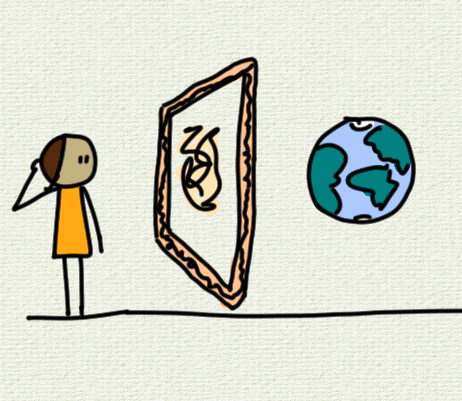
In the last 28 years not one person has asked me for help installing Linux.

Until now.

I have a friend coming over tomorrow, wanting to convert two PCs.

There are many good reasons to try GNU/Linux – cost, security, control.

But I have a more irrational reason for being a Free Software advocate.

Here’s the story.

I think I was 10 or so when we got our first computer.

It was around the same time that I picked my first dog from a litter – a pointer puppy.

It was also an exciting time for computing in India – and so we called him Unix.

A dog becomes your best friend. The one thing that will never let you down.

He wasn’t called Dos. Or Mac.

So, unsurprisingly, when Linux came along I couldn’t wait to try it out.

I built the systems that ran our first startup using GNU/Linux. And it’s powering the systems that run our business now.

Windows and Macs may dominate market and mindshare.

But I use Linux not just because it’s better.

It’s because I’ve grown up trusting it.

Why Should You Build A Thing?

2026-04-28_product.png

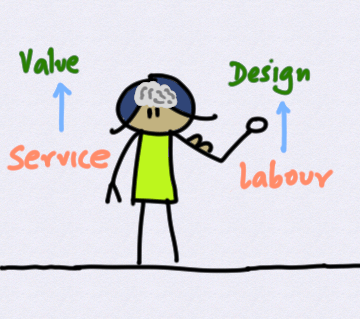
When build costs fall to zero, judgement becomes the bottleneck.

I ask two questions to help me create a new product or service.

  1. Do I know what to build?
  2. Do I know how to build it.

If the answer is no to both, then it’s time to study.

If you know how to build things but not what to build – spend time on discovery.

If you have a vision for a product but not the capability to deliver, select partners wisely.

The magic happens when you know the answer to both questions.

What matters now is not what you build or how you build it.

It’s why you build it.

Value gets attention. Risk drives action.

2026-04-24_couch.png

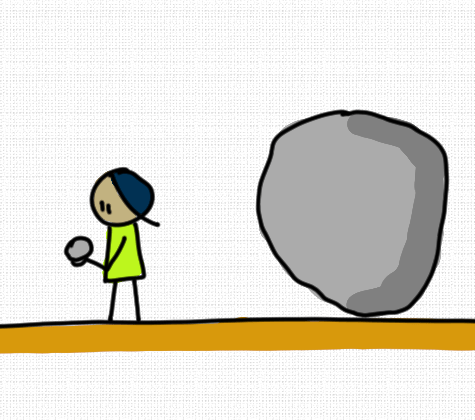
AI adoption in a company is not about value, it’s about risk.

If you have an interesting but unproven use-case you have to start by investing some time.

Find a partner with a real-world problem and understand what they’re struggling with – see the situation through their eyes.

Then do the work. Build and show your solution in action.

Consultative selling is about value creation.

But first, you have to eliminate the downside.

Value gets attention. Risk drives action.

Script Work, Not Relationships

2026-04-23_same-thing.png

It’s hard to do something the same way every time.

That’s why I like scripts.

Scripts are small programs that do a task the same way every time.

But some businesses try and script customer interactions as well.

They use sales scripts and messaging sequences – to train staff and help scale the business.

That’s a mistake.

Scripts are good for processes, but bad for human interaction.

Script the work. Don’t script the relationship.

Sustainability Is A License To Operate

2026-04-22_tensions.png

Programmes fail when they try to be objective and ignore the subjective parts of real-world operations.

Sustaining a decarbonisation programme in a company takes a huge amount of effort.

You have to:

  • Analyse the whole system, not just parts of it.
  • Wrestle with uncertainties and feedback loops.
  • Engage with stakeholders, not just count assets.

It takes years to develop a baseline, longer to get stakeholder buy-in for action, a decade to reap the benefits.

It’s also easy to derail a programme.

Progress can be set back a few years by a change of management, deferred legislation, or a different focus.

A decade ago, a sustainability director told me not to think of this work as a compliance exercise.

Think of it as a license to operate.

What you’re really building is the foundations for the long-term viability of your business.

Focus on Making Systems Stronger

2026-04-21_value.png

The managers we talk to are increasingly unhappy.

Costs are up. Supplies are delayed. Contracts aren’t being renewed.

In times of crisis, firms tend to focus on costs.

That can make things worse.

Resilience doesn’t come from what a single firm does.

It’s built between firms – in how they communicate and work together.

A crisis puts new demands on managers.

This is not the time to optimise parts. It’s time to strengthen the system.

When To Use Iterative Sense-Making

2026-04-17_problem.png

“I have yet to see any problem, however complicated, which, when … looked … the right way, did not become still more complicated.” – Poul Anderson.

If you’re a manager trying to make decisions, the methods of half a century ago struggle to help with the complex world of today.

Set targets, objectives and goals. Make plans. Allocate resources. Make it happen.

That assumes a linear, predictable environment – the high ground – rather than the wicked, swampy lowlands that we deal with daily.

Complex problems are not solved by planning and control.

They need iterative sense-making and incremental action.

Take decarbonisation transition planning, for example – something many of our clients have to do.

There are many stakeholders involved, each with different perspectives, needs and reasoning.

They need methods designed for structured sense-making that supports negotiation, debate and trade-offs.

You don’t manage such complexity by trying to simplify it.

Instead, you identify the next action that stakeholders and leaders can support.

When To Start Work

2026-04-09_order-v3.png

There are only two times when you should start work.

One – when you have customer demand. Two – when you’re curious.

Modern manufacturers start building a car only once a customer places an order.

We need the same discipline in consultancy.

It’s very easy to burn time working for free doing studies or pilots.

But we shouldn’t confuse delivery work with exploration.

I also spend a lot of time with customers and prospects – talking through their situations to understand what needs doing.

It looks like unpaid work. It isn’t. It’s an investment.

Time spent exploring a situation with a client shows us what needs to be done.

And that sometimes leads to paid delivery work.

Work should be pulled by demand, or by curiosity. Nothing else.

The Value Of Consulting

2026-04-08_theatre.png

I triage information into three categories.

First, what do I need to know to get the job done?

That means understanding a situation in detail – how did we get here, and what needs to change?

One level up is management – talking about resources, timelines and monitoring.

At the edge is pure theatre.

It’s the post with a case study that falls apart when interrogated. A pitch that papers over the cracks. Cleverness that substitutes for clarity.

What I’m searching for is the equivalent of going to Gemba – to the place where work is done.

In consulting, Gemba isn’t a place. It’s a point of view.

It’s the way stakeholders perceive the situation, and the problems they believe need to be addressed.

As management consultants, we make a difference by cutting through to the core.

The value isn’t in talking around the work.

It’s in understanding it.

VIEW – A Way To Drive Down Costs

2026-04-07_view.png

Did you know that managing costs can lead to higher costs?

Toyota’s Ohno was one of the few to realise that the way to cut costs was to focus on flow instead.

There are four flows that matter, and I came up with the mnemonic VIEW to remember them.

  • V: is for value
  • I: is for information
  • E: is for energy
  • W: is for materials

Value is about revenue – delivering what the customer actually wants.

The other three are about costs – the inputs into a business.

You reduce costs by improving how they flow through your business.

For example, we used to calculate a client’s carbon footprint once a year – at reporting time.

We redesigned our system to reduce manual work by 90% – reducing friction, delays and errors.

Now we can see our position daily, making reporting significantly easier.

This is improving information flow in practice – and we can drive down a client’s costs as a result.

Energy and materials can be improved in the same way.

Stop managing costs. Design better flows instead.