The Changing Nature Of Jobs And AI

2026-05-08_change.png

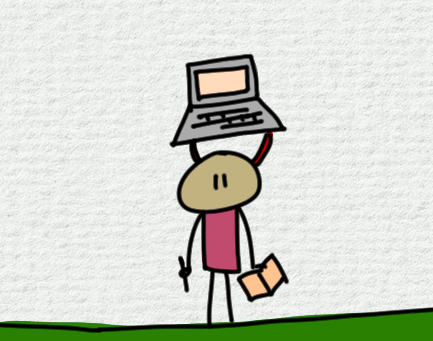
My job used to involve creating jobs.

We ran an innovation service, finding new opportunities, figuring out how to serve them, and then creating roles and teams to scale our service.

Now, I’m looking at each opportunity and asking myself whether it’s one for a person, or one for AI.

We should think of AI like we think of Excel – a general purpose tool that we reach for.

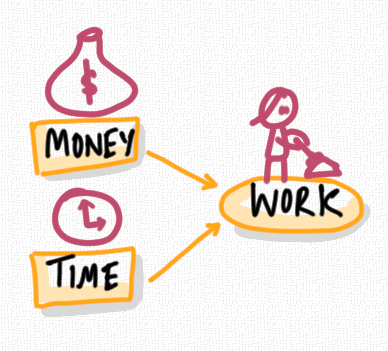
Old jobs were created when we needed to get something done, but didn’t have time to do it ourselves.

New jobs will emerge when we need someone to get something done better than we can.

That will undoubtedly include AI and automation.

Work is no longer about jobs and time on task.

It’s about delivering reliable, trusted outcomes.

How To Compete In 2026

2026-05-07_ai-flow-touch.png

In my first year of engineering school Rolls Royce came in to teach us how to build a jet engine.

A hundred students were divided into teams mimicking real factory departments.

I was in quality control. We told each team to creatively write the name of the part they were going to make on a piece of paper.

Then bring the part to quality control. We’d check it and pass it to the assembly team.

They put it on a board, and the job is done. We’ve built an engine.

Unsurprisingly, the first iteration was slow. Individual communication with teams took time. The artwork was great, but took time to create.

Then the task was repeated – do it again, but faster.

You can imagine how it went. Over a few iterations we improved communication and reduced the amount of work.

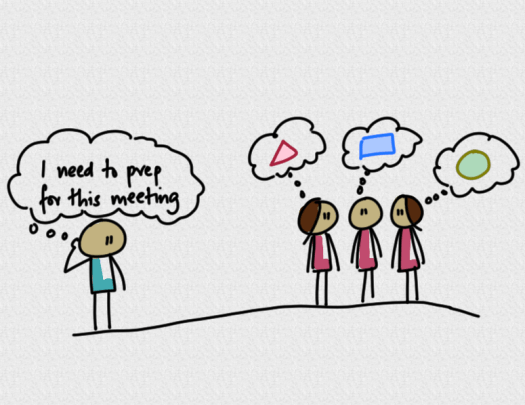
Less work. Fewer touchpoints. Quicker delivery.

23 years later, the Wall Street Journal has a piece on how Ford is going to compete with Chinese giants on car making.

They’re following this exact process.

Starting a skunk works to press steel in giant parts so that there are fewer components. Rebuilding the entire assembly system around limited touchpoints.

The takeway as a business/service/product builder trying to compete in 2026 against global competition?

Every extra handoff, approval and coordination step in your process costs you time and money.

Reduce the number of touchpoints – and keep it simple.

The Real Value From Technology

2026-05-06_dissolve.png

I once built a business that didn’t make me any money.

The problem was that I didn’t understand economics – in particular how prices are formed.

For example, it’s still not clear to me what will eventually set the price of the AI you use.

You can save time and money by having an AI build a financial modelling spreadsheet rather than having an analyst do it.

But is that what we’re really trying to do?

We don’t want to do the same crappy thing faster.

We want to stop having to do it at all.

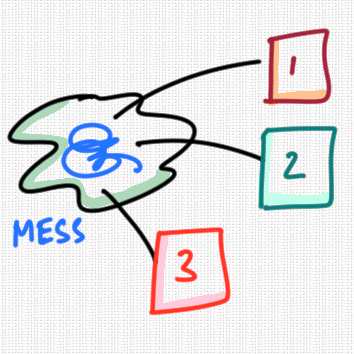
As Ackoff put it – stop trying to solve problems. Dissolve them instead.

The real value from technology comes from redesigning systems so that unnecessary work doesn’t need doing at all in the first place.

Stop using AI to do the wrong thing faster.

Use it to build a better way instead.

Numbers Look Back. Culture Looks Forward.

2026-05-04_valuation.png

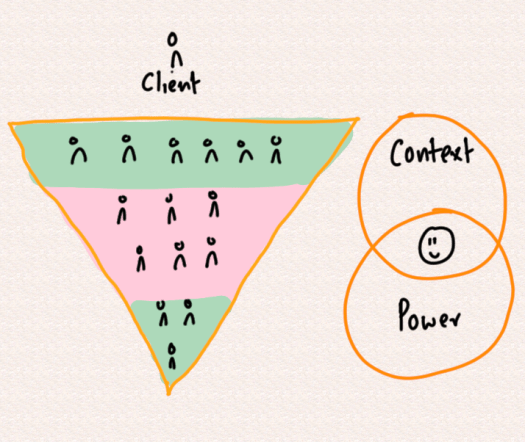
Two things tell you all you need to know about a company’s strategy.

Its numbers, and its culture.

Greg Abel took over from Warren Buffett this year, and wrote this in his 2026 shareholder letter.

“… culture is a system for generating long term performance, not just a set of beliefs.”

Numbers are a starting point to analyze a business.

But numbers can be gamed and manipulated to present a rosy picture.

It’s much harder to hide the cracks in culture.

Numbers look back – telling you what a company did.

Culture looks forward – telling you what it’s willing to tolerate.

Why I Use GNU/Linux

2026-04-29_linux.png

In the last 28 years not one person has asked me for help installing Linux.

Until now.

I have a friend coming over tomorrow, wanting to convert two PCs.

There are many good reasons to try GNU/Linux – cost, security, control.

But I have a more irrational reason for being a Free Software advocate.

Here’s the story.

I think I was 10 or so when we got our first computer.

It was around the same time that I picked my first dog from a litter – a pointer puppy.

It was also an exciting time for computing in India – and so we called him Unix.

A dog becomes your best friend. The one thing that will never let you down.

He wasn’t called Dos. Or Mac.

So, unsurprisingly, when Linux came along I couldn’t wait to try it out.

I built the systems that ran our first startup using GNU/Linux. And it’s powering the systems that run our business now.

Windows and Macs may dominate market and mindshare.

But I use Linux not just because it’s better.

It’s because I’ve grown up trusting it.

Why Should You Build A Thing?

2026-04-28_product.png

When build costs fall to zero, judgement becomes the bottleneck.

I ask two questions to help me create a new product or service.

  1. Do I know what to build?
  2. Do I know how to build it.

If the answer is no to both, then it’s time to study.

If you know how to build things but not what to build – spend time on discovery.

If you have a vision for a product but not the capability to deliver, select partners wisely.

The magic happens when you know the answer to both questions.

What matters now is not what you build or how you build it.

It’s why you build it.

Value gets attention. Risk drives action.

2026-04-24_couch.png

AI adoption in a company is not about value, it’s about risk.

If you have an interesting but unproven use-case you have to start by investing some time.

Find a partner with a real-world problem and understand what they’re struggling with – see the situation through their eyes.

Then do the work. Build and show your solution in action.

Consultative selling is about value creation.

But first, you have to eliminate the downside.

Value gets attention. Risk drives action.

Script Work, Not Relationships

2026-04-23_same-thing.png

It’s hard to do something the same way every time.

That’s why I like scripts.

Scripts are small programs that do a task the same way every time.

But some businesses try and script customer interactions as well.

They use sales scripts and messaging sequences – to train staff and help scale the business.

That’s a mistake.

Scripts are good for processes, but bad for human interaction.

Script the work. Don’t script the relationship.

Sustainability Is A License To Operate

2026-04-22_tensions.png

Programmes fail when they try to be objective and ignore the subjective parts of real-world operations.

Sustaining a decarbonisation programme in a company takes a huge amount of effort.

You have to:

  • Analyse the whole system, not just parts of it.
  • Wrestle with uncertainties and feedback loops.
  • Engage with stakeholders, not just count assets.

It takes years to develop a baseline, longer to get stakeholder buy-in for action, a decade to reap the benefits.

It’s also easy to derail a programme.

Progress can be set back a few years by a change of management, deferred legislation, or a different focus.

A decade ago, a sustainability director told me not to think of this work as a compliance exercise.

Think of it as a license to operate.

What you’re really building is the foundations for the long-term viability of your business.

Focus on Making Systems Stronger

2026-04-21_value.png

The managers we talk to are increasingly unhappy.

Costs are up. Supplies are delayed. Contracts aren’t being renewed.

In times of crisis, firms tend to focus on costs.

That can make things worse.

Resilience doesn’t come from what a single firm does.

It’s built between firms – in how they communicate and work together.

A crisis puts new demands on managers.

This is not the time to optimise parts. It’s time to strengthen the system.