
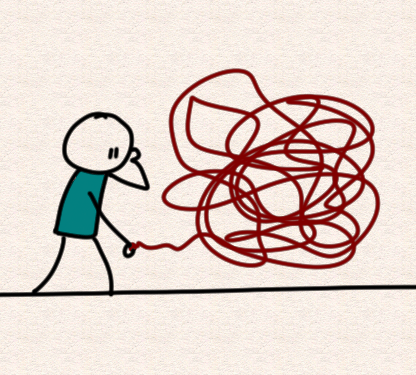
“I have yet to see any problem, however complicated, which, when … looked … the right way, did not become still more complicated.” – Poul Anderson.
If you’re a manager trying to make decisions, the methods of half a century ago struggle to help with the complex world of today.
Set targets, objectives and goals. Make plans. Allocate resources. Make it happen.
That assumes a linear, predictable environment – the high ground – rather than the wicked, swampy lowlands that we deal with daily.
Complex problems are not solved by planning and control.
They need iterative sense-making and incremental action.
Take decarbonisation transition planning, for example – something many of our clients have to do.
There are many stakeholders involved, each with different perspectives, needs and reasoning.
They need methods designed for structured sense-making that supports negotiation, debate and trade-offs.
You don’t manage such complexity by trying to simplify it.
Instead, you identify the next action that stakeholders and leaders can support.
 Handcrafted insight