We’ve Talked About Emissions. Now It’s About Risk

2026-07-02_problems.png

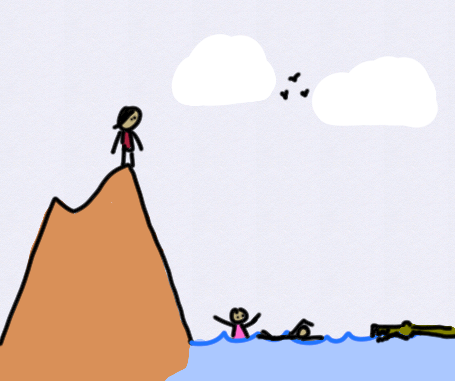
There’s one issue with solving problems when they are small.

We’re unprepared for big problems.

Climate change could have been a small problem – if we had acted sooner.

But now we’re going past the point where we can prevent the worst effects.

Heat. Floods. Wind. Wildfires. Drought.

These are physical risks. And the risk to us depends on where our assets are located.

The problems are getting bigger. And more complex.

So far we’ve talked about emissions.

Now we need to talk about exposure and financial impact.

AI Is The Bear

2026-07-01_better.png

I think we need to treat AI like the bear.

You know the story. Two friends are walking in a wood when they come across a bear.

One immediately reaches into her bag and starts putting on running shoes.

Her friend asks, “What are you doing? You can’t outrun a bear.”

“I don’t need to outrun the bear”, comes the reply. “I only need to outrun you.”

Today I came to the conclusion that AI is better at Excel than I am. It’s also better at programming, at writing guidance documentation, and checking if data in a system is correct.

AI has already replaced the workers I was going to hire.

Now it’s replacing the work that I was going to do.

But we all have equal access to AI.

So my only shot is to be better at using it to create value for my clients than my competition.

If you can’t outrun a bear, you really only have two choices.

Move to a place where there are no bears.

Or get really good at not being dinner.

Will AI Help Us Make Better Choices?

2026-06-27_approximate.png

Is anyone else finding that they’re settling into patterns with their use of AI chat models?

I haven’t done a real “search” in a while. Not the Google kind anyway.

When I search, it’s in academic databases for specific articles and authors.

I use an LLM to critique my writing and find weaknesses, but not to rewrite or suggest language.

I want to find my own words.

At work, it seems increasingly natural to ask a model to do work.

Add some calculations to a spreadsheet. Pull out action points from my notes. Create a first draft.

I’ve read of others using models as a way to process thoughts – talking to them about how they’re feeling.

I’ve started an experiment doing that as a food log instead. I talk to an LLM about the plan for the day. How many calories in this meal? Can I have this bar of chocolate or not?

It seems like this technology is now settling into some of our daily systems and routines.

I’m optimistic about the path we’re taking.

This technology may help us make better choices over time.

Why We Developed A Carbon Reporting Service

2026-06-26_problems.png

Buying software is easy. Making it work for you is the hard part.

Our core service is a lean, flexible and customisable carbon data management service that leverages technology you already have – starting with the Microsoft stack.

We got into that business because a client had bought a SaaS platform that wasn’t delivering.

Buying a SaaS solution is often seen as a silver bullet – the easy step. Buy one and everything is sorted.

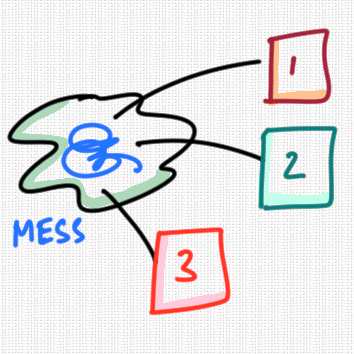
Except it’s not. It’s only when you start working on the detail that you realise there’s a mountain left to climb – that there are big problems SaaS doesn’t solve.

Ten years later, the situation hasn’t changed much.

There are thousands of SaaS carbon reporting solutions in the market.

There are so many that comparison sites have sprung up.

But what we still hear from clients is that the solutions on the market aren’t flexible enough to cope with their specific needs.

And they’re now trying to figure out what to do next – build their own, buy something else, or connect solutions better.

If this is something you’re looking at, I’m always happy to compare notes and share our experiences.

Taking Action Once Risk Becomes Real

2026-06-25_risk.png

Risks are easiest to spot once things go wrong.

We’ve in the middle of a heatwave.

Schools are shutting. Hospitals are cancelling procedures.

People can’t attend an event set up to talk about climate because trains can’t run in this heat.

For the last ten years we’ve focused on what impact we have on the climate – our Scope 1, 2 and 3 emissions.

There’s been less focus on what the changing climate has on our businesses and ways of living, but that’s been raised over the last few years as climate-related disruptions have increased.

But now we’re being forced to look at and re-evaluate how we run our businesses.

What will you do if the weather stops your business operating?

The first sign that we’re losing a safety net is when we can’t get insurance – not in certain areas exposed to flood risk and buildings exposed to fire risk.

Our job now is to build safety nets as we fall, before the ground rises up to meet us.

It’s when risk gets real that we finally start doing something about it.

The Best Businesses Have Narrow Sales Funnels

2026-06-24_funnels.png

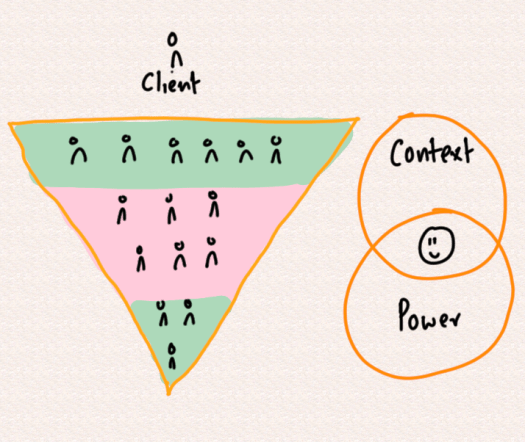
Eleven years ago, Neil Rackham spoke at my university on how the very best companies approached sales.

Rackham, in case you don’t know, authored “Spin Selling” and is a leading researcher in sales science and consultative selling.

He argued that it’s not the number of opportunities that matter. It’s having a very narrow sales funnel.

Here’s why.

  1. The more opportunities a salesperson has, the safer they feel.
  2. Salespeople look for easy wins, not strategic wins.
  3. The cost of sales is rising in consultative sales.

This means you can spend a lot of money on salespeople that look like they’re being active, without getting a return.

Picture a golf course. This way of approaching sales is like loading a cannon with golf balls and firing at the green.

Hopefully some will go in.

But a better approach is to swing at one ball, and over a few shots, guide it to the hole.

Maybe that’s why cannon golf never took off.

Sales is no longer a numbers game.

It’s a value game, fewer shots but higher returns.

The Physics and Psychology Of Business

2026-06-23_phys-psych.png

It takes a knowledge of both physics and psychology to make a difference in business.

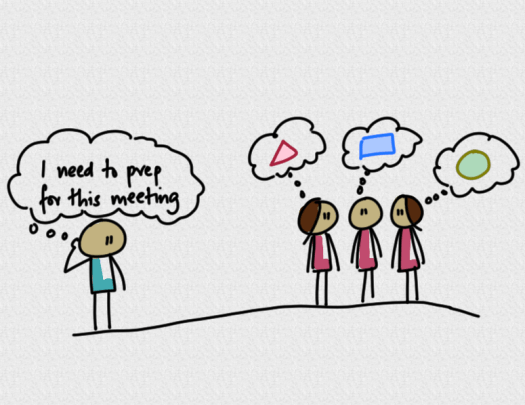
The problem isn’t that we don’t know how to solve a problem.

It’s that we can’t agree on how to get started.

Take climate change, for example.

We know that there are only a few real levers we can pull.

We can use less. We can substitute with better. We can get better at quantifying the impact of different options to inform better decisions.

The physics of change is often quite straightforward.

The real blocker isn’t technology – it’s the way we make choices.

It’s the psychology of change that’s hard to get right.

Many companies feel stuck, recognising the need to take action but worrying about the impact on finances, and the wider political and legal risks.

There isn’t a simple solution – a magic bullet.

Instead, it’s a considered course of action, a reasoned, debated strategy that sets a direction for the business.

It’s getting the mental models aligned, recognising apples as apples, oranges as oranges, and agreeing what to do next.

When it comes to change physics explains the how.

But psychology agrees the why.

How AI Changes What Delivers Competitive Advantage

2026-06-19_advantage.png

In sports, the faster you are the more likely it is you’ll get to the ball first.

The faster you get the job done at work, the more likely it is you’ll get more work, and get ahead.

Speed delivers competitive advantage.

But AI is changing that.

A year or so ago, I was busy building code so that an AI could provide tailor-made responses based on my data, rather than its general model.

I tried it with clients. It was a bit clunky but worked. I got there early with the idea.

A few days ago, the same task was a one-click job. Add an agent. Job done.

AI is like those moving walkways at an airport. You can sprint along on the ground, but others on the walkway will catch up with you with less effort.

But in a world of low-cost accessible AI, we’re competing with others with the same levels of access, which means no one gets ahead.

If I make something today with AI, you can copy it tomorrow using AI.

The new source of competitive advantage is making things that can’t be copied.

Your relationships. Your experiences. Your reach. Your particular ways of working.

Today, it’s not about getting there first.

It’s getting somewhere that no one else can.

The Problem With Boiling Frogs And Burning Platforms

2026-06-17_burning-platforms.png

Imagine a frog in cold water, and a person on a platform.

We’re told that a frog will jump out of a pan of boiling water, but sit there and cook if the heat is gradually increased.

We’re also told that people need to be on a burning platform before they will change their minds.

Both these theories, while vivid, aren’t much help in the real world.

A frog, I hear, will simply jump out if it gets uncomfortable.

And most people will avoid getting on a platform in the first place, or get off it as soon as possible if there is a problem.

In the real world, people don’t stand around waiting for the world to happen to them.

They’re usually taking some action – moving somewhere else, reframing the narrative, finding an excuse, coming up with a new idea.

Real-world change deals with dynamic, ever changing situations, not static systems.

A better approach is to imagine someone purposefully moving towards their particular vision of the future.

What matters is asking whether they’re heading in the right direction.

If not, then what course should they follow instead?

Focus On Sales And Engineering, Rather Than Innovation And Marketing

2026-06-16_engineering-sales-v2.png

AI is changing how we structure businesses to create value.

Drucker focused on marketing and innovation, but I think we’re in a time where that’s not sharp enough.

We need to move closer to sales or engineering.

For example, wth any service there’s an overhead in training the teams that need to do the work.

There’s documentation, guidance, step through videos.

In the past, I’d set up systems of work that ran to several pages. It took us weeks to set everything up and then run training programmes.

Now, you can record yourself talking through what needs to be done with teams. Gen AI can create guidance documents from that transcript that are 90% there. We can use text to voice and add screencasts to create training videos.

It now takes a few days to put something together.

One model of an organisation is a small core, surrounded by a large bureaucracy, which in turn is surrounded by a marketing layer.

Gen AI tools shrink the bureaucratic middle, bringing sales and engineering closer together.