
In my first year of engineering school Rolls Royce came in to teach us how to build a jet engine.
A hundred students were divided into teams mimicking real factory departments.
I was in quality control. We told each team to creatively write the name of the part they were going to make on a piece of paper.
Then bring the part to quality control. We’d check it and pass it to the assembly team.
They put it on a board, and the job is done. We’ve built an engine.
Unsurprisingly, the first iteration was slow. Individual communication with teams took time. The artwork was great, but took time to create.
Then the task was repeated – do it again, but faster.
You can imagine how it went. Over a few iterations we improved communication and reduced the amount of work.
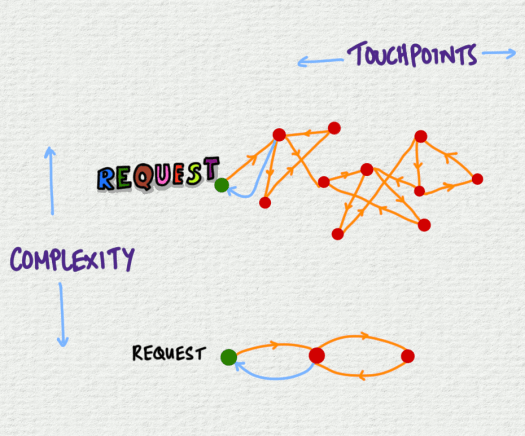
Less work. Fewer touchpoints. Quicker delivery.
23 years later, the Wall Street Journal has a piece on how Ford is going to compete with Chinese giants on car making.
They’re following this exact process.
Starting a skunk works to press steel in giant parts so that there are fewer components. Rebuilding the entire assembly system around limited touchpoints.
The takeway as a business/service/product builder trying to compete in 2026 against global competition?
Every extra handoff, approval and coordination step in your process costs you time and money.
Reduce the number of touchpoints – and keep it simple.
 Handcrafted insight