This Is The One Principle You Should Always Keep In Mind

pareto-basketball.png

Saturday, 9.18pm

Sheffield, U.K.

When it is useful to them, men can believe a theory of which they know nothing more than its name. – Vilfredo Pareto

You’ve heard of the Pareto Principle, but do you really understand it?

I thought I did but then a video from Miglautsch Marketing popped up on my feed.

It’s a tribute video to a direct marketer called John Wirth, one of whose ideas was around a Bathtub model of customer value.

This bit is interesting because what it reinforces is the Pareto principle in direct marketing.

In any list that you reach out to you’ll get 80% of your results from 20% of the list.

The argument here is that you shouldn’t try and worry about working the tail of the list but instead work on the next one – so you’re always getting 80% of the value and then moving on.

I suppose this sort of idea says worry less about lifetime value – what you get from each person on that list over time – and instead make sure you’ve got hot water coming into the bath and letting cooler, dirty water out.

That way things keep bubbling away nice and warm.

I think that’s the metaphor, anyway.

But the really interesting bit, the one I related to, is later in the video when Miglautsch talks about basketball.

He used to play as a kid, he says, and was pretty good, but he wasn’t good enough to get into the starting five.

He was number 6 or 7, and so he got less time on the court and when he did come in, it wasn’t with the best players on the other side.

And this is the thing you should get.

The main thing that matters is time on court.

Every once in a while I have to watch kids at a sports club – say they’re doing tennis.

There is a game where everyone lines up and then the coach lobs them a ball one at a time.

If they hit it, they get to go back to the end of the line for another go.

If they miss, they have to sit down.

This is the stupidest thing I have ever seen a coach do with kids.

What they’re doing is giving the kids that are already good more chances to get better, and the ones that need the practice less time.

What they should do, if they’re trying to get everyone to the same standard, is get the good ones to sit down so the poorer ones can practise some more.

Or just give everyone the same number of shots.

Anyway, if you’re competitive you probably think this is ok – but then you should be even more worried if you’re the one sat on the bench.

If you’re sat on the bench you’re never going to catch up – those other kids will always get more time and more practice and play against better competition than you will.

All else being equal, that is.

You can do two things to beat this.

You can put in more time on the court.

I once saw a kid do this at school.

We all went home for the holidays and lazed around.

He still went to the school grounds every day and practised his shots.

When the next term started he was sinking every shot he took and suddenly he was always on the starting team.

So, if the competition takes a rest and you keep working then you can get ahead.

The other way is to find something else where you can be in the starting team.

Miglautsch took up skiing and got very good at it.

And that’s something worth looking out for in your own career.

If you try and follow someone else – if you try and become what someone else is – then you’re going to have a difficult path ahead.

Especially if that person also plans to get better.

If, for example, you want to be the next John Grisham or James Patterson, be prepared to wait a while.

But there’s nothing stopping you from being the next you, as long as what you do is valuable and unique.

It’s hard to become a big fish in a pond that’s already full of big fish.

Much better to find your own pond – one where you have no competition and can grow as big as you want.

So, here’s the thing.

If you find yourself in a situation where you are consistently on the bench – stop and look around.

And go find yourself a new game to play.

Cheers,

Karthik Suresh
Why Should Someone Take A Bet On You?

earnout.png

Friday, 7.37pm

Sheffield, U.K.

Once people see you pulling off one role, they think you’re a safe bet to do a similar role. – Margot Robbie

You know when you look at the same thing from a different point of view, you see different things?

For example, you are probably very comfortable with the idea of a payback period.

You put your money into a project and you get it back in three years.

That makes sense – and, depending on the project, more money turns up later.

I was listening to Ryan Holiday, the author of Ego is the enemy among other works being interviewed on the economics of the book business.

And he talked about earnouts.

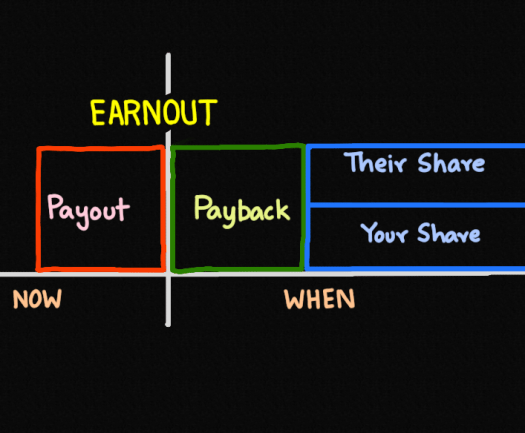
In essence, if a book publisher wants to buy your book they give you an advance.

That’s a payout that you get up front – it lets you live and buy noodles while you write.

Then, you write the book and it goes on the shelves and the sales start trickling in.

The first thing that needs to happen is the book needs to earn out – it needs to pay back for the publisher who took that bet on you.

Same thing, different point of view.

Now, imagine what happens when you go for a job interview – how does the boss of the company look at you?

Well, most bosses I suppose, have a role that needs filling – a job that needs to be done.

That calculation is one where they think, “Well, I could be making £50 an hour so I’ll hire someone else to do that job at £10 an hour.”

But really, what you want to have them think is, “Wow, I could sell the skills this person has and make back the money I pay them in six months, and the rest is all profit.”

So, in the book business, the money that comes in first goes to pay off the investment the publisher has made.

And that first part is the same with jobs – where the sales pay for you to be in work in the first place.

And many places actually need a multiple of salary to come in – they might work on two or three times the salary to get to the profit levels they want.

But here’s the thing.

Once you’ve reached a point where your earnout is complete, why should the company get everything else?

In the book trade you start to get a percentage – a bit of those future sales.

And that’s the money that matters – the trickle over time that gives you an income.

I think this whole area is one where people could really do with looking at themselves from an investor’s point of view.

Some people work in jobs where they are cheap – anyone could do that and no one will worry about replacing you and getting someone else in.

Some get paid a lot but deliver just enough to pay their way or not enough to justify keeping them – and eventually that tends to catch up with them.

They might be lovely people – but they’ll still be let go with reluctance.

Some go for the big payout, asking for as much as possible – and they get it while they’re winning, but get thrown out just as fast if they make a wrong move.

But none of this really matters if you’re looking at the long term.

If you look at earnout, the payout you get actually has to last you all the way until the payback has happened – from now to when.

Then you start to get anything else.

But at that point you have to do nothing more as well, the revenues roll in from the product you’ve created, the asset you’ve built.

That asset could be a book, a product or the service you’ve developed.

So, if you’re in a position when you have to ask for money to develop that asset – well, you should be very conscious of the earnout equation.

Because if someone takes a bet on you, and pays you up front, you need that earnout to work out.

Otherwise you might not get a second bet – almost certainly not with the same person.

But all this talk of payout and payback and earnout is simply a way of looking at what’s going on.

It just describes how the bet will pan out as the future does.

The most important thing that needs to happen for any of this to be relevant is that you have to work on producing that asset.

Production is what matters.

If you want someone to bet on you – make sure you’re the kind of person who produces something of value.

Cheers,

Karthik Suresh

Why You Should Be Turning Flywheels, Not Playing On Swings

flywheel.png

Thursday, 7.49pm

Sheffield, U.K.

It takes a long time to get good at something, so it’s important to begin as early as possible so that we can improve and begin to see the compounding benefits of the work over time. – Priscilla Chan

Small things matter over time – often more than big things.

Jim Collins writes about this as the flywheel effect.

A flywheel is a wheel with a very heavy rim, a wheel that’s hard to turn.

If you put your back into it, however, you’ll start to overcome its inertia – the weight keeping it in place.

And then, as you turn it, it will move, first slowly then faster and faster until it starts to be pushed along by its own weight, with only a small bit of additional effort required from you to keep it going.

You now have momentum on your side.

A swing, on the other hand, is quick to get on and start going – and you go quite high and it feels good.

Then, at the end, you go the other way and it feels good.

There is a reason swings are rarely used in machinery and flywheels are.

Collins argues that the metaphor of a flywheel is useful to keep in mind when thinking of what to do with your business.

It’s rarely the big swing, the giant push that gets results.

Instead, it’s the gradual build up of capability and competence and experience that does.

It’s easy to believe that it’s the big hitters that matter – the ones that make the difference in a game.

They may the most visible, the most flamboyant.

And you may think that they make a difference – but that’s because you don’t see all the people who tried ot make a big hit and failed.

But all around you, everywhere you look, you can see people who did something day after day and built their careers and their businesses and their reputations.

The sudden elevation to fortune is a romantic myth – something that we try and bring to life because we love stories.

That’s why shows that have a competition with a winner are so appealing – we want to believe it’s possible to jump the queue and get there faster.

It wouldn’t be much fun watching a show following the twenty-year career of an intern who eventually becomes a CEO.

Sometimes it’s easier to hope than work – to wait for that big change instead of working it out day after day.

But when you do put in the hours, the time – the focused effort to build up your capability – then eventually you’ll find that what you’ve created starts working for you.

As Collins says there isn’t one push that matters – all the ones matter until you reach the point where what you’ve created becomes self-sustaining, reaches a tipping point – where it now pulls you forward with little additional effort.

And that’s a good position to be in.

After all, you could be on a swing where, just as soon as you reach your furthest potential, everything starts to go backwards.

Cheers,

Karthik Suresh

What Sort Of Approach To Teaching Or Thinking Actually Works?

analysis.png

Sunday, 9.25pm

Sheffield, U.K.

The study of the art of motorcycle maintenance is really a miniature study of the art of rationality itself. Working on a motorcycle, working well, caring, is to become part of a process, to achieve an inner peace of mind. The motorcycle is primarily a mental phenomenon. – Robert M. Pirsig

If you’re read this blog for a while or glanced at the intro you’ll know I’m interested in Systems Thinking.

This is something that many people have opinions on – and don’t really agree on as well – all over the Internet you can find proponents of different schools of thought sniping at each other.

But, what are they saying and why is it so hard to understand?

I saw a social media post recently that tried to use the language of Systems Thinking to describe what’s happening around us right now with the Coronavirus, and it reminded me of an important bit of Robert Pirsig’s Zen and the Art of Motorcycle Maintenance.

And that’s the utter futility of trying to explain something you understand to someone else.

Let me explain.

I keep trying to take courses on Coursera – thinking that this will help me pick up a skill I lack.

I elect to audit the course, try a few bits and then recoil – utterly and totally bored by what is in front of me.

And that’s because I think the teachers try and break things down into teachable chunks – they create modules and divisions and ways to introduce you to the subject bit by bit.

This is the way of analysis, breaking things down and then dealing with them piece by piece.

Analysis has something to do with understanding through discourse.

Pirsig explains that you start to notice some weird things when you stop trying to use analysis and look at it instead as an object in itself.

And he uses a motorcycle to explain the idea.

For example, if you wanted to analyse a motorcycle you’d break it down into its parts – a running assembly and a power assembly – and then break those down further, into frames, wheels, an engine, the chain and so on.

Isn’t that what people do when they try and teach you anything?

Break language into grammar and nouns and verbs. Break martial arts into stance and footwork and punches?

And the thing that you notice first, the thing that’s loudest and most in your face is just how crashingly boring all this is – just like I found with the Coursera material.

But, says Pirsig, if you get past this you notice a few other things.

All this description only makes sense if you already know what the person is talking about.

If you look at my picture, for example, can you tell if it’s a motorcycle?

Of course you can – because you know what one is – but if you didn’t you might accept the idea that a motorcycle is a bicycle with a human providing the power assembly.

The next thing about analysis is that it gets rid of any human observer.

So, no one tells you how someone came up with this rule that means you now write the way you do because they misspelt something in a play that went on to be famous.

Analysis also forgets to think about making value judgements – is this good or bad, pure or not?

And finally, this analysis happens to have happened this way because someone chose to use this particular way of slicing things up – they used an intellectual scalpel that you just don’t even see.

Now… if you’ve read this far and don’t know what I’m talking about – that’s because you don’t already know and haven’t read Pirsig’s book.

So here is the point to take away.

Let’s say you want to teach someone to write a novel – don’t start by breaking down the process into pieces.

Get them to start writing instead.

Give them a prompt, a topic, ask them to magic a few hundred, a few thousand words out of thin air.

Then start to teach – because they now have something they know – which they can then understand.

I remember back in engineering school getting passing marks in an exam by writing about relays – even though I had no idea what one was and had never seen one.

You can fool people some of the time if you simply recite what you’ve memorised.

You can do courses and learn the structures and look like you’re doing great.

But you can’t fool yourself – and you know inside that you don’t know.

And you will never know until you’ve done the work.

Do the work first – and then try to understand what you’ve done and how you could do it better.

That’s the way to think better, to do better and, eventually, teach better.

Cheers,

Karthik Suresh

How Do You Work Out Your Brand Personality?

metaphor-elicitation.png

Saturday, 9.51pm

Sheffield, U.K.

The metaphor is perhaps one of man’s most fruitful potentialities. Its efficacy verges on magic, and it seems a tool for creation which God forgot inside one of His creatures when He made him. – Jose Ortega y Gasset

I’m getting a lot of my inspiration from TED talks at the moment – mainly because I watch them while putting the kids to bed in a bid to avoid falling asleep myself.

And Morgan Spurlock’s talk The greatest TED talk ever sold came up on my feed.

It’s about Spurlock’s vision to create a film about product placement but the bit that caught my attention was twelve minutes in where Spurlock decided he needed an expert to help him understand his “brand personality”.

He went to Olson Zaltman, founded by Dr Gerald Zaltman who came up with the Zaltman metaphor elicitation technique, or ZMET.

The process they used with Spurlock came up with the idea that his brand personality was “mindful-playful”, which seemed to sum up his approach of going into deep, important subjects in a different, imaginative and irreverent way.

So, what is ZMET and how does it work.

It turns out that it was patented and I came across another associated patent on using the technique along with physiological monitoring.

The basic point Zaltman makes is that most communication is non-verbal, although that’s debatable, so market research methods that are based on verbal means miss the stuff that isn’t being said – the things people are less aware of.

The ZMET is a way to make these “hidden” preferences more visible.

The picture above takes elements of the MET that’s described in the patent – 14 steps in all.

The process starts with something like a storyboard – select images that are important to you and talk about them, tell stories to the researcher.

Sort your images into groups – try and see what’s common about them.

The reason you’re doing this is to study something – yourself perhaps – or your product brand – so dig into that product using all the senses you have, including sound, shape, touch, smell, taste and feelings.

From all your images select one that is the most representative – what describes you best.

Now that you’ve seen all you’ve seen, think about what you couldn’t get – talk about that.

Talk about the opposite of what you are.

Talk about the one critical message you want the audience to get.

And talk about what they will want to hear least – what’s the message they will be most resistant to.

Now, if you’ve done all this you have a rich trove of material to work with – lots and lots of metaphors.

Then you put things together to create a mental map – what I’m used to calling a conceptual model.

Something like “mindful-playful”.

It would be nice to see if there are other groupings like that but I didn’t find that in my brief search, no doubt there are papers on the topic.

The thing with this method is that it’s like a storyboard on steroids.

We know we’re told to collect pictures of what we want – get that image clear.

But this approach takes those images and really digs into them to find out what’s underpinning them – and that’s why I think it’s really quite powerful.

Personally, I might do it with drawings, just because that’s even more organic.

You know – talk to someone about the important events in their lives and get them to draw rough sketches, sort of like I’ve done in the picture.

But really, it’s about trying to hear what’s often not said.

And it’s when you do that that you discover what’s at the very core of who you are.

And when you do that you know everything you need to know to get your brand personality right.

Cheers,

Karthik Suresh

How Do You Know When To Walk Away From A Prospect Or Promoter?

castles-in-the-air.png

Friday, 9.18pm

Sheffield, U.K.

A neurotic is a man who builds a castle in the air. A psychotic is the man who lives in it. A psychiatrist is the man who collects the rent. – Lord Robert Webb-Johnstone

I’ve had some interesting conversations recently and one of them reminded me about how to walk away – when do you know you have to do it?

You will come across a great many opportunities in life – which often come along with a friendly face trying to get you to buy into them.

Sometimes that face belongs to you.

It’s not always clear what you should do – will you miss the opportunity of a lifetime or will you breathe a sigh of relief that you dodged that bullet?

Cliches exist in this space because they’re true.

I spend a lot of time listening to people and I’ve started to realise one thing.

If you listen for long enough and ask enough questions you’ll start to get a feel for the kind of foundations an idea is built on.

Some ideas have no foundation, they are right down there at ground level already.

These are ideas with little ambition, few prospects.

I think we all start with these kinds of ideas when we first come up with them – it’s the equivalent of a child’s lemonade stand.

Isn’t that sweet, we think, and hand over some money for a drink.

Although I have to say, I’ve never actually done that – in this modern age the kids seem to reach straight into my wallet for some kind of sponsored activity or the other.

But, most business ideas you come up with that have to do with you personally spending time on they are, by definition, hard to scale – because there’s only one of you.

If you create crafts or art or do photography, there is a limit to what you can do yourself – unless you change your model.

For example, you can create a franchise, do online training or focus on design and outsource production and delivery.

At the other and are ideas that are rather on the fantastical end.

This is where someone comes up to you with a plan to create the next YouTube or the next Apple or the next something that already exists.

These are what you should recognise as castles in the air.

There is a recognisable shape to the idea, something plausible and similar has been done before.

But, does this person you’re talking to have the ability, experience and finances to make it happen?

How sound are his or her foundations?

You see, we shouldn’t really be swayed by the statistics that say things like 95% of all startups fail.

What we should do is look at the characteristics you need to succeed at anything at all in the first place.

And, if you want to succeed, it helps if you know what you’re doing.

It helps if you have a background in the subject, some knowledge, some ability to deliver, a track record of some kind.

Every once in a while you will find someone that enters a field that is completely different to theirs and disrupts it – creating a whole new industry and category of products and services.

But even those people will have a history – one that is built through testing and learning and failing and succeeding.

They will have foundations.

And foundations matter – because that’s what you build on.

Without them, you have nothing.

People will tell you that foundations don’t matter – what you need is belief.

And sometimes belief can keep a castle up there – you only have to look at what happened before the dot com boom and the housing boom and the tulip boom to know that belief is a very powerful thing.

Belief can support a castle in the air while gravity is busy doing its own thing watching over apples.

That doesn’t make it a sensible long-term strategy, however.

All it takes is for gravity to notice that there’s some funny business going on and you will find that the ground starts coming at you rather quickly and in an inconveniently unstoppable way.

That’s usually the bust part of the journey.

But these ideas are really tempting – be honest, how many of you stayed away from crypto during the hysteria in 2018?

I didn’t.

Here’s the thing.

It’s sometimes very hard to tell whether something is solid or not.

All you can do is think for yourself – don’t believe everything you’re told.

Ask questions.

Pointy ones – ones that try to figure out what’s really going on.

Because you’re trying to see if there is some substance to the story, if it’s built on solid foundations.

And if it’s not?

Walk away.

Cheers,

Karthik Suresh

What Is It That Really Makes Us Happy?

happy-relationships.png

Thursday, 9.44pm

Sheffield, U.K.

If you want others to be happy, practice compassion. If you want to be happy, practice compassion. – Dalai Lama

I came across a TED talk by Robert Waldinger about the longest study on happiness – 75 years old in 2015 – so in the region of 80 now.

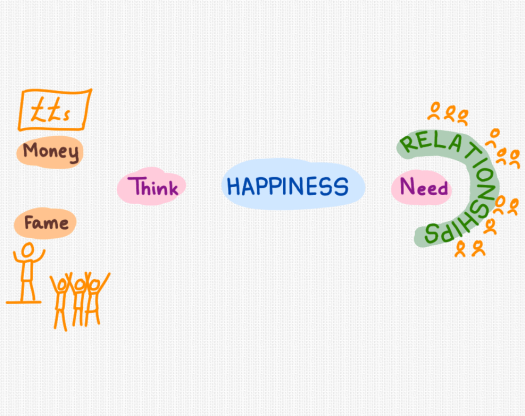
Waldinger says that many of us think that what will make us happy is getting rich or famous, preferably both.

But it turns out that what makes us happy – and healthy – is good relationships.

And there are three aspects to good relationships.

First, it’s good if you have a social life – one connected to family, friends and your community.

Second, it’s not the number of connections that’s important but the quality of connections – conflict is a bad thing.

And third, being in a secure relationship in your 80’s helps your brain stay sharper longer.

It sometimes feels like everything we do is taking us in the other direction.

We spend time on our devices, shut away in a private world so that we don’t need to acknowledge anyone else around us.

That private world is filled with pictures of perfection – of carefully curated content that shows up the inadequacy and messiness of your own life.

And, when you see how perfect everyone else has it – or at least everyone who seems to be on your screen – you’re dissatisfied with what you have.

It’s clearly not a good thing – and people were rebelling.

The increase in meet up groups and face to face sessions seemed to indicate a bit of a reaction to how technology was taking over our lives – and not really for the better.

And, for some of us, the enforced seclusion required to cope with the coronavirus has actually rekindled fires of community spirit that had gone out.

In many places people have now met their neighbours for the first time – helped them out – been there for them.

When we are threatened we pull together – we suddenly find that we are stronger as a community and society than we are as individuals.

The fact is that this virus has forced us to change our habits in ways that that we might have done eventually – because it’s the right thing to do.

We should work from home, if possible.

We shouldn’t drive and create air pollution if we don’t need to.

We should look out for the others in our communities.

We should think about families and societies.

And, when things are normal, we’re too busy to do any of that.

And normal will return one day.

But will it be the old normal?

Or will we have learned something from this experience?

Time will tell.

Cheers,

Karthik Suresh

Are You Living A Life Worth Living?

humanities.png

Wednesday, 9.26pm

Sheffield, U.K.

The method of science is logical and rational; the method of the humanities is one of imagination, sympathetic understanding, ‘indwelling. – Andrew Louth, Discerning the Mystery: An Essay on the Nature of Theology

When I was young and had to decide what I would be when I grew up, there were only three options open to me.

I could go to university to study to be a doctor, lawyer or engineer – because of the subjects I has studied at school.

If I had been free to choose I think I’d have studied English, perhaps tried my hand at writing.

As it happened, I failed into engineering – and picked up a few skills along the way – the sort of skills that help you make a living by making things work.

What I was told was that doing a degree like engineering gave you options – you could choose to be anything you wanted after that.

But really, what people meant was that certain degrees had market value – you had a better chance of getting a job with one of them.

There are children all over the world who are being pushed towards STEM subjects – the “hard” disciplines as opposed to the soft, fluffy ones you also see dotted around.

And this leads to a few things that may be worth keeping in mind.

First, how do you work out whether you’re living a life worth living?

“Worth” is seen differently from different points of view.

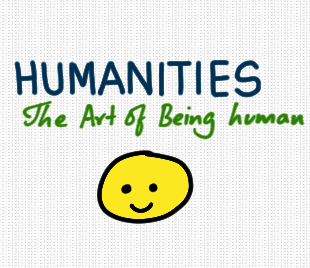
I started browsing thought The art of being human: The humanities as a technique for living by Richard Paul Janaro and Thelma C. Altshuler, where they address this question head on.

The approach most of us are familiar with is the idea of “net worth” – how much do you have in the bank – how much will you leave when you die?

This is an economic concept of worth.

But there is another concept of worth – which has more to do with a “good” life.

A life where you travel, see other cultures, appreciate art and music and the other things that are uniquely human.

But it’s not quite as simple as that.

If you have no money but are deeply sensitive and appreciative of art and music – is that a good life?

Surely it’s better to have a roof and a bed and be able to see a play?

What happens if you take it to extremes – like when very rich people go to very expensive cultural programmes and preen and flatter themselves for their appreciation and sophistication?

Of course, I’ve never been to such events but I imagine there are some out there…

When it comes down to it I don’t think there really is that much of a separation.

It probably has a bit to do with Maslow and his hierarchy.

Learning a trade or a practical subject is going to help you meet your basic needs – and perhaps get you a partner.

But, if you stop there then you’re missing out on quite a bit of what life has to offer.

In particular, the humanities teach you to appreciate other humans and their creations.

Perhaps the right approach to education is a layered one.

Start with a grounding in a practical skill – the trades, the professions.

Work for a while.

Then, go back to school or do a self-study programme and learn the humanities.

And you’ll probably find that you become a better professional and a better human.

And isn’t that worth doing?

Cheers,

Karthik Suresh

How To Make Your Writing And Ideas More Interesting

talking-to-a-wall.png

Tuesday, 9.31pm

Sheffield, U.K.

Imagination is more important than knowledge. For knowledge is limited to all we now know and understand, while imagination embraces the entire world, and all there ever will be to know and understand. – Albert Einstein

I’ve been thinking about writing some marketing copy – and when it comes to doing something or finding a way to procrastinate – I find myself usually doing the second.

Why do something when you can read about how to do it instead?

You could just sit down and write something… but would it be any good?

What is it that makes a piece of writing or an idea interesting?

A book called The lively art of writing by Lucile Vaughan Payne caught my eye as I thought about this – and it has an interesting central idea.

Here’s the thing that Payne asks you to sear into your brain.

“All writing is the sound of one voice speaking, and all writing can be heard.”

Good writing – the kind of writing that works – makes you sit up and listen.

And that’s because when you read you actually hear the words – writing is simply a magical way to capture the words someone says in letters, where they stay until you release them by speaking them to yourself.

Good writing is a conversation between the writer and the reader.

If you forget this – if you write for an audience, for a market, for a group – then what you come up with is probably something else – a bland lecture perhaps, a list of things, meaningless prose.

It’s about as satisfying, Payne writes, “as a conversation with a wall.”

If you want an example of this kind of writing just take a look at the stuff I was writing back in 2016.

Now, I’m not saying that what I’m doing now is an example of what good looks like.

But, I gave myself ten years and a million words to get the hang of how to do it and I’m three and a bit years in and at 770,986 words – 70% of which are in this blog.

And all I want to be able to do is write simply and clearly, in a way that makes it easy for you to read.

And why would anyone want to do this?

Well, I suppose it’s because words matter – they shape the way we think and see, and what we see and think shapes our words.

For example, Charles Faulkner, in a TEDx talk, shows you how people react to words viscerally, instinctively.

He pours salt into two containers, and then turns them around.

One is labelled salt, the other cyanide.

Most people, you included, would probably avoid the bottle labelled cyanide, even though you saw both being filled from the same source.

Just like right now on supermarket shelves the one beer you can be confident of still finding is Corona.

Faulkner says that knowledge isn’t enough, quoting Einstein.

You have to be able to imagine, because that’s what pulls you forward, what creates something new.

Knowledge is all about what you know already – and it can be really quite dull.

Imagination, on the other hand, is vibrant and exciting, and it’s fuelled with words and story.

So, if you need to write some marketing copy for your service why not try asking yourself this.

How would you tell your best friend about what you do?

Did they get it?

And if they did – begin with those words and the chances are that you’re off to a good start.

Cheers,

Karthik Suresh

What Would Happen If You Tried To Answer This One Question Every Day?

make-something.png

Monday, 8.50pm

Sheffield, U.K.

Write it. Shoot it. Publish it. Crochet it, sauté it, whatever. MAKE. – Joss Whedon

Have you ever wondered why you do what you do?

Many of us never set out with a grand plan for a career – we might have chosen subjects in school that worked for us – and ended up taking a temporary job but somehow staying there for a couple of decades.

I’m not sure I know that many people who really had a clear idea of what they wanted to be when they grew up.

I’ve seen one – a little boy who writes and draws stories – and who wants to be a writer when he grows up.

The rest of us tend to muddle through somehow – taking whatever route seems like the path of least resistance.

I found a book on that by Robert Fritz called The path of least resistance – which has an interesting little model that’s worth keeping in mind.

He asks why Boston is laid out the way it is – streets going this way and that.

He says it’s because the first paths were trodden by cows as they went about their business.

A cow, seeing a hill, doesn’t see it as a challenge – something it must climb – it simply finds the easiest way to get around it.

And this, Fritz says, should help you get three key insights.

The first is that animals, people, things, follow the path of least resistance.

The second is that the path they follow is determined by the terrain, the structure they’re in.

A river, for example, follows the terrain, the contours of the land as it makes its way from the heights to the sea.

The third insight is that you can change your terrain to something that works for you – something animals and rivers don’t really think too much about.

What all this leads to is an answer.

An answer that says that the reason you are where you are right now is because you took the easiest path given your environment – the structure of your life.

I don’t know what you do – but the chances are that you’re happy doing it, or not happy.

If you’re happy, don’t bother reading any further.

If you’re not, then the question I think that’s worth asking yourself is “What did I make today?”

I think if you really want to get in touch with yourself – you have to figure out what the creative part of you wants.

If you’re not sure what a creative part is – just watch a child.

Children just do this – they play and imagine and make things up.

And sometimes, they make things.

They run to you and show you – they want you to get involved – they want to teach you.

“Look at this thing I did,” they say, “Let me show you how to do it as well.”

Children get bored and crabby when all they do is watch telly.

They light up inside when they make stuff.

And I think we do as well – I know that when I create something I’m a lot more satisfied than when I don’t.

Creativity for me is writing, drawing and programming.

Sometimes it’s designing, repairing, teaching.

Sometimes you’re in a job where you don’t get a chance to make stuff – you’re busy getting other people to do things, moving stuff on, chasing, brokering, selling.

So, perhaps there you need a hobby – as many people do – they create and make in their spare time to make up for what they don’t get at work.

So, here’s the thing.

I have a theory that if you end each day knowing that you’ve made something that didn’t exist when the day started – you’ll be happier.

But first, you need to make it possible to do that.

Cheers,

Karthik Suresh