Imagine a technology-enabled enterprise. What comes to mind is often different from day-to-day reality.
Is there a clear technology stack? Data at the bottom? A user interface at the top? Clean efficient connections between data and insight?
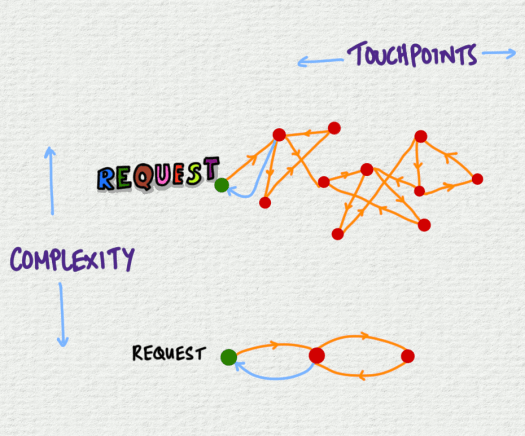
Or do we have a mess of systems built and procured over time? People as an intrinsic part of the process. Software tweaked and customised over time to get the job done.
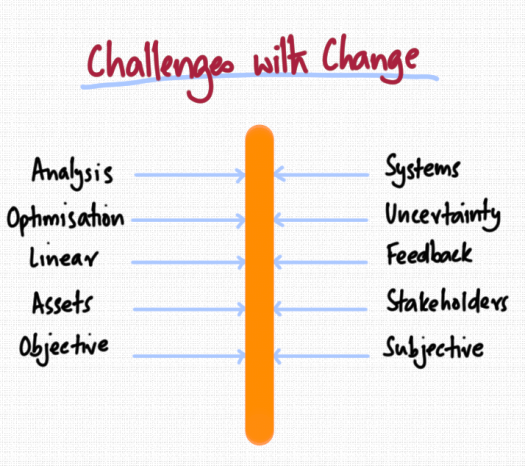
In such situations, change is a challenge.
Go down the RFP route, and you can end up getting a large, bloated system that no one uses.
Pick an innovative new platform – and navigate risks and issues raised by procurement, IT, legal, and finance – delaying the start of projects.
Change imposes costs. Real ones.
Right now, we’re being told that budgets are tight, costs must be controlled, and there’s no money to spare.
Buying a system doesn’t mean the work gets done. Sometimes it creates more work.
The pragmatic solution? Orchestration: start by getting the most out of the systems and capabilities we already have.
We’re using AI more and more, as it takes centre stage in work and business.
Let’s go through the list.
I’m sure you’re using AI to help you read, write, analyse and summarise information.
So is your boss.
Your customer is using AI before they talk to you.
As is your customer’s customer.
All your competitors are leaning into this.
And your next hire, they’re building resumes with AI and practicing interviews on AI avatars.
We’re doing this to be more productive. But it also creates a whole new category of risks.
The recent Anthropic row is a preview. It’s fallen out with the DOD, federal agencies have been ordered to stop using it, and it’s been labelled a “supply chain risk”.
Any use of tools like Claude could bar a company from defense contracts.
Will all this happen or will there be a negotiated resolution?
We don’t know yet – but even the risk that it could – that the AI tool that’s central to the use of so many organisations could be banned with the stroke of a pen – is going to cause concerns.
If you’ve spent the last year building your services around the use of Claude, what are you going to do next? Wait and see? Pivot?
When AI becomes core infrastructure – and is exposed to regulatory and geopolitical risk – we need new controls and mitigations.
We will start to run business operations like programmers – but that needs a shift in thinking.
You’re an FD or Sustainability Director and here comes a hot topic – new SRS rules in the UK. How are you processing what this means for your operations?
The way I’d have done this a few years ago is to assign an analyst – an individual contributor – to read the source material and create a brief. Key points? Align with IFRS S1,S2. More work coming your way. Get ready. Review the output and get it out to clients.
What changes if we bring AI into the process?
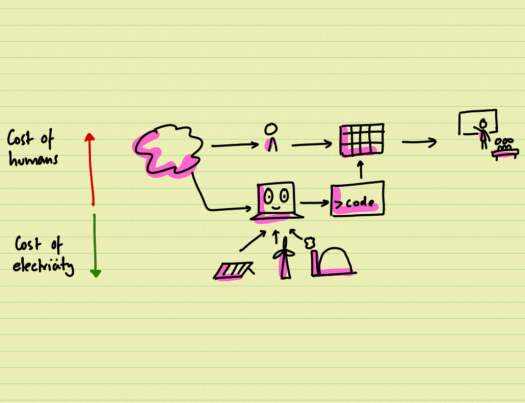
The picture shows a workflow that I’ve been testing.
First, we use a production agent, an intellectual chainsaw, to mine content and create work-in-progress output.
That output can be picked up by an IC who has two tasks.
First, they ought to have their own validation agent that checks the WIP against source material.
The IC also has to read and check the content – someone, somewhere has to take responsibility for actually knowing what’s going on.
Then, checked, validated content is used to produce the final output – which is reviewed by the leader and shared with a client.
If you’re a programmer looking at the revised process, you’ll see that there are more steps, and more opportunities for bugs.
And there are two ways to squish technical bugs.
Better reviews. And better tests.
If you are getting your organisation AI-ready – that means two actions.
Build better group review processes
Build test processes to improve automated validation and error detection
Given a choice between giving work to a person or AI – I’m going to pick AI first.
Have a question about a market, technology, location? Start with deep research.
Pre-AI, the bottleneck was hours spent doing research, looking up sources, and drafting decks.
Junior consultants did research and drafting. Senior ones did a review and Partners managed socialisation and communication.
Research and first drafts can be done with AI, moving the bottleneck downstream to the review process.
That’s the next pinch point – how can we tell if the information is good, or correct?
AI will come for that in time. For example, we can use multiple AIs on the same problem and get them to check each other’s work. The industry is going to solve the citation problem.
The bit that still needs people is for the human sense making and decision processes involved in socialisation and group consensus.
Success depends less on the structure you create than the story you tell.
When you’re working in a company does it often feel like the structure is working against you rather than for you?
I’ve been reading Jackson and Carter’s “Rethinking organisational behaviour: A poststructuralist framework” and think it has useful insights to sustainability managers – well, all managers in general.
It starts by getting clear on what we mean by structure.
There are three versions of structure.
First, there is structral functionalism.
This view is that structure is visible, most clearly in the org chart.
You change things by getting the right structure. If things aren’t working, then restructure.
This is a dominant view – many people think it’s the “natural” way to think about organisations.
But – does it work? If you look at your organisation do you see visible structure getting results?
If not, we turn to structuralism for an explanation.
Structuralism says that it’s the stuff under the surface that drives behaviour – that which you don’t see but exists.
This is the underlying logic – the relationships and dynamics between leaders and teams that result in one thing or the other.
What makes a difference is the less visible stuff – power relations, inequalities, differing levels of freedom to act.
And then we have the third view – poststructuralism.
The first two approaches suggest that structure is a real thing and exists – either above the surface or below – but it’s there.
Poststructuralism says that structure is constructed – from the way we explain things.
Explanation is the key – it helps us make sense of what is going on.
That explanation is the structure, not real and objective but a product of the human mind.
If you’ve read this far and are wondering why this matters, this is why I think it’s important.
If the poststructralism view is right, then success depends not on the structure you create but the story you tell.
I’m sure you’ve heard of the famous Amazon process where people are asked to write a plan rather than use PowerPoint.
This could be seen as an implementation of poststructuralism – tell me a story – get your thinking down on paper and explain what you want to do and why it’s going to help.
Help me make sense of what is going on, so I can decide what to do next.
Cynical optimism – that’s what’s needed right now.
This is the term Jim Swanson, the CIO of J&J, used about the need for AI to shift from vision to execution.
I think we’re at the same point in the sustainability sector.
For the last ten years, we’ve talked to clients about a 3-year ready-set-go strategy.
Year 1. Get ready, collect data and understand your baseline. Year 2. Set goals, allocate resources. Year 3. Start running.
In 2024, we realized we were running towards a cliff edge created by near-term goals.
If you’re familiar with the history of the space you’ll know that these are complicated decisions to make.
In an ideal world, we’d use more renewables, cut down on personal consumption and move to more sustainable alternatives.
In the real world, fossil fuel company shares soared after the Russian invasion of Ukraine, COVID increased consumption with home shopping, and countries are rolling back on sustainability policies – worrying more about geopolitics and trade.
2030 seemed a long way away in 2012, but it’s now much closer. If you’re operating a large industrial or commercial firm, the road ahead is hard to see.
The advisory firms get this. Many are already suggesting that it’s time to look at interim targets and test if they’re still achievable.
A good question to ask – leaning into the cynical optimist approach – is knowing what you now know what would you do differently when it comes to setting goals and allocating resources?