Has technology made us more or less productive?

productivity.png

Every generation probably feels that it is living through the most profound changes that have ever happened since the dawn of time.

From the printing press to the industrial revolution, from world wars to the world wide web, things have changed – and the most visible part of that change is the technology that enables the modern world and, in particular, the technology that affects how we live and work.

So, is it helping us or not? Are we more productive or not?

It’s hard to tell – and that’s because an abundance of something always results in a shortage of something else.

So, take how modern technology has transformed the world of work, making it easier for us to collaborate, have everything everywhere and communicate with others. How are these working out in practice?

Is it easier to work with others?

Many new companies and startups are delighted by how easy it is to collaborate with others on projects now.

Take Google docs, for example. We can share and work on a document at the same time – something impossible in the days when we had to write a draft, send it to someone else, wait for comments, rewrite and repeat the process until everyone was satisfied.

Now we can work together quickly, come to a consensus and publish anything we want pretty fast.

So why is that anything less than perfect?

For two reasons…

First, if two of us can collaborate, then so can others. If it’s easy to have five, ten, fifteen people all providing their input, then we can quickly get locked into a cycle of never ending comments, suggestions and changes.

Procurement is one area where such delays can increase delays massively. It takes much longer to get five buyers to agree than two and the trend towards decision by committee slows things down and doesn’t necessarily improve quality.

The second reason is that when it’s quick and easy to collaborate and produce something, the result is probably going to be of less quality.

That’s why we’re taught to be suspicious of things we read on the internet and to be more accepting of things we read in peer-reviewed journals.

Is it good having everything everywhere?

Dropbox, Google Docs, Office 365 – all these tools have changed the way in which we store information – taking us from a world of USB drives to being able to work on any computer anywhere.

It’s also meant that we can store everything – never lose a thing.

And so many of us pile on the gigs of storage, like the pounds we put on every year since college. It’s gradual, but it grows and, after some time, it shows.

Not every picture we take is worth saving. Not everything we write is worth preserving.

When we had limited space, we had to choose what to keep. So what we had was worth having. Now we have everything, but it’s hard to find what matters.

At some point we’ll probably wake up to the need for a digital diet. Just because its cheap to keep everything doesn’t mean we should, because it makes it more expensive for us to find what is important.

And it’s also annoying that when we get a phone call it could be one of seven contacts that system has scraped from all our accounts – although it’s just the one person…

We never apologise for sending a long letter these days

Blaise Pascal, the French mathematician and philosopher is credited with writing a long letter with an apology for not having had the time to make it shorter.

When we had to write to each other, we probably took care to express our thoughts clearly and concisely so that we wouldn’t have to fix it weeks later when the replies came back.

With email, we can write to someone so quickly that we no longer need to think about our words and how they might be interpreted – after all we can follow up with a clarification immediately.

And that means we probably take less care – and it shows up in the increased number of emails we need to send to get things done.

It’s easy to communicate – and because it’s so easy we spend more time doing it. It’s also easy to get a meeting in the diary – and that’s why more managers spend their time in meetings than ever before.

But – sitting in a meeting and sending emails is not work – it’s stuff that gets in the way of doing real, useful work – like thinking about strategy, improving operations, recruiting or expanding.

If we all got together less often and interrupted each other less we might get more done.

The problem isn’t technology… it’s us

What we come back to is that the way use technology better is to understand how we humans use stuff. Make it easy for us and we’ll do it more – but something else suffers at the same time.

Technology can help us – but it can also hinder us.

To get the most out of it, we need to remember who is in control – it or us.

Why we don’t get noticed as much as we think

spotlight-effect.png

Thomas Gilovitch, Victoria Medvec and Kenneth Savitsky carried out research to show that people overestimate how much others note what they do.

This is called the spotlight effect – the feeling we have that everyone is watching us, sitting in judgement or appreciation.

There’s a simple reason for that – it’s normal to feel that way – but it can also mean we’re too scared or embarrassed to do some things or are overoptimistic about our ability to make other things work.

Gilovitch et al point out that we’re at the centre of our own little worlds – and because we focus so much on us it’s hard to appreciate how much others actually see.

What’s inside us is not easy to see

The feelings and thoughts we have are private – but we often think others see them to a greater extent than they really do.

This can make us more anxious than we need to be. There’s no reason to assume that when we walk into a room, the people there will automatically notice things about us that are off – whether it’s a bad hair day or a stain on our clothes.

Some will… most won’t.

We shouldn’t assume others know what we know

Because we’re so focused on ourselves and what we know, we often assume that everyone else knows it as well.

This means that we might think we’re explaining something well, but because the listener doesn’t have the knowledge we’re assuming they have, they don’t really understand us.

Let’s say we’re in a sales meeting. If we spend all our time talking about ourselves and our product before we understand just how familiar the other people in the room are with the topic, our chances of moving things on falls off massively.

We’re probably having less impact than we think

It’s easy in group situations to think that we’re being noticed more than we are – that we’ll be singled out because of something we’ve noticed.

Conversely, it’s easy to assume that what we’re saying is important – and that other people think it’s important.

That often isn’t the case.

Listening to someone else is hard. Listening to a group is harder. And it’s almost impossible to really listen to someone else when we’re spending all our time thinking about what we’re going to say next.

The formula for moving on

Joe Gebbia, the co-founder of Airbnb has a formula that might help us overcome the spotlight effect – especially when we’re not being noticed as much as we want to.

SW2 + WC = MO

SW squared stands for some will love it, some won’t. Putting it together with the others, we get some will love it, some won’t plus who cares equals move on.

We just need to keep working, and eventually we’ll get noticed.

How entrepreneurial are you really?

entrepreneurial-orientation.png

We live in a world where we increasingly have to take responsibility for our own careers. The ladders that used to be around are getting old and have missing rungs.

For some of us, the ladders weren’t ever there. We had to make our own and clamber up as best we could.

The problem is knowing where to go and what to do next. What do we do if we’ve just entered the workforce? What do we do after twenty years? After forty?

Knowing ourselves better may help answer such questions. In particular, knowing how we’re oriented when it comes to entrepreneurial activity may help us make some tough choices.

Jeff Covin and Dennis Prescott introduced the concept of Entrepreneurial Orientation (EO) in 1985 and came up with a scale to measure it.

The model has been tested over time and is well accepted and essentially measures three aspects of a firm:

  1. How innovative it is.
  2. How proactive it is.
  3. How much of a risk taker is it?

How innovative are you?

Managers at an entrepreneurial company emphasises research and development and its technological lead over competitors. It has many products and changes them quite quickly.

At the opposite end, a company might prefer proven products, bringing out nothing new or making minor changes.

How proactive are you?

Entrepreneurial companies strike first – doing things that their competitors have to respond to. The bring in new products, services, processes, ways of doing things – and have an attacking mindset when it comes to the competition.

Their opposite numbers prefer harmony and carving up the market, responding to change and usually introducing anything new later.

How much risk do you take?

Entrepreneurial companies are willing to take bold, aggressive steps and make decisions that have a high risk but associated with high reward.

Less entrepreneurial companies prefer low risk opportunities, believe in caution and incremental progress and wait to see what happens before committing themselves.

So, does being innovative, acting first and taking risk work?

Entrepreneurial firms do better – but as a whole many fail as well.

Firms that tilt towards the high end of an EO scale are entrepreneurial in the sense that some people on the OCEAN scale are agreeable.

It clearly helps to be innovative when small because people meet us because they see the prospect of something new and shiny- but sometimes large firms only want to work with firms that are low risk.

It’s better to be proactive than not – many a salesperson has been told that they’ll find a million dollars under their shoes if they get going.

Risk is perhaps the tricky one. It’s easy come up with cliches – swing for the fences – go hard or go home.

The entrepreneurs that succeed are probably good at maximising the upside while limiting the downside.

And there are lessons for us as individuals as well – being innovative, proactive and being willing to take risk will get us further this century than looking for ladders to climb.

How do we know when we’re doing things right?

measuring-impact.png

It’s an inconvenient fact of life that people often want us to account for what we do. Especially when they’re giving us money to do something.

In these situations they’d like us to do something – grow their money, help a community, eradicate a disease – in other words, make an impact of some kind.

They ask, quite reasonably perhaps, that we measure and show what impact we’re having.

Mary Kay Gugerty and Dean Karlan argue that we need to be careful when doing this because we could end up spending more trying to measure things than it’s worth doing – the money could be better spent making an impact.

The problem is that there is lots of data that we can collect. How can we tell what’s worth collecting and what isn’t?

They argue that a good system has the right-fit – giving the people with the money reassurance that the work is having an impact and the people with the responsibility for decisions information that they can act on.

In particular, they say that we need to think about five kinds of data – two that we probably already do, and three that we need to think about some more.

1. Financial information

Most organisations will have some kind of overall financial reporting, if only for tax reasons. They’ll have a profit and loss statement and a balance sheet.

What they might not have is good quality costing that tells them whether they’re spending money wisely or whether certain programs have a better return than others.

When thinking about spending money, being able to work out where it will make the most difference could make the difference between spending wisely or just spending.

2. Activity or implementation information

The second thing we can tell fairly easily is how busy we are. How many tents have been sent out, how many doctors are working in the field or how many servers are in the office.

We can count the busy bees and what they’re doing.

The point is whether what they’re doing is worth doing – does it advance the aims of the organisation?

In some cases, if it’s not worth doing well, it’s not worth doing at all.

3. Targeting information

Then we need to think about whether what we’re doing is helping the right people.

Whether its an aid program or a new computer system – who are the people that will be affected? Is it a large number or will it help a small fraction of a population?

The more we know about who we’re doing something for, the more likely it is we’ll do it right.

4. Engagement information

The next thing to look at is whether people are actually spending time with the thing we’ve put in front of them.

Take mobile apps, for example. The thing that makes an app live or die is whether it gets used.

An interesting experiment on the iPhone is to check the option that says download apps when used. Of the thirty on my screen there are about five I use all the time.

And arguably, all of them could wait till I get to a computer instead of spending my time distracted by the screen.

5. Feedback information

The final thing we need to do is ask people how we’re doing.

Do they like what we do, could we do anything better?

We’ll work harder to deliver better service when we know that we’re going to ask users how we did.

In summary… just collecting data isn’t enough.

Measuring lots of things or creating complicated calculations isn’t going to help.

We’ve got to get better at getting the right kind of information that tells us if we’re on track or way off.

Then, we need to act on what we’ve learned to make things better.

How some companies are creating opportunities from CO2

catching-carbon.png

Many of us see emissions as a problem to be resolved – at some time – by someone else.

Yes, there is the Paris accord and, in theory, the world is going to try and keep carbon dioxide levels to a safe level, although it appears that we are already past those levels, according to some models and measurements.

So, is there anything that can actually be done, or is being done?

It turns out there is, and an article by R.P Siegal pulls together some interesting and innovative work being done by companies out there.

It turns out there are three main ways these companies are trying to make carbon work for them:

  1. Putting it somewhere where it is more useful
  2. Creating raw materials out of it
  3. Creating products

1. Carbon capture and storage (CCS)

The first approach is the one that most people are familiar with and, in the UK, has had money thrown at it.

The CCS association says that the main components of CCS are extracting the CO2 from the atmosphere, transporting and then storing it underground in depleted oil and gas fields or aquifer formations.

Another approach is to inject the CO2 into rock formations, where it becomes part of the rock eventually.

2. Creating raw materials

Some companies reuse materials – in effect reusing the CO2 that went into making them in the first place rather than creating new emissions – creating things like carpet tiles.

A more direct approach, however, extracts CO2 from the air and turns it into plastics or fuel.

3. Creating products

Siegel then points to companies that turn pollution into products – such as an Indian company that turns exhaust particles into carbon black for ink.

Other companies create concrete, cement and bricks.

Early stages – but a promising start

It’s still early days for these kinds of innovations – but they are coming. Smart people are spotting opportunities and creating companies to take advantage of the pollution in the air.

As the saying goes – where there’s muck, there’s brass.

Why we should charge for reading free stuff

information-overload.png

In 1971 – 1971! – Herbert A. Simon – participated in a discussion about the problems of an information rich world.

He reminded the audience of how economics works. Let’s say we have rabbits – and we end up with lots of little rabbits as a result.

Our world has an abundance of rabbits – we’re literally swamped by them.

But, abundance is always accompanied by scarcity.

In our rabbit rich world, there isn’t enough lettuce to go around – so we have a lettuce poor world.

And it’s the same with information. In a world where there is lots of information there will be a lack of something – the something that information consumes.

And what is that? Information consumes attention.

So, to properly value our attention, we should really price up how much our time costs and charge ourselves for the lost attention.

In simple terms, if we make $20 an hour – reading a magazine costs the $5 it takes to buy it and the $20 it takes to read it.

Even if the information is free, it isn’t costless, using this approach.

So, the second point Simon makes is that we should choose how we allocate our attention very carefully. We need filters. We need ways of taking lots of information and only paying attention to what matters.

That means we need processes to filter information. Analysts who take it all and put out only what matters.

Too many analysts thing that their job is to feed people with information. That’s just wrong.

Their job is to hack away at the information and leave only what matters.

And the same thing applies to how we store information.

In a world where we can find information on almost anything on the internet, there is simply no need to keep it.

We need to move from storing information to being able to find it when needed.

That’s where computers come in. Used properly, they help us. Used poorly they become gigantic sinks of unprocessed, unfiltered information.

According to Simon, we need to make a simple change.

We need to change from thinking that we need more information – that more information is better – to thinking of our attention as being a scarce resource that must be preserved.

Our focus should be on less but better.

How high-level performers become experts in their chosen field

resonance-model.png

We’d all like to be good at something – and the chances are that we have achieved a level of expertise in one area or another – whether it’s sport or academics or caring for someone else.

Sometimes we might wonder if we have become good at the right things for us – perhaps we studied law to please our parents rather than because we really wanted to – and now we’re a card carrying member of the unhappy professionals society.

How do some people seem to avoid that fate – and become good at something they choose to do?

There are four steps, according to Doug Newburg who in 2002 created the Resonance Performance Model (RPM) to describe what high-level performers do from his research.

Start with a dream

We need to start with a picture of where we want to get to – and how we want to feel when we get there.

We also need to be aware of what gets in the way – people, conditions and experiences that don’t help us feel that way.

Then there is preparation

We need to put in the time, the effort to build the skills, capability and capacity we need.

Whether it’s putting the time into studying or practice, top performers work on themselves and their abilities.

We’d be best off doing this strategically as well, focusing our efforts on areas that matter and where we can see results.

Things are always going to get in the way

There will be bumps along the path, little ones and big ones.

By being aware that they will come along, we’ll be better prepared to deal with them mentally, physically and emotionally.

Sometimes they can be terrifying or paralysing – and slow us down a lot.

We need to remember and revisit the dreams we have

At which point, we need to remind ourselves why we started this whole thing in the first place. Why we set off to become good at something that mattered to us.

Writing down goals helps. Reflecting along the way helps.

We need to make the time to look at the picture and where we are in it so that we don’t get stuck.

We achieve resonance when we achieve a fit between what’s in us and what is outside

Resonance happens when how we feel inside and what we have outside fit well together – when we are able to do something we like, are good at and can find flow in our work.

The RPM is a simple model – but like most simple models it tells us simply that if we want to do something, work on it every day, tackle the inevitable setbacks and keep ourselves going by keeping that dream in mind – we’ll get where we want to one day.


What are we trying to do?

four-fold-path.png

The Minimalists are Joshua Millburn and Ryan Nicodemus – the poster children of a movement called minimalism – that they offer as a tool to find freedom.

The ideas behind it are simple – own less stuff. Have less, but better. And, dovetailing with Marie Kondo, only keep the things in your life that spark joy.

The interesting thing about minimalism, when you search for it, is that there are people documenting how they are experimenting with it, and people who seem vehemently opposed to it – calling it an oppressive gospel or another form of consumerism.

Focusing on stuff, however, is not the point.

The point is found in the word freedom.

Minimalism is a way to be free of being attached to things. As someone said, first you own things and then things own you.

Take a new car, for example. It’s nice having something new – but is it also nice having the fear that it will get scratched or the alloys will get dented.

But for many people, freedom means being able to drive in a car they love or live in a home that is homely rather than a house.

So, is it possible to test of whether one is free or not? Are we doing what we want to do, or are we living out a life someone else has decided for us?

There are four things we should perhaps look at.

The first is to reflect on our choices. How did we get here – and what choices did we make along the way.

After all, choices got us here, and choices will get us out as well.

The second is to look at our actions – what are we doing every day? Where does the time go? What are we planning to do?

The third is to see if we are learning. Do we have ten years of experience or one year repeated ten times.

And finally – are we happy being who we are – are we at peace with ourselves?

These four choices map onto quite ancient philosophies – we spend our times choosing, acting, learning – and in so doing create what we are.

Less stuff – more stuff – does that really matter?

Less free – more free – how much more does that matter?

How can we make more confident decisions?

confident-decisions.png

There are many situations when we are trying to work out what is best to do. Should we hire a marketing firm? Should we buy that building? Should we hire that person?

In all these cases we don’t know if we’re going to be successful. And, more importantly, we’re not confident that we’re making the right call.

Is there a way we can change this – be more sure of ourselves and the choices we make when we have to?

Three approaches – perhaps even formulae – may help.

First, make sure that it is actually important

Not all decisions are worth taking time over. As we get more to do, perfectionism gets in the way of progress.

Some people try and read everything, check everything. That’s laudable, but not smart.

The smart thing to do is focus on the things that matter – and the 80/20 rule or Pareto principle is one to follow here.

Of all the things on our lists, a few matter as much as the rest put together.

The key is figuring out what those are and choosing to put everything else on autopilot. The extreme example here is people who wear the same kind of clothes all the time so they don’t have to spend time choosing an outfit.

Then, look at the choice from multiple perspectives

A good rule for meeting requests is never to accept them.

Or at least only accept the ones that we are really happy with. But how do we know that?

A common issue is that we heavily discount the future. We are happy to book a meeting in a months time that we would not book in today, for example.

So, we need to apply the 10/10/10 rule.

Would we be happy with the outcome of that decision 10 minutes from now, 10 months from now and 10 years from now?

If yes, then we should go ahead. If not – then maybe we should pass on this one.

Very few choices or decisions are really once-in-a-lifetime ones. If we take the trouble to put ourselves in the path of opportunity, these decisions come along like buses.

By only choosing the right ones, we’ll probably get to where we want to end up much faster.

Finally – is the decision going to move the most important needle?

A concept behind many successful business models is the idea of one key metric.

A community in India, for example, called the Marwaris have an ancient system of accounting that totals their sales and expenses daily to keep an eye on daily profit.

If we have a market stall and use their technique, for example, and we’ve sold less than we wanted to during the day, then we might choose to defer an expense or part pay it so that we don’t incur a loss that day.

This simple technique means that we get better at managing our cashflow. Also, making a profit every day means that we’ll be in profit at the end of the month – and at the end of the year.

In other businesses, the Net Promoter Score, the difference between the customers you have that will recommend us to someone else and the ones that will not, can mean the difference between growing and winding up.

In summary decisions are hard – but we can make them easier by focusing on the important ones, looking at them from multiple perspectives and really asking ourselves if they will move the most important needle in our business.

3 things managers have to do if they are going to manage remote teams

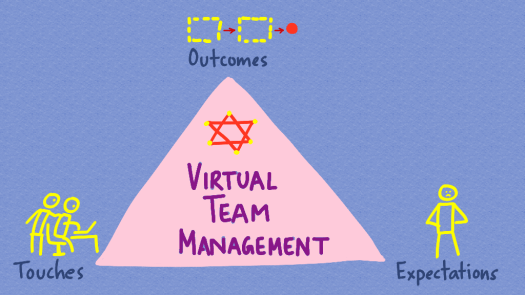
managing-remote-teams.png

Imagine setting up a new business or expanding an existing team.

The first things many organisations do is think about adding people at an office. We need desks, computers, software, phones and all the other things that go with bringing that person online – and that takes time, effort and money.

Why do we do this?

In a world where most people we want to work with already have a desk, a computer and an internet connection that lets them get all the software and communications tech they need – why do we keep thinking working in an office is the way to go?

Or is that still the case? Research from Upwork, the freelancing website, says that two thirds of companies use remote workers. As talented specialists get harder to find, companies that are willing to offer remote working can choose from workers around the world.

Many organisations that have started up now have entirely virtual workplaces – with no central office at all.

So, what do our organisations and managers need to do to make virtual teams work well?

There are three things we need to get right.

1. Focus on outcomes, not process or how we would do it

Individuals now are developing increasingly individual ways of working – and that can be a challenge.

Take something as simple as taking notes – a fundamental part of work.

I’ve jumped from using a reporter’s notebook to a legal pad to One Note to text files to journalling software to Google spreadsheets to custom Excel files back to Moleskine notebooks.

In some businesses notes need to be recorded in a particular way for legal reasons. Reporters need to keep their notes in case they get sued. Policemen need to keep their pocket notebooks as evidence.

For most jobs, however, how people take notes doesn’t matter. What they do after that does matter.

For example, do they liberate the main points from their notes and share them with colleagues who need to know them? Does a sales person’s notes provide enough information for a service team member to take on the account?

With remote teams we need to focus on outcomes – the way things turn out – rather than the way in which they are done or the way in which we would do it.

2. Be clear on what you expect from others

I remember being on a train down to London and hearing a conversation a few years ago.

The speaker, who sounded like an entrepreneur, was quite loud and making no effort to speak quietly – but the gist of the talking was that a remote worker who was at home couldn’t be contacted on instant messaging – and that wasn’t acceptable.

Any sort of situation that makes us want to stand with our hands on our hips crossly is one where our expectations are not being met.

In this case, the entrepreneur’s expectation was that the remote worker needed to be available to contact during work hours on this system.

The worker may have had a perfectly good reason to be away from the desk at that time – or may have been in the park throwing snowballs. We don’t know – but that simple inability to contact the worker was enough to cause a work problem.

Some organisations recognise that instant messaging interruptions are as bad as actual interruptions, and set expectations that such contact is by arrangement and usual business is conducted by email.

The point is that much irritation can be avoided if expectations are clarified up front.

3. Make the effort to make contact and stay in touch

At the same time, workers will find managers much more relaxed if they make the effort to keep in touch.

Where there is little or no face to face contact, email updates, messages and phone calls can all help keep the lines of communication open.

Managers get nervous when they don’t hear anything for long periods of time. And – quite probably – when people don’t keep in touch it’s because things aren’t working and they are looking for, or working on, something else.

Lack of contact quite often leads to termination of appointments.

Interestingly – sharing personal updates before moving to business can help reinforce the feeling of being on the same team and help maintain a warmer relationship.

Summary

Many of us, if we don’t already, will experience remote working, virtual teams and more flexible ways of working.

For new starters, it will simply be the norm. For older workers, it is what they do as they move away from corporate jobs and focus on a more balanced life that looks after their health and family.

Whether we’re in offices together or on the phone – the things that make us human are what will cause us to succeed or fail.

Working towards a common outcome, being clear on what we expect from each other and taking the time to keep in touch and talk will help us manage this new world of work.