How To Learn Anything You Need To Know For Your Business

learning-through-modelling.png

Sunday, 7.11am

Sheffield, U.K.

The more that you read, the more things you will know. The more that you learn, the more places you’ll go. – Dr. Seuss, I Can Read With My Eyes Shut!

What do you do when you realise you don’t know something?

All study is self-study

There is an Indian story of a forest hunter called Ekalavya.

He wanted to study archery but the best teacher in the land, Dronacharya, who taught the royal princes, refused to take him as a student.

So Ekalavya built a mud statue of Dronacharya, literally modelling him out of clay, and taught himself, practising every day in front of his teacher until he became a great archer.

The story doesn’t end well for Ekalavya – but that’s in another time and place.

The main lesson – that you can teach yourself anything you want – is one we should take to heart.

Once upon a time you needed to be apprenticed, you needed a teacher.

And then we had books that distilled the knowledge of experienced people into packages that anyone could take up and learn from.

And now we have YouTube, where we can see how others do it and learn anything we want, from how to teach better to how to replace a broken door frame.

You have everything you need to learn anything you want – we all have access to more opportunity than anyone before in history.

But how do we go about using it successfully, rather than drowning in a flood of knowledge.

Focus on relevant, useful information

When information is everywhere you no longer need to absorb it all.

You can access it on a just-in-time basis rather than a just-in-case basis.

Rather than trying to learn everything about a subject, focus on the outcome you want and identify the things you need to know to make that outcome happen.

That list of things becomes what you need to know.

For example, to build your personal brand, you need to be clear about what you want to get across – what is it that you want to be seen as an expert on?

How will you showcase that content – will you write, create a podcast, create video, or do all three and more?

Will you do it yourself or get someone else to do it and manage the process?

How will you get people to come and look at your material – how will you get the word out?

When you are clear that the outcome is a enhanced personal brand, what you need to do will become obvious very quickly.

You have to ask yourself how you will do these things and how much it will cost you and how you can do them well.

And if you don’t already know how you are going to do this you should spend some time watching you other people do it well.

Learning through modelling

On my Twitter feed one of the posts said that you shouldn’t pay people to tell you how to get rich.

After all, if they were already rich, they wouldn’t need your money.

Paul Graham, the founder of YCombinator, responded by saying that they would often tell you how to do that for free.

Now, being rich isn’t the only outcome that matters – and you will find examples of all kinds of people who have created outcomes that are relevant and useful to you.

Some of them will share their story and what they’ve learned and when you come across them you have an amazing opportunity to learn because they are modelling how to do something and giving you the opportunity to watch and learn.

But you have to be careful.

With every person you watch, read or listen to, ask yourself how they make their money.

Most of the ads you see on YouTube for people who are offering you a course on how to be successful have no useful content.

You will often find a detailed breakdown of the flaws with their programmes if you do a search, but what most of them boil down to is that you make money by selling their programme.

It’s a network marketing strategy, where you create something that has little intrinsic value, but you persuade other people to join you in selling it and make money off the membership fees they pay.

You should ignore all these entirely.

Then you have a category of “personalities” who have strong opinions and are entertaining.

Many of the big names in self-help will fall into this category – they are inspiring, articulate performers who can make you think you can do anything if you have the will and the grit and the ability to outwork everyone else.

You should be careful with these people. Some of what they say is useful but most of it is entertainment.

If they make most of their money through speeches, courses, books, conferences – then you know that it’s the performance and the thrills they’re selling rather than the content.

Most of the content is folk-lore – common sense repackaged for your viewing pleasure.

But their main measure of success is eyeballs watching their content – eyeballs they can monetise.

And then you have people who show you how they do things – in an authentic and transparent way.

What you’re looking for here are real people – the ones that show it as it is.

Perhaps the best example here is Warren Buffett and his shareholder letters.

They articulate what he has thought and learned over decades of investing and if you’re interested in that field they are required reading.

People like this use their ability to create content as a way to showcase what they are interested in, what they do and the products and services they have to offer.

They make money either through the businesses and assets they have which they’re talking to you about, or they have created products that you can buy from them – but the products are how they make their money not by monetising you as their audience.

But, there aren’t that many examples of people doing this intentionally, but what’s interesting is that you can find better examples as you look into the early days of what people did.

When I come across someone on YouTube whose channel I like and find useful I often view their earliest videos – because that gives me a sense of where they started, and how their approach and message has changed over time.

Many develop their craft and ability to tell a story over time and it’s fascinating to see how they balance content and presentation.

For example, some focus on enhancing their content and teaching style while others improve their lighting, camera setup and on-screen presence with hair and makeup.

And when you come to their latest content you can tell whether they have a product to sell you or whether you are the product that they’re trying to sell to advertisers.

You also need to appreciate that you can learn different things from different people at different times in your career – and the best thing you can do is be intentional in who you follow and why.

Modelling over time

Different people will show you different approaches and you can learn different things from them.

The test is how relevant they are to you and what you want to get out of things.

If you want to learn about developing your screen presence, your ability to speak into a camera and be persuasive – then the big personalities of the Internet are where you go looking.

If you want to build a sustainable business then you might want to look elsewhere, to people who have found a niche and developed their business to fit into and dominate that little patch of cyberspace.

That’s certainly how I progressed over time – starting with persuasive speakers who told you to do things like write affirmations.

I still have books filled with daily writing somewhere – based on people saying that if you just wrote down what you wanted every day the universe would come along and give it to you.

The thing that changed the way I looked at these things was when I was introduced to the idea of thinking critically.

Critical thinking is not a negative thing – it’s not about criticising.

It is, instead, about taking in information and sifting it, evaluating it, and looking beyond the rhetoric, questioning tradition, not accepting authority unthinkingly and always being conscious of the objectivity of the people involved.

People will say things for many reasons.

You need to be careful to learn things for the right reasons, as best as you can given the situation you are in.

The test of knowledge for you is whether it is useful, whether it can help you take the next step you need to take.

And taking a series of steps will get you to where you want to be.

We’ll talk about that next.

Cheers,

Karthik Suresh
What Are The Things You Need To Do?

system-holon-model.png

Saturday, 7.00am

Sheffield, U.K.

The basic managerial idea introduced by systems thinking, is that to manage a system effectively, you might focus on the interactions of the parts rather than their behavior taken separately. – Russell Ackoff

We have a tendency to focus on things – try and identify the one thing we can understand and improve.

That has been a very successful approach – taking something and deconstructing it, figuring out how it works.

It’s the basis of the scientific method and rational thinking and has created the modern world.

But the process of deconstruction always loses something – and it’s not always obvious what that is.

Because you won’t find it in the pieces that you’re left with.

So what is this thing and how can you be intentional about the way you go after it?

Understanding emergence

Imagine you’re running a large business with lots of departments that do different functions.

Which function do you think is the most important one?

Your sales people will argue that it’s what they do – without the customers they bring in you have no business.

The operations people will counter, saying that if they don’t make things people want the sales people will not have anything to sell.

Finance will weigh in now, pointing out that without their ability to keep money flowing in the business no one would have the space and time to do what they need to do.

When you think about it you realise that you need all the departments to function – or at least you need the essential ones to deliver your capability and you need the others to do superior work.

The performance of the business as a whole depends less on whether you have an amazing sales director or the most qualified finance person in the country than on whether they work well together as a team.

If you go and look for “performance” in the business you won’t find it in sales or operations or finance.

You might see performance in the shape of satisfied customers as a result of their interaction with your business at the various points at which they connect with each other.

Performance or customer satisfaction are “emergent” properties – they happen as a result of everything you do not from any one thing.

Making the best car in the world

This is why you cannot make things better just by improving one thing – and it’s the reason why improvement efforts focused on a particular function or department don’t deliver results as a whole.

The management thinking Russell Ackoff used to use an example with cars.

Imagine you want to build the best car in the world.

You start by getting a collection of the best cars in the world right now, one of each type.

You get the fastest one, the best looking, the biggest, the best seller,

Now that you have the best cars in the world you take them all apart.

You compare the pieces and select the best ones from each – the best suspension, chassis, engine, exhaust, seats.

And then you put them all together and now you have the best car in the world.

After all, it’s made from the best parts in the world, so it must be the best, right?

You know that isn’t the case – you’ll be lucky if the car even starts and moves.

It’s not the parts that make the difference, it’s how they work together.

Each of those “best” cars had components that fitted together and worked together to deliver that performance you rated as “best”.

Another way to think about this is the idea of “dream teams”.

There are individuals who play brilliantly in their teams – perhaps for various clubs with players from different countries.

Then, when you have a national game you get your best players together from these clubs – the superstars of the game and put them into a team.

Isn’t it odd how they seem to find it very hard to win – these are the best players at their clubs but together they don’t seem to be able to deliver a result?

Again, it’s because being the best isn’t enough – you need to be able to play well with the others in your team.

It’s a simple concept but one that many people just don’t see – because we’re so caught up in the approach that says you have to focus and have a target and be single minded to achieve something.

We fail to see that it’s about more than that one thing.

Seeing the things that matter

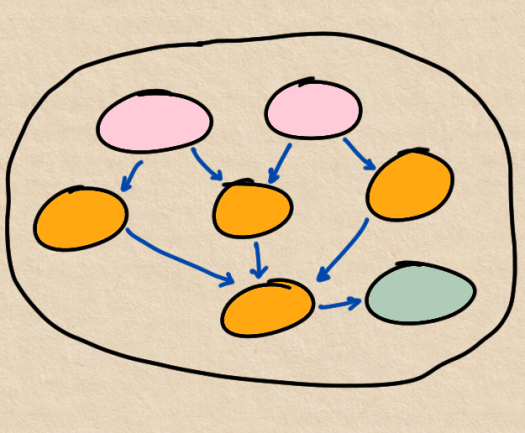
One way of seeing everything rather than one thing is to create a simple model.

Think of the things that matter – the things you need to do.

Write each one and draw a circle around it.

Then, draw arrows from each one to the others to indicate dependencies.

Finally, draw a circle around all of them.

This model has a number of properties.

It has a boundary – the things inside the big circle are the main things you need to do.

In our business example, there are things that you might think of like marketing, sales, operations, finance, logistics, strategy.

Some of those things are things you can do – things that go inside the big circle as little circles.

I’d probably include things like marketing, operations, sales,

But what about strategy?

Well, if you need to write a strategy document, perhaps it goes inside the circle but strategy could also be the whole picture itself – the strategy emerges from being able to clearly see everything that needs to be done.

And that happens because once you have the small circles of things to do you draw arrows that show what happens first and what happens next and if there are feedback loops where something that happens affects how you look at something that happens earlier.

Feedback from prospects, for example, may lead you to change your marketing message or tweak your product in operations.

Now you’re probably used to making a list of everything you do but the main thing that happens when you do it in this way is that you intentionally look at the relationships and dependencies between things.

This simple approach shows you everything you need to do and also tells you what you need to do first.

You start with the areas that have arrows pointing away from them but none pointing to them.

That’s the beginning.

Then you have the ones in the middle that have arrows pointing to them and have arrows pointing away from them.

And you end with the ones that only have arrows pointing to them.

This shows you everything you need to do and the order in which you need to do them – a strategy in one simple image.

Keep this high level – with only 5 to 9 nodes.

More than that gets complicated and you rarely need them.

If you want to expand on a node create a separate diagram for it.

What happens when you do this?

When you look at this map of nodes and relationships explicitly you can see you need them all to operate together for your business or project to succeed.

Imagine that the nodes are logs and the connections are strings.

Like in the image below, you need to choose logs that float and string that holds them together.

raft.png

Lead logs and spaghetti won’t work – you need wood and cord and the thing you build needs to be sound and strong and fulfil its purpose if you are to stand on it and stay afloat.

But that’s what you’re doing when you’re building your business or starting your project – doing something with purpose and making it work.

So, how do you do it well?

You start by learning how others do it well – which is what we’ll look at next.

Cheers,

Karthik Suresh

Why You Should Plan In Ten-Year Chunks Of Time

ten-year-chunks.png

Friday, 5.35am

Sheffield, U.K.

People tend to overestimate what can be done in one year and to underestimate what can be done in five or ten years. – J. C. R. Licklider

Is there a good time to start anything?

As an old saying goes, the best time was ten years ago. The second best time is now.

Can you last the distance?

When you start your project you should ask yourself whether this is something you can commit to for ten years.

If you’re starting a new business, can you do what it takes – hustle, work all the hours you can, raise money, hire people, build product, get customers, create cashflow – all while maintaining a relationship and being there for your kids?

Maybe that’s not what you want – you want a lifestyle business that allows you to pursue your dream and give you enough time to enjoy life – so is your dream enough to keep you occupied for ten years?

A ten-year period is a significant chunk of time – it’s a serious part of your life to set aside pursuing something that may or may not work out.

So, how can you maximise the changes that you will make it and create something worth having.

Have a clear outcome you want from each decade

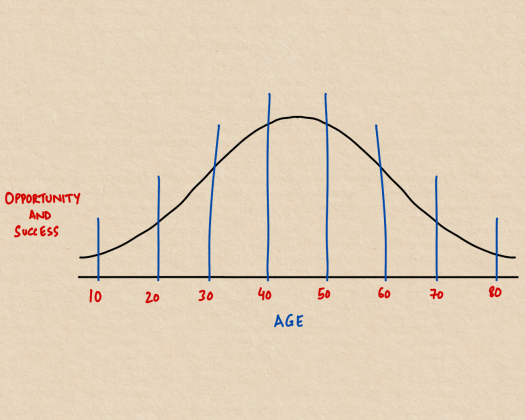
When we look back at the lives many of us lead, they probably follow a pattern something like this.

Until we get to ten, there isn’t much pressure on us, we play and get socialised – become part of the culture we live in.

From 10 to 20 we learn how to learn.

From 20 to 30 we start making our own money, get our first job; we go from depending on parents or the state to becoming cashflow positive, bringing in more than we spend on our own.

From 30 to 40 we develop in a profession, find our own place and start to find a niche that we can call our own. A niche that we can dominate and where we can do competent work when others ask us to.

From 40 to 50 we start becoming responsible, for others, for bringing in business. We operate increasingly independently, as the ones who take decisions rather than the ones who implement them.

From 50 to 60 we’re in charge – we are responsible for the future as well, so we spend more time training and developing others.

From 60 to 70, we wind down, easing our way out and letting others take over.

And after 70, we have the time to do what we want, with few responsibilities and obligations – and hopefully with the health and mental ability to use the time well.

Now, your chances of making it, of succeeding are greatest in that period from 30 to 60 but you can do it at any stage of your life.

It’s just that the chances are less of you being a child prodigy or being a 17-year old millionaire or an 80-year old startup founder.

But it happens.

Don’t let age hold you back.

Just recognise the reality of where you are and decide what you’re going to do in the next ten-year chunk.

But how do you do that – decide what to do?

Say yes until you have to say no

At the beginning of a period, when you’re just starting out, you have to take every opportunity you’re given.

For example, let’s say you want to build your consultancy practice but you’re at the start of your journey – then don’t worry about money.

Just take every chance you can to practise your craft.

For example, you may have spent the last decade working with top brands – but now you want to go independent.

Don’t just target the top brands that you used to work with.

Instead, book sessions with everyone, with individuals, small businesses, medium sized ones, large ones, charities, non-profits, startups – anyone who will take the time to talk to you.

Don’t make those sessions about money or value or exchange – just listen as hard as you can and give as much as you can.

Sometimes you will get paid, and sometimes you won’t.

But, if you do that for a while, pretty soon you will know what people need and are desperate to have and how much it costs them to do it the old way but they’re stuck because they can’t find someone who can solve that problem.

That will tell you what you need to make and how much you can charge and how big the market is and whether you have a viable business.

And once you match what you do to what people need you’ll start getting interest and once you have proof that it works – social proof, in the sense that others have used it and it worked – it will be easier to show others and get them to say yes.

As more people say yes you will have more work and so you start to have a problem as you haven’t got enough time and you’re working all the hours in the day to get everything done.

Which is the point at which you start putting in filters – things that reduce the amount you have to do – so that you can focus on what you do best.

You start by raising prices, then by reducing availability – and you fine-tune that until you can once again match supply and demand – your ability to create and your market’s desire for what you do.

Eventually, you will find yourself saying no to everything that doesn’t help move you towards that outcome you want.

Maybe you over-correct, stop doing too many things, and find you have to say yes again.

That’s ok – you don’t have to feel like you’re committed to anything other than making your customers happy.

If a process doesn’t work, abandon it. If a book isn’t engaging, stop reading.

Say yes, but don’t be afraid to stop if it’s wasting your time – abandon stuff without guilt – books, projects, opportunities.

Don’t put down an anchor until you’re certain you’re in the right place and this is going to work for you.

But once you do, commit, do it every day and make it a routine – get used to the idea that you’re going to do this for ten years.

Make fewer, better decisions

Warren Buffett has talked about how the ability to do more investments doesn’t do anything other than making the people who help you do transactions rich.

If you could pick only twenty stocks in your lifetime you’d be much more careful about which ones you chose.

If you could do only one thing in the next ten years, you might be much more careful about what you chose to do.

The thing to realise is that your success doesn’t depend on your age – there are advantages and disadvantages at every stage of life.

When you’re young, you have time but lack knowledge.

When you’re older you know what needs to be done but you have responsibilities that take up your time.

Success depends on making it easy to do what’s important for as long as it takes, being ready to commit for at least a decade to make what you want come true.

Ten years where you will build something – put together the pieces in a way that only you can to create something that didn’t exist before that people want and are willing to pay for.

And you have to work through what that looks like, which is what we’ll get to next.

Cheers,

Karthik Suresh

Exploring Your Prospect’s Mind And Planting An Idea Flag

plant-an-idea-flag.png

Thursday, 5.25am

Sheffield, U.K.

Skillful conversationalists can explore disagreements and make points in ways that feel constructive and positive rather than combative or corrective. – Gretchen Rubin

What is your project?

In the last couple of posts we looked at making sure you were heading in the right direction and that you had taken a good look at the obstacles in your way.

Now, as you set off, let’s ask the question; what is your project?

Is it to start a business, write a book, create a portfolio, make a course, produce a product?

Now, what do you do with that idea?

Exploring your prospect’s mind

The world has been thoroughly mapped and explored, there are few places you can go to on the surface and plant a flag to claim that you found it first.

That’s not the case with the territory of the mind.

You have a vast, uncharted space to work with, a space where you can create territories rather than find them if you choose to do so.

Apple are an example of a company that’s great at doing this.

The products they have come out with have redefined what the world looks like for their customers, changing how they live and act.

You and I, we’re not Apple, but we can still have a go at exploring this territory of the mind and planting a flag in a patch that we believe we’ve found for the first time.

And this is important because why should anyone listen to you if you have nothing different to say to everyone else?

In marketing speak this idea of finding a space that’s your own is referred to as your USP – your unique service proposition.

That’s not entirely right.

It’s not what you do that needs to be unique.

It’s the way you position yourself in the mind of your prospect that needs to be different.

For example, if you’ve recently started as an estate agent, what are you going to do to win customers?

Are you going to act exactly the same way as the company you’ve just left, the one that trained you?

Or is there going to be something different, something unique about your message, your brand, your approach?

Now, in order to set yourself apart, you need to know what normal looks like to your prospect.

That means having conversations, enough of them to be able to map out what’s going on.

What does your prospect think, feel, believe about the world around them.

What are they happy with, what doesn’t work, what’s frustrating, what do they really want to fix?

All these questions help you explore the minds of your prospects and, as you wander around, you may come across a piece of mental real estate that’s unclaimed, something that you can make your own.

Somewhere you can plant a flag and stake a claim.

Planting your flag

The act of putting your flag in the ground is a decisive one – it means you now have an intent, an end goal, a place to call your own.

And there is a power to doing this – you can now look at every option you have and discard the ones that do not directly contribute to achieving your goal.

For example, I have been writing this blog for a few years now – writing every day.

I had no real plan for the blog at first, I wanted to write, but I wasn’t sure what to write about and I wanted to give myself time to work that out, work on developing a voice and a style.

I used the blog to help me read and learn, finding out what interested me and what didn’t, discovering which ideas were useful and which weren’t.

So far, I was wandering the territory of the mind, looking around – just exploring.

On the 26th of May 2020 I decided that I would start a project to write a book and planted an idea flag.

I briefly described my plan in a post and came up with a working title for the book.

And the act of doing that has made subsequent decisions extremely simple.

Especially when it comes to getting started.

I have a box filled with paper slips that set out the structure of the book and every day I take out the next slip and write that section.

That’s it.

But you have to be kind to yourself.

Everything is a work in progress

You have to realise that just because you’ve planted your flag that doesn’t mean that you’re done and can rest now.

That’s just the beginning, you now need to cultivate, to build on, to develop that patch of intellectual territory you’ve staked a claim to.

In my case these posts are a first draft, fleshing out the ideas on those slips, creating a form and argument with words.

I have to give myself permission to create – badly if necessary – but to create.

I need the words on the page, however badly written, however inadequate, because it’s only when these words are down that I can go back and edit and rearrange and trim and improve.

Until the words are down the book is just an idea.

Just like any project you may have.

So, be kind to yourself, and allow yourself to be rubbish – it’s okay to create stuff that you aren’t proud of.

It’s more important to create, to make a start, to get going – because once you have something you can make it better.

You can’t improve something that doesn’t exist in the first place.

Planting an idea flag gives you a place to call your own, a patch of mental territory you can now work.

But you’ll need to give yourself time – time to till the land, get rid of the rocks, create a fertile soil for your ideas and plans.

And that’s what we’ll look at next.

Cheers,

Karthik Suresh

What Would You Do If You Could Magically Remove All The Obstacles In Your Way?

no-fear.png

Wednesday, 5.31am

Sheffield, U.K.

Nothing in life is to be feared, it is only to be understood. Now is the time to understand more, so that we may fear less. – Marie Curie

Once you know where you are heading how will you make sure you get there?

What are the obstacles in your way?

Most of us, as we go through life, pick up responsibilities and cares and worries.

We need to earn money, pay the mortgage, pay for tuition for the kids.

The obligations pile up, silently, one at a time, until one day we find that we’re stuck, we can’t move for all the things blocking our path.

For example, you might have started a job as a temp, just to earn some money for a while and then a decade later you’re stuck in a well-paying but ultimately meaningless role that you never thought you’d be doing at this stage of your life.

But you can’t leave because you’ve gotten used to the money and the lifestyle and the holidays and it’s too hard to give all that up, so you might as well grind it out.

Or, on the other hand, you could have loads of ideas for things to do but be short on resources – time, money, expertise to do what you want to do.

You’re stuck, unable to act because you don’t have the things you need to get the job done.

So what, if anything, can you do about it?

Introducing magical thinking

Make a list of the things in your way, the things holding you back.

Write them down – the obligations, the responsibilities, the relationships, the things you own.

We enter and create and develop and buy all these things, which then end up wrapping themselves around us, gently but firmly holding us in place.

Now, look at that list of obstacles and imagine what your life would look like if you could magically remove each one.

If you need the money to come in to pay for the mortgage and your lifestyle – what would it look like if you had all the money in the world?

Or what would it look like if you didn’t have the mortgage and a different lifestyle?

Let’s say, for example, that you’re putting off starting your business because you need your salary to pay for the new house you want to buy.

What would life look like if you could magically remove the need for money – if you had more would you buy the house you’re looking at now, or perhaps an even bigger one?

What would it look like if you didn’t need to own the house – if you could rent where you wanted to live?

Go through the things on your list – what about relationships.

Are there ones that are negative, toxic, ones that are holding you back?

What would happen if you crossed them off, stopped associating with those people.

You don’t need to spend much time on this – just look at the things that are holding you back and magically wish them away.

They don’t exist any more, you have no constraints, no restrictions, no past obligations, no present responsibilities.

What will you do now?

A life without constraints

If you had nothing holding you back would you take a leap off the edge into a more exciting future?

Or would you hang back, staying away from the prospect of change, hobbled by fear?

If there was nothing stopping you from pursuing your business idea right now, what would you do?

For example, many people have restrictive clauses in their employment contracts that stop them from working for competitors or doing the same work on their own behalf.

That’s to protect the interests of your employer.

But if that wasn’t in place, would you do the same thing you’re doing now or is there something different, something better, something that’s more you, that you would do?

For example, is the reason you’re not promoting yourself more on social media because you’re afraid of what people will think and say – perhaps they’ll feel like you’re trying to get ahead of them, publicise yourself at their expense?

Or maybe you just think they won’t approve?

You need to take a long, hard look at these things – these obstacles in your way.

Then look past them, magically make them vanish in your mind, and ask yourself what you would do next.

If you could, would you start doing practical things, like registering a business, starting to create promotional content, a website, getting in touch with a few people to pitch your idea and ask for feedback?

Is there stuff you’re doing already, stuff you’ve done but not shared with the world because you’re afraid of how people will react?

What would happen if you magically removed that fear and started to put that stuff into the world?

Get out of your own way

If you want to build a better tomorrow for yourself, you have to start by clarifying if what you think you want is really what you want.

Once you know that, you need to look at the things holding you back – and if you’ve done this exercise you will start to realise that that’s a little more complicated than it first seems.

Some things are fundamental – like having enough money to live.

Some things you wouldn’t change – you want to spend time with your kids, however long it takes.

Some things you can control, like how much you spend on things that you could do without if you needed the money.

We’ve all got constraints, some more than others.

But if you can see what you would do next if you magically removed those constraints, then you can see the beginnings of the path you need to tread.

This exercise is like hacking through the foliage covering it up, taking a machete and cutting through to the point where you can see that there is something beyond.

And eventually that path may lead to a place where you can dive into your future.

But, for right now, it’s enough to see it – that’s a start.

Because here’s the thing.

If you don’t know what you will do when there is nothing in your way, how can you do anything with all the things that are in your way right now.

Your constraints define you, they hobble you, they surround you.

And you can’t do anything about some of them.

But the ones you can do something about are the ones that will let you slip your bonds and wriggle free.

Free enough to move forward.

Which is what we’ll look at doing next.

Cheers,

Karthik Suresh

How To Do The Perfect Day Exercise To Clarify Your Goals

perfect-day.png

Tuesday, 5.42am

Sheffield, U.K.

The perfect day is going to bed with a dream and waking up with a purpose. – A. J. McLean

It’s been 43 posts into this Getting Started book project and we’re in the final section of the first draft that I’m writing in these blog posts.

The first section started by looking at where you are right now.

The second looked back at where you had come from, and what you had gathered during your journey.

And now we’re ready to go into the future – shaping it to suit us and what we want.

So we have to start with that.

What do you want? Really, really want?

It’s time to do the perfect day exercise, which is described in Barbara Sher’s book Wishcraft.

Find a piece of paper and a pen.

I’ll wait.

Ready? Let’s begin.

What you have to do in this exercise is picture your perfect day and write it down.

Start from the very first moment in the morning.

How do you wake up, when do you wake up, where do you wake up?

This is your perfect day so it can be anything you want – there is nothing in your way apart from the laws of physics.

You could be in Australia or the Caribbean. You could be in London or Lhasa.

You could have a mansion or a beach hut.

What happens next after you wake up?

Where do you go, what do you eat, who are you with?

Picture the day unfolding in your mind, minute by minute, hour by hour.

What happens next each time?

Write down how it goes, what do you do or not do in the morning, how and where and when do you have lunch?

What happens in the afternoon, how does the evening pan out, what do you do late into the night before you finally get back into bed – at the end of a perfect day?

When you’re done you should have a page or two filled with notes.

Have a look and make sure that this day is about you – not about someone else.

Be selfish – write about what you want in detail.

Be honest – this is about what you want and no one else need ever see your notes.

Also, don’t settle for vague descriptions, such as getting a particular job – dig into exactly what you do in that job and how you spend your time – not what label you have.

Before you read on, this exercise will be most useful if you have done this first.

Looking back at your perfect day

Say you’re a photographer and your perfect day goes something like this.

You wake up at your mansion in rural England.

Breakfast is served at a long table; you have your own chef and butler.

After that the Bentley whisks you off to a private gathering of some of the most influential people around – who are here to listen to you speak about branding and marketing.

After that you go to an exclusive restaurant, which has been reserved for just your party – and you have a fabulous afternoon talking to your tribe.

In the evening you go to the best nightclub around, to your own private section with just the people you choose to have.

Eventually, your personal helicopter picks you up from the roof and drop you back home where you sink into bed.

Now that you have this down what does it mean?

Last chance to write your own now!

Looking back at your perfect day

Now, what does your perfect day tell you about what you want?

Let’s take our photographer friend above and look at his perfect day.

There’s a lot in there about what money and fame can get you – the luxury lifestyle, the adoration of others, anything you crave.

Does your perfect day have many of those in there as well?

Now look at it again and see how big a part the project you want to start has in it?

Our photographer, for example, has not left much time in that day to do actual photography.

If you want to start on a serious project – starting a business, changing a career, committing to a product – then how much time would you spend doing that project if you didn’t have to?

If you could have and do anything you wanted – would you still do that project?

If the answer is yes – and you can find it in your perfect day notes – then it looks like you’re planning to do something you’re truly passionate about, something that’s important to you and you would do whether you were successful or not.

If it’s not in there, you might need to take some time to consider whether it’s really what you want.

If you’re trying to decide what career path to go down and you choose to be a lawyer because your parents think it’s a good idea – then this exercise will help you clarify if that’s in line with what you really want.

Do you like reading, discussing, arguing a point of view?

Or do you dislike confrontation and prefer creating, playing and recording your music?

Now the point of the perfect day exercise is not to put you off pursuing your idea.

But it is to question what you want as a consequence of pursuing that idea.

For example, if you want to write a book so that you can become rich and famous but your perfect day doesn’t involve spending any time writing the book – then perhaps writing isn’t your thing.

You don’t enjoy the hours of research and drafting and redrafting that go into the creation of a book – word after word after word.

But you’d like the feeling of being a published author – so maybe instead of spending time writing you should hire a ghostwriter and work with them instead.

Or if you want to be famous – perhaps there are other ways that suit you better based on what your perfect day is telling you.

Either way the benefit of this exercise is to give you some insight into whether the project you’re starting is one you really want to do.

If so, you’re ready to move to the next step.

Which is what we’ll talk about in the next post.

Cheers,

Karthik Suresh

The Four Lead Generation Strategies You Should Try First

lead-generation-strategies.png

Sunday, 5.26am

Sheffield, U.K.

Water does not resist. Water flows. When you plunge your hand into it, all you feel is a caress. Water is not a solid wall, it will not stop you. But water always goes where it wants to go, and nothing in the end can stand against it. Water is patient. Dripping water wears away a stone. Remember that, my child. Remember you are half water. If you can’t go through an obstacle, go around it. Water does. – Margaret Atwood, The Penelopiad

We’re nearly at the end of the second section of the Getting Started book project.

In the first section we talked about understanding where you are right now.

In this second section we’ve been looking back, at what you’ve done and the foundations you have to build on.

And we’ve come to the point where you have something to offer to the world and you now need to start getting leads, you need to talk to prospective customers.

I was going to have a few pages on technology but I’ve decided not to do that here – because the technology doesn’t matter.

A focus on the technology, in fact, can detract from the substance – from the thing you have to do in the first place.

Technology can help scale something good, but it can’t turn something bad into something good.

So let’s talk about what good lead generation strategies look like.

How to open a conversation with a prospect

How many ways can you think of to reach a prospect – to start that first conversation?

Let’s look at four ways that come up pretty often.

The first is reaching out to them directly, either getting in touch or making yourself discoverable so they can find you easily.

The second is to be introduced by someone who knows you and trusts you – a friend, someone you have already helped.

The third is to be introduced by a connector, someone who the prospect knows and trusts and who is willing to “engineer” an introduction, usually in return for a payment.

The fourth route is to be introduced by your prospect’s customer, someone who sees what you do as a way to help their supply chain.

If you’re just getting started, then, how can you implement these strategies?

Direct marketing

Reaching out directly to a prospect is a difficult business, one summed up nicely in the famous McGraw Hill ad that shows a grumpy man sitting in a chair.

My version of this is shown in the image below. man-in-chair.jpg

It’s very easy to reach people these days – you can connect with them on LinkedIn, you can send an email, everyone has contact details listed on their websites.

And, as a result, everyone gets contacted through a variety of media all the time – it’s an incessant barrage of connection requests and adverts.

That doesn’t mean you can’t stand out.

The people who I know that do this successfully seem to share certain traits.

They are identified by their business, their profession, their passion.

When you’re the CEO of a company, the Managing Director, a seasoned professional or you really care about the topic – that comes across in your content.

Think about your social media feed – aren’t you looking for useful stuff from people that you feel you can trust.

It’s very easy to spot inauthentic content, stuff that’s posted to try and get a reaction, where someone is using a strategy to build “relationships” with others.

I think that in today’s environment nothing has changed from yesterday’s environment other than the medium we use.

If you care about what you do and tell the world about it honestly and passionately then the people who can benefit from what you do will take an interest.

But it will take time, time to build credibility, time for them to see what you put out there and get to know you, and eventually trust you.

Direct marketing is not a quick route – so start building your brand and message well before you need to.

Eventually, it will become the biggest part of your lead generation strategy if you do it consistently over time, but in the beginning you will also need quicker routes.

Who do you know that knows you and trusts you?

This is where you turn to the people you know, your friends and the people you’ve worked with already.

What you’re asking them to do is help introduce you to prospects that know and trust them.

You’re asking them for a recommendation, for an endorsement.

This is a powerful approach – you’re much more likely to get time from a prospect if you’re referred by someone they know and trust than if you go in directly without any history.

So, who do you know that can help you out?

And how can you ask for help without damaging the fragile web of trust that holds everyone together?

Even your friends aren’t going to help you out if they’re not sure that you can do what you say, that you won’t put them in the embarrassing position of having to apologise for having introduced you.

You have a responsibility to do the best work you can do and provide an unconditional guarantee to the prospect – you need to protect your friend’s position whatever happens or you’ll lose that friendship.

A favour can help you out initially and get you started with the first few conversations but if you need more conversations you need to invest in creating those conversations.

Which is where connectors come in.

Paying for introductions

There’s no shortage of people who will help you get in front of your prospective customers in exchange for a payment.

Some of them will charge you up front while others will be willing to introduce you for a percentage of the business you generate.

The main thing here is having a budget for advertising – because that’s what this is.

You’ll also exhaust any one person’s list pretty quickly – once you’ve reached out to their database a couple of times the people who are interested will have responded already – so you’re now trying to target the less interested rest.

You might be better switching your investment to another person and their list when that happens.

When you’re getting started this can be an expensive and high-risk strategy – because you’re committing to paying for something without a guarantee of results.

A commission based approach reduces that risk – but you need to find people willing to work with you on that basis.

You can make that easier by giving them a larger share of your first sale if you can make subsequent sales to the same prospect.

For example, if your average project value is $2,000 then a 10% commission of $200 will not excite too many people.

But if you’re going to typically make ten sales over the time you have the customer, then the lifetime value is $20,000.

In that case, you could afford to give away 50%, even 100% of the first sale – $1,000, $2,000 – because you’re still going to make $18-19,000 over time.

And your introducer will be much more excited about getting a four figure sum for making a phone call on your behalf.

Your prospect’s customer

The fourth strategy here is to understand and reach out to your prospect’s customer.

For example, if you offer a cost-optimisation service and you’ve worked with an organisation and delivered results, then they will probably be open to introducing you to their supply chain, the people that serve them.

That kind of introduction will often get you a first meeting, from which you can develop the conversation.

Create a network of partners

It’s worth taking the time to reach out and try to build that network of partners who can help you grow their business, especially if you can also help grow their businesses.

But don’t spend all your time networking and pitching to partners – they can suck up your time as well as they work out what’s in it for them.

Create a simple model to show partners what you do and how you can share value and then get on with the job of delivering value to the customers you have right now.

Happy customers are the best source of new referrals – and also the ones that can bring down your business if they’re dissatisfied with what you do.

Moving on

It’s time now to look at what to do next, how you’re going to prepare yourself to build your business or project over the next two to ten years.

It’s time to look at what tomorrow might bring – and move into the last stage of this book project.

We’re at 46,000 words so far.

Not long to go now.

Cheers,

Karthik Suresh

Why You Should Tell Your Story – Many Many Times

copywriting-story-mountain.png

Saturday, 5.48am

Sheffield, U.K.

When we read a story, we inhabit it. The covers of the book are like a roof and four walls. What is to happen next will take place within the four walls of the story. And this is possible because the story’s voice makes everything its own. – John Berger, Keeping a Rendezvous

There is just one thing I have to say about marketing.

Tell your story

All you have to do when you want to get started with a new project – building a business, moving your career on – is tell your story.

If you’re not used to doing this, be warned, it’s going to take some time until you feel like you’re getting it right.

So start telling stories five, ten years before you think you’re going to be ready.

Because every good story is about your life, and it starts, “Once upon a time,”

Why marketing yourself comes down to stories

Think back to a few hundred thousand years ago, when our ancestors first huddled around a fire in a cave.

Imagine a hunter, standing at the cave wall, putting the final touches on a drawing of the day’s hunt – the animals, the chase, the trap, the kill.

One image – there’s no Powerpoint, no fancy visuals – just the scene.

Imagine the story of the hunt, told by the hunter, perhaps with a few embellishments – perhaps the buffalo are a little larger than in real life, perhaps the snakes a little more vicious.

But it’s the story of their life, their day, the animals, the chase, the trap, the kill.

And the audience listened, with rapt attention, lit by flickering firelight, to the story, learning and being entertained.

We’re not really that different from those people – a few hundred thousand years doesn’t make that much of a difference in our genetic makeup.

Flickering firelight, or the mobile screen, will draw us in every time.

What will keep us there is story.

So what’s your story?

The story mountain

Let’s go back to the first year of school where you learned about story mountains.

You go up and down the story mountain, starting with an inciting event – an introduction, and then build up the story until you reach the top – the problem. Then you have a resolution to the problem and an ending.

It sounds really dull when you put it that way – and it’s even worse when you apply it to your business as in the image above.

Your story starts with an opening, an introduction to you. You move on to make an assertion and build up to an example that sets out the problem or problems your clients typically face. You then talk about how you solve that problem – showing the result you get and providing proof and then you move on to the next step.

You’ll see this pattern in almost every YouTube advert out there, except people will normally start with the assertion (I’m going to show you how easy it is to make money on Amazon) and then do a build up including an intro (Hello, I’m Jane Bloggs, and I started with nothing).

Now, the thing to remember about things like story mountains is that they are an artefact – something created after the fact.

First lots of people told stories and then someone said, “Hey, look at this, it looks like there is a pattern here that all the good stories follow.”

And for your business the most important element of the pattern is that when you say something – make an assertion – back it up with an example.

For example, if you’re a video production company, then when you say something like “We specialise in videos showcasing manufacturing processes,” you follow up with, “For example, here’s one we did for ABC manufacturing that helps you understand how their complex machinery works.”

You probably already do this naturally, if you’ve spent any time already in a sales role.

If you haven’t, the idea is not to do this mechanically, but to start doing it intentionally.

Start being intentional about following your assertions with a proof point, something that helps to demonstrate that you know what you’re doing.

When you do that you’ve created a mini story, something that the listener can follow along with – and what happens when a listener hears your story is that they recreate it inside their own heads – they make it their own.

Now you are a part of their story, and you’ve just marketed your way in there.

Next steps

I can’t tell you what tools and methods to use in your particular situation – I don’t know enough about you.

But I can give you a prescription to take, which goes as follows:

  1. Understand yourself, your idea, your business
  2. Apply your understanding, learn through practice on the job or with projects
  3. Condense what you’re learning, find the nuggets that matter.
  4. Explain that condensed version – to yourself, to anyone who will listen to you face to face

Then, when you’re ready to face the world and market yourself:

  1. Select a medium you like communicating in – writing, audio, video.
  2. Make something every day.
  3. Look back at what you’ve made, reflect on it – see what you did well and what you can improve.
  4. Revise it in light of that reflection, if you can.
  5. Publish it.

But, you ask, what about quality, finish, polish, sound, video, editing, music?

That’s up to you – but remember that every additional thing you do makes it harder for you to get your marketing message out.

If you can do it by firelight using a cave wall then do it.

If you need to spend ten hours on fancy animation – then do it – but accept that you will probably be able to do less.

Quantity often leads to quality over time, but a focus on quality at the beginning can be paralysing because of the amount of effort you need to put in.

So start simple, start with what you already have, start with the simplest possible setup and technology.

But start.

The good news is that the vast majority of people will not do the doing – the minute you start intentionally working on telling your story you’ll start to set yourself apart.

And when you have this story to tell, in the early days, you will need some help getting it out into the world.

That’s where your friends and other complementary organisations come into the picture.

We’ll talk about them next.

Cheers,

Karthik Suresh

Taking The First Step Towards Marketing Yourself

marketing-talking-into-the-dark.png

Friday, 5.37am

Sheffield, U.K.

Here’s my whole marketing idea: treat people the way you want to be treated. – Garth Brooks

What comes to mind when you think about the word “marketing”?

Do you think social media ads, brochures and flyers, the video ads you see on TV and YouTube?

Is it your website, the branding, the images, the logo, the customer service, the technology, the network?

And it is all of those things, but what are we trying to do, what’s the essential purpose of all this activity?

Isn’t it to have a conversation with someone else?

Starting a conversation

When you first start marketing something new it’s a little like speaking in a dark room – trying to find out if there is anyone out there listening.

Conversely, it can be like entering a very busy and noisy room and trying to get someone’s attention.

Some people are naturally gifted at this – they seem to somehow make themselves the centre of attention.

They’re witty, charming, amusing and everyone loves them.

They’re born networkers, connectors, the kind of people who know everybody.

Some of us don’t like crowds, we shy away from large gatherings.

We’re much better at one-on-one conversations, at private reflection and are quite happy being by ourselves.

And there’s a range of people in between these two extremes, all the diversity of humanity, each of us trying to figure out how to have meaningful conversations with others.

Having Authentic Conversations

When you look at every marketing encounter you see around you in terms of a conversation, then which ones do you feel are authentic ones?

“Authentic” can be a tricky word. It’s been made popular, but what does it really mean to be authentic?

It’s not something you are, but something people feel about the way in which you come across to them.

Human beings are smart, they’re the product of a harsh evolutionary history that needed them to be in order to survive.

They can see when you’re being real and when you’re not, even when you use all the tools and technology at your disposal.

For example, there are a number of “laws” of persuasion that you can use to get people to act the way you want – to influence their behaviour.

Much of the history of marketing is littered with these methods, from spam email to pop-up boxes to cold calls to doorstep salespeople.

They work when your goal is to work with numbers, when you want to target a large number of people in a methodical way and you’re looking for a very small conversion rate that makes you your return.

If a few people buy you’re regained your investment.

They also work when your product is the person – like most multilevel marketing programmes.

The basic idea behind these programmes is that you get people to buy the idea that they’re selling a product when in fact the real money is in selling the programme to other people.

That’s not the kind of business this post is aimed at.

The kind of business we’re looking at here is one that is trying to build a customer base that’s going to stay and grow over time.

If you want to be an effective consultant, a good service provider, an innovative product creator, then you need to think about your customers as individuals who are going to work with you over the long term – and they need the real you, the authentic you – the person you can be over that length of time.

Not a person who is always desperately trying to keep a mask on.

Tools and strategies

It’s easy to avoid hard questions like “what do you do, really?” and focus instead on tools and systems and technology.

But tools and systems and technology will not make up for a lack of the core “why”, why should someone be interested in what you have to offer?

To answer that question you first need to understand the questioner, understand what they’re looking for in the world around them.

Then you answer the question.

Your success depends on how well your answer works for them.

No amount of technology will make your response better.

The font in which you write it, the timbre of your audio, the clarity of your video, the dizzying visuals you use – all of these things are decoration but the thing that matters is that answer you give.

All too often people think that they can come up with any old idea and then push it to marketing – it’s now their job to package it up and sell it.

But that’s not marketing – that’s the artistry around graphic design and media production and technology integration – they are all the components of a modern, integrated marketing system.

But you don’t need all that to create a message is clear and simple and says why a prospect should be interested enough in what you have to offer to start a conversation with you.

Crafting a message

How do you craft that clear and simple message?

Simple.

You do it, reflect on what you’ve done and work on improving it.

No one comes out with a clear and compelling proposition that works for their entire market the very first time.

Marketing is, like everything else we do, a process of trial and error and progressive refinement.

Start with a message – what you think you do.

Say it – to yourself, to other people.

Study yourself, study their reaction.

Think about what you could change, change it and try again.

It really is that simple – test and learn and refine and try again.

But that doesn’t mean it’s easy.

We all know that writing multiple drafts improves the quality of your writing.

But, once you write it, and format it and it looks so pretty and clean – it’s easy to assume the writing is good as well.

And it gets worse when you have more people involved – and when you get all their “input” and amend your message to include their views you end up with a mishmash of something that insiders are happy with but that means nothing to your prospect.

And that’s where marketing should come in – testing every line, every idea for clarity and conciseness.

Is what you’re saying clear and simple and compelling?

If it is, then we can package it up and send it out using a variety of media – whatever your budget can take.

But if it’s not, no amount of money can fix it.

Start simple, but start

The starting point for most people is to realise that marketing is a process of understanding yourself and your prospective customers so you can have better conversations.

So start by talking into the dark, talk about yourself, speak using media that you’re comfortable with.

If you like face to face, then get out there and meet people, if you like writing, express yourself in text, if you like video, record yourself and share your stuff.

Just get started with telling your story.

At first, you may just need to do that for a while.

Be ready to do that for a couple of years.

That’s how long it takes me anyway.

When I look back at the projects I’ve worked on, projects like this blog and various commercial projects, it’s taken roughly two years to get from an initial idea to something that starts to look like a workable model.

That’s the time when you should be testing and refining your story, not paying for marketing technology or expensive design.

The technology and design come into their own when it’s time to scale something you know works – when you have a compelling message that works when you deliver it in person or using very simple technology.

In the next few posts we’ll look at those elements – crafting your story and starting simple, before moving onto your vision for the future.

Cheers,

Karthik Suresh

How Well Can You Empathise With Your Prospect Or Customer?

empathy-map.png

Thursday, 5.24am

Sheffield, U.K.

…that the world is not as it seems, that we know the world only through our own cultural biases, that even the little things matter, that taken together all the little things we do make the world what it is, and that if we are willing to challenge ourselves, truly understand others with empathy, and shed the comfort of our familiar but sometimes blinding, binding, and taken-for-granted assumptions, we can make the world a better place. – Michael Wesch

How do we truly understand someone else?

We can try and appreciate what they take in through their senses but we will never really know what is going on inside their heads.

Unless we try.

Being obvious versus being familiar

One of the biggest mistakes we make in many aspects of life is thinking that there is a “natural” or “correct” way of doing things.

For example, it may seem obvious to you that a gear shift should look and operate in a certain way but that hasn’t always been the case.

In the early days of automobiles they were all over the place and the French car market Citroen seemed to delight in creating unexpected ones.

Over time, people have come up with interesting and beautiful variations on this concept.

But which one is “right”.

None, really – we’ve settled on one as the competitive battle between manufacturers settled down and the winners converged on an approach.

The thing to remember is that what seems obvious to you now has more to do with the fact that you are used to it – you don’t know any other way of doing things and so you take it for granted that this is the right way of doing it.

That’s a way of thinking called ethnocentrism – thinking that what you believe, think, value is the approach that’s true, the one that everyone else should take.

If you are part of the majority culture in any situation, you can be blind to your own ethnocentrism – you see nothing different.

You often need to go into an entirely different culture to really see – to have your eyes opened – to just how much of the way you live your life is based on unquestioned assumptions and beliefs.

And you will run into people who look at you with puzzled incomprehension as you act in the way you think is right and proper and they wonder what is going on.

For example, native English speakers are often affronted when they feel they are spoken to impolitely by non-native English speakers.

If I said to you, “Pass the salt,” your first reaction as a native speaker is probably going to be negative.

Where’s the “please”? Who do you think you are?

The thing is that the first language of the speaker may have no such thing as a word for “please”.

Using the word please indicates respect for the other person – it is a request, not an order.

Some languages have respect built in as a feature, when you speak to someone else there are elements like prefixes and suffixes you add to indicate respect.

To such speakers constantly saying “please” can be harsh and grating – it comes across completely differently from the way it was intended.

The way to be less ethnocentric is to practice empathy – the way anthropologists do it.

Empathy is not the same as sympathy, feeling what others feel and it is not the same as agreeing with them, and accepting they are right.

It’s understanding the way in which they understand the world in their terms.

And it’s a powerful tool to help you with your career and business.

Developing empathy with someone else

Can you project yourself into the life of your prospect?

What does the world look like through their eyes?

What do they see?

Now, it’s easiest to do this if you have already immersed yourself in their world for a while.

If you have spent time in their culture, worked with them before, observed them for a while, then you’re going to be able to create a more accurate picture of what’s going on.

The best business people don’t guess what someone else wants – they know because they know their prospect’s world already.

That’s why you first start with research, desktop research if that’s all you can do but ideally you interact with and talk to your prospects to understand them, well before you try and sell anything to them.

But let’s assume you’ve done some homework, you aren’t just guessing, what do they see?

For example, let’s say you provide a technology consultancy service, how would you describe the way the person you want to talk to – a CEO or founder – will see their world?

Let’s use the empathy map in the image above as a scaffold to think through this question.

If they are a decision maker, they probably have quite strong opinions.

They’re probably very interested in knowing about the latest stuff out there, the innovations that are changing the landscape for their business.

At the same time, they are veterans, they know that many fads fizzle out and they don’t want to waste their time.

They’re sceptical about whether things will actually work out – so while you’re touting all the features of what you do they’re thinking up ways it could break or go wrong.

They speak their minds, asking tough questions to test what you’re saying – it’s their money on the line and so they aren’t shy about saying no.

In fact, they probably say no to most things.

They’re probably quick thinkers and can see the pros and cons in a situation – but perhaps don’t always see all the details.

Because of that they rely a lot on their feelings – about you, about the situation.

They listen to their gut – if something doesn’t feel right they won’t do it.

But when it feels right and they smell an opportunity they will act decisively and quickly.

Now, how would you pitch to this kind of individual.

Well, you’d better be quick and on point and lead with what’s important to the listener.

But this will also probably only work in certain cultures, especially Anglo-Saxon ones.

In many European and Eastern cultures there is less focus on a single decisive individual and more focus on participatory decision making.

Which will require a different approach from you.

One that understands that your prospect sees the world around them as a web of relationships, how they are careful not to say things that shake that web, how they think long and hard before they say anything, and how perhaps feelings are expressed indirectly as reservations and how an action is taken only after a consensus has been achieved.

And that’s just geography – it gets more complicated as you factor in history and race.

But that’s the point of being human – you might as well spend the time understanding how other humans tick – developing empathy with them.

The better you understand them, the better you will be at working with them.

If you can get to them in the first place… which is where lead generation comes in.

Let’s look at strategies for that next.

Cheers,

Karthik Suresh