The Lindy Effect

2026-08-28_lindy-effect.png

Yogi Berra once said, “It’s tough to make predictions, especially about the future.”

I’m optimistic about AI and its ability to make us more productive.

But there are issues that pop up from time to time.

We’ve already seen workflows break when a model changes.

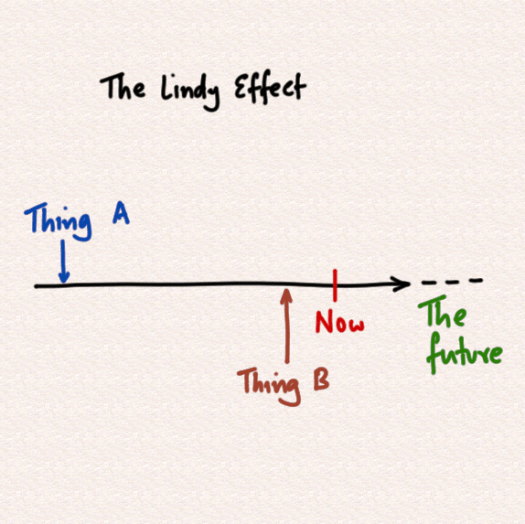
I recently learned about the Lindy Effect – essentially, time is your friend.

If something has been around for some time, it will probably stay around for some time longer.

Corporations have used Microsoft for decades. Open Source is a foundational part of modern technology.

AI is still novel and changing rapidly.

AI lets you do things that weren’t practical before, but we shouldn’t confuse AI experiments with enterprise infrastructure.

That’s why we keep an eye on the latest technology but build our core services around Microsoft and Open Source.

Use new technology where it gives you leverage.

But build your systems so that they are understandable, maintainable and useful.

The Swamp And The High Ground

2026-08-22_swamp.png

Why do tools that look good during demos fail to deliver in practice?

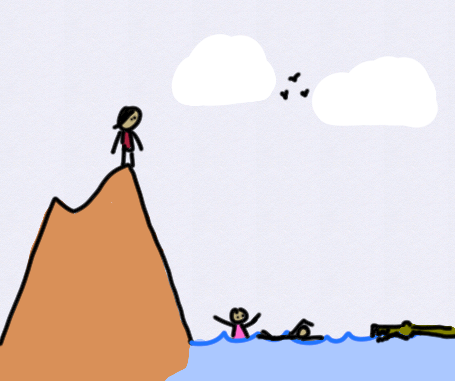
Donald Schön described this as the difference between the high ground and the swamp.

On the high ground people create methods and tools that are rigorous and research-based to solve manageable problems.

In the swamp are the messy and confusing problems humans have to deal with daily.

Tools that work for manageable problems struggle when facing messy ones.

SaaS demos look great with clean test data.

But they run into trouble when we try and use them to solve our particular problem in our particular context.

AI now makes it possible to create customised solutions that will do exactly what we need.

If they work, that shifts the complexity elsewhere.

Governance. Control. Reliability. Repeatabilty. Integration. Understanding.

The complexity doesn’t go away. We never get to drain the swamp.

Instead, we get to work on what needs to be done next.

Here’s what we really need from the systems we deploy.

They should make it easy to do the easy things.

And they should make it possible to do the hard things

In 2026 You Need To Know What You Want Out Of Time

2026-08-22_time.png

The value of craft is in the struggle

Many years ago I went to a talk by a philosopher about the meaning of work.

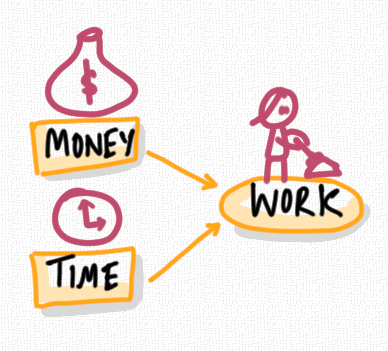
After much research she had concluded, she said, that work was a task you wouldn’t do unless you were paid.

If you wanted to know what you want out of work, she argued, you first had to know what you wanted out of money.

I’m not sure that view translates to knowledge work.

Learning how to do something. Figuring it out. Finding a way. Struggling with the problem.

It’s closer to being a craft.

One that involves technology. We used to reach for Google to find information. Now we reach for an AI to give us the answer.

We’ve outsourced our memories. And now it’s very tempting to outsource our thinking.

But what we’re really doing is outsourcing the struggle.

The question isn’t whether AI can do the work.

It’s whether you want to.

It’s about the way in which you spend your days.

In 2026, if you want to know what you want out of work, you first need to know what you want out of time.

What To Do When There Is No Reason To Do Anything

2026-08-17_thinking.png

Monday, 9.58pm

Sheffield, U.K.

The point of human evolution is adapting to circumstance. Not letting go of the old, but adapting it, is necessary. – Sonali Bendre

What do you do when the machines are better than you?

I had a meeting today where I took notes – the usual kind – sketchnotes. A messy mix of stuff.

This is the kind of thing where a rich picture helps – a drawing of the things and connections so you can get a sense of the whole, so you can see what’s going on.

It takes time to draw a rich picture so I talked to Copilot. I described the conversation from my notes and asked it to create a rich picture that had the elements we discussed.

And then I opened my drawing software and started making my own.

When I checked what was on the picture I was taken aback.

… No spelling mistakes.

… All the points I asked for.

… A good layout.

A visualisation of something I described exactly the way I had pictured it in my mind.

It was astonishingly good

So, what are you going to do if a machine does something faster and better than you.

There are two choices.

  1. You can watch TV
  2. You can figure out what to do next.

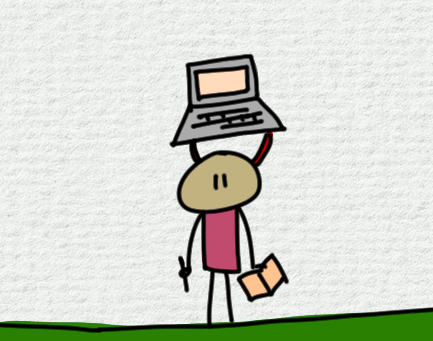
But what if the “figuring” step is happening outside your brain?

The Extended Mind hypothesis by Andy Clark and David Chalmers explored this idea back in 1998.

We don’t just think in our heads. We use paper and tools to think.

In a way, this extends our mind outside the physical confines of the body.

While this sounds strange think about it for a minute – how many things can you do without reaching for help – for a book, for a YouTube video.

Our heads don’t have much of the information needed to operate effectively in the world.

And LLMs will make that worse

A key part of making sense of the world is building connections between ideas.

But how important is it that you build the connections. What if a model does that for you – does that help?

I’m trying an experiment at the moment – seeing if an LLM can make sense of a bunch of notes I have in text files and create a wiki – a knowledge repository from them.

The code to set this up? Google’s AI told me how to do that. Does it work? I’ll let you know later.

But it gave me a creepy feeling

We think that we’re using these tools.

But actually, what if they’re using us?

Once the task of identifying ideas and making connections moves out of our brains and into these models – then surely we’re just extensions of the model copying and pasting instructions.

They’re plugged into us, and in using us they take away our ability to think – not intentionally but because they can do it for us, we don’t try as much – and that part of our ability withers away.

When there’s no reason to draw, no reason to write, no reason to think – the only reason left to do something is because you really want to.

Cheers,

Karthik Suresh

Understand First. Then Act.

2026-08-15_preparation.png

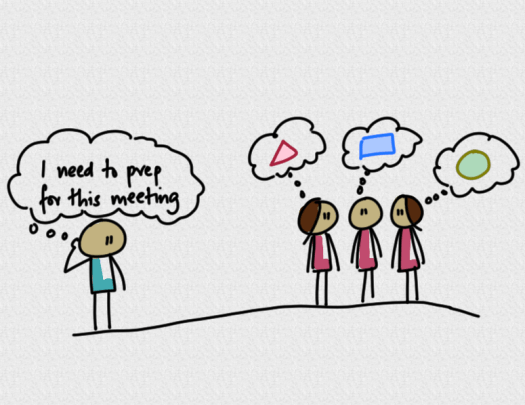
At the start of my career we prepped hard before every meeting.

We were ready. At the meeting we could talk for ages about what we did and the problems we solved.

We were the experts in the room.

But something was off. Prospects nodded in agreement and then went silent when chased.

It took me a while to learn that the problem was us – we were talking too much.

**The world isn’t full of clean, well defined problems waiting for your solution.**

Instead it’s full of messy situations that people find problematic.

Take something like working out a company’s carbon emissions. That should be straightforward, right?

Well, not quite.

… one company has a system but is struggling to use it.

… another is a large global enterprise, but is structured in a complicated way.

… another has changed methods three times and now needs to stick to one.

We can’t just rush into these situations and start offering solutions.

You have to first understand what’s going on.

So we slowed down. Listened more. Took notes. Asked questions. Drew what was going on. Checked that we understood what was in people’s minds.

What works? What doesn’t? What needs fixing?

Expertise helps us build solutions.

Understanding helps us build the right solutions.