How Can You Become Better At What You Do?

letter-to-shareholders.png

Friday, 8.59pm

Sheffield, U.K.

A tool, to paraphrase George Polya, is a trick I use twiceSanjoy Mahajan

Mahajan, in his book Street-Fighting Mathematics, writes how the best teachers say little and ask much because questions, discussions and wonder help you learn so much better.

Learning maths, however, seems relatively straightforward.

As the most purely intellectual subject there is Maths doesn’t have to deal with emotion and mess and life.

Or does it?

You could argue instead that the application of maths is fundamental to modern life and everything we do can be done better with maths.

William Shakespeare mused about the gap between thought and action – and how it was filled with uncertainty and doubt.

He was talking about Brutus’ decision to murder his friend Caesar but I’m thinking about it more in the context of using software more effectively.

For example, many years ago when I was reading about marketing I came across Neil Patel who, on his blog at Quicksprout, created long, in-depth content to help you learn how to market better online.

And he made it simple and step by step. If you followed his instructions, opened a spreadsheet, entered in lots of keywords, came up with topic ideas, created a content schedule and worked every day you could also possibly end up like him.

Which sounded great, but didn’t work for me.

Partly because I really don’t like working hard, especially at something that really should be done by a computer.

The principle was right – we need to create content because that’s how the world will find us and, perhaps more importantly, how we will find ourselves, but his method didn’t work for me.

The tool wasn’t right.

Now, the tool that I use that does work for me is perhaps ridiculously specialised.

I use a text file filled with thoughts and ideas and use a markup syntax to identify important ones and the ones that should go into the diary.

A program then extracts what’s important and creates a content calendar for me.

I get involved in the messy thinking and let the computer create the structure and framework and order.

So, this is one of the challenges of going from thought to action.

We can have our eyes opened to principles but it’s only by trying stuff out ourselves that we can really learn and figure out whether we’re happier with a hammer or a chainsaw or just getting someone else in to do the work for us.

Now really, where I wanted to go with this post was to talk about where we get these principles from in the first place.

And one good source is shareholder letters.

Most people are familiar with Warren Buffett and his letters, which are hosted on a site that is so unconcerned with fancy design that it remains a precious corner of the Internet.

Charlie Munger’s letters are worth reading as well and Jason Zweig suggests a few more worth reading and these from Sardar Biglari are worth a look as well.

Reading these letters gives you a look into how people who have made a career making decisions make decisions – how they look at and examine situations.

And, often, how they use maths to explain what has happened and what they want to make happen.

So, to really make the most of a situation it seems to me we need to use better principles and questions, to really figure out which tools are right for us to get better at what we do.

Cheers,

Karthik Suresh
What You Need To Do To Be Understood

windows.png

Thursday 9.00pm

Sheffield, U.K.

I’m just a soul whose intentions are good. Oh lord please don’t let me be misunderstood. – Regina Spektor

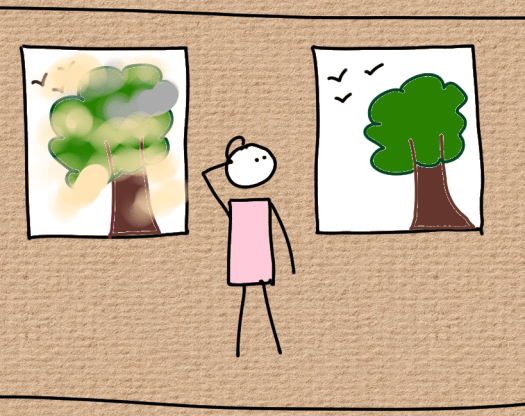
If you could look out of two windows, one dirty and one clean, which would you choose?

Communicating is hard. Even the word “communicating” is long and multi-syllabic and doesn’t really catch the essence of what we’re trying to do.

We’re trying to pour our thoughts into someone else’s mind and we spill quite a lot as we try.

Chris Anderson, the curator at TED talks, says one of the reasons they work so well is that human beings have evolved to listen to storytellers.

That person who tells you stories as you huddle around a fire, your grandmother who tells you stories as you snuggle up together, that’s what you grew up with and what your genes have learned is the way to learn.

But just as important is the fact that the storyteller and you are near each other. She can look at you and tell by how you react whether you are hearing her or not.

Writing, on the other hand, is a relatively new invention. And even if you use audio or video it’s not the same as getting feedback from wide open eyes staring at you.

So, it’s not surprising that most of what we see and read is not easy to understand.

In fact, it’s easy to misunderstand.

And it’s even easier to ignore.

Then again, it’s naive to think that you’ll get it clear the first time you try and express yourself.

Clarity is iterative. It emerges over time, like polishing a diamond.

You start with a lump and end with a sparkling gemstone.

So, how can you get better at being clear?

The first thing is to remember that using big words doesn’t mean you are having big thoughts.

Winston Churchill said shorts words are best and the old ones, when short, are best of all.

You can say a lot with small words and you will almost certainly be better understood.

Being clear is important when you want to explain what you’re thinking to someone else.

But it’s just as important that you’re clear with yourself.

It’s easy to fool yourself about what’s important, what you should focus on and what you should do next.

But the more effort you put into making it clear to yourself about what matters to you and what is the best use of your time, the more likely it is that you’ll be happy at the end of each day.

So, what should you do if you want to be understood?

Try and be clear in everything you say, write and do.

William Zinsser, the author of On Writing Well said that the secret was to get rid of clutter.

Strip every sentence of every word that has no use, that is long when it could be short or passive instead of active.

And that skill comes with practice so the time to start being clear about everything is now.

Cheers,

Karthik Suresh

What Should You Absolutely Do Before Approaching A Prospect?

scripts.png

Wednesday, 10.08pm

Sheffield, U.K.

To make a great film you need three things – the script, the script and the script. – Alfred Hitchcock

The media is everything these days, isn’t it?

Everyone’s a rock star on YouTube, minting it with podcasts and making loads of money just talking into a microphone or to a camera.

Or are they?

Harvard Business School has a page called Working Knowledge aimed at Business Leaders where you will find a short article about John H. Patterson and the National Cash Register company.

Cash registers changed modern retail and the N.C.R led that change and its salespeople were guided by a little booklet called the N.C.R primer.

This document grew as the 1800s waned, reaching 200 pages and then shrinking to a quarter of that again and it created the foundation for a selling approach based on scripts.

The point of the script was to make it easier for salespeople to carry a conversation from an approach to a close.

A hundred or so years later the script is the hidden structure behind much of what we see.

Every radio program, every TV show, every professionally produced piece of entertainment has a script behind it.

And if you’re trying to work out how to talk to someone about what you have to offer a script is something that will probably help you too.

Jay Abraman, a well known direct response marketer, has some interesting views about the kind of attitude you need to have.

First, you need to value what you have to offer.

That’s sort of the starting point – you have something of value and you need to know that, and believe in that before you try and approach anyone.

Then, when you do approach someone, you need to assume that they will respond to you. Eventually, you will talk to everyone you need to talk to.

When that happens what will you do?

Will you simply “wing it”?

When that conversation starts and the prospect approaches you are you just going to say the first thing that comes to mind?

Well, at first probably yes.

But then you’ll learn.

And what I’ve learned is that having some points that you plan to talk around helps.

If you’re going to have talking points, you could do worse, than writing out a script.

We remember speeches from great leaders but we rarely remember that those leaders rarely wrote their own speeches. The words that came out were drafted by others and they helped change futures.

If you’ve watched The Wolf of Wall Street you’ll remember Jordan Belfort and his scripts.

In his book, he’s quite blunt about it:

“…young men and women who possess the collective social graces of a herd of sex-crazed water buffalo and have an intelligence quotient in the range of Forrest Gump on three hits of acid, can be taught to sound like Wall Street wizards, as long as you write every last word down for them and then keep drilling it into their heads again and again—every day, twice a day—for a year straight.”

And if they can do it, we all can.

Movie makers and actors get it.

A good script is essential if you want to make a good movie.

Perhaps that insight is the same for sales.

Or for life.

Cheers.

Karthik Suresh

How To Get Out Of Your Own Way This Year

toolbox.png

Tuesday, 9.00pm

Sheffield, U.K.

Choose your tools carefully, but not so carefully that you get uptight or spend more time at the stationery store than at your writing table. – Natalie Goldberg

Happy New Year.

The great thing about the first day of a new year is that you have a chance to change things at the same time that millions of others are planning to as well.

Clearly, not everyone is going to succeed, but that isn’t the point.

The point is that you ought to at least try.

We were watching a film the other day where a character quoted Dr Seuss, “You have a brain in your head. You have feet in your shoes. You can steer yourself any direction you choose.”

And one of the things that is either enjoyable or panic-inducing is choosing your tools.

I can spend far too much time obsessing about whether I should be doing things electronically or on paper. Whether it’s best to use a software program or code something myself. Whether a reporter’s notebook is better than a Filofax.

That’s just the way I’m wired and, quite probably, many others as well.

That’s why so many rules and resolutions and goals don’t work.

They may have worked for someone else, worked really well, but that doesn’t mean they’ll work for you.

What you need to do is figure out what will work for you and that may be getting organised or getting stuck into the first thing you see.

Trying to get it perfect often means not getting started at all.

Which brings us back to tools.

What is going to work for you this year?

One approach that works for me is to think of having lots of small tools rather than a singe big one.

Sort of like having a toolbox filled with hammers and screwdrivers instead of carrying around a single Swiss Army knife.

If you think of this like writing a computer program – you’re creating a program to follow this year.

The chances are very slim that you know exactly what program to write if you haven’t already got one in place.

So it makes sense to start with what’s important right now rather than what might be important in five years.

The more lines of code you write the more likely it is that the program will fail to run or have bugs when you do run it.

Small programs are best. And small programs that work together are even better.

So, for example, if I decided that I was going to run every day for the next year I’d probably fail in a week or less.

But, if I tried to get my 10,000 steps every day there’s a good chance I could do that and get in the odd run.

How could you combine that with better diet, more rest and better time with your family?

What could you do to make your job more interesting and work on stuff that felt like it was helping someone?

When it comes down to it we live our lives following programs – often ones that have been written for us and downloaded into our brains by parents and society.

The first step, then, to getting control of your life is to start writing your own program.

And today is a good day to get started with that.

Cheers,

Karthik Suresh

How Are You Going To See Yourself In The Year Ahead?

unique-connect.png

Sunday, 9.07pm

Sheffield, U.K.

Diversity: the art of thinking independently together. – Macolm Forbes

The last few days of the year are a good time to reflect and plan.

There’s a natural rhythm to it, just a natural time when you look back and forward and think.

And one of the things that we’re all probably more aware of has to do with diversity.

There are the struggles we have with outward diversity – the diversity that deals with gender and race and choice – but there is also the struggle for inner diversity – of knowing who you really are.

We’ve all reached wherever we are in life because of choices we made in the past.

But, what lay behind those choices? Did you make them because they felt right for you or because they felt like the right choices to make?

I’ve made many decisions because it seemed like the right thing to do – the thing that would help me fit in or do well or get ahead.

The danger with that is by trying to fit in you forget who you are.

And, at some point, it may make sense to try and rediscover yourself – and the end of one year and the start of another is not a bad time to do that.

The point I’m trying to make, I think, is that if you try and be the best at something anyone else can do you’re in for a rather stressful existence.

That’s because you’re always worried that someone else will come along, someone younger, harder working and with fewer commitments, someone cheaper – someone who can replace you.

And that’s no different for businesses. Anyone in a commodity business knows that they only way to survive is to be as efficient as possible – to sell at the lowest margin that allows you to survive.

Anything more than that requires something special – something that no one else has – a moat.

And that moat, whether you are an individual or a business has to come from something unique that only you can do.

The fact is that you have to deal with the world around you – and the world is full of different people.

But – if you try and change to fit in with those people you’ll forget who you are.

The point is about being able to communicate with others, not be like others.

Which brings us back to diversity, in thought and belief and action.

What’s unique about you is the way you think and act – and you show that by having a belief in yourself.

I think in the year ahead one of my goals is to look more widely – search out diverse thoughts and ideas – because it’s by understanding differences that we’re more likely to better understand ourselves.

Cheers,

Karthik Suresh

The Secret To Doing Work That Matters To You And Others

digging.png

Sunday, 9.04pm

Sheffield, U.K.

Social media is not about the exploitation of technology but service to community. – Simon Mainwaring

As the year draws to a close there are a few things I have learned that you may find interesting.

In 2008, I wrote on a piece of paper, if it isn’t written down, then it doesn’t exist.

A few years ago, that thought became if it isn’t on the internet, then it doesn’t exist.

Clearly, whatever it is that I was referring to does exist…

The point is that if others aren’t aware then does it matter whether it does or not?

It’s a bit like the old Zen question of if a tree falls in a forest and no one is around to hear it does it make a sound?

It’s all very well reading other people’s material and thinking hard about things but do you really need to start doing things yourself?

Well… the only way to find out was to start trying to do something and that’s where this blog started a few years ago.

And at first, it was awkward and halting. I didn’t quite know what I was writing about or who I was writing for and what would happen as a result.

But what I learned was that didn’t matter, for a few reasons.

First, the act of doing something had a benefit in itself.

Deciding to write at around the same time each day and just seeing where things went was the only way I would find out where I wanted to go.

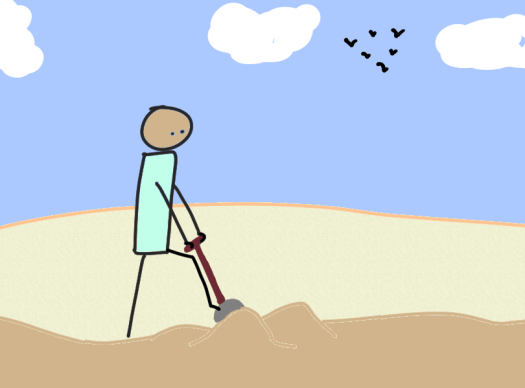
To find treasure, you have to start to dig.

I started thinking I’d write about energy, a field in which I had some experience.

But I found that I hardly wrote about that. Instead, I wrote about things that interested me, things that I heard or read or came across and wanted to understand in a little more detail.

And really, its through writing that I started to discover what I was really interested in.

Second, you might start by trying to attract people or write for an audience but you soon realise that’s just tiring.

If you write about what you are interested in then at least there’s one person who’s getting some value from what you’re doing.

You’re happy.

The fact is that spreading it more widely has nothing to do with you.

At all.

Derek Silvers has a wonderful TED talk on how to start a movement that shows a lone dancer on a field.

At that point, he’s just a nut dancing around.

What changes is when he gets his first follower. That first person who joins in is the one makes everything change.

That bit of social proof is what gets more people to join in and eventually have everyone join in.

It’s Christmas, after all, so we watched Elf, with Will Ferrell.

And the same thing happens there when Zooey Deschanel starts carolling near the end. At first she’s a lone voice and it’s only when someone else joins in and then someone else that it registers on Santa’s Christmas spirit meters.

So that’s probably the biggest thing that I’ve learned in the last couple of years of writing.

If you want to create something – words, pictures, music, software, a business – you’ll need to do it for yourself first.

Check that you are happy when you do it regardless of anything that happens later.

And then, whether it goes anywhere else depends on the community out there and what they do.

You can’t control that but you can be thankful if they like what you do.

So, for those of you that take the time to read and like these posts thank you very much and I hope you have a great Christmas and Happy New Year.

Cheers,

Karthik Suresh

What Is The Most Important Thing You Need To Do When Negotiating?

caring-less.png

Friday, 9.27pm

Sheffield, U.K.

A coward dies a thousand times before his death, but the valiant taste of death but once. It seems to me most strange that men should fear, seeing that death, a necessary end, will come when it will come. – William Shakespeare

What is it that links economics, negotiation and freedom?

Well, let’s start with a little situation.

You run a software company and provide SAAS services to a number of customers.

You’ve recently been bought by a larger firm. What do you think is the first thing you should do?

The answer is: raise prices.

Why?

It all comes down to an economic principle called elasticity.

This is not as hard as it sounds if you keep the numbers simple.

Imagine that there are 12 people in the world who will buy what you have at the right price.

If you gave it away for free, all 12 would buy it. That’s the green 12 on the top chart.

If you charged $12, then no one would buy it.

These numbers give you a line on a chart, going from a cost of $12 for no customers to a cost of 0 for 12 customers – the blue line on the top chart.

So, what price should you charge to make the most money?

If you look at the middle of the chart, selling your product at $6 would result in six customers for a total income of $36.

If you charge more than that by, for example, raising the price to $7 then 5 customers will buy giving you $36.

If you dropped the price to $4, then 8 customers would buy giving you $32.

Anything you do to raise the price above or below that sweet spot in the middle will make you less money, as the second chart shows.

Still here?

Ok, so what this means for most people is that when you start, you price your product low.

And the easiest way to make more money is to raise prices which is what the experts will tell you because they know that when you raise prices the extra money you make will make up for the customers who leave you as long as your pricing is below that sweet spot.

That’s an easy way to get a quick win for the company that bought you. A tripling of income inside a year.

Now, how do you raise prices?

Well, you’ve got a SAAS product. The customers don’t own a single line of your code. They either pay more or lose the ability to do whatever you enabled them to do.

You’ve got a gun pointed at them and you aren’t afraid to use it now that you understand the power of pricing.

Now, let’s switch things around.

You aren’t really the SAAS provider with the power and the gun.

You’re the poor fool stood opposite looking at that nasty grey gun.

What is it you should do?

That choice you have to give in to the person opposite you will be made entirely on how much you care about what happens next.

Are you ready to walk away.

Do you care less than the other guy about what happens as a result?

Because here’s the thing.

Even if you had a good relationship with the guy opposite and consider him a friend you need to be ready to do what needs to be done when he demands you give in.

It really comes down to fear.

Fear – the lack of courage – is what will get you down.

Fear is what will make you give in.

That’s one reason why if you really have something important to do you need to have control over it.

Maybe you get that control by doing it yourself.

But whenever you deal with anyone else always be ready to walk away no matter what the consequences.

Because that’s the only way you’ll keep your freedom in the face of tyranny or a hostile negotiator.

Because nothing will be as bad as giving in.

Cheers,

Karthik Suresh

How Do You Get People To Pay Attention To Your Message?

interest.png

Thursday, 8.49pm

Sheffield, U.K.

The only way to influence people is to talk in terms of what the other person wants. – Dale Carnegie

I have a press release to write soon.

How would you go about writing one of these?

Let’s say you have a consulting business and you get an opportunity to submit a short piece to a local newspaper.

What should you do?

As always, there is much advice on the Internet and some of it is actually useful.

But to start with I’d suggest just putting down the first 300 words that come to mind.

That’s because a blank screen or piece of paper can be the most intimidating thing around.

Before you can get it perfect you have to get started.

Once you’ve done that what are the most likely mistakes you’ve made?

If you’re like me, your first draft is all me. me. me.

It’s about you and your product and how fabulous you are and how your journey is so interesting and different. And here’s a really special thing that happened to make you who you are now.

The first thing to remove, then, is the hyperbole.

Phrases like “this fantastic product” or “this amazing experience” fail the smell test. They smell like a sales pitch and make people turn away as quickly as possible.

Then the advice usually starts to address how you can benefit your reader and talk about the things they care about.

But I’m not sure that’s the place to go next.

And when I thought about this, the whole camel and the eye of a needle metaphor came to mind.

I think what you want to do is think hard about your needle.

A lot of people read the local paper: butchers, bakers and candlestick makers; homeowners, homewreckers and hopeful romantics.

But only a few people are right for you and what you’re offering to do for them.

That’s the real purpose of each line in your copy – to filter the people who don’t care about your stuff phrase by phrase.

Unsurprisingly, Amazon have a process for doing this sort of stuff.

A good press release, they write, is clear and to the point and gives you the product’s features and benefits. It’s what the world sees about the product.

So, lets say you have a consulting firm, you might write that you do lots of clever techy stuff.

But who is the kind of person that is likely to buy from you?

Is it a harassed small business owner, a manager in a large firm or another consultant that wants to be more efficient in how they deliver their services?

The headline you use will decide whether the right person reads your copy because they are planning to buy or whether someone skims it because it happens to be in front of them.

I think I’d probably go with the advice of someone like the late Gary Halbert and write down 20 or so headlines.

The headline, after all, is a one sentence pitch that should hold the essence of your message.

With this process so far, you’ve got a first draft, preferably one you’d be ashamed to show anybody, and a bunch of headlines.

Then it’s time for more attempts at writing copy.

Writing in chunks helps.

The perfect message is never going to be written in one sitting – tapping directly into divine inspiration.

Instead, it’s a process of writing and rewriting.

And assembling.

I read somewhere about writing being like construction, like assembly, and that makes a lot of sense.

We need to be able to add and rearrange and delete and move things around because that’s how we get our thoughts in order.

We may have a number of ideas and scramble to get them all down.

But then we need to look at each idea, compare it with the next one and ask which comes first.

Should you introduce your company first or write about what you do or muse about the problems you know your prospects face?

There is no right answer, but the process of writing and moving and thinking will get you closer to something you are happy to send off.

I think when it comes down to it getting people to pay attention to your message is less about the message itself and more about how hard you try and make it easy for your reader to get.

And that takes work. Hard work.

As William Zinsser, who wrote the classic book On Writing Well says A clear sentence is no accident.

And it should be hard work for you – because the harder you work the less you reader has to – and that’s going to help them like you.

Maybe they’ll then even like you enough to consider buying from you.

Cheers,

Karthik Suresh

Do You Have This Essential Marketing System In Place?

referral-systems.png

Wednesday, 6.11am

Sheffield, U.K.

Do what you do so well that they will want to see it again and bring their friends. – Walt Disney

It takes time to see things clearly.

I don’t know about you but when you hear someone explain a concept it’s all words and ideas and concepts.

You don’t get it, really get it, viscerally and in your being, until you try doing what those words say and fail a few times.

I suppose that is the case with any profession but it’s even more true with marketing.

Because marketing is the art of having a conversation with someone and, as we all know, talking to someone you don’t know is not the easiest thing in the world.

It all depends on context.

A direct approach has the highest chance of failure.

As the famous McGraw Hill ad of the grumpy man in a chair shows beautifully.

What works better is being in the same place at the same time, serendipitously.

But serendipity is fickle and you may have to spend time trying to structure opportunities to meet instead.

But there’s something better that you should try and get working as a process in your business.

For a while now, I’ve been looking at the stuff that Jay Abraham puts out.

Abraham, one of the doyens of direct marketing, rubs shoulders with people like Tony Robbins and has some useful things to say.

He’s big on referral marketing – getting business through other people who know people.

And you see this being used by many of the people that are doing well in the digital economy today.

Take Tim Ferris, for example, the host of one of the most popular business podcasts on the Internet today.

His podcast starts with around six minutes of advertising built entirely around referring his audience to products and services he trusts and uses.

Abraham has a five step approach that you could use when approaching people who are, like Ferris, influencers that know your prospects.

The influencers you want to talk to may be existing customers, associates, or even competitors.

The point is that they have access to the kind of prospects who can benefit from what you have to offer.

The benefits need to be real and clear and tangible.

There is a mindset shift that Abraham needs from you – one where you go from being in love with your product to being in love with your customer.

Sounds cheesy.

But I suppose the point is that you need to look at things from the point of view of that customer and what they need.

So then you need to construct a risk-free offer. One that has no strings or obligations attached. A safety net that will make sure that new customer is not going to have a bad experience.

But then, coming back to the influencer, you really want to create an incentive that is customised for them.

So they can tell their contacts and audience that they’ve got a special deal or offer just for them.

The whole point of having a referral system in place is that you’re trying to make it easier for people to cross the chasm that stands in the way of them becoming your customer.

Everything you do in marketing is trying to bridge that chasm.

A referral, on the other hand, makes the gap smaller and easier for a prospect to step across.

So, if you don’t already have a working referral system in place make that one of your aims for the year ahead.

Cheers,

Karthik Suresh

How To Navigate Towards A Common Understanding And Alliance

proposal.png

Tuesday, 6.02am

Sheffield, U.K.

Good government is no substitute for self-government. – Mahatma Gandhi

It’s the time of year for planning and deciding what you’re going to do with life and work next year.

What should you do if you want to change things? Change something or everything about your way of life?

Well, if we start with what most people would like to have, it’s work with purpose, autonomy when it comes to how they work and mastery of what they do, a framework described by Daniel Pink.

Peter Drucker, the management thinker, wrote about self-governance in organisations.

He imagined a world where each worker takes on the job of management – takes on managerial responsibility.

And, in doing so, you take responsibility for what you and your colleagues do, for what you contribute to the “performance and results” of the organisation and for the “social tasks of the work community”.

Drucker points out that the world of work as it is now, with managers and workers is relatively recent.

And, we’re moving to a situation where freelancing and gig working is more common.

So, what can you do to position yourself for these changing times?

The starting point is to write something down.

What you are trying to do in most cases is figure out an approach that is going to work for you and someone else.

It’s not quite a negotiation because it’s quite possible that neither of you know what the end result is.

It’s more about alignment.

Reid Hoffman, the founder of LinkedIn, wrote in his book The Alliance about the difficulties organisations have in recruiting and keeping talent.

He says that the old work model is broken. There is no more lifetime employment, no more seeing employees as family.

You also can’t run a business where everyone is free to do whatever they want.

The solution, according to Hoffman, is to forge alliances between employers and employees.

An alliance is an understanding that the two of you are coming together for a specific purpose – to achieve something together.

Morningstar, a tomato products company, has no hierarchy or job titles. Each person agrees how they will contribute with the others that they need to work with.

The thing that is common in both Hoffman’s and Morningstar’s situations is a piece of writing that sets out how things will work.

Hoffman calls this a Statement of Alliance while Morningstar calls it a Colleague Letter of Understanding.

So, how can you go about thinking through one of these?

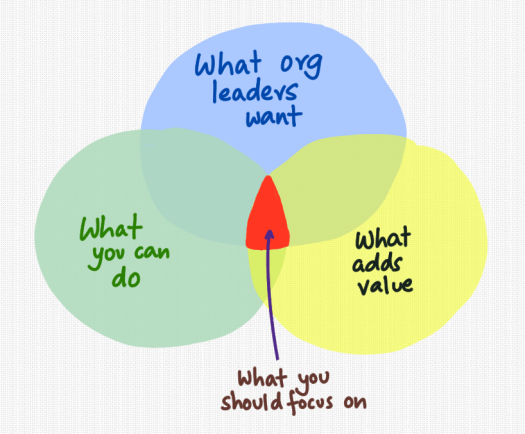
The place to start is with what the leaders of the organisation want to achieve.

Maybe they’re focused on growth, perhaps on culture, perhaps on both.

But they’re only going to sign up to things that they can see will add value. And value usually means something that adds to profits this year. Maybe next year, if they can see it makes sense.

The only things you should put in front of them, then, are the things you can do to help them with those jobs.

Then, it’s time for the plan.

Which pretty much comes down to some variant of objectives, activities and deliverables with a little bit of honesty and plain talking built in.

Maybe that structure is worth exploring another day.

Cheers,

Karthik Suresh