I’ve been talking to managers recently about what really frustrates them.
It’s how much of their time is drained managing performance.
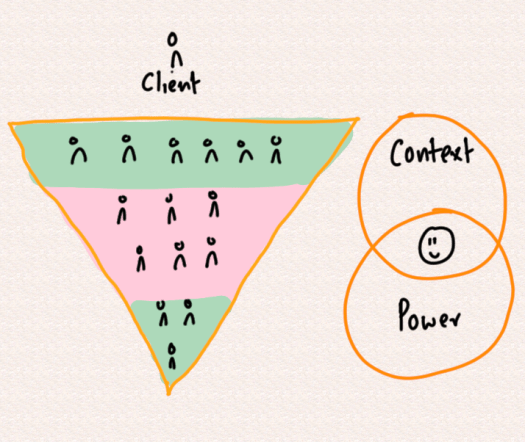
But the problem often isn’t the people. It’s the system.
For example, setting targets often results in gaming behaviour. The objective becomes hitting the target, rather than doing the work in a way that’s best for the customer.
We see this play out often:
the surgeon that avoids cases that hurt their stats
the salesperson that offers a ridiculous discount to get their bonus
the CEO that uses layoffs to maintain quarterly EBITDA
People will behave in ways that are rational for the system that employs them.
If you want them to act differently, you have to change the way the system works.
That’s the insight Deming had.
“A bad system will beat a good person every time.”
Next time, try fixing the system before fixing the people.
You know that question you ask your cat when it drops a mouse at your feet?
“I can see you’re very proud of yourself, but what do you want me to do with this now?”
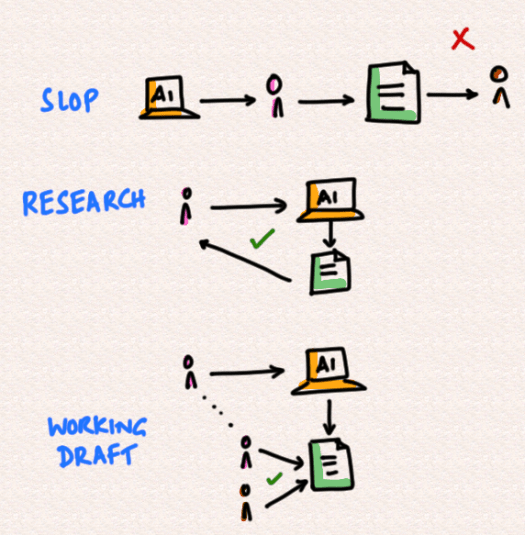
That’s how I feel when someone presents me with work they’ve made using AI.
Here’s an example. Let’s say you ask a junior consultant to generate market research and a go-to-market plan for one of your clients.
You get given 20 pages of output.
You ask the junior to talk you through the material.
Ideally, they’ve read the 20 pages, validated the information, sense-checked against prior knowledge, and can confidently articulate the situation and explain what needs to be done next.
All too often, you’ll get the same blank look the cat gave you when you asked it the question.
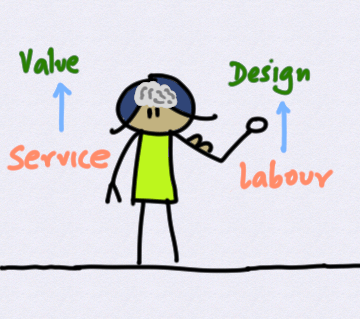
AI does not give you less work. In fact, you’ll probably end up with more.
Arthur Schopenhauer, as an old man, was asked what he thought about his life’s work on philosophy being ignored, and replied that he didn’t care at all. “They will find me”, he said.
This extract is at the end of a Peter Checkland (1992) paper I was reading, and so, of course, I looked up Schopenhauer.
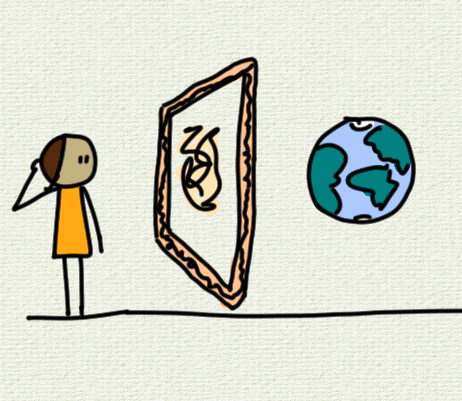
I’ve recently been studying “explanation” as a sense-making device, in the context of strategy making by organisations.
In essence, this is the idea that structure is not something external to people but something that they construct based on how they explain the way in which they see the world.
In practical terms, this makes the difference between arguing for investing in sustainable technology or waiting, between starting a war or compromising to keep the peace. Explanations that make or break the future.
So what are we trying to explain?
Schopenhaur argued that there are four kinds of objects and four corresponding types of explanations.
Material objects, explained with cause and effect reasoning
Abstract objects, explained with logic.
Mathematical and geometrical objects, explained with numbers and spaces.
Psychologically motivating objects, explained by motivation or moral reasoning.
Problems arise when we try and apply one style of explanation to a different type of object.
I see this problem all the time in my consulting practice.
Here’s an example. You have a leadership team that wants to build a decarbonized company. Should you therefore replace your gas boiler with an air-source heat pump?
The first problem is one of motivation. Do leadership believe in the case for decarbonisation? Are they forced to do it by supplier pressure? By regulation? What motivates them?
The second is a cause and effect problem. Will the ASHP meet heating demand in all situations? Are operating costs equivalent?
It’s when we mix modes of explanation that we end up with circular and stalled thinking.
Progress becomes easier when we use the right kind of explanation to match the problem we’re facing.