
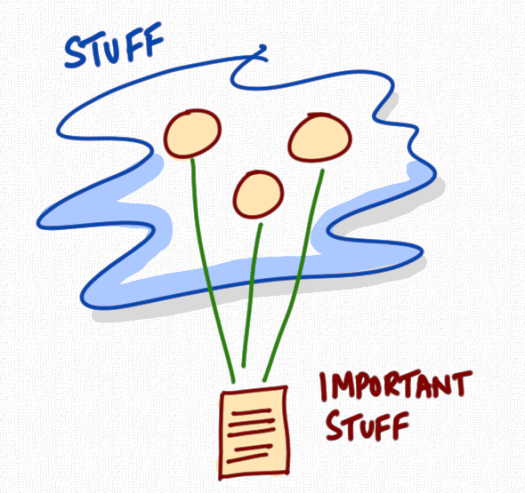
Selection is the art of picking out the important stuff.
I’ve been thinking about this as I read papers on deliberative processes – how we talk in small groups to take action.
Many of us have to have complex conversations – about strategy, sustainability, resilience, value, impact, and a myriad other topics.
But it’s difficult to hold more than a few ideas in working memory at one time.
As a result, we’re easily biased, swayed by what we’ve heard most recently, the thing we reacted to most viscerally, the image that comes to mind most easily.
The way we talk about complex things matters. The methods and procedures we use to manage discussions will lead to better or worse decisions.
One way to think about this is using the input-throughput-output framework from Gastil et. al, (2012).
Input is the raw stuff – the people and ideas you have to bring together to be able to understand a situation.
In our business, sustainability reporting, that’s involving diverse stakeholders, finding data sources, understanding strategies.
Throughput is about engaging with the stuff. How do we work with what’s there? How do we do this efficiently and cost-effectively. We want to work out the best way to work with the complexity of a given situation.
That might be interviews, working out process flows, constructing automations.
And then there’s output. Surfacing the important stuff. The ideas that matter. Analysis that helps support discussions. Conclusions that lead to action.
You can use the ITO model in many situations. Yesterday I was listening to a panel about circular economy principles in construction, and the same ideas came up. We need to reduce inputs – lowering the need for materials at the start of the construction process. We want to maximise throughput – keeping elements that have been made in service for as long as possible. And we want to close output, recovering materials and reusing them as much as possible.
But can you just imagine how complex the discussions are going to be to make this kind of process work?
My prediction: regardless of what’s happening with AI the ability to have good conversations – high quality deliberative processes – will still matter in 2026.
 Handcrafted insight