
Of all the seasons, the hungry season is the one we hope to never experience.
I watched “The Boy Who Harnessed the Wind” yesterday” – a 2019 directorial debut from Chiwetel Ejiofor.
The film is a micro exploration of what happens when human activity meets the effects of climate crisis and its impact on a subsistence farming family in Malawi.
- The weather dictates the growing seasons.
You plant when the ground can be dug – it gets too hard in the dry season.
- The rains are unpredictable Floods one year,
droughts the next. It’s a gamble.
- Resources are scarce. The only tools are hoes –
a technology so old it predates the plough.
- Short term interests. Cutting down trees gives farmers
money in the short term but removes the barrier that protects against floods.
Many of are so isolated from the food system that it’s hard to imagine what it’s like for subsistence farmers to be so dependent on the weather.
The developed world isn’t that much more resilient, really. COVID showed us that we are only a few days away from being unable to supply our basic needs if the system is disrupted.
How many people know there is a Hungry Gap in the UK – from around April to mid-June where we rely on imported and stored produce because the winter crops are down and the summer crops aren’t ready be harvested yet?
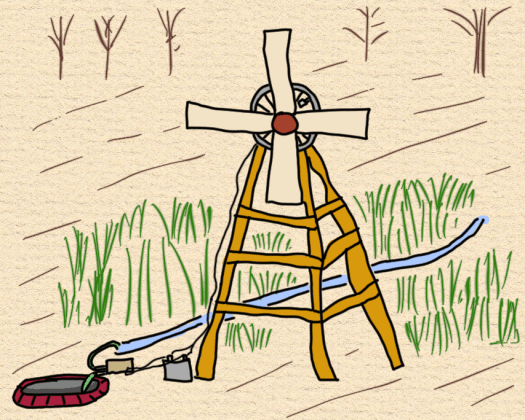
Spoiler alert – the story’s hero, William Kamkwamba, finds a book on energy and uses scavenged parts to build a working turbine, allowing his family to irrigate crops during the dry season and survive a famine.
Here’s the thing about the climate crisis.
We know it’s happening. We know that there are a range of reactions from people out there, from denial to catastrophizing.
What matters is the action we take.
 Handcrafted insight