How To Construct A Program That Actually Works

obvious-and-right.png

Monday, 6.27pm

Sheffield, U.K.

There are two ways of constructing a software design: one way is to make it so simple that there are obviously no deficiencies and the other is to make it so complicated that there are no obvious deficiencies. – Tony Hoare

Too much in life is about compromise.

If you work in a business, for example, do you think you’ll get the best tools and finest training available on the planet to help you do your best work?

That question isn’t worth answering but it is interesting to ask why that doesn’t happen.

Take the practice of programming, for example.

A program, in its most general sense, is a plan, an algorithm, a set of steps which, if followed, reach a specified end.

And a good question to start with in any problem situation is to what end?

What end are we hoping for by following this program.

Perhaps it’s a program to help us lose weight, to become less anxious, to market our company more effectively or get a particular product to market.

Or, of course, it’s a program that does something – a web application, for example or a spreadsheet.

In all these cases what approach is going to help you construct a program that works?

Tony Hoare’s observation in the quote at the start of this piece can also be looked at as a matrix, as in the image above.

Some things are obviously wrong – obviously a bad idea.

Like stepping into a puddle on the road or leaning too far over a deep hole.

A small number of things are obviously right.

Given a set of choices about what to do next one of the options is often a fairly clear next step.

The fifth step or the fiftieth step might be harder but the next action, the next move can sometimes be obvious.

This situation where it’s easier to be certain about the short term and much harder to be certain about the long term means we can make the right decisions for right now – but they are also almost always compromises.

When we work in groups anyway.

That’s why so much business is done using spreadsheets when almost any other alternative would be better.

We use spreadsheets not because they are the best tool but because they meet the requirements for a lowest common denominator.

It allows the largest number of people to collaborate on a project that involves numbers where they can understand and manipulate both the tool and the data it holds.

In many software packages you can manipulate the data but not the software itself.

And, in a sufficiently complex package, your ability to change the data is also limited until eventually you grind to a halt, stuck in the equivalent of a digital swamp.

The approach many people take is to take refuge in complexity – creating more complicated programs that try and address their complicated needs.

The problem with this complexity is that it also makes what’s going on much less obvious.

You don’t know if this particular approach is going to result in your falling off a cliff or making a successful moon shot.

These two extremes – between obvious and not obvious – dominate our thinking and so we go for safe solutions because we don’t want to take the risk of doing something more ambitious.

Unless you’re working on your own, of course.

If you’re doing things your way – ignoring what is happening everywhere else then you have a chance to create something new.

Or fail, of course, but on the whole you’ll learn something whatever happens.

If you want to break through this the challenge is to get the right perspective.

And that really comes down to the number of lines in your program.

As humans we can really only hold five to seven things in working memory and think through whether the way in which they are connected works or not.

If your plan or program is a hundred items long you need to group them and keep grouping them until you can describe them using five to seven lines that cover the major things you’re trying to do.

That’s the point where you can differentiate the wood from the trees – where the big picture emerges from the detail.

Okay – those are cliches but they make a point.

But, if you want to go past the cliches and look at how you might actually do this this article has a go at distilling a long Wikipedia article into its main points and comes up with a model that you can look at for yourself and see if it meets the need to be obviously right or wrong.

I suppose the point is this – thinking in terms of programs is a very powerful approach.

Once you’ve written a program that sets out what you need to do to reach a specific end you can run that program and see what happens.

And you can change it if the results aren’t what you want.

Because the secret to constructing a program that works is not just about making a great design.

It comes from running it, testing it and debugging it.

And if you do that enough times you’ll end up with a program that makes a difference.

Cheers,

Karthik Suresh

What Is The Main Thing That Will Get People To Notice You?

users.png

Tuesday, 7.14pm

Sheffield, U.K.

The ball you need to keep your eye on here is the underlying principle that wealth is what people want. If you plan to get rich by creating wealth, you have to know what people want. – Paul Graham, YCombinator

I’ve been reading some of the older essays that Paul Graham, the co-founder of YCombinator, has penned over the years and one of them has answered a question that has bugged me for a while.

Why is it that companies that make no money are sold at such astonishing valuations?

Facebook, LinkedIn, Twitter, Google, Snapchat, Instagram are all examples of billion dollar companies that were making no money at one time.

I grew up reading the essays of Warren Buffett, which in turn pointed me to the work of Benjamin Graham, the father of value investing who pointed to even earlier works that defined value in terms of the present value of future cashflows.

If you wanted to buy a company, for example, that made a good, steady product and you figured that it would keep selling for the next ten years, you might buy that stream of money at a discount today.

As a rule of thumb, for example, you might pay between 6 and 10 times earnings for such a business.

What if you thought that business was likely to grow?

Well, if you were bullish on that, you might go up to 20 times earnings.

And to protect yourself, you might actually work that out on the average of the last three years of earnings.

But the ideal, in those days of Graham and the early work of Buffett, was to pick bargains – to go shopping for discounts.

So I tried that first, when I was trying my hand at investing, and my picks turned out to have a disappointing tendency to go to zero fast.

Companies like JKK and Aquarius Platinum and Herbert Brown pawnbrokers don’t hold good memories for me.

Fast forward a few years and Buffett started listening to Charlie Munger and talked about buying great companies at a good price.

That tied in with the ideas of Peter Lynch, who suggested buying what you knew.

The increases I experienced buying into Superdry and Drax at particular times when they were cheap but still were good are a better memory of those times.

My early adventures at stock picking were more about the learning than the result really and so when it came to more serious investments I went with passive index funds – which have never really caused the kind of anxiety and euphoria that came with the active picks I made.

But in all that time one thing remained constant – the companies I bought made money.

So, how do you value a company that is making no money?

The answer, when you read Graham, is astonishingly simple.

Simply crowdsource the question.

What does that mean?

It means letting people tell you who the winners are.

Graham says that investors, venture capitalists and potential acquirers really have little to no idea of how good your plan is or whether your technology is really light years ahead of the competition.

So they turn to the market and ask what users think of your business.

They figure that users must have the good sense to select services and products that work for them.

When you tried to set up your first email account, for example, you probably tried rocketmail, hotmail, msn among others.

Do you now use gmail?

And if millions of people are making the same choices all you have to do is meet all the providers of such services and ask them how many users they have.

The most successful service will be the one that has the most users.

That’s why google pulled ahead in search, despite starting after Yahoo.

Now there is a danger in looking at large startups for all the examples of a successful approach because that makes you think only software businesses need to think of this.

It’s really about systems.

The question to ask is which “system” is most favoured by users.

McDonalds, for example, is a system, just like Google is a system.

And your construction business is also a system, anyone looking at your business can work out how successful you are by how many users you have.

And that means you need to ask yourself what your business is doing to get more users.

That’s a different question from selling – how many sales you’re making.

If you’re selling a service, for example, the price is immaterial – you could sell it for free and lose nothing but your time.

If you can’t get users, even if you’re giving it away, then you have a real problem.

If they’re signing up in droves, you can make money later on – you’ll figure out a way to do that because you’re giving people what they want.

Think about this for a second – what is the one thing you need to have if you want to persuade someone to work with you?

You need examples of work you’ve done with previous clients.

No one wants to be the first to try you out – most people are conservative and will pay more for something that is proven.

And there is no better proof than existence and growth of other users of your service.

And so, focus on users, because having them is the thing that will get you noticed.

And you can only get users by giving them what they need and want.

Which is why the number of users you have seems to have become the investment valuation rule of thumb for the digital world.

Cheers,

Karthik Suresh

What Is It You Want From Or For Your Customer?

customer-service.png

Sunday, 8.38pm

Sheffield, U.K.

People don’t care how much you know until they know how much you care – Theodore Roosevelt

I’ve been reading Seth Godin’s This Is Marketing and he has a very nice lime just hidden away on page 75.

It reads: “… what people want is to be understood and to be served, not merely to witness whatever you feel like doing in a given moment.”

I think that line is useful enough to stop and reflect on it for a minute.

Use it to think about how you execute your marketing strategy, for example.

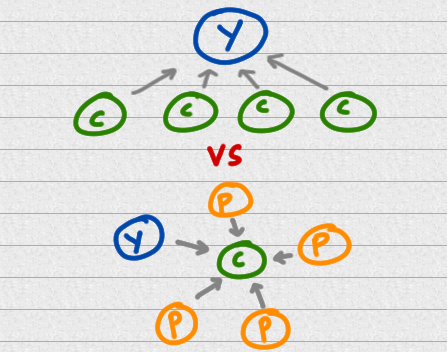
If you’re putting out content is it because what you want is for your customers to give you their undivided attention?

In your head are the flows of attention coming from your customers to you?

I suppose if you run a successful YouTube channel that’s exactly what’s happening.

Or if you’re a celebrity that already has attention flowing in then it’s a logical enough approach.

If you’re not, however, if you sell electrical services or drainage or carpet cleaning does that make any sense?

Or are you better off focusing your attention on the customer and working with partners to meet the customer’s needs more effectively?

You’ve already worked this out but in the picture above Y is for you, C is for customer and P is for partner.

I think this simple model can actually go a long way towards helping us plan modern marketing, especially since everything is so focused on content.

How much of your content is about you – about your history, your products and your skills?

And how much of your content is about helping the customer with what they need.

After all, before you can help them you need to understand what they need in the first place.

And to do that you need to study them.

And I’m not sure it’s as simple as using segmentation and words ending in graphics – like demographics, psychographics and infographics.

And I’m not sure it’s just about personas either like smart susan and joker joe, which are thin stereotypes – carboard masks stuck onto cartoon personalities – that completely miss the real people they try to represent.

When it comes down to it understanding is about going deeper than that, doing research that is in-depth and thoughtful.

Because here’s the thing – the end result, the holy grail for marketers is having empathy with the customer.

And empathy comes from understanding.

Now, you can shortcut your way to empathy if you are the customer – after all, you would hope you understand yourself.

But it’s not really that easy to understand someone else – not for those of us with a technical background and fewer social skills anyway.

For us, we need to work at it.

Two papers from my collection that might help if you’re interested in doing this are How to study an organisation and Studying Organisations Using Soft Systems Methodology.

Both of these papers are about methods to have deep conversations with customers – and figure out what would make their lives better.

Because once you know that you can build a business around serving them.

And that’s probably a better strategy than waiting for them to realise how magnificent you are and follow you in droves.

Cheers,

Karthik Suresh

Where Do The Big Profits Come From In Your Business?

big-profits.png

Thursday, 7.55pm

Sheffield, U.K.

There is only one boss. The customer. And he can fire everybody in the company from the chairman on down, simply by spending his money somewhere else. – Sam Walton

It’s hard to appreciate customers.

If you’re like most people, there’s something you’re good at doing – good enough so you’re better than others – and good enough to do it as your job.

It could be anything really.

Glenn Adamson, in his book Fewer Better Things: The Hidden Wisdom Of Objects, talks about how his grandfather designed jet engines and later took up woodworking – and put both skills down proudly on a single business card.

The thing is that we can all get so heads-down in whatever we do that it’s hard to make the time to look around.

And it’s even harder when your environment is designed so you never see a customer.

Increasingly we work in fields where we are separated from customers by technology and distance.

If you’re a programmer, for instance, you’re unlikely to meet a real user of the things you make, unless they happen to be your friends.

In other professions, however, that’s not the case – usually because what you offer is a service and that involves dealing with a customer.

In some situations people are clearly taught that they need to act in a certain way.

There’s a supermarket where some staff members have an angry resting face – where they look unhappy or cross even though they probably aren’t.

Now, if you’re at a checkout, and someone switches off their resting face and replaces it with a forced grin while saying scripted words of goodbye, that’s more creepy than friendly.

Personally, I’d rather they stayed with the normal version of them.

Now all of this is a roundabout way of saying customers matter.

Which you knew, of course. That’s why you’re always trying to get more of them.

Except, those aren’t the ones you should focus on.

The customers that you should be obsessed with are the ones that have already bought from you.

If you haven’t come across The Open Library before it’s an amazing place where you can borrow books for free to read online – and that means finding some books that you just wouldn’t stumble across in print.

So, wandering about, I came across The Upstart guide to owning and managing a mail order business which had the following line.

“The big profits in mail order comes from building up a satisfied customer base that continues to purchase from you year after year. The first time a person buys from you they are only trying you out. The second time they buy is the most important.”

This is the same thing Jay Abraham talks about all the time – You may lose money or only break even on the first sale, but it’s what happens after that that matters – it’s the other sales that are going to make you successful.

Now many people completely miss the implications of that insight – including me.

What it means is that you’ve got to make it easy for someone to make that first purchase.

You can’t talk about how good you are and what you do and why you should be trusted and expect a customer to just believe you.

You’ve got to earn that trust by first doing something small well.

Something that means they can try you out and see what happens without losing lots of money if you fail to deliver.

That first thing is all about getting the customer to place the next order – and that means making sure your marketing is aimed at existing customers as much as it is at new ones.

You need to ask yourself how easy and risk free it is to do the first piece of business with you, whether it’s getting something for free or paying a ridiculously low price for a large bundle of benefits.

And if you do that, do you have a pipeline of products or services that you can then offer once you’ve shown you do a good job and can be trusted?

Because the thing to remember is the value of a customer is not what you make on the first sale but what you make over the lifetime of their relationship with you.

That’s where big profits come from.

Cheers,

Karthik Suresh

How Can Acting Like An Actor Help You In Business?

method-acting.png

Saturday, 8.16pm

Sheffield, U.K.

All the world’s a stage, and all the men and women merely players: they have their exits and their entrances; and one man in his time plays many parts, his acts being seven ages. – William Shakespeare

Are you in the sort of role where you have to give presentations fairly often?

Perhaps you do sales presentations, seminars or small group talks.

I haven’t had to do these for a while but have recently had more on the go.

Which, of course, meant I had to put off preparing for as long as possible.

I excuse this by retelling the story of the woodcutter who had to chop down a tree in an hour and so spent the first three-quarters of the hour sharpening the axe.

It’s more interesting finding a way to hack something than to do it in the first place.

And my approach was to think about how to plan these presentations using scripts – which of course meant learning how to make scripts like the ones used in films.

If you remember, they look typewritten with dialogue centered and other stuff everywhere.

Anyway, I also decided that I would do this using Groff, learning how to create some simple macros along the way.

Now, for the one person, maybe not even that, who is interested in this, here is some code.

\# Define macro for screenplay format
.de DG
.CW
.ps 12
.ll 5.3i
.in 1.9i
.ce
\\$1
.ad l
..

.de NM
.LP
.CW
.ps 12
..

If you save this in a file called screen.mac and call that in a Groff file formatted using ms macros – as shown in the snippet below

.so screen.mac

.NM
THIS IS AN EXAMPLE SCREENPLAY LAYOUT PRESENTATION SCRIPT

.DG "INTRODUCTION"
And my approach
was to think about
how to plan these presentations
using scripts -
which of course meant
learning how to make scripts
like the ones used in films.

You get something that looks like this:

script-layout.png

Okay – back to the main theme of this post.

Once you’ve got your screenplay what do you do with it?

The point, I think, is to get better at telling people what you do in your business.

Now, what actors do is learn their lines so they can convince us they are someone else and draw us into the story.

How do they do that?

A paper by Nina Bandelj titled How Method Actors Create Character Roles tells us that Method-acting is a technique based on the work of Konstantin Stanislavsky, a Russian theatre director and practitioner.

He laid down conventions, a few of which are important for us to understand if we want to apply them to our work.

Few of us like to sell, but we also like to think we do good work.

So, we need to be clear on the underlying motivation for why we do what we do.

If we’re not con artists and do a decent job then at the heart of why we do the work we do must lie a conviction that it is good work to do.

Without that underlying motivation any performance will either fall flat or come across as fake.

Which brings us to being authentic. The best actors bring their own personality to a part. They augment it rather than taking away from it.

In your business you play many parts and one of the most important is as a salesperson – which is why the best salespeople are the ones that own the business. They identify completely with their business and so come across as authentic.

Crucial to a role, however, is understanding its context and environment. Method actors do deep research, relying on acute observation to understand the part they are playing.

If you’re selling to someone that process is one of deep research. The more you understand what your client needs the better your pitch can be.

In fact, these days, you’re probably better off not bidding for any work unless the client agrees to spend at least an hour going through the situation and answering any questions you have about what they might need.

When you’re pitching, however, you’re not going to read from your script.

That’s there to learn and improve and fiddle with – but you’ll also need to be prepared to deliver without holding onto it and improvise along the way.

The improvisation is what’s going to make your delivery natural – even if it’s scripted word for word.

And then there is the look and feel – the dress and props you use to show who you are – whether that’s a business person in a suit or a cool designer in a turtleneck.

There’s a school of thought that suggests you can act yourself into feeling a certain way.

If you want to feel like you’re a confident, accomplished presenter then you could do worse than acting like an actor.

The tools and methods they use to prepare for roles are ones that you can use to prepare for the day-to-day situations you face in business.

You just need to act like you know what you’re doing.

Cheers,

Karthik Suresh

Are You Burning Out Trying To Be Someone You’re Not?

charging-yourself.png

Thursday, 9.15pm

Sheffield, U.K.

Your best strategy is to manage your creativity, not your time. People who manage their creativity get happy and rich. People who manage their time get tired. – Scott Adams

Are you one of those people that needs a break after being around other people for too long?

I am.

It’s a trait, I understand, of introverts – something that Susan Cain has popularised in her book Quiet.

Many people find themselves in situations that don’t seem designed for them – instead they’re expected to plug into whatever is there and perform at peak capacity.

But, like the increasingly dismal performance I get from batteries that I try and use in my cameras, things go wrong.

So, if you were a battery, how should you use yourself?

The first thing to understand is how you charge your battery.

Some people need quiet time to rest and regroup.

Others need to be around people, amidst the buzz and vibe to be energised and ready.

If you’re one kind of person too much of the other kind of stimulation, or lack of stimulation, is going to mean you’re just not available to do anything.

Then there’s what you use your battery to do.

Maybe you’re an AA battery and can plug into most devices – but an AA battery designed for a remote control is not going to power a professional camera for more than a few minutes.

Or are you a specialist cell, designed for specific or demanding work?

It’s also important to know what kind of work drains you quickly – what’s the power draw?

I like the Alphasmart Neo, for example. It’s a portable electronic typewriter than you can write on for a year without depleting the three AA batteries that power it.

If you built a raspberry pi based unit to do the same thing you’d get about half an hour.

I bought two NEOs instead – they’ve stopped making them so I’m stocking up for the next 40 years of writing.

Which takes us to the topic of burnout.

The reason I was musing about this topic is that working with others depletes my energy – I need some quiet time to recharge after a burst of activity.

Some people say that burnout happens because you don’t get enough rest – which makes sense in that context.

The other way of looking at burnout is that it’s about doing too much work – about pushing yourself for to long.

But there are other things we do, things that we could do for a long time and emerge at the end of that time feeling more refreshed and energised than we were when we started.

I find that’s the case with activities like writing – at the end of a session I’m not drained – if anything I’m recharged.

But clearly if you work five back to back 12 hour shifts you’re going to be in a very different situation.

All of which suggests that burnout is not about enough rest or too much work but about how you manage how you charge and discharge and what things you plug yourself into.

You’d pick the right battery for your camera – and you should probably pick the right combination of environment and activities that are best for you.

And that might be an office with a door or a loud open plan space. It might be long periods of reflection or prolonged sessions of high intensity debate.

Whatever works.

But as Adams writes in his book, The Joy Of Work, managing your creativity is what matters.

And if you want to manage your creativity what you have to first learn is how to manage your energy.

Cheers,

Karthik Suresh

What’s Really Going On When You Try And Sell A Software Solution

crucial-conversation.png

Wednesday, 9.17pm

Sheffield, U.K.

The cause is hidden. The effect is visible to all. – Ovid

If you work for a large organisation do you think that the software you work with makes you more productive?

It’s not a question with an easy and obvious answer – not for the population at large anyway.

If you do a search some of the results you get suggest that productivity has gone up while others suggest it’s gone down.

The one thing that people agree on is that software developers are more productive – they have better tools and better ways to do things.

So that’s good – the programmers are doing well out of the technological revolution.

How about everyone else?

When I looked at this a couple of years ago the data suggested that productivity was flatlining.

And the reasons for that are probably not hard to see – the effects are pretty clear.

For example, how exactly has using something like Microsoft Word made you work better?

The chances are it hasn’t – not compared to how you would have worked a long time ago.

For example, the average time to draft and finalise a document has probably gone up – because instead of writing three drafts and checking each one very carefully we can now fiddle forever and let the spellchecker catch errors – but some still slip though.

Yes, the process of printing and emailing and sharing the document is much much faster – although instead of one package in the mail you probably send several emails.

The point is not that typewriters are better than word processors – although if you’re a techie you will probably accept that plain text is better than everything else – and that’s decades old.

The point is that systems are not designed to meet the needs of the user – they’re designed to conform with what the vendor thinks the user needs.

The picture above is an adaptation of a model shown in Information, Systems and Information Systems, written by Peter Checkland and Sue Holwell.

The model shows that people have different conceptual models in their minds about what is going on.

Think of what happens when you sit down to write a document.

The mechanics of the task is to get the words on the page – but the purpose of the task is bigger than that – it might be to explain an idea to your boss or let someone know you’re going to sue them.

As a buyer you need to do something – and the act of writing a document is a small part of what’s going on in your mind.

A vendor, on the other hand, isn’t that interested in whether you’re writing a letter to a friend or an annual report for a PLC.

They’re aware of it but what they want to show you is the kinds of styles and themes and fonts that you could have.

In an ideal world the model that the vendor has in their mind will be designed to serve the model that the buyer has in their mind.

In other words before you build a system to do something you need to know what that something is being done for – you need to understand what is being served as a result of activity before you build a system to help do that activity better.

That may seem pedantic but think about it.

As a vendor what you’re trying to do often is convince a buyer that your solution will work for them unchanged.

But it never will, for the simple reason that each person you talk to will have a different system that they’re serving.

So, you have to convince them to change what they serve to what you think they should serve instead.

This is unashamedly the view of enterprise resource planning software – if you want to use it what you need to do is change your business to fit in with how the software works rather than the other way around.

Or you could think about how you could adapt your software to serve the user better – or build something from scratch.

What that needs, however, is the skill to get into the buyers mind – to take the time to make what’s in their head visible and construct the model of purposeful activity that they’re using.

Then you can compare their model with your model of activity and see what’s the same (the green) and where there are differences and what you can do about it.

That takes time.

But the chances are that it’s only the vendors who take the time to do that kind of thing that then put in solutions that really help their customers.

The rest just move on.

Cheers,

Karthik Suresh

How To Do Research For Business Development

business-development-research.png

Research is formalized curiosity. It is poking and prying with a purpose.Zora Neale Hurston

Often, in our hurry for shortcuts and easy ways to success we ignore the basic routes – the ones that will get us there but that also need us to cover some distance first.

That happens all the time, to me anyway, when it comes to business development – which is not the same as sales.

Instead, it’s what you do to make your business better, which includes getting better clients.

Maybe even more of them.

As I was reminded recently it all starts with research – but what does that mean and how can you do it more effectively?

The model in the picture above is a five-step process that I find works for me – but that I also often need to remind myself to follow.

1. Start by designing a filter

The main choice we have to make these days is not what to include but what to leave out.

It’s easy to want to be seen as someone that can do everything but that simply means you also need to know about everyone.

And, as that’s impossible it makes sense to filter the universe out there and focus on only those prospects that have a need for your services.

That filter may be a simple one that first restricts by sectors then by companies and then by people.

You might choose, for example, to focus on the oil and gas sector, the companies with a turnover of over a billion and the Technical Manager for pipes.

2. Gather information

This step is often missed out or carried out in a way that isn’t systematic or repeatable.

The irony is that with so much information around us we do a quick search for a company, read a few pages and then try and get in touch with someone.

But, if you take the time to read about the company, what it’s doing, what its finances look like and what’s being published in the news then you get a much richer picture of what’s going on.

You can’t do that in your head – you need tools.

For example, this where things like Evernote or OneNote come in or, if you like open source, something that information security professionals use like Basket Note Pads or Dradis.

3. Look for common ground

Now, with your material you can read – and look for people and what you have in common.

The point of this is not to be stalkerish but to be curious – to take the time to understand what is out there so that when you reach out you don’t waste someone else’s time.

All too often you get connections on social media that are designed to test if you react at all – and then to follow up with a series of messages.

Which probably works for people – and they make their numbers but more people must get annoyed at the approach than those that welcome it.

If you want to build a business relationship with someone new it makes sense to keep it ethical – because otherwise you’re starting it in the wrong way.

If you take the time to understand where someone is from what is publicly available and craft a message that is based around common goals and values you’ll probably do better – in terms of quality contacts anyway.

4. Seek to understand and educate

Children don’t go happily to someone new, they find someone to hide behind, peeping out warily.

That sense of being wary never leaves most of us. We’re not interested in what you’re offering – we’re just looking at that first step and seeing if we’re brave enough to take it.

So that means you’re a way away from making a sale – instead your approach should be designed to understand and educate the person you want to work with over time.

And that probably means slowing down – not pitching and selling right away.

That can be hard if it’s what you feel like you should do but it might be easier when you think of it as having to go up a number of steps before you reach the point where you can do a deal.

5. Study the results

Studying organisations and people is a matter of looking and learning.

Yes you may want to be data driven and formal but in many service businesses what matters is the one to one exchange you have with others.

But whether its data or whether its a reflection on how your last pass through the process loop went, the point is to look and learn.

Did your filter work effectively?

Did you get enough information – was there something you missed that might have helped with a conversation later on?

Are people responding to you – are you showing that there is enough common value for them to take that first step?

And then are they taking the next one, and the next one after that.

Do the basics well – even though it’s hard

The fact is that many of us would much rather be busy doing work than working on systems or improving our own approaches.

As the saying goes, however, you don’t rise to the level of your expectations – you fall to the level of your training.

It’s easy to skip any one of these steps and try and go straight to a hard close.

But by taking your time you’ll build a better business – one that works for you and helps you eventually meet your expectations.

Cheers,

Karthik Suresh

What Can Chess Tell Us About Developing A Content Strategy?

chess.png

Saturday, 9.12pm

Sheffield, U.K.

I used to attack because it was the only thing I knew. Now I attack because I know it works best. – Garry Kasparov

Saturday mornings are a time to go to the library and browse for surprises.

Today, however, I had a definite aim in mind.

The elder youngster and I had played a game of chess earlier – something I don’t really do much.

After a false start, confused by the picture on the cover that showed a chessboard that just happened to be set up wrong, we played a couple of games.

So I thought it might be a good idea to have a look and see if there were any books that might help a younger audience (and me) with our game.

After some searching I found a book called Tips for young players which, confusingly, does not have the word Chess anywhere in the title or on the spine – one assumes the authors wanted to keep it secret.

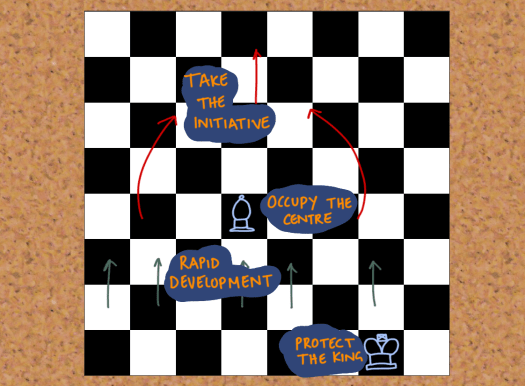
Leafing through the pages I learned there are four concepts you must understand to win – and interestingly they are four concepts that you can apply to many other things in life.

Like developing a content strategy.

I thought of content strategy mainly because I’d been talking to a friend about content and was musing on the kind of model that might help – and this one came along so let’s see if it’s any use…

1. Control or occupy the centre ground

You want your pieces to be in the centre of the board.

A bishop in the centre can reach 13 places. One in a corner can only get to seven.

The content marketing equivalent of this is to ask whether you’re in control of the space you want to play in or whether you’re on the fringes.

If you’re trying and failing to break into a crowded and noisy market maybe there’s a quiet space where you can be heard better?

Sometimes this means getting more specific about what you do.

If you’re a marketing consultant, for example, and want to stand out from the other marketing consultants out there what space would make sense for you to occupy?

The real point here is that you have to make a decision about which battlefield you are going to fight on – one that you control or one that you need to fight your way onto in the first place.

That decision could make the difference between success and failure.

2. Protect the king

As the game opens up your king gets more exposed so it’s important to move the piece to safety – to the edges as soon as possible by castling – crossing over the king and the rook.

The equivalent of this is protecting your most important asset – whatever that might be.

When it comes to content that might be your process, your writers or your research material.

Or, more importantly, it’s probably your time.

If you’re in charge of creating content you need to set time aside to do it – and you need to protect that time.

It’s almost impossible to do creative work ad-hoc.

The best way is to make it routine – to sit down at the same time and do the work – and that won’t happen unless you protect and shield that time from everyone – bosses, families and distractions.

3. Rapid development

In Chess pawns play a very important part.

Despite being the weakest pieces on the board their ability to attack and the reluctance of your opponent to sacrifice valuable pieces in exchange for a pawn let you charge forward.

And to get that charge underway you want to move pieces quickly.

Rather than doing multiple moves with one piece get them all into play.

The equivalent of a pawn in your content strategy is perhaps a blog post – something short that you can get out every day but that over time builds into a solid library of content that leads your charge.

Putting something out every week helps create a more receptive environment for the larger material you send out every few months.

Your mix of content can be likened to your mix of pieces – some short and expendable and some long, complex or expensive to create and use.

What you want to do, however, is get your content in play because the more you have the more likely it is that you’ll give the competition a “Content Shock” where they see the amount of stuff you have out there and decide that it’s easier to go and compete with someone else.

4. Take the initiative

Finally, if you’re now creating content you can’t sit back and wait for people to find you.

In Chess, once your pieces are on the board you need to take the initiative – press the attack and force your opponent to react to your moves rather than reacting to theirs.

With content that means reaching out and helping put your material in front of people – using social media and the other means at your disposal to get your message out there.

The fact is that there is much more stuff out there than people will ever have a chance to get around to looking at.

For a while – maybe a long time – you’ll need to work on recruiting people to look at your content – maybe directly, maybe through advertisements.

But you have to do something – and take the initiative or you could be waiting a long time

Summary

These four rules seem quite simple but it’s quite likely that if you look at your own content strategy you could do better on one or more of them.

Perhaps you’re creating content that’s too much like everything else out there.

Maybe you’d like to do more but just haven’t protected the time.

Or you’re a perfectionist and it just takes you a couple of months to get everything right instead of putting something out every day or week.

Or you’ve got a great content creation machine – but no one knows about it because you haven’t told them.

But when you boil all this down I’m reminded of something a friend of mine who played competitive chess once told me.

Just attack.

Cheers,

Karthik Suresh

How To Think When Planning A New Marketing Campaign

generalisability.png

Friday, 8.48pm

Sheffield, U.K.

Never write an advertisement which you wouldn’t want your family to read. You wouldn’t tell lies to your own wife. Don’t tell them to mine. – David Ogilvy

What do you do when thinking of marketing a new business or idea?

If you follow the traditional approach you start with a plan – and writing that plan requires researching and understanding your market.

But what does that research look like?

One way to approach the task of research is to look at it as a scientific problem.

You have a population out there and you can segment that population using various characteristics – geography, income, job titles and so on.

Once you study your population – little humans suspended in a vat of solution you can come up with your campaign – say a social media or search engine ad and let it run and a percentage of the humans will make their way towards you like iron filings towards a magnet.

This system works – after all many people have successfully used it to market their businesses online and offline.

So, surely you can use it as well?

Well… there are a couple of issues that are worth understanding first.

I was listening to Jim Collins being interviewed on the Tim Ferriss show.

It’s a fascinating episode and you get a chance to listen to a management legend – someone who has built a career on studying companies using methods like the ones described above – positivist ones.

Collins and his team study huge amounts of data, coding them and pulling out insights – which is how he identified a set of companies that outperformed others in his book Good to Great.

But, the problem is that despite all that data the characteristics that made the sample companies great only describe what they are – and are little use when thinking about companies not in the sample.

Taking the picture above, the insights you get about the samples in A cannot be generalised to include the samples in B.

Why is that?

That’s something a paper by Lee and Baskerville titled “Generalizing Generalizability in Information Systems Research” goes into in some detail.

To cut a long story short you can study a thing and say things about what you see and the measurements you make.

But what you can’t do is prove that what you learn or believe is going to apply to other things.

It’s something called Hume’s truism.

You can assume, guess and try it out – but you can’t generalise – say it’s generally true that if you do what you did in A you get the same result for B.

Which is what Collins says as well: “The books never promised that these companies would always be great, just that they were once great.”

So, what’s the second way of doing your research.

Well, you need to do what the experimenter is doing in vat A – jumping in and getting involved in the situation.

If you’re trying to engage with people – trying to get them to listen to your pitch about what you do then your starting point is to understand them by living the way they do.

Sort of like ethnographers of old used to do – go and live in societies to understand their customs and rituals.

And that’s what you need to do – go to the people you want to talk to and understand how they live and ideally, live it yourself.

That kind of research doesn’t try and generalise – it tries to understand.

It doesn’t use stats and conversion ratios but looks at people and appreciates them for what they are.

And I don’t think you can play games like saying you’ve created personas so now you understand the market and what you need to do.

Now, of course, bosses want results and want them quick.

So just buy that list and send out some emails.

But if you really want results you’d be better off learning how to do good quality research.

Research that seeks to understand – not from a distance but by getting up close and personal.

It’s a bit like a celebrity who spends a night out in the open to get an appreciation of what a homeless person goes through.

That’s better quality research, from this point of view, than a pile of papers written in a warm, cosy study about the nature of the homeless experience.

If you want a name for this kind of approach we can borrow the term Genchi Genbutsu from the Toyota Production System.

Which means Go and See what is happening for yourself.

Cheers,

Karthik Suresh