A Network Structure Beats Hierarchy In A Post-Pandemic World

2025-07-23_post-modern.png

When you run your own business you get to choose how you structure it.

I think we’re still struggling with how to do this in a post-pandemic world.

I’m a startup person, happiest in a small firm with a few partners.

Life is simple here.

We have two jobs –

  1. Build stuff that solves problems for clients.
  2. Talk about what we do so new clients can find us.

The problems start when we try and grow up.

As you grow, you add more people, and as you add more people you create structures and roles and processes and governance and bureaucracy.

This is how you start loving your work and then find yourself ten years later wearing a suit watching others work and wondering why it’s all so boring.

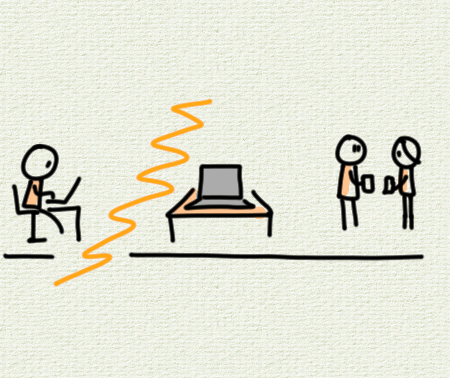
The pandemic changed all that. We found we could work with anyone, anywhere.

What mattered was finding ways to build teams that worked great together.

And you can do this remotely just as well as you can do it in-person. People who say you can’t just don’t know how to do it yet.

And these teams don’t need to be at the same firm.

We can cut across organisations – the team is made up of the client or problem owner and people from multiple firms that bring the expertise together that’s needed to improve the situation.

It’s the network that delivers value, not the hierarchy.

This is, if done well, inherently more efficient, effective and sustainable than the way we did things before the pandemic.

Some people will disagree vehemently. And that’s ok.

The economics are what matter in the long run.

It’s OK to Push Against Boundaries To Make Things Better

2025-07-22_decisions.png

Many of us, perhaps the majority of us, are insufficiently cynical about how the world really works.

We spend time doing what we think is right – and are frustrated when things don’t work out.

Many years ago, I went to a seminar on decision modelling, where I was introduced to decision trees.

These are branching models of decisions, consequences and outcomes.

Forks in the road, if you will. Times that come along where you must choose to go one way or another.

These choices come along all the time. Should I buy this software or wait? Approve this project or not? Go one way or another?

We can spend a lot of time modelling all the options and putting together sets of recommendations.

But does all this modelling actually help – will anyone use it in decision making?

That’s where understanding boundaries comes in handy.

All too often, we draw a boundary around the work that ignores where real power, real decision making authority rests.

I saw a good example of this during a recent seminar. This had to do with ways of decarbonising an asset portfolio – and there were a number of options that could be explored.

We could look at redesigning the assets, changing fuel sources, working out schedules and timelines for replacement.

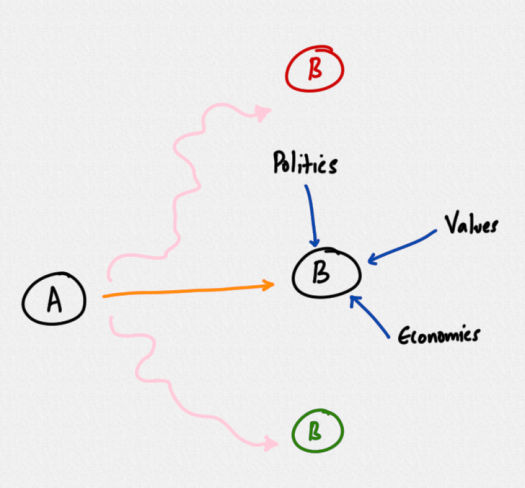
But what was possible depended entirely on government regulation being passed.

Although it looked like there were many options, the political and policy process, which was outside the boundary of the analysis, would determine which pathway through the decision tree could be activated.

So, all we can do right now is wait.

A fancy term for that is preserving optionality – wait until you absolutely have to do something rather than moving too fast too early.

In the meantime, use the tools you already have to get on with what must be done.

Of course, this is also a recipe for stagnation. If you do only what is required, how will you get ahead and prosper?

And that’s why the prescription is not about being cynical or about being over-prepared – it’s about tempering analysis with a dose of reality.

Do the modelling – it helps you think clearly about what might happen in the future, but include the constraints and fuzzy factors that are traditionally excluded as being too “soft” from your analysis.

Boundaries are also mental constructs – it’s ok to push against them when you’re trying to change something for the better.

A Systems Model For Decarbonising Organisations

2025-07-21_strategy.png

The model for decarbonising business is arguably quite simple.

Take a company with emissions of 1 or more, and make that number 0.

The devil is, as always, is in the detail.

How can we stand back and look at the situation facing organisations today?

The first thing is to recognise that making an organisation more sustainable is not a departmental activity – it requires coordination with all the main functions.

The sustainability team has to work with legal, finance, procurement, IT, operations, HR, marketing and others and get them aligned on the way forward.

But the first question anyone asks is “where are we right now, what does the data say?”.

So the starting point is often the second step – we need to monitor the organisational system – and that starts with collecting data and creating a robust and reliable data set.

Ten years ago, this was an annual exercise that no one worried about too much. You had different reasons for collecting this information, depending on the market and schemes you were part of, but it was really an end-of-year exercise.

If you want to make decisions on the data, however, if you want to use it to take control action on the organisational system, then you need it more frequently – so that’s a harder thing to put in place.

But we have the systems and technology to do that now.

Some people worry that we’ve gotten stuck at this step – collecting and reporting, but taking no action.

But taking action is a non-trivial problem and goes back to step 1 – we have to get the key decision makers, the people with power, aligned first.

And there are other factors that influence their decision making – what customers think, what the regulations say, what employees want, what’s the best use of money right now?

It takes a lot of talking, lots of engagement, to get some clarity on this.

In the meantime, the climate keeps changing.

There is a definite shift in the mood music – from an attitude of we can solve this to what do we do if things start going bad?

There is more talk about the third element in this picture – the exposure to climate risk.

Depending on who you are and what you do the impact from climate change could be nothing, or pose an existential threat to business.

A major emerging risk to solar panels, for example, is extreme weather, with hail and wind risk factored into insurance premiums for developments.

The stuff we’re focus on right now – the carbon accounting – is just the basics. It’s what we have to do to be able to have a proper conversation based on data and evidence.

Those conversations, the engagement with leaders in organisations on which decisions need to be made – that’s where the real work is.

Building Custom Solutions Versus Buying A System

2025-07-19_build-buy.png

In this day and age you should always go out and buy a system to get a task done – there’s an app for that.

Right?

I’m not so sure.

More than ten years ago, we were trying to get into the demand response business.

Demand response, in case you don’t know, helps balance a grid that has a high proportion of renewables.

Because the sun doesn’t always shine, and the wind stops blowing, renewable supplies can be intermittent, and be unavailable at certain periods.

Instead of spinning up a gas generator to keep supply going demand response programmes pay large users to switch off and drop demand – hence demand response.

We went to the market to see if there were solutions out there that would do the things we needed – monitor notifications from the grid, meter client sites in near-real time, and pull everything together so that we could ask a site to turn down or up as needed.

We looked at the market, talked to providers – but nothing quite fit what we needed.

So we started building our own. In doing that we learned more about how meters operated, which ones we could connect to and which ones were tricky. The difference between modbus and TCP-IP.

Eventually, we did get our own system running, held together with a combination of servers and code that did the job – that ran and helped us operate the business.

Would we have been better off buying a tool? I don’t know, because we didn’t.

We built a lean and low-cost system that let us do what the market needed and test if it could be a business.

Which it wasn’t. The DR business at the time didn’t have a working economic model – it’s a monopsonist system which basically means suppliers can’t make a margin.

It wasn’t for us.

For the last several years we’ve been developing systems for energy and carbon data management instead.

It’s not an easy space for corporates to scan – there are thousands of systems out there and it’s even more complicated with the hopes and promises from AI.

And the next couple of years look to be challenging – with a greater focus on costs and a need for effective solutions that deliver clear outcomes.

Keeping it lean and simple still has value here.

To Do A Thing – You Must Have These

2025-07-18_hamlet.png

I’ve been making a conscious decision to put the phone away and read more – and I’ve just finished James Shapiro’s 1599 – A year in the life of Shakespeare.

This was an incredibly productive period for Shakespeare. He wrote Henry the Fifth, Julius Caeser, As You Like It, and drafted Hamlet.

The backdrop to his writing is equally interesting. An ageing tyrant was in power, the first Queen Elizabeth. The country was under threat of an armada from Spain and faltering under an Irish Rebellion – and the Queen was relying on a brash young noble, the Earl of Essex, to go in and sort it all out.

I wondered aloud to a friend if the world of today had parallels to the world of 426 years ago.

My friend, a history teacher, reminded me that such backdrops have existed for most of history – power and politics change little because people change little.

Shakespeare had to tread a fine line between saying things that had to be said – that were important to hear – and getting in trouble.

It was a world of censorship, one where books and plays were seized and destroyed if they were considered dangerous.

We know very little about how Shakepeare navigated the politics of the day or his personal views on anything – the richness of his surviving work is only equalled by the lack of information on him as a person.

He must have been good at what he did, however, because he did the work – he wrote his plays, he acted in them, he ran a business – and what he created still helps us make sense of the world.

If you have things to do, for example as Hamlet did, you’ll succeed if and because you have cause and will and strength and means.

Batten Down The Hatches – Yet Another Crisis Is On The Way (Probably…)

2025-07-17_clean-fossil.png

In real life the good guys don’t always win.

But sometimes they get the chance to do some good.

My timeline is full of people talking about just how hard it is to carry on the work of sustainability in organisations.

It’s not like the heady days of 2020-22, when we thought everything would change and money poured into ESG funds.

People said, they insisted, that ESG had alpha – that firms with strong ESG would outperform the market.

And that looked like it was the case, for a while.

But, would you bet your life’s savings on a thesis – on an expected future?

Life has an unwelcome habit of attacking you in the rear.

I’m quite conservative. I think sustainability is important – and embedding it in everything we do is the sensible thing to do.

But I’m not naive enough to think that the world works the way I wish it would.

I made my bet on the market. Just hold the index. If ESG firms do well, they will make up more and more of your portfolio. If something else does, you won’t lose out.

And that’s precisely what happened.

Few people – no one I knew – predicted that Russia would invade Ukraine in 2022. Sanctions would mean that a quarter of Europe’s energy imports vanished from the supply side.

The boom that followed was in the oil and gas sector, not in the clean and green one.

The last 6-12 months have been about geopolitics, about nationalism, protectionism and a backlash against regulation, starting with elements of ESG.

So, is all hope lost? Should we just give up?

Of course not. A simple constant in life is that one thing happens after another.

As long as I have worked, there has been crisis after crisis – all we know for sure is that something will happen that we didn’t or couldn’t predict.

Things happen in cycles. And being responsible for cleaning up our mess will come back into fashion.

In the meantime, businesses would do well to batten down the hatches, to run lean and figure out how they can do more with what they already have.

Do What You Do Best And Partner With Others Who Do What They Do Best

2025-07-16_chatgpt-friend.png

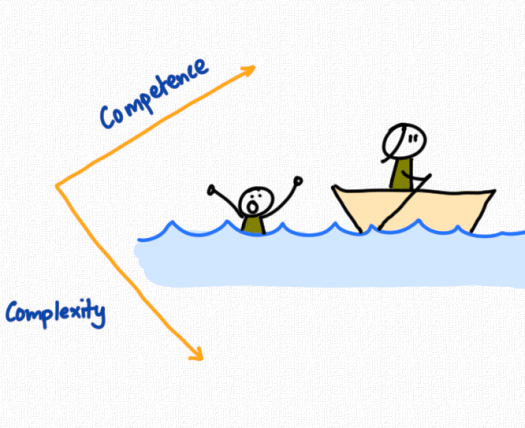
For a long time, everything I saw suggested that people in organisations rise until they reach a sustainable level of incompetence.

For the first time, I think that’s no longer the case.

The idea, as you probably know, is based on the Peter principle, developed by Laurence J. Peter that suggested that success leads to promotions until you reach a point where you are no longer competent – and this is where you plateau.

But why would you plateau?

There are two reasons.

First, you’re too senior to do the work so you hire others to do it for you and oversee what they do.

Inevitably, your skills fall behind, until one day you no longer know enough to understand what others are doing.

You did that to someone else, and one day it will happen to you.

The second is that as you rise in an organisation success is less about the work and more about the politics.

This is a well-understood, well-researched phenomenon that derails the best laid plans of well-meaning leaders.

They spend so much time on the politics of their organisations that’s there’s no time left to learn and develop their own capabilities.

So what’s different now?

It’s that you now have a friendly AI to help – to be there and support your learning journey – a supportive system that has your back.

It means that you can figure out how to do something in a few hours that would have taken you six months the old way – where you had to hunt down the information.

I cannot begin to express how transformational this can be – if you use it right.

The key is using these tools to help supercharge your learning rather than seeing them as tools that you can offload work onto.

Why did you hire someone to help you in the first place – presumably because there was a task to be done that was taking too much of your time and the value equation didn’t add up?

But now, if you can spend less time to solve that problem than it will take to go through the pain of recruiting someone – shouldn’t you just do that?

But there’s one more thing that will make the difference between doing this well and getting overwhelmed.

When you can learn anything – you should focus all your time and energy on what you can do best and partner with others on what they do best.

That, I think, is the future of teams – in companies, boutique consultancies and all kinds of organisations.

The AI Chasm – Cross It With The Power Of Responsibility

2025-07-15_deployment.png

The concept of a chasm that we must cross was introduced by Geoffrey A. Moore in 1991 to explain the adoption challenge faced by people marketing innovative new products.

This may be a useful model to help us figure out how to adopt AI – and maybe make it work.

You might have seen a version of the saying that goes around where a man says to a horse, “A tractor won’t take your job, but a horse using a tractor will.”

I have a feeling that some of us might be horses when it comes to AI.

At the recent EURO conference Nici Zimmerman said that building AI was a computer science problem – deploying it was operational research.

The huge amounts of capital and technical talent poured into the computer science bit means that a huge number of people – billions now – have access to free or low-cost AI.

The next step is deployment – and we’re all figuring out how that’s going to work for us.

Let’s look at three use cases and I’d be interested in your reactions.

  1. Using AI images and video in posts

As you know, I draw all my blog and LI pictures and write the text myself.

So, I may be biased, but I find myself scanning text and images and if I think they are AI generated I am less likely to click or engage with them.

There’s one or two that stand out – the Schein critique, for example – but on the whole I’m not interested.

  1. Using AI to create applications or long-form documents

These tools are great at outputting large amounts of content – whether that’s code or text – and it looks like something useful is going on.

There’s another observation going around – if you have 50 lines of code to review, then you’ll probably look at it and have comments. If it’s 5,000 – then meh, it’s probably fine.

Big stuff takes time to proof, and if you don’t know enough to do that or aren’t willing to hire someone to do it then it’s likely that stuff gets shipped that is flawed.

For big projects, I’m currently betting that resource levels don’t go down. Instead they shift from building stuff to shoring up broken stuff and getting increasingly frustrated.

  1. Professional Services

This is where AI is having an impact, as far as I can see.

You have someone that has to take responsibility – a lawyer, a consultant – and as part of that they need to review and understand material.

AI can help do that. It can take a first pass and help you figure out where to look.

It means that you, as a senior, experienced person, don’t need a junior or assistant any more.

That’s an important distinction. Many people look at jobs and think that they just exist, that’s there’s a fixed stock of jobs out there, something like a fixed stock of gold.

That’s not the case. Jobs are made. That job you’re doing didn’t exist once. Someone created it.

And AI will mean that some jobs are no longer created. They’re just not required any more.

But new ones are.

And the most important one, one Ethan Mollick suggested, is that of “sin eater”.

Someone that takes responsibility to take what AI makes, and make sure it’s usable.

In the age of AI, we’ll have to be more responsible if we want to continue to exist.

Two Of The Most Important Decisions I Have Ever Made

2025-07-13_weekly-review-reflection.png

This week marks perhaps the most important milestone in my life.

My youngest son will finish junior school.

If you know me, you will know that I have spent the last 20+ years obsessed with decision making.

And what I’ve learned comes down to the thing that my son’s teacher said she shouted while running after him.

“Make good choices”

If you have young children, pre-school, perhaps, here are two pieces of advice that I will never have cause to regret.

The first comes from a blog post I read by Tim Urban of WaitButWhy.

He wrote that people don’t realise that by the time we turn 18 and leave home for the next stage of our adult lives we’ve spent 93% of all the in-person time we’ll spend with our parents. It’s already the tail end of your time together.

If your kids are 3, that’s 15 more summers. 15 holidays if you go away somewhere with them once a year, before they pull away from you.

I am quite tight, but it was a simple decision to say we should at least do two experiences a year. More if possible. Double or triple our stock of memories with the kids.

Not expensive stuff. It’s not about money. It’s about having more time with your children.

The second thing is that if you put work first you’ll miss the first 10 years of your kids’ lives as well.

Leave at 7.30, come back at 7 and do that for long enough, and the years will go by. And you’ll miss really important stuff. You’ll miss them growing up.

I tried very hard to construct the kind of working life where I could move from commuting every day to being at home.

I’ve managed to have around 6 years of walking my kids to school. Six years of four minutes twice a day. Walking up and down, hand in hand.

One day, as comedian John Bishop said, one day they’ll let go of your hand and never hold it again.

And it ends this week.

But I was there for it.

These two decisions will be, as far as I am concerned, the best choices I ever made.

And if you are in that stage of life, with children that are still young, I would strongly advise that you consider making them too.

Are You Bringing a Digger Or A Spade To Work?

2025-07-07_digger.png

I was trying out the new Gemini cli coding assistant on the weekend and it feels like something truly new – worryingly so.

It could be the equivalent of bringing a digger to a spade fight.

We needed our garden doing for years. The space was hard to access and the early quotes we got were astronomical because they involved a couple of folks with spades digging out all the soil for a few days.

So we waited until we were doing larger renovations, and got a digger around, which flattened everything in a few hours.

And that’s the sort of difference I see that working with a coding assistant in the command line can bring.

It’s foundational.

You can ask it to work out a plan for a an application, set out the folders in a modular way, and start creating the skeleton of the application.

It hurries along, setting things up, testing them, seeing there are errors and fixing them.

You get to the point where the workspace is flat and prepped and ready to go pretty quickly.

And that speeds up your ability to create tools that help – and figure out which ones work and which ones don’t.

I could build (or have the AI build for me) a couple of tools that just worked in the time it takes to go and make a cup of tea.

Another attempt at a more complex tool didn’t work out quite like I wanted but it reminded me that I had another approach that worked ok.

For a developer, speeding up the time between idea, code and execution is important.

The sooner you have working code, the sooner you can tell whether you’re on the right track with a solution or not.

I know there’s a massive debate about whether AI is simply doing things that artists should be doing by taking and remixing their work without permission.

But in software development this is starting to feel like an emergent phenomenon, a shift from a coding language to a natural language development pattern, something that is a throw back to the dreams of literate programming.

In this space, anyway, it feels like something new and important is happening.