How Do You Work Out Your Brand Personality?

metaphor-elicitation.png

Saturday, 9.51pm

Sheffield, U.K.

The metaphor is perhaps one of man’s most fruitful potentialities. Its efficacy verges on magic, and it seems a tool for creation which God forgot inside one of His creatures when He made him. – Jose Ortega y Gasset

I’m getting a lot of my inspiration from TED talks at the moment – mainly because I watch them while putting the kids to bed in a bid to avoid falling asleep myself.

And Morgan Spurlock’s talk The greatest TED talk ever sold came up on my feed.

It’s about Spurlock’s vision to create a film about product placement but the bit that caught my attention was twelve minutes in where Spurlock decided he needed an expert to help him understand his “brand personality”.

He went to Olson Zaltman, founded by Dr Gerald Zaltman who came up with the Zaltman metaphor elicitation technique, or ZMET.

The process they used with Spurlock came up with the idea that his brand personality was “mindful-playful”, which seemed to sum up his approach of going into deep, important subjects in a different, imaginative and irreverent way.

So, what is ZMET and how does it work.

It turns out that it was patented and I came across another associated patent on using the technique along with physiological monitoring.

The basic point Zaltman makes is that most communication is non-verbal, although that’s debatable, so market research methods that are based on verbal means miss the stuff that isn’t being said – the things people are less aware of.

The ZMET is a way to make these “hidden” preferences more visible.

The picture above takes elements of the MET that’s described in the patent – 14 steps in all.

The process starts with something like a storyboard – select images that are important to you and talk about them, tell stories to the researcher.

Sort your images into groups – try and see what’s common about them.

The reason you’re doing this is to study something – yourself perhaps – or your product brand – so dig into that product using all the senses you have, including sound, shape, touch, smell, taste and feelings.

From all your images select one that is the most representative – what describes you best.

Now that you’ve seen all you’ve seen, think about what you couldn’t get – talk about that.

Talk about the opposite of what you are.

Talk about the one critical message you want the audience to get.

And talk about what they will want to hear least – what’s the message they will be most resistant to.

Now, if you’ve done all this you have a rich trove of material to work with – lots and lots of metaphors.

Then you put things together to create a mental map – what I’m used to calling a conceptual model.

Something like “mindful-playful”.

It would be nice to see if there are other groupings like that but I didn’t find that in my brief search, no doubt there are papers on the topic.

The thing with this method is that it’s like a storyboard on steroids.

We know we’re told to collect pictures of what we want – get that image clear.

But this approach takes those images and really digs into them to find out what’s underpinning them – and that’s why I think it’s really quite powerful.

Personally, I might do it with drawings, just because that’s even more organic.

You know – talk to someone about the important events in their lives and get them to draw rough sketches, sort of like I’ve done in the picture.

But really, it’s about trying to hear what’s often not said.

And it’s when you do that that you discover what’s at the very core of who you are.

And when you do that you know everything you need to know to get your brand personality right.

Cheers,

Karthik Suresh

How Do You Know When To Walk Away From A Prospect Or Promoter?

castles-in-the-air.png

Friday, 9.18pm

Sheffield, U.K.

A neurotic is a man who builds a castle in the air. A psychotic is the man who lives in it. A psychiatrist is the man who collects the rent. – Lord Robert Webb-Johnstone

I’ve had some interesting conversations recently and one of them reminded me about how to walk away – when do you know you have to do it?

You will come across a great many opportunities in life – which often come along with a friendly face trying to get you to buy into them.

Sometimes that face belongs to you.

It’s not always clear what you should do – will you miss the opportunity of a lifetime or will you breathe a sigh of relief that you dodged that bullet?

Cliches exist in this space because they’re true.

I spend a lot of time listening to people and I’ve started to realise one thing.

If you listen for long enough and ask enough questions you’ll start to get a feel for the kind of foundations an idea is built on.

Some ideas have no foundation, they are right down there at ground level already.

These are ideas with little ambition, few prospects.

I think we all start with these kinds of ideas when we first come up with them – it’s the equivalent of a child’s lemonade stand.

Isn’t that sweet, we think, and hand over some money for a drink.

Although I have to say, I’ve never actually done that – in this modern age the kids seem to reach straight into my wallet for some kind of sponsored activity or the other.

But, most business ideas you come up with that have to do with you personally spending time on they are, by definition, hard to scale – because there’s only one of you.

If you create crafts or art or do photography, there is a limit to what you can do yourself – unless you change your model.

For example, you can create a franchise, do online training or focus on design and outsource production and delivery.

At the other and are ideas that are rather on the fantastical end.

This is where someone comes up to you with a plan to create the next YouTube or the next Apple or the next something that already exists.

These are what you should recognise as castles in the air.

There is a recognisable shape to the idea, something plausible and similar has been done before.

But, does this person you’re talking to have the ability, experience and finances to make it happen?

How sound are his or her foundations?

You see, we shouldn’t really be swayed by the statistics that say things like 95% of all startups fail.

What we should do is look at the characteristics you need to succeed at anything at all in the first place.

And, if you want to succeed, it helps if you know what you’re doing.

It helps if you have a background in the subject, some knowledge, some ability to deliver, a track record of some kind.

Every once in a while you will find someone that enters a field that is completely different to theirs and disrupts it – creating a whole new industry and category of products and services.

But even those people will have a history – one that is built through testing and learning and failing and succeeding.

They will have foundations.

And foundations matter – because that’s what you build on.

Without them, you have nothing.

People will tell you that foundations don’t matter – what you need is belief.

And sometimes belief can keep a castle up there – you only have to look at what happened before the dot com boom and the housing boom and the tulip boom to know that belief is a very powerful thing.

Belief can support a castle in the air while gravity is busy doing its own thing watching over apples.

That doesn’t make it a sensible long-term strategy, however.

All it takes is for gravity to notice that there’s some funny business going on and you will find that the ground starts coming at you rather quickly and in an inconveniently unstoppable way.

That’s usually the bust part of the journey.

But these ideas are really tempting – be honest, how many of you stayed away from crypto during the hysteria in 2018?

I didn’t.

Here’s the thing.

It’s sometimes very hard to tell whether something is solid or not.

All you can do is think for yourself – don’t believe everything you’re told.

Ask questions.

Pointy ones – ones that try to figure out what’s really going on.

Because you’re trying to see if there is some substance to the story, if it’s built on solid foundations.

And if it’s not?

Walk away.

Cheers,

Karthik Suresh

What Is It That Really Makes Us Happy?

happy-relationships.png

Thursday, 9.44pm

Sheffield, U.K.

If you want others to be happy, practice compassion. If you want to be happy, practice compassion. – Dalai Lama

I came across a TED talk by Robert Waldinger about the longest study on happiness – 75 years old in 2015 – so in the region of 80 now.

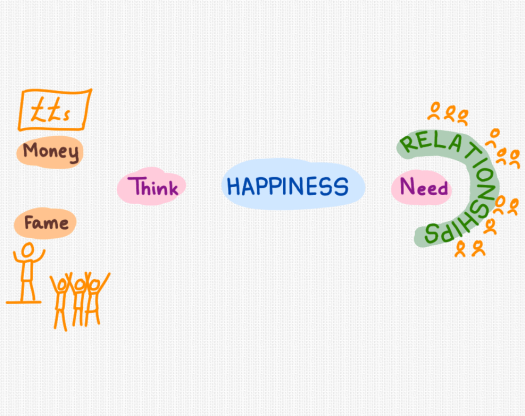
Waldinger says that many of us think that what will make us happy is getting rich or famous, preferably both.

But it turns out that what makes us happy – and healthy – is good relationships.

And there are three aspects to good relationships.

First, it’s good if you have a social life – one connected to family, friends and your community.

Second, it’s not the number of connections that’s important but the quality of connections – conflict is a bad thing.

And third, being in a secure relationship in your 80’s helps your brain stay sharper longer.

It sometimes feels like everything we do is taking us in the other direction.

We spend time on our devices, shut away in a private world so that we don’t need to acknowledge anyone else around us.

That private world is filled with pictures of perfection – of carefully curated content that shows up the inadequacy and messiness of your own life.

And, when you see how perfect everyone else has it – or at least everyone who seems to be on your screen – you’re dissatisfied with what you have.

It’s clearly not a good thing – and people were rebelling.

The increase in meet up groups and face to face sessions seemed to indicate a bit of a reaction to how technology was taking over our lives – and not really for the better.

And, for some of us, the enforced seclusion required to cope with the coronavirus has actually rekindled fires of community spirit that had gone out.

In many places people have now met their neighbours for the first time – helped them out – been there for them.

When we are threatened we pull together – we suddenly find that we are stronger as a community and society than we are as individuals.

The fact is that this virus has forced us to change our habits in ways that that we might have done eventually – because it’s the right thing to do.

We should work from home, if possible.

We shouldn’t drive and create air pollution if we don’t need to.

We should look out for the others in our communities.

We should think about families and societies.

And, when things are normal, we’re too busy to do any of that.

And normal will return one day.

But will it be the old normal?

Or will we have learned something from this experience?

Time will tell.

Cheers,

Karthik Suresh

Are You Living A Life Worth Living?

humanities.png

Wednesday, 9.26pm

Sheffield, U.K.

The method of science is logical and rational; the method of the humanities is one of imagination, sympathetic understanding, ‘indwelling. – Andrew Louth, Discerning the Mystery: An Essay on the Nature of Theology

When I was young and had to decide what I would be when I grew up, there were only three options open to me.

I could go to university to study to be a doctor, lawyer or engineer – because of the subjects I has studied at school.

If I had been free to choose I think I’d have studied English, perhaps tried my hand at writing.

As it happened, I failed into engineering – and picked up a few skills along the way – the sort of skills that help you make a living by making things work.

What I was told was that doing a degree like engineering gave you options – you could choose to be anything you wanted after that.

But really, what people meant was that certain degrees had market value – you had a better chance of getting a job with one of them.

There are children all over the world who are being pushed towards STEM subjects – the “hard” disciplines as opposed to the soft, fluffy ones you also see dotted around.

And this leads to a few things that may be worth keeping in mind.

First, how do you work out whether you’re living a life worth living?

“Worth” is seen differently from different points of view.

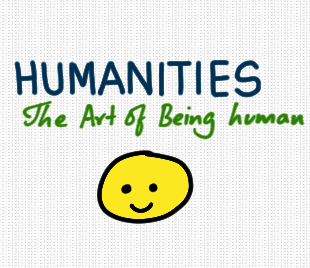
I started browsing thought The art of being human: The humanities as a technique for living by Richard Paul Janaro and Thelma C. Altshuler, where they address this question head on.

The approach most of us are familiar with is the idea of “net worth” – how much do you have in the bank – how much will you leave when you die?

This is an economic concept of worth.

But there is another concept of worth – which has more to do with a “good” life.

A life where you travel, see other cultures, appreciate art and music and the other things that are uniquely human.

But it’s not quite as simple as that.

If you have no money but are deeply sensitive and appreciative of art and music – is that a good life?

Surely it’s better to have a roof and a bed and be able to see a play?

What happens if you take it to extremes – like when very rich people go to very expensive cultural programmes and preen and flatter themselves for their appreciation and sophistication?

Of course, I’ve never been to such events but I imagine there are some out there…

When it comes down to it I don’t think there really is that much of a separation.

It probably has a bit to do with Maslow and his hierarchy.

Learning a trade or a practical subject is going to help you meet your basic needs – and perhaps get you a partner.

But, if you stop there then you’re missing out on quite a bit of what life has to offer.

In particular, the humanities teach you to appreciate other humans and their creations.

Perhaps the right approach to education is a layered one.

Start with a grounding in a practical skill – the trades, the professions.

Work for a while.

Then, go back to school or do a self-study programme and learn the humanities.

And you’ll probably find that you become a better professional and a better human.

And isn’t that worth doing?

Cheers,

Karthik Suresh

How To Make Your Writing And Ideas More Interesting

talking-to-a-wall.png

Tuesday, 9.31pm

Sheffield, U.K.

Imagination is more important than knowledge. For knowledge is limited to all we now know and understand, while imagination embraces the entire world, and all there ever will be to know and understand. – Albert Einstein

I’ve been thinking about writing some marketing copy – and when it comes to doing something or finding a way to procrastinate – I find myself usually doing the second.

Why do something when you can read about how to do it instead?

You could just sit down and write something… but would it be any good?

What is it that makes a piece of writing or an idea interesting?

A book called The lively art of writing by Lucile Vaughan Payne caught my eye as I thought about this – and it has an interesting central idea.

Here’s the thing that Payne asks you to sear into your brain.

“All writing is the sound of one voice speaking, and all writing can be heard.”

Good writing – the kind of writing that works – makes you sit up and listen.

And that’s because when you read you actually hear the words – writing is simply a magical way to capture the words someone says in letters, where they stay until you release them by speaking them to yourself.

Good writing is a conversation between the writer and the reader.

If you forget this – if you write for an audience, for a market, for a group – then what you come up with is probably something else – a bland lecture perhaps, a list of things, meaningless prose.

It’s about as satisfying, Payne writes, “as a conversation with a wall.”

If you want an example of this kind of writing just take a look at the stuff I was writing back in 2016.

Now, I’m not saying that what I’m doing now is an example of what good looks like.

But, I gave myself ten years and a million words to get the hang of how to do it and I’m three and a bit years in and at 770,986 words – 70% of which are in this blog.

And all I want to be able to do is write simply and clearly, in a way that makes it easy for you to read.

And why would anyone want to do this?

Well, I suppose it’s because words matter – they shape the way we think and see, and what we see and think shapes our words.

For example, Charles Faulkner, in a TEDx talk, shows you how people react to words viscerally, instinctively.

He pours salt into two containers, and then turns them around.

One is labelled salt, the other cyanide.

Most people, you included, would probably avoid the bottle labelled cyanide, even though you saw both being filled from the same source.

Just like right now on supermarket shelves the one beer you can be confident of still finding is Corona.

Faulkner says that knowledge isn’t enough, quoting Einstein.

You have to be able to imagine, because that’s what pulls you forward, what creates something new.

Knowledge is all about what you know already – and it can be really quite dull.

Imagination, on the other hand, is vibrant and exciting, and it’s fuelled with words and story.

So, if you need to write some marketing copy for your service why not try asking yourself this.

How would you tell your best friend about what you do?

Did they get it?

And if they did – begin with those words and the chances are that you’re off to a good start.

Cheers,

Karthik Suresh

What Would Happen If You Tried To Answer This One Question Every Day?

make-something.png

Monday, 8.50pm

Sheffield, U.K.

Write it. Shoot it. Publish it. Crochet it, sauté it, whatever. MAKE. – Joss Whedon

Have you ever wondered why you do what you do?

Many of us never set out with a grand plan for a career – we might have chosen subjects in school that worked for us – and ended up taking a temporary job but somehow staying there for a couple of decades.

I’m not sure I know that many people who really had a clear idea of what they wanted to be when they grew up.

I’ve seen one – a little boy who writes and draws stories – and who wants to be a writer when he grows up.

The rest of us tend to muddle through somehow – taking whatever route seems like the path of least resistance.

I found a book on that by Robert Fritz called The path of least resistance – which has an interesting little model that’s worth keeping in mind.

He asks why Boston is laid out the way it is – streets going this way and that.

He says it’s because the first paths were trodden by cows as they went about their business.

A cow, seeing a hill, doesn’t see it as a challenge – something it must climb – it simply finds the easiest way to get around it.

And this, Fritz says, should help you get three key insights.

The first is that animals, people, things, follow the path of least resistance.

The second is that the path they follow is determined by the terrain, the structure they’re in.

A river, for example, follows the terrain, the contours of the land as it makes its way from the heights to the sea.

The third insight is that you can change your terrain to something that works for you – something animals and rivers don’t really think too much about.

What all this leads to is an answer.

An answer that says that the reason you are where you are right now is because you took the easiest path given your environment – the structure of your life.

I don’t know what you do – but the chances are that you’re happy doing it, or not happy.

If you’re happy, don’t bother reading any further.

If you’re not, then the question I think that’s worth asking yourself is “What did I make today?”

I think if you really want to get in touch with yourself – you have to figure out what the creative part of you wants.

If you’re not sure what a creative part is – just watch a child.

Children just do this – they play and imagine and make things up.

And sometimes, they make things.

They run to you and show you – they want you to get involved – they want to teach you.

“Look at this thing I did,” they say, “Let me show you how to do it as well.”

Children get bored and crabby when all they do is watch telly.

They light up inside when they make stuff.

And I think we do as well – I know that when I create something I’m a lot more satisfied than when I don’t.

Creativity for me is writing, drawing and programming.

Sometimes it’s designing, repairing, teaching.

Sometimes you’re in a job where you don’t get a chance to make stuff – you’re busy getting other people to do things, moving stuff on, chasing, brokering, selling.

So, perhaps there you need a hobby – as many people do – they create and make in their spare time to make up for what they don’t get at work.

So, here’s the thing.

I have a theory that if you end each day knowing that you’ve made something that didn’t exist when the day started – you’ll be happier.

But first, you need to make it possible to do that.

Cheers,

Karthik Suresh

How To Become Happier By Using Better Mental Tools

tools-for-thinking.png

Sunday, 9.01pm

Sheffield, U.K.

You can’t do much carpentry with your bare hands, and you can’t do much thinking with your bare brain. – Bo Dahlbom

Today I came across a talk by Daniel Dennett for the first time, in which he introduced the quote that starts this post.

The quote resonated with me because much of my work over the last couple of years has been around trying to make sense of things – finding some kind of clarity in the messy real world that we live in.

It feels like different people have approached this in different ways over the years.

At one extreme you have approaches that are rooted in meditation and thought – the kind of thing you imagine Zen Buddhists doing.

It’s a long process of study and practice – at the end of which they achieve enlightenment – which I imagine is making a sort of peace with reality.

Although I did read a quote that said something like if anyone thinks they are enlightened, they should spend a weekend with their family.

At another extreme you have people of certain forms of science who believe that if it cannot be observed and measured it does not exist.

For them it’s about research and measurement and electrical flows and visualisations – about the detail of what’s going on in the physical world.

Now, it feels like there are many extremes as you think through the options.

For example, another extreme is the self-help guru, the person who has come up with a method that has worked for them and which they believe will work for you.

You find these everywhere, because surely if someone has achieved something then doing what they’ve done will work for you.

In Dennett’s talk he says you should install a surely alarm.

Whenever you see the word “surely” in a passage what it means is that the author hopes you’ll accept the point without questioning it.

They’re not totally sure about their point – if they were, they’d simply say that.

So, with the “surely”, they’re often trying to get something they believe to be true past you, hoping you won’t notice.

But you should – and perhaps probe more deeply into what’s going on.

Another extreme is Dennett’s own field – philosophy.

Some people believe that philosophy is the way you understand things – a rigorous way to understand what is true and false.

But really, what you need to understand is that philosophy is a form of logic, much like mathematics.

And Godel proved that even with maths, there are things you need to believe – things that can’t be proven using the system of maths you’re using.

Axioms.

What this means is that pretty much everything is rooted in a belief – and the reason you carry on believing is because nothing absurd results from thinking that way.

So, what I’m saying here is that some people believe that you have to just “get” it for yourself, others that you have to break it down scientifically, others that they have a way that’s worked for them and a few others who say this is the logical way to do things.

And then there are probably a few more ways to go.

What I’m taking from this is that reality is complex and complicated.

There are so many threads of thought, things that happen and what we think about those things happening – so many different ways we could approach the world.

What often matters is finding a way that works for us.

It’s what I’ve thought of as “models” for a while – perhaps what Peter Checkland calls a “holon” – and something that might be captured by Dennett’s concept of an “intuition pump”.

This is something that “focuses the reader’s attention on the ‘important features'” – something perhaps like I do in the model above.

Although what I’ve done is draw some circles around a random bunch of squiggles.

Still, perhaps, looking at those sections of squiggles can help us make some sense of what’s going on.

And I think that’s the point.

We’ve got to a stage in human evolution where just thinking about things isn’t enough.

There are tools that can help – and I suppose we are taught quite a few of these in school.

But many of us then forget these, or don’t go on to learn more tools, and end up trying to get through life on our bare brains alone.

What I see is that approach leads to discontent and worry and stress.

I remember, early in my career, as experiences piled up and I found it harder and harder to get what was happening.

And then I went back to university, did a management degree, and was introduced to models and ways of thinking that helped me make sense of the experiences I had had.

All of a sudden the feelings fell away – having words to describe what was going on meant that I could understand it better, and so there was no more need for feelings of doubt or inadequacy or shame.

Making sense of things matters – but there is no grand “sense” that we all share.

Instead, you have to make your own personal sense of things – but having good mental tools will help.

Some of which I have tried to use as I write this blog – the point of which really is to help me make sense of the world around me.

I hope it helps you as well.

Cheers,

Karthik Suresh

Why The Only Thing That Matters Is To Keep Going

keep-moving.png

Saturday, 8.56pm

Sheffield, U.K.

Those who flow as life flows know they need no other force. – Lao Tzu

A lot of people seem to believe that things need to be difficult – that you need to work hard, push yourself and struggle – because it’s only that kind of effort that produces results.

That doesn’t really work for me.

It seems to me that a lot of time when people say they’re working hard what they mean is that they haven’t got the time to figure how to do it in an easier way.

Now, it’s hard for someone who is in the middle of a particular experience to stand back and see how it can be done better.

And it’s usually infuriating to be told by some smug nobody that you’re doing it wrong when you’re putting all this effort into what you’re doing.

I’ve learned over time that trying to change other people is not time well spent.

But, it makes a lot of sense to try and work on yourself – and when it comes to that I see three kinds of approaches.

The first is one where people focus on why they can’t do things – they see all the obstacles in their way and fold their arms and refuse to move.

Such folk are happy doing their work and living their life in the way they do it – they can’t imagine an alternative but they do seem to spend quite a lot of time complaining about the present.

I’m not really sure how that helps you – but from what I can see it means you get old and see rather a lot of people doing better than you are doing.

Standing still is not a good strategy.

At the other extreme is the person who really pushes themselves – the one who wants to be in a position of responsibility early, be a Managing Director, get that big promotion.

That’s the one you see a lot of in society – the people who’ve been brought up on the idea that competition is everything, you get ahead by beating others and that winning is what matters.

I see people like this as running as fast as they can – pushing themselves to the brink of exhaustion – and still going.

They’re the ones staying late at work, pushing themselves to get the job done on time, working very very hard.

But, is that really a useful way to be?

Haven’t we moved on from a world where brawn and time made a difference?

Once upon a time the size of your muscles mattered if your job was to cut down trees.

Now machines do that.

And if you’re doing knowledge work then surely you don’t need to spend huge amounts of time getting things done – isn’t that what computers are for?

Except, most people don’t realise how to use computers.

For example, most consultants use Powerpoint extensively for their work – and that means they spend hundreds of hours getting every detail right.

But, did you know you can automate Powerpoint – get it to programmatically do a lot of the things that you’re doing manually right now?

The vast majority of people don’t – and are racking up hundreds of thousands of hours manually positioning text boxes.

I don’t know about you – but I think that’s a waste of time.

Now, another approach, one that I think is better, is one designed around you as an individual.

It’s well known that the human body is not designed for continuous running – you can do it for a while but not forever.

What we are designed to do is walk.

You can walk pretty long distances, just keep going – because that’s the mode of travel our bodies have evolved to do most efficiently.

And doing things efficiently is the best way to do them.

What that means is that you should design your work around your life – you should try and make it as easy as possible to get what you need to do done.

If you want to write, for example, but have kids – then write when they’re asleep: early in the morning or late in the evening.

That might mean you write 30 books in your lifetime rather than the 200 put out by people without children – but would you really not have your kids?

If you have a demanding job – then perhaps first figure out how you can make it less demanding – what are the bits that you’re spending time doing that can be automated?

Many things can be – really.

Now, if you head towards excuse territory – then there isn’t much more to say.

But it’s hard to see very many situations where you can’t do things that you’re currently doing in a manual way more effectively – if you only knew how to.

And many people just don’t have the time to think about things like that – they’re too busy.

Which is why to the first and last groups – there is very little to say.

To the first – you’d suggest they get moving or get left behind.

To the last – you might need to wait till they realise for themselves that this is putting a huge strain on themselves.

But if you arrange things so that you can do them at the pace that works for you – well then you can go for a very long time.

And maybe then you’ll do something you’re proud of – without having to sacrifice everything that actually matters.

Because really – life shouldn’t have to be all that hard.

Cheers,

Karthik Suresh

Do You Know This One Secret That Can Improve Your Marketing?

curse-of-knowledge.png

Friday, 9.06pm

Sheffield, U.K.

Euclid taught me that without assumptions there is no proof. Therefore, in any argument, examine the assumptions. – E. T. Bell

Today I learned from Steven Pinker about a thing called the curse of knowledge.

It turns out there is an experiment you can do with a three-year old.

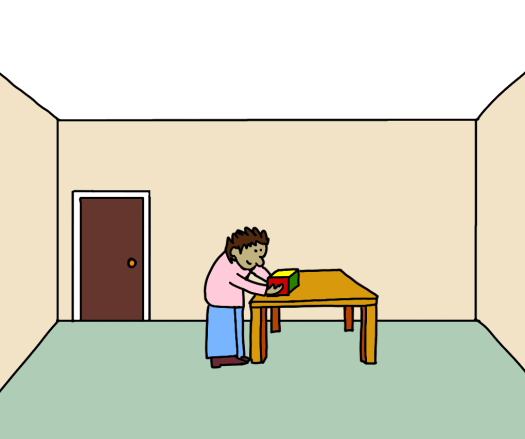
Show a child a box of chocolates and ask them what’s in it.

They will probably say, “Chocolate.”

Now, get them to open the box.

Inside, they’ll find pencils instead of chocolate.

Now, ask them what’s inside the box.

They’ll say, “Pencils.”

Now, bring another child into the room and ask the first child what the second child thinks is inside the box.

The answer is, “Pencils.”

What’s happened is that the first child cannot now “unknow” what’s in the box.

But also, the first child now believes that everyone else also knows what it knows.

This is something many people never grow out of.

We believe that because we know something other people must know it as well.

And that causes us to make mistakes in the messaging we create – the things we write and design to explain what we do and how we work.

You probably see this all the time at work.

If you ask someone to pull together a briefing paper or a presentation on a topic, what you will get is a comprehensive statement of what they know.

There are all these things you have to start with, and we did all this stuff, and carried out these complicated calculations and did all this really detailed things about these really specific elements and so on and on and on.

But, what does this mean for someone who doesn’t know what you know – but who is bright and capable?

How do you get a message across to people like that?

For starters, you think about what they need to know.

Are they interested in the mechanics of cocoa production or are they interested in why your chocolate is different?

Take Tony’s Chocolonely, for example.

I like chocolate, probably too much, but I’ve never given it much thought.

My default has been something in the Cadbury’s or Galaxy line.

I was introduced to Tony’s Chocolonely as a “slave free” chocolate – an ethical brand.

I tried it – it was nice, but expensive.

And then we went to Amsterdam – before the world shut down – and visited the shop where it was made, and that left an impression.

And more recently, when I bought a few bars, I read some words on the marketing that said something like “unequally divided, because the world isn’t fair” – or something on those lines.

You don’t get nice clean squares with this chocolate.

There’s a lot of messaging with this brand – and some of it is clearly getting through, for me, at least.

All these things make the chocolate stand out in a way that’s different from brands that talk about being the finest chocolate, or having master chocolateers or focusing on the colour purple.

By this time, you’re probably thinking about chocolate and I’m losing my train of thought wanting some…

To pull things back.

The hardest thing for us to do is see things from the point of view of someone else who doesn’t yet know all the things we know – or actually someone who doesn’t want to know at all.

When you write or ask someone to write a piece of marketing you should see that as a first draft.

What’s probably going to happen is that first draft puts down everything you know about what you do – it’s a list of features.

What you need to do next is remind yourself of the curse of knowledge – remind yourself that you need to know what you know to be able to understand what you’ve written.

Then you need to sit down and rewrite every sentence in your draft so it make sense to someone coming to it with little or no knowledge – but someone bright enough to get what you’re talking about.

You don’t need to talk down to people or be patronising – you just need to be clear about what this means for them.

I remember, years ago, going to a marketing class where we did just this.

We were asked to write down a few words about what we did for customers.

Two of my examples were “risk management” and “carbon offsets”.

Then we were asked to try and write down what this meant for customers – how did they benefit?

And I suppose I wrote something like “Buy what you need as cheaply as possible” and “do business in a green and sustainable way”.

The second attempt, hopefully, make more sense than the more technical words that make sense to me.

The fact is that writing is bloody hard work – you’re not just going to sit down and dash off a masterpiece of marketing copy or a story or anything like that.

The first draft really is just you telling the story to yourself.

The second, third and fourth drafts are where you start telling the story to someone else – and how you eventually get to something that is so easy to read that people just “get” it.

But it’s not easy – if it reads well it’s because someone worked for a long time writing it.

And maybe that’s the lesson.

You worked really hard to learn what you know.

Now you need to work twice as hard to get other people to see it.

And that’s marketing.

Cheers,

Karthik Suresh

Business Lessons From A Literary Agent And Critic

rejection.png

Thursday, 9.29pm

Sheffield, U.K.

An objection is not a rejection; it is simply a request for more information. – Bo Bennett

At the moment I’m finding a lot of ideas in TEDx talks – the shows that I watch in scattered fragments of time during the day.

The beauty of the TED format is you get a lifetime of experience compressed into fifteen to twenty minutes – and that means the speaker has to create a thought diamond – a flashing stone of inspiration just for you.

One of today’s shows was by Julian Friedmann about storytelling – about what he had learned as an agent working with authors.

The thing that stood out for me was the idea of rejection.

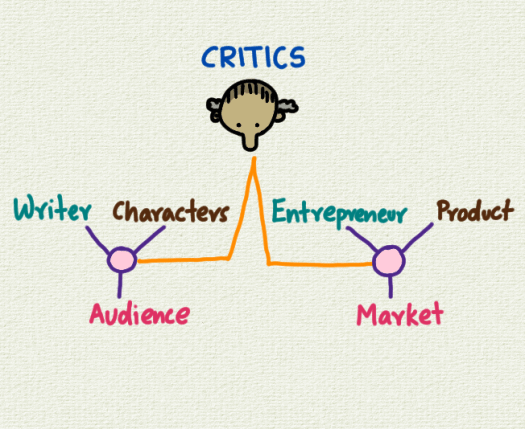
When someone sets out to write something like a novel – a thing that is made for other people to read – there are three elements that are involved.

There is the writer – the person sat in the chair writing day after day.

There are the characters – the people the writer creates and watches and sees doing things day after day.

And then there is the audience, that takes the book and tells themselves the story.

Now, in traditional publishing, to get your book out there you have to get past the gatekeepers.

These are the agents, the editors, the publishers – the ones who can decide whether you as a writer get to make a living or not from doing what you love.

They often have, as Friedmann says, less creativity and talent than you, but they have the power to decide what happens to your work and, by extension, you.

What gives these people the right to do that – how is it that they have that kind of influence over what you do?

Well, increasingly, they don’t – if you want to publish these days, you can.

It might not be any good – but that doesn’t mean you can’t see your name in print.

The point is that if an agent or critic rejects what you’ve produced it’s because they don’t think it will sell – it won’t appeal to the audience out there.

Now, if you look for the analogy of this writing structure in business you get a very similar three part model.

There is an entrepreneur who lavishes time and money in creating a product and then brings it to the attention of a market.

And they come up against the investors and buyers who are the equivalent of critics in the business world – the people with the power to decide what happens to your product and, by extension, you.

Writers fall in love with their creations; entrepreneurs fall in love with their products.

Some fail to realise that their creations and products are just not very good – they’re not what the audience or market is willing to buy.

They react by getting angry, by chasing publishers, by trying hard sell tactics

They believe that eventually the world will realise their brilliance – they just need to push hard enough.

And that may be the case, and they may win.

But in other cases the world is telling them something they should listen to – which is that they need to go back and improve the novel, make a better product.

The feedback might actually be useful – within the rejection you experience may actually be the secret that you need to know for your eventual success.

The next time you pitch your product – the thing you have spent huge amounts of time building with care – just remember that it’s not about you.

It’s about your audience, your market.

It’s about how they take what you’ve created and look at it – what is the story they tell themselves?

How do they see this thing you’ve made from their point of view – how do they use it, why do they need it, what do they do with it?

Their experience of your thing is what matters – that’s the one thing you can’t control.

But you can control yourself and the thing you make – you can change those and then go back and see if you get a different reaction.

Rejection, in this model, is simply the world telling you that you need to do some more work – perhaps slightly smarter, more targeted, better informed work.

That’s all.

Cheers,

Karthik Suresh