Flexibility Vs Focus In Consultancies

2026-06-06_flex-focus.png

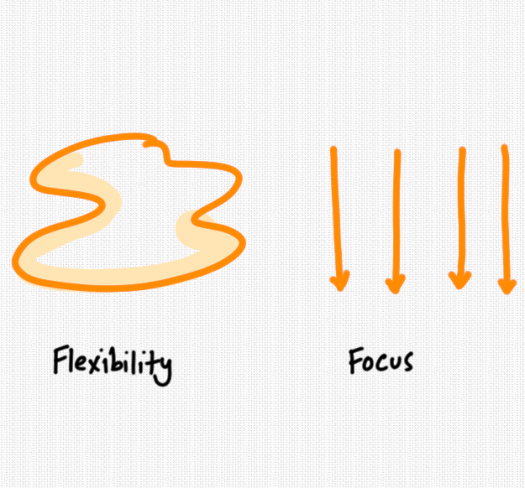
Building a consultancy is about focus. Being a consultant is about flexibility.

Every service business faces a tension between solving client problems and delivering a standardised service.

We can resolve this tension – by recognising the difference between what we do as consultants and what we design as service creators.

For example, in our previous businesses, we’d listen to clients, see what they needed and create new services to help them.

Energy contracting. Bill validation. New connections. Demand Response. Water services. There was an endless list of problems that clients needed sorting.

As a consultant, this was interesting work.

But it was hard to scale, forced us to spread resources, and was sometimes unprofitable.

In our current business we focus on one thing. Turning messy, real-world data into structured data that can be used for reporting and decision making.

We work with partners who focus on value streams that they’re good at.

And together we do a better job than if we tried to do the whole thing ourselves.

This is what we should recognise – consultants discover problems, but businesses deliver solutions.

Flexibility helps you learn.

Focus helps you scale.
The Value Equation In Sustainability

2026-06-05_sust-value.png

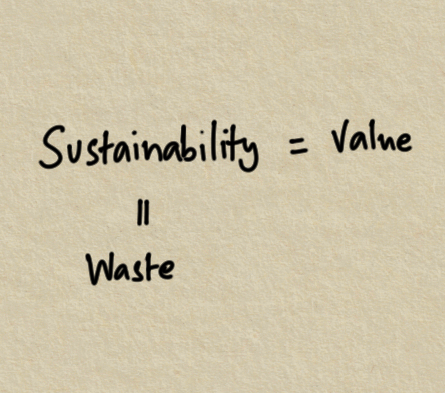
Sustainability should create value. But that’s not guaranteed.

If you remember the pandemic days, companies claiming to be sustainable were the new hot thing.

You had ESG focused funds popping up everywhere – with the pitch that a portfolio built from sustainable firms would have alpha – outperforming the market.

I was sceptical.

Here’s my logic. The low-risk default is always to buy the index – a low cost tracker that buys companies in proportion to their market cap.

If sustainable companies really can do better, then they will form a larger part of the index, and you’ll benefit from their success by owning the tracker.

You don’t need to pick them because you think (hope) they’ll do better.

And in the subsequent years, they didn’t.

The Russia-Ukraine war turbocharged oil stocks in 2022. AI came along and lit a fire under the tech sector from 2023.

A sustainability thesis alone would not have captured either trend. And it’s probably worth noting that both booms are the opposite of what sustainability advocates would want.

We’re a long way from the euphoria now and a sustainability program in 2026 has to be hyper-focused on value.

If not, it has a tendency to create waste. Extra resources. Unnecessary complexity. Added reporting burdens.

A good place to start is with an old question that applies to every investment.

How does every pound going into your sustainability program add £3 in business value for the firm?

Fix Your Systems Rather Than Blaming Your People

2026-06-03_sit-systems.png

Everything is working exactly as designed. And that’s the problem.

Think of your operations right now. The activities, the processes, the systems.

They’re working exactly as designed to produce the outcomes you’re seeing today.

We have a problem when the outcomes we get aren’t the outcomes we want.

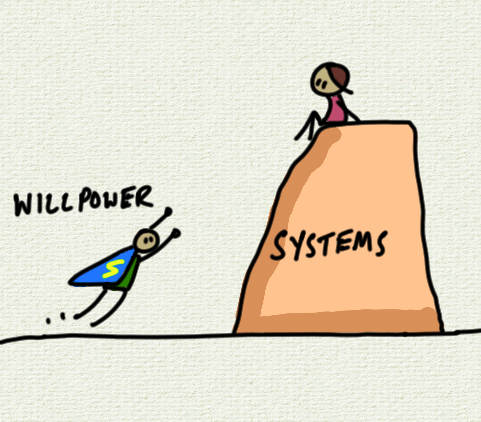
And fixing such problems takes more than willpower. We need to fix our systems instead.

As James Clear wrote in Atomic Habits, “You do not rise to the level of your goals. You fall to the level of your systems.”

Or, as Stafford Beer wrote, “The purpose of a system is what it does”.

That’s why the most effective organisations focus on systemic improvement rather than just pushing people harder.

To adapt Scott Adam’s words from “The Joy of Work”:

People who make systems work get happy and rich.

People who work hard get tired.

Fix Your Process Before Buying A New System

2026-06-03_tricycle.png

My parents once bought me a fancy tricycle that I promptly took apart. They had to take the pieces back to the shop and get a more robust one.

Maybe that’s why I still don’t trust fancy solutions.

They often solve the wrong problem.

I build information systems for a living. The challenge is never with the system – it’s with the information.

Take systems on the market that do sustainability reporting. Once you get data into them they do a great job.

The pain is getting the data into the system in the first place.

That’s because the relevant data has to be extracted from a convoluted mass of messy information that looks different for each company.

You don’t always need to start by picking a new system.

Yes, you can always buy a bigger tractor to deal with your mountain of waste.

But a better way is to stop the waste building up in the first place – effectively reducing the pile you have to deal with.

Then all the technology you need is a spade.

Technology can scale a good process. It doesn’t compensate for a broken one.

Four Principles To Use AI In Your Consultancy

2026-05-21_principles.png

After three years I have started finally paying for AI. Here’s why.

I’m taking a new business to market with co-founders, focused on solving the data management problem in sustainability.

With our previous businesses we quickly reached a point where we needed more hands to do the work – there were more tasks to do than we had time for.

But AI can now handle these tasks more quickly and competently in an enterprise context.

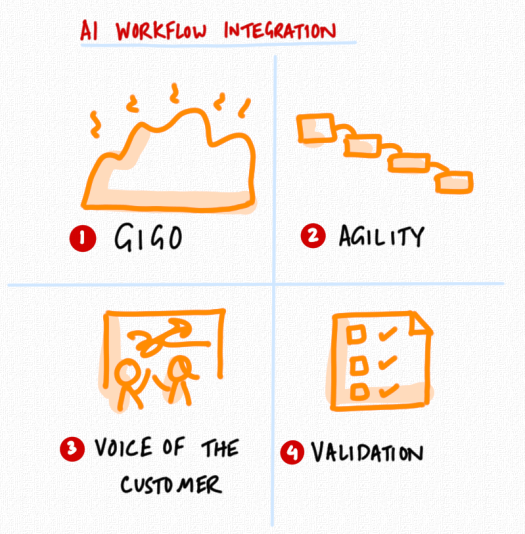
But there are four principles for deployment that are worth remembering.

  1. GIGO is still a thing

AI can do a lot, but it cannot unscramble your omlette. Give it good data, and it produces good output.

Give it garbage and it produces more work for you to fix.

  1. Stay small to stay agile

It’s increasingly clear that you have to scope what you want carefully to get what you want. The bigger the scope, the less flexible it is.

Keep your projects small and contained. Then you’ll get the benefits of AI while staying agile.

  1. Build what the customer needs

The time and costs of making stuff have gone down – unless you burn hours and tokens building things no one wants.

I’m spending 3-4 hours talking to customers for every hour of building – making sure I’m working on the right thing.

  1. Build quality into the process

AI works so quickly that there’s no time to inspect everything.

Create outputs that are easy to validate. Build in checks. Make it easy to see what’s going on.

A good valdation process is the way to build trust.

As a new(ish) firm, we have the flexibility to start from scratch and build a consultancy that leverages AI.

But it’s not about cutting costs.

It’s about building a better way to do good work for clients.

Risk Management Matters Most When Everything Is Going Well

2026-05-18_swimming-naked.png

It is a time of euphoria. Check if your pants are still on.

The Economist is puzzled this week.

  • A jobs apocalypse may or may not arrive.
  • Markets are correctly pricing or ignoring energy supply risk
  • The S&P500 is on a rollercoaster, down 7% in April, up 8% year to date

How will we know if it’s real performance or not? Is this a bubble, or are we going to reach a top and then tip into recession?

We won’t know until it does. It’s very hard to predict the end of things.

Undertainty and optimism often coexist right before systems become fragile.

What matters is how prepared you are if the music stops.

As Warren Buffett wrote, it’s only when the tide goes out that you see who’s swimming naked.

Good risk management is never more important than when it seems everthing is going swimmingly well.

This Is The Real Work

2026-05-15_power-politics-culture.png

A company will not adopt an AI workflow just because it’s new and innovative.

We have to understand how people in the organisation make decisions.

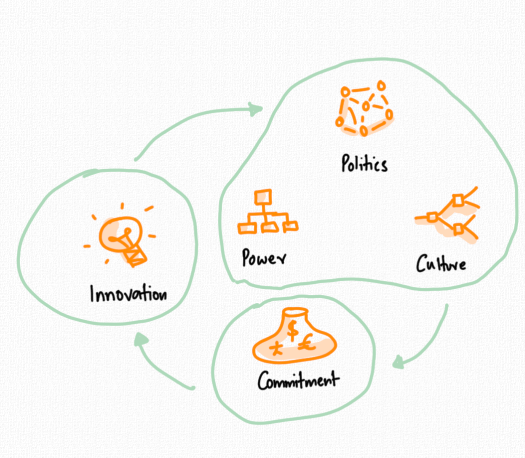
In every conversation I have, we eventually have to address issues of power, politics and culture.

Who has leverage? Who wants what? How are things done around here?

You can’t get to commitment without first addressing these issues.

This is not a distraction.

This is the work.

Why We Need Tools To Help Build Shared Mental Models

The days of any one person being the expert in the room are over.

We all bring different types of expertise.

Consultants bring process expertise – this is how we’ve done this in other companies.

Clients bring situation-specific expertise – here’s what we’re struggling with right now.

A meeting may start with alignment – we’re here to talk about X.

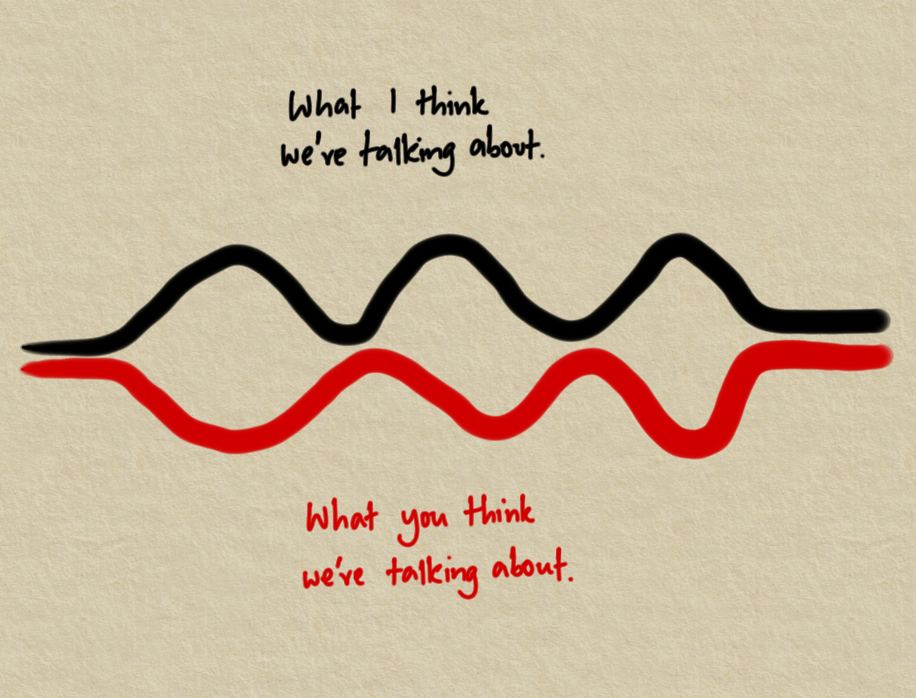
But then it often diverges, as what you think we’re talking about and what I think we’re talking about drift apart.

The challenge is to bring us back together each time and realign the discussion.

This is actually the focus of my PhD research – where I’ve been developing a technique for managing and facilitating small group discussions.

We need tools that help us build shared mental models in real time.

Then we can agree on what to do next.

AI And Productivity

2026-05-12_focus.png

What you choose not to do may be more important than what you choose to do.

We’re often in situations where more information is needed before we can make a decision.

Should we apply for this grant? Should we build that capability? Is it worth buying this tool?

The real issue is the opportunity cost – are you making the best use of your limited time doing this kind of research?

But now, you can do a first pass with AI and then decide whether to invest more time.

Productivity is not about stacking hours of work.

It’s about making smarter choices about what to work on next.

Moving From Reporting To Risk Management

2026-05-11_3m.png

Over the last ten years sustainability work has been heads down – collecting data, producing reports, and monitoring portfolios.

It’s time to go heads up – and show how climate intelligence can help manage risk.

A new generation of tools and APIs are making it easier to access high quality global geospatial climate data.

And spatial intelligence changes how decisions are made.

It lets us create customised risk models for large global portfolios.

Insights from those models inform how we manage risk.

For example, it’s one thing knowing that it gets hotter the further away you are from the equator.

It’s another knowing what percentage of your sites are exposed to extreme heat, and targeting them to create mitigation plans.

We don’t collect data for reporting alone.

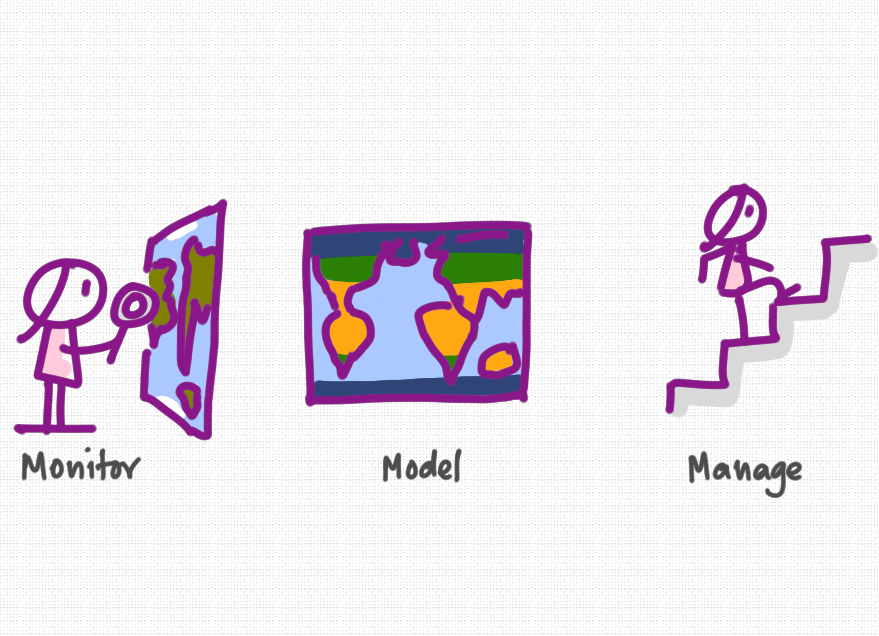
We collect it because it’s essential to monitor, model and manage risk.