What Do You Do When You Feel Less Good Than Everyone Else?

inadequacy.png

Saturday, 9.30pm

Sheffield, U.K.

What fascinated me most was Churchill as a young child. He had a kind of Dickensian childhood. The neglect. And he was a terrible student. His whole life is a study in trying to overcome your feelings of inadequacy. – John Lithgow

I said I probably wouldn’t write about the fourth chapter of Alain de Botton’s book The consolations of philosophy but I’ve changed my mind.

The reason I thought I’d skip it is because it covers areas that are not nice to read about as part of an essay on inadequacy.

The problem is one of how people in history have treated other people because they were different – lesser than them.

And it’s happened all over the world, all across time – from South America to Africa to Europe and Asia and Australasia.

The scars of these histories are still visible today – just pick a country – it seems unfair to single out one and there will be something in their history people now wish was simply forgotten.

The good thing is that it now is unlikely that such things will be forgotten – the Internet has a long memory and gives people a voice when they did not have one.

Some of those stories are ones you may not wish to hear.

Right now, for example, with young children and knowing what we now know- I am unable to pick up a book in the library that has letters that Jewish children living in ghettos wrote during the war.

I know it’s there, and must be read – but later.

But my reason for writing about this chapter is that it introduces a French philosopher, Montaigne, who wrote about how important it was that we understand one another.

It is easy to see anything different as worse – and that is how people have seen things for most of history.

In some ways that is a natural, instinctive way to look at the world.

It’s natural and instinctive to see your country being filled up with foreigners and feeling like you’re being pushed out.

And that’s why it’s wrong.

If you want to be a “good” person they you have to fight against what is your natural and instinctive reaction to things – a reaction based on what you think is normal and abnormal based on what you have learned and been exposed to.

And Montaigne pointed out that they only way you can do that is by learning more about other people, other cultures and other ways of doing things.

In any situation you will have some people that are in charge, in control, this is their space.

And you will have others that try to fit in – but feel small, marginalised, without a voice, facing a glass ceiling or outright antagonism and violence.

Who feel inadequate.

And this happens to individuals as well – the inadequacy that affects us when we see people living perfect lives on social media – when we see others that seem to be doing much better than we are.

Montaigne points out that respect or value seems to come from people who are furthest away from you.

To your family you are an eccentric – while to someone on the other side of the world your words might be life changing.

Now one solution to the inequity in life and society is for the majority, the winners to make place for the minority, the marginalised.

Some places do this – and some places fight it and depending on where you live – you take the opportunity or you live with the injustice.

But if you are lucky you have something now that almost no one had in the past.

You have the ability to get a voice – a global one.

And one can hope that when we hear these voices we will be more open to change.

Let’s be real about this – you will have some people build walls and ignore the evidence – fight against any suggestion that they or their ancestors did anything wrong.

And you will have others that accept what happened and try to make a difference.

For example, this article analyses Japan’s history and suggests that what is needed in such situations is a permanent way of memorialising and apologising for national crimes – in law, in education, and in culture.

But while you’re waiting being able to tell your story is one way of dealing with what has happened.

What we should be doing is teaching people the right way to treat others.

You’ve all heard of the golden rule, “Do unto others as you would have them do unto you.”

What’s actually needed, but less well known, is the platinum rule.

“Do unto others as they would have you do unto them.”

Cheers,

Karthik Suresh
How Do You React When Things Don’t Go The Way You Want?

reality-frustration.png

Friday, 9.23pm

Sheffield, U.K.

It took 10 months for me to learn to tie a lace; I must have howled with rage and frustration. But one day I could tie my laces. That no one can take from you. I profoundly distrust the pedagogy of ease. – George Steiner

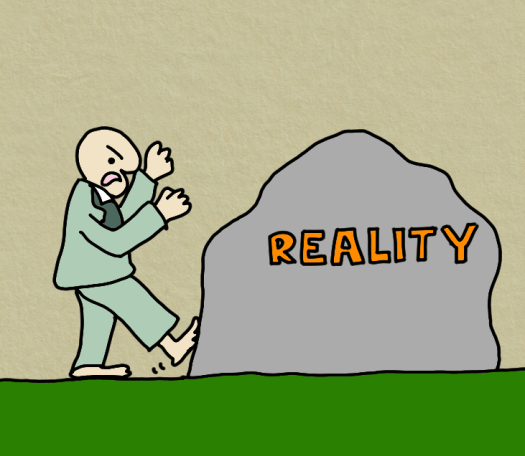
I’m on the third chapter of Alain de Botton’s The consolations of philosophy and this is about frustration.

The basic problem with life is that every once a while what we wish for is blocked by reality.

You really wanted that promotion, but someone else got it.

Or you wanted to get those tickets but they were sold out.

When this kind of stuff happens some people get angry.

It’s a natural response to being frustrated, they argue. If you don’t respond like that then you’re emotionally shut down – not in touch with your feelings – a robot.

de Botton draws on the Roman philosopher Seneca whose advice pretty much comes down to shit happens – so expect it to happen and then you won’t be surprised when it does happen.

Bad things can happen – in fact every bad thing that could happen to you could happen pretty much in the next minute.

So, prepare yourself and be ready for whatever might happen.

And then you won’t feel so bad?

Hmmm. Not sure about that last bit.

Seneca went through his share of troubles – he was exiled, brought back and finally ordered to kill himself by his former student, the Emperor Nero – and he did so – without falling apart.

The thing is, when you look at Seneca’s approach to dealing with frustration it really only applies to things that frustrate you – things that affect only you.

If you’re passed over, if you’re swindled out of a commission, if people use you and then discard you – then yes you can choose to be stoic and calm about it all.

But then there are times when you can be calm and very angry at the same time.

And those times are when, I suppose, you are in a situation where other people have absolute power over you and your family and your people.

The next chapter of de Botton’s book, which I think I will skip writing about, talks about what happened to the Native American population in the 1500s.

They were seen as non-human by the invading Spanish – and butchered and treated worse than animals – 70 million died out of a population of 80 million.

This might seem like a long time ago – but you have to then remember the history of slavery a few hundred years later.

And the guillotine and the inquisition were still there in the East in the last century.

Should the Indians and the slaves have just taken this stoically – accepted that bad things happen to them and their families and got on with living – or more often, dying?

How would you react?

But then, coming back to something approaching normality – you have frustrations that can be overcome – like building a bridge or inventing new things.

Being too stoic and accepting of everything might also mean that you never grow or learn or push yourself.

So, perhaps here’s a conclusion from the essay.

Most things are small things – don’t sweat the small stuff.

Many things can be overcome – don’t give up too soon.

But what’s not in the essay is when frustration should be absorbed and used and redirected.

Sometimes you should work to make change happen – and anger can drive you to do that – especially when things are unfair.

And sometimes you should go with the flow – accept reality and live the best you can.

As always – the approach you take depends on the situation you’re in.

Cheers,

Karthik Suresh

How To Think About Money And Happiness

happiness.png

Thursday, 9.29pm

Sheffield, U.K.

Annual income twenty pounds, annual expenditure nineteen six, result happiness. Annual income twenty pounds, annual expenditure twenty pound ought and six, result misery. – Charles Dickens, David Copperfield

I’m on the second chapter of Alain de Botton’s The consolations of philosophy in my attempt to start the year with a good book.

Although you could start every day anew there is something special about the start of a new year – some kind of extra energy you get only at this time.

de Botton’s second chapter is called Consolation for not having enough money and it introduces a philosopher called Epicurus who championed the importance of pleasure – especially when it came to food.

His name has been appropriated to now mean an excessive pursuit of pleasure – the difference between a good meal and gluttony – but de Botton explains that the real person found happiness in simpler, less expensive things.

There were three things in his list.

First was the importance of friendships – never eat alone, he said.

Next came freedom – the option not to work for people you don’t like and do things you don’t want to do.

Or the converse, I suppose – work with people you like, admire and trust – in the words of Warren Buffett.

And then lastly having the time to think, to reflect, to question – to go through issues and come to a view – the ability to analyse anxiety and, in doing so, resolve it.

Maybe even dissolve it.

The point, de Botton points out, is that these three have nothing to do with money.

If you have money but don’t have these things – well, you’re probably not happy.

And if you do have money as well – then it must be a good life.

de Botton goes on to argue that the reason we think we need stuff in order to be happy is because of marketing – we’ve been programmed that way.

And if look for exceptions to those marketing messages or rules then we might find that the rules are wrong or need amending – and we can do that.

That seems quite simple – almost simplistic – so maybe there are a couple of messages to also add to that.

I’m reminded of two points about this thing called money.

Most of us think that money was created so we had a medium of exchange that wasn’t a chicken or pig or potato.

In other words money helped us replace a system of bartering with one of trading.

But there is another view that money is actually a form of debt.

Suppose I came to your shop and wanted some bread – and you didn’t really want one of my chickens, but you did want a piece of gold.

I might have written you an IOU on whatever the equivalent was of paper at that time – and this IOU was a promissory note for something of a certain value – and money was invented.

So, to some extent, when you collect money you collect someone else’s debt – you are “owed”.

But then why do you collect the money in the first place – why do you work or do whatever it is you do?

Is it for the money – for that pile of debts?

Or is it because you want to do something with that money?

This brings us to the second thing about money.

In order to figure out if money will bring you happiness, you first need to figure out what you want out of money.

I come from a world where Dickens’ quote that starts this blog is still very relevant.

I remember my grandmother keeping a cash book and accounting for where everything went.

And she seemed pretty happy.

I did that for a long time as well, although in the last decade it became harder with children and a general lack of time.

But it’s something to get back to again now – because I think Epicurus’s list is missing something.

Yes you need friends, freedom and time to think to be happy.

But many of us don’t have the freedom he talks about – and we still manage to be happy.

The thing that’s missing is not money, I think, but what money represents.

It doesn’t represent the ability to buy things as much as it represents a lack of debt.

And not being in debt is a good place to be.

Cheers,

Karthik Suresh

How To Reboot Your Thinking This New Year

socrates.png

Wednesday, 8.09pm

Sheffield, U.K.

Employ your time in improving yourself by other men’s writings, so that you shall gain easily what others have labored hard for. – Socrates

What book would you choose to help you start this new year?

I’ve stumbled across Alain de Botton’s The consolations of philosophy and I think this is one to study over the next six days or so.

It’s a collection of essays that address six human concerns – ageless ones.

de Botton enlists the help of philosophers to explore the topics of unpopularity, not having enough money, frustration, inadequacy, a broken heart and difficulties.

Socrates is his first philosopher and he helps us understand what is right – and that what is right is not necessarily the same as what is popular.

What is important is whether it makes sense – and that’s something that we, as individuals, need to think through for ourselves.

This is important because in our short lives we are going to be exposed to many ideas – some from powerful people.

And these ideas have an impact – they have consequences.

From the views of politicians on climate change or whether to be part of a federal system or not to whether you should eat carbs or meat – it’s increasingly hard to make sense of it all.

The problem has to do with logic – or more accurately the lack of it.

And thinking logically is not that hard – de Botton claims – and gives us a six step process to follow.

  1. Select a rule that is considered common sense
  2. Imagine it’s false – look for exceptions
  3. If an exception is found the rule must be wrong or imprecise
  4. Modify the rule – add nuance to address the exception
  5. Goto 2

The sixth statement is that the product of thought is superior to the product of intuition.

And now we have a problem.

Let’s take that sixth statement – is it common sense?

Except we know it’s wrong in the case of what to do when you see a hungry lion heading in your direction.

In that case your intuition – your animal brain takes over and you run for cover or climb a tree.

Standing there thinking logically about the situation is not going to help you.

So there we have an exception – and one that we don’t really need to explore – it’s pretty much set out in Thinking, fast and slow by Kahneman.

Last year I did a lot of reading – browsing through books looking for nuggets, insights – something interesting that I could use or adapt in my own life.

And when you’re doing this it makes sense to be expansive – to collect without discrimination because there are things everywhere.

But then you have to see which of these ideas make sense – which ones you might choose to incorporate into daily life.

That’s where another one of de Botton’s observations is useful.

There are things you know that are right – but you don’t know how to respond when other people raise objections about this thing you know.

Socrates called that a “true opinion”.

Knowledge, on the other hand, is when you know why something is true and why it’s alternatives are false.

But to do that you must know the alternatives – you need to have studied them as well.

And this is where we come to why people don’t do that.

de Botton points out that some things are hard and they look hard as well.

Become an expert painter or potter or sculptor is that kind of thing – it takes time to learn how to do such things.

Then there are things that are hard to do but look easy.

Deciding how to live your life is one of those things.

After all, you could just follow the teachings of your church.

Or you could follow the laws of your state.

Or you could listen to your mum and dad.

There is no shortage of people lining up to give you advice on the best way to do things – hacks and tips and shortcuts and goals and targets and strategies.

Listen to them all.

But also learn how to work out which of those ideas make sense.

For you.

Cheers,

Karthik Suresh

The Vantasner Danger Meridian – Why It Should Exist

jellyfish.png

Monday, 7.26pm

Sheffield, U.K.

And this was known as that greatest of treasures, which is Hope. It was a good way of getting poorer really very quickly, and staying poor. It could be you, but it wouldn’t be – Terry Pratchett, Going Postal

It’s that time of year when we’re almost at the end – and we start thinking about how we’re going to do things differently.

After a short period of doing nothing, that is, other than reading and watching TV – which is where you pick up a few interesting insights.

Take Terry Pratchett’s book “Going Postal”, for example.

It’s a story about a con man and his sometimes involuntary journey towards redemption, and along the way we could learn something about human nature and management.

Pratchett clearly has a history there, given his first story published when he was 13 is called “Business Rivals” and he spent time in the Central Electricity Generating Board.

One thing you should really take away from the book is that you need to make it easy for people to give you money.

In the book you have a man who figures that you might as well go for the impossible – because if you do achieve it you’re a hero and if you don’t – well it was impossible anyway.

You don’t get marks for reaching for something safe and not making it – people don’t notice that happening.

So what should you do and when?

That’s where the TV series “Patriot” comes in and especially the episode on the Vantasner Danger Meridian.

The Vantasner Danger Meridian is defined as “the point or line after which danger to your mission and/or sense of self increases exponentially. Often used to demarcate conditions of grave and approaching danger.”

It doesn’t exist in real life – but it should.

Here’s why.

We all know about the Sunk Cost Fallacy – you might have spent lots of time and money into a particular idea or cause but that shouldn’t be taken into consideration when deciding what to do next.

You should make that decision based on the facts you have now – not what you did previously.

Which is where we are all right now.

You have have spent decades building up a career, or failing to build one.

You might have spent lots of money on a project that isn’t working out the way you might like.

So, should you walk away because things don’t look good?

The Sunk Cost Fallacy would have you do just that – and that’s probably a fallacy in itself.

The difficulty is that we don’t know – we can’t know the best thing to do.

Endless possibilities unfold in front of us – it’s only when we make a decision that some disappear and others appear.

So what really matters is not the right decision but the next decision.

And this is where something like the VDM should really exist in real life.

Given where you are now what are the next things you can do?

And which of those do you want to do?

And where is the line – where is the point where danger increases exponentially.

Let’s take an example – it’s the New Year and you think it’s a good idea to start it by chucking in your job.

For many people that creates a number of dangerous scenarios.

Where is your money going to come from, how will you pay the mortgage, where is the next job, do you have clients lined up if you’re going to go independent?

That’s probably well past the VDM

What we need to do is figure out where the line is and how close we can get to it without things going bad.

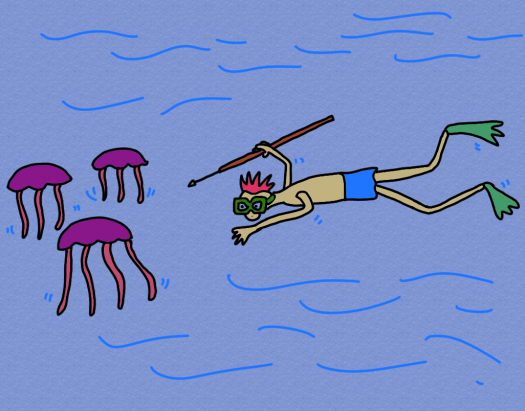
And that needs us to be conscious of another introduction in the plot – that of jellyfish.

Apparently if you cut a jellyfish in two, the pieces can regenerate and form two new jellyfish.

The analogy here is that if you screw up a situation then that results in more things to deal with – lies beget more lies and so on.

And pretty soon the number of things you have to handle grows more quickly than you can handle them – and things start to go wrong.

When you pull all this together and combine Pratchett’s observations and the Patriot’s script you are left with something like this.

Hope is not a strategy.

Wishes are for wells.

If you want to change things the challenge is figuring out what you can do in the situation you’re in without crossing a line where danger increases exponentially.

When you’re on the right side of that line you can try and experiment and innovate.

On the wrong side of that line lies panic and desperation.

And at the edge – the edge between Newtonian physics and chaos lies complexity.

Which is where change emerges.

And if you’re lucky, it’s the change you want.

Happy New Year.

Cheers,

Karthik Suresh

What Might Being Open And Transparent Do For Your Business?

naked.png

Sunday, 6.52pm

Sheffield, U.K.

The poet strips naked. The philosopher takes notes. – Marty Rubin

How open and transparent should you be is a contingent question – it depends on where you are right now.

If you are a large corporate then having friends in the right places and laws that protect your business are perhaps more important.

If you are new and fresh then showing everyone why you are different might be what matters.

What’s interesting is the range of views you get from different people – a range you can see in a sampling of quotes.

Many politicians say they believe in being transparent – which might get a laugh or two from the masses.

A lot of people say transparency is absolutely good – perhaps they are the poets Rubin talks about in the quote above.

But then you have a rejoinder like this one from J. Richard Singleton, “The truth is like sunlight: It causes cancer.”

Harsh.

Plausible?

How open should you be, for example, when it comes to negotiating a pay rise?

Should you be open about how much you need the money? About how much of a struggle it is to meet your bills?

Or should you be open about the work you put in – or don’t put in because of the obstacles in your way?

What if you make a mistake on a client’s account – how do you handle that?

Do you tell the client everything that’s happened or do you try and manage the impact it has on them?

The thing that led me to think about this question has to do with free software.

There are a number of tasks that are better done with such tools – tasks that matter – because they can help with things like climate change.

Should this be done with proprietary, secret tools or should we be trying to use tools that protect our freedom?

When I re-read Richard Stallman’s essays I’m reminded of the huge effort that went into creating the free software ecosystem that many of us use now – the ecosystem that allows me to type this words and share them with you.

But what is it that protects us?

Is it humanity and good feelings – sharing and brotherhood?

Or is it the copyleft – that legal instrument that means work you do for free on free software cannot simply be taken and owned by your employer?

I started this post with the vague thought that openness and transparency are good things.

I may have changed my mind half-way through.

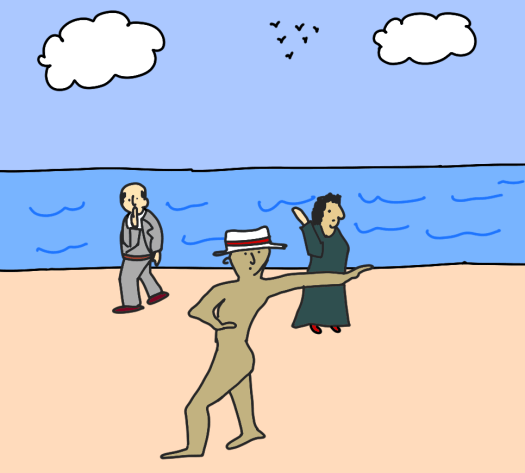
Being completely open and transparent is like standing naked on a beach.

It is unlikely to attract people to you.

The most famous example of such an exercise is perhaps the story of Lady Godiva – but no one seems to be quite sure what the point of it all was.

Or perhaps it’s the story of the Emperor’s new clothes – but that is a story of self-delusion.

You see, the whole point of being open and transparent is not about what it does for your business.

It’s about what it does for your users, your customers.

Free software protects the rights of its users, their freedom to run, study, copy and improve a program.

And it does that by using the law – by using the conventions that society has come up with.

If you help your customers to do the same thing – you might create something unexpected.

You might create trust.

And that’s priceless.

Cheers,

Karthik Suresh

What Do You Do When You See Things Differently From Those Around You?

seeing-differently.png

Saturday, 7.25pm

Sheffield, U.K.

The limits of my language means the limits of my world. – Ludwig Wittgenstein

There are a lot of things worth learning out there.

That’s the purpose of this blog – to wander around a garden of ideas, looking, sniffing and picking ones that seem interesting or different.

And along the way, the way I look at things has shifted.

For example, I no longer think much of targets and tracking and effort.

The way most people are taught the way the world works is that they should set goals, decide what their targets are going to be and then go ahead and make it happen.

If you are working with other people who aren’t achieving what you think they should achieve – you should set them targets and monitor their progress to see how they are performing – and take corrective action when they fall short.

This kind of thinking is seen as normal, reasonable – of course you should do something like that.

But, if you are interested in Systems Thinking and the work of W. Edwards Deming, then you will counter that what happens is because of the system.

The system you have in place is perfectly designed to deliver the results you are getting.

If you want to get different results then you don’t start by setting goals and targets – you start by understanding the system and then you might see what you need to change to get different results.

Yeah so what, you say, that’s the same thing.

Start with targets and change how you act is the same as changing how you act and getting different results.

At this point, you are in a conversation that has no resolution.

Let me explain why.

Many years ago I used to go to University sessions where someone would talk to you about their religion and why you should consider making it yours as well.

I went to my first session by mistake – I was told there would be cake there.

I kept going because there was free food – but there was an obligation to talk to someone about What You Believed.

And it was fun, for a while – but eventually, after a number of discussions, I had a pretty good feel for how the argument would go.

They would say this and I would counter with that and then there would be something else with another response – and eventually we would come to certain points that had no way of being proved and we would have to just agree to disagree – because we believed different things.

It is difficult to resolve differing beliefs – it’s probably best not to try in the first place.

But that leaves us with a problem – what do we do when we see things differently?

Well, to boil a lot of theory into one simple, obvious approach – we have to take the time to listen.

We try and understand the other person’s point of view – their perspective – the way they see the world.

We don’t have to agree with it but we do have to take the time to try and see it for what it is.

And then, if we want to work together or live together we need to figure out an accommodation – a compromise – that will work for us in the situation we face.

A compromise that will, hopefully, make things better.

But don’t be lulled into thinking this is easy.

As we see from the world around us and the politics that happens the easy route is to hate and fight.

It takes effort to build a society that can live under common laws – especially if individual perspectives are very different or are subject to different laws.

It’s not really a cold end state that we get to – but rather one where we simmer instead of boiling.

Because in the end we share the same world.

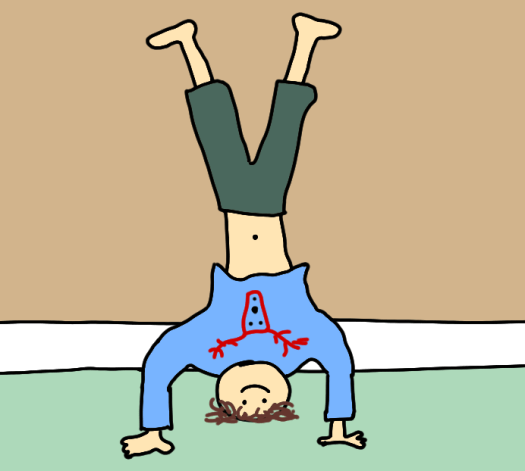
Even if one of us happens to be looking at it upside down.

Cheers,

Karthik Suresh

What Is The Key Thing To Look For In Any Situation?

happenings.png

Thursday, 9.05pm

Sheffield, U.K.

This is a world of action, and not for moping and droning in. – Charles Dickens

I mentioned yesterday that I had come across James Thurber again.

Over the last few days I’ve been copying his drawings in my sketchbook – trying to get a feel for how they work and I noticed something.

In every drawing there is something happening.

You don’t see it at first – it doesn’t grab your attention because it just seems like his style.

But as you look more closely, draw the pictures, you see action, movement, tension in the lines.

Many of my drawings so far, for example, have a person standing there looking at something – passive, uninvolved, disinterested.

The fencers in Thurber’s depiction are anything but disinterested.

And it comes out using the spare economy of a few lines – two people walking past each other holding umbrellas in the rain, his animals creeping and peering, and my current favourite – a man hiding under a fortress made from his chairs and tables.

And that got me thinking about real life and work and trying to sell stuff.

All too often we look at things from a static point of view.

We see things as set in stone, as rules, as dogma – and we think that if we follow a formula then things will happen.

Think good thoughts every morning and the universe will move things around to give you what you want.

Things like that.

But really, what we need to be doing is looking for where the action is.

For example, you could commission any number of studies telling you what people should pay attention to.

But, you’ll do better focusing on what people are actually doing.

It reminds me of that story by Gary Halbert where he says that he’ll bet you that he can sell more burgers than you can.

You can pick any type of burger you want – the quality, the advertising, the colours.

You have the ability to do whatever you like to make your burgers the best in the world.

But he will still sell more – because all he wants is one thing.

A hungry crowd.

And that’s the action bit – that’s where the real thing is happening.

It’s what the Japanese call Gemba – where the work is done.

You can spend a lot of time thinking and agonizing and wondering.

And I think that is a good use of time – I’m not averse to thinking and I think theory is useful.

But when you come into the real world and try to apply that theory – you need to be able to see where the action is – where things are happening.

Because that’s where life happens to be.

Cheers,

Karthik Suresh

What Do You See When You Look Around You At The World?

thurber.png

Wednesday, 10.27pm

Sheffield, U.K.

Unless artists can remember what it was to be a little boy, they are only half complete as artist and as man. – James Thurber

I stumbled over James Thurber again today.

I remember reading him as a child, remember the humour and pictures and laughing.

And then three decades seem to have passed.

So, I went back and looked at some of his work, starting with The beast in me and other animals.

This time, I’ve been looking at the drawings – his way of capturing what is going on around him, and what goes on in between the lines – in between what is obvious.

I gravitated towards the drawings because they seem to capture something that few other things seem to do – an essence that is lost in other forms of media.

For example, all parents take millions of pictures of their children.

But the images I remember are the sketches I dashed off as I watched mine play near a river or draw during a train journey.

They are not good drawings – they lack any pretence at being art.

They are doodles, dashed off in the moment, but they capture a memory differently than a photograph – which retains every detail but that which matters.

So, it’s reassuring to learn that Thurber took a similar approach to his drawings as well – despite being featured on the New Yorker and around the world they were dashed off in minutes and somehow drastically reduce complexity to comedic brilliance.

And observation – of the small things that make up our world today.

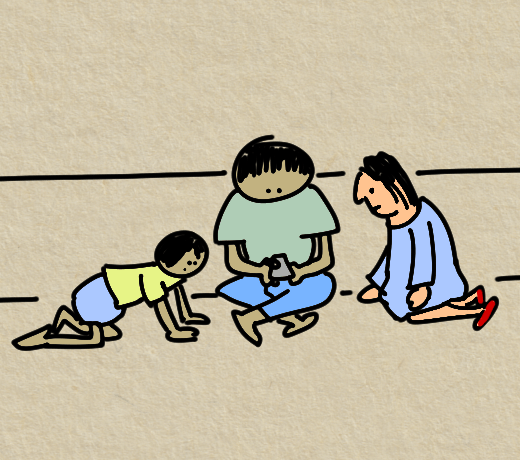
I tried to do a Thurberesque sketch of a scene we see all too often these days – a child with a device and other children gravitating towards it.

We see this more and more as children (and adults) consume content – while once we might have had them creating it, sat on the floor drawing and doodling instead.

Which makes me wonder – if children grow up too quickly – too aware of perfect images before they have time to doodle – then what happens to their ability to create?

The thing that Thurber did was observe – look around and see humour and contradiction in everyday life.

It’s not perfect.

But it can be amusing.

Cheers,

Karthik Suresh

Is The White Collar Professional Job An Endangered Species?

white-collar.png

Tuesday, 9.06pm

Sheffield, U.K.

The American Dream is one of success, home ownership, college education for one’s children, and have a secure job to provide these and other goals. – Leonard Boswell

I’ve been reading Bait and switch: The (futile) pursuit of the American dream by Barbara Ehrenreich and am not sure what to make of it.

It was published in 2005 and is a reporter’s attempt to explore the world of white collar economic hardship.

It’s easy to blame people for getting into difficulties for making bad choices – not finishing school, getting pregnant young, doing petty crime.

In fact, some people really should have chosen their parents more carefully…

But what of the people who did what they should have done – worked hard, paid for University, went out there and got good jobs – and then lost them through downsizing, rightsizing, outsourcing, restructuring or whatever else is the way you cut costs in an organisation?

And for those who do have jobs – what kind of jobs are they?

Are they any different from sweat shops where you work all the time, at work or at home or on the move – working to please your boss all the time?

If we jump to the end of the book Ehrenreich suggests that there is something weird and wrong about corporate life – about the life of white collar professionals.

First, they aren’t really professionals at all.

They don’t have a requirement to have qualifications – one that’s enforced by law.

They aren’t licensed and there isn’t a body of knowledge they are required to know.

Real professionals figured this out some time back and created these things – these barriers that kept them safe.

Professionals like doctors, lawyers and accountants.

Next, how intelligent do these professionals need to be?

Well, if you look at intelligence as being related to some kind of academic standard – with people encouraged to think independently, look clearly at the facts, where dissent is tolerated, perhaps even encouraged, and there is comfort in engaging with complexity rather than reducing everything to a simple maxim – there isn’t much of that around.

Instead, there is lots of “magical thinking”, views and opinions and general hot air.

Third, how equal are workplaces these days?

No, really, if you’re too old, a woman or non-male gender, if you’re the wrong colour, speak funny, don’t have the right education – how likely is it that you’ll really be treated fairly?

Well, we’ll never really know because this isn’t the kind of thing that can be measured easily.

And finally, when it comes to who does what and who gets ahead – is it fair?

Or does it have to do with who you know, what the politics are and who has the power?

And are you really getting a fair return on your investment of time in the business in terms of what you get paid?

Now, all this is quite depressing although Ehrenreich didn’t actually manage to get a job in the first place.

So she talked to lots of people who had lost their jobs and were trying to find new ones.

She learned about the “transition economy”, the services that have sprung up to help people make the leap from being unemployed to finding another job – and the issues with that.

I think her general argument is that these “professionals” haven’t done what’s needed to rise up and defend their professions – form guilds and societies and other such protective measures.

And they suffer more because in America there is less of a safety net – with healthcare and living expenses a major issue for those without jobs.

Growth areas for jobs are, unfortunately, in areas that require manual dexterity – healthcare, cleaning, fruit picking, plumbing.

But you don’t need a degree for that – what was the point of all that learning?

It’s a while since the book was written and there seems to actually be a lot of demand for employees.

The Internet has taken off in the meantime, ecommerce is a thing, lots of people are trying to figure out how to make a living as the world changes.

Taking the long view, we moved from a world of sole traders – butchers, bakers, candlestick makers – to factory workers, doing jobs in big industrial complexes.

And now, are we in a phase of connected, Internet workers – where value emerges from how teams work together rather than what jobs they do?

Have we moved from asking “What job do you do?” to “What value do you add?”

In fact, are jobs themselves, and the professionals who used to do them, a thing of the past?

And if so, what do you do now?

Cheers,

Karthik Suresh