Four Green Houses. One Red Hotel

2026-02-03_world-monopoly.png

The answer to what’s going on with real-world geopolitics is in a game of monopoly I played with my son.

He is fiercely competitive. In this game, he landed on a property that I wanted.

Rather than just letting me buy it, he forced a bidding war, driving the price higher.

I had money. I could have kept bidding. But I bailed out, thinking it wasn’t worth the price.

And that was a mistake.

From that point, I was going to lose the game.

The key to monopoly is four green houses equals one red hotel.

Where are the properties that matter on the world board?

It’s where the resources are, and the ones that matter are the rare earths and critical minerals that underpin today’s technology.

These are the properties where prospective hoteliers need to get a foothold and start building their green houses.

It’s where the conflict is happening – armed conflict, and the threats of conflict.

The three big players in the game are the U.S, the E.U and China.

It’s coming down to how much they’re willing to spend and do to get control of these properties.

How they play the game will shape the economic machine for decades – and dictate the balance of global power.

This is not the time to blink, or bail out of the game.

How Does Vibe Coding Fit In Your Business?

2026-01-31_tight-ropes.png

I’m still trying to figure out the role of vibe coding in my infrastructure.

Stever Robbins had a great metaphor in his post exploring this issue.

https://www.linkedin.com/posts/stever_i-dont-know-who-needs-to-hear-this-but-activity-7421941317032775681-qosf

For years we’ve built our systems like bridges.

Look around you. Everything you see has been designed and engineered.

It is understood.

LLMs change that.

Now we have engines creating code that we don’t have enough time to understand.

Relying on these systems is like stepping off onto a tightrope. Will it hold? Can you stay on? And what happens if you fall?

But tightropes are cheap and easy to install. And maybe it doesn’t matter if you fall off sometimes, as long as you can pick yourself up and carry on.

I suppose the best thing is to be pragmatic.

Build, test, learn, apply.

Where Are You On The Smile Curve

2026-01-30_must-have.png

I was reading about the smile curve yesterday and how it’s changing the rules of the game.

This is the idea that we open our wallets only when we must do something, or if we really want to do something.

Taking buying a house, for example – one of the biggest decisions we’ll make.

The Economist wrote that there are only two reasons to buy a house.

Either it’s cheaper to buy than rent, or the house is perfect and you really want to live in it.

A so-so house, in the middle of a so-so place – you’ll pass on that.

The bottom of the smile is where products and services go to die – the things that are nice to have, but that you can’t really justify right now.

And this means we have to design products and services differently.

A service business like ours uses tested systems and processes to do work that clients have to do because of government rules.

Another business I know massively increases sales for its customers through a platform that quickly matches orders to the cheapest suppliers.

Who wouldn’t want to sign up to that?

Growth, it turns out, is increasingly at the extremes.

As business builders – we need to figure out where we sit on the smile curve and then head in the right direction.

Redesign First Then Use Tools Like AI

2026-01-29_redesign.png

We’re building a firm that’s remote first and makes the most of AI.

But what does that mean in practice?

Twenty years ago, we hired 30 people to build a team.

Ten years ago, we hired 5.

Now – we don’t need people to fill roles. We need them to bring creativity and knowledge.

The roles we hired for previously – data entry, spreadsheet wrangling, manual checks – they’re starting to disappear.

We’re able to do more and more of that kind of work with technology.

But you can’t just think of AI as a cheap employee – a robot doing exactly what was done before, just for less money.

You have to first change how things are done to generate value.

Take making bread for example. I’ve spent much time over the years kneading together flour, water, salt, sugar and yeast to make a dough.

If I were to design a replacement how would I start? Would I try and create a machine that replicates what I do?

The KitchenAid mixer doesn’t do that. It has a spiral tool that does the job in two minutes.

I haven’t hand-kneaded dough in a couple of years.

In the same way, I think we’ll move to a different, more collaborative approach in the way we work with others, at least in boutique consultancies.

Because in every business, we have to redesign how the work is done – and that starts with recognizing the value that people bring, and how it’s different from the value that AI brings.

How To Resolve Tension – Start By Thinking

2026-01-27_sust-change.png

There is a common failure pattern we’ve seen in organisations trying to become more sustainable.

It goes like this.

  1. The leaders are under pressure

to show they are making their firm more sustainable. They set objectives and targets.

  1. Teams are assigned to do work.

They carry out research and identify a series of projects.

  1. Leaders are also concerned

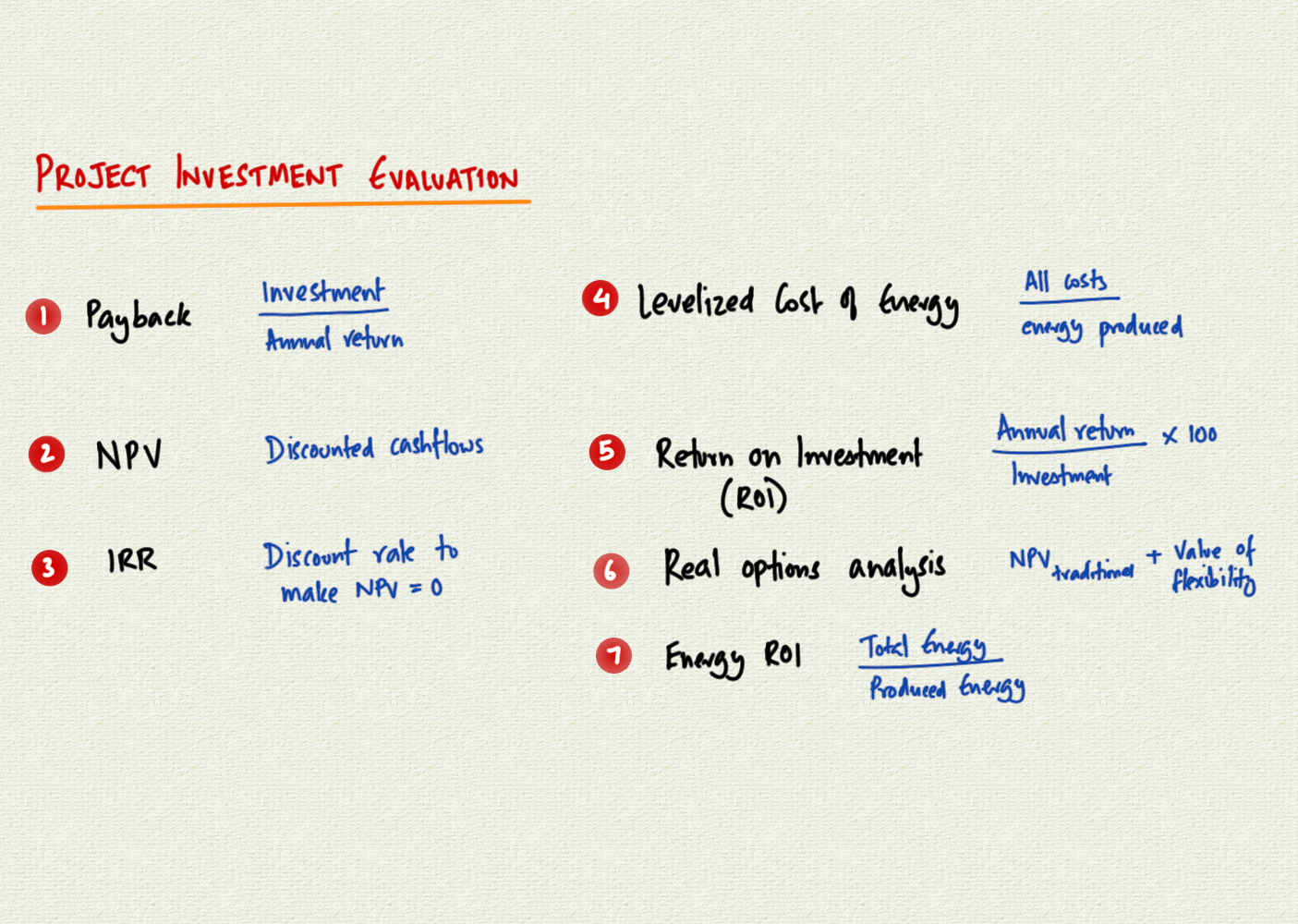
with financial impact, and set short payback criteria for project approval as prudent financial practice.

  1. None of the identified projects

can meet the hurdle rates required and no projects are approved.

This creates a tension between the stated objective of the organisation and the ability for people to actually initiate projects that will allow the company to meet its goals.

The conflict in this situation cannot be resolved technically – solutions that reduce emissions often have a 5+ year payback while companies have a 2-3 year payback requirement.

Instead, we need to question our assumptions – an approach suggested by Goldratt in the theory of constraints (TOC) literature.

If we don’t – the situation will stay the same as it is now, locked into position by opposing forces, until something else happens to break the deadlock, like a crisis, change in leadership or strategic re-evaluation.

What we need to do is relax this tension – identify the sources of conflict and then think our way out of the situation.

How would you go about doing that?

Why Learning Loops Are Important When Developing Your Career

2026-01-23_learning-loops.png

Where are the learning loops in your career story?

If you’ve read Zen and the art of motorcycle maintenance, you’ll remember a section about a hypothetical student who enters a university where they teach but don’t have exams or grades.

The student turns up. Comes to some lectures. Finds partying more interesting. Skips a few. Finds the later material hard. Doesn’t put in the work to catch up.

As there are no exams or grades, there are no consequences. Eventually the student decides it’s not worth the trouble and drops out.

Now the student has to find something else to do. Perhaps a job to make money. Maybe as a mechanic. Finds that’s interesting. Works at it. Gets better. Wants to make some modifications. Realises that he or she doesn’t know enough. Maybe needs to learn more about mechanics and electrical. Joins a college or university.

This time the mindset is different. The student is driven to learn, because he or she really wants to know more about this subject. It’s intrinsic motivation rather than extrinsic recognition.

That’s a learning loop in action. And the interesting thing is that real learning often starts with practice – with taking action in a situation.

I did an MBA after around eight years of working. The theory I learned in the MBA helped explain the previous eight years. Following that, the continuing work and reflection informed my practice after that, which in turn led to more theory work as I tried to understand the previous experience.

I’m wondering how AI will improve these learning loops – and I think it may be at the level of theory.

It’s easier to work with AI to dissect and understand complex theoretical ideas. It can help us make sense of a large body of knowledge and connect and surface insights that it might take us years to do ourselves.

But the practice and reflection – that’s time we have to spend to apply and internalise the theory.

AI’s main promise, as far as I can see, is that it will help us become better learners.

Wouldn’t It Be Nice If Work Were Easy?

2026-01-22_simple.png

If you’re finding a job hard to do maybe the problem is a failing system.

Does each step flow seamlessly and inevitably into the next one?

I see this all the time with data flows.

Information is messy and fragmented, and we try to fix it with one-off interventions.

But those on-off tasks become repeated obligations and before you know it we’re working on a complicated monster of a system that’s almost certainly wrong.

That’s why I love the “small programs” idea that you get with Unix systems.

Build small tools that do one job well and connect them together to do complicated things.

It’s a philosophy that you see in organisations that have lean approaches – they focus on flow and better communication as a way to do things better.

And if you get this right, it’s as easy as going down a slide.

Wouldn’t it be nice if work were more like that?

What Is Consulting Success

2026-01-21_situation.png

It took me a long to learn that success in systems design is about people, not technology.

Every potential engagement starts with a group of people in a situation.

That situation never has a clearly defined problem. Instead, it’s problematic. Concerning. There are issues. Challenges. Uncertainties.

It’s not a box. It’s a fuzzy boundary that isn’t fully understood.

And this is the work of consultancy. To enter the situation and work alongside the people there to see how we can improve the situation.

Success in consulting doesn’t show up just in engagement metrics and KPIs.

It’s whether the people in that situation are happier than they were before.

Planning For Launch

2026-01-20_launch.png

Getting a project away these days feels like planning a rocket launch.

You know the problem – the Earth is surrounded by a debris field and you have to wait for the next best time to get your rocket through.

Take an energy saving project, for example. When can you do it?

I remember walking around a production line with air leaks everywhere – a simple source of savings.

But the problem was that the money saved was dwarfed by the money lost if production was stopped.

So no projects could be done unless a planned maintenance window came around or if something failed catastrophically.

Planned maintenance is better. And that idea of working to a window make sense for a lot of projects.

The best time to get in a new energy efficient machine is when the current one comes to end of life and it’s time to replace it.

Retrofits are hard to do and people avoid them unless they have to do them.

Figure out when the windows are for you to make a decision – and work backwards from there to get everything else in place for launch.

What Value Do Consultants Add To A Business?

2026-01-17_systems.png

What value do consultants add to your organisation?

It depends on the kind of work you do and the resources you have in house.

The rule when adding someone external is that if you need something doing but don’t want to put your best people on it.

In that case, work with someone that’s willing to put their best people to work on that problem.

Which then brings us to the types of problems we face.

Some problems have to do with bits and transactions. Information and its use. So you bring in data services consultants.

It gets more difficult when you introduce interactions. It’s about information but also about how people make choices and operate in networks.

That’s where lobbyists, industry experts, networking groups live.

On the top left you have work that deals with atoms – problems of inventory, factory operations and energy usage.

Consulting work there is all about flow, about getting things moving more effectively and efficiently. Reducing costs. Moving product.

And at the top right you’ve got a mix of all these problems, bits, atoms, transaction and interactions.

That’s where it’s about having clarity of purpose – what you do and more importantly, what you don’t do.

Strategic consultants, the ones who’ve been there and done that and have the experience to help you avoid pitfalls operate in that segment.

Now it’s not really a simple 2×2 matrix. it’s more about how the four components: bits; atoms; transactions; and interactions, come together in a business.

Consultancy, at its core, is a helping profession.

The idea is to help clients get things done that they need doing but shouldn’t be doing themselves.

We don’t need to make it any more complicated than that.