The Trough of Despair – Is SSM understandable?

2025-05-17_ssm-issues.png

Shallow understanding from people of good will is more frustrating than absolute misunderstanding from people of ill will. – Martin Luther King, Jr.

Saturday, 9.43pm

Sheffield, UK.

First, apologies if you have received multiple posts today.

That’s because I figured that some of the lighter, more business focused stuff that I’ve been putting on LinkedIn might as well be here as well.

It’s a bit of a break from the heavier stuff on systems thinking, like in this post.

I really wouldn’t blame you if you stopped reading here. In fact I’d advise it…

But, if you’re still here.

Going forward, you might get a mix of the two types depending on what I write and when I post.

With this post I want to close off Holwell (2000) that I’ve been working on the last three or so posts.

And I think I might have bitten off too much with taking on this talk.

The reason is that it’s very hard to explain something to someone that they don’t already know.

This is because most people know something.

When they hear something new they try and fit it into the existing structure of what they know.

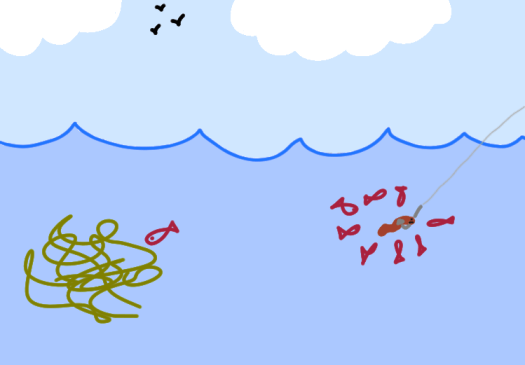
This is a bit like fitting a watermelon into a large bucket.

That’s easy you might think – but here’s the problem. The bucket is sealed with a lid fitted with a small straw.

That’s the cognitive opening – the hole in the straw that you’ve got to fit the watermelon through.

And that sort of activity usually ends up making a mess, with most of the watermelon dripping everywhere.

This is a terrible analogy.

The takeaway message is that there is lots of confusion and misunderstanding about soft systems methodology (SSM) and what it is.

So much so, that I’m not sure I can tell you what it is and I’m supposed to be the sort of expert around here.

So, let me just sum up some of the key points that make discussion problematic – the issues, if you will.

First, there’s the history of SSM and how it developed from being an application of systems engineering to a learning system that could be used to engage with and improve problem situations.

Then there is the explanation of what it actually is – from paraphrasing or parroting what the pioneers said, and the philosophy behind it all.

Although, I do remember reading a catty letter that suggested the pioneers disagreed too.

Again – the old thing. Why are academic arguments so vicious? Because the stakes are so small.

Explanation is complicated by what’s said, what’s said later, and what one says about what’s been said.

I don’t want to go into it but it feels a bit zen like – you can only get it with experience not with talk.

But talk is the business of academia so you end up with lots of usage and lots of talk.

This is stuff like the aspects of SSM, definitions, justifications, how it could be used with other approaches, whether it’s grafted on or whether other approaches are embedded in it.

And throughout all this, you’ll note that I haven’t yet said what the thing is – SSM, that is.

Anyway, I’m now in this trough, where it all seems far too hard to explain but I think I know what it is and it works.

Just trust me, will you?

Okay, I wouldn’t either.

So, I think we’ll move on and I’ll climb out of this sometime.

Starting with figuring out how one should approach a history paper in the first place.

Maybe we’ll examine one or two by Kirby, who’s written a few histories of the operational research (OR) society and see if they can give us some guidance.

Cheers,

Karthik Suresh

Pitch Less, Listen More – The Rules Of Selling

2025-05-16_freud-frankl.png

I was talking to a friend yesterday about how our experience of the sales process has changed over time.

Selling is a critical part of a business – it’s what makes everything else possible.

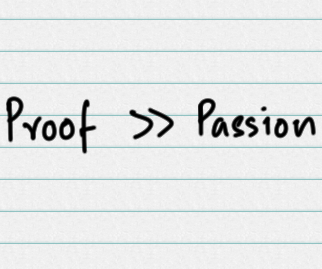
But too much selling is based on Freudian principles, assuming that the main drivers for buyers is to seek pleasure and/or avoid pain.

Victor Frankl, on the other hand, thought that people’s primary drive is towards finding meaning in their lives.

This is a more nuanced lens that is tricker to pin down.

The idea is that we tell stories to make sense of the world around us.

The stories we tell, especially about how we see problematic situations unfolding in front of us, give others insights into the way in which we structure our understanding and find purpose and meaning.

For example, the way in which you approach sustainability will be different if you are a purpose-driven firm that wants to minimize your environmental impact versus a profit-driven firm that wants to comply in a meaningful but compliance-led way.

Purpose matters.

If we understand purpose then we can build solutions that are fit for purpose.

Interestingly, that’s now the accepted definition of quality.

Juran’s quality handbook defines quality as \”fitness for purpose\”.

But how do you understand purpose from a buyer’s point of view?

That’s where having a good discovery process at the front end of your sales cycle is essential – and that’s the thing that’s changed.

Fewer decks, less pitching.

More listening and more problem structuring.

Vibe Coding – To Be Or Not To Be?

2025-05-17_ai-force-field.png

Will something like vibe coding take off? As an operations manager, should you or I spend more time on this, or will it pass away in a year or so?

I was just thinking about a post by Judah Diament – seen via mastodon, starting on BlueSky – about a computer scientist’s perspective.

As engineers and managers we need things that work.

Success or failure matters.

With a new tool, the promise always is that “this time it’s different”.

The opposition to that starts with a minimal knowledge of history. There have been many tools that aimed to construct complete applications.

But the market wasn’t ovverrun by automatically generated applications.

These tools produced code and documentation and you could understand what was going on.

Their successors live on in frameworks that you can start from and build on – but no one pretends they are ready out of the box.

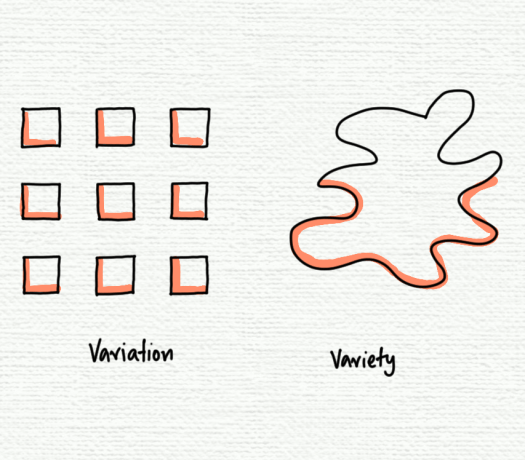
That’s because any real world application has variety – it needs changes, has complexity, introduces unusual requirements.

At some point, you may need to understand what’s going on to match a client’s needs – and how can you do that if the output is unpredictable and depends on the particular prompt you used?

Then there’s the question of value.

If an entire system can be created from a single prompt, then what’s the value of the output?

It’s probably the cost of the prompt in whichever platform you’re using.

Say you can build an application for ten dollars.

If an operations manager can do the same thing then she might as well use the prompt to create the application too.

The real cost comes over time, in customising and maintaining that application.

The value then comes from the team that delivers the ongoing service to the manager, not the product.

In short, if this approach starts to succeed despite the evidence and history, the cost of products will fall close to zero.

Managers will instead pay for operations and maintenance teams to understand and keep this pile of code operational.

The SaaS model becomes one where the S for service starts to matter much more than the S for software.

Well-defined or Ill-defined Problems

2025-05-13_holwell-2.png

Tuesday, 9.06pm

Sheffield, U.K.

There is a lot of stuff we can’t control, but it is completely in our power to decide what the definition of what a good job is. That’s up to us. – Mike Rowe

I’m carrying on with reading Holwell, S., 2000. Soft Systems Methodology: Other Voices. Systemic Practice and Action Research 13, 773–797, and today I am going to focus on a single paragraph.

But first, some background.

I’ve been writing more on LinkedIn recently and I’m finding it tricky to find the right kind of tone.

A writer on LinkedIn is incentivised by the system to chase engagement and likes – it’s the dopamine reward for putting the “right” kind of content on the platform.

That content is designed to stop and engage you, and so it uses certain psychological triggers – clickbait of one kind or another.

With each promise in the headline, there has to be a payoff to keep you from being disappointed; you need a nugget of wisdom in exchange for stopping your scroll.

This is something that’s tricky to deliver if your message is that the world is complicated and when you start trying to make sense of it things usually get more complicated.

And that things are usually harder to do than you think.

But the kind of message that hooks you is look at this thing you need, we’ve got an easy button for it, and if you buy this everything in your life will be better.

In a roundabout way, this is the point of the paragraph that I’m reading – the difference between simple and complex, between well-defined and ill-defined problems.

A well defined problem is what is 2 x 3? You don’t need to worry about what is 2 and what is 3.

I struggled to find a word for this next point and came up with it’s a closed problem – you don’t need to know anything about the properties of graphite to figure out the answer. The pencil you use has no impact on the problem, neither does the room you’re in or the ongoing dispute you have with a neighbour.

It’s a means-ends problem – what means do I need to achieve this end? To solve the problem you must have some knowledge of arithmetic or know someone who does.

And finally, there is a stopping point. There is a solution. You know when you get to the answer that there is an answer, and this is it.

The kinds of problems we face in real life are often not of this sort, they are instead ill-defined.

There isn’t really a “problem” but a problem situation.

Take a look at the news right now.

How would you, if you were the leader of a country, respond to what is going on in politics?

It’s got to be a hard one. You may agree with the policies. You may disagree with them. You might disagree but have to pretend to agree because you haven’t got any cards. You might have to disagree because that’s what your people want you to do, but really you want this whole thing to be over and retire to your country house.

What you’ve got isn’t a problem but a problem-situation.

In such problem-situations the context matters. The way you act will be different if you have power, or if you need support from others, and whether you can count on support or if you have to persuade others.

Such approaches require problem structuring – what are the tradeoffs, what kind of agreements could you reach, what levers do you have?

I imagine the kind of frantic negotiation that happens when a bill needs to be passed and the sponsors need to call all the legislators they know and engage in horse trading to get the task done. You know it’s heading in the right direction when everyone is about the same amount of unhappy.

And then finally, there is no end point, there is no solution.

The best you can hope for is that you’ve made the world a better place – that there has been some improvement.

In the next post, we’ll try and get back on the history track.

Other Voices In The Development Of Soft Systems Methodology

2025-05-11_2000-Holwell.png

Sunday, 8.41pm

Sheffield, U.K.

There are three kinds of men. The one that learns by reading. The few who learn by observation. The rest of them have to pee on the electric fence for themselves. – Will Rogers

This post is a set of reading notes from Holwell, S., 2000. Soft Systems Methodology: Other Voices. Systemic Practice and Action Research 13, 773–797, as I prepare to give a talk on the history of soft systems methodology (SSM).

I was going to carry on from my last post which was working through the summary in Systems Thinking Systems Practice (STSP) but then I felt I would just be repeating what Checkland had already said.

I stopped, thinking I should look more widely first and searched my collection of papers and came across Holwell (2000).

She makes the following observations:

  1. Many people simply repeat Checkland’s work, more sophisticated approaches focus on specific aspects of the work;
  2. A lot of people just don’t get it;
  3. Early work in Lancaster was based on systems engineering – how do we approach that and is it dated?
  4. The secondary literature is starting to impact the way people think about SSM.

From positivist thinking to interpretivist thinking

Brace yourselves. This is going to be heavy going. I find it tricky.

Checkland’s defining contribution is bringing “the concepts and philosophy of interpretive social science into systems thinking” (Flood and Ulrich, 1991, p.186).

Let’s unpack this.

First, interpretive rather than positivist refers to two ways of looking at the world. Positivism says that the world is real and all that matters can be observed and measured. Interpretivism says that you create the world along with others in your mind.

The systems concept is about wholes and the properties of wholes.

The application of systems thinking in the social sciences is usually under the heading of functionalism. This is Emile Durkheim’s theory that socity is similar to a biological organism. There are parts to it, and there are structures that connect these parts and that the workings of these parts within the whole enables a successful society.

A functionalist model “sees” society as parts and connections and can therefore accept that these parts can be designed, constructed and managed.

Society is a machine that can be controlled.

Now, you can see that this line of thinking leads to possibly problematic outcomes, such as dictatorships.

SSM has a model of social reality that is derived instead from Husserl’s philosophy of phenomenology.

Husserl’s approach says something like rather than going with the traditional Western rationalist bias, pay attention to your real lived experience – it’s sometimes called the science of experience.

I think this must be similar to the Japanese concept of going to gemba – the place where the work is actually happening.

So I think what this is saying is that rather than starting with a framework that says this is how societies work and this is how we should organize things, go and look and see for yourself and rely on an intuitive approach, without assumptions or intellectualizing to “get” what is going on.

Which is a lot of big words to say something like just open your eyes and see what is in front of you rather than what you believe is in front of you.

The other connection SSM has is with Weber’s interpretive sociology, which combines a social group’s needs to have a coherent world view, but also what the power relationships are in their environments.

Again in simple terms – this is about why are we where we are, and how can we hold on to, or gain more power.

Think about this like a manager – why are you in your job, and how do you keep your position and get ahead?

Let’s stop here and carry on in the next post.

Cheers,

Karthik Suresh

From Science To SSM – A Summary

2025-05-07_ssm-history.png

Wednesday, 9.39pm

Sheffield, U.K.

History never looks like history when you are living through it. – John W. Gardner

In Peter Checkland’s 1981 book “Systems Thinking, Systems Practice” (STSP), there is a helpful summary of the arguments developed in the book.

The scope, however, is vast.

Let me try and make sense of the summary, by in turn summarizing it.

In the beginning, there was magic and mystery and then science came along.

As an aside, I’m currently watching the BBC series Merlin, for no defensible reason.

The legends of King Arthur are set in a post-Roman time around the 5th and 6th centuries.

In the reimagined series, there is quite a lot about the methods of science.

The scientific method and modern science are really associated, however, with the scientific revolution in the 16th and 17th century.

The three Rs made it clear what was science and what was not.

Reductionism, repeatability and refutation made it possible to build a reliable and continuously refined account of what went on in the world.

This worked very well in the restricted sciences like physics, and pretty well in the unrestricted sciences like biology.

But the methods of natural science start to break down when they are applied to complex and social situations.

In particular, they struggle with questions of ends and means – of “managing” activities.

While science is concerned with bits it’s less worried about wholes – and that’s where the systems concept entered the picture.

The systems concept is concerned with wholes and characteristics that emerge at different levels – characteristics that do not arise from lower levels.

For example, in biology, the science of cells does not explain why a particular arrangement of cells makes up a human body that sings.

The systems concept was seen as a useful way to address management problems associated with human activity.

But then we came up against different types of problems.

The techniques of analysis and engineering being used worked well on certain kinds of problems – hard ones – where there was a well defined problem that needed to be solved.

How do we bridge that large gap so a train can get from here to there, for example.

But the systems concept struggled with ill-structured problems.

How do you start to fix something that you know is broken but you’re not sure how to express the problem in the first place?

That issue led to the development of a new methodology from 1969 to 1972 in 9 studies.

We’ll dig into this in the next post.

Cheers,

Karthik Suresh

What Is Soft Systems Methodology (SSM)?

2025-04-24_ssm-definitive.png

Thursday, 9.12pm

Sheffield, U.K.

Every company has two organizational structures: The formal one is written on the charts; the other is the everyday relationship of the men and women in the organization. – Harold S. Geneen

I write a lot in this blog about soft systems methodology (SSM).

But what is that, exactly?

To find out, you might want to read Peter Checkland and John Poulter’s “A short definitive account of soft systems methodology and its use for practitioners, teachers and students”, published in 2006.

It’s the definitive account, the final say, so perhaps that’s a good place to start.

A few of Checkland’s papers complain that people don’t understand SSM and they miss the point of it in how they use it – or claim to use it.

It’s easy to get lost in the academic discussion – but I am going to make things worse by attempting my own interpretation of what’s going on with SSM.

Here’s my version of the brief version.

Let’s start with life itself – the everyday. Today, tomorrow, yesterday. All the days that we live through.

We live in a flux of interwoven events and ideas. Ideas lead to events, events spark ideas and life goes on.

Everyday life produces situations.

These situations have people in them. It’s the presence of people that make it possible for situations to exist – because they come into existence in the minds of people. A problem only bursts into existence when someone believes it does.

Let’s not worry about this too much, but the key point is that you need people to make a situation – and what those people think about the situation is what we’re focused on.

Sometimes, they think a situation is problematical. That something is wrong. That things could be better.

Why do they do that? Why look for problems, or think at all?

It’s because we can’t help but be purposeful – we act with purpose. Human beings have a brain that allows them to act intentionally – rather than randomly.

But, we usually only see situations from our point of view. We may exist in a complex, multifaceted reality that some people insist is very simple because they see it one way, and others disagree because they see it another way.

It’s the same thing – we just have different perceptions of the thing we’re in.

Wars have been fought over these different perceptions of the same thing.

But, we’re learning over time – and the thing that could help is to learn more about the situation.

We go out and intentionally learn more about the situation as perceived by the people affected by it and affecting it.

We talk to them, we ask questions, we listen to them, we build a rich picture of what’s going on.

All this learning helps us build models of purposeful activity.

This is a new bit – it’s not something most people do.

A model helps us capture that learning and put it into a form that we can look at and understand – it’s like a theory, an operating manual – something we can use.

And we use it to help us as questions about the situation, to take this model or models with multiple viewpoints and have a structured debate – a good conversation about what’s going on and what we could possibly do.

This kind of discussion helps us to decide what action to take – and to take that action.

The action, we hope, is going to improve the situation.

It’s going to affect it in some way, anyway.

And now the situation has changed – hopefully for the better, sometimes for the worse, and we now have a new situation.

If all is good, great.

If it’s still problematic, then we continue our cycle of learning, modelling, questioning, and taking action.

All this may seem simple. Perhaps even obvious. But it’s the result of decades of thinking and action research.

In my next post I think I need to go back to where it all started to show the gap between where things were and where things are, and then build a bridge between the two.

Cheers,

Karthik Suresh