Do You Have The Right Kind Of Energy In Your Life

suck-energy.png

Tuesday, 7.58pm

Sheffield, U.K.

Haters never win. I just think that’s true about life, because negative energy always costs in the end. – Tom Hiddleston

Many years ago I spoke with a girl who seemed to see things other people didn’t.

Like energy – she said some people sucked energy from you, while other people didn’t.

I didn’t quite know what to make of this at the time and, to some extent, I still don’t.

Do people who need to talk things through with you – the ones who spend hours going through their experiences fall into this category of energy vampires?

Or is it a more insidious thing – are there people who are relentlessly negative? The ones who see the dark side everywhere, the possibilities for failure and who seem to take a perverse delight in seeing others stumble and fall?

There is a line, somewhere between normal conversation and the need to unload one’s feelings, and this other place.

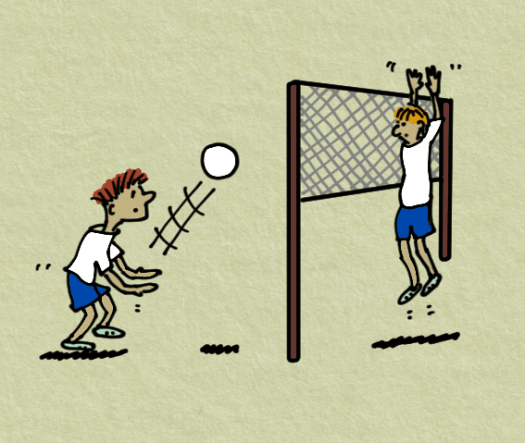
At the extreme is the feeling you might get if you were one of the victims in the picture above – a loose adaptation of a scene from a well-known film still in cinemas at the moment.

I remember being relieved that the girl said I wasn’t in the energy vampire camp – but then I’m not sure that’s a good thing.

For example, I think that my writing is relatively balanced, relatively thoughtful.

It lacks the passion and angst, however, of a more driven person – it lacks the anger and drive of someone who wants to take radical action to change the world around them.

You will know people personally or have watched them – these larger than life people who fill rooms and screens, simply bursting with energy.

They can be glorified or vilified.

The press, in particular, loves the story of a person rising up and then take equal delight in pulling them down – it’s the action and angst that matters not the person.

But there’s a dark side to dynamism, isn’t there?

The same energy that one person harnesses to create a movement and positive change is used by others to create a cult and harmful change.

An uncompromising quest for the good can result in something like the inquisition – where you deal harshly with people who don’t meet your standards of what good looks like.

And negativity is not always bad, is it?

I’m often see conversations where people talk about what to do – what strategy to take.

And one school of thought is to say that no idea is bad – and you can’t win if you aren’t in the game.

But sometimes you know why a particular idea won’t work – should you stay quiet?

Or perhaps you should just say no to everything unless it’s in your sweet spot – you only swing for those shots that you have a good chance of hitting.

Is that being negative or just pragmatic?

And if the game is baseball, something you’ve never played – surely you’d be better off not trying to play and work on a sport you do know instead?

What all this teaches us, I think, is that people lie on a spectrum – from frenzied optimism to relentless pessimism.

One might say that the first thing to achieve is balance – a dynamic equilibrium between the negative and positive – so that you are unaffected by the forces on either side.

That means you don’t rush to criticise but that you also don’t rush in without questioning.

You might also want to spend less time with negative people who do suck the job from your life – but also be wary of charismatic types that draw you into their web of magic and euphoria.

Because when you’re balanced you can choose what to say and when to say it and how to act – you can make choices about how you want to be.

And surely when you have that ability – that energy – you’re going to choose to be positive and optimistic.

Aren’t you?

Cheers,

Karthik Suresh
Where Should You Start When You Want To Create Something New?

arrowhead.png

Monday, 8.38pm

Sheffield, U.K.

If you have built castles in the air, your work need not be lost; that is where they should be. Now put the foundations under them. – Henry David Thoreau, Walden

When you listen to the way in which people go about their business it’s remarkably similar whatever business they’re in.

Take the business of comedy, for example.

Comedy is a business – we spend a lot of our time being entertained – and there are people working very hard to come up with the jokes and gags and plot lines that keep us amused.

A good joke is like a magic trick – it’s best when you don’t know how it’s done – when you experience that sense of surprise when it’s executed perfectly and cannot help but laugh.

So, I was listening to Jerry Corley talk about the comedy writing process and he said a couple of things that made sense in several ways.

One of those things was about how you don’t try and write funny stuff.

Instead, you just write, starting with whatever you have and then you make it funny.

Now, that’s really insightful – and obvious – but mostly insightful.

It got me thinking about arrowheads.

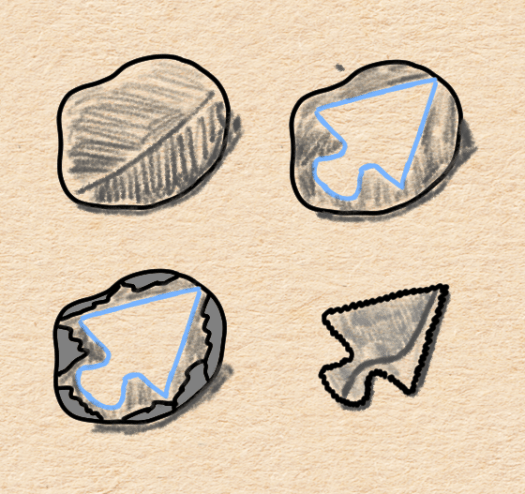
Let’s say you find a rock – perhaps its obsidian or flint – what do you do with it?

You might be tempted to carve a statue, perhaps one of a god, or the successor to Michelangelo’s David.

Except David is over five metres tall and your rock is around three inches across.

Have you ever had a conversation with someone in a pub who’s had a brilliant idea for a “platform”, something that rivals YouTube and Facebook, and they’ve planned out exactly how they’re going to do it?

The only problem is that they aren’t techie and so will need to hire others to do the entire thing on their behalf.

This kind of thing is like sculpting a five metre David from a three-inch piece of rock.

Maybe it’s possible if you have access to a few extra dimensions but your chances aren’t good.

But, on the other hand, if you decide to make an arrowhead, you have a pretty good chance of being successful.

Which is actually the second point I wanted to make.

You have to match your ambitions to your resources – to what you have.

Yes, by all means have dreams, believe that your reach should exceed your grasp, but recognise that you will eventually have to either give up on grabbing a star or find a practical way of making a rocket.

The first, and more important point, is starting with what you have.

Too many people look around at what the market is buying, or what others are doing and think they’ll do that as well.

But that way you’re always chasing the market – and by the time you get to where the market was it’s moved on.

You’re better off starting exactly where you are and then adjusting, chipping away, to fit the needs of the market.

Let’s take that stone again.

Inside that stone lives something like an arrowhead, not a David.

You can chip away at that stone to reveal the shape underneath and if you chip away enough you will get an arrowhead – one that is useful and that will get you dinner.

And the same approach applies to your career, your business or your startup.

Begin with the skills you have, build on what you’ve already done and then tweak, adjust, chip away – until what you have fits what the market needs.

A startup based on something you need and want is going to have a better chance of succeeding than one where you believe that if you build it others will buy.

Belief is a dangerous thing – a double edged sword that cuts both ways.

Knowledge, on the other hand, of yourself, what you do, what your skills are – is something you can use without fear.

Because if you start with what you have you can make a joke – or make a career – or make your business.

And it will be solid.

Cheers,

Karthik Suresh

How Do We Truly Learn To See What Is In Front Of Us?

negative-space.png

Sunday, 9.36pm

Sheffield, U.K.

But in order to survive in this foreign world, I had to teach myself that love was very much like a painting. The negative space between people was just as important as the positive space we occupy. The air between our resting bodies, and the breath in our conversations, were all like the white of the canvas, and the rest our relationship – the laughter and the memories – were the brushstroke applied over time. – Alyson Richman

I’ve been thinking more about drawing the last few weeks – and the way in which drawings can help us see the world around us.

And it’s funny how they can help us see in the way that we want to see – they follow our approach rather than the other way around.

Let me explain.

Most people will appreciate the fact that when they see reality what they see is not reality at all – it’s instead a construction, a hugely effective virtual reality system, that creates a world in our brains using electrical signals generated by our sensory systems.

In reality, this brain of ours, which hides in a cave with no windows fools us into thinking that the movie it’s showing us is the same thing as reality.

The world is an illusion – Maya, as the Indians would say.

And because there is so much data the brain ends up using some data that is real time and a lot of data that is stored and reused.

And that’s why when we look at a house we don’t really see a house – we replace it with a mental model of a house.

Unless there is a reason for us to look more closely – we’re in the market for a house – and then we start to notice many more things about the houses around us.

We look at size, age, driveways or lack thereof, the people, schools feeling.

We’re always positively looking for things – and our brains focus on bringing those to our attention, filling in everything else with stored data.

And this makes sense because if it insisted on processing exabytes of real-time information every time we stepped out of our front doors – it might just burn up – but instead it just uses a quarter of the energy we put into our bodies and does all the work for us.

But the shortcuts it sets up create a problem – we can start thinking of these shortcuts as the same as reality.

For example, if you once dealt with a situation in a particular way it’s hard to stop yourself telling others that the same way will work for them as well.

Or, you might even start telling people how to do things because you think that approach will work – without even really testing it first – the approach taken by many how-to books over there.

Which is why reading Betty Edwards Drawing on the right side of the brain again reminded me of some very important points.

One of which is the idea of negative space.

Let’s say you’re asked to draw a chair.

If you’re like most people your mental model of a chair will intrude forecefully to influence the image you create on paper.

You know how a chair looks, how its legs are connected at right angles, how there is a seat – and this will affect the lines you put down as your mental model of a chair clashes with the particular scene in front of you.

One way of getting around this is to stop looking at what you know and start looking for what is not there.

In the image above I’ve traced the negative spaces that you find looking at a wicker chair.

Look at those weird shapes, the odd angles, the spine and fishlike backbone.

Yes, you could see a picture of the chair, but you would not see what is not there, the thing that is in between what you see.

And that’s important because as long as we look for what we expect our solutions will fall short.

In business the thing that takes you down is rarely the thing you’re looking out for.

Retailers were busy watching footfall – they never thought the Internet would be a thing.

Armies are always training to fight the last war.

The books we read, the subjects we study, the strategies we adopt – these are all things that help us deal with what we see, what’s in front of us, what we expect to find coming down the line.

But it’s the unexpected that gets us every time – governments, companies, empires are overthrown from within again and again – not from without.

And so, it is only by training yourself to look for what is not there will you come up with strategies that have the potential to save you.

What will you do when your job disappears – if you lose it tomorrow.

What will you do if you make a living with your writing and your hands stop working?

Where is the space where there is no one else – the niche that you can fill with your new product?

Space matters – because everything else is already filled with something else.

Learn to see what is not there and you will always have a place to go.

Cheers,

Karthik Suresh

What Would You Do If You Could Do Anything Right Now?

many-lives.png

Friday, 8.21pm

Sheffield, U.K.

The thing I love most about my job is watching people age backward, becoming more lively and energetic as they free themselves from situations that are toxic to their essential selves. – Martha Beck

One of the exercises psychologists ask you to do is the perfect day exercise.

Imagine you could do anything – you had no limits or constraints at all – and you had all the resources and money to do whatever you could possibly want.

What would you do?

If you’re interested, take a minute and write down your perfect day – go into detail and be as imaginative as you want.

You can do the same exercise with your business or your job role.

What would a perfect day at work look like, a perfect business trajectory – how would you describe that to someone else.

Now, when you’ve done this you have an opportunity to learn more about yourself.

Many of us think that we would like to do something – be a famous singer, a racing car driver, a President.

When you look at your perfect day the thing you should ask is how much time you spend doing the thing you think you want to do.

For example, does your perfect day include practising for three or four hours?

Does it include doing to track days?

Or does it involve actively getting involved in local politics?

If your idea of a perfect day is to spend your morning in bed with several attractive members of the opposite sex and then take your private jet to Paris for breakfast, followed by lunch in the Riviera while your chauffeur waits to take you to a private dinner with the Queen followed by an exclusive nightclub – then perhaps what you want is to be famous and have lots of money – not actually sing or drive or lead.

When it comes to your business the same considerations apply – do you want a passive income generating machine that gives you money for doing no work at all – or are you pursuing a calling that means a huge amount to you?

The chances are that what we think we want is often what we think we should want – or what others want for us.

How do we know what we really want – what’s the thing that would drive us if we only knew what it was?

What are the possible selves we could have?

Do you think you would like writing poetry or painting?

Is being a good parent the thing you want to do – know that your children will look back on their childhood with happiness and gratitude?

Do you want to tinker with things, invent or make stuff that helps people – or do you want to be a good friend, someone with strong, deep relationships?

Or do you want to be the life and soul of the party – the person who is in charge of happiness?

Here’s the thing.

If you can’t do anything you want in your imagination when there is nothing holding you back – how will you do it in real life with all the constraints and excuses around you?

When you have a job that drains all your energy, when you have children and a mortgage and car payments and holidays and no money – how will you find the time to create or learn or be who you want to be?

And there’s no easy answer to that – because all the things you have bought over time – the things that you own now own you and your life.

You’re loaded down – just imagine yourself like a mule weighted down with all the possessions in your life.

When you were young and carefree you didn’t have a care in the world and the time seemed endless.

When you’re older time passes more quickly and you move more slowly – because of all the baggage you’re carrying.

So, the first step to making a change, especially later in life, is to jettison some of that load – get rid of everything you don’t need and most of what you do and keep only what is absolutely crucial to your existence.

Your family, friends and passion for what you do.

And then maybe you can start working on making life just that bit more perfect.

Cheers,

Karthik Suresh

What Is The Best Way To Learn To Do Something Well?

skill-learning.gif

Thursday, 8.47pm

Sheffield, U.K.

Perform your duty equipoised, O Arjuna, abandoning all attachment to success or failure. Such equanimity is called yoga – Bhagavad Gita

I felt like there’s been something missing the last few days of writing – a feeling of being tapped out, exhausted, running out of energy and content.

Maybe that because the big ideas seem to run into each other – the differences seem less relevant and the insights questionable.

For example, take the value of mathematical modelling.

That’s something I would have been quite interested in once upon a time for decision making.

But now I’m not so sure.

If you want to design a new bridge or a heart valve then modelling is crucial – you’re building something real and if it doesn’t work people could die.

But when you’re trying to choose between options the value of maths seems to fall – and what seems to matter more is maximising the opportunity to gain power and avoid blame.

It starts to be about people and people are hard to model mathematically.

It can also seem a hopeless task to try and understand anything new well.

After all, the 10,000 hour rule says that you must spend that much time over around ten years to get any good.

I’ve always had that rule in mind which is why I’ve given myself ten years and a million words to get better at writing.

And it appears that I’m wrong.

I watched a talk by Josh Kaufman, the author of The first 20 hours where he explained why what I thought was wrong.

The 10,000 hour rule, it turns out, comes from research into how much time you need to spend to become one of the best in the world at something that can be easily tested and ranked.

If you want to become one of the best violinists, for example, you’ve got to put in your time and then some.

But you don’t need to spend anything like that amount of time to get merely good.

Kaufman argues you can get to good in as little as 20 hours – 40 minutes of practice a day for a month – if you’re strategic about it.

Kaufman has a model and lists for how to go about acquiring a new skill – but the main takeaways for me are about two things.

First, sort out the environmental issues.

Decide what you’re going to do and block out time every day – preferably at the same time – to practise doing it. And get rid of distractions – notifications, children, your spouse.

And get the tools and space you need and keep them to hand – basically make it really easy to do what you want to do when you’re ready to do it.

And second, be structured about how you learn.

Focus on the things that come up often – the high frequency components.

Create a way to check you’re doing it right.

And practise, practise, practise – repeat, repeat, repeat.

Now, to give you an example of how this might be done – I’ve created the picture at the top of this blog.

I’ve been drawing images for my posts (badly) for a couple of years – nearly 700 of them so far.

I’ve been telling myself that it’s all about communication, not art.

But recently I found a book called The cartoonist’s workbook by Robin Hall which breaks down the drawing process in a way I hadn’t seen before – and this is what you see in the image above.

First, if you want to learn to draw cartoons, you will need to draw people – but those people are often built up from simple shapes – circles, boxes and so on.

So, you need to practise doing those fundamental shapes because you’ll use them again and again.

That’s the first thing then – selecting high frequency elements to practice – common chords in music, common steps in dance and so on.

The next thing is to make it easy to get things right.

Hall is the first cartoonist I’ve seen who says to draw on lined paper – and that makes a huge difference.

Suddenly, getting the size of things right is easy because the guides are there.

A head, for example is one line while a whole body is four lines.

In another life when I used to teach dance we used to tell students to take a step that was hip-width apart.

This often ended up with some people taking tiny steps and others taking huge leaps – and we had to clarify – but eventually they got it.

And then the last bit is repetition – doing the bits again and again until you start committing them to muscle memory.

And then you move on to the next element.

Now, I suppose if I were to add my own approach to this I would do a couple of things.

First, it’s not enough to practise the elements alone – it’s important that during each learning attempt you try and create the sum of the parts – a whole.

Break the thing you want to do into its elements, practice the elements but then put them together as well.

And the second is to worry only about what you’re doing – not about reward or failure.

It’s worth learning if you’re having fun doing it.

And that’s enough reward.

In Indian culture we think of Yoga not as an exercise – but as a way to do something – a way to learn, a way to be, a way to act.

The way is what matters.

Cheers,

Karthik Suresh

What Would You Tell Your Children To Do When They Grow Up?

do-when-grow-up.png

Wednesday, 9.38pm

Sheffield, U.K.

It is a capital mistake to theorize before one has data. Insensibly one begins to twist facts to suit theories, instead of theories to suit facts. – Sir Arthur Conan Doyle, Sherlock Holmes

One of the small people that live with us asked at the dinner table, rather unexpectedly, “What should I do when I grow up?”

The other small person piped up immediately. “I thought you wanted to be a Lego designer?”

The first small person looked uncertain. “I’m not sure anymore.”

The question arose, I think, because they had been talking about the rise of automation in the world – and how you now had self driving cars and robot that flipped burgers.

What kind of jobs should a young person aspire to these days?

Although that concern, it has to be said, is not limited to young people.

We older ones have the same worries – are our skills still relevant in a networked, always on, social media ruled world?

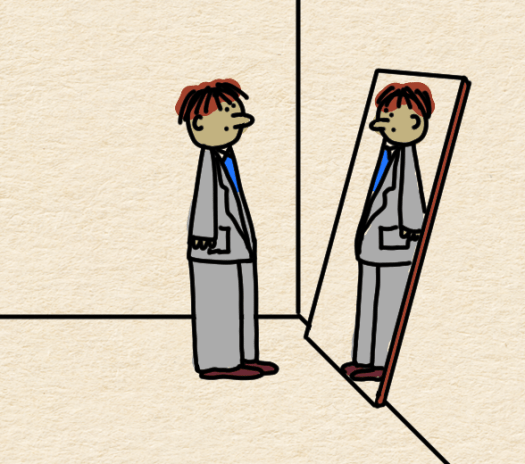
When we look in the mirror what do we see staring back at us?

And does that person approve of who we have turned out to be?

There are a few ways to look at this – and one of them is to realise that the person you are now is not the person you were ten years ago.

If you could somehow talk to that other, older person, what would you say?

Would you tell them to take more risks, try more things, be more adventurous?

Would you have told them not to settle too quickly – to find something that they looked forward to doing every day?

Or would you have said that life is hard and life is grim and you need a job – so get a skill or a trade and get on with it.

You can always have fun when you’re at the pub or at a game – and leave the work behind.

Are you pleased that the older you made the decisions he or she did or are you resentful at the chances that were passed up and the opportunities that were missed?

But you are where you are, but there is a younger you, ten years from now, who will look back at you and ask the same questions.

How will you answer?

I think that when I was young I made too many decisions that were safe ones.

The time to take risks is when you have nothing to lose – and it is later in life when you have more and are responsible for more.

But then, when you are young, you know less – and that’s why having the right teacher is crucial.

And if you can’t find a teacher, finding the right books may help.

It’s a big responsibility to place on a child – asking them to decide what they are going to do for the next sixty or seventy years.

Instead, perhaps what you should do is help them go through the process of what you would do now, given the chance.

Try many things.

Reflect on which ones you like.

Observe the ones you like doing.

And see if there is a living to be made doing the things you like.

All too often we twist our hopes and dreams to fit a narrative of success.

But a story is no substitute for the real life you’re living.

What is your’s telling you about how you’re doing?

Cheers,

Karthik Suresh

Under What Conditions Should You Consider Making A Major Change?

adapt-or-die.png

Wednesday, 7.42pm

Sheffield, U.K.

To be truly radical is to make hope possible rather than despair convincing – Raymond Williams

Change is not always a good thing.

As I write this, I have in front of me a shark tooth, allegedly a fossilised one, that we saw in a London market.

The little card that came with it says, “FOSSILISED SHARK’S TOOTH. From the species Otodus Obliquus. A cousin of the Great White Shark, this species is estimated to have grown to as much as 30 feet long. Found in Morocco. Circa 50 million years old.”

Sharks have done very well out of refusing to change one little bit – they’re pretty much the same as they were 300 million years ago, single minded killing machines, from the age of the dinosaurs.

But most other creatures have had to change – to adapt or die.

What about organisations or even individuals?

Are we different? Are we subject to different rules or do the same forces inexorably act on us as well?

I came across a 1992 paper by Heather A. Haveman titled Between a rock and a hard place: Organisational change and performance under conditions of fundamental environmental transformation that looks like it might have some interesting ideas.

The first point Haveman makes is change in organisations is limited by inertia.

Inertia is a tendency to stay the same, to not change, to leave well alone.

There are lots of factors that contribute to inertia – but they all come down in the end to people – because the people in the organisations are the only ones that can decide to make change happen.

And they don’t because they’re comfortable where they are, or have created rules that enable some things to happen and stop other things from happening.

For example, almost every organisation you come across will insist on a payback on a project of under two years.

Why two years?

Well, it’s probably because most investments the company makes are in things that wear out after a few years.

If you buy a machine that does a lot of hard work – then there’s a good chance you’ll need to replace it as some point.

So what you want to do is make sure that it makes you back the money you’ve spent and then some so you can make a profit.

But the two years starts being used to look at every opportunity the organisation has and anything that’s over two years gets thrown out.

It’s now a rule, something unbreakable, so people don’t even try bringing up such projects.

And a some of the time such an approach is fine.

Not that long ago retailers probably thought that as long as they invested in their stores and made sure it was a pleasant experience the shoppers would keep coming.

Investing in this whole new-fangled Internet store thing was too expensive, too complicated and didn’t meet the investment criteria.

They were happy in their little world.

Until the world changed around them.

What happens is that animals that have evolved to fit a niche are perfectly happy until their niche disappears – and they tend to disappear as well.

Organisations and people have an alternative – but it’s not an easy one.

They can change when they have to but Haveman argues that it takes the same amount of effort as it does to set up a new organisation.

That’s because it’s like setting up a whole new nervous system – creating the roles and information flows and communication protocols that enable the organisation to operate in a changed world.

And there’s a risk to doing that – a risk that it won’t work and a risk that the organisation will fail.

On an individual level the same things apply.

You might have spent a significant chunk of your life learning to operate heavy steel making machinery and then the whole business just disappears – and you’re left with skills that no one needs any more.

At what point should you have thought about changing?

This question is, quite frankly, one of the hardest ones around and I don’t have a simple answer.

But, if you don’t think about it you’ll end up in a place a little like the person in the picture above, hanging by your fingertips to a crumbling ledge while sharks circle below.

It doesn’t look like it’s going to end well under any possible future.

Perhaps you should just give up and let go?

But that’s not what an animal would do.

An animal would fight to the very end – until it was entirely defeated.

For people and for organisations – the equivalent is to, as Williams says, make hope possible.

Because all change happens in the minds of people – and people will do amazing things when there is hope.

Which is why that is the first thing you must create if you want to make change possible.

Cheers,

Karthik Suresh

Why It’s Crucial To Pick A Game You Like Playing When It Comes To Life Strategy

game.png

Monday, 9.04pm

Sheffield, U.K.

A finite game is played for the purpose of winning, an infinite game for the purpose of continuing the play. – James P. Carse, Finite and Infinite Games: A Vision of Life as Play and Possibility

It is really hard to find a quote about games or sport that doesn’t have something to do with winning or losing.

It feels like everything in life is seen through this prism of sport – the idea that a competitive nature is what matters – beating others and reaching the top and excelling and getting the prize is the most important thing in the world.

And it’s just not.

Many people will disagree – surely you want your kids to be competitive – to push themselves – to get ahead?

Well, the first question you have to ask yourself is how much success is down to native talent these days.

And how much is down to the resources invested in a particular person to make them the best in the world.

In sports like tennis parents spend huge amounts of money and time taking their children to the best coaches and training facilities in the world.

One would assume that there is a reason why countries that have a lot of snow and ice tend to be the ones that come up with sportspeople who dominate the winter games.

If the sport you’re interested in is an individual one – then there’s only one winner.

And if it’s a team game, there’s one team.

And the fact is that sport is an arena event – it’s a battle, a bloodsport, and humans like nothing more than watching a fight.

That’s really what watching sport comes down to – the vicarious thrill of battle.

And there is absolutely nothing wrong with that.

What’s wrong is taking that bloodlust and imagining it’s a way to also do things in society.

Which is where Carse’s quote that starts this post is right on the money.

If you have a finite game, one that you play and then it ends – you can win, shake hands and walk away.

And if there is a prize you can walk away with that as well.

These games, you could argue, are played not just to win but also for the prize.

Then there are games that continue – and continue – until life runs out.

The games you play because you want to stay healthy – keep your relationships alive, get ahead in work.

All these are forms of play, where what matters is what you get out of the game.

For example, let’s say you always wanted to be an artist but your parents convinced you that engineering was the right thing for you to do and now you spend your days doing technical support – would you say you were winning or losing?

It’s not that easy, is it?

Maybe the job has provided you with a steady income, given you the ability to raise a family and keep a house.

And yet you wonder where you might have been if you had followed your heart?

Probably penniless.

The point, I suppose, is this.

Just like life isn’t about winning or losing, it’s also not about grand gestures and big wishes.

Just look at what children do, naturally.

They want to play – they get engrossed in what they’re doing.

They carry on until they get bored and want to try something else.

The one thing that destroys play for children is technology, in the form of the telly and devices.

Then they stop playing and start consuming instead – until they find video games and spend all their time exercising their eyes and fingers.

But, despite the pitfalls the thing to see is that kids like to play and as adults we’re no different.

If we see the thing we do as play, then we’ll do it happily for the rest of our lives.

If we see it as work, we’ll stop doing it the minute we stop getting money for doing it.

If we see it as a competition we’ll probably stop doing it once we start losing consistently.

There is an end when you do something for a reason outside yourself.

When you do something because the reason is inside you – because you like doing it – then you’ll find it’s easy to do it day after day, week after week, year after year.

And somehow, without realising it you’ll probably end up winning.

But, better still, if you don’t, you probably won’t care.

Because you’d have enjoyed yourself every step of the way.

Cheers,

Karthik Suresh

How Should You Try And Spend Your Time Every Day?

do-big-things.png

Sunday, 6.42pm

Sheffield, U.K.

Whoever renders service to many puts himself in line for greatness – great wealth, great return, great satisfaction, great reputation, and great joy. – Jim Rohn

I was thinking about one of the things that Jay Abraham talks about every once in a while in his podcasts.

Highest and best use theory.

So, what does that mean?

Well, if you check out Wikipedia it has to do with figuring out what the value of something should be rather than what it is.

In the case of property, real estate, the value of it depends on the best use it can be put to rather than what it’s being used for now.

But of course, there are constraints.

Let’s take the example of a farmer’s field on the outskirts of a city – one that is growing.

The chances are that the farmer is using the land for pasture or growing crops – but the highest return will come if houses were built on it instead.

Unless the land is on a flood plain and houses built there will regularly get flooded and ruined.

Or unless the land is in a green belt zone and no new buildings are allowed in the area.

Or unless the soil is so soft and sandy that it will be far too expensive to put in the foundations you need.

In a more formal way – the ability to achieve the highest and best use value depends on four main things – whether you can do it legally, whether you can do it physically and whether you can do it financially AND if it’s the highest return option.

Now, it’s worth seeing if this highest and best use theory can be used to decide how you’re going to spend your time every day.

In some situations the more time you spend the bigger the result you get.

If you get a balloon and spend a minute blowing it up, you’ll get a small balloon.

If you spend a lot more time and assuming the thing doesn’t burst, you’ll get a bigger one.

There are many tasks where to get a bigger return you have to put in more resources.

And your time is a resource – which leads many people to believe that the more time they spend on the job the bigger the reward.

The harder you work the better your return.

But there is another school of thought that holds that it takes about the same amount of time and effort to do something small as it does to do something big.

For example, if you spend your time labouring for $10 an hour and your lawyer sister bills herself at $400 an hour, how do you compare the effort that goes into both activities?

Well, you don’t really. Both tasks need doing and the amount paid for them depends on the market for those services.

There are lots of people willing to work as labourers while there are few people allowed to work as lawyers and supply and demand ends up setting the price.

The same person who is labouring right now could end up learning everything about the real estate business and in ten years end up owning their own building company and making in a day what the lawyer makes in a year.

You just don’t know what is going to work out.

So, what should you keep in mind about how you spend your time.

My feeling is that the first test you should have is whether you’re learning something new every day.

With whatever you’re doing, are you stretching yourself, trying new things, understanding more about your business.

Do you just do the same thing day after day or do you learn more day after day.

And then the next test is whether you are at a stage when you can teach what you’ve learned.

If you can teach, then you can start a business or grow a business – because the point of being in charge is not to order and shout and bully but to teach and coach and develop people.

And throughout life maybe you can do both.

The thing that make humans special is our brains – the ability that gives us.

And the highest and best use of our brains is to do two things in our lives – learn and teach.

If you do that it’s hard to see how you could ever be dissatisfied with the life you live.

Cheers,

Karthik Suresh

p.s. As it’s Sunday, today’s paper is about The art of learning.

How To Break Down What Happens And Get Your Timing Right

timeline.png

Thursday, 6.47pm

Sheffield, U.K.

All things entail rising and falling timing. You must be able to discern this. – Miyamoto Musashi

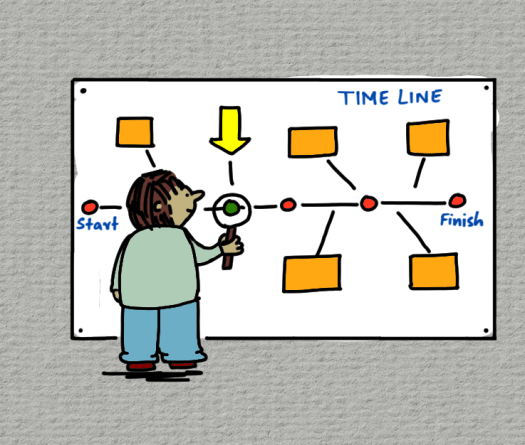
In a police investigation, I understand, the most important thing is the timeline of events.

What happened first? What happened next? And so on.

It’s useful to keep this in mind because, although we sort of know time happens in this sequential kind of way we sometimes forget.

Actually, it’s probably fair to say we often forget.

And that probably has something to do with how our brains work.

For example, I read something on social media today that has a line that looked like “Why is no one talking about … thing?”

And someone responded, agreeing that no one was talking about it, and pointing to a report on the issue.

So, someone is talking about it – just because it’s news to you doesn’t mean that somewhere else there’s an army of people working on the subject.

When we first become aware of something our brain adjusts its filter, now showing you everything that’s similar – the so called reticular activating system.

It’s when you decide you want a new car you see models of the ones you’re considering everywhere you look.

Now, let’s turn this the other way around – what if you have a message you want to get out there.

Is the right time to send out that message when you’ve written it?

That’s what many of us do – we do stuff and send it out.

This post, for example, will come to your inbox in a short while when I press the right button.

And that’s fine if your focus is on creating material – that’s what I’m trying to do.

But you need to think differently when you want someone to react to your stuff – to respond to what you do.

If you want that to happen you first need to work out what their timeline looks like.

Let’s say you sell a cost reduction service.

When is the best time to get in touch with a person at a prospect organisation?

First, obviously, you need to figure out who the best person is to get in touch with – is it the Managing Director, a plant operator?

Who is the person or group of people with the responsibility and the power to commission your services?

If it’s the MD, do you work down a list of companies from A-Z, highest to lowest turnover?

Bash the phones or send spam email and hope you get through?

Or can you be more strategic about it all?

What if you look at companies and see how their results look year on year – which ones are under pressure to do something?

What if you look at companies where a new MD has taken over – someone who wants to make their mark quickly?

What about companies that have negative reviews and are struggling to manage the impact on their reputation?

All these organisations may be willing to listen to your message about how you can take out costs because of what you know.

There are many reasons why you might be rejected by someone – and it often has to do with when you’ve approached them.

If you adopt a random approach then you will have a certain success rate – because for a proportion of the people you talk to you’ll get the timing right.

The question for you is whether by looking more closely at the timeline of events you can figure out which entry point will increase your chances of success.

But that information isn’t just out there – it’s not easy to find.

It takes some detective work.

You have to get into the minds of your prospects – the way they act and think.

Maybe you interview them, maybe you gather research, maybe you set up google alerts for significant events.

You create a research division – even if it’s just you – your own private investigative office to support your marketing efforts.

You know how in stories the detective gets the bad guys by piecing together bits of evidence that are there for everyone to see – but only the detective put together.

That’s the skill we need to develop as marketers.

Because you can get your timing right by accident.

But if you understand the way the timeline works, you can get it right on purpose.

Cheers,

Karthik Suresh