Why Would You Build An Unsustainable Business?

2025-09-06_game.png

The word strategy reminds me of another one that is hard to define but you know it when you see it.

So what kind of strategy does a company pursue in these uncertain times?

A time where the gap between opposing views has never seemed wider.

On a recent UN Global Compact webinar Susanne Stormer from PwC said something that stuck with me.

As a company, you should ask yourself two questions:

  1. Where are you positioned on the climate transition?
  2. How do you treat your people?

In a decade of talking to managers only one, maybe at a stretch two, have said that sustainability is not an issue for them.

Of these, one was privately owned and did not have to answer to shareholders, and the owner didn’t really believe this climate change thing.

And the other was buried so deeply in the supply chain that no one asked them.

In other words, you can only ignore sustainability if you are invisible.

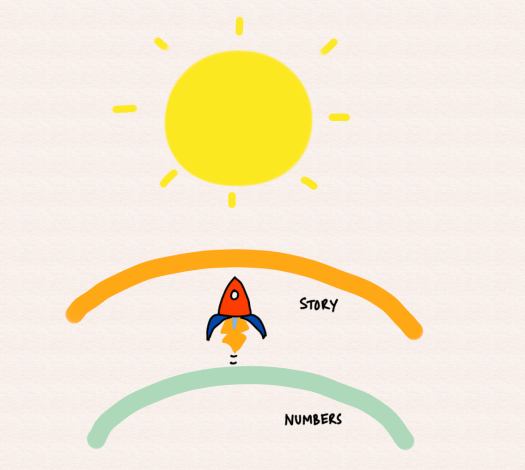
But if you’re in the game, and the other players are looking at you, then strategy is about position and the next move.

I mean – imagine you’re building a business now.

Why would you build one that’s not sustainable, or that treats its people badly?

Does that sound like a winning strategy?

Choosing The Long Road

2025-09-05_hard-bit.png

When I hit a bad shot I always look at the bat like there’s something wrong with it.

The middle is too hard. The edges are too soft. There’s no grip.

It’s easier to do that than admit I need to work on my game.

It’s easier to look for a shortcut, a tip, a life-changing programme.

Something that will get me from here to there without having to go through all the tedious bit in the middle.

But the middle is the bit that’s worth doing.

That’s where the learning, the fun, the value is.

The hard thing is saying no to the easy pill.

And then focusing on the next step.

Getting in shape for the game.

How Do You Give Time Back To Your Client?

2025-09-02_time-thieves.png

Some services are time thieves.

I really resonated with a post from Paul Brown.

He said your clients aren’t short of reports and alerts – they’re short of minutes.

https://www.linkedin.com/posts/paulbrown579_you-dont-sell-digital-health-to-clinicians-activity-7366684711647191040-ERwD

He was talking about clinicians.

But this applies to operators and managers across the piece.

Companies like Apple have convinced us that what we need to solve problems is to first reach for a new software product.

“There’s an app for that”. Apple’s trademark.

It’s easy to say yes.

It’s harder to ask why?

Why do we need this step? Why do we think this application will save us time? Why are we still doing all the work after spending all this money?

Too many applications just make it easy to do easy things.

They leave you with the hard jobs.

So now you have two jobs – the job you had, and the job of feeding the application you thought was going to make your job easier.

When we design services, we keep one key question in mind.

How will this thing we do return time to our client?

Monday Markets Update – w/c 1 September 2025

2025-09-01_monday-markets.png

September is the last summer month for energy watchers.

I started my career building energy market tracking tools.

The electricity and gas forward markets are like having a crystal ball – the way they move gives you an early warning signal of good and bad times ahead.

So I thought I might go back to my roots and write a Monday markets review – nothing too complicated but just keeping an eye on what’s going on.

So, from now the focus shifts to the coming winter.

Storage in Europe is around three quarters full, comfortable for this time of year.

But the war in the Ukraine shows no signs of easing.

Both sides will and are targeting energy infrastructure including pipelines that supply Russian fuel to Central Europe.

We have always said that March to August is a good time to get contracts done.

Markets get twitchy after September, watching weather and geopolitical news carefully – Summer is unfortunately a good time to start a war or continue offensives.

This is the time to check that your exposure to the comine winter is covered – time is running out.

How To Deliver Quality Outcomes

2025-08-30_next-generation.png

Building a company is a constant cycle of finding fit for purpose.

Every new service line I’ve built has started with a trigger that we should really get our heads around what’s coming next.

A lot of consultants feel like they have to perform – to pretend like they know everything and are on top of it all.

In reality, most of us are a page or two ahead of clients.

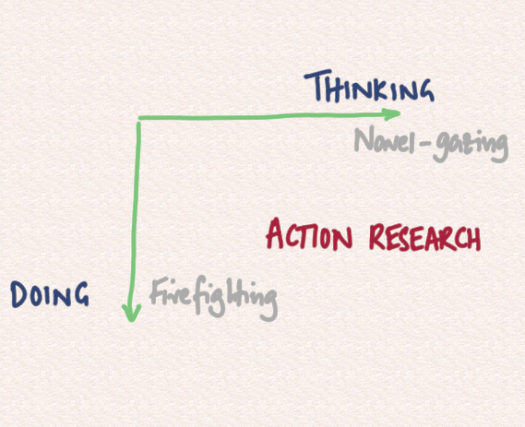
Around a decade ago, I started treating business building like a research project.

The research phase is about accepting that things are a mess – in your head at least – that there is lots going on and it’s not clear what’s important and what’s not important.

Anyone looking at building a sustainable firm today has to engage with a mess – what’s going to happen with regulations in the US and EU? How will China change the game – or has it already changed it entirely? What do we have to do, what would be nice to do, and how do we make the case for action?

There are no simple and easy answers to these questions.

But if we engage with the detail, with the mess, we can start to create a programme for action that we can use in practice.

A series of steps that can make some part of the situation better.

But the difference today is that the research work is not done in a room alone.

It’s action research – done in the real world and participatory – done with clients and co-creators.

Helped by technology, including AI.

And if we do this well, we will create quality outcomes – defined as ones that are “fit for purpose”.

Change Is Here – And It’s All About Speed

2025-08-29_time-to-value.png

As a founder building a consulting firm I’ve been reflecting on the benefits of speed.

The thing we can do today in service firms differently from a few years ago is dramatically lower time to value.

Speed is a superpower. If you’re fast enough you can predict what others are going to do and do it before them.

But in service firms, we’ve always been limited by the speed at which we can get manual work done.

And there is a lot of manual work in consultancy. There’s research. Analysis. Verification. Report writing. Presentations.

The traditional model is to hire – Maister’s grinders, minders and finders model. That’s how we built businesses from 2000 to 2025.

Things are changing. That model is evaporating in front of our eyes.

For example – I was listening to a webinar a day or so ago, but I needed to process some documents. The task was to extract key elements and put them into a structure.

In a previous life I’d have sent this over to a back office team. Someone would have picked up an email and done the work, and then let me know. Maybe. I’d probably have had to chase it.

This time, I remembered I had gemini on my machine, working at the command line. So I told it what to do and went on listening to my webinar while it did the task in the background.

And it did an ok job. It pulled out what I needed. Not perfectly, but it got me an hour or so down the road so I could finish things off.

The real benefit of these tools is they give you time back. You get to a value point faster than you could before.

And this frees up the time to focus on making things better – to really improve what’s happening – and deliver better outcomes.

Change is here. And it’s all about speed.

Cross Little Chasms Rather Than Big Ones

2025-08-28_chasm-model.png

I was thinking about Geoffrey’s Moore’s crossing the chasm concept, which Clayton Christensen also explored in the “Innovator’s dilemma”, and an old memory popped into my mind.

The first proper game I played was Prince of Persia on my dad’s computer – an IBM PC-XT, which had no hard drive, only a 5 1/4 inch floppy drive.

I found a version of that DOS game recently that I could try on Linux – and if you’ve played it you’ll remember the character jumping over hazards.

Moore’s book is about marketing – early adopters vs the mainstream. Christensen’s is about crossing the early thorny stage to find and serve a niche that eventually disrupts the status quo.

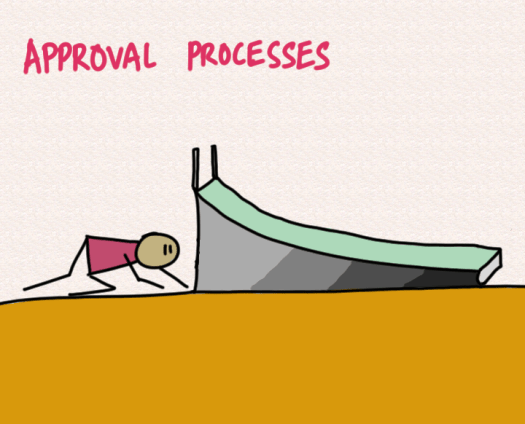
The idea of a chasm, a space we have to cross which has hazards in the way, is more generalisable to everyday business operations as well.

Take sustainability, for example.

I liked a post by Maria Svantemark about the questions to ask if you were going to take on a Head of Sustainability role.

https://www.linkedin.com/posts/mariasvantemark_%F0%9D%97%9B%F0%9D%97%BC%F0%9D%98%84-%F0%9D%98%81%F0%9D%97%BC-%F0%9D%97%B8%F0%9D%97%BB%F0%9D%97%BC%F0%9D%98%84-%F0%9D%97%B6%F0%9D%97%B3-%F0%9D%97%AE-%F0%9D%97%9B%F0%9D%97%B2%F0%9D%97%AE%F0%9D%97%B1-%F0%9D%97%BC%F0%9D%97%B3-activity-7366370211559624707-yhpm

Each one of the questions she asks is a little chasm that needs to be crossed. Will you have a supportive team? Will you have a budget? How much power will you have? What does the company want to achieve.

And of course I focused on the last one – which is how is data collected now?

If it’s spreadsheets and a SharePoint folder, it’s going to take a year of work before you can do anything.

The reality is that most organisations start with spreadsheets. And it makes sense to use SharePoint.

It’s a big chasm to cross to try and get them to stop doing what they’re doing and starting using an entirely new system – especially when it’s not clear exactly what time this system is going to save.

So we took the approach of crossing a little chasm instead. We keep everything in spreadsheets and build better data management and dataflow processes so that we can get the information we need quickly and easily.

Once we have clean data, we can feed it into other systems, that you can select because they add value to your processes – specialist billing tools, asset management tools, pricing and procurement, climate risk measurement. These then take the data we collect and give you added value.

Company operations are full of chasms.

Choose the ones you can step over rather than the ones you will struggle to jump over.

Change Happens One Day At A Time

2025-08-26_balance.png

The challenge for most of us is to stop looking back and start to look forward.

Accounting is rear view work. So is calorie counting. And carbon reporting.

We count things and by the time we know where we were, we are now somewhere else.

It’s easier to count things after the fact so that’s what we do. But knowing what’s going on a month or so later isn’t really much help.

But maybe we should be looking at things differently.

For example, say you set a daily budget – for anything, your spending, the number of calories you can take in, the amount of carbon you can burn.

Then, you work out what you think you’re going to do that day first thing.

And you keep a record, jot things down and at the end of the day work out your daily profit and loss.

That’s a good signal.

If you’re negative, say you’ve spent too much today, maybe it’s time to back off and give it a couple of days to rebuild your numbers.

Real change happens slowly, one day at a time.

Why You Should Build For Users, Not For Yourself

2025-08-22_solution-fit.png

There is no “simple button” or “magic bullet”. There is work. And there is continual improvement.

I learned something early in my career that stuck with me.

I could build technology. I’d studied, practised, was familiar with a range of tools, and could create something that worked well for me.

Reliably. Predictably.

Then, when I gave it to someone else, they always broke it in new and interesting ways that I hadn’t considered.

Some people think of this as a problem with humans – and some technologists work very hard to remove this irritant from their workflows.

But that’s a mistake. The people at an organisation are the ones that buy your product, that engage with it, that need it to make their work lives easier, that promote you if you make that happen.

So I learned to build for users, rather than just building for myself.

And this starts by understanding that your prospect is in an existing, probably complicated situation.

In that situation, they usually have an existing, probably complicated set of issues they consider problematic.

You can’t rock up and offer your nice, packaged brick of a solution to fill their jagged and misshapen issues.

It’s not going to work. Maybe you’re so great at selling that they buy it. The disappointment comes later.

The only way is to change our approach.

We need to shape our solutions to fit our client’s problematic situation.

And then constantly work with them to improve and make it better.

More Than Half Of SaaS Tools Are No Use

2025-08-21_tech-stack.png

More than half the SaaS tools in organisations contribute “little or nothing to organizational outcomes”.

A post by Tom Fishburne of Marketoonist fame caught my eye last week.

https://www.linkedin.com/posts/tomfishburne_marketing-cartoon-marketoon-activity-7360671448283168768-C_N8

It cited research from Zylo that said the average firm had 275 tools in their technology stack.

16% of tools were purchased by IT, half by the business line, and the rest were shadow IT purchases.

In conversations with sustainability managers, a version of the following story comes up again and again.

  1. We’re drowning in spreadsheets.
  2. There is no budget for hiring, or we’re struggling to get people to do these jobs.
  3. Internal audit has highlighted weaknesses that we need to improve.
  4. Senior management think we need a system – someone has recommended XYZ software.
  5. The software doesn’t save us any time in the work we need to do – but now we need to format everything so it fits the interface so that’s more work.
  6. Any changes are complicated, costing more in changes or we have to do this outside the software.
  7. We’re still paying for the license, but have gone back to Excel to get the work done.

There also seems to be a bit of a price war going on with sustainability software – one manager said they had shifted to another tool that cost 66% less. There is an oversupply of tools out there and the sector is probably overdue for a shakeout, so it’s not surprising that prices are plummeting.

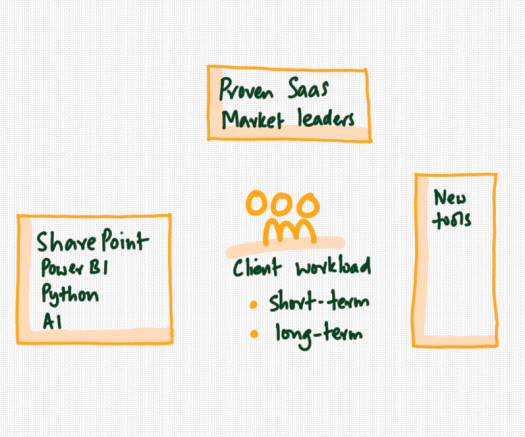
We’ve approached this from the other end. Rather than building software, we use lean processes to get the data flowing cleanly, so that it can be used in the next stage, whether that’s in a DIY PowerBi system, internal management reporting, or a SaaS platform that clients have invested in.

Let me be clear, I’m not against SaaS – the data just shows that there’s a disconnect between what people buy and how they use it.

And if you’re a SaaS vendor customers seem to be looking at the level of implementation support that comes with your product.

If you’re a senior manager, talk to your team doing the work and see if the tools they have are really saving them time.

And if this is a problem, get in touch. We can help streamline the process, get the most out of your existing investments and get that tech stack working for you.