What Are The Economics Of The Situations You Face?

what-you-are-interested-in.png

Thursday, 8.17pm

Sheffield, U.K.

Some say economics has all kinds of good tools and techniques, but it has an absence of interesting problems. I look around the world, and I see all kinds of interesting, important problems we ought to solve with the tools we have. – Alvin E. Roth

There is a term in economics called the production possibility frontier. It essentially says that what you can do is finite – and if you choose to spend your resources doing more of one thing then you will have fewer resources to do something else. If you spend a lot of time reading, for example, you will have less time for exercise and vice versa. Hence the advice for students going to top universities – you will have a choice of doing studies, sports or socialising. Pick any two.

Economics is one of those things that I’ve found useful and perplexing at the same time. For example, why is it so hard to correctly predict what’s going to happen? We’ve been through a few crisis situations since the start of this century. The dot com bust, the housing bubble, the financial crash, the Fukushima nuclear incident and the global pandemic. You start to appreciate some of the issues only after the impacts are clear. For example, the financial crisis had to do with confidence while Fukushima affected demand. The housing bubble has to do with easy credit while the continuing strength of house prices has to do with cheap money. The dot com bust was a technology mania that came too early, and has quietly resumed in the last decade or so. And the global pandemic, apparently, has had next to no effect on rich countries and rich people.

Economists are quite good at putting forward theories as to why what’s happened happened but are there elements that we can use ourselves for day-to-day decision making?

I suppose you could start with the idea of scarcity and having to make tradeoffs. If you want more of one thing, that usually means less of another. That’s simple enough. Except when it’s not. It’s easy to assume that you can’t increase quality and speed without increasing cost – but of course it turns out that you can. The Japanese have been doing that for a while and online platforms, led by Amazon, are leading the way across industries.

Then there’s communication. Information flows are crucial to understanding what’s going on and making decisions. The more you listen and communicate the more likely it is that you’ll make better choices. That goes for our personal lives just as much as it does in business – but it’s not easy to do.

And then there are incentives – ways of nudging people to go one way rather than another. If you make certain things more expensive and other things cheaper or easier then people will start doing things that they might not do otherwise. Or, if you can make them think that it’s a good thing to do then they might do even more.

An interesting example of applying economics to understand a situation is set out in this video by Ashley Hodgson. She constructs an equation that looks at recycling and works through the impact of a single person’s recycling efforts and how it’s affected by the hassle associated with recycling different kinds of material and the social value of being seen as a green, environmentally considerate individual. The thing that’s a little hard to tell is whether the conclusion that you need to make it easier for people to recycle is obvious and the interesting part is hearing it in economics speak or whether the economic model helps you to understand what’s involved in a more effective way. And also whether a different approach, such as a systems dynamics model would work better. But when we get to this point we’re talking about whether we should have a discussion in French or Mandarin – it’s about the language we use rather than the thing we’re trying to understand.

Much of the time the economic principles I’ve learned so far, which are admittedly rudimentary, have been more useful in explaining the past than in modelling the future. At the moment I understand that we could have a future with higher inflation and higher interest rates, which would make things very bad but we could also have a future with low inflation, high growth and low interest rates. Either could happen, we just don’t know which. And I don’t know how useful that is as a way to approach the future.

Perhaps an alternative approach is simply to figure out what you would do if things went bad – figure out your worst case position, put something in place to mitigate that and get on with whatever else you’re working on. Of course, risk management is going to take up scarce resources that you could spend instead on taking on debt and taking risky bets that could result in outsize results or complete failure. Search for Greensill Capital to see how that works as a model.

Those sorts of choices are less about economics and more about what kind of person you are.

Cheers,

Karthik Suresh

The Uses And Dangers Of Ideal State Models

on-the-moon.png

Wednesday, 7.08pm

Sheffield, U.K.

Every utopia – let’s just stick with the literary ones – faces the same problem: What do you do with the people who don’t fit in? – Margaret Atwood

There is an approach to thinking through a problem that relies on the idea of an “ideal future state.” This seems to be, on the surface, a good idea. But is it – and where does it come from in the first place?

A starting point with an ideal future state analysis is in the context of organisational development or change. Let’s sit people down and talk about what an ideal future looks like to them. You can even do this for yourself – it’s called the perfect day exercise. Write down everything you would do on a perfect day – from the time you get up to the time you go to sleep. Include every important detail, all the things you want to do and have in your life. As a group you can do a similar exercise, working out everything that would make your situation perfect.

Then you analyse what you’ve put down. What does your perfect day, your perfect organisation look like? And what relation does your current reality have when compared to that ideal future state. A common “wish” for organisations is to have the growth rates and valuations typically associated with successful technology firms. Wouldn’t it be great if you were worth a billion even though you’re making a loss? But if you want to have that kind of growth rate you also have to be in the kind of business that has the characteristics shared by the firms you want to emulate.

For example, Facebook’s net revenue per employee last year was over $600,000. McKinsey, a global consultancy business, makes around half that per employee. What matters for certain results is not what you want but what the fundamental economics are of the business you’re in – the returns on capital you can generate and the kind of moat you have around what you do.

The first issue we have then, with this approach, is that the ideal state also has to be an achievable state – wishing for something doesn’t make it so.

The next problem quickly appears when you start to search for where this idea came from in the first place. One source is Plato and his idea of a utopia where everyone was equal, you had a right place in society but could move up on merit and individual interest was given up in preference to supporting the public good. There is a clear and obvious danger to applying any theory of an ideal state to societies – because you end up with an “in” group and an “out” group and we’re all aware of what happens as a result, especially when there is an imbalance of power.

The inevitable conclusion we come to is that any ideal state can only be ideal for the group of people who stand to benefit from its coming into existence. If you want to carry out an exercise, with just the leaders of an organisation to find out what they feel an ideal future state will be you will inevitably end up with one that furthers their interests but doesn’t represent those people that weren’t invited to the ideation process.

The best you can hope for is that you improve the situation from where it is now – and that you take enough views into account so that the changes you create make things better, on the whole, for as many people as possible. Arguably you should aim for consensus – if your decision makes even one person worse off than they are now then perhaps you shouldn’t do anything at all. It’s very hard to sustain arguments that one person’s loss is worth the progress for a large number of others – not unless you live in a society that places little value on the individual.

I think the conclusion I am coming to is that using an “ideal future state” method is dangerous in almost all important situations. However, it may be useful in specific situations where the end result cannot cause too much damage.

A good barometer of when to use the method is the Calvin and Hobbes strip where Calvin asks Hobbes, “If you could have anything in the world right now what would it be?” Hobbes thinks for a bit and says, “A sandwich.” What kind of stupid wish is that, screams Calvin, “Talk about a failure of imagination! I’d ask for a trillion billion dollars, my own space shuttle, and a private continent!”

The panel ends with Hobbes munching on a sandwich and saying, “I got MY wish.”

Cheers,

Karthik Suresh

How Do You Make A Contribution To A Field?

big-shoes.png

Tuesday, 6.43pm

Sheffield, U.K.

I was absolutely a non-starter at games. My report for rugby said, ‘Nigel’s chief contribution is his presence on the field.’ I used to pray for rain and sometimes it did rain – and we played anyway. – Nigel Rees

If you’re considering going into a programme of deeper study, something like a doctoral programme, how should you think about the problems facing you – about what it is that you’re going to start learning about and discovering? What is it that you’re going to have to do?

The first thing to think about is how others have approaches the problem before you. There is a tendency for marketers and promoters to try and build a story around something – to create a narrative that something is “unique”. Most things are not unique. The majority of thoughts people have are badly told rehashed versions of thoughts that were first originated centuries ago. Think about it for a second – how many things do you think you know that you came up with yourself? What do you know that you discovered for the first time?

What is more often the case is that someone comes across an idea and then repackages it with a small difference in order to lay a claim on it. Take mind maps, for example. They’ve been around since the third century but they were made popular by Tony Buzan who went on to trademark the words “Mind Map” and then attempt to control how it was used. This is often the end result of such approaches and techniques – an attempt to create something of value that can be protected and monetised using one of the instruments of intellectual property.

The problem with this, of course, is that a “rose by any other name would smell as sweet” unless you were forbidden to smell it at all. Trying to pretend that something is new by changing its name or some small part of it is not really a contribution to human knowledge. If anything, it’s a waste of time – even if it makes you money.

The starting point has to be, then, to look at what people have done before and pull the various strands together in a way that makes sense. Fortunately we live in a world that has Wikipedia and the contributors there do much of the work for us. If you read the entry on Mind Maps you get much of the associated history.

It’s perhaps a little harder when you get into fields that aren’t as well known. For example, I recently learned of the Macy conferences that aimed to “set the foundations for a general science of the workings of the human mind” between 1941 and 1960. There is much work in this space, from theories based on observable behaviour to what we’ve learned from scanning brains more recently. What we have an opportunity to work in is understanding human beings from the inside-out and outside-in – from having rich conversations to looking at MRIs. And this leads to some very interesting concepts.

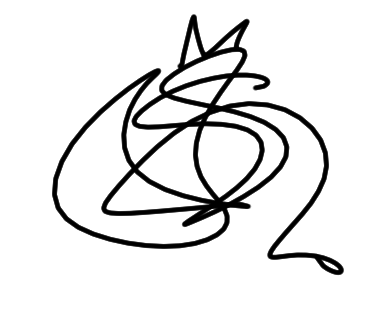
Try this. Draw a squiggle – just a few lines. Something like this.

squiggle.png

Then add two ears at the top – something like this.

squiggle-ears.png

Now, doesn’t it almost instantly transform into an animal for you? Can’t you see the fox or cheetah or whatever else in your drawing? This ability to spot something in a line by picking out a pattern is something that’s part of our visual biology. And it’s fascinating.

Anyway, I suppose when you enter into a field you always feel like what’s been done before was done by giants – what is possibly there that you could contribute? But knowledge is built on insight after insight. Not on regurgitated marketing but patient and consistent work.

If you want to do something useful then you have to start by showing up.

Cheers,

Karthik Suresh

What Is The Basis Of Value?

basis-of-money.png

Monday, 8.53pm

Sheffield, U.K.

A billion here, a billion there, and pretty soon you’re talking about real money. – Everett Dirksen

I’ve been reading Terry Pratchett’s “Making Money” one more time. It’s about the introduction of paper money to the city of Ankh-Morpork and how everyone responds and it has lessons for us when we try to think about what value really is and how we can hold on to it.

Last week the Financial Times had a piece on NFTs – non-fungible tokens and whether they had a place in your investment portfolio. An NFT, as you’re probably aware, is a way to create a token that represents a piece of digital art, an image, a song, a tweet. These tokens are unique and can be used to prove ownership and they’ve recently been changing hands at astronomical valuations. The very first tweet, for example, was sold for nearly $3 million. In Ether.

Which brings us to Ethereum and the idea of cryptocurrencies. NFTs are typically paid for using new digital currencies. $3 million was, at the time of the trade, equivalent to around 1630 ETH. Ethereum has surged in value in the last month or so – my paltry holding that I picked up as an experiment is up around ten times. Perhaps I should have bought more. Then again – why would I, what is the basis of believing that this thing has any value?

The story of how value is created is the story of “Making Money”. It goes something like this. Once upon a time people believed in gold and they made money that was backed by gold. If you held a paper note that meant you had a claim on gold from the bank that issued the note. You weren’t ever expected to go into the bank and demand to get the amount of gold that the note backed but in theory, if you wanted to, you could. This meant that the amount of money in circulation was tied to the amount of gold you had and this was a little inconvenient.

What people realised was that the gold wasn’t the important bit. What was important was the reputation of the people who backed the gold. Did you believe in the country, the government that issued the paper money? The US dollar is backed by the US government as is the British Pound. As long as you believe in those governments you believe that their money has worth. And if you stop believing in a government the value of its currency crashes too – as we’ve seen happen several times.

When it comes to digital currencies you have no equivalent of a government backer. These are distributed currencies created using algorithms. Part of their appeal is getting away from the control of governments and their ability to create new money as it suits them. Bitcoin, for example, was created as a sort of digital gold. It needs to be mined, the total amount that can be mined is, in theory, fixed and you might think that it would have the stabilising properties of a monetary system anchored to gold as a store of value.

But these are early days so the main thing that holds up the value of digital currencies is the belief that they have value to someone else. So the price keeps rising because people buy it hoping that the price will rise.

So, we should probably go back to the basis of valuations – why does something have value?

The first way to think about value is as the net present value of future cashflows. Something is worth the money it will make for you now and in the future. If you buy a share of a business you will be rewarded with earnings. And the net present value of those future earnings is the value you’re willing to pay.

Of course, those earnings are in money and you have to believe in the value of the money you are getting. A company that earns in dollars is probably worth more than one that earns in a less tradeable currency. Would you be happy owning a company that derives the majority of its revenue in Bitcoin? You might if you’re Elon Musk – Tesla will accept payment in Bitcoin for its cars now.

The short-term view is that cryptocurrencies are dangerous because no one backs them – there is no government that you can turn to and demand they show value. The long-term view might be that cryptocurrencies are backed by all of us. We can all mine them, have digital wallets and inspect the ledgers. It means that distributed currencies are backed by all those who choose to engage with them.

What history teaches us is that things change. I’m sceptical about most things and the majority of my investments are in safe, traditional businesses. There is a small chance, however, that all the safe, traditional stuff will be wiped out by the new at some point. The only rational thing to do is have some of the new stuff in your portfolio as well as a hedge against the inevitable changes that the future will bring.

Now, how do I make an NFT from my picture and sell it?

Cheers,

Karthik Suresh

Why Do Big Ideas Rarely Work?

where-to-begin.png

Sunday, 8.12pm

Sheffield, U.K.

I never think of an entire book at once. I always just start with a very small idea. In ‘Holes,’ I just began with the setting; a juvenile correctional facility located in the Texas desert. Then I slowly make up the story, and rewrite it several times, and each time I rewrite it, I get new ideas, and change the old ideas around. – Louis Sachar

I’ve been looking at Ivan Brunetti’s books over the last few days – reminding myself of approach to drawing as I try and find a line that works for me and came across his An Anthology of Graphic Fiction, Cartoons, and True Stories which has an essay by Charles M. Schulz on developing a comic strip.

I have the odd conversation with friends that have to with starting something new – and they usually have a BIG IDEA. Something that they believe is going to change everything. And because big ideas have come along in the past and had an impact, they believe that their idea has as much of a chance of success as one by anyone else. Is that the case and is there any way of telling what might happen one way or the other?

Schulz talks about how people aren’t willing to put in “the great amount of work that others do in comparable fields.” He’s talking about cartooning but this is a good starting point for almost any idea that someone has. Have they put in the work that’s needed to be in a position where they know what they’re talking about? Do they have the experience that matters?

Experience is not the same as technique. You might be able to do something to a certain standard but that’s different from doing something many many times and figuring out what works and what does not. It might be worth asking yourself whether you’ve spent the five to ten years that are needed to develop the skills and capabilities you are going to use. And we mustn’t forget that there are a limited number of ten-year periods that we have. If you still have a few ahead of you, then you might be able to try out different things. If not, you might need to figure out what experience you already have and that you can build on.

What you can’t do is spend a little bit of time learning something new and then expect that whatever you create is going to make you millions. Behind every overnight success is often decades of preparatory work.

Now, assuming you have put in the time to know something about what you want to do – then how should you start with a project? Should you start at the top with a grand idea or should you start at the bottom and build from there?

You will find people that support either point of view. The writer John McPhee, for example, always starts with a structure, a graphic of some kind that captures the big idea. Then again, his process also involves transcribing all of his notes, coding them and taking a bottom up approach to organising his material before he starts writing.

In Zen and the art of motorcycle maintenance, Robert Pirsig describes a scene where a student is finding it hard to write about a town. Pirsig tries to narrow the focus of the topic again and again but the student is still struggling. Finally, in exasperation, he snaps, “Narrow it down to the front of one building on the main street of Bozeman. The Opera House. Start with the upper left-hand brick.”

The challenge with creating original work of any kind, according to Pirsig, is that all the stuff we already know comes in and gets in the way – we think we should do things in a certain way or that there is a particular approach that is best and we get blocked. We lose the ability to see what is actually there, instead getting lost in what we expect to see.

The way to unblock ourselves is to start seeing again. And we can’t do that with a big picture approach. We have to look closer and closer, smaller and smaller until we see what is actually there. And then that thing we see for the first time can form the kernel that we build around. If we do that we will end up creating something. And after a while we might create something that’s good.

The challenge is getting to the point where we can do original work. To get there, however, we have to practise and that means we have to imitate what others have done in order to learn. And eventually we’ll stop imitating and start to find our own style as long as we keep working at it.

Big ideas and models are banal – as my marketing lecturer said about one of my essays. Real value is in the specific, in the focused, in the unique.

That’s why we should start small, because it’s when you solve a particular problem, that applies in a particular situation for a particular group of people that you’re probably going to stumble across the next big idea.

Cheers,

Karthik Suresh

How Can You Tell When Your Product Is In Trouble?

flying-too-high.png

Friday, 8.04pm

Sheffield, U.K.

In technology, the low end always eats the high end. It’s easier to make an inexpensive product more powerful than to make a powerful product cheaper.[…] It’s very dangerous to let anyone fly under you. If you have the cheapest, easiest product, you’ll own the low end. And if you don’t, you’re in the crosshairs of whoever does. – Paul Graham

A lot of business is boring – for me anyway. I’m not very good at buying stuff in the first place so trying to figure out how to sell it is even less fun. But economics and value is mostly comes down to selling something to someone else. So it makes sense to try and get better at it – but where do you start?

At one end you have commodities. Things that are the same whoever you get them from. More and more things are commodities these days. Buying commodities comes down to getting them at the lowest price and that’s where markets come in. Traditionally, commodities used to be things like copper or coffee but these days they’ve started to include much of the stuff you buy on markets like Amazon or Ebay.

Let’s say you want to buy a webcam, for instance, there will be lots of options of things that seem mostly the same and it will come down to price. Sellers can improve their sales by optimising their listings, following the suggestions by the platform on best practice. Marketing these products comes down to making sure that information and images are clear enough so that a customer goes ahead with a transaction.

This “transactional” approach to buying a product is what marks it out as a commodity. Information and price are the two things that matter. Buyers use information to reassure themselves that they are getting what they need and use price to pick the particular item that they buy. And the better marketers get at pulling together the information that customers are looking for the more likely they are to make sales.

At the other end of the range you don’t really have products. You have customer needs, possibly ones that they don’t even understand themselves. People often think that the starting point is solving problems for customers. In fact, the starting point is more often problem finding – figuring out what the problem is in the first place.

This is the space for what Neal Rackham, one of the few researchers into sales, calls consultative selling. It’s working with users to figure out what the problems are in the first place and then working on solutions to them. The solutions we come up with these days are often a combination of process changes and software tools. At the same time many of these solutions don’t work – software solutions often run into trouble. For example, why do we see reports like this: “The key battleground will be the tech behind the passports. As the disastrous, and expensive, NHS Test and Trace app showed, the infrastructure is not easy to build.”

If you want to build something that works then you’re best off keeping it simple. This is hard to do because we’re trained to think that new is better, novel is good. And new and novel is good if you’re doing research and trying to push the boundaries of knowledge. But useful things are often simple and utilitarian – they get the job done with a minimum of fuss. And because they’re good you use them more and make them more powerful – eventually overtaking the more complex pieces of software that try and do everything.

This is one of the reasons why free software is so popular – the code often starts with someone writing something for themselves. The popular art program MyPaint started off because Martin Renold wanted a simple digital canvas with brushes. It’s simple but amazingly good for artists who just want to get on and make stuff. And there isn’t a commercial product out there that has the same feel and efficiency for the task that Martin and others need to do.

Paul Graham, the founder of YCombinator, knows a thing or two about startups, and what he has to say resonates with Neal Rackham’s research. It’s hard to go from big to small, from high end to low end, from complex to simple. It’s much easier to go the other way. So, if you’re not keeping things as simple and cheap as you can, there’s a good chance there’s someone else doing something that’s going to make your product and business irrelevant. After all, as Andy Grove, Intel’s CEO used to say, “Only the paranoid survive.”

Cheers,

Karthik Suresh

How To Start To Understand What’s Going On

rich-picture.png

Wednesday, 7.58pm

Sheffield, U.K.

UNIX is basically a simple operating system, but you have to be a genius to understand the simplicity. – Dennis Ritchie

If you want to understand something you should start by trying to draw a picture of what’s going on. What are the parts, the things that you can see. Don’t forget that people are also part of the picture. And then what are the links, how do things flow from one part to another?

If you try and capture these two things, the parts and the relationships, you’re well on your way to starting to understand what’s going on. Some people call this a rich picture – a combination of images and icons and arrows and words that help you understand something that has more parts than you can easily keep in your head.

Now, you can have a literal “rich picture”, one that’s drawn in a way you can share with someone else but you need to be careful not to confuse your picture with the real thing. Real life is infinitely complicated and the best model of reality is reality itself. Anything else has to be an approximation, something that captures less detail. The challenge is getting the right amount of detail. Too little is useless. Too much is overwhelming. You can only make decisions when it’s just right.

Of course, no one can tell you what “right” is – you have to figure that out for yourself. But drawing a picture of what’s going on is a start. And the thing you can do, once you have a picture, is talk about it. The biggest benefit of making your thinking visible, whether in writing or as a picture or in some other way, is that you can now talk about what you think without having to repeat yourself over and over again.

One of the mistakes we make is thinking that something that looks finished is the end of the process. Take company accounts, for example. They look perfect, so crisp and clear and laid out. Surely there’s nothing more that can be said about them. If you’re an investor, however, those reports are just the beginning. You have to read them and look not for just what is there but also what isn’t there. The story is in the whitespace just as much as it is in the text.

The value of a rich picture is not in its final form – but in its ability to act as a means of communicating more effectively. And that’s the genius of a picture – if it’s used well. After all, why use a picture at all? What else would you use?

Well, there are words and there are charts. Words are good when you’re telling a story – narrating something so that people can follow what you have to say. Just like this post – it’s much more effective with words than in any other medium. Charts help you make sense of numbers – they show you patterns that are hard to see in the form of numbers themselves. But what pictures help you see is structure and relationships – the way in which things relate to other things and what helps things flow and what gets in the way.

The takeaway is this. All these things, words, pictures, charts – are tools that help you communicate more effectively. They help you to take information out of your head and put it out in front of someone else. But their real value lies not in them being there, but in helping you and others make sense of what is going on. They are tools that help you think better and communicate more clearly.

And these are the things that will help you begin to understand what’s going on.

Cheers,

Karthik Suresh

How Do You Tell A Good Story From A Dangerous One?

start-pitch.png

Tuesday, 8.23pm

Sheffield, U.K.

If you want a happy ending, that depends, of course, on where you stop your story. – Orson Welles

The news is full of stories about the collapse of Greensill Capital – the disruptive fintech that turned out to have little tech and which employed that age old financial instrument – the long con. Greensill Capital’s founder, Lex Greensill, was feted and celebrated around the world. And then the company went bust this month. Another meltdown, this time of a hedge fund called Archegos run by another billionaire, Bill Hwang, seems to be a story of banks falling over themselves to lend to someone with a chequered history because they wanted the fees that would result.

So, there are dangerous stories – people with power and connections pushing a narrative that ends up hurting others. But could you have worked this out before the fact? Was there anything that would have warned us that these people couldn’t be trusted? I suppose you might as well ask if you could have predicted Hitler and everything else that happened after he came to power. Some people would argue you could, others will argue the opposite. Both may be right.

How about the story you tell yourself about your career and your life choices? Or the story you come up with for a new business idea or a project? Or the story about your next year’s business plan. What’s the difference between one kind of story and another?

The reason I’m thinking about this is that I need to come up with a few stories – ones that can convince me that certain projects are worth doing. So what should we consider as we try and create a narrative?

Warren Buffett is usually helpful here so let me draw on what I remember from reading his letters.

It starts with the opportunity. Whether it’s a business or a project or an idea – the first thing you need to ask yourself is whether it has a moat. Why is it protected from the competition, what does it have that sets it apart? Specifically, what does it do that is hard to copy, difficult to replicate, impossible to catch up with? The bigger your moat, the more likely that you have something that has a chance of succeeding.

The second thing you need to ask is whether you have your timing right. Why do this now? What is it about the environment, about what’s going on that means now is the time for this idea to be released into the world? Why will it take off? Why will people realise that this is the thing that they never knew they always wanted?

The third thing you need to understand is the character of the management. And if you are the manager – you must understand your own character. Why should people trust you? Why should they believe in you – why should they be certain that you will do everything you can to do what you have said you will do?

For many of us these are three hard tests. Our ideas may not be unique. The world may not be ready. And we may not be committed to the thing we are pitching.

If that’s the case, don’t bother to pitch at all. But if you have these elements in place or you are willing to work on them – then you might have something that you believe in. And if you believe in it, perhaps others will as well.

Maybe that’s when you’ll have a good story to tell.

Cheers,

Karthik Suresh

When Is History Not A Good Guide To The Future

helicopter-money.png

Monday, 9.42pm

Sheffield, U.K.

Yesterday is a cancelled check. Today is cash on the line. Tomorrow is a promissory note. – Hank Stram

It’s been a number of years since I really looked at markets. I’m starting to take an interest again, because I think I need to understand what’s going on with the world and the years are passing by far too quickly.

I was brought up to be quite conservative around money, to count my pennies and keep track of my spending. There were rules around how much you should borrow, what a sensible amount was and why you shouldn’t extend yourself. For example, you shouldn’t borrow more than 2.5 times your income to buy a house.

What was odd when I was ready to buy a house was that the banks were offering crazy amounts of money. I thought anyway. I was sensible, I borrowed what I thought was the right amount to borrow, rather than what was on offer. And then the financial crash happened and all those overextended borrowers had a rather good time, as interest rates crashed and their mortgages came down. My five-year fixed rate suddenly seemed a poor deal – except that it was affordable and I could get on with it.

Now, back in 2008 the Financial Times said something like all the debt that governments are taking on will take years to sort out. We’re looking at low interest rates for fifteen years. That’s because countries around the world put money into their economies. But what exactly is this and how do you understand what happens?

Robert Kiyosaki had this image of helicopter money. The central bankers fly around and essentially throw money out of the window. The money is so cheap it’s effectively free – so what happens to it. Well, it floats down and piles on top of things. Usually real things – like houses and businesses. So, the price of those things goes up because there’s all this money chasing real things and so people pay more. That explains why house prices rise so fast – if money is cheap then you’ll be willing to borrow more and spend more to get the house of your dreams, as will everyone else. And so you bid the price up and up.

The people this affects most is the ones who are looking for a return on their money – often older savers. Then again, these are the same people who have benefited from a rise in the value of their properties. Low interest rates seem to act like a form of wealth transfer, moving money from savers to borrowers. And if you’d invested your savings over the last five to ten years you’ll have done just fine.

I did that six or so years back, following the advice on a blog called Monevator. It seemed a cool thing, to construct my own portfolio and out an investment plan together. As you’ll see from the Monevator update it’s worked out ok. Returns have been on the order of 7% or so annualised, which is pretty good in a close to zero interest rate world. But I’d have done better, much better, if I hadn’t tried to do anything at all and just invested in a whole world tracker, as Monevator points out.

Now, it appears that there could be issues with inflation. All this extra money in the system as a result of the pandemic could end up pushing prices higher, not to mention the other issues around supply chains and fires and Texas outages. It seems like when one crisis ends another one comes along to make sure life stays interesting.

Anyway, to answer the question I started this post with – what’s history good for? Well, with investing and markets and what’s going to happen next – I think we’ve been blindsided much of the time. The pandemic hasn’t crushed business. If anything it’s shown us that we can do better business. And maybe we can have fun too when we’re allowed out again.

If you have to bet on anything, bet on the possibility that humanity will, on the whole, make things better in the future.

Cheers,

Karthik Suresh

How To Write A Use Case

use-cases.png

Sunday, 8.44pm

Sheffield, U.K.

Many artists use their own lives as a kind of case study to examine what it’s like to be human. – Terry Gross

I need to write some use cases soon so I thought I would get my head around what that means.

I’m not interested in the software approach to a use case – where you write out what someone does on your website. The general principle, however, of a software use case can be used to think about your business and what a user or customer might want to get out of their interactions with you.

So, lets step through what we need to figure out.

The first thing is to understand who your users or customers are. Let’s pick an industry I know nothing about – the craft brewing business. Who are the users? From what I’ve seen it’s reasonably well off folk, probably with a good education but who don’t want mass market consumer stuff and want to try something different, and support the people who are making the actual product as well.

So, pick a user. It might be useful to think of a specific individual – perhaps your user is a woman, 18-35, with a desk job.

How could she experience your product – what literal or metaphorical door would she go through to try your craft beer? Would she see it at a festival? Is it the kind of thing that would come up on an online ad? Is it a magazine article that talks about it?

Pick one of those experiences – say the festival. Think of it like walking through a door. What’s the normal course of events that would take place? Would she order for herself, or take a number of orders for friends? Would she try samples before ordering or go for a favourite? What if you had a sign out saying, “Ask for a sample?”

Now, that’s your base case – so what else could happen? Would you walk around with a tray of samples? Would you have a sign somewhere? Would you have a prize of your beers at a particular event? What are the other scenarios that could play out once your customer or user enters that first door?

Okay, now that you’ve worked that out, go back to the beginning. Start with the same user or pick another user and then pick a door. Repeat the process, working through the base case and the possible alternatives.

This might sound a little mechanistic, especially if you’re the kind of person that thinks you already know what your customer wants. But the chances are that you know what you want, but not what else could happen. Perhaps taking some time to think through these steps will mean you’re better prepared for the routes people take and the way they experience you and your business.

After all, you want them to have a good time.

Cheers,

Karthik Suresh