How To Tell The Difference Between Hopes And Reality

reality-vs-plans.png

Tuesday, 8.43pm

Sheffield, U.K.

Life is a series of natural and spontaneous changes. Don’t resist them; that only creates sorrow. Let reality be reality. Let things flow naturally forward in whatever way they like. – Lao Tzu

I was browsing through titles and stopped at Art is a way of knowing by Pat B. Allen, a book about using art to know yourself.

The book addresses questions I have been having recently about the way in which so much around us is stripped of its soul, it’s essence.

I don’t know if it’s a peculiarly Western thing or if it’s common to all people but it’s a problem.

There seems to be a desire for people to reduce everything to method – to take something which is new and good and useful and boil it down to nothing.

It’s like taking fresh, green garden peas and reducing them to dull, drab, grey mush.

Let’s put this in context.

It’s good to reach out to people, no?

It’s good to be social, to communicate, be friendly, be approachable, be open?

So that is what you do on social media – you make an effort to be all those things.

Then, just to make sure everyone sees how social you are you get into a routine of posting – create a method to increase engagement.

That means hacking the system, perhaps posting the same content several times a day to make sure everyone gets it when they turn on their phones.

And then there are a myriad other tips and tricks and hacks and shortcuts that boost engagement.

But do they create a connection between you and someone else?

Do you make a friend?

Allen describes how this happens with art, as it professionalises and is measured, judged, approved or not by others, and how artists then contort themselves to fit with this thinking or flee somewhere else.

And a lot of this, I think, comes down to people just not understanding the difference between method and practice.

Method is something you do.

Practice is something you do.

And yet, they are not the same thing.

For example, any business course, book or guru will tell you the method to success; that you need a plan, you need to set goals, objectives, have a vision and a mission.

If you don’t have those things you have nothing.

I feel like these things are like differently shaped blocks piled on top of one another balancing on the head of a pin.

They may be stable in the seconds after you build the tower – if you’ve got the balance right.

But the slightest tremor, the lightest breeze can knock them over.

As the saying goes, no plan survives first contact with the enemy.

How would you depict reality if you could only use colour and not these plans?

For me, it’s a landscape – rocks, greenery, pits, lava.

There are no boundaries, nothing demarcated in nature – just what is and how it’s arranged itself – and it looks different depending on how you see it.

How would you navigate through such a landscape?

If you’re afraid of the black bits or the brown bits or the red bits – then you’re going to stop – move no further.

But if you want to go forward you have to try out routes – try and see where you can move.

If you look around, pay attention, then you’ll start to see safe spots and dangerous spots – start to see where it might be possible to move.

There are no guarantees, just because you can see doesn’t mean you will do anything.

But when you see things you start to learn and you start to see patterns.

And once you see patterns you can make other decisions and see if the patterns spoke the truth to you.

Reality is messy and real and doesn’t really give a damn about you and what you want and what your hopes and plans are.

You just need to move through your reality taking whatever route opens up to you that seems like it’s going to keep you moving.

And eventually you’ll tread your own path – one that seems like you could really have done nothing else with your life.

And you really won’t be able to tell whether you did well or poorly, whether you won or lost until it’s all over.

All that matters, in reality, is to enjoy the journey.

The practice.

Cheers,

Karthik Suresh

How To Make Sure You Fail At Everything You Do

invert.png

Monday, 9.11pm

Sheffield, U.K.

The internet is a total inversion of television. It’s the opposite. – Joel Hodgson

I was reminded of the words of Charlie Munger recently by a Twitter thread by Tren Griffin.

One of Munger’s messages – one that he’s been talking about for decades now has to do with the idea of inversion.

Many hard problems, Munger said, “are best solved only when they are addressed backwards.”

Why is this, and why should we try and learn what this means?

Our brains try, it seems, to minimise the amount of thinking we need to do.

It makes little sense to use up lots of glucose every time we need to solve a simple problem, like how to tie a knot.

So, our brain takes shortcuts.

It embeds actions in muscle memory so we no longer have to think of things like which keys to press when we type or how to walk.

It creates pathways – physical ones that we get used to walking down.

How often do you take the same route to work without thinking of the alternatives even if they might be better in the circumstances?

We are creatures of habit – we like to do things the same way most of the time and can sometimes get quite uneasy when jolted out of our routine.

Just think back to what happens if you don’t get enough sleep or are hungry – it usually ends with you being irritable.

Routine and habit are good but they don’t prepare you for something new – what they do is help you get on with the reality of the here and now in the most efficient way possible.

But, we can get so comfortable that we start to see only what we expect to see – even if reality is changing right before our eyes.

A good way to see how this works in reality is to try drawing.

Most people, if you ask them to draw a house, will draw an image from their childhood – a square with a triangle for a roof, a door and two windows, something like a face.

house.png

No house looks like that picture – but we still draw it that way.

Try and draw a table, a horse, yourself, your children from memory and you will find that you rely on shortcuts – shapes that represent what you think you remember.

One child has wavy hair and the other straight.

A table and horse both have four legs and then seem about as straight as each other.

Our mind shields us from the enormous amount of information that exists in reality by creating representations, models, shortcuts in our mind.

But then we make the mistake of confusing these models with reality – and choosing to believe what the model tells us rather than taking in new knowledge that might have a different view.

That’s why people were burned for suggesting the earth wasn’t flat.

Now, when it comes to drawing a good way to start seeing more clearly is to turn the picture upside down, something Betty Edwards teaches in her book Drawing on the right side of the brain.

Try it yourself – look at the picture that starts this blog.

In one image the scene is clearly recognisable and you see and take in what is there.

In the second your eye sees something that is not entirely obvious and is probably drawn to that tip in the centre as it tries to figure out what is going on.

If you just had the second picture you would have had to look closely and see it for what it is rather than what you think it is.

This idea of inversion has a similar effect.

Imagine you need to think through the security system you’re going to put in your house.

For any strategic question you ask it’s possible to invert it and try and see what it looks like backwards.

Instead of asking what you should do to lose weight, you could ask what must I do if I want to gain weight as fast as possible.

Instead of asking how can I cut emissions at my company, ask how can I make sure that it’s impossible for me to lower my footprint?

Looking at things this way forces you to stop relying on things you already know.

Instead, you might start to look at what is in front of you with fresh eyes – seeing the same thing differently.

And in doing so you might come up with completely different answers to what you might have done if you use the same old ways.

Always remember that armies train to fight the last war.

But the thing that catches you off guard is the thing that you never realised you had to watch out for.

What do you need to do now to make sure you fail in life?

And once you know those things – perhaps you should consider trying to make sure they don’t happen.

Cheers,

Karthik Suresh

The Slightly Unexpected Secret To Power

knight.png

Sunday, 7.32pm

Sheffield, U.K.

That was how you got to be a power in the land, he thought. You never cared a toss about whatever anyone else thought and you were never, ever, uncertain about anything – Captain Vimes in Terry Pratchett’s “Guards! Guards!”

I have rediscovered Terry Pratchett recently, and realised something – or at least had it pointed out by Neil Gaiman in another book.

Pratchett is a hard to pin down writer, combining the wit of Douglas Adams with the output of P.G Wodehouse.

His writing is funny and clever, which means that clever people probably look at the funny bit and assume that it’s not going to be something they will get into while funny people don’t perhaps get just how clever some of the stuff is.

And there is lots of it, buried within the funny bits.

Let’s leave out the physics – just focus on the social observations he makes.

For example, in one of his books he says that when people ask for advice they don’t really want you to tell them anything.

The sort of want you to be around while they talk about it.

It’s taken me a while to realise that – but having done so it’s created a rather interesting line of business so far.

And then you have his observation about power, which is in the quote above that for me, anyway, is a complete eye-opener.

Let me explain.

For a while, I have been observing people that I term born business folk – people who have a certain something about them.

It’s their ability to look at a situation and make a decision.

Now, that decision may be based on facts and opinion, some of which I agree with and some of which seem wrong, and some of which I know to be wrong.

But it’s not just a decision – it’s a sense of certainty they give out when they make that decision.

As if they’ve just said, “Here I stand!”, they’ve planted a standard and there is no moving them.

You wonder sometimes whether they realise just how badly things could go… and come to the conclusion that they do not.

And so you scuttle back, step into the shadows, and wait and see what happens.

Perhaps with a touch of schadenfreude, waiting for the inevitable downfall.

Now clearly, to any right thinking person, that way of operating – certainty until the fates prove you right or wrong – has a range of outcomes.

We remember the wins and forget the losses – heroes are created by selecting winners after all.

And eventually there seems to be a link between confidence and certainty and success.

We follow the leader that sounds confident because in the past such leaders led others to victory.

Hitler, Stalin, Churchill, Joan of Arc.

It’s the other observation of Terry’s that starts to balance things out.

Do you care what other people think?

If you do, then you’re in a different game – one where politics is important and keeping up appearances is crucial.

In such a world it’s far more important not to fail than it is to win.

It’s the “No one ever got fired for buying IBM” sort of world.

Certainty in a world where success depends on what other people think can lead to odd results.

Take painters, for example.

Many have been certain in their art but less successful in a market.

What matters as much is knowing your business – knowing what needs to happen regardless of what other people think.

So, how do these two things relate?

Imagine you’re building a product because you think someone else is going to need it – then your chances of success are probably the same as most products that are brought to the market – perhaps 5 percent or so.

If you build something because you need it – because you’re scratching your own itch – then you’re starting to tilt the odds in your favour.

Let’s say you’ve done your research and you understand the approach you need to take and how viable your product is – how are you going to market it?

If you are diffident and balanced about the pros and cons of what you are going to do – then you’ll find that people will be equally circumspect.

They will note your lack of confidence and instinctively move away.

It’s just what happens.

But, if you can marry research and a thorough knowledge of your business – if you’re operating in what Warren Buffett calls your circle of competence then you need to – you must take decisive action when the time calls for it.

You must be confident that you are right and you will prevail.

What got the ancestors of old their portraits on the wall was because they brought this combination of skills to their battles.

If they were green, untrained, able only to fight on paper – but confident in their approach and holding power, they probably sent their soldiers to their slaughter.

But if they knew their field, their tactics, their people – and then they led the battle, their army followed and they probably won.

And ended up with the loot and the castle and the portrait.

What this means for us is this.

If you want power temporarily, you can get it through politics.

If you want real power, the kind of thing that lasts for generations – you get that through your work.

And power does not have to be money and jewels and castles.

These days power has more to do with what you have in your mind.

Which is why your work matters.

Cheers,

Karthik Suresh

Are The Days Of The Persuasive Salesperson Numbered?

pitch.png

Saturday, 7.28pm

Sheffield, U.K.

Ladies and gentlemen, attention, please! Come in close where everyone can see! I got a tale to tell, it isn’t gonna cost a dime! (And if you believe that, we’re gonna get along just fine.) – Stephen King, Needful Things

I feel like I have listened to lots of pitches, many of which sound quite plausible.

Others don’t.

I remember being invited to a multi-level marketing seminar which had all the carefully selected components needed to help you switch off the sceptical part of your brain.

The person inviting you sat with you, ready to answer any questions.

Loud, energetic music filled the air and a procession of happy, successful people trooped up to tell you how much money they were making and how good life was for them.

At the end of the session my host turned to me and asked what I thought and when it wasn’t what he wanted blanked me completely and turned instead to his other guest who had made noises about wanting to join.

In that particular case I knew the industry, and could work out the structure of the deal – which rarely works out for the majority of people.

At a much higher level occasion I heard another speaker trot out a pitch for their technology and how it was going to revolutionise everything.

But, if you listened carefully to what they said – their focus wasn’t on anything new and the abilities they talked about clearly didn’t have a link with the technologies they were talking about.

For example, AI was mentioned a lot.

And then it happened again – a smartly dressed person giving a pitch that, when you thought about it later, had a lot of marketing sizzle but a questionable type of meat.

I don’t want to be unkind about it all – but there is a certain kind of person that is very good at telling you a story, and it’s hard to tell the ones that have something real from the ones that don’t.

In some cases, the people telling you the story don’t even know they’re wrong – they truly believe in their product, or have been told that they have to believe in order to sell it so they’ve first sold it to themselves to get that authenticity.

Which clearly means that at the core what’s they’re doing is rotten.

Now the thing is that the art of the sale is more than just the person pitching one on one, or to a group – it’s now spread to the Internet.

Where people are being sold all kinds of things that they buy using emotion.

I’ve recently reviewed a couple of prospectuses for crowd funding and I’m quite curious as to exactly who gets value from the deals the way they are structured.

The promoters get free money effectively in exchange for offering discounts on the products they sell – a self funding proposition.

The people who sign up get shares that have no dividends and that can only be traded within a private market.

The main shareholders retain all the control and rely instead on selling a feeling – the feeling of “feeling good” in exchange for cold hard cash – and I wonder whether they think they’re really doing a social good or if they’re sitting there wondering how the heck they could con all these people out of so much cash.

Because here’s the thing about an investment.

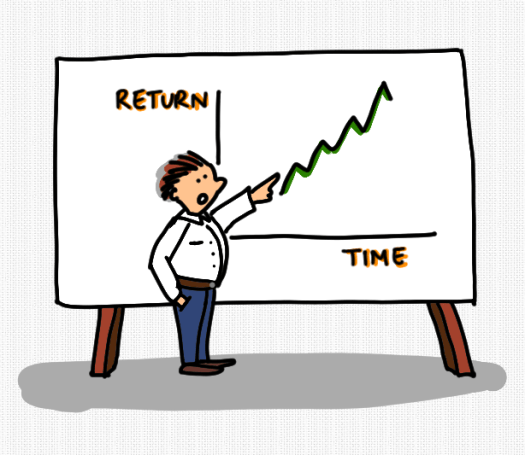
It needs to give you a return.

If it doesn’t put money in your pocket then it’s an expense – borrowing Robert Kiyosaki’s very pithy description of an asset.

And an “investment” that gets you to spend more money is not an investment – it’s a long con.

When I look around it’s clear that the days of the persuasive salesperson are anything but numbered.

They’re probably just at the start of a huge growth phase.

There are so many ways now to confuse people and make them think they’re getting value when in reality they’re just handing over money they’ll never see again.

And the solution is probably not regulation – expecting someone to step in.

It’s the oldest advice out there.

Caveat emptor.

Let the buyer beware.

Cheers,

Karthik Suresh

Why These Two Modes Of Working Are Both Essential For Your Business

exploit-explore.png

Friday, 9pm

Sheffield, U.K.

Innovation comes from the producer – not from the customer. W. Edwards Deming

I’m browsing through Robert I Sutton’s book Weird ideas that work: 11 and a half practices for promoting, managing and sustaining innovation and I’m not sure what to make of it.

It’s a catchy title and makes some good points right off, one of which I tried to work through and found myself having to modify to make sense to me.

Sutton argues that there are two kinds of work you tend to find people doing.

One kind of work is based around exploiting what we have now in the business.

That means doing what we do in a way that is standardised, that delivers a particular output every time.

This means that if your task is to create boxes or agree contracts you do it with a process that can be audited and justified – in other words you drive out and seek to reduce variance.

It also means doing things they way they should be done – using tried and tested methods.

For example, if your industry advertises in a particular way because it suits your demographic – well, why change?

And the biggest focus of this approach is keeping an eye on bringing in the money now – these companies have accountants whose job it is to tot everything up and make sure people can get paid.

A company that focuses on exploiting its capabilities will find, at some point, that it is no longer relevant.

It was once right for a market but over time markets change – and if you haven’t noticed that happening you could wake up one day and find you no longer have a business.

The other kind of work people do is exploration – the kind of thing that leads to innovation.

The best kind of innovation is driven by a need to serve the variety of demands your customers have.

If a customer comes to you and says they have a problem you have two choices.

You can look at the things you offer and if they don’t seem to fix the problem, you can regretfully say no.

Which a surprising number of people seem to think is the right approach.

Or, you could build the customer what they’re asking for, potentially creating a new line of business as a side effect.

But you can only do this if you’re open to trying new things, if you ask questions like do we have to walk up the stairs and would this bouncy thing work instead.

The point about this kind of work is that it’s like chasing a rainbow – the money might be out there but you’re going to have to go and find it.

People who are in the exploit frame of mind see themselves as the serious ones, the ones doing the important work while the explorers swan off and do pointless, wasteful things.

The explorers see the exploiters as dinosaurs who don’t know that they’re going to be extinct soon – the world will change, it always does, and some people will be left behind.

A company, however, is more than just one approach.

You need both kinds of people in your business – and you can’t let one get hold of all the power.

You need a balance between people who will do the daily work in the way it should be done and people who will create new things to delight customers.

In terms of staff, the chances are that the exploitation category will have many more people than the explorers.

But that shouldn’t mean that they’re more important – the few explorers will quite possibly do the work that enables the others to keep their jobs.

As an individual, you need to learn to straddle both worlds if you want to be in charge of anything.

There are great admin people who will never come up with a new idea, but will also never make a mistake.

There are great ideas people who you wouldn’t put in charge of the drinks round.

These two will always have a job.

But if you can see how to get the best out of both of them, then you have a chance of being in charge.

If you want to, that is.

Cheers,

Karthik Suresh

Why You Should Realise That A Weakness Can Be As Strong As A Strength

david-goliath.png

Wednesday, 9.40pm

Sheffield, U.K.

The conventional army loses if it does not win. The guerrilla wins if he does not lose. – Henry Kissinger

I was browsing through the on-demand film catalogue when I spotted Don’t Worry, He Won’t Get Far on Foot again.

This film, in case you don’t know, is based on the life of John Callahan, who became a quadriplegic after a car accident.

He went on to become a cartoonist, creating aggressive and controversial material and a whole new career for himself – after an incident that might have led many others to conclude there was nothing more they could do with their lives.

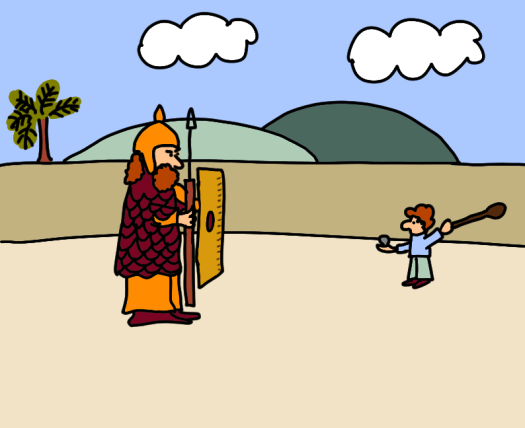
Malcolm Gladwell, in his book David & Goliath: Underdogs, misfits and the art of battling giants tells the story of David and Goliath again.

He argues that the story that most of us know probably doesn’t tell the whole story.

Goliath was big, yes. He was armoured and armed and could have killed anyone who came close enough to be struck with his weapon.

David, however, was an expert with a sling – not a toy but a real weapon – the artillery of the time.

Gladwell says that we think the fight was mismatched because Goliath was big and David was small.

The mistake we make is to view what is happening through a conventional lens – using a narrative that we think of as normal.

Big beats small, that’s obvious.

But, as Gladwell points out, this fight is actually the equivalent of a man with a sword facing another with a gun.

Who has the advantage then?

If the history of warfare has taught us one thing it is that superior forces can often be defeated by a smaller, less well equipped force if they choose to fight unconventionally.

There is an undeniable advantage to size, to being the biggest beast in the jungle, where you have no natural competitors.

Except the ones that are yet to come.

The point to take away, really, is not whether you are big or little, strong or weak, in full possession of your capacities or lacking in most of them.

You should try and remember to keep two things in mind.

If you are big, never become complacent.

That’s when you make a mistake and get beaten.

You have the advantage of size – use it.

If you are small, don’t give up.

You have advantages, in speed, agility and flexibility, that the big people just don’t have.

Use them.

The side that wins, all too often, is the one that plays best with the hand it’s dealt.

Cheers,

Karthik Suresh

What Do They Mean When They Say You Are The Product?

product-you.png

Tuesday, 9.08pm

Sheffield, U.K.

Many respectable physicists said that they weren’t going to stand for this – partly because it was a debasement of science, but mostly because they didn’t get invited to those sort of parties. – Douglas Adams, The Hitchhiker’s Guide to the Galaxy

I’ve been thinking about marketing mixes for a bit, and particularly about options that give you access to an audience of some kind.

For example, my LinkedIn feed right now is full of posts of conferences – places where people come together to share knowledge and connect with others in their industry.

That seems like a good thing.

But how do these conferences make money?

Well, they get speakers, high profile ones and ones from businesses that you would probably like to work with and invite them to speak.

They often give you free entry and cover their costs and make a profit by selling stalls and marketing packs to companies that might be interested.

One of the things I need to be careful of is my own scepticism – the urge to question whether something is of value.

That kind of thinking quickly leads to pithy sayings like “if you get it for free, then you’re the product” and variants on that theme.

And perhaps because I don’t get invited to participate in such sessions I feel a bit like the physicists in Douglas Adams’s quote above.

Now, there are people who argue that the saying about products and us should really be questioned further, such as Derek Powazek, because the fact is that just because you pay for something it doesn’t mean you get value.

In fact, we get a lot of value for free these days – and you know that Google makes money hand over fist even while it gives you free email.

There’s a business model there, perhaps not one we fully understand or can replicate – but it exists.

Powazek does sum this up quite elegantly when he writes “If you don’t know how a startup will make money, neither do they.”

Or a conference that you attend.

I started this post with a question – are the organisers of these events evil?

Do they stand there rubbing their hands at the prospect of making money off you?

Or are they promoters, showmen and women – who love nothing more than the buzz of getting a great event together, throwing a fabulous party and getting people out talking, laughing, drinking and doing business.

Should we be thanking them for the opportunity to get together with like minded business people and create value together?

If you think about it, throwing an event is a bet – a gamble that you can create enough buzz to attract people – some of whom teach and some of whom learn – and get others to pay for it all to happen.

It’s clearly a bet that more and more people are willing to take – the number of face to face events seems to be skyrocketing as people try and find real connection and take a break from their virtual social systems.

People seem to crave connection – and these events provide that.

The conclusion, then, is that events and products and businesses are not inherently evil.

But, like every other industry, the vary in quality and the value they provide.

I guess you have to try them out to see if they work for you.

The thing that won’t work is staying cooped up at home with the curtains drawn.

If you want to do business, you have to go out and do what needs to be done to help people find you.

Cheers,

Karthik Suresh

Why It Is Essential To Develop Your Curation Skills

curation-skills.png

Monday, 9.23pm

Sheffield, U.K.

Enlighten yourself and you will enlighten the viewer. – Jean-Christophe Ammann – Carin Kuoni, Words of Wisdom: A Curator’s Vade Mecum

As the Internet grows up we see an increasing polarisation of views and debate, the storms and tornadoes of a virtual landscape.

But, just because we see lots of noise, it doesn’t mean we have to react to every little thing that comes along.

If we do want to get better at responding, however, we have to get better at separating the signal from the noise, the stuff that matters from the stuff that doesn’t.

When you look at what is happening online these days you see lots of themes – cults of personality, new terms like humblebrag, and the strategic use of sympathy-generating stories to boost one’s social media profile.

Most of us probably feel like we’re being tossed about in a sea full of flotsam and are unsure what to hold on to – how to make sense of what is going on.

And one way to do that – one way to find a lifeboat – is to get better at curation.

Which is why I stopped when I came across James A. Cohen and Paul Mihailidis’s 2013 paper Exploring Curation as a core competency in digital and media literacy education.

Cohen and Mihailidis argue that learning how to curate content makes us more literate.

Literacy, you must remember, is not just the ability to read.

It also requires you to learn how to write.

And in a world where content comes at us in different forms, literacy means more than consuming it – it also means being able to critically consider, analyse and express ourselves online – perhaps through the content we select and present as the content we like and identify with – the content we curate.

And so, if you want to get better at curation ask yourself how much you use these six skills brought out in this paper.

First, we get content in two main ways these days – top down and bottom up.

We get a traditional or official view from the media, the kind of stuff you get from newspapers and the TV, where journalists go out and research the story and give it to us in a top down way.

The other way is through our peer to peer social networks – a bottom up method.

For example, I’ll often check BBC and then check Twitter and millions of people probably use a similar approach to get their news.

These two sources can often be in conflict – as has been shown over the last few years between the media and a certain prominent leader.

The next thing to consider is where you get the information – what’s the medium, message or platform?,

Do you still get newspapers or is your entire diet served online?

What do you miss by only having one of those media?

And how do you benefit by keeping an eye on more than one?

Then you have to think about sources, voices and credibility.

Do you believe a President, a group of scientists or a young activist when it comes to the scale and urgency of climate change?

Of course, you have to always keep in mind that people engage in framing, bias, agenda and perspective.

What’s their point of view, is it honest, do they have an angle, why should you trust them?

There are too many people in the world who are looking for a shortcut to becoming rich and famous.

And there are too many people working on important and useful work that are barely recognised.

You’re in the position of a miner working through lots of useless rock to get to a seam of gold.

And if you can’t tell the difference between a rock and a lump of gold, you might want to learn that first before investing in digging gear.

So, after all that are you making sure you’re being exposed to a diverse set of views?

Many people take a position and refuse to listen to others.

And that leaves no option but to engage in conflict, and no one usually wins, not in the long term anyway.

It’s important to be exposed to people who think differently, who see the world differently.

You might not like what they have to say, but if they’re right then eventually you’ll be found out as wrong.

The last point is that whatever you do should keep in mind civic values and civic voices.

We all live in communities, small ones where our children go to school, large ones that make up nations and a global one that is the only place we inhabit.

What’s going on in other parts of the world matters, especially when there is injustice and oppression.

And the only way to deal with that is to shine a light on it – or at least keep your eyes open and be a witness to what is going on.

The essential skill that we need to develop to deal with the world is the ability to think critically with what is happening around us.

In a world full of information that starts with what we curate for ourselves and each other.

Cheers,

Karthik Suresh

How To Use Tiny Habits To Create Lasting Change

tiny-habits.png

Sunday, 8.23pm

Sheffield, U.K.

If you are going to achieve excellence in big things, you develop the habit in little matters. Excellence is not an exception, it is a prevailing attitude. – Colin Powell

If you’re anything like me there are a lot of things you want to do.

From losing weight and getting fitter to developing your career and creating more options, there are more things to do than there are hours in the day in which to do them.

And something always seems to fall off because it’s too hard to make sure everything stays on track.

Which is why B.J Fogg’s book Tiny Habits seems worth a look.

The book is based on Dr Fogg’s research and experience at Stanford University, and he comes up with a simple model that you can use to install a new behaviour.

Let’s say you want to start exercising daily.

Deciding to go to the gym for an hour every day is a big ask – and you could start by doing that but the chances are that you’ll stop after a while, as you get bored and other priorities take over.

Fogg argues that you should instead start with the smallest possible, the tiniest possible behaviour that will meet the criteria for what you are trying to do.

For example, with exercise, deciding to do two pushups probably qualifies as a tiny habit.

Let’s say you decide to do two pushups – then you have to decide when you’re going to do them.

It helps if you create some kind of prompt – something that will remind you that you need to carry out this behaviour.

This is also called an anchor.

For example, you could do your tiny two pushup habit every time you go to the loo.

The action of going to the bathroom acts as a prompt – something that reminds you to do the behaviour you want to do.

And then Fogg suggests having a little celebration.

He shouts “Victory!” but that’s a little too expressive for some of us, and I might settle for a quiet self-congratulatory fist pump.

Now it’s easy to be sceptical of something like this without trying it, so the first step is to actually try it out.

Which is what I’m going to do with the exercise routine – but I probably have an example of where I’ve followed this model and it has worked, although I didn’t know about Fogg at the time.

A few years ago, in late 2016, I decided that I wanted to keep a blog.

But, I didn’t know what I wanted to write about, so I started by simply writing something in a text file every day.

It only needed to be three paragraphs or so – a sort of freewriting – with no expectations that it would turn into anything else.

After a few months of this, however, it started to become easier.

Later on, in 2017, going from freewriting to writing a blog post every day wasn’t that big a step.

Going from writing something to adding in a drawing didn’t seem too difficult.

Now, over 700 posts and 440,000 words later it’s probably fair to say that I’m starting to get the hang of this.

But it all did start with a tiny habit.

And I do let myself have a little celebration after I finish each post, although it involves watching a programme I like.

So, I’m going to give tiny habits a try for the next few years and we’ll see if it works when it comes to health as well.

Until then,

Cheers,

Karthik Suresh

How To Start Thinking About Content For A New Website

searches.png

Saturday, 8.06pm

Sheffield, U.K.

The power of a website comes from the people using it, not the people making it. – Chris Edwards

I’m planning on creating a niche site on a particular topic – so it made sense to review what’s out there on website design – what are people talking about now?

Not a whole lot that’s new, apparently.

As a first pass it feels like there are three things you should start by considering.

Let’s start with intent. What does that mean?

These days almost everyone goes to Google as a first step to doing anything.

But what is it they’re trying to do?

Well, it could be any number of things – from is that discolouration on their arm a wart to how to change a washer on a specific brand of tap.

There are billions of people searching for billions of things.

Trying to figure out their intent is probably not the best idea in the world, come to think of it.

Instead, the world of internet search actually seems to function a bit like the way a market operates.

The function of a market is to match buyers and sellers through the discovery of a price that both can settle on.

The function of search engines is to match people with questions and people with answers with a page that one creates and the other uses.

It’s usually a mistake to think that you can control a traded market.

And I think it’s probably just as big a mistake to think you can control an information market – especially as Google and other search engines get better at figuring out what people want rather than what they ask for.

What does this mean for my new site?

Well, it probably means that I should create a site that I want to use – something that answers questions that I have.

That’s the core – if you start off trying to create something that you think someone else needs then your site isn’t anchored anywhere, it’s simply floating free hoping for an audience.

But if you start with a site that “scratches your own itch” you have an audience of at least one and that’s a start.

From that anchor point, it’s time to think about searches.

The general advice on searches seems to be look at what people seem to ask for on a search engine.

Type in a couple of words and autocomplete suggestions drop down – presumably showing you what other people have searched for before.

Now, a good tip I came across was the a-z principle.

Let’s say your site has to do with horses.

You type in “horses a” and make a note of what comes up in the suggestions dropdown.

Slightly unexpectedly, these results include the words arse, ankle and glue.

Do that for the remaining b-z options and go through them.

I’ve done this for the site I’m thinking about and need to go through the result – but you would think that this approach will give you a useful list of search terms that are being used – the voice of the people, in a way.

I think then what might make sense is to look at these terms and keywords in a connected graph – how are these terms related when you put them down with nodes and links.

If you want to think about planning content this kind of graph can give you an idea of the area you need to cover and perhaps tell you how much you need to create.

With some niche areas you can write a small amount and rank pretty well.

With others, you need more and also need to be prepared to keep it updated to keep the search engines happy.

A third thing to keep in mind is what stage is your user at in their journey?

This transcript on search intent is quite useful and explains that people might be looking just for information or actively seeking a business relationship.

They might be carrying out a transaction, like buying something on Ebay or looking for local information, like an event.

The stage they’re in will affect the intent they have when carrying out the searches they do.

So what you’ve got to construct in your site is the thing they interact with when they’re in a particular stage.

For example, your content comes up when they’re looking for information and they can find your contact details and check how credible you are when looking to do business.

These three points are just a start – something to consider when building a new website.

There are enough sites out there and many of them will be competing with you.

At the same time it’s an information market – you will find a match with people looking for the information you’re putting out there.

You might as well try and build your site for those particular folk.

Cheers,

Karthik Suresh