The Difference Between Theory And Practice

professional-artistry.png

Tuesday, 8.45pm

Sheffield, U.K.

In theory there is no difference between theory and practice. In practice there is. – Yogi Berra

I read an article recently about How McKinsey destroyed the middle class. The short version of the story is that once upon a time companies invested in their people, helping them grow and develop and have a career that could take them from an entry level position to running the company, filling a host of middle-management positions along the way, keeping expertise in getting things done in the company. This was a good thing. And then McKinsey came along and took aim at all those middle-managers seeing them as fat and lazy and a cost that could be easily removed. So they slashed and restructured until you were left with a small core of highly paid managers and a large workforce of poorly paid and unprotected staff who were simply there to do work that hadn’t been automated yet. And that’s why we now have this huge gap between the people at the top and the people at the bottom.

The resulting situation, whatever you think about the way history is represented, is that you don’t have the expertise within organisations to do all the things people at the top need to get done. So you have to bring in consultants to help – consultants like McKinsey and a host of others. So really many of those managerial roles are undertaken by smaller outfits and perhaps there are benefits in having consultants serve several companies than duplicating all that expertise. I am probably in favour of this state of affairs as I find myself, somewhat by accident, doing the work of a management consultant much of the time.

Which takes me to the work of Richard J. Ormerod and his 1996 paper on “Combining management consultancy and research”. How do we know if a consultant is doing a good job – how does the consultant know themselves, and are there better or worse ways to do the job of making a company work better?

This is more challenging to answer than you might think because of something called the Hawthorne effect. A study, possibly fictional, tried to find out if an intervention, for example changing the lighting at a plant, would improve or reduce performance. What eventually came out of this study is that if you go and watch people work they will try and work better – because they’re being watched. As a consultant, you could go into a business and find things improve – but that could just be because of the Hawthorne effect – people change how they act because you’re hanging around.

But you might argue that you’re doing something of value. If so, what is that? You probably can’t tell me because of the nature of the client-consultant relationship. A client asks you in because they need help. Imagine you went to the doctor and they helped you out and a few days later wrote a paper describing all your problems in glorious detail to the world and your competitors. You would not be amused. A consultant, like a doctor, has to maintain client confidentiality.

But, like a doctor, the consultant also wants to share their knowledge. So they share their insights, their techniques, their ways of doing things. They talk about process and method. And that’s fine – except you fall into a logical trap that says what you say isn’t reliable. That goes a bit like this, as Checkland explained. If you say something worked then I can say to you, “How do you know it wouldn’t work better if I had done something else?.” And if I try what you say and it doesn’t work, you can say to me, “How do you know it didn’t work because you didn’t do it properly?”

This paradox means that you can’t say anything about a particular way of doing something until you try it and even if it doesn’t work for you you can’t really say it doesn’t work. So if you’re a fan of any one of the methods that permeate the Internet, from Agile or SSM or Design Thinking – stop trying to prove they work. It isn’t worth your time. Pick the one that works for you and get on with your work.

But this means that your work is a reflection on experience – it’s what you think about what you did rather than a wider truth – a more generalizable set of ideas that can be wrapped up and presented as a THEORY. So does that mean that we can’t have a theory – or actually are there different kinds of theory and we just need to figure out what we’re saying. Ormerod’s conclusion in his paper was that he found that the publications he was creating were “weak in the sense of lacking theoretical underpinning. The were reflections on experience.”

This paper is from a while ago so the chances are that people have thought about this a bit more since then, and perhaps there is more theory around about how to create theory from reflection on practice. That’s for another post though.

I think the takeaway from this is that it’s very hard to tell whether someone was good or lucky. Two people doing the same thing can have very different fortunes. The thing to remember is the saying, “luck is when preparation meets opportunity.” We cannot dictate when opportunity knocks but we can certainly take the time to prepare. And the thing you want to do is become an artist at your work – display what Ormerod calls “professional artistry”. Forget about the theory – be brilliant at the practice – and the theory will catch up to you eventually.

Cheers,

Karthik Suresh

Learning How To Deal With Power In Your Business

3-approaches-to-power.png

Sunday, 8.39pm

Sheffield, U.K.

“And power is a game of smoke and mirrors,’ said her ladyship, reaching for the wine. ‘Oddly enough, Commander Vimes reminds me of that nearly every day. No civil police force could hold out against an irate and resolute population. The trick is not to let them realize that.” – Terry Pratchett, Unseen Academicals

The situations you find yourself in day-to-day almost inevitably involve an exercise of power. You need to understand how power works and the three types of power you will come across in order to deal with it effectively, When you don’t it’s easy to use a method that you’re familiar with in a situation where it will not work, leaving you worse off than before.

The first kind of power is based in natural laws. You can’t argue with gravity. The Coronavirus doesn’t care about your approach to border control. This is the kind of power engineers like – we make things and they work or they don’t. Your opinions don’t matter – but whether a bridge holds up or not under its designed conditions does.

The second kind of power is based in social structures. Sometimes they are set down as social laws, sometimes they are custom and practice. You need to recognise the power dynamics that exist if you want to get things done.

With these two types of power you have two strategies you can follow. With natural power you simply dictate what is to be done. The Coronavirus response provides an example of how this works. Left to itself, the virus will keep spreading. You have to do something. Politicians around the world felt they had a choice – they could ignore the science and bend nature to their will. They were wrong.

With social power, however, your only choice is to appeal to power. You have to plead your case, going to those who have power and getting them to buy into what you’re selling. And that means dealing with the reality of the situation you’re in, sometimes you’ll get what you want, sometimes you won’t – but the people with the power will make the decisions in either case.

Sometimes those people are wrong and that’s when the third kind of power comes in, the power of action. If you believe that those with power are doing the wrong thing you can undermine them, dig away at the ground under their feet. People that have been overlooked, repressed, unrepresented can take action. Power is a fragile thing – the people with it only have it because the people without allow them to. Action doesn’t mean rioting – it means shining a light on what is going on, showing things as they are.

The approach you take depends on the situation you’re in. As a scientist your focus is on the first kind of power. As a politician or businessperson it’s the second. And as a particular group of marginalised people it’s the third.

You can’t go into a business and dictate what must be done like it’s scientific fact – that will work against you. At the same time you can’t go into a business and undermine what’s going on, that will get you kicked out. In business you have to work with the people in power – appeal to them to make the change that you want to see. And it’s the same with the other groups. Scientists will not change their findings because you feel that things should be different from the facts on the ground. And politicians will do anything, regardless of whether it’s right or wrong in your eyes, to stay in power – because that’s their job – to stay in power.

In a nutshell, then, if you want to work with power you have to first recognise what kind of power you’re dealing with and then select a strategy that’s going o work in that situation.

Cheers,

Karthik Suresh

My Evolving Method For Writing For Research

writing-research.png

Thursday, 8.29pm

Sheffield, U.K.

Research is what I’m doing when I don’t know what I’m doing. – Wernher von Braun

I have been wondering about the purpose of this blog – why do I write it and how does it help? I started it six years ago so I could practice writing, setting a goal to write daily without worrying about whether it was good or bad, or whether I was actually able to publish every day.

Such a lack of focus is what people tell you not to do when you’re starting a project. You should have an audience in mind, they say, make it clear what you’re about. But what if you don’t know? What if you’re just trying to figure things out? Do you have to know what you’re doing before you get started?

Based on what I’ve learned so far I don’t think you do. Nothing springs fully formed even though it might seem that way. Taking a lesson from archaeology it’s important to go and survey a site before you form any opinions about it. This applies to business, to learning and to life in general. You have to spend some time messing about in the real world before you start thinking about how to make sense of things and how to do things that work for you.

I think I’m now at the stage where I need to do more than push out something every day without worrying about quality or fitness for use. This material has to serve a purpose. And that purpose is to help me with the research programme that I’m going to be working on over the next five or six years. That programme is not clear yet – it’s got something to do with making organisations more sustainable – but the process of doing the work is much clearer because of the writing I’ve done over the last few years.

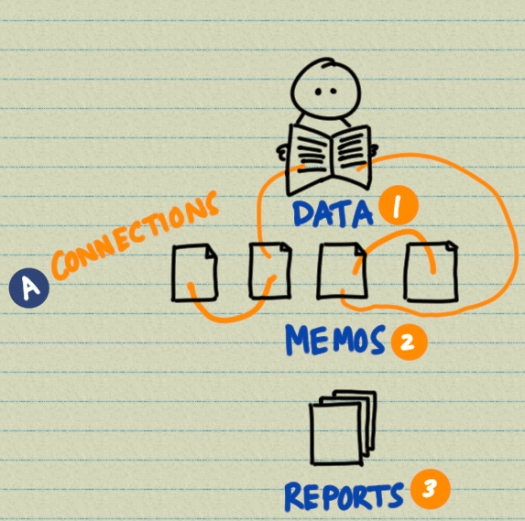
And that looks a bit like this. I need to collect data from several places – good ideas from the literature, notes from the field and reflections on everything that’s going on. This accumulates quickly, page after page after page. I filled my last notebook in fifteen days. It’s a form of ethnographic research and it needs processing.

One way to process material is by writing memos – short notes that summarize the ideas, trying to explain them to the reader. That sounds a lot like a blog post. So that’s how I am going to treat future posts, in-process memos that address questions of methodology, practice, interpretation and analysis. These pull together ideas and can be used to relate concepts in other posts and in the source data. Maintaining these as blog posts creates a similar setup to a Zettelkasten – but there are clear differences as well in the nature of what is being done.

The idea behind writing memos is that they can support the later creation of longer pieces – reports, papers and even books. If they’re well written, of course, and if they’re useful. That’s what I’ve got to try and do with each post from now on.

So that’s the plan going forward.

Cheers,

Karthik Suresh

How Do We Learn From History?

antiquity.png

Sunday, 9.14pm

Sheffield, U.K.

History is a vast early warning system. – Norman Cousins

We visited Ironbridge recently, a place that is saturated with industrial archaeology, a relatively modern discipline. I learned about industrial archaeology from a book I found in a charity shop – Writing for antiquity – the essays of Glyn Daniels, the editor of the journal Antiquity.

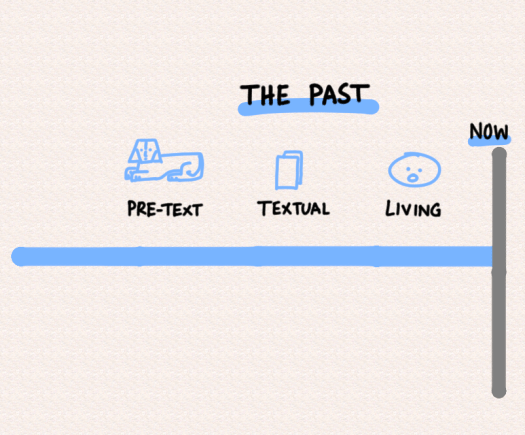
I also learned about a previous editor, O.G.S Crawford, whose autobiography is available on the Internet Archive and which is very readable indeed. Daniels talks about the field – archaeology, history, with their differences and similarities – and points out that perhaps the only thing that you can tell between pre-history and history is that one has writing and the other doesn’t. If you look back from now you will find people writing about their lives and then at some point the writing runs out and you have to figure out what is going on from the material things they left behind.

Crawford describes a time when he met an old family retainer, someone born around 1788 and who left France during the revolution. He talked about meeting her as a living link, one spanning 165 years. Living links bring us closer to the now – reminding us to have conversations with grandparents while they are still around.

Nassim Nicholas Taleb has a Twitter feed that seems odd at times – but he also writes fiercely intelligent stuff. Perhaps it seems intelligent to me because it’s new. But what he says sticks in the mind. For example societies that look like no one agrees and that have lots of disagreement and debate are in reality much freer and better off than ones where everything looks fine on the surface because it’s all controlled. He writes about how the mistake of the last century was thinking that technology would bring a utopia while the mistake this century is thinking that the utopia is going to come with artificial intelligence and machine learning.

Maybe it will. But the thing we need to understand is how people are going to work with this changing world – we need to have a way to make sense of the problems in the world without looking for a quick fix. Solutions take time. And in this day and age it can seem like no one has enough time to do what needs to be done. History has a big part to play in helping us understand what’s going on.

Cheers,

Karthik Suresh

Why We Need To Change The Way We Look At Things If We Want To Survive

looking-at-things-differently.png

Saturday, 8.19pm

Sheffield, U.K.

In our traditional culture, people have a very different view towards nature than in Western culture. We consider humans as part of nature. But in the West, they talk about protecting nature. That’s a joke because nature doesn’t care; it’s humans who need to protect themselves. – Ma Yansong

I have a folder in my research software with clippings of climate news – and it makes for grim reading. Things aren’t good around the world. Also in the news is a story of a journalist being forced to leave a country that she has reported in for twenty years. And you have the stories related to the ongoing pandemic, not least the issues of going back to normality or continuing to restrict movement.

Geopolitics is complicated. It was just as complicated a few hundred years ago. I’m reading a book that talks about how the Elgin marbles were moved to London to protect them – other monuments around that time were being defaced or being smashed for building materials. The UK became a home for historic artefacts that were at risk around the world. A refuge for history, you might say. And history was busily being blown up for much of the last century.

Arguably much of the problems in the world were caused by people moving to places other than where they came from. Exploration and colonisation followed by economic and social migration patterns have changed the way the world works – people move around, all the time for all kinds of reasons.

All that movement has made the world smaller and helped us understand different cultures, connect far-flung places and show us different ways of living. But the biggest cultural influence has been the growth of the media industry. We see and believe what we see and it creates an idea of what we think is true.

What’s the connection between these things? What is the point of considering these issues? I wonder whether the need for movement no longer exists in the way it did. People keep talking about going back to normality but what would normality look like in a world that accepts the reality of what we are seeing around us now?

Take journalism, for starters. The purpose of journalism, one definition goes, is to monitor the centres of power. Once upon a time you had to go to a place to do your monitoring. Now every citizen is a journalist, able to collect and share media. The dangerous places where journalists went to speak with sources that they had to protect are a remnant of an earlier time. Surely it’s just as easy now to have an encrypted conversation or share information via a low risk secure medium? Do you really need all that old-world cold-war stuff? We already see the effects of media sharing – gaining insights into the practices some governments enact on their people. And the task of your government should be to monitor what is going on and take decisions that are in the best interests of your people.

This can be a complicated discussion – so I’ll avoid going into it further – but the point is that when you have easy ways to share information on what is going on it’s much harder for the bad actors to hide. Shining a light on things makes evil scuttle away into corners – but while you can throw people out technology is now so cheap and easily available that it shouldn’t make a difference – a reporter should find it easier to get the story than ever before.

Let’s take another example – the business of the future. Are we really going to go back into offices or is there a better alternative? Everything you do in the office can be done just as well or better remotely – you just have to know how to do it. We’ve proven, for example, that you can have IT security and a remote workforce. This isn’t even a real issue. For example, I can imagine a new company providing all employees with refurbished laptops that can be fully recycled that has a physical tracker and locked down ports. All company work is done through the machine and it can be made just as safe as it could be in a physical office. The entire operation would be greener, require no travel for the employee and provide them with the tools they need to get the job done. It’s really not that hard and being a physical company is no security these days at being able to keep stuff private, especially if you’re doing anything dodgy. Reporters will be able to find out pretty quickly – see the above argument.

These examples merely preserve the status quo. But the other thing is that the technology we have can help us make things better. You can have experts in one place work with people who need expertise in other places around the world without needing to go there. If you can have a surgeon in London operating on a patient in New York why can’t you have an engineer in Sheffield instructing a technician in Bolivia on how to safely install a machine? We don’t need to have high bandwidth or even real time communications. We need to have the appropriate technology that enables participation instead of creating exclusion.

I learned recently, for example, that many developing countries run courses entirely on WhatsApp – delivering training and discussion groups using mobile phones. Do we really need lecture rooms? This kind of approach can help bring many people into the workforce, including working mums and people with disabilities who may not be able to access traditional venues or resources. You don’t need to go to an Oxford college – you just need a mobile phone.

The world is the way it is because history made it so. The virus doesn’t care about history and the planet doesn’t care about people – it’s just rebalancing its system as the gases in its atmosphere stir things up. If we want to survive we will have to change or we will be forced to.

Just to imagine a dystopian future – I was looking at the trees outside my window and thinking that those things remove CO2 from the air and give us oxygen. Surely we know how that works? Surely we can build an artificial tree? We must have done that already – that’s what they use in space for astronauts as they recycle their air.

The problem, one assumes, is that we don’t do at scale because there’s no money in it. Who would pay, after all, for air – something that’s free all around us? That’s what the machine would make. So we should ask ourselves, do we really want to put ourselves in a position where we have to pay for air? Where you go to a store every week to buy a week’s air for your family? Where air is piped into your house so that you can have it each month – and you pay for it?

And if you think that is outlandish just consider that you pay right now for water – another thing that you couldn’t exist without. We’ve messed up the water around us so much that you have to pay to have clean water delivered to you. What would happen to you and your family if you no longer had access to clean water? Is it really so far-fetched that the same thing could happen with air?

We really have to look at everything we do differently – one person at a time – starting with you and me.

Cheers,

Karthik Suresh

How To Get The Balance Right When Designing A Service

attenuator-amplifier.png

Thursday, 8.39pm

Sheffield, U.K.

If we need simple narratives so people can amplify and spread them, are we forced to engage only with the simplest of problems? – Ethan Zuckerman

Many years ago, when I entered my first electronics lecture, a charismatic lecturer introduced me to the book The art of electronics by Horowitz and Hill. 20 years later the words in the preface still resonate with me, the idea that electronics is “basically a simple art, a combination of some basic laws, rules of thumb, and a large bag of tricks.” I have not developed my knowledge of electronics beyond those early lectures – heading in the direction of computers instead but a few words that I came across again recently prompted me to have a go at the picture above – drawing on the old book again.

I am currently thinking about how you can make a difference with a service. All too often we think that service is the same as self-service – if we build a tool that lets you do something that’s the same as providing you with a service. That’s a little like saying here’s a booth – go in and the machine will give you a haircut. You might be happy with a booth if you need to get something like a passport photo but you might want a little more input into what happens with your hair.

Now, of course, an organisation can’t deal with anything and everything thrown at it. You have to reduce what comes at you to manageable proportions. Organisations do this by limiting what they do. A hairdresser, for example, may specialise in certain styles, or focus on a gender. The same professional will probably not cut a person’s hair and trim dogs and cats.

This act of limiting what comes in is like attenuation in electronics – accomplished by using a voltage divider that reduces the size of the signal. Now this isn’t an exact analogy because in attentuation you have the same signal, only at a lower amplitude, while in the work kind of attentuation you actually have less things that you are willing to do. So, the electronics analogy is not a good one – but since the theory uses the word it’s amusing to draw it that way.

The point, however, is that if you want to get something done you have to cut it down to size, limit it, make it possible to do. You can limit it too much though – if you insist on everything coming to you in a particular form then you’ll end up with little or no business. The trick is to limit and limit and limit until what comes to you matches your capability to deliver.

The other side of the coin, however, is that you want to increase your capability to deliver. Hairdressers use scissors and combs, of course, but they also use hairdryers and electric trimmers to make the process faster, so they can get more done to either give you a better service or reduce the amount of time you’re in the chair. This process of increasing their capacity is called amplification.

What’s interesting to note is the relationship between the organisation and the environment. When you try and attentuate what’s coming at you from the environment you have to limit it, reduce it, from whatever the total amount is to something you can manage. But when you’re trying to amplify something you have to rely on the resources you have available. You can’t rely on getting more from the environment for free – what you do depends on what you have.

These basic ideas are powerful – the idea of attentuation and amplification. If you translate this to simple language it really comes down to two things.

Focus on what you’re good at. And use the best tools you can get to be as good as you can be.

Cheers,

Karthik Suresh

What Can You Realistically Change Around You?

break-out-of-frame.png

Wednesday, 9.03pm

Sheffield, U.K.

If you change the way you look at things, the things you look at change. – Wayne Dyer

When you start reading you find that everything you read points to a whole list of other things that you should really also read. There’s a lot of stuff out there. Once upon a time, not that long ago, you could probably learn all there was to know about a topic. Now, what happens is you start with a search and try to winnow down the thousands of results to a manageable number – a few hundred or so. You read those and then you “snowball”, follow up on the references in those papers and hopefully when you’re done you know something about the area you’re reading about.

But you can’t be sure.

When you’re early in the reading process, as I am, this seems daunting. What if you spend months, even years following ideas that lead nowhere, ones that have no real value. How do you avoid doing that?

Well, you could start by being sensible. Reading the things that are in good journals, the material that is cited by others. Safe work, the good stuff – material that is judged to be best in class.

Unfortunately, that approach also leads to putting what’s there right now on a pedestal – taking it as unquestioned truth or really as it should be. The difficulty is that it could just be the way things are because people with power and influence thought that way. What you need to do is get away from the stuff that’s treated as seminal, as gospel – go to the edges where the interesting and revolutionary stuff is happening – maybe that’s where the real knowledge happens to be.

But of course sometimes things are on the fringes because they’re looney ideas – because they’re wrong. If they were right they’d be in the centre… maybe – perhaps there’s a conspiracy to keep them out, except that in real life most people aren’t skillful enough to run a real conspiracy without everything leaking out.

So we’re stuck – do we go with the known centre or do we go with the revolutionary edge?

Or is there an alternative. Everything we do is framed in some way – there’s a mental wall, one that we may not recognise, that keeps us thinking the way we do. We may not be able to pull it down completely or leave it entirely behind but we can try and see it for what it is and perhaps look to see what else is there close by – something that Steven Johnson calls “the adjacent possible.”

The other thing we can do is try and stick to the things we know – ground ourselves in the real world. For example, it’s easy to get lost in theory about concepts and situations that you don’t really know anything about. For example, I followed a reference about dysfunctional group dynamics – something I don’t really know much about. The thing is – I don’t really want to know much about that other than being able to recognise when something is going wrong. When that happens I don’t want to change the group – I want to get out of that situation and go and find a group that does want to do something and is interested in working together.

So perhaps that’s a strategy for dealing with the enormous amount of content on everything that’s out there. Start with what you know and learn about what’s adjacent. Grow your knowledge outwards, pushing your mental walls and expanding the area they cover. You never know – you might learn something that changes your life.

Cheers,

Karthik Suresh

What Is A Rich Picture

rich-picture-traditional.png

Tuesday, 9.07pm

Sheffield, U.K.

In systems thinking, increases in understanding are believed to be obtainable by expanding the systems to be understood, not by reducing them to their elements. Understanding proceeds from the whole to its parts, not from the parts to the whole as knowledge does. – Russell L. Ackoff

If you want to create something new – a product, a service – it’s very tempting to start looking at the inside of the thing you want to make – how will it work, what will it need, why will people want it?

I saw a post today on LinkedIn where someone shared a drawing of the learning process they designed when they set out to create a new business. The first few years were all about starting with a hypothesis, building something, trying it out, changing things and doing this again and again until you reached product-market fit. This is the basic idea behind concepts like the lean startup model – you start with an idea and then test and learn your way to making it real.

One of the steps in the lean startup model that stuck with me was the idea of “getting out of the building.” Go and talk to users, the process urges, get out there and interview them, understand what they need and use that knowledge to build the right product for them. And there are ways of doing this well. The big tip – don’t ask ice cream questions like, “Would you like feature X.” No one turns down a feature. Instead ask them “What did you do when you came across this problem?” The best predictor of how people will act in the future is how they acted in the past – if they spent money on an issue then there is a good chance they see the value of investing in a solution to problems of that sort.

Your goal with any project that involves an uncertain future is to get as much clarity as you can on what the situation is and what needs to be done to make it better. An unknown future is stuffed full of what is called “epistemic uncertainty” and you cannot rationally and mathematically work your way to the best possible solution. Believe me, I’ve tried. You need something more powerful. Something like the ability to map a situation and think about issues and scenarios.

That’s where tools like Rich Pictures come in. Rich pictures are part of Soft Systems Methodology. What you’re trying to do is understand how what you do fits into the world around you – moving from looking inward to looking outward. For example, if you want to pick a career should you look to follow your passion or look around you to see what kinds of jobs are available for graduates in the area you want to live? There’s no right answer to that, is there? There’s epistemic uncertainty – you could end up a millionaire rock star or starving in the gutter. You could end up a rich business owner or find yourself in a dead-end job with no prospects. How do you even start to make sense of that kind of problem situation?

You start by drawing a picture. There are no rules. In the picture above, for example, I’ve mapped a common problem we come up against. We have an organisation that has operations – we could make these work better. The people who can change things are the management team, who will be influenced by micro and macro factors, from labour availability to interest rates. They will be work with suppliers and have to deliver to customers. There are people involved, in different roles with different views who need different things from work.

You can see quickly how this simple map can be expanded to fit your particular situation and create a picture, an artifact, something tangible outside your head that you can use to talk to other people. If you have a good discussion, understanding the situation you face, the way the people involved act and how decisions are taken and who holds the “levers of power”. When you’re done you can make a list of issues – the things that come up that need to be sorted, thought about and dealt with. And when you’re done you should have something that’s going to help you figure out what needs to be done next.

It won’t be a guaranteed right answer but it will be something that you’ve worked to get to and that you are happy with. And if you’re not, you still have work to do. Because what you’re trying to do is understand where your idea, your product, your service fits into the world around it. What’s its niche?

Because if you want it to succeed you have to find the right fit – ideas that survive are ones that are best suited to their environment.

Cheers,

Karthik Suresh

The Connection Between Brain Effort And Note Taking

taking-note.png

Monday, 8.21pm

Sheffield, U.K.

For every complex problem there is an answer that is clear, simple, and wrong. – H. L. Mencken

If you are a fan of stationery and nice pens, as I am, you will have been pleased by the discovery by Mueller and Oppenheimer (2014) that taking notes by hand is better for you than taking notes using a laptop. Their conclusion is clear: “laptops may be doing more harm in classrooms than good.”

But unfortunately it’s not quite as simple as that. Like the often repeated but incorrect belief that 93% of communication is non-verbal you need to dig a little deeper to understand what’s going on.

A review of the literature by Jansen, Lakens and IJsselsteijn (2017) found that some studies show notetaking with laptops works better, while others prefer longhand. There are many factors to consider, such as the way information is presented, the way people take notes, differences in cognitive capability between people and the way in which understanding is tested.

They find, for example, some studies that show that taking notes worsens recall while other studies show the opposite. The link between taking notes and how much you remember varies with whether you’re reading or listening to the content, how fast it’s coming at you, whether you can go over it again and again or not, whether you copy it exactly or say it in your own words, whether you use an outline, or words or a diagram. Learning is complicated stuff.

Jansen et. al. suggest that we should look at cognitive load theory to understand what’s going on – the amount of effort your brain puts into the task and what it spends that effort on doing.

When you’re trying to learn something there are five main things you do. You need to understand the material, you need to pick the points that are important, you need to connect them with other ideas that you know and that are relevant, you need to restate the ideas in your own words and finally you need to write them down. That’s a lot of stuff that’s going on.

It’s not surprising that there isn’t one perfect system that will sort you out every time. What you need to do is figure out a way of learning that lets you engage at a deeper level with the material. Copying it out exactly or taking notes verbatim is a surface level of understanding. Picking out ideas and relating them to other ideas is a deeper level. Saying these ideas in your own words starts you on the path of making them your own which you finish by creating a piece of written work that is ready for the world.

We visited Ironbridge this weekend, a place known as a symbol of the Industrial Revolution. We saw a candle maker’s workshop where the owner and his children made candles all day, boiling down the fat from carcasses – a dangerous, difficult and smelly job. They were one of the richest families in the town, but carried the stench with them – and the term “stinking rich” originates with this kind of job.

These days what we’re aiming for is to be the “thinking rich” – and to do that we need the ability to boil down knowledge by taking good notes and creating something valuable.

Cheers,

Karthk Suresh

How To Spend Your Time

inverse.png

Sunday, 7.40pm

Sheffield, U.K.

In the commercial world, you have this problem that the amount of research you can do in a company is based on how well your current business is going, whereas there actually should be an inverse relationship: when things are going worse, you should do more research. – Alan Kay

I’m in the first few months of a PhD programme and trying to figure out what’s worth doing, what’s not and whether it matters. And the difficulty with these kinds of questions is that every answer you reach for is right.

For example – if you want to learn to write should you write every day? Yes. Should you only publish material when you know it’s ready? Yes. Should you show the world work in progress – a glimpse behind the workshop curtain? Yes. Should you make your research open so that others can examine your process? Yes.

You can’t produce good material in one sitting – that takes work and rework. But if you don’t produce something on a regular basis you won’t get the experience you need to be able to produce good work.

When you start looking into such questions there is no right answer. You have a mix of factors and no guarantee that you will get things right. Whatever choice you make, it’s very likely that there were better ones. But you’re stuck with the ones that you’ve chosen and the possibilities that open up because of those decisions. You learn in the world of decision making that there is no benefit in regret. You move on, leaving sunk costs behind.

In my research process I have challenges that look like these:

  • What to read
  • What to extract and keep
  • What to take notes on
  • What to think about
  • How to take notes and think – the medium, the method.
  • Balance traditional methods and newer, perhaps more creative ones
  • Try and see things from different perspectives
  • Consider how approaches work for me
  • Consider how approaches work in groups
  • Work out what the important questions might be

What role does this blog play in that process – and, as you’re reading this, is what you are going to find something that’s worth your time?

I’ve tried a few things so far. Writing about what’s on my mind, what I’ve learned, pulling together a book project. Sometimes there is a thread, sometimes there isn’t. Sometimes I write about specific methods, and sometimes it’s writing about process, about the experience of method.

The one constant is that I sit down at roughly the same time every day to work on something that will be published when I finish typing these words. There is a clear beginning and an end and a time limit – and that helps with producing words. Making the rules of operation less clear or subject to choice will make it harder to do. But, of course, that also makes it harder to be clear on what is being done – what’s the purpose of this blog?

I don’t think I need to answer that right now because it fits into an emerging programme of work that I am still working to define and design. Perhaps it’s a reflective journal, a place where I write about things that I’m working on. Perhaps it’s a place for work in progress, first drafts that are later reworked. Perhaps it’s Zettelkasten, a partner in research, but it’s going to be a few years before we can work together.

All I can say right now is that there is no right answer. What you have to do is trust in the process.

And wait.

Cheers,

Karthik Suresh