What Kinds of Targets Should You Set When You Want To Change A Habit?

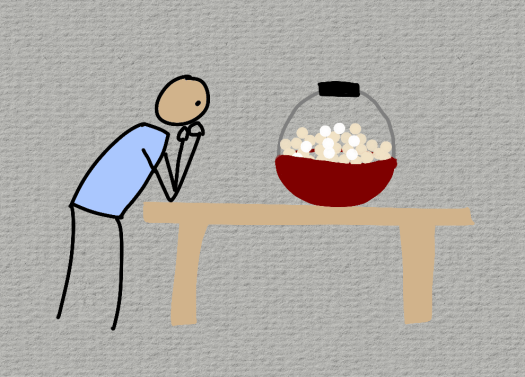
embarrassingly-easy.png

Monday, 6.14pm

Sheffield, U.K.

Are you the kind of person that thinks if it isn’t hurting, it isn’t working?

Do you set ambitious targets – because that’s what you feel you should be doing – and then feel guilty and down when you don’t achieve them?

If that’s the case, perhaps you’ve been going about targets all wrong.

Let’s take a few things that many of us would like to do.

We’d like to become more mindful – more calm, we’d like to be healthier and fitter and we’d like to be better at our job – say it’s a sales role.

What do you need to do to achieve these outcomes?

Well, we’ll need to put time and effort into them. If you’re not calm right now, then being able to be calm is a process. If you’re overweight – that’s another process. As is selling.

What many of us do is start with a target – set a goal – have an ambition.

I’m going to meditate for an hour every day. I’m going to the gym for an hour five times a week. Or I’m going to make 100 calls a day.

We rush into the task full of energy. We give it all we have, perhaps for a few days, perhaps a few weeks.

Perhaps even a few months.

And then, it gets hard. If we aren’t seeing results or life gets in the way or other things become more important, it just becomes too hard and we start to “forget”.

And then we stop.

One answer to this is that you should have more willpower. Do more affirmations, tell yourself to do it, control your mind and focus…

But that’s hard, isn’t it? How long can you keep going at full speed before you just run out of gas?

This way of being is hurting us more than it’s helping.

Some people suggest we do things differently.

Think about the game Limbo, for example.

That’s the game where you turn around, bend over backwards, and shuffle your way under a pole. Then the pole is lowered and you start again.

That gets harder and harder, doesn’t it?

Well, what would happen if you set the pole at neck height, faced forward, bent back slightly and shuffled under the pole?

It would be embarrassingly easy, wouldn’t it?

And this is the secret of how many people manage to train themselves and set new habits.

You’ll find a few examples in Tim Ferriss’ book, Tools of Titans.

Here you have the monk that says to become more mindful – take just one breath a day.

To get fitter, do just one push-up a day.

IBM used to ask it’s sales representatives to make just one sales call a day.

And, if you want to be a writer, just writing two shitty pages a day will get you on the way.

So, for the next thing you want to change, before you start with an ambitious and far reaching action plan to reach a goal, try this.

Set an embarrassingly easy task that you’ll do every day that will move you closer to your goal.

Cheers,

Karthik Suresh

This Is The Simplest Strategy Model You’ll Need To Know

what-is-strategy.png

Sunday, 10.23pm

Sheffield, U.K

What is it that makes a strategy succeed?

The way we answer this, often, is by looking back.

Why did Microsoft become what it is and dominate desktops around the world? Why are there enough Apple phones in the world for the entire population? And why is IBM still around?

Or, what makes one particular influencer popular? Why does a particular chef or singer or artist hit the big time?

Surely there are patterns we can find and copy to become successful ourselves?

But there is a problem with this. All too often, history is not a good guide. The path others took is a fragile one and sometimes crumbles away behind them.

What are your chances of starting a search engine that will compete with Google? Google has more computing power than you can imagine.

If you’re a grad student at University, what are your chances of raising the several billion needed to set up the next Google?

An article interviewing Professor Bala Balachandran has a useful way to think about your options.

Michael Porter once wrote that your have two ways in which you can stay profitable over time.

One – you can do activities different from your competitors.

Two – you can do activities differently.

Four words that stand out, two of which are the same, leaving you with three to ponder. So much packed into so little.

Porter’s emphasis was on different and differently.

Let’s say you’re in the web search business – going back to our previous example.

Bing and Yahoo are going head to head with Google. I’m not sure what’s happening with Yahoo, really, but Bing is funded by Microsoft and so has the financial muscle needed to compete with Google.

Three quarters of the world’s searches happen through Google. The others are trailing.

Because they’re doing the same activities the same way.

A minnow that some people use – although less than 1% – is duckduckgo.com. Because it does search differently.

While Google tracks everything you do and can tell you the sex of your unborn child, duckduckgo does the opposite – it sells you on how it protects your privacy.

But what’s the technology that will actually sink Google? Is it too far ahead?

Google is big. But is it bigger than the entire world? Perhaps the next Google will actually be a distributed search engine like yacy that runs on a few billion distributed computers in India and China?

Professor Balachandran steps away from Porter’s emphasis on difference and focuses on the word activities.

His point is that strategy is inseparable from the activities you do.

A strategy that does not involve action is navel gazing – no more than a dream.

And you can build a strategy around activities – whether different or differently.

This chimes with what Scott Adams says about how he became a cartoonist.

He says he was an average cartoonist, an average storyteller and knew a little about engineering.

When he put all three together, he created one of the most loved comics in the world.

Many people can do each of these three activities.

By combining them, Adams got a strategic advantage over everyone else out there.

This is a strategy that all of us can use.

Do different things – or do things differently.

That’s it.

Cheers,

Karthik Suresh

What’s Andrew Carnegie’s Number One Secret For Succeeding In Business?

all-eggs-in-one-basket.png

Saturday, 10.56pm

Sheffield, U.K.

I don’t know how you go about writing your blog, if you have one, but my approach is quite random.

Really.

If you were to get some advice from a marketing person on blogging, you’d probably start by having a goal, understanding your target audience, coming up with a list of topics they’d find useful, getting a schedule set up, crafting headlines and spending a lot of time promoting what you’re doing.

That’s how it should be. Perhaps.

What I do is start with an idea – something random I’ve read. Say it’s about the Rule Of Frequency – which I’ll cover in a separate post.

This particular article is associated with GNU/Linux, so that gets me searching and gets me to the O’Reilly Open Books site. Which talks about the Open Library project.

A lot of what I learn and write about wouldn’t be possible without people putting time and effort into sharing what they know.

And since that seems a good thing – the fact that there is an Open Library project is also very interesting.

Because it seems to me that people create stuff for one of two reasons. They think it will help them in some way. Or they need to put down what they know before they burst.

The ones who do it for the second reason create much more interesting stuff. Stuff that’s actually useful.

And those are the books and articles that are worth reading. So, it makes sense to spend time hunting them down.

Wandering through the Open Library finally has me stumbling over Andrew Carnegie’s book “The Empire Of Business”, printed by Doubleday, Page & Co. in 1902.

The first chapter is a talk to young men – young people if we bring it up to date – where Carnegie tells you what he’s learned over a long business career.

His success secrets…

It’s good to start at the bottom, he says. If you’ve started there, you’ll be motivated to get ahead and much less likely to be led astray by the temptations available to those with more money than you.

Then there are three things you shouldn’t do. The first two? Don’t drink or speculate.

The third one… this is out of left field…

Don’t “indorse”. This means lending your name to support someone else. Perhaps as a favour to a friend – or as an influencer in these modern times. Probably “endorse” today.

In essence, be very careful who you lend your reputation to, because if things go wrong, you’ll be dragged down as well.

Then… what should you do?

Instead of looking at what you are asked to do – what you must do – for an employer, look for what you can do.

You’re paid a wage to do what you must do. To make more, you must do more.

Future millionaires have one sure habit, Carnegie goes on. “Their revenues exceed their expenditures”.

If you can save, if you can show that you can hold on to money – others will lend you hundreds and thousands what you have when you need capital.

And then… we come to his final secret – the big one…

You can make money in any business – in any legitimate one making or dealing in a product that people want.

If you want to make money you need to do one thing. “Concentrate your energy, thought and capital exclusively” on that business.

Stick to it, fight it out, resolve to lead, be the best, have the best and know the most.

In other words, he says, “Put all your eggs in one basket, and then watch that basket”.

And finally… be patient. You’ll get there.

Cheers,

Karthik Suresh

How To Tell When You’re Overdoing It

icbm-fly.png

Friday, 9.25pm

Sheffield, U.K.

Sometimes a phrase paints a picture in your mind – and you know there’s something there worth thinking about.

I stumbled across such a phrase on Charlie Stross’ blog. Charlie is a science fiction writer living in Edinburgh.

He talks about using a revision control system for writing his books – and writes that when he has some spare time he’s “going to poke around with git, but pointing a distributed SCCM at a novel is a bit like using an ICBM to swat a fly”

That is a fantastic phrase.

And it’s conjures up a picture that is worth keeping in mind.

Because, so much stuff around us is incredibly complicated yet astonishingly useless.

Take writing, for instance.

If you do any kind of professional writing – for a sales proposal, for example – you know that you go through certain phases.

You need to do your research, then try and pick out the most important points, organise them in a sensible order, fill in the text, go and find or create images and charts and tables and sprinkle the whole thing with plenty of examples and proof points while keeping track of any references and data that might be important later.

Then, perhaps you open Microsoft Word and stare at a blank page.

It’s hard to get across just how unhelpful a tool Word is when you want to do a serious piece of writing.

Yes the capability is in there somewhere. You can use an outliner. There is a reference manager. You can set out the document and pull in pictures.

Very quickly, however, as the word count and images rack up, you end up with a multi-megabyte monster that slows down when opening and starts to haunt your dreams.

And the software world is full of such examples. We have bigger and better computers, but we never seem to be able to get things done any faster.

The developers of these tools are constantly trying to made them better – but perhaps they’re just overdoing it and the actual benefits lie elsewhere.

Maybe we just need something much simpler.

What we see on our computers is happening around us in life as well.

Take a look around your house. Perhaps you’re one of those rare people that has only what you need and nothing else.

The kind of person that empties out your briefcase or bag every night and fills it again in the morning.

The rest of us, especially those of us with kids, live in what appears to be a collection centre for plastic and fabric.

Do we really need that many toys? Or clothes? Or pots and pans? Or bags?

Books? Now there I have to admit – I’m not sure there is such a thing as too many books…

But I know that sometimes I need to get rid of them. And I do. Reluctantly.

Whatever your goal in life – it probably involves an element of living well – being happy.

And I wonder just how happy all this stuff makes us.

As the saying goes, first you own your stuff. And then your stuff owns you.

Perhaps we just need to put all these ICBMs down and have a rest.

Cheers,

Karthik Suresh

What Should Your Computer Do When It Has Nothing To Say?

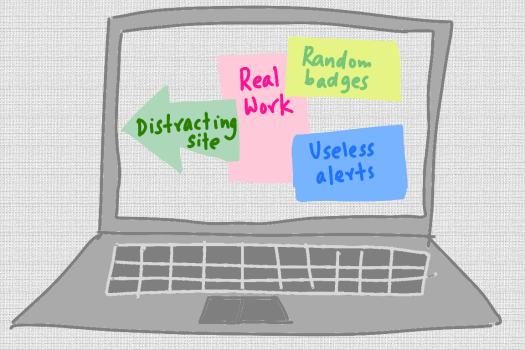
distraction.png

When you spend time working in a GNU/Linux environment, something strange happens.

Especially if you like the terminal – as I do.

For example, I recently discovered that Google has a cloud offering, just like Amazon AWS and Microsoft Azure.

You can set up a server and have a play – and it says that the really small ones – the ones they call a droplet – are forever free.

That’s the kind of price I like.

So, I played about creating a website – setting everything up from a browser that acted like a terminal. If you don’t know what that is – it’s a bit like DOS.

And do you know how many times the droplet – the terminal – interrupted me while I was working?

How many times did it stop to tell me I had new mail, or that a new file had been added to Dropbox, or that it needed to be updated?

That’s right – not once.

There’s a rule that’s part of the Unix Philosophy – a cardinal virtue. It’s called the rule of silence.

This rule says – if you have nothing surprising, interesting or useful to say, say nothing.

It’s ignored by virtually every other type of system out there.

In fact, many do the opposite of being silent. They jump up and down, waving and shouting and pushing into your space, vying for attention.

People study exactly how to get you hooked. It’s called Captology, which stands for Computers as Persuasive Technologies – or now just behaviour design.

In essence – these systems know that if they want you to act in a certain way – then they have to get three things right:

  1. You must want to do it.
  2. You must be able to do it.
  3. You must be prompted to do it.

Watch out for this approach the next time you use Dropbox, for example, and see how they try and get you to upgrade.

They know that you want to keep your photos safe. If you have Dropbox, then you probably know how to put photos in there – but because photos take up space you’re probably keeping them somewhere else if you have the free account..

So what do they do? They introduce lots of prompts – with a pop up asking if you’d like to import your photos, integrate with your documents, add videos.

Anything that will make you add more to the folder and decide that you need to upgrade and pay for more space.

It’s just good business. Good, old fashioned manipulation.

That’s focusing on number 3. But you can do number 2 – make it easier for them. So videos autoplay on every service out there and your binge watching soars.

If you want to learn more about how to do this kind of work, or learn how to avoid it, here’s a good article.

The best defence, however, is a good offence. Turn off every notification, every alert. Stop using devices if you have to.

Or use a device for exactly one purpose. A text editor for writing. A camera for photos. Taking nothing in your pockets if you want to relax other than a good paperback.

Silence really is golden.

Cheers,

Karthik Suresh

5 Vital Skills For a Self-Managed Freelance World of Work

freelance-skills.png

Many people in charge of companies now still have a mindset of 9-5 factory style work where people are structured in a hierarchy and there is a chain of command.

You’re slotted into your role in the organisation like pegs in a giant pegboard.

But, work is changing. Roles aren’t fixed any more. Not in the sense that you can do one job your entire life and retire with a pension.

As people live older, they don’t particularly want to stop working. And younger folk are finding it hard to move up a career ladder based on roles and seniority when the older ones insist on staying on the rungs.

Which is why Morningstar is interesting.

Morningstar does things with tomatoes. They care about tomatoes. On their website you can learn about the history of tomatoes, watch a day in the life of a tomato and check out prices for tomato products from hot paste to diced tomatoes in juice.

That’s not the interesting bit.

The interesting bit is that they have no managers. The only role in the company is held by Chris Rufer, the President, because it needs to for legal reasons. And he’s got that because he started it.

Instead, they have a workforce of around 400 workers that manage themselves by creating a network of agreements with each other. A peer-to-peer management system, if you like.

You might think this approach is nonsense. Surely the company would collapse without a cadre of trained managers, all being paid four times what a worker earns, watching the workers work?

Somehow it doesn’t. A mini-market emerges instead, and out of the transactions and agreements made between the workers, a low margin business sustains and grows over time.

This self-management system has spawned its own training centre – The Morningstar Self-Management Institute – and Doug Kirkpatrick sets out five skills that you need to have to do this well.

Now, even if you don’t work for Morningstar but work in a regular company or as a freelancer, these skills are worth thinking about.

1. Always take the initiative

Talk is easy. It’s when you start doing something – taking the first step – that magic happens.

Thinking and strategy and plans are all important and need doing. But you have to get started – whatever that means for you.

For example, as a freelancer with no clients, you have to take the initiative and reach out to prospects. If you have prospects, you have to reach out to them with pitches and suggestions. If you have clients, you have to go back to them with new ideas and opportunities.

Stop talking and start doing.

2. Get comfortable with fuzziness and ambiguity

A world where you have a safe, well-paid job where you can’t be fired is unlikely. And, if you do have that, it’s probably pretty boring.

Safety usually is.

Really exciting things happen in places where people wear t-shirts saying “Safety third”.

Fuzzy and uncertain spaces are where you can find and add value. That’s the edge of new technology, new capability or wasted effort that you can sort out.

If you go where other people don’t – you’ll find projects and opportunities and money.

3. Learn how to be aware of yourself and your progress

If you want to get somewhere, you have to constantly check yourself, check whether you’re moving in the right direction.

Time goes by quickly. Before you know it your time is up and you’re behind where you wanted to be at this point.

If you have a mission – a goal – you’ve got to be aware of it every single day and move towards it. You’re not going to make it in one big leap. But a step every day will make it impossible for you not to reach it.

4. Always try to contribute

Don’t wait for stuff to come to you. Don’t hold back protecting ideas and thoughts and plans because you think they are really clever.

If you can help someone else do it.

It’s good practice. You can get whatever you want if you help enough other people get what they want.

Today, the more you share, the more people can see what you do and are willing to trust you.

It’s one thing saying you can do something – another showing your work.

If you contribute, if you’re visible – you’ll make yourself discoverable – and that is the key to getting more work and growing a business.

5. Select for low power distance

You’re going to have a choice of who to work with. There’s an entire world of people out there looking for your exact skills.

Some of them are not nice.

In the series Scrubs, the actors talk about a no asshole rule. It doesn’t matter how good you are, if you’re an asshole you’re not joining the team.

This is a good rule to use when working for someone.

It’s good practice to fire difficult customers and spend all the time you save being extra-helpful to the nice ones.

The ones who don’t lord themselves over you.

Your ideal customer is one that doesn’t see themselves as your boss but as a colleague – someone who can work with you to create something that benefits both of you.

Someone who just wants to take from you isn’t worth working with.

In summary

Whether you’re just starting a new career or moving out of an old one into a new freelance way of working, you’re going to have to pick up new skills.

One of the most important is how to move from doing what you’re told to agreeing what needs to be done with people willing to pay you.

Or better yet, offering value that people are happy to buy from you.

And all that starts with a mindset shift.

Followed by massive action.

Cheers,

Karthik Suresh

How To Get Your Business Ready To Compete In A Digital Economy

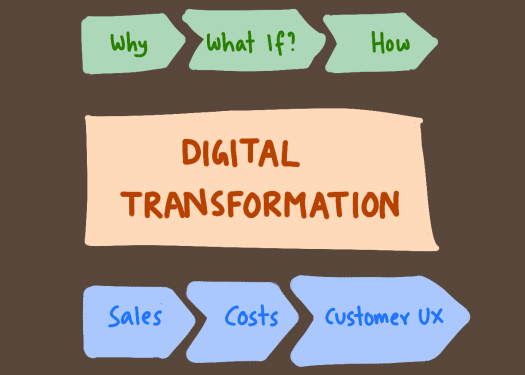
digital-transformation.png

Sunday, 7.40pm

Sheffield, U.K.

What does a digital transformation mean for your business?

Your business may have been born digital.

Perhaps you used to do personal training, decided to do some videos of your training routines and recipe ideas, got a following and now create fitness and nutrition content online and offline full time.

You don’t need to worry about a transformation. You’re already there.

But, what if you clean carpets?

In 2015 I needed some carpets cleaning. So, I picked up the yellow pages and rang the number of the company closest to me. It was a weekend – a Saturday.

A lady answered the phone and took a message. She said the owner would call back later.

Well, I wasn’t that keen on waiting. So, I did a search. Found a website for a carpet cleaner that listed all their services and prices.

I could have ordered online, but I thought I’d call them instead. Someone answered the phone. They asked if I had called because of the online discount. I’d missed that but of course I said yes. They gave me the discount and got the order.

The first guy never called me back. Or maybe he did and I missed the call.

Now, if you called him as part of a survey and asked him if he had a website, there’s a good chance he doesn’t. And, of the people who don’t have websites, nearly 80% think they’re not necessary – perhaps what this guy would have said.

The problem is… he doesn’t know. He doesn’t know he’s losing business because he doesn’t have that website. It’s happening – but it’s invisible to him – he’s simply not even in the running for many people who’ve ordered online straight away.

At the other end of the scale you have large businesses that still operate using legacy digital and paper systems. It’s possible they’re changing things, but it’s also possible that they’re too terrified of breaking stuff to make a difference.

So, if this whole transformation thing is something you’re vaguely aware is something you should be doing, how do you get started?

There are three areas where you can make a difference

The main thing to get clear is not technology. There are lots of offerings – and you might have a choice of free/open source software, cloud infrastructure, software as a service options and endless other combinations.

The first thing to get clear is what are the benefits to you. A digital technology must help you do any of these things to be in the running:

  1. Does it help you make more sales?
  2. Does it help you reduce operating costs?
  3. Does it help you give customers a better experience?

The business case for the first two is pretty simple. If you get more business than the cost of the technology, then you might consider it.

The last one is the hard one to quantify. Do your customers get a better experience if you give them a self-service portal or if you give them more individual attention?

Do the videos and pictures you put up make your company more human and approachable – more authentic – and so lead to a better experience than corporate blandness?

If anything comes to you that doesn’t clearly improve things in one of these three areas, then it’s not a priority. It’s a nice to have and you can think about it later.

How to think through your situation and come up with a strategy

Once you’re clear on the areas when you can make a difference, it’s time to ask yourself some more questions.

Once again – there are three to work through.

Let’s take sales, for example.

First you ask – why do you need to transform it?

Perhaps you’re an author and want to reach readers around the world but don’t have a publisher. If you’re going to try self-publishing, then understanding e-book platforms, personal branding and content creation is an absolute must.

If, on the other hand, you sell very specific business services to a possible market of a few thousand people, you’re not going to need a fancy CRM to manage that. A spreadsheet will probably work just fine.

Perhaps use Google docs so you can share information.

The second question is to ask, what if I do a particular thing.

Let’s look at costs this time.

What if you bought an expensive system to evaluate the impact of commodity prices on your business?

Such a system might cost you a few $100k. If your commodity spend isn’t in the hundreds of millions, it will be hard to justify the saving.

Perhaps you’re better off outsourcing that – having someone else buy the system and effectively rent the results from them.

The second question then leads to a decision on how to go ahead.

How do I implement this improvement?

The how is about getting the benefit – not about implementing a system. The system exists to provide you with a benefit.

So, let’s take the third focus area to look at this one – customer experience.

Quite often, companies think that they should install a self-service portal.

This does make the experience better in some industries – internet banking, for instance.

In other industries, it’s a pain in the rear. Customers might prefer to simply get the information they need by email rather than spending hours working with your painfully slow portal.

iCloud – for example – is my current example of a completely and utterly useless online portal.

And the how should also consider what happens when things go wrong.

If you go completely SAAS and the company folds, what happens? If it’s a crucial part of your business, perhaps you should consider open source so that you can keep going even if the developers fold up one day.

In summary… if you’re digitally native already, thank your lucky stars.

If you’re not, before you buy a system – you’ve got some important strategic thinking to work through.

Cheers,

Karthik Suresh

Why Sometimes You Need To Wake Up And Face Reality Head On

wantrepreneur.png

Saturday, 6.33pm.

Sheffield, U.K.

I saw a drawing on Charles Robinson’s post about books for entrepreneurs and it spoke very directly to me – and not in a nice fluffy way.

More in a kick up the ass kind of way.

It’s a very simple truth – and there’s no way to avoid what it’s telling you.

Do you know the kinds of people that succeed in business?

They tend to be the kind of people, in my experience, that you’d want on your side in a fight. People that stand their ground. That don’t give up. That move forward.

A surprising number seem to be born under the sign Taurus. Something about being bull-headed perhaps.

And the thing they do is get on with it.

A lot of us don’t. We have ideas. We talk about them, to our other halves, at the pub. It’s conversation and chat and wouldn’t this be brilliant.

Here’s the thing.

An idea is ephemeral, a thought in your mind. You might think it is valuable – but it’s worth nothing until it’s made real.

Now, one could argue over this – but what’s the point. Some people will say that ideas are valuable and you should protect them and sign NDAs before you talk about them.

Others will say that there is no point – no one is going to take the effort to steal and implement this idea of yours. If it’s that easy to steal, then you can’t protect it anyway.

So, putting those things aside, if you are – right now – in a position where you have an idea and want to be an entrepreneur, what should you do?

What’s the single most important thing you should do?

You should talk to someone with the power to make the decision to buy what you have to offer.

That’s the end game. So, you need to start there.

All this talk of ideas and businesses ends at this place. With you handing over something that the person who takes it wants more than the money in their wallet.

In economic terms, it has utility – worth or value.

What’s going to get them to make that decision to buy?

That’s a function of demand – and this gives you a hint of how to get from the idea you have to a viable business.

There are seven parts to this function – and it goes back to the first chapter of an economics textbook…

Ask yourself these questions:

  1. What is the price of your product?
  2. How much of it will the buyer want?
  3. What are their tastes and preferences?
  4. What else will they need that is related to your product to get full benefit from it?
  5. How much money or income do they have?
  6. What are their expectations about future prices?
  7. How many such buyers exist out there?

Let’s do a quick exercise and work through these questions for a possible business. Lets say you’re setting up a marketing agency. It’s just you in the business.

  1. What’s your price? Say your hourly rate is $100.
  2. How many hours will the buyer want? Perhaps to get the job done they’ll need 10 hours a month.
  3. Tastes and preferences? They like writing but haven’t got the time to manage social media and PR.
  4. What else do they need? An advertising budget – perhaps $500 a month to get started.
  5. How much money do they have? They’re okay with a budget of $2,500 a month.
  6. What do they think about future prices? They’re expecting charge rates to stay broadly flat.
  7. How many buyers are out there? You specialise in B2B consultancy firms – and there are perhaps 30-40 within 20 miles of you.

Does that seem reasonable? Say you need to get in $4,000 a month to maintain a decent standard of living. So you need 4 clients that have a budget of $2,500 – around 10% of your potential market.

If you think you can make that work – then you now have a plan for your business.

Now you need to pick the phone, send an email, send a letter, get a referral – use some way to talk to the kinds of people that can make the decision to hire you.

The one thing to notice is that an economics model doesn’t care what product you actually have.

There’s nothing in there that talks about quality or sweat and tears or your feelings.

It looks at your product from the customer’s point of view.

The only view that matters.

That’s reality.

And the sooner you face that, the sooner you will stop having ideas and start creating businesses.

How To Search For Product-Market Fit

product-market-fit.png

Friday, 6:46pm

Sheffield, U.K.

You must have seen an Emma Bridgewater mug at some point. They stand out – ceramic with sponge dotted bits of colour. Instantly recognisable.

And the market goes crazy about them. I’m looking at one on my desk right now. There’s something very calming about them.

This outcome – product-market fit, is what all of us are searching for. We’re searching for this in almost every aspect of our lives, if you take a moment to think about it.

What are kids doing when they try and decide what to study or specialise in? They’re trying to match their talents with the courses on offer.

Sometimes we think we should do something because there is a market for those skills. We might study engineering or law because our parents think it will get us a good job.

They’re suggesting we change ourselves – the product – to fit what the market wants.

This is such a crucial aspect of succeeding at anything that it’s worth examining in some detail.

Let’s say you have a brilliant new invention. You think it’s brilliant anyway. How do you know for sure?

You know when someone hands over money for it. Willingly.

But that just tries to simply a hugely important thing into a few words – missing the point along the way.

Let’s think of a model that we can apply. What is the most successful product-market fitting algorithm ever devised?

I’ll give you a hint. It resulted in you.

Evolution.

The world is full of environments – jungles, marshes, volcanoes, deep ocean trenches.

And every one of those environments has creatures. Creatures that have specialised and adapted and evolved to fit those environments.

Just like markets. Markets are simply a manifestation of people’s desires. We want stuff, and products emerge in the market to fill our need.

We want to get from one place to another. So we get cars – fast cars, big cars, slow cars, expensive cars, off-road cars – and bikes and planes and everything else.

All these products help us with one main thing – mobility. And they also make us happy on the way – with music and comfort and buttons and flashing lights.

What happens if you don’t get product-market fit? Or the market changes?

It’s kind of obvious really. That’s why you don’t see many mammoths around. Or many companies that have been going for over a hundred years.

Everything changes. And the products that survive change and adapt along the way.

So, here’s my approach to product-market fit.

You get to it when your product can survive. It’s when you get to be profitable. You’re making more money selling it than it costs you to make it.

It’s not about growth and rocketships. The crucial point, the tipping point, is being able to survive.

Whether you’re a fruit fly or a Siberian tiger, if you’re alive, you’ve found a fit.

A creature survives when it gets enough energy from food from the outside to sustain it on the inside.

Your product will survive when it makes enough money to get into profit and sustain itself.

Now you’ve got a fit. You’ve survived. Everything from there is upside.

And you can grow just as big as your market lets you.

Or stay as small as you want to.

Why So Many Things That Seem A Good Idea Are Really Not

multi-tool.png

Thursday, 6.28pm

Sheffield, U.K.

I am not a fan of Apple.

Yes, I have an iPhone, a Mac and an IPad – so they have got me in their clutches – but I’m trying to get away.

Because they’re turning evil. Perhaps they don’t realize it, but they are – and it’s making their stuff too hard to use.

It probably goes back to Steve Jobs. Most things with Apple do.

As far as Apple is concerned, all you need to do to live happily is use Apple products.

The iPhone is everything you need – a phone, a computer, a camera.

With iTunes and iCloud and the Apple Store – pay up and be happy.

Now, you may love Apple – and that’s just fine.

The point I’m making is that anything that tries to do too many things starts to become problematic.

Take pictures, for example.

If you have a camera and use a normal SD card, getting pictures off it is pretty simple. Stick it in a slot and copy the pictures across.

When you have a phone that holds 16, 32 or 128 GB, it starts to become more complicated.

Yes, iCloud will copy stuff off your phone – but it’s still going to fill up. If you add videos and podcasts into the mix, your new phone with more space gets stuffed quickly again.

Have you tried getting photos off the phone?

Once upon a time you could plug it in, take off the photos and clear the phone. Then you couldn’t clear the phone because iCloud got in the way and you had to…

Well, this isn’t meant to be a technical rant on how to use an iPhone and your photo management workflow.

It’s a warning.

Richard Stallman, the prophet of Free Software, says this “Digital technology can give you freedom; it can also take your freedom away.”

It might seem a brilliant idea to use Google docs and mail. To use a host of other online services to carry out everything from invoicing to data analysis.

But, when you have no internet access, you’re completely cut off. What would that do to you if your business relied entirely on such platforms?

You’re also better off sticking to a tool that does one thing well than a number of things badly.

However snazzy your todo list application – it’s hard to beat the power of a yellow pad and a pencil for making lists and ticking them off.

Stuff you write in plain text will still be accessible in half a century – while bloated Word and Excel documents will be hard to get into in a couple of years.

The advantage of a tool that does lots of things is that sometimes, when you need a quick task doing, it’s convenient.

The Swiss army knife is a rubbish knife – but it’s good for opening a bottle of beer. Just about.

If you really need to do some cutting – you need a good knife.

And the same thing goes for the rest of your life.

If you need to get something done – get the right tool. Choose a good one.

And watch out for the things that look good but really take your freedom when you aren’t looking.

Cheers,

Karthik Suresh