Why Putting In Place Some Structure Can Help You Work More Freely

clothesline.png

Thursday, 8.18pm

Sheffield, U.K.

It’s hard to write a good play because it’s hard to structure a plot. If you can think of it off the top of your head, so can the audience. – David Mamet

When it comes down to it a lot of things happen the same way.

I was reading Writing television sitcoms by Evan S. Smith, who described his approach as premise-driven comedy writing.

He explains that there are two ways writers usually work.

Some just start and get a first draft written quickly – which then goes through endless rewrites – sometimes for the better and sometimes worse.

Others create or are given an outline and then fill in the blanks – there’s much less freedom but also less to worry about.

Smith’s approach says start by “weaving funny elements into the premise of the episode” – put in things that will generate humour in situations.

For example, in many sitcoms you’ll find that the two main characters are diametrically opposed.

You have a laid back person and a very buttoned person – and conflict and funny situations just come out of putting them together.

This got me thinking about Steven Pressfield’s clothesline method of writing, where you pin up key scenes, almost like you would hang them out on a clothesline, to see what the major parts of your story might be.

Taking this one step further you have Shawn Coyne’s story grid, which tells you that any genre you write in will have conventions and obligatory scenes.

Conventions are things that people expect to see in your story while obligatory scenes are things that you must have if you want the story to work.

Coyne explains that in a mystery story you’d expect someone to set out to solve the mystery – that’s a convention.

An obligatory scene in a thriller is having the hero at the mercy of the villain – think of every Bond film you’ve seen – if that isn’t there it’s just not going to do it for you.

Now, when I think about business and marketing, the same things apply.

For example, if you want to sell something on Ebay these days you need to follow certain conventions.

You need to describe your item and tell Ebay how to categorise it, probably at a minimum.

But if you want to sell you have to do more – have pictures, a description that stands out, stuff that helps people see you as a real seller and not a scammer.

You’ve got to do the same thing on LinkedIn – have a profile picture, build a network, engage and share content.

In both cases there are conventions you adhere to.

Some people simply connect to everyone out there – and probably annoy more than a few.

Others take the time to personalise an invite, reaching fewer but perhaps getting better quality connections.

Take a different field – creating online ads or a direct marketing piece.

Again, there will be elements that you need to put into your content – conventions you follow.

An obligatory element in an ad might be the call to action – why should they get in touch?

When you start thinking of anything you do in these terms you start to see the value of knowing what these conventional and obligatory elements are.

If you know these you can pin them up on your imaginary clothesline – you know you need these to make things work.

And then, because you have those elements in place you can get on with creating something that is uniquely about you.

Pure novelty is hard to sell – and it’s usually ignored because people don’t know what to make of it.

Sitcoms and books that work do so not because they contain something novel – but because they contain timeless elements that are being presented in a novel way.

And really, when you think about it, businesses and campaigns that work probably do so for the same reason – they appeal to things that are timeless – but show them to you in a new way.

Which makes them unique.

Cheers,

Karthik Suresh

The Very Best Reason For Keeping Things As Simple As Possible

cant-see.png

Wednesday, 9.25pm

Sheffield, U.K.

Debugging is twice as hard as writing the code in the first place. Therefore, if you write the code as cleverly as possible, you are, by definition, not smart enough to debug it. – Brian W. Kernighan and P. J. Plauger in The Elements of Programming Style.

Most people react instinctively to complexity in the way animals respond to a forest fire.

They try and get as far away from it as possible.

Not everyone though.

Some people make things complicated because they’re learning and they’re trying to push their boundaries – do things in new ways.

And that’s a good thing.

Eventually, they will learn that the really cool and complex thing they made two years ago is now the bane of their lives as they struggle to maintain and deliver a service using it.

And then they will learn the value of simplicity.

Others see their mastery of something complicated as a weapon, a secret to be hoarded – as if the possession of knowledge is a guarantee of security.

And that’s less useful, because no one wants to work with people like that really.

If you are a programmer – an experienced one anyway – you will know that any reasonably sized piece of work you make will have bugs.

Often, the way in which we work encourages us to create bugs.

This is not restricted just to programmers, however, it applies to most people who interact with a computer.

For example, if you write, do you rely on your word processor to help you with spelling and grammar?

Do those little red lines or the absence of them help you correct mistakes?

If you are expecting the computer to pick up all those errors, then you’re doing the same thing as a programmer – creating something and then hoping that when there are no red lines on the screen you are done and can send the thing.

Except, do you find that every once in a while errors still creep in, two words have crept in that are spelt correctly but don’t belong together.

If you really want to catch your mistakes, what you should do is print out your document and read it, catching as many errors as you can manually before using the computer.

And, it turns out that if programmers do this they catch quite a few more bugs before the things get a chance to get built into the program.

But who has the time to do that – I don’t – I often catch errors in these posts only when I read them later.

Now, this principle applies to much in life.

Any time you create a process – a marketing process, a sales process, an operations process – there is a temptation to create steps and gateways and forms.

Imagine that the thing you’re creating is a program – it’s a set of instructions that are going to be executed one after the other, perhaps some in parallel.

It should be obvious to you that the number of bugs is going to scale with the number of instructions – if you don’t do something then you can’t do it wrong.

So why is it that any seminar on sales will give you a 7 step process, a 10 step process, a 15 step process?

Is that because they have to justify the value – it’s hard to charge you much if I say – just listen to your prospect and build what they tell you they need.

If you try and give people too many instructions they will probably do them wrong.

And, unlike a machine, they will interpret those instructions quite differently from someone else – creating a whole new category of bugs – ones that arise from misunderstandings and miscommunication.

The only way to deal with this is to recognise that the world has no need of the smartest thing you can build.

Actually – you don’t need to do that.

When you come across something made by someone else – or even something you made a few years ago you’re like a person blundering about blindly – trying to figure out what is going on while deprived of a number of senses.

When you have something complicated to deal with in that condition – it’s just going to make you unhappy.

So be kind to your future self – and keep things simple.

Cheers,

Karthik Suresh

p.s. Some more good quotes about programming and keeping it simple are here

Can The Critical Study Of Poetry Tell Us Anything About Social Media?

starry-sky.png

Tuesday, 8.05pm

Sheffield, U.K.

Modernus, based on the word modo, for “now,” first came into use in the sixth century A.D., and it is worth remembering that “Modernism” always means “For Now.” – Harold Bloom

My social media feed is brimming with at the moment with posts about how companies are stepping up to decarbonise their operations.

This is a good thing, right?

But, I’m not sure if what I’m seeing is really what’s happening.

Is it really the case that organisations have finally seen the light – that we have reached a tipping point and now everything is going to be better.

Or is it just that the clever social media algorithms that impersonally monitor my every move on the Internet are putting stuff in front of me that is like stuff I have looked at before.

Is the world really changing, or is it what I see that has changed?

I could spend more time on social media trying to find out but I don’t want to.

Instead, I do what I often do when I’m not sure what to do – spin the wheel and go somewhere that looks different but interesting.

That aimless journey today took me to Harold Bloom’s book A map of misreading, that tells you how to critically read a poem.

But first, Bloom talks about his theory of poetry which he says others will argue about but that might still be useful.

I’ll be straight with you – the language is tough going and I was tempted to give up quickly – it will take hard thought to decode such a text.

But, there are little gems that kept me going, so here are a few of them.

We might have an image of a poet as a solitary creature, that crafts things of wonder in quiet solitude, but Bloom argues first that poets write in response to other poets.

A poet is not the only pinpoint of light in an empty universe – there are other stars and they reflect each other’s light.

Think of how you act in a social situation – do you act in splendid isolation or are you influenced by how others act – and is it not the same on social media?

A second point is what we accept as tradition – what we see as normal right now.

For example, a decade or so ago most people would have ignored social media as a plaything for college kids – but now it is increasingly seen as a potential tool for business.

We are all students, learning what should be done from those who come before us – a tradition of studentship that goes back thousands of years.

A teacher must first be a student and a writer first a reader – and they must go around changing from one to the other as long as they want to be useful.

It’s when you stop that you start to ossify, to fossilise, to get old and irrelevant.

It is dangerous to think that we can ignore what has gone before.

Bloom gives the example of those people who rebel against everything their parents are – learning nothing from them – and finding to their dismay that later they turn into their parents.

If you would avoid being who your parents are then how can you do it if you don’t know anything about them?

People who start from scratch rarely do anything – they may reinvent something that has been done better before – and what use is that?

But it would be a mistake too to think that what is there now is all there is – that tradition is more important than anything else.

As Bloom says in the quote that starts this post, everything you see as modern is only there “for now.”

So, the letter and the fax have been displaced by email and the status update.

So far, we have been given two options to engage with the world.

The first is that of the early adopter – the one who got blogs and social media and content early – and are now firmly sat as experts, traditionalists in the field.

Then there are others who turn their backs in disgust, either too old to play or feel that they are too late and so why bother anyway, how can they possible compete?

Which is where Bloom draws on Romanticism, the way of thinking of the last two hundred or so years, which makes a point of being late to the party – of being consciously late.

It’s the approach that comes along and takes a good, long, hard look at what is there now and reinterprets it, revises it, questions it.

And that means that it’s okay to come along to this big Internet, social thing late in the game – just don’t play it the same way everyone else does but find a way to look at it again and make a new way that works for you.

Although Bloom cautions that you can get so caught up in Romantic revisionism that revising for the sake of revising become a new norm.

The media we have now is a technological implementation of an ancient intellectual battle.

On one side is the camp of those that believe that the spoken word is key.

One other side are those that believe that the written word is supreme.

Those who see ideas as things to be discussed, interpreted, argued and settled through “contemporary authority” see the world in one way.

Those who believe that the written word is primal see things differently – they see thought captured in the words and divorced from the personality of the speaker – perhaps allowing for more independent and objective examination. They see how meaning lives past the meaning maker.

But now we see something different.

We see social media being used to discuss and argue ideas in a court made of the public – and in some cases this creates great change – maybe good change.

Like the change that seems to be happening as organisations wake up to just how much people want them to decarbonise and make sure there is still a planet for future generations.

But then you also have the polarisation of debate, the echo chambers and the election of politicians who appeal to people on the basis of their opposition to other people.

There are a lot of stars in the sky, after all.

And so perhaps the most important quote is the one Bloom takes from a book titled Beyond the pleasure principle.

Protection against stimuli is an almost more important function for the living organism than reception of stimuli.

In other words, sometimes you just have to turn the damn devices off.

Cheers,

Karthik Suresh

How Can You Make Youself More Findable

findability.png

Monday, 7.34pm

Sheffield, U.K.

Findability precedes usability. In the alphabet and on the Web. You can’t use what you can’t find. – Ambient Findability by Peter Morville

I was wondering about marketing today – about the process of making others aware of what you do.

Social media, in particular, is interesting – because you see a lot happening but you don’t see what happens next.

For example, we all know people who seem to post on a regular basis – it seems underpinned by a strategy.

And that’s what you’ll learn if you go to a seminar – that you’ve got to be on there, got to be posting, got to be active if you want to be found.

Now, how many times have you done business with someone you didn’t know but connected with on social media?

I can’t really think of any examples personally, but your business may be different.

Where do people normally do business then?

Well, let’s start with “normal” businesses, the ones you find in shops – or actually, in a market.

When you go to a town market you’ll probably find that similar shops are clustered near each other.

Fruit and veg sellers, for example, are in one place. Fish and meat in another. And clothing somewhere else.

Why would you want to be situated next door to someone selling the same thing you are?

The reason is that customers can find you – if they see fruit shops and head in that direction – the chances are that they want fruit.

If you’re there, then you might get a bit of that footfall but if you’ve over in the clothes section, while you’re unique, people are there to buy clothes and not fruit.

If you ran around the market and tapped random people on the shoulder asking if they want fruit – then some will.

So that’s another strategy you could use.

And if you look at the Internet, both these strategies are used all the time.

The first, being near other people who sell the same thing, is what you call SEO where the idea is to be in the mix of results when people search for something.

And the second is outbound marketing – ranging from cold calling to spam, and taking in advertising along the way – as you try and interrupt people and get them to pay attention to what you have to say.

Now, if you want to be found by Google, what you need is to get better at creating stuff people like and that they link to – because of how important the principle of citations are to the way Google looks at things – along with clever ways of recognising the meaning of what’s written on pages.

And that takes time, one assumes – time to create useful stuff that is ranked highly.

But really, that depends on whether you want to get across one coherent message or if you’re comfortable with lots of micro-messages.

Peter Morville, in his book Intertwingled: Information changes everything talks about how you organise information.

You can do it top down, with a hierarchy, like a list of services.

You can do in clusters, or categories, like you might find in a retail store – shoes here and shirts there.

Or you can do it with tags, something that describes what you have.

Morville describes how Netflix uses tags to create microgenres, stitching several together to create something you’d never think of searching for, but still describes what you want to see.

His example is “Cult Evil Kid Horror Movies”, which could be well described by the picture I’ve drawn on the right.

While a straightforward feel-good film is perhaps the one on the left.

When you start thinking about being findable, then, what matters is perhaps not the strategy you use but what you do.

If you do something that’s straightforward to describe, then SEO your way to success – if you know what people search for when they’re looking for your services then you can construct pages that are designed to get to the top of Google.

If it’s not, then you have two choices – either work on your outbound strategy, go and find customers and build your referral approach.

Which is where social media comes in really – it’s a form of outbound where you have to catch someone’s attention through all the noise rather than waiting for them to come to you.

But if you really want to be found – despite not being able to say what you do in three words or less – then you might want to build several pages that stress different facets of what you do – create microgenres and develop pages that will rank with long form content and the kind of stuff Google loves.

The thing about getting found is spending some time working on ways that people can get to you – but that also work for you to set up and manage without running out of energy.

Because if you don’t, they won’t.

Cheers,

Karthik Suresh

What Is The One Thing To Focus On When Trying To Improve Your Process?

speed.png

Sunday, 8.29pm

Sheffield, U.K.

If everything seems under control, you’re not going fast enough. – Mario Andretti

Every once in a while you come across people who take their time to get things done.

One place you’ll find them is in a public service – where it’s important for your career not to get things wrong.

If you get things right you’ll get more work and fail to be recognised – and your boss will probably take the credit.

If you get it wrong, you might get fired.

So there really is no point in taking a risk, pushing for change, making a noise – unless you’re certain you won’t be criticised.

Then there are others who take their time in the private sector – doing their jobs as set out in their contracts.

But they’re probably not very high up in their business – and if they keep taking their time they’re not going to get any higher.

Perhaps they’re fine with that – but what do you do if you’re not?

What you’ve got to think about is speed – how do you do what needs to be done faster and faster.

Speed matters, because in many cases it provides a competitive advantage that is hard to beat.

Let’s say you’re in the business of delivering a consultancy service.

The way you get business is to go into a prospect’s company and offer a free review – you study what they’re doing and produce a report showing how they could do better – and how hiring you will make them money.

Let’s say you budget for three days to do this – one day to travel to see them and sell them your free review, another day to go down, interview them and look around and one more day to prepare and present your report.

That’s three days of free consultancy.

A consultant usually needs to hit a certain number of paying days to stay in business – typically around a hundred.

If your typical client takes a five day engagement from you, then you need to make twenty sales to hit your number.

And that’s at least 60 days of free consultancy to win those – at three days a pop.

But you don’t win all your pitches – let’s say you get one in three.

That’s 180 days spent pitching to win 100 days of business.

And now you have to work 280 days in a year.

At which point you might decide that it’s all a waste of time and you should go back and get a real job.

So what can you do to improve things?

Well – the first thing is to get faster at every step that’s involved in the process.

Do you have to go and meet people face to face – should you first qualify every prospect with a phone call.

Do you have to do your review on site – can’t you collect material from their website and documentation, or run a session using videoconferencing?

Does your report take a day to create – how much can you automate and speed up what you’re doing?

People sometimes equate time with quality and that’s just not the case.

Or even if it is, there is a problem with that approach.

The question is whether that quality is worth paying for.

Let’s take blogging as an example.

There are lots of people who create their content with care – who spend four or five hours on each post.

They interact with the WordPress editor, curate their images and sort out every last detail perfectly.

And maybe that matters in some sectors, and maybe it doesn’t in others.

For example, I don’t have four or five hours to write my posts.

I give myself an hour to an hour and a half every day to pick a topic, do research, draw a picture and write these words.

It’s not perfect – but it’s a process that works for me – and one that helps me create content most days in a year.

And that helps in other ways – as I learn more about the topics that interest me and get better and elements of the work.

Recently, I thought I’d try my hand at explaining what I do professionally by creating a comic

My first attempt tried to bring together various elements that go into the design of a comic.

One quite important element is the layout of panels – the boxes in which you put your text and images.

Now, you could draw them in a graphics editor using a mouse.

But I am not a big fan of anything that requires manual intervention – so I used the PIC programming language to lay out a set of boxes and create functions that could be called quickly.

It’s geeky – but it means you can create a page of panels set out with the right gaps in a matter of minutes – and that works for me because the one thing I don’t have is lots of time.

And you’ll find areas in your business where the things you take a lot of time doing manually can be done faster – but you might have to learn how.

And the beauty of doing as much of the process as fast as you can is that you then create the time to spend on what you really want to do.

If the small things, the details that take up your time are no longer an issue, you can then focus on using your time to add value – something that makes the most of your knowledge and skills.

The kind of value that is best added when you take your time.

Cheers,

Karthik Suresh

Is This Sales Model One That Could Help You In Your Business?

lat-sales.png

Saturday, 8.33pm

Sheffield, U.K.

Pretend that every single person you meet has a sign around his or her neck that says, ‘Make me feel important.’ Not only will you succeed in sales, you will succeed in life. – Mary Kay Ash

When you think of a “model” what comes to mind?

Is it something like a physical scale model of a building – the kind of thing an architect might build?

Is it a set of equations that describe a relationship between things, maybe even a cause and effect one – the kind of thing you could build in a spreadsheet?

Or perhaps it’s a framework, a matrix of possibilities or a collection of ideas that seem to work well together.

But perhaps what’s more important than what a model “is” is what it helps you to do.

A model should help you look at a situation where there’s a lot going on and focus on the key elements that are important – from that particular point of view.

This is harder than it sounds.

Take the last point – the one about a point of view.

The same situation will be seen differently by an engineer and an accountant, by an employee and her manager, by the shareholders of a company and a group opposed to what the company makes.

There is a tendency in some places to think of sales as an exercise in positioning and pushing product.

Set it up right and then hammer a message home until a buyer gets it.

This approach works in some situations – ones where the product is easy to describe, easy to compare and where there is a market that needs to get it.

Like insurance, for example – getting you to buy insurance now is all about share of mind – you will have certain websites in mind that make it easy for you to check options, select the cheapest and go ahead.

It doesn’t work that well in service businesses that are harder to describe and compare.

In those situations you still need someone doing the selling – and that’s where the LAT sales model comes in.

I’ve made this model up, so I should probably explain why quickly.

Often when I read about a model I’m not sure how it was created.

The chances are that there was some science at work – people like to quantify things.

Maybe they did some surveys, looked at data and came up with correlations – and then put it all together in a neat package and presented it as a model.

But in social situations numbers are not always the most useful way to look at things.

Sometimes you need to actually spend some time in the situation, looking at what is going on, grounding yourself in the reality that is in front of you and then generating theory – which might make its way into a model.

Which is where the LAT model comes from – it’s an attempt to simplify some of the things I’m seeing when doing sales these days.

How would you use this model when thinking through your own sales process?

The first element here is to Listen.

What I mean by that is to shut up and only say something to ask a question or clarify your understanding of a point.

All too often sales people spend their time with a prospect explaining everything about their product.

They might start by asking the customer what he or she needs but as soon as there is some hint that what they’re selling could come in, they jump into the conversation to talk about themselves.

I think that’s an issue.

When you simply listen and ask questions, forcing yourself to stay quiet even when you know exactly how to solve the problem being described, what you’re giving the prospect a chance to do is work through everything that’s in their heads with you.

When they finish doing that – when they’ve said everything they have to say – and look at you to ask what you think – that’s the point where you start to talk about yourself.

What happens if you do this is that you should understand much more about what their problem is and zero in on the areas where you can help.

What you’ve got to do is Agree that you and your prospect have the same problem in mind – the same image of what needs to be done.

All too often salespeople think that you have to change the mind of the prospect with your pitch.

Instead, what you need to do is put yourself in their shoes, look at things from their point of view and see what they’re seeing.

And then you can talk about what you would do to make things better – and you’ll get a more positive response because you’re both talking about the same thing.

At this point there is still one more thing to do.

You both need to Tell a story.

The chances are that you are both now clear on what needs to happen next – but you probably need to get agreement from a larger decision making group.

They don’t need all the detail, all the hard work you’ve done to listen and see things from the prospect’s point of view – the work that’s gone in to making sure you’re aligned.

But they do need to be comfortable with the plan that’s being put forward and to do that you need to tell them the story of why it’s the right thing to do.

You need to take them from being negative or neutral to being positive and supportive – because that’s how you’ll get your contract signed.

And this takes work because you might think that your existing material – the deck you have is just fine – and it may be.

But you’re better off telling a story in a way that will engage an audience rather than describing things from your point of view – which is what most presentations do.

They talk about things that are important to you and the audience dozes off.

Your presentation should be all about them – about what they’re going to get, how they’re going to get it, and how you’re going to take away all the risk because you know exactly what you’re doing.

Now, this is a simple model on the surface but there is a lot of depth to it.

Many salespeople operate using a model that seems to follow a Talk, Pressure, Whine model.

They talk about themselves to a prospect, try to pressure them to make a decision and then whine about how ungrateful the prospect is.

In their minds they’re the most important people in the room.

But you know that person is your prospect.

So start by taking the time to listen to them.

Cheers,

Karthik Suresh

What Are The Steps To Creating Something That Adds Value?

components.png

Thursday, 9.23pm

Sheffield, U.K.

The promises of this world are, for the most part, vain phantoms; and to confide in one’s self, and become something of worth and value is the best and safest course. – Michelangelo

When you know how to do something you start to forget that it was once difficult.

Take reading, for example.

How often do you stop and take a minute to think about what you’re actually doing right now?

How your brain is taking shapes made from light, descended from charcoal on stone walls?

How it turns them into meaning – putting together squiggles in combinations that spell out words and sentences and phrases and help you read someone else’s mind.

If you have children you can see their attempts to get to grips with this astoundingly complex activity.

If you’re unsympathetic or have forgotten what it’s like to start something right from the beginning – you might wonder why they have a problem at all.

But if you’re wise you’ll watch them closely, picking up clues about how you can plan your next learning experiment.

Reading and writing seem easy in comparison to other tasks – but that’s just because we’ve been doing them for a long time.

When we set out to learn something new we start by examining the components of that thing.

Take baking a cake, for example.

I’m not a good baker – I don’t have the patience to follow recipes.

I find that if I throw a bunch of ingredients into a mixer and blend until the resulting mix seems about the right consistency – then something edible sometimes emerges.

Two out of three times, perhaps.

I’m thinking particularly of a banana cake experiment and a spinach based chocolate cake.

My last attempt at creating a flapjack resulted in what tasted like soggy bricks of cold porridge.

And the point I am making, I suppose, is that gaining mastery over the components of a thing matters if you want to do it as a job or profession or business.

I used to think that the thing that differentiates a professional from an amatuer was money – the act of being paid.

But I think actually the thing that makes the difference is the mindset of the person – are they trying to do this once or twice – or just when they need to?

Or are they trying to do it again and again – getting better each time and trying to learn everything they can about wha they do?

You might think of the professions – doctors and lawyers and so on.

But the best doctors and lawyers will spend their time reading and learning about their field.

Others will spend their lives prescribing based on what they have learned so far.

While both are called professionals – only some of them act like professionals.

I was in London the other day and had some time to kill so I wandered over to the treasures room in the British Museum.

There you are confronted with the messy reality of how people once worked.

The piece of paper where Wordsworth wrote out the lines to “I wandered lonely as a cloud” next to the Beatles collection – who appeared to write their lyrics with crayons on brown paper.

If you look at the physical artifact it looks like something anyone could do – something you and I could do.

But we don’t.

And we would be wise to see those marks – marks that we could make – and see how they emerge from a lifetime of work and practice hidden from view.

The point I’m trying to make is this.

A lot of people can read and write – they’ve mastered the components and put them together and can create useful things – emails and documents.

But if you want to be exceptional you have to learn and put together components in a way that other people don’t.

Cartoonists, for example, combine skills with page layout, script writing, fine art and colour to create something that many people would see as simple, maybe even childish.

But could you create one?

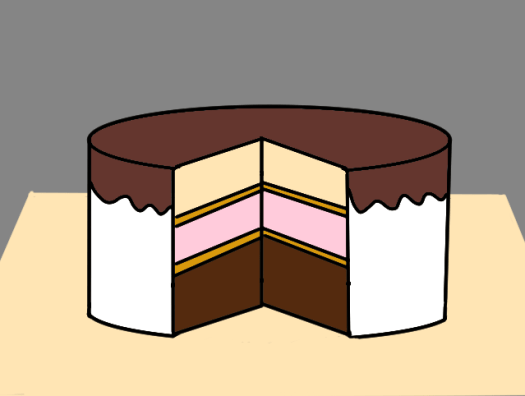
Could you bake a multi-layer cake with a topping and frosting?

I can’t even draw one properly…

But if you knew how to create the components of a normal cake and then you were able to add your spin and twist and design ideas – you might create something that stands out – something that has value for others.

A lot of people think that value is something you have or that you give in exchange for money.

Perhaps we should think of value as something that emerges from how you put together the underlying components.

My one layer banana cake has value – my children will eat it to get sugar fix.

But given a choice they’ll pick the one made by a baker who knows what he or she is doing.

So perhaps if you want to get into the business of creating value – you first need to understand what you need to do to be a professional.

And then get busy working.

Cheers,

Karthik Suresh

Here Are Some Of The Ways You Can Be Wrong About The Future

futurology.png

Monday, 8.22pm

Sheffield, U.K.

The future depends on what you do today. – Mahatma Gandhi

I am reading Bertrand de Jouvenel’s The art of conjecture which looks at how we try and predict what will happen.

How do we forecast possible futures – how do we come up with a vision, a conjecture – and then stop ourselves falling in love with it and believing that it will inevitably come true?

We do this kind of thinking all the time – from figuring out what to do next with our careers, our businesses and our relationships – to how we participate in society and politics based on our beliefs about what is going to happen.

We use lots of methods to do this thinking – many of them so automatically that we don’t question our approach to using them.

It makes sense, then, to spend a little bit of time thinking about how we think before we look at how we might think better – perhaps in the next post, so here are seven ways described by de Jouvenel in the book.

Let’s start with the concept of inertia.

Inertia is the tendency of something to keep doing what it’s doing.

If our local retail business has been growing organically at 3% a year since 2000, we think that is going to continue at about the same rate.

Things will be similar in the future to how they are now because things will keep happening in about the same way.

We’ll always commute to offices to work because that’s what we’ve always done.

Closely related to inertia is our tendency to use an analogy to explain what will happen.

The financial crisis in the 1920s led to a great depression and that’s what some people expected would happen in 2008.

But things didn’t quite work out that way and I suppose it’s too early to say exactly how they are working out.

Then there’s a view of what will happen as something like a journey on a railway track.

This model says that everyone is on a journey, some people are ahead of us but we’ll get there eventually.

That underpins the idea that developing countries, for example, will become as developed as developed countries – in time that’s inevitable.

If you’re running out of ideas, then the if-then approach works well to fill in the blanks.

This has to do with the idea of causality – that there is cause and effect.

If you do the things the same way they were done by someone else you can have the same results.

This is the mantra of the self-help industry. For example, because some people have made lots of money on the Internet, you can too by doing the same things.

Or you can be happy or thin or wealthy – just do what must be done and the result will happen.

At one extreme thinking in terms of cause and effect can take you down an avenue of positive thinking and the Think and grow rich schools of being.

Banish all negativity from your life, don’t listen to critics, believe in yourself.

At the other extreme is the person who believes that things are impossible because they just are, what de Jouvenel calls a priori – something independent of experience.

You believe it to be impossible and therefore it is.

It’s impossible to create a free encyclopedia.

It’s ludicrous to imagine a world without newspapers.

Chasms cannot be leaped – don’t even try.

But then someone builds a bridge and it’s suddenly possible.

A more complex approach looks at the world in terms of systems.

A simple approach is to say that things happen, which cause other things to happen which then affect things that happen.

When something feeds back into something else we get more complex behaviour – sometimes unpredictable behaviour.

You can build system models of lots of things – from the way communism should work to how to combat terrorism.

But somehow these sometimes overly mathematical models have been of little practical use in real situations.

But we like trying to use them anyway.

A final approach brought up in the book is to think in terms of forms.

Forms are about structure and hierarchy – there is natural size for a team, for example, or that the way you set up management depends on the size of your organisation.

All these approaches seem natural and we use them all the time.

It doesn’t take too much thought, however, to think of companies that don’t follow the norm.

Take the car industry, for example.

Who would have thought that the major automakers with their vast factories would be under pressure from lean Japanese producers?

Or that the future of car production seems to belong to Tesla.

It seems impossible to see how we could transition from a fossil fuel based economy to a renewable one – but have we reached a tipping point there?

But at the same time are we seeing the resurgence of a nasty kind of nationalism and despotic leaders – something that hasn’t worked too well before?

These ways of visualising the future come easily to us – and they are probably useful thinking tools.

The problem, sometimes, is that we believe our own stories – we believe that what we believe will come true and so we act as if that is what will happen.

what we should do is study the now – study what people say and what they do.

Because how the future turns out depends entirely on what we do in the present.

So what are you doing?

And is it good?

Cheers,

Karthik Suresh

What Should You Do When You’re Running On Empty?

running-empty.png

Thursday, 9.00pm

Sheffield, U.K.

The first virtue in a soldier is endurance of fatigue; courage is only the second virtue. – Napoleon Bonaparte

What do you do after a tiring day at work, or a few exhausting days out on the road, or at the end of a long shift?

Do you come home and flop on the sofa and get a glass of wine – have you given everything you have and now is it time for a rest?

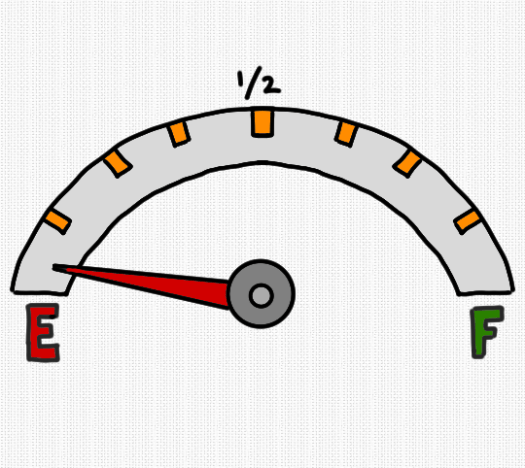
We all probably feel that way sometimes – feel that we’re running out of energy, out of fuel – and the needle is hovering close to empty.

Some people power on, pushing through the tiredness – willing themselves to keep going.

Others stop and rest, perhaps they give up and look for something easier to do.

Others are used to the ride – the roller-coaster of idleness followed by explosive, exhausting action.

Special forces soldiers, for example, eat when they can and take a nap whenever they can – because they know that it might be a long time before they can do those things again when on a mission.

Napoleon’s quote is interesting in that context – if you could choose someone on your team would you pick the most brilliant person – or the one who you knew could go the distance with you?

We all know people who are clever and capable but that are unable to shift their views when needed – they follow a set path and any variation unsettles them.

And then you have those who talk a lot and promise much but usually fail to deliver.

The people who make the cut in elite armed forces are often not the best or sharpest or quickest – but the ones who can plod away, taking step after step until they reach the end.

Being good at plodding matters.

It matters because if you’re the kind of person who needs to be fully rested, fully fed, with all the gear and tools and resources to get things done – then you probably won’t.

That’s often the problem with large organisations – they have the resources but not the people with the will to keep going.

A startup, on the other hand, has few resources and depends on the energy of the team – and not on mercurial, unpredictable energy but the focused, concentrated and undivided attention that comes with working on something you’re really interested in.

If you have tried to cultivate a daily habit – daily exercise, daily writing, daily meditation – you know how there are always forces that are trying to pull you off track.

Not intentionally – but there are fun things to do, people do see, things to watch – and surely you can just put it off for one day and take a break?

And that’s the problem with relying on willpower to get anything done.

Will power needs energy and if you’re tired and have had a long day your willpower is drained and you’re more likely to take the easy choice – order takeout and sprawl on the sofa.

When you’re tired what comes to your aid is not willpower but habit.

If you have created a habit then you’ll be able to get started even when the needle is pointing at zero.

You might have to take a nap but then you can get started.

The ability to endure comes from habit, not from will.

We are weak creatures, we humans – we get excited when things go well and we get down when we don’t.

And we can easily be let astray by the basic forces – just like you see with children all the time.

Tired, hungry, ill or bored – those are the things that get you every time.

If you’re tired, you’ll reach for the chocolate.

If you make a habit of not buying any – then you won’t have it.

Because what you need to get where you want is to know how you’re going to keep moving when you’re completely shattered and on the verge of being wiped out.

Because most of your competition will stop at that point.

You just need to take a few more steps – and you’ll be out there, in front, on your own.

Winning.

Cheers,

Karthik Suresh

Why Life Is Nothing Like Chess

kick-chess.png

Wednesday, 9.45pm

Sheffield, U.K.

Many leaders are tempted to lead like a chess master, striving to control every move, when they should be leading like gardeners, creating and maintaining a viable ecosystem in which the organization operates. – Stanley A. McChrystal

I came across something called Goodhart’s law recently, which says “When a measure becomes a target, it ceases to be a good measure.”

What this basically says is that when you try to engineer a result by creating a target people respond in a predictable way – they try and game your system.

You can see this most clearly in any sales activity.

If you set a target for the number of sales achieved, for example, then salespeople will do whatever they can to make that number – especially if it affects how much money they personally make.

And what you get usually is some kind of miss-selling.

For example, in one kind of industry it’s common for people to call up pretending to be a supplier or claiming that something is wrong and they need information from you to fix it.

They might pressure you into signing something that you don’t fully understand.

Now, if you own the company and have hired those salespeople and put in that kind of measure – then what do you think will happen?

In the short term they’ll hit their targets, you’ll pay their bonuses and they’ll be off.

But when the complaints and claims come in then you’re left to deal with them and pay the costs.

Unless you’re in on the scam as well and have left for another job leaving shareholders to pick up the bill.

Gaming is a completely rational response to managers who think that targets and pressure is the way to get things done.

Which is, oddly, the vast majority of managers.

If you look at governments – they do this kind of thing.

So do company bosses, virtually every network marketing business you can think of and even diet and exercise coaches.

Targets are good, they say, and let’s focus on targets to hit goals.

But, from what I have seen, there are two problems.

The first is that the people setting targets often have their own goals – target setting can be a way to deflect criticism of their leadership and performance.

Political leaders, for example, love to put targets on service delivery – like waiting times in hospitals – because it looks like they’re doing something.

They don’t care that their approach to target setting results in hospitals gaming the numbers to make sure they get their funding – while the actual service that patients get falls apart because everyone is too busy trying to meet numbers instead of doing their jobs.

Or actually – they do care – about getting re-elected.

The second problem is that focusing on one part of the problem almost never results in improving the overall situation.

Systemic improvement does not result from working on parts – it comes from making those parts work better together.

Gardening is a good analogy for this – as you tend weeds and put in plants that work well together – removing waste and improving performance.

Nothing in nature has targets – and it seems to work just fine.

Bees don’t need targets for the amount of honey they collect, for example.

They just work together and get what they need.

The basic mistake managers make is that they think life is like chess – if they put the right systems in place and the right measures – then they’ll get performance.

But actually people don’t do good work when they are afraid, when they are told that if they don’t meet a target they will not get their money.

Money is not a good motivator for anything.

People do good work because they want to.

And if you try and treat them like automatons, like chess pieces in your very clever game, you’ll end up with one very real problem.

You can move your pieces all you want.

A person can simply kick them over.

Cheers,

Karthik Suresh