Why we should first do as little as possible

prototype-then-polish.png

There are two traps we often fall into when developing something new:

  1. We try too hard to plan ahead and come up with everything we will possibly need before starting any work.
  2. We spend a lot of time making one part better and faster when it doesn’t help to make the overall performance better.

In software development the classic problem is one of requirements and specifications.

We usually don’t know what we need to do the first time we approach a problem.

It’s the process of engaging with and solving the problem usually helps clarify thinking – and when we have finished with our first solution we now know what we really need to do to solve the problem.

The idea of right first time simply doesn’t work when we don’t know what the right way is yet.

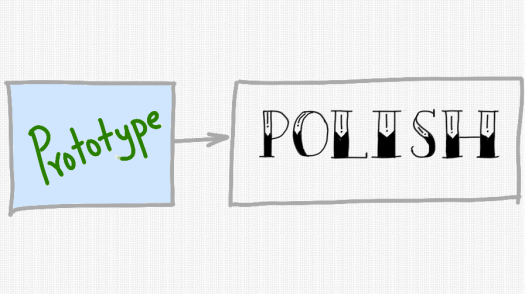
A better approach is to prototype our way to the right solution.

We ought to start small and simple – designing something we and others can understand.

Whether it’s a business process or a software program, once we can show others a working prototype we will be able to see reactions, get feedback and other useful information which can help us refine our ideas.

It’s also important we don’t get too fancy or try to locally optimise things.

Something very clever right now may be hard to understand in three year’s time by someone else, who might decide to throw out all our work and start again instead.

Local optimisation is the idea that we work very hard on speeding up one part of the process but miss the real bottlenecks in the system.

The overall time any system takes to work will be controlled by its slowest component. Making any other part work faster will not reduce the overall time.

For example, it doesn’t matter how fast we get ready in the mornings if the real bottleneck is how long it takes the bus to get to our stop.

We could be 20 minutes early – but it’s the bus time that will decide whether we are late or on time to work.

Our natural tendency, very often, is to try and do more – plan more, think more and have more.

In reality that leads to bloat – creating large unwieldy systems no one loves.

We would be better off following a few simple rules:

  1. Prototype then polish. Get it working first, then try and make it better.
  2. Doing nothing can be very constructive. Words that aren’t there can’t be read wrong. Code that isn’t written can’t fail.

If we must do something – then we should concentrate our time on the things that deliver exponential results, not incremental improvements.

Why we focus on our concerns instead of on users’ needs

conways-principle.png

Why is it that many systems – software applications, company policies, operational processes – are hard to use?

Take websites for example. How many company websites are structured in an easy to use, logical manner?

If we ask any company’s marketing team, they will probably say that their website is structured, laid out and easy to follow.

For them, that is.

This is an example of a principle called Conways’s law, which says that Any organization that designs a system (defined broadly) will produce a design whose structure is a copy of the organization’s communication structure.

In other words, the way in which we structure ourselves influences the systems we create.

For example, if we have two factories, one making bread and the other making jam, we are likely to advertise ourselves as having two product lines, the bread line and the jam line.

We’re unlikely to combine them and pitch ourselves to customers as the jam sandwich line – even though they might actually be looking for a sandwich rather than a collection of components.

This is a natural way for an organisation to behave – after all the way they look at themselves seems natural and normal – so why not show themselves to the world in that way?

Except to a user with little experience, it’s hard to work out what companies do, so they will pick the one that makes it easiest for them to understand.

The problem gets worse as we try and create bigger and bigger systems.

For example, a large software application that tries to do everything will find itself bogged down as it grows, constrained by previous decisions and choices about architecture and design.

One solution to this problem is to limit the size of teams – use multi-skilled individuals in small teams that have end-to-end responsibility for a product.

This is the principle behind work cells in lean manufacturing.

These teams tend to produce work that has clean edges and plays nicely with other teams.

Small teams are also fast – they can get together, come up with a plan, develop a product, test it and get feedback, and iterate and improve in the time it takes for a large organisation to do the paperwork needed to get permission to start.

Although, the size of teams is not a solution by itself – it simply produces systems that may be smaller, simpler and work more independently, and so be easier to scale.

The point is that our default approach when trying to design anything is to focus on what we think a user needs.

But, that thinking focuses on us – not on the user – who might actually approach the situation from a completely different point of view.

Perhaps that’s why some of the most useful tools have been developed by people who made them for their own use – they knew exactly what they wanted from the start.

How to create small changes that make a big difference

EAST-model.png

If we want to change our behaviour or influence the behaviour of a group of people around us for the better, what should we do?

In Inside The Nudge Unit, David Halpern describes how the Behavioural Insights Team in the UK government showed that designing policy using behavioural insights dramatically improves results and outcomes.

If we’re trying to do something – for example encourage more people to use public transport or corporations to invest in energy efficiency – we can use a simple framework developed by the Nudge unit to design a programme.

The framework can be remembered with a mnemonic – EAST – which stands for easy, attract, social and timely.

We need to start by making things Easy.

Just as water flows downhill, people are more likely to do something if it’s simple or the default option.

Anything that adds friction reduces performance – so we can remove friction to make things easier, or add it to make things harder.

For example, supermarkets now keep healthy snacks closer to checkout and sweets further away so that buyers find it easier to choose a healthy option rather than an unhealthy one.

Asking people to turn off the lights or the tap when they leave requires an action from them.

Making it the default through a sensor and switch or taps that open for a preset amount of time makes this easier.

Then we need to get their attention – attract them.

We can do this if we personalise information, make key points obvious, use trusted, authoritative or well-known people to publicise information and create incentives for them to act.

The key thing is getting people to have an emotional connection with the idea.

We are also more likely to do things if we see other people doing them – we are social creatures.

We look around us for guidance and confirmation that what we are doing is the right thing to do.

In many organisations, recycling is now the norm with segregated bins for different kinds of waste.

We need to make use of networks to reach out and use social recognition – awards, committments, promises – as ways to engage and enthuse people.

For example, people are much more likely to recycle when they see other people also doing it. Conversely, if they see others littering, they are more likely to do that too.

Finally, interventions work best when they are timely.

For example, the best time to work with organisations to improve energy efficiency is to engage with them at the point they are making new purchases.

That is when they can compare the purchase costs of different pieces of kit to the lifetime costs of owning and operating the kit.

If they can see that they save money over the long term at that point, then the are more likely to go for the better, more expensive option, rather than going for a cheap thing now that is more expensive and wasteful over the long term.

When we’re planning a change, whether at an individual or organisational level, we need to look at our plans and see how things might work out.

We are much more likely to be successful if we can tick off the four elements of the EAST framework.

The secret to making money

daily-profits.png

Every real businessperson I have met thinks about money in a certain way.

They break things down into what they cost on a daily or weekly basis and then see how much they need to make every day or week to be in profit.

For example, let’s say we wanted to start a taxi service and bought a car for £10,000 that will be run for 3 years – and it’s going to be worth £3,000 at the end.

A business person will think of that as £7,000 of capital spread over three years to make decisions.

The taxi might be in service 5 days a week, 48 weeks of the year for 3 years – that’s 720 days of operation.

So we need to make at least £10 a day to pay for the car. The stuff on top is profit.

It’s as simple as that – once we are making a profit, however, lots of people will want a bite of it – from the government to helpers.

But the basic principle is still just that simple.

Sometimes the more complex financial calculations that we do – from paybacks to internal rate of return – simply confuse the issue.

Especially when it comes to serious projects that have lots of moving parts.

For example, battery storage plus solar is all the rage now.

Around a year ago I made some notes from a podcast by Barry Cinnamon, who uses exactly this method to evaluate the economics of an battery storage plus solar installation.

It’s from 2016, and prices may have changed, but principles don’t.

We are currently going through an infrastructure upgrade process in the UK that staggering in its scope and scale.

We have ageing networks of wires, pipes, sewers, roads and railways, all of which are being upgraded or replaced.

And there are a myriad projects being chased by developers.

For projects in the energy business – it’s once again pretty simple.

There is a price per kWh of energy – and if we can buy it for less or sell it for more than that we can make a profit.

The problem is when we have very complex financial models that help us buy it for more or sell it for less.

As Theresa May (now probably wishing she hadn’t) said, there is no magic money tree.

But there are many, very real, money pits.

Which business model will catch the next wave?

surfing-model.png

Charlie Munger talked about competitive destruction – the process by which new businesses come along and destroy older ones – often built using new and different technology.

Being one of the first to market can be a good thing in this situation.

Using a surfing model, if a business can get up and catch the wave, they could ride it for a long time, making profits on the way.

Intel did it with microprocessors, Microsoft with desktop operating systems, Apple with smartphones and Google with search.

Products based on artificial intelligence (AI) and machine learning might seem good candidates for the next wave.

Take the way in which we use mobile phones, for instance.

Tools like predictive text have been around for a while – but phones are used for much more than talking or texting.

Navigation systems on them have gone from route planning to real time route optimisation, with suggestions on how to change routes in the middle of a journey based on travel patterns in the area.

Translation is another area being transformed by technology.

For gist translation – where what we need is an understanding of what a document says in a different language – the systems built into browsers and search engines do a remarkable job.

Machine learning may provide the solution to spam emails.

Microsoft Outlook’s clutter service means that virtually all spam type emails are filtered out and never hit the inbox.

Generic newsletter, marketing and sales emails simply can’t interrupt us any more.

Some of us don’t worry about scheduling or planning things – the entries turn up in our diaries and we can rely on our phones to tell us where we are going and when to set off.

These tiny changes to the way in which machines help to organise and optimise our days are happening in a barely recognizable way.

But they are becoming also becoming an inextricable part of how we go about our daily business.

These changes signal a groundswell that is expected to turn into a tidal wave as AI affects everything from law and medicine to transportation and sustainability.

The question that individuals and organisations need to consider is how they will fit into a world where work requires hybrid human-machine skills.

Why we should do more things that give us energy

energy-audit.png

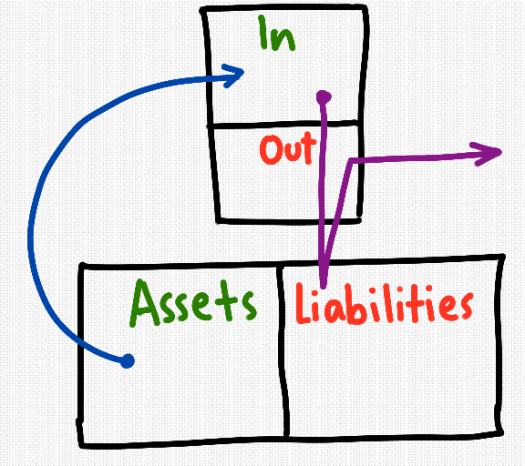
Robert Kiyosaki in his book Rich Dad Poor Dad has an elegant way to define assets and liabilities.

Assets put money in your pocket. Liabilities take money out of your pocket.

This isn’t the way accountants look at things – but it’s a good way for the rest of us to visualize where we should put our money.

Investing in a rental property that gives us income every month is good.

Buying a flash car that costs us hundreds in payments every month is bad.

It’s a clear and simple model that should increase how much money we have if followed.

We can tell what kind of financial health our life is in by looking at the pattern money takes as it flows through our hands.

If, when money comes in, we invest in assets and the money flows back into our pockets, that leaves us with more at the end of the day.

On the other hand if, when money comes in, we have liabilities, then the money flows out to pay for them and we are left with less when done.

And the same model, it turns out, can be used to think about activities that we do every day.

It’s a bit of a cliche – but even the Harvard Business Review is happy to use an article title like Manage your energy, not your time.

Our days are made up of rituals – things that we do from the time we wake up to the time we go to bed.

Some of these things are going to leave us with more energy than we started with.

Others are going to drain us of energy when done.

And, while it’s easy to fall into a victim mentality and argue that what we have to do is driven by the demands of other people like colleagues and bosses, recognizing the patterns that aren’t good for us is still the right starting point.

Like doing an audit.

There are a couple of ways to do this.

One approach is to log what we do over the day and then look back to see how our energy levels have increased or decreased.

Another is to make a simple list of things and give them a score.

Then it’s time to start making changes.

Usually this starts with creating new rituals.

For example, some people find their energy levels go up if they check email an hour after getting into work rather than first thing or in the afternoons.

Or we could do work sprints – 90-120 minutes of focused activity with a 5-minute break every 25 minutes followed by a longer break at the end.

We need to increase the number of rituals we have that are assets, which leave us feeling more energized when we are done doing them.

We might work on liabilities with high energy, but when we are done we’re drained – so we need to keep those to a minimum.

The last word on this goes to Scott Adams, the creator of Dilbert, who says –

Manage your creativity, not your time. People who manage their creativity get happy and rich. People who manage their time get tired.

Which path would you take?

small-steps.png

Edward de Bono wrote about a small but significant difference between the way we think about the physical and mental world.

Let’s imagine we had to build a staircase.

Would it look like the one on the left in the picture – or the one on the right?

Most people, in the real world, understand that small steps are the way to go.

But, when it comes to mental work, we try and take shortcuts.

Take investing, for example.

Tom Dorsey wrote about a colleague of his who said – Tom, ain’t but one way to make money in the stock market. Slowly.

Most of the people and businesses that survive compounded their value over time – they didn’t simply skyrocket to fame and fortune.

The recent falls in the value of cryptocurrencies, although there has been a rise again, have left some people feeling elated, and some despondent.

If you bought at $16,000 hoping to hold until it went up, $12,000 is going to keep you nervous for a while.

But, the prices simply reflect supply and demand – and someone who takes a position needs to be aware that buying a currency is not a one-way ticket to riches.

Over the last year, a fairly sensible trading strategy could have resulted in a 6x return on Litecoin. Around 6-7 trades would have turned $20,000 into $122,000.

If you knew how to do it, had the money, were willing to take the risk and had the discipline to monitor markets at least daily that is…

On the other hand, a much easier approach would have been to buy a selection of low cost index funds five years ago and then get on with life.

That would have gained almost 30%. That’s not a bad return either given where interest rates are.

The same principles – going step by step – apply to most of the knowledge work we do now.

People who create anything of value do so piece by piece over time.

It’s tempting to take a shortcut.

But a shortcut may turn out to be the harder path.

The story of Mr. Market

mr-market.png

Benjamin Graham, the father of value investing and Warren Buffet’s friend and teacher wrote about the kind of mental attitude that would be most useful for investment success.

Imagine that we own part of a business – a privately held one – and have a partner called Mr. Market.

Each day, Mr. Market comes into our office and names a price where he will sell his share of the business to us, or buy our shares of the business.

Our business might be in something quite normal – a restaurant, retailer, a professional services firm.

Mr Market, on the other hand, is anything but normal.

Some days he is euphoric, wildly optimistic, and the price he gives us is high because by selling to you he may lose out on future gains.

At other times he is down and depressed – unable to see anything but problems ahead – and names a very low price because he doesn’t want us to dump our shares on him.

The other thing about Mr. Market is that he comes back day after day.

He doesn’t take offence if we ignore him for a while – he’s always willing to offer a price to buy and to sell.

So, the question is would we sell to Mr Market at his prices? Should we be up when he is up and down when he is down?

That would seem very odd in a business we owned.

We would know the value of the business – how much it makes and is likely to make. We understand the costs and profits.

So, if we were to go through all the hassle of selling, we’d only do it when we felt like it.

We’d let the results of the business tell us how well we were doing rather than rely on Mr. Market’s opinion.

Mr. Market is there to serve us – to allow us to buy and sell when we want – and not to guide us and tell us when to do something.

Benjamin Graham also said – In the short run, the market is a voting machine but in the long run it’s a weighing machine.

The story of Mr. Market is a useful one to keep in mind when trying to make our own investment decisions.

What is the flippening and would you take a position?

ico-fear-greed.png

It’s hard to get one’s head around how currencies like bitcoin are changing things.

Two things exploded in 2017 – cryptocurrencies and Initial Coin Offerings (ICOs) and will probably get more attention in the weeks and months ahead.

Take the choice of cryptocurrencies themselves. New ones are being added all the time – so what should we be buying or selling?

Warren Buffett says that he wouldn’t get involved.

But, what he would do is buy a five-year put on every one of the currencies out there.

What that means is that if he could buy an option to sell a currency at a fixed price within the next five years, then he would buy that for every currency.

That means that he believes that in five years the price of all currencies would be lower than they are today.

So – should we take the advice of the legendary investor?

Well – the counterpoint is Arthur C. Clarke’s comment that if an elderly but distinguished scientist says that something is possible, he is almost certainly right; but if he says that it is impossible, he is very probably wrong.

Is the world a different place now? More like it was in 1971?

That was when the gold standard ended, and dollars were no longer pegged to gold.

All of a sudden, currencies could be whatever value they wanted and the total amount wasn’t linked to the amount of gold a country held.

With a fixed supply of cryptocurrency – the idea of a standard comes back into play.

What do those that are bullish on the space say then?

The idea behind cryptocurrencies is that they are fair – they take away the control of the large financial institutions and redistribute power to the community and network in a democratic way.

In a sense, bitcoin’s founder had the idea of one-cpu one-vote.

Where are we now?

Some Initial Coin Offerings (ICO’s) have staggering valuations – they raise millions in minutes.

In 2017, Gnosis raised $12 million in 15 minutes, OMG raised $25 million, and Qtum raised $15.6 million.

The latter two sold tokens at at around $0.30 which have gone up by around 40 times in under a year.

That’s an interesting return.

So greed kicks in – a new technology that looks like it’s going to take over the world, fast returns and the ability to lock in incredibly high returns.

On the sidelines we have fear – this doesn’t make sense and the valuations are not tied to any real world value and revenue.

Are investors – and there are a few who seem to take up most of the offering value – focused on making money from volatility rather than from the underlying business?

And is the basic business case the greater fool theory – where we can find someone more dumb to buy the stuff we hold?

Just the idea of a company being involved in this space is like giving it steroids. Kodak – a 130 year old company – tripled its shares after announcing it was going to start a currency.

Back to the title – the flippening is what happens as sentiment flips from one asset class to another.

It’s used mostly to monitor the possible flip from bitcoin to ethereum as the latter becomes more valuable.

Will 2018 be the year when there is a flippening from the dollar and stock markets to cryptocurrencies and ICOs?

Never send a human to do a computer’s job

human-computer-jobs.png

Why do we spend so much time doing things that could be automated?

Often, we’re too busy to spend the time to learn how to do things to save time.

And what doesn’t really help is the way in which software systems are evolving.

What is the single biggest problem many software vendors face?

It’s keeping us hooked – interested enough in their platform for us to come back to it again and again.

The apps that succeed are the ones that get and keep our attention – the more time we spend on them, the more addicted we are to using them – and the more reliable we are as a source of income to the owners of the software.

So, what does the current trend towards software as a service mean for us?

At one extreme there are some truly useful services – like Dropbox. That sits in the background and makes all our files available everywhere and really does increase productivity.

In the middle are a large number of so-so services.

Do we really need to store everything that we read in a cloud based notetaking system? Are platforms necessary for everything from bank accounts to electricity billing?

One argument is that it makes access easier – when everyone can sell on ebay then there is more choice and better value for consumers.

On the other hand, some services are designed to make it cheaper for the providers to do their thing and for users to do the hard work instead.

Service in this case really means self-service.

And that’s perhaps where some business models don’t work – where people want a service and are instead offered a self-service option.

The point is that they don’t want to do the work, they want it done by someone else or something else.

Most of us now probably have around 300 logins and passwords for various platforms but use a handful regularly.

The rest simply take up time and effort.

Perhaps the primary test for buying a new piece of software is not what it can do, but how much time it will save us.

A good starting point might be to select software that doesn’t have a login screen at all – no graphical interface to bother us – and which really does just sit in the background doing work that needs doing while we put our feet up.