How To Map The Stages Of Your Career To Date And Work Out What’s Next

stages-of-growth.png

Sunday, 5.20am

Sheffield, U.K.

And the day came when the risk to remain tight in a bud was more painful than the risk it took to blossom. – Anais Nin

We’re working through the second act of the Getting Started book project.

This is the last of three techniques to help explore the past and get some perspective on what you have experienced so far.

The first technique, lifelines, let you see the sweep and trend of what’s happened.

The second, defining experiences, asked you to pick out key events that have made you who you are.

And this technique, stages of growth, will ask you to take a hard look at the development of your career to date.

What stage of your career are you in?

This is not, as I have explained elsewhere, a book that promises shortcuts.

Transformation takes time and you should think in terms of decades, not weeks or months or years.

If something is easy to do then it’s as easy for someone else to do – it gives you no competitive edge, no protection, no defensive moat.

Those things come with time, with accumulating experience and creating artefacts and building proof.

And over a period of time, your own career will have developed.

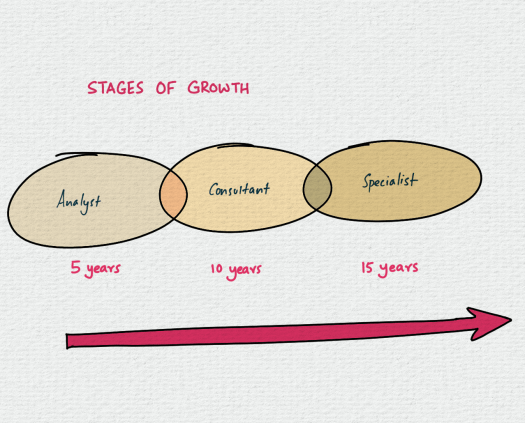
For example, let’s look at a typical knowledge worker’s career over a span of fifteen years..

The first five years are spent in learning about the field and doing analytical work on a customer’s account.

These tasks include carrying out research, documenting findings, creating analyses, creating presentations, dealing with queries and handling administration.

Most of the time you do what you’re told to do and, if you’re lucky, you get the chance to improve systems and processes and demonstrate your competence.

Over the next five years you might progress into the role of a consultant.

You now have the experience and understanding of workflows and how things are done.

Instead of having to be told what to do you can start having conversations about what needs to be done – moving from an task focus to thinking in terms of outcomes.

As a consultant, your focus is on delivering what the client needs, not completing a particular task – and the better you are at understanding their objectives and marshalling resources to deliver what is needed the more likely you are to get given responsibility and oversight.

Then, in the next five years you start to move into the role of a specialist, someone who is an expert in a particular area.

You may have your own team or operate with few resources and bring in others when needed – but you become the “go to” person when there is something that needs to be done related to your field of expertise.

Most people should be able to see themselves somewhere on this continuum, as they look back on their careers.

You can get started at any point

You can start a new project at any time in this timeline – but the way you think about it will be heavily influenced by what you know at the time.

Early in your career you will focus on the tasks you can help with – the specific skills you bring to the project.

The kind of business you may gravitate towards will be a freelancing structure working on a project basis.

Later in your career you will have a better understanding of the landscape and how what you do fits into what the customer does.

This gives you the ability to range more widely, creating value where you think you can.

Still later in your career you will focus on specific value creation, preferably as high as possible, to justify using your experience and higher costs.

But these will be dynamic times, filled with tension and difficult choices.

Early in your career you have less to offer but more flexibility and the ability to learn and change.

Later in your career you have more to offer but may also be getting more rigid in your thinking, less open to change, both professionally and personally.

It’s important to be clear sighted about where you are right now – because there is much still left to do.

Complete the model

Draw this model out for yourself, starting with three overlapping ellipses and adding as many as you need.

Work through your career and label the stages you think you’ve been through – use words that capture the roles and expertise you’ve developed over time.

Try and separate the stages so that they are clear in terms of growth, not title.

Going from a junior analyst to an analyst to a senior analyst may simply mean that you’ve become more competent at doing the same tasks.

Moving from being focused on getting a task done to being focused on what the client needs doing is a significant growth step in any career.

It the first step in moving from being self-centered to being customer-centered.

Getting Started

The important thing to remember the fact that you can get started on a new project at any time – but keep in mind that the next stage is likely to take another five years, regardless of which stage you’re in when you start.

Especially when what you’re trying to do is start a business or create a step change in your career.

That’s because in addition to doing what you do you need to learn how to sell what you do.

And that requires some deep thinking about the way in which you’ve changed people’s lives, which we’ll get into in the next post.

Cheers,

Karthik Suresh

What Do You Remember As The Defining Experiences Of Your Life?

defining-experiences.png

Saturday, 5.18am

Sheffield, U.K.

A little talent is a good thing to have if you want to be a writer. But the only real requirement is the ability to remember every scar. – Stephen King

In my last post we looked at lifelines – following the story of your moments in patterns of pencil.

Along the way we talked about noticing defining moments, events that played a big part in making you who you are now.

Let’s talk about those in more detail.

Think of three defining moments

The purpose of this exercise is to search for cause and effect – the events of the past that make you who you are today.

We’re looking for events that stand out in your memory, perhaps because of how they affected you, perhaps because of how they shaped you and influenced you.

Most of all, we’re looking for the events that have developed the things about you that are at the core of your being, the things that you can form a structure and business around that is centred and stable and ready for the future you want to build.

Get your thoughts down on paper

Start by drawing a simple figure in the middle of the page that represents you.

We tend to think in terms of cause and effect as flowing from left to right, so on the left, list a few things that come to mind.

You just need to jot down a few words that mean something to you.

For example, I’ve put down boarding school, books and unix.

Behind each of these words is a story – one that is important to you.

And each of those stories has led to making you the person you are today.

I Went to boarding school when I was eight years old.

That early experience taught me many things, especially how little actual things matter.

At the start of a term you have to put everything you need into a trunk to go to school and at the end of the term you have to fit the things you want to take home back in the trunk.

You get good at getting rid of things – at being frugal – at only keeping the things that matter to you.

Books have always mattered to me.

I was one of those people who was always reading and had another book in my back pocket.

I have found that books turn up when I need them with answers to the questions that I have.

And that has led to a lifelong interest in writing as a way to make sense of the world.

I don’t write for money or for fame.

I write because I enjoy writing.

My first dog was named unix, after the operating system.

My dad had just bought our first computer, an IBM PC/XT with only a floppy disk drive and no hard drive.

I helped create a database for a conference he was organising using whatever database software came on the disk, using the DOS command prompt.

Someone my parents knew had a dog which gave birth to a litter of dogs and I went to pick out one.

We named the pup, a little pointer, unix – I guess because computers were in the air at the time.

Around ten years later I discovered GNU/Linux and I am writing these words in a unix environment.

And it’s an environment that enables problem solving, where your computer works with you to help you tackle things rather than, as most commercial systems seem to do, prevent you from getting things done.

You will have very different words and very different stories – and you may share some of my interests or have very different ones.

But they will be, they must be your own – because you have to start getting clarity on your own story if you are to build on it.

Why are these stories important to you?

These stories are important because you can go back to them and remind yourself that at your centre is a hard core, formed early in life.

This is a core that has been compressed and hardened a steel ball that you can build around.

These core experiences have defined and set the way you look the world – they are the reason for the perspective you take and the approaches you prefer.

They help you decide whether you should face obstacles head on or whether you should go around them.

And because they are what you’ve lived through it’s hard to see them for what they are – you’re inside them.

Step outside the circle

Take another look at that drawing of you on the page.

You’re looking at yourself from outside, seeing yourself on the page and the experiences that went into you and the characteristics that define you now.

Is this a picture you are pleased with, one that you can live with, one that you can build on?

Or are the experiences negative ones, are the outcomes ones you would rather change?

What next?

The end result of this exercise and all the others in this book is not about getting to some magical end point where you will find riches and contentment.

It’s about getting started on your journey, whether that’s building on the good that has happened so far or picking yourself back up again after the bad.

It about you, where you are and what happens next.

If the person in the centre of that image was a friend, what would you tell them to do?

Nothing yet, perhaps.

We’ve looked at lifelines, and at defining moments.

Let’s try a few more exercises first before we come to any conclusions and the next one to consider is stages of growth.

That’s in the next post.

Cheers,

Karthik Suresh
How To Map Your Lifeline

range-of-lifelines.png

Friday, 5.22am

Sheffield, U.K.

The path to our destination is not always a straight one. We go down the wrong road, we get lost, we turn back. Maybe it doesn’t matter which road we embark on. Maybe what matters is that we embark. – Barbara Hall

In the next few posts, as we continue with this Getting Started book project, we’ll look at different ways to map your past and squeeze out some insights.

Let’s start with a lifeline.

Drawing a lifeline

You’re probably aware of palm reading – the idea that the lines on your palms have something to say about your life in general.

One of those lines is called a lifeline.

Let’s use that idea of a line that represents your life to take a first pass at what’s happened so far.

Get a pencil and some paper and let’s get started.

The point you make when you first touch your pencil to the paper is when you’re born.

What’s happened since then?

Were you born into a rich or a poor family, or did you have no family at all?

Did life get better – did you have a warm, safe home and all the things you could want – or was it a difficult childhood.

Let the pencil make a record, as you run the past through your mind, going up and down as things get better or worse.

Was school good or bad, did you enjoy it or did you feel like an outsider, someone who didn’t fit in.

Keep going, playing back memories, and changing direction at key events as your life improves or becomes worse.

And stop when you reach the present.

What does your lifeline look like?

Every one of us will have a unique lifeline, the experiences accumulated over our lifetime.

But there may be patterns, the kind of patterns you see around you when you take the time to learn about other people and their lives.

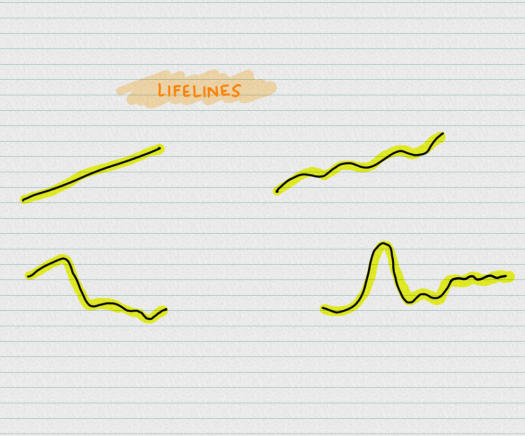
Some might have had a very steady improvement – from being born into the right family to having access to opportunities and taking advantage of them.

In many cases, you have ups and downs – good experiences followed by bad ones – but as you learn from the bad ones and build on the good your life becomes steadily better.

Then again, maybe it’s not good news. Early tragedy or misfortune pushed you down and has kept you down even when you tried to change things.

Or you’ve had early success and an equally spectacular fall and have spent much of the intervening time since then trying to recapture some of that lost glory.

Why is a lifeline useful?

A lifeline is a very simple way of compressing your experiences into a compact image that you can critically evaluate.

Right now, at this very instant, you’re at the end of the line.

Every instant before that, each mark making up the whole line, has led you to where you are now.

It is your history, your story – and where you are now and why you are who you are now is captured in those up and down marks on that sheet of paper.

You could annotate the line if you wanted with the main events that make it up but you don’t have to, especially if the memories aren’t great.

Just drawing this line and looking at it is a start – a way of facing your past instead of hiding from it or glossing over it.

This is what is there and this is what you have to build with.

And maybe it’s amazing and you can go on to great things or it’s not so good and you have some rebuilding to do – either way you’ll get a sense of what you’re up against.

And some of these points, the ones that turn, are defining experiences – the times that have made you who you are today.

Let’s look at what that’s created in the next post.

Cheers,

Karthik Suresh
Why You Should Look To Your Past For The Way To Build Your Future

past-as-source-of-truth.png

Thursday, 5.19am

Sheffield, U.K.

Study the past if you would define the future. – Confucius

I’ve worked through the first act of my Getting Started book project which looks at where you are right now.

The next section looks at your past, where you’ve been and what you’ve done so far before we move to the future in the last section.

The past is something you can understand

If you want to really understand what someone will do in the future, the best way to do that is to ask them what they’ve done in the past.

The past is a place where you’ve passed through. one that you’re familiar with.

You have memories of the past.

And these are important, the story of your past – your history – is the most valuable thing you have right now.

The word history comes from an ancient Greek verb for “to know” – and brings together methods of collecting information, organising it and constructing a narrative.

This is not an easy task – a narrative can be a list of facts or it can weave together myth and truth or it can be manipulative, a retelling of history to suit the point of view of the person telling the story.

Think of how this works in a business setting.

How would you present yourself at an interview?

You’d probably send in a resume or CV, which would be a list of facts – where you went to school, your work experience, your accomplishments so far.

When you go for an interview you come out with stories, with narratives about your past.

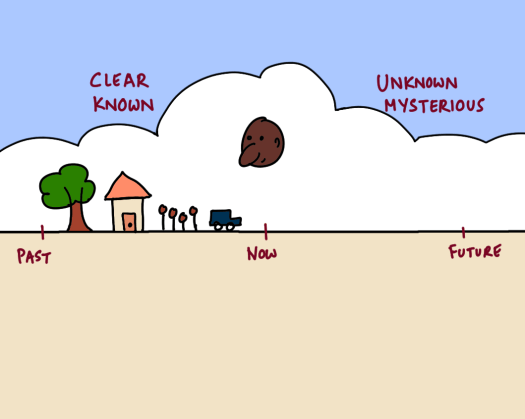
The past is where you go to when you look for certainty and truth – it’s clear and known.

Or at least, it’s a plausible story that you can believe in.

Why don’t people just believe in you?

The next time someone is trying to persuade you to do something, listen to how they speak.

If they’re not too experienced at sales, they will probably be passionate about the future.

Listen to a founder talk about the business – there will be lots of sentences starting with, “You could do…” this or that with our product.

There’s a lot of fantasy in such statements, and the problem with them is that they are fantastical – they’re imagined possibilities.

And no one really believes in fantasies.

Especially if they are your fantasies.

We know instinctively that the future is uncertain

The problem is that we know in our gut that the future is unknown and mysterious.

There are a million possible futures that could be potentially realised, and who knows what’s going to happen.

Whether we say this out loud or not, what we really want from the future is the past but with better benefits.

Few people walk around asking for their businesses to be radically transformed, looking to create huge changes in the way they operate, or invest in huge ideas that could change everything.

Mostly, they want certainty and a few improvements.

Think about the way in which your other half will react if you come to them with a business proposal.

One is based on a get-rich quick scheme based on trading international properties that you’ve just learned about in a small room in a hotel.

The other is based on starting an independent firm based on the job you’ve been doing for the last ten years.

Which one is more likely to get a sympathetic hearing?

Which one is more likely to put food on the table and a roof over your head?

The past is what others can believe in

If you want to persuade others stop talking about the future, about what you can do, and talk about your past, what you have done.

You have probably done more than you realise.

There are skills and experiences and capabilities you possess right now that can help you in the future, if you list them, organise them and enlist them in the service of your cause.

There are also the realities and constraints of the past which will restrict what is possible in the future.

You have to understand these and work with them to build the future you want.

We all have different histories to start with – some are scarred, barren landscapes while others are lush, verdant pastures.

Nevertheless, they are our histories – and we must look at them before we can move forward.

The next series of posts will look at how to understand your past so that you can build a better future.

Cheers,

Karthik

What The Freemasons Can Tell Us About Building A Business Or Career

principles-of-building.png

Wednesday, 5.23am

Sheffield, U.K.

May the Great Architect of the universe enable us as successfully to carry out and finish this work. May He protect the workmen from danger and accident, and long preserve the structure from decay; and may He grant us all our needed supply, the corn of nourishment, the wine of refreshment, and the oil of joy, Amen. So mote it be.Masonic Order prayer, Wikipedia

I’m nearly at the end of the first act of this. Getting Started book project

If you’ve been following along, what we’ve been doing so far is understanding where you are right now – because that’s the place from where you start.

What happens next depends on two things.

The foundation you start with and the structure you build.

So, to wrap up this first act let’s look at the idea of building and see what we can learn from it.

The foundation stone

What do the words “foundation stone” bring to mind?

I thought of it as something like the first brick, one that starts everything off.

But, it is much more than that.

It’s also called a cornerstone and in addition to being the first it’s also the one used to decide where every other stone goes.

The entire structure that’s built afterwards will be positioned with reference to this stone.

So, it matters. It’s important.

And it leads to the question – how will you lay your foundation stone?

What you’re trying to achieve

The Masonic prayer that starts this post sets out everything you need to keep in mind.

It asks for God’s help to start the work, carry it out successfully, have the resources needed to do the job safely, finish it, and build something that will endure over time.

Is there anything else you want for your project?

This overarching principle, expressed as a prayer, captures the essence of what you are trying to achieve when you get started on something new.

But, to actually get your build done, you need to do two things.

You need build on sound foundations, on ground that will support the structure you want to create.

And you have to have a clear idea of the structure you want to build, have a design that you’re going to try and make real.

When it comes to business that means you have to do two things.

You have to look back at your life and experience so far because that’s the foundation you will build on.

Then you look forward, create a design for the future that you want to build

Then you get started by laying the foundation stone, the one that will determine how the structure you build will be positioned.

And, of course, you want to build something that’s going to be of use, that’s going to be valuable for the rest of your life – because you’ll be around to see it and it’s something that you want to be proud of.

The importance of rituals

The laying of a foundation stone has, over time, become a ritual act.

That’s why there is a prayer and a ceremony.

And this makes sense, when you think about it.

When you do something as important as positioning the first stone, you need to get it right.

And you get things right by paying attention to the details, by focusing on getting it right.

And what better way to do that than in full view of everyone, under scrutiny.

In that situation, everyone involved wants to get it perfect, and will check and double check everything that needs to be done.

In the Freemason ceremony they check and declare that the foundation stone is “duly and truly laid.”

I’m not suggesting that you start your project with a prayer.

But, having some rituals makes it easier to get started.

For example, when you’re writing it’s hard to start with a blank page.

One of my rituals is to start with freewriting – getting down three paragraphs of anything which I’m not going to use anyway.

Once that’s done the words I’m going to use start to flow more easily.

Whether it’s going into an office, the morning cup of coffee, working in the same place every day – all the small habits and rituals make it easier to get started on your project every day.

And it’s with these small acts that you will eventually build the grand structure you have in mind.

But before you do that we have to check the ground you’re building on.

We’ll start looking at that section next.

Cheers,

Karthik Suresh

Do You Know Who Your Ideal Customer Is And What They Want?

who-are-you-making-things-for.png

Tuesday 5.16am

Sheffield, U.K.

The aim of marketing is to know and understand the customer so well the product or service fits him and sells itself. – Peter Drucker

I said that I would start looking at risks in my last post and perhaps a good one to start with is the risk of spending time and effort making something for which there isn’t a market.

In this post we’ll look at why you’re doing what you’re doing and if its time for a rethink.

Three big reasons to make a thing

Most of the business ideas that I have come across seem to fall into three categories.

First there are the people who build something for themselves – they “scratch their own itch.”

Then there are the people nwho know there is a market out there for what they’re creating – they just need to get in front of the right people.

And finally there are people who create for a market that they believe exists out there – and they construct an imaginary person, a persona or archetype to focus on.

There are pros and cons with each of these approaches so how do you work through where you are and increase your chances of success?

When you are your own customer

When you make something for yourself, the good thing is that you know there is at least a market of one.

Many great ideas start off this way – people creating products and services because they need those things in their lives.

The iconic example here is Apple.

Steve Jobs had a vision of the kind of portable computer he wanted and that eventually became the family of products which include the iPad and iPhone.

The great thing about this kind of approach to getting started is that you already know about yourself, you know how you see the world and what is missing there.

If something isn’t working, something could be better, something would make life simpler – that is something that you could work on as a project.

Eventually you’ll end up with something that works for you – and you might even end up creating something that works for many other people.

Something they want and are willing to pay for.

And find that you’ve created a viable business along the way.

Tapping a market you understand

The second way of getting started is to build for a market that you understand really well.

Rather than thinking of that group as a market – which brings up images of a place where transactions happen with no connection between buyer and seller, think of it as creating something for a community – people that are held together by things they have in common.

The key thing to have when you are creating for that community is empathy – you have to be able to see the world the way they see it.

The easist way to do this is if you are part of that community already, if you can see what’s needed and go about fixing it.

Inside a company, for example, this might be what you call an intrapreneurship role, where you create something new from inside the group.

If you aren’t part of the community they you need to learn about the way they see the world before you can really help.

You have to talk to them, participate in their world and you will then start to build a model of what you think they see.

And if what you see matches what they see then what you make has a chance of being what they need and are willing to pay for.

Building for an imaginary person

Now, most people will argue that they’re creating something for one of the first two reasons – for themselves or for a defined market.

But it’s easy to fool yourself sometimes.

For example, a big part of marketing is segmentation and targeting.

This is all about working out your ideal customer – creating an archetype and persona and listing out demographic attributes, psychographic attributes.

Or, more simply, just saying something like, “Everyone is going to want this.”

I think this leads to two kinds of errors.

The first is to create a glossy, glamour magazine style picture of your consumer.

This is inevitably shallow and biased – based on the media and images that tend to dominate what we see.

The second is to pull together a bunch of factors that make sense in isolation but don’t work so well when you put them together.

A sort of Frankenstein’s monster of a customer.

You might think that this is an exception, but it’s often the first thing many people do.

They create things that they think people will want.

And crucial word is “think” – you can spend a lot of money on something you think is needed before you realise that you were wrong.

Know, don’t think

The way to improve your chances of succeeding is to move from thinking something needs to existing to knowing it does.

If you’re building for yourself, then it’s relatively easy – you can make it, use it, see if it makes your life better.

As long as you don’t fall in love with the idea and can stay somewhat objective you’ll end up with something that might have a future.

If you’re building for a market that you either already know well, or take the time to get to know well, then you’re going to be able to make something useful for them.

The final category is the dangerous one – the one where you spend time because you think or believe that something should exist.

This is the tragedy of the inventor who makes something that no one wants or needs, right now anyway.

And the key to changing this is developing empathy, seeing the world the way someone else sees it.

When you see the world the way that your prospective customer sees it, then you’ll be able to build something that fits into their world – something they want and are willing to pay for.

Cheers,

Karthik Suresh

Click here for the video behind the post

How Does Money Help You When You’re Getting Started?

how-to-spend-money.png

Monday, 5.23am

Sheffield, U.K.

Making money, it seems, is all about the velocity of moving it around, so that it can exist in Hong Kong one moment and Wall Street a split second later. – Richard Dooling

In my last post I looked at how taking the time to understand your customer’s customer could help you create a better sales pitch – one based around how you could help them rather than what you could sell them.

I said I would look at risk next, but before that I think I want to look at money.

Your and my money.

And I want to just see how we go about spending it when we’re getting started and whether the way we do that makes sense.

How can you spend your money?

There are many ways to lighten your wallet, but only a few of them result in money coming back to you as well.

It seems to me that there are three good ways and a whole bunch of not-so-good ways.

The first three have varying chances of making a profit while the remainder will usually lose you money.

Let’s see why and how.

Spending on production expenses

One of the conclusions I have come to while writing this blog is that we should start thinking of ourselves as producers.

If you think of yourself as a creative or a writer or a photographer – then you’re thinking about things in terms of what you do.

The only problem with that is no one really cares about you – even your immediate family – who have to pretend like they are interested, but what they’re really doing is waiting for you to finish talking so they can talk about their problems.

I think that when you go into a situation and talk about yourself – your skills, track record, ambitions – people are really not listening at all.

But they get interested – sit up and become alert – when they hear about what’s in it for them, how it relates to what they do and want and are interested in.

If you really want to get their attention you have to start thinking in terms of what they are interested in.

And if you also want their money you have to think in terms of what you’re going to give them – what actual “thing” are you going to hand over.

And then you have to produce that “thing”.

Which is why production is a good mental model for this kind of work – your task as a producer is to take resources and transform them to produce the thing that your customer needs.

Now, this works if you’re your own customer.

If you want to be something – a writer, an actor, a businessperson – then all the thinking in the world will not help.

You have to produce words, acts and products to improve your craft and create a market for your work.

In this kind of situation what you have to do is match your costs to your income, to revenues.

When you have no revenue, keep your costs low, spend as little as possible and focus on producing what your customer needs.

As you start to sell and the revenue comes in, you’ll start to make a profit.

But still, you’re best off investing money only when it’s helping you produce that “thing” your customer wants.

Unless you’re getting something else out of the process.

Test and learn

The one exception to spending money to produce something is when you’re focused on also learning something.

We usually don’t know exactly what needs to be done when we get started on a new project.

There is a period of trial and experimentation and finding out what works and what doesn’t work.

This can take a while – and it will not always make money.

But it will almost always produce learning, if you’re looking out for it.

In this model you’re putting money into a project in the expectation that revenues will come in and you’ll make a profit.

But if you don’t, that’s ok because you will also get some learning out of it.

But you would be wise not to try and get things perfect at this stage – learn to live with imperfections because you can always get rid of them when you’ve learned what’s going to work.

Paying for success

Another spending model you will come across all the time is a commission model – where you pay for success.

The simplest case is when you pay someone for an introduction that later generates some business.

There is usually little or no up front cost but you do have to give the person a share of any income you make as a commission.

What you’re paying for here is a leg up, a little bit of help in climbing a wall, finding that customer, making those sales.

That’s an old and perfectly justifiable way of doing a deal.

Except when it’s not.

There are many business, with financial services among the most egregious, that take commissions on transactions without creating value.

That’s because they make money on the number of transactions that happen – not on the value that is created for you or your customer.

The difference is not always clear cut.

Take estate agents, for example.

If you pay them a commission on sale, are you paying for success?

Well, it turns out that agents aren’t interested in what you make – they want a sale to happen as quickly as possible – because that’s how their incentives work.

You’re better off paying for what they do for you – advertising your property and showing it – rather than linking it to the sale.

Production costs rather than success based commission, in other words.

But as you can see the distinctions get hard fast.

Which is why hoping and praying is a big thing

All the other ways of spending money seem to fall best into a hope and pray category.

Advertising and marketing can be viewed as test and learn in some cases but all too often it’s hope and pray.

Every single get rich quick scheme is in this category.

As are all the ads you see for whatever magical course is on your media feed for the day.

Not for the people promoting the scheme, of course – for them these are legitimate production cots, or a test and learn model.

But if you put your money into something hoping for a fast return, then you’re in this camp.

And the one thing to realise is that if you don’t fully understand how it works then you’re best off staying far far away.

Put your money to work in the right way.

Focus on what you get

The first three ways to spend your money produce something.

They produce a “thing” that people want, learning for you or sales and results.

They also keep you costs low – which is crucial when getting started on any project.

And they help speed up the process of getting results – another crucial element.

But what you have to do is learn to recognise the ways that don’t do that – that trip you up, cost you more and waste your time.

Those ways you have to avoid – you need to see the risks and get around them.

If you can’t manage your own risks, how will you manage them for your customer?

We’ll carry on with this topic the next time.

Cheers,

Karthik Suresh

You’ll find the YouTube version here with some additional hand-drawn footage.

Why You Really Need To Understand Who Is Your Customer’s Customer

who-is-your-customers-customer.png

Sunday, 5.57am

Sheffield, U.K.

When you’re thinking about your next product or current product and wondering how to make it different so you don’t have competition, understand the job the customer needs to get done. – Clayton M. Christensen

In my last post I looked at the basic business system of leads, first sales and operations, which lead to repeat business and ended by saying I’d look at how you can supercharge your sales conversion.

You do this by answering one simple question.

We’ll look at that in a minute, but first…

What do most people think selling is all about?

The image we have in our minds when it comes to selling is one of pushy sales people pressuring us to buy something.

We’re often suspicious, we doubt what they say, and we’re right to do that – because there are so many industries that create selling systems that incentivise that kind of behaviour.

Sales is seen as a role for people who haven’t got technical or academic skills but who are good at reading people and guiding them down a certain path.

This kind of thinking, when it comes down to it, sees customers as not very intelligent creatures, the kind of beings that can be directed into a maze that you control and be led down a path that you want them to take.

Just think of the movies where this kind of manipulative, master salesperson is portrayed, Michael Douglas in Wall Street, with the line, “Greed is good” and Leonardo di Caprio in the Wolf of Wall Street.

But the reality is that the smooth-talking, shiny-suited sales person of those days was probably a myth then and is less and less relevant now.

It only worked when they had an information advantage – they knew things the customer didn’t know.

In a world where information is everywhere, you need to operate differently.

Rather than trying to get the customer to see your point of view, you have to put yourself in their shoes – see what they are trying to do and show how you can help them.

This usually starts by looking at how your product or service can cut costs for them.

We can reduce your costs – it’s a no brainer.

As a reminder, these posts are aimed at business to business companies on the whole – and that is where this particular question is especially important if you want to get your sales conversion up.

No business wants to add to its costs.

Every decision they make has to be justified by a return somewhere, maybe not right now, but that has to happen over time.

The biggest mistake most people make is coming up with a product and offering it to a customer without first looking at the impact across the whole piece.

This is especially the case with technology solutions.

Let’s say you come up with a machine that cuts production costs in half for your customer.

Now that this invention is in the world, if your customer buys from you they’ll save loads of money.

Right?

And if they save loads of money, they’ll have higher profits.

Right?

Well, no. Not really.

What happens is that those reduced costs flow through to the customer in the form of reduced prices.

This is obvious when you take a second to think about it.

If and your competitor have access to a technology that cuts your costs in half, then if they want to take business from you, the easiest way is to drop their prices.

If you keep your prices high, eventually your business will move to your competitor.

And so you drop your prices, they drop theirs – and eventually the prices you charge fall to the point where you cover your costs.

The profit in that situation evaporates, passed along as a lower price.

That’s economics in action for you.

It works – overall, the system is better off.

But you are no better off with the new technology than you were with the old.

In fact, it makes sense to let other people go first, spend the money to try it out, see the results and then go with an option that you know is going to work.

This is why, when you sell on a cost-reduction pitch you get so much resistance to your “no-brainer” model.

It’s because your customer knows intuitively, even if they aren’t aware of the theory, that these no-brainers rarely work out.

That’s why they ask for things like a 2-year payback, because they know that those longer-term projections rarely pan out and at a minimum they want their money back.

This is why you need to really understand what they are trying to do with their customers, to see if your product or service adds value or not.

Who is your customer’s customer?

Which brings us to the point of this post – try and understand who is your customer’s customer.

Let’s take a video production firm as an example.

I’ve used this before to talk about how become better at audio and visual content creation is going to be essential for everyone.

And as I watch friends and connections building their businesses I can see clear trends emerging.

Early videos that people put out are often advertising – they follow a case study model and do some showing and telling.

But this is usually expensive, a full shoot takes time and resources and so you can only do it so many times before you can’t afford it any more.

So people then shift to self-generated content, using phones and webcams and putting stuff out there which is a talking head, and they learn how to add subtitles and transitions and make it look good.

If your pitch, as the video production company, is all about how you have all these resources and can get an amazing video done for much less than the customer can do themselves, you’ll get some interest.

But what if you looked a little further, to what your customer is trying to do in the first place.

You’d see that the purpose of the video is not to showcase your customer, just talk about how brilliant they are, but it’s part of a move towards communicating more, putting out more stuff that helps your customer get in front of their customer enough times.

As Marshall McLuhan puts it – the first view someone has of something is cog-nition – they first become aware it exists.

Then, when they see it again is re-cog-nition, a replay.

And what your customer wants their customer to do is recognise them – re-cognise them, when they’re in a situation where they are looking for a supplier for that thing they want.

In that sales situation, you could go in with your generic pitch about costs and times and case studies.

Or you could do some research into your customer’s customers, see how the competition currently target that sector, and the methods and tactics they use.

You could assess where your prospect is right now, in terms of how well they use video.

You could go in with a pitch that shows how they’re faring against their competitors right now, show them how you could get them started with some more expensive but high end videos, and then sell them the kit to do the videos themselves, if they wanted to, or put in a package where they record content and you put it together.

You have a conversation around what they’re facing, what their customers want, what they’re trying to do.

And you will find a way to help – a place where you can fit in and add value.

When that happens the only things that remain to be settled have to do with whether the customer has a budget for what you do.

And they will be more comfortable about doing this because you’ve both figured out how you can add value rather than you pitching how you can cut costs.

Now, there’s an entire book in the art of having that conversation, but really, it comes down to listening, asking questions and empathising with your prospect.

But to close that sale it’s not enough to do all this.

You also have to figure out how to remove risk for your customer.

We’ll look at that in the next post.

Cheers,

Karthik Suresh

p.s. If you want to listen to a discussion of this post I’m starting an experiment in reading and critiquing the content straight after I’m done.

You can find the first of these on YouTube here.

I’m not sure where this will go, and whether you’d rather listen to a 17 minute video or read a 1,300 word piece.

After all, if you’re really busy the entire message is in the picture.

The rest is all commentary.

What Does Your Business System Look Like?

leads-to-sales-and-back-again.png

Saturday, 5.35am

Sheffield, U.K.

You are not getting because you are not giving. For example, you can get sales orders only after you give attention, admiration or information first. – Meir Ezra

In the last few posts, as I continue this Getting Started book project, I looked at how what you can do is limited by your resources and how you should then do what you can do in a way that creates value for your prospective customer.

You’re doing all this to get a customer, and so the earlier you start thinking about that customer acquisition process the better.

What does the basic cycle look like?

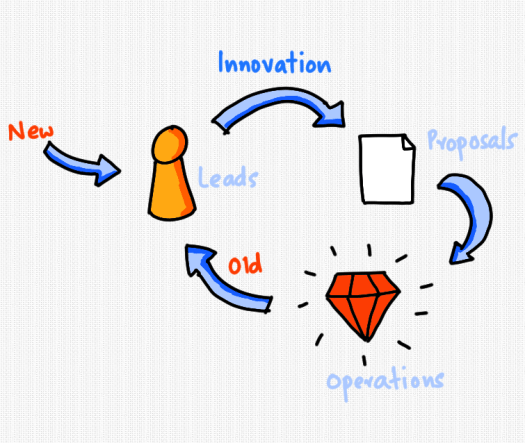
First you need a way to get new leads – and this is the first element of the venerable marketing model AIDA, which stands for attention, interest, desire and action.

How do you get the attention of the kind of people who will be interested in what you do?

It’s easy to start by saying that everyone will be, or should be interested.

That kind of approach always leads to a vague, general message that rarely gets any one person’s attention.

The more specific you are, the more you limit your market but it is also more likely that the people who will eventually become your customers will notice what you’re doing.

The next thing you need to do is develop that initial interest into a contract for services – and this is where being innovative helps.

All that thinking you did previously about what makes you different will help you here.

But innovation isn’t just about what you do – it’s actually more about what the customer needs.

And the way you have that conversation is going to make the difference between getting to a signed proposal or losing the customer.

Once you’ve gotten a customer you have to do what you said you would do – deliver value through operations and make sure they get a lot more from you than they’re paying for.

When you do that you’ll start to build a base of happy, satisfied customers who come back to you and give you repeat business – and these old leads will turn into the long tail, the bulk of the value you create over time.

This is a very simple cycle and most business get every stage badly wrong much of the time.

Why do we fail at doing these simple things?

The main reason we struggle to make what looks like a simple system work is that just because something is simple to understand that doesn’t mean it’s easy to do.

Unless you’ve lived through a startup, the chances are that your own expertise sits in only one of these spaces.

You may be very comfortable doing marketing, or good at selling, or great at crafting proposals or an amazing operator.

But that’s the role you play.

Imagine a scene on the Starship Enterprise, with all the characters doing their assigned roles and the Captain orchestrating and making sure that every one does what they should do.

That kind of smooth operation is only possible when you know what you need to do – travel there, escape that attack, fix that problem.

That entire system of people and machinery actually does quite a simple thing.

Your business, however small, actually has a much more complex task overall – to acquire and delight customers.

And it’s not surprising that people with expertise in a role fail to see what needs to happen as a whole.

People tend to believe that because they are smart at one thing that means they are smart at everything.

That leads to a number of mistakes.

First, people tend to optimise locally without making any difference globally.

What that means is that you could spend a huge amount of money building the best marketing system but your sales conversion could be useless, or your operations less than perfect.

Those leaks in your system will cause customers to flow away, often faster than you can bring in new ones.

So then you have people blaming each other and most of the time goes in infighting and turf wars.

In such situations the only way to make decisions is through the use of power – whoever has the power makes the call regardless of their competence in that area.

These dynamics are invisible to most people and even those who are a part of the business will only see a part of this.

The most visible parts of a business are the marketing and sales content and the operational delivery.

But all around you, hanging in the air, are the effects of culture and politics – and although they are as real as the things you make few people acknowledge they exist or take them into account when making decisions.

How can you change that?

Most people don’t – they work harder and struggle and get stressed.

That’s why most business people and most managers are increasingly tired and exhausted as they grow their business and operations.

But there are a few simple ways to make things easier.

They are, however, counter-intuitive and you will struggle to implement them in most organisations.

But that’s ok – it gives you an edge when you’re getting started.

The first is to do less – just stop doing a whole bunch of things.

After all, you can’t get something wrong that you don’t do at all.

Most people believe that the way to fix a problem is do implement a correction – do something to make everything better.

Few people ask whether they need to do the thing that cause the problem at all.

The way to decide what to do and what not to do is to focus on things that add value to the customer.

Throw away anything that does not directly result in improved quality and value to your customer.

That means things like internal reports, busywork, pointless analysis.

But, you argue, surely it’s important to be prepared, to have all the facts, to do your research.

I’d argue that it’s much more important to spend that time with your prospect, giving them your attention.

If you do that well they will tell you all you need to know about what they need – and then you can give them that.

And that reduces what you have to do.

Once I got better at doing this I went from writing 20 page proposals about how good I was to writing a one page proposal about what I could do for them.

I spent less time writing, they spent less time reading and the conversion rates went way way up.

What next?

So far, we’ve covered resources you have, the edge they give you and briefly considered the sales process.

In the next post we’ll look at how you can supercharge that sales conversion bit before we take a deeper look at the problems you will face and what to do about them.

Nearly 25,000 words on over 21 posts and we’re about a sixth of the way through the book plan – and there’s a fair amount of editing to do eventually.

Apologies to those of you that are getting these long posts in your email – hopefully there is still something of value in there, even if it’s buried in the rubble of a first draft.

I do plan to start the draft of the next book as soon as I finish the rough drafts here though, while editing happens on the side – so this may be the new normal for a while.

The next thirty years or so…

Cheers, Karthik Suresh

How To Deliver More And Different Value Than Anyone Else

value-circles.png

Friday, 5.23am

Sheffield, U.K.

Successwise, you’re better off being good at two complementary skills than being excellent at one. – Scott Adams

In my last post I wrote about the difference between being really good at one thing versus making things happen.

I want to continue on that theme today and see if we can make some progress towards understanding how to make something valuable happen.

The difference between creation and value

I was talking to one of the small people in the house the other day about the difference between creating something and producing something.

There are lots of things you can create – and kids do a lot of that kind of stuff.

Or they used to, when they still went to school.

They’d come back with clay creations, monstrous little dumpy blobs studded with stones and toothpicks.

Of course, no one would buy them or want them to keep.

Even as parents, looking proudly at what they’ve made, we probably would keep a few for the sentimental value but in general most of them will have to go.

The point I’m driving at is that value mostly depends on what other people think about what you create.

Anybody can “create” something – you could create a toy out of the mud in your garden.

But, that thing you make starts to get valuable when someone else thinks it is.

And the idea I was floating with the small person is that creating is open ended – you could go anywhere with it.

But producing is about getting a result, making something happen or making something new.

And the question we’re trying to answer is how do we make that something that we make valuable in the eyes of someone else.

Building value by layering qualities

One way to create value is by being the best at the world at the thing you do.

Or, in any case, being seen as the best out there.

This is the principle behind Google, being first to market and “blowing up” on social media.

Winners take everything in these situations.

But, almost by definition, there can only be a few people or businesses up there at the top, and being in the right place at the right time with a heavy dose of luck plays a big part in getting there.

For the rest of us success is more likely through a simpler and more achievable strategy.

And that’s layering.

For example, let’s say your business is producing videos for other businesses.

If you’re a person with a camera and editing software and access to stock footage – then you’ve made a start.

You could probably pitch for work and get a few gigs, set up a profitable business.

Now, in a Covid 19 world, everyone needs to move to digital marketing – we’re seeing an explosion in home videos from smaller businesses – as tradespeople and personal service businesses realise that they can no longer go out there to knock on doors, sit in living rooms and talk business.

Everyone needs video.

And they’re going to start with a DIY approach.

They’ll use the cameras they have, free or cheap software and little editing.

But eventually, if they do enough, they’ll get better – they’ll start adding animations, transitions, maybe start using some stock footage.

What makes you different from those DIYers?

Well, to start making that difference more visible, you have to tell us about what you do and how the combination of all that creates value.

There’s your experience, of course, your portfolio.

The tips and tricks you’ve learned over your career.

Your ability to craft engaging, compelling storylines.

Your access to a library of curated content material you’ve filmed yourself that you can use in client projects.

The investments you’ve made in high quality cameras and lighting that let you create cinematic style videos with depth of focus.

The automation you’ve put in place to speed up your workflow.

The way you’ve created a proposition that reduces costs for the customer even when compared to DIY.

What? You’ve done some of those things but not all of them, or much much more?

Well, that’s the difference then.

If you do one thing, like point a camera and shoot – everyone with a smart phone can compete with you.

But, when you start doing a few more things, the number of people competing with you falls off dramatically.

It doesn’t take many – in the case of Scott Adams, he’s taken elements that many people can do to some extent.

He draws pictures, and tells stories. About engineering.

And those three circles, when overlapped, created Dilbert – a one of a kind comic series.

And when you start looking you’ll recognise this everywhere.

The people you see on social media putting out content are doing what they do for their core business and one more thing – creating relevant content.

And so, they stand out.

You could do it too, but the vast majority of people don’t.

And so they miss out on an opportunity to create value in the eyes of others.

Making value defensible

One of the things people worry about is what if they do all this and someone copies their idea or business.

This is less of a problem than you might think.

Usually, when someone copies something, they copy one element of it.

If your business is all about that one element then you’re going to have a problem.

But if you’ve layered enough things to create something of value, then it gets harder to take away.

Of course, it’s best when you actually have a barrier to entry – and the best one is a monopoly.

The best example of this is creating content, writing a book or making a video.

That material is protected by copyright – no one else can use it without your permission.

You have a monopoly on its use.

The only way people can take it is by stealing it.

And these days the best defence against that is to drop your protections – give away stuff for free on your website and add value – make it easier for people who want to buy your stuff to get it through other means.

For example, Shawn Coyne created the Story Grid method and I read his stuff for ages on his website – where he told you that you could find much of the stuff in his book.

And eventually I ordered his book because it added value by setting out the material in an easy to read form and in a physical package that I could put on a shelf.

If you don’t have a monopoly the next best thing is to dominate the space, be first to market, be the largest in there, have the most material.

Be the best.

And as we’ve already worked out only a few people get there.

And then, third on the list, is to build value by layering things anyone could do but where few people do all at the same time.

Create combinations of activities that create something people want and do it faster and cheaper than they can get elsewhere.

This is the thinking behind Lean and the Toyota Production System – the kind of approach behind the Japanese economic engine.

Strip out waste from your processes, make things flow better.

It is possible to make thing that last for longer, use better materials and which are cheaper than other options.

You can have quality, deliver fast and reduce costs.

Or at least, some people can, and those people will start to capture market share.

Start thinking in terms of production

The thing to take away from this section is that you should go from thinking about what you create to thinking about how you produce something.

Production is about the process, the steps that take you from start to finish, to the point where you hand something over to someone else.

And you can add value throughout that production line – by adding things that make it better and taking out waste.

Each item you add or subtract sets you further apart from the people who don’t do those things, and it’s amazing how quickly you can start to differentiate between what you do and what others do.

And if what you do is what people want, then you’re on your way to getting started.

It seems simple but it will require time and experimentation on your part to get the mix right for you.

You have to draw the circles that match your situation, your skills, your approach, to get something that’s unique and different about your proposition.

If you just copy what someone else does – they will always be better – because they were first, because they do more, because they’re already well known.

You have to do something that sets you apart even from the people that first inspired and drove you to have a go at your thing.

And once you’ve figured out what those things are, then you need to focus your attention on doing more of them until you do stand out.

We’ll explore some of those ideas in subsequent posts.

Cheers,

Karthik Suresh