What Do You See When You Look Around You At The World?

thurber.png

Wednesday, 10.27pm

Sheffield, U.K.

Unless artists can remember what it was to be a little boy, they are only half complete as artist and as man. – James Thurber

I stumbled over James Thurber again today.

I remember reading him as a child, remember the humour and pictures and laughing.

And then three decades seem to have passed.

So, I went back and looked at some of his work, starting with The beast in me and other animals.

This time, I’ve been looking at the drawings – his way of capturing what is going on around him, and what goes on in between the lines – in between what is obvious.

I gravitated towards the drawings because they seem to capture something that few other things seem to do – an essence that is lost in other forms of media.

For example, all parents take millions of pictures of their children.

But the images I remember are the sketches I dashed off as I watched mine play near a river or draw during a train journey.

They are not good drawings – they lack any pretence at being art.

They are doodles, dashed off in the moment, but they capture a memory differently than a photograph – which retains every detail but that which matters.

So, it’s reassuring to learn that Thurber took a similar approach to his drawings as well – despite being featured on the New Yorker and around the world they were dashed off in minutes and somehow drastically reduce complexity to comedic brilliance.

And observation – of the small things that make up our world today.

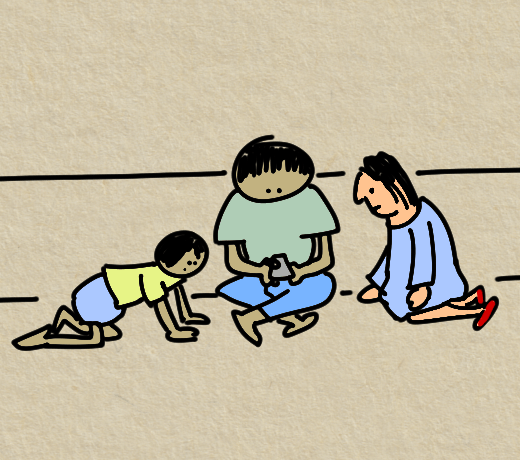
I tried to do a Thurberesque sketch of a scene we see all too often these days – a child with a device and other children gravitating towards it.

We see this more and more as children (and adults) consume content – while once we might have had them creating it, sat on the floor drawing and doodling instead.

Which makes me wonder – if children grow up too quickly – too aware of perfect images before they have time to doodle – then what happens to their ability to create?

The thing that Thurber did was observe – look around and see humour and contradiction in everyday life.

It’s not perfect.

But it can be amusing.

Cheers,

Karthik Suresh

Is The White Collar Professional Job An Endangered Species?

white-collar.png

Tuesday, 9.06pm

Sheffield, U.K.

The American Dream is one of success, home ownership, college education for one’s children, and have a secure job to provide these and other goals. – Leonard Boswell

I’ve been reading Bait and switch: The (futile) pursuit of the American dream by Barbara Ehrenreich and am not sure what to make of it.

It was published in 2005 and is a reporter’s attempt to explore the world of white collar economic hardship.

It’s easy to blame people for getting into difficulties for making bad choices – not finishing school, getting pregnant young, doing petty crime.

In fact, some people really should have chosen their parents more carefully…

But what of the people who did what they should have done – worked hard, paid for University, went out there and got good jobs – and then lost them through downsizing, rightsizing, outsourcing, restructuring or whatever else is the way you cut costs in an organisation?

And for those who do have jobs – what kind of jobs are they?

Are they any different from sweat shops where you work all the time, at work or at home or on the move – working to please your boss all the time?

If we jump to the end of the book Ehrenreich suggests that there is something weird and wrong about corporate life – about the life of white collar professionals.

First, they aren’t really professionals at all.

They don’t have a requirement to have qualifications – one that’s enforced by law.

They aren’t licensed and there isn’t a body of knowledge they are required to know.

Real professionals figured this out some time back and created these things – these barriers that kept them safe.

Professionals like doctors, lawyers and accountants.

Next, how intelligent do these professionals need to be?

Well, if you look at intelligence as being related to some kind of academic standard – with people encouraged to think independently, look clearly at the facts, where dissent is tolerated, perhaps even encouraged, and there is comfort in engaging with complexity rather than reducing everything to a simple maxim – there isn’t much of that around.

Instead, there is lots of “magical thinking”, views and opinions and general hot air.

Third, how equal are workplaces these days?

No, really, if you’re too old, a woman or non-male gender, if you’re the wrong colour, speak funny, don’t have the right education – how likely is it that you’ll really be treated fairly?

Well, we’ll never really know because this isn’t the kind of thing that can be measured easily.

And finally, when it comes to who does what and who gets ahead – is it fair?

Or does it have to do with who you know, what the politics are and who has the power?

And are you really getting a fair return on your investment of time in the business in terms of what you get paid?

Now, all this is quite depressing although Ehrenreich didn’t actually manage to get a job in the first place.

So she talked to lots of people who had lost their jobs and were trying to find new ones.

She learned about the “transition economy”, the services that have sprung up to help people make the leap from being unemployed to finding another job – and the issues with that.

I think her general argument is that these “professionals” haven’t done what’s needed to rise up and defend their professions – form guilds and societies and other such protective measures.

And they suffer more because in America there is less of a safety net – with healthcare and living expenses a major issue for those without jobs.

Growth areas for jobs are, unfortunately, in areas that require manual dexterity – healthcare, cleaning, fruit picking, plumbing.

But you don’t need a degree for that – what was the point of all that learning?

It’s a while since the book was written and there seems to actually be a lot of demand for employees.

The Internet has taken off in the meantime, ecommerce is a thing, lots of people are trying to figure out how to make a living as the world changes.

Taking the long view, we moved from a world of sole traders – butchers, bakers, candlestick makers – to factory workers, doing jobs in big industrial complexes.

And now, are we in a phase of connected, Internet workers – where value emerges from how teams work together rather than what jobs they do?

Have we moved from asking “What job do you do?” to “What value do you add?”

In fact, are jobs themselves, and the professionals who used to do them, a thing of the past?

And if so, what do you do now?

Cheers,

Karthik Suresh

How To Design A Lean DevOps Service That Actually Works

lean-devops.png

Monday, 8.52pm

Sheffield, U.K.

It’s important not to divorce developers from the consequences of their work since the fires are frequently set by their code. – Mike Loukides, What is DevOps?

This is not going to be a very informative post about DevOps – although I’m not sure how informative the other stuff out there on the Internet is either.

But some of the ideas that I’m trying to pull together here may be useful.

Let me explain.

Imagine we go to see a customer.

We have a brilliant conversation, work out what they need and come away with a plan and a budget.

We resource our project – getting people in place – developers, analysts, project managers, admin staff.

We divide up the work and get going.

People do their bits, pass things around and some time later we start to see finished stuff emerging – perhaps we get a service running.

The developers and project managers are now done – the analysts and admin teams get on with using the system and sort out the queries that result.

And there are always queries – so we need a query management system and there are a few hundred on the go at any given time.

And that’s a good operation, right?

Everyone’s working hard, no?

Well, no. Not really.

Here’s the thing.

Lots of demands that look like work aren’t actually work that should be done.

There are two types of demand: failure demand and value demand.

Value demand is stuff that customers need doing.

Failure demand is what you have to do when things don’t work as expected – and queries are a prime example of failure demand.

What we need to do is squish failure demand rates – and I think the DevOps approach is one way to do that.

Think of an alternative approach to what happens.

A developer works directly with a customer to design and develop services to meet the needs of stakeholders.

When the services are deployed, the developer operates and maintains those services as well.

But, you say, a developer is an experienced and valuable resource – you don’t want such a person doing operations and maintenance.

To which I say they shouldn’t be.

If they’ve driven failure demand out of the system, that is.

Let’s say you’re collecting data on behalf of a customer and the report you get in from a source is always a little bit different each time.

That breaks your data collection process so you need to go and fix it each time.

That’s failure demand.

Now, if this task is handed to an “admin” person then you might tell them to make those changes as part of their job.

You are now paying someone to handle defective materials – driving up your costs.

Instead, why not go to the source and help them generate clean data in the first place?

Maybe have a conversation, talk through what is going on and figure out a way to improve things.

If you fix the cause of failure demand then your system should operate reliably and automatically without your intervention.

Developers want to create things but are less keen to live with the consequences of their creations – that’s for users (lusers?) and less technical folk to struggle with.

And that’s not really that useful.

Instead, hire or train smart people with the skills to both program a computer and talk to people and fix problems.

It’s not that hard – but you have to get better at selecting and training people with the right attitude.

Because you’re asking them to do more than just a job.

You’re asking them to delight customers.

Cheers,

Karthik Suresh

The One Skill Every One Of Us Has To Develop To Do Good Work

doctors.png

Sunday, 7.02pm

Sheffield, U.K.

Listen to your patient, he is telling you the diagnosis – William Osler

I was talking about the state of medicine today with someone who should know – and learned that there is a serious problem with training new doctors in the developing world.

Privatisation of teaching inevitably results in the standard of teaching going down – as the superstars migrate to the highest paid and most prestigious roles and the rest staff the other places.

Doctors don’t know the basics – how to take a patient history, how to present their findings and how to do the things that doctors should learn to do.

The fact is that there are things that can be trained easily and there are things that can’t – like a good bedside manner.

And all this has been known for a long time.

William Osler came up with the idea of a medical residency – and the idea that students should see and talk to patients.

An essay of his titled Books and Men has this line:

“To study the phenomena of disease without books is to sail an uncharted sea, while to study books without patients is not to go to sea at all.”

The first point we should take from this is that it’s not enough to read about things – we must practice as well in real life situations.

If you’re a writer, an artist, a salesperson, a consultant, a photographer – you will learn much by reading about it and you will learn much by doing it.

Doing both will make you brilliant at what you do.

Doing either one on its own will not.

Good, perhaps, but not exceptional.

Of course, you have to learn how to learn – and Osler has something to say on that, quoting an old writer who says there are four sorts of readers.

Sponges who soak up everything without asking or checking; Hour glasses that get knowledge and pour it out just as quickly; bags, that retain the dregs and let the wine escape and sieves that keep only the best.

Strive to be a sieve – it takes longer than you think.

And then there is the quote that starts this blog – which tells you all you need to know about the skill you need to have.

Too many people, many doctors don’t listen.

They look at the symptoms and make a diagnosis.

They sweep in, look at the person, the situation – and say what they think.

It’s something you see all the time – with managers, executives, partners – anyone in a position of authority.

What they want to do is get to the solution – and of course it’s the solution they have in mind.

People like that are very confident – they’ve been successful – that’s why they’re in charge.

Successful anyway in the sense that what they did or didn’t do can’t be measured and the people judging them had no idea what was really going on.

And the thing about people like that is they don’t want to listen – they might politely give you the impression they are but really they’re thinking about something else and will, as soon as they can, squish you and anyone else that’s in their way.

What such people don’t do is listen.

They don’t take a patient history – a situation history.

They don’t ask what has been going on, what’s the background, what’s the context – what led up to the events that are being considered.

And this is what you find when you listen.

The answer is in front of you every time – one answer anyway that fits the facts that you’ve now taken the time to gather.

It’s just sitting there hidden in plain view – and what you needed to make it visible is get people talking – and just listen.

And then, when you’ve listened, you can add your professional opinion.

You will now know what to name the problem, the disease, the condition.

You will know how to test for it, how to measure it, how to detect it.

And you will know what to prescribe, how to fix it, how to solve it.

It doesn’t matter what you do or how you help other people.

But you will do it better if you first learn to listen.

Cheers,

Karthik Suresh

p.s. If you want to learn more about how I do this professionally, here is a paper I wrote today that sets it out in more detail.

What Would You Do If You Didn’t Know What You Now Know?

reflection.png

Saturday, 9.31pm

Sheffield, U.K.

Life can only be understood backwards; but it must be lived forwards. – Søren Kierkegaard

One of my favourite books is Robert Pirsig’s Zen and the art of motorcycle maintenance.

His other book Lila has never grabbed me in the same way but there is a section in there that I keep going back to again and again.

Pirsig describes the way in which he collects and organises research – using small sheets of paper to record notes and thoughts.

These notes build up over time – he has around eleven thousand of these – and he observes that some interesting things happen.

This piece by piece collection starts to grow, become larger.

Over time, as Pirsig interacts with it, he moves notes around, groups related things and collections start to emerge.

Connections between notes and connections between collections start to build.

The difference between this collection of notes and a diary or journal is the ability for random access – to get to a particular note without having to go through all the other ones first.

This way of collecting information is also called a Zettelkasten or a commonplace book.

The point is that there are many days when what you do is collect information.

But you can’t keep it all in your head – it has to go somewhere else or after a while you’ll be too full to take anything else in.

And some days nothing comes in – which is when you might look at organising the notes you have – seeing if they build up to anything bigger.

This is, I suppose, an act of reflection.

These days the Internet is really a global commonplace book – one that we could read if we wanted to.

And I, like most people, now turn to it first when I have a question.

But it’s possible that we ask the same things in the same way and don’t really end up asking the right things.

For example, if you were an alien just landed on Earth what would your impressions be?

You’d see people rushing about in planes and cars.

You’d see several ways in which societies organise themselves – from schools to armies.

And you’d see humanity go through a range of emotions every day as they coped with whatever happened.

The alien might wonder why we rush about so much, why we spend so much time being unhappy – and really we’d be hard pressed to answer why too – other than it’s always been this way.

But it’s really too hard to predict the future.

All we can do is make decisions about right here and now – decisions that will need to be judged by our future selves.

Brian Tracy has a line that goes something like “What would you do now, knowing what you know.”

Maybe it’s worth trying every once in a while to imagine what you would do if you didn’t know what you now know.

If you had just arrived at Earth from a very long way away would you take an office job and race around the world trying to make people like you and buy from you?

Or would you try and leave the world in a better place for those that come after you?

Or something else?

What would you do?

Cheers,

Karthik Suresh

How Do You Know You’re In The Right Place For You?

imagination.png

Friday, 7.46pm

Sheffield, U.K.

We are the only species on Earth that observe “Shark Week”. Sharks don’t even observe “Shark Week”, but we do. For the same reason I can pick this pencil, tell you its name is Steve and go like this (breaks pencil) and part of you dies just a little bit on the inside, because people can connect with anything. We can sympathize with a pencil, we can forgive a shark, and we can give Ben Affleck an academy award for Screenwriting. – Jeff Winger in Community

A few things haven’t gone the way I would have liked today.

I don’t usually worry much about things not going right – but when they don’t it’s still stings a little.

It will pass – it always does.

But, it gets me thinking about a few things – but I don’t know if the pieces will come together in any coherent way.

But let us have a go.

We start with a book called Bureaucracy: What government organisations do and why they do it by James Q. Wilson.

Wilson makes an unpromising start by quoting James G. March and Herbert A. Simon as writing that “not a great deal has been said about organizations, but it has been said over and over in a variety of languages.”

Theory, this implies, is a waste of time but it is unlikely to be of any practical use.

Well – that’s it for this blog then.

Luckily, there is more, and it is useful.

First, there is a distillation of concepts one can use to understand bureaucracies – and organisations in general.

Ask yourself what tasks the organisation does – not goals, but the critical tasks it must carry out.

Then ask what gives the organisation its sense of mission – is it pride in what people do, a religious calling, a sense of honour and duty?

And then ask how autonomous the organisation is – how well it can make decisions.

Then, if we skip to the end Wilson quotes James Colvard on how to run organisations better – have “a bias towards action, small staffs, and a high level of delegation based on trust.”

And here we get to a central point – management is not about tools and it is not about systems.

It is about delivering something – a mission – what a customer needs – something that makes things better.

From this, we can jump to Federalist Paper No. 51 which has some hope for people wondering what is happening in the world right now – especially when it comes to people and governments.

James Madison argues, in his paper that:

“The interest of the man must be connected with the constitutional rights of the place. It may be a reflection on human nature, that such devices should be necessary to control the abuses of government. But what is government itself, but the greatest of all reflections on human nature? If men were angels, no government would be necessary. If angels were to govern men, neither external nor internal controls on government would be necessary. In framing a government which is to be administered by men over men, the great difficulty lies in this: you must first enable the government to control the governed; and in the next place oblige it to control itself.”

In other words you need institutions – independent centres of power that balance and check each other to maintain freedom and democracy in a society.

And you need the same in an organisation – excessive centralisation leads to ossification, excessive decentralisation leads to dissipation – and you need a balance of loose and tight to keep the system together.

So, what about the broken pencil?

The point, I suppose, is that organisations act in ways that don’t always make sense.

What wins in one situation loses in another – and we often make the mistake of thinking that it’s the systems and processes that are the organisation rather than the people.

But the people are also the system.

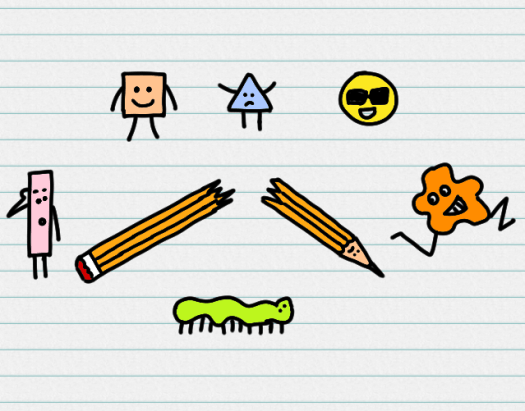
As humans we can connect to anything – we can take a bunch of shapes, add facial features and emotions and give them personalities and feel like we relate to them in some way.

And as humans we are impossibly complex.

Something that seems right to one person is completely wrong to another.

When I fail, it is often less because what I did was a failure but because what I did was wrong in the eyes of others.

Or maybe it was just wrong – it’s hard to tell.

But the thing is to keep going – because what else is there to do?

We have the ability, it seems, to project human nature onto everything around us.

When we understand our own – then perhaps we will find the right place for us.

Cheers,

Karthik Suresh

What Mistake Do Most People Make When They Decide What To Do?

what-to-work-on.png

Wednesday, 9.23pm

Sheffield, U.K.

The mass of men lead lives of quiet desperation – Henry David Thoreau

We all know people who go to work and then come home and do what they really want to do.

They make furniture, work on home improvement projects, sell things on Ebay.

Others find ways to pass the time – TV, sports.

And along the way we have ideas – ideas for businesses that we might like to start.

And, of course, some of those ideas might be at work.

Now, think about how one might think when trying to decide what to work on?

Some people focus on the importance of market research – going out and talking to consumers.

That might work – although you must keep in mind that Henry Ford aphorism that his customers would have told him they wanted faster horses.

Others believe that they have something that people will definitely want – and they pour time and money and significant chunks of their lives into the project.

And sometimes that works out and often it doesn’t.

The mistake we’re making, perhaps, is looking outside ourselves.

Consider this – how well do you know yourself?

If you were to ask yourself what you liked, what you disliked, what you really wanted out of life – how many of those things do you really know clearly, completely?

Most of the time we find it hard to know what we want.

So, when we get out of our own heads and try to understand what other people want – surely it’s going to be harder?

And if we take one more step – going from thinking about what people want from the things they can have right now to thinking about the things they would want that they don’t already have – surely we’re simply stumbling around in the dark?

When you really think about it what are the chances that you’ll come up with something that the majority of people will embrace wholeheartedly?

Well – judging from the proportion of startups that make it big – fairly small.

Which is why it makes sense to turn the approach around.

Why do you go on holiday?

Because you’d like to visit the place you’re going to and believe you’re going to have a good time.

Why do you work on your house – build an extension or put in a new kitchen?

Probably because you believe you’ll use the space or find that you really like having those self-closing doors.

In these everyday situations you’re doing something because you want to have the benefits of doing the activity – the experience, the space, the stuff.

And so that leads us to a principle, articulated by Eric Allman – the inventor of sendmail.

“One general principle of software engineering is that you should be writing a program that you want to use.”

And in that statement I think lies the secret what we should work on.

If you’re a manager looking to get the best out of people you should design systems and processes that you want to work on yourself.

A manager who reluctantly gives up the fun of doing the work to engaged and motivated staff has created a different system to one that needs bullying and threats to get anything done.

If you work in the knowledge business you know that it’s overrun by people who think they need to do things because it is what other people want.

From trying to create new apps to learning how to spam people better – it’s all about perfecting some kind of interruption based selling process.

But, if you work on something you really want yourself – then there is a good chance that other people will want it as well.

And if you’re an engineer the fun is in taking things apart and building them – really understanding the internals rather than just using some shiny thing that someone else has made.

And you might avoid making the mistake of building for an anonymous “market” and instead create something of real value to yourself and others.

Cheers,

Karthik Suresh

p.s Some of the ideas in this post were inspired by links in Arnold Robbin’s site – the maintainer of Gnu Awk.

He links to a few interesting articles but they’re broken, so see links below.

The dumbing down of programming Part 1

and here is

part 2

What Will You Do In A World Where Anyone Can Rip Off What You Make?

duplicator.png

Tuesday, 7.34pm

Sheffield, U.K.

They say the secret of success is being at the right place at the right time, but since you never know when the right time is going to be, I figure the trick is to find the right place and just hang around.” – Bill Waterson

It’s not often when some of my favourite concepts find themselves travelling towards each other and, unlike physical objects that find it hard to occupy the same space at the same time, combine to create something greater – something more lasting.

Let me explain.

If you are familiar with Bill Waterson’s cartoons of Calvin and Hobbes – the boy with the tiger – you may remember that he once invented a transmogrifier – something that would change you into something else.

Later, he modified the transmogrifier, turning it on its side creating a duplicator – where you could make copies of anything.

The one in the image above is the perfected version…

A duplicator, coincidentally, is the subject of a story that Neil Gaiman remembers in his book The view from the cheap seats – a story that changed how he looked at things.

And it has to do with theft.

When someone steals from you they take something you have, something you can’t get back.

Like your watch or some gold or a car.

But when you steal music or a book or a movie, Gaiman points out, it’s something different – what you’re doing is using a duplicator – making a copy.

In doing that the original hasn’t been taken, but an exact copy has.

What this means for creators is that the value of stuff that can be duplicated is going to go down.

If you create a song now you sell it for less than a dollar.

Books are cheap – not many people can get away with selling books that have a three figure price tag.

The entire industry that goes into policing intellectual property – making sure that copies are not passed around may keep prices high but reduces value as well due to the cost of policing.

In this new world the things that will hold and gain in value are the things that cannot be reproduced.

Gaiman suggests these are things like live shows and personal contact.

And we’re all probably finding that to be the case – which is why events and get-togethers are one of the fastest growing segments of society and activity.

Gaiman then talks about his friend Cory Doctorow who has an analogy about mammals and dandelions that starts to explain this changing world.

Mammals invest a huge amount of time protecting and nurturing their young.

Dandelions let their seeds drift away with the wind and don’t worry about which ones make it or not.

People who treat their intellectual property like mammals treat their young – protective and nurturing to ensure their profits will find the whole thing pretty hard going and pretty depressing.

The thing for creators now is to create – that’s the first thing.

As the quote that starts this post suggests find something you like doing and then go about doing it.

Don’t worry about profits and protection and property – such things are from the old days.

Just create and set your creations free to drift with the wind – fly along the Internet.

And find things to do to help you make a living that are hard to duplicate – consulting, events, support, maintenance – the kinds of things that will pay for food and shelter and some luxuries.

Because the thing is you might find that the duplicator works for you and the things you do that are hard to duplicate work for you.

The only question is when?

Until then, hang around creating stuff you enjoy making.

Cheers,

Karthik Suresh

How Are We Going To Get This Climate Change Thing Right?

pdta.png

Monday, 9.18pm

Sheffield, U.K.

Now I see that going out into the testing ground of men it is the tongue and not the deed that wins the day. – Sophocles

Maybe it’s just the way the news media permeates everything we do but it’s hard to ignore the noise around climate change.

Not that you should – but it’s really quite clear that people are worried about it and want someone to do something at some time.

Preferably sooner rather than later.

The thing is that no one really knows what to do – whether we should all stop driving or flying or whether we should buy new cars as long as they’re electric.

And all along the way there is noise – noise from prophets of doom and noise from purveyors of snake oil or the latest best thing – it’s hard to tell.

What’s going to save us?

Is is the technology?

Is it abstinence – stopping consumption?

Is it ending capitalism as we know it?

This is something one might call a “wicked” problem, characterised by feedback loops that are impossible to predict.

For example, you would probably argue that solar panels and batteries are a good thing.

But, in a few decades when we send the remains of shattered glass and silicon to recycling plants and moan about the poisoning of land by dumped and leaking batteries will we still feel the same way?

All these are questions for other people.

If you really want to make change we need to focus on the data – how to use data better to understand what our impact is and what we can do about it.

I wonder if we are all getting too exercised about creating participative and inclusive ways to make a difference – focusing on dashboards and reports rather than actually doing stuff.

If you create a factory these days you want as much as possible to be done automatically.

People are there to look after the machines, to make sure they keep working.

They’re not there to do stuff by hand themselves – hammer steel in a mill or blow glass in a bottle factory.

But we seem to think that we have to insert people into processes that use data in a way that we never would into processes that do physical work.

People are good at thinking up new ideas and creating new ways to do things.

They to the first two steps in Deming’s PDSA cycle – plan and do rather well.

Then we come to Study – which really is about learning from what is going on.

Or you have the modern form of Check – which sounds a little like inspection.

I’m not sure we’re getting it right at these steps – especially the check part.

I wonder if an alternative from the world of software development might help.

In software, people are getting used to the idea of running tests – and good tests, when they run correctly, say nothing.

If you are familiar with the Unix command environment you’ll know of a program called “test” that simply returns an exit status.

Either things are ok or they are not.

What does this have to do with climate change?

We need to figure out how to act when it’s necessary – how to act on the things that need our attention.

We don’t need to spend a whole lot of time flailing around trying to do lots of things.

Instead, we need to get the data flows right – figure out what needs to happen, put tests in place to check if we’re on track and act when we’re not.

In other words we need to stop thinking in terms of interactive ways to fix stuff and instead focus on test driven ways to manage the right things.

We’re at a point where it looks like people really want to make things happen – they really want change.

But it’s a lot of talk – lots of hot air.

Change happens in the ditches, in the mud, and for this particular change – the ditches and mud contain the data we need to really understand what we use, how much we need to reduce and how we’re doing along the way.

The worrying thing is that not many people know how to do that.

And that needs to change.

Cheers,

Karthik Suresh

The Biggest Mistake We Make When Trying To Advertise Ourselves

man-in-chair.jpg

Sunday, 9.19pm

Sheffield, U.K.

The real fact of the matter is that nobody reads ads. People read what interests them, and sometimes it’s an ad. – Howard Luck Gossage

Like most of you, I suspect, I’ve tried writing a blog at various points – and most of them fell by the wayside.

I drew the picture above for one of these attempts in April 2016 to talk about The Man in the Chair.

In 1958 McGraw-Hill, a publisher of business titles, came up with an ad – The Man in the Chair – which then ran for the next three or four decades.

The point of the ad was that a buyer knows almost nothing about you when they first become aware of you – so why do you think they should buy from you?

Now, you probably don’t think that – but it’s a lesson many of us learn over time, often too late.

For example, when you send off your CV for a job do you assume that everything the reviewer needs to know is in there?

Do you not mention something when you’re talking to someone because you assume they must already know?

Most people are much less informed about you, your product or your service than you might think.

I was browsing through Great advertising campaigns by Nicholas Ind, and he points out in the book that it’s easy for those involved with a brand – those who spend much of their time thinking and working and trying to figure out how to tell others about their brand – to assume that it’s just as important to the consumer.

In reality, it’s probably inconsequential – or at least nowhere near as important as you think it might be.

For example in the utility industries – those dealing with electricity, gas, water and telecoms – there is a huge amount of complexity.

There is regulation, change, investment, billing – all kinds of arcane things that keep people employed.

Most consumers, however, are interested in two things at most.

Do they have to do something – are they obliged to comply?

What does it mean for their budgets?

Other than that they want you to sort out all the complexity.

So, at the sharp end, the bit that points at the consumer you need a very simple message.

In the book Nicholas tells you about Absolut Vodka – how Geoff Hayes, an Art Director, came up with the idea of showing the vodka bottle with words like “It’s absolutely perfect.”

His writer pointed out that you could trim that to “Absolut Perfection.”

Two words – and it captures something.

But, the book points out, is that the reason the team thought they had something was because from those two words they had ten ideas for how to present things – which is what made it a campaign.

It takes time to get a sense of what something is – what it means.

And even if that something is you – you might find that it takes time to figure that out – and it takes time to figure out what your business is all about.

And it’s probably worth remembering that if it takes us so long to work it out – it must be even harder for someone else.

The mistake we make is trying to sell – to close – too early in the process.

What we really need to learn when trying to advertise is that, as the McGraw-Hill ad says, “sales start before your salesman calls.”

So design your advertising to help your customer get to know you in a way that works for them.

And then the sales seem to just happen.

Cheers,

Karthik Suresh