Some lessons from business and writing

writing-and-business.png

The writer Lee Child and businessman Sir Hugh Sykes were interviewed during the Off the Shelf Festival of Words in Sheffield.

They do two seemingly different things – one writes the Reacher novels, sitting down on the 1st of September and writing a book by March. He reads 300 books a year.

The other has bought 20-30 companies over the course of his career, which started by becoming the CFO of a FTSE 500 company in his 20s, and attributes his success to hard work and a good dose of luck.

Two things in particular stood out for me.

Hugh described how he learned to use money to build things. It was a simple process that he picked up from Jim Slater.

Buy a company. Improve it and add value. Float it on the stock market. Use the shares with increased value to buy another company. Rinse and repeat.

It’s simple, he said, but not easy.

This echoes a favourite saying of Warren Buffett. The principles of investing are simple, but that doesn’t mean it’s easy. Your worst enemy is yourself sometimes, and the emotions – the fear and greed that drives decision making.

Hugh also said that when you put your mind to it, it’s amazing what you can do and he found that very few problems were truly insuperable.

One final point – business planning once again is simple. Where do you want to go – what’s your objective? How are you going to get there? What do you need – what are the resources?

Answer those three questions and you are on your way.

Lee Child, on the other hand, got into writing after he lost his job in the TV industry doing something very specialised. The skills weren’t transferable, and he had to learn to write again.

He once had Reacher say “I tried it their way. Now I’m going to do it my way”. And that served as a guide for him as well.

When he started writing, he didn’t plan out the next 22 years and books. Instead, he started to explore through his writing and the character and story emerged.

An interesting observation he made was that sometimes people look down on mass-market fiction, thinking that somehow it is less literary and so less important or easier.

He pointed out, however, that only a few people buy Rolls Royces, so you can create a custom product for them, and someone will buy it.

A mass-market car has to appeal to many more people, and so is actually harder to put together in a way that is successful.

This has parallels in business – it’s easy to create a niche product that a specific group want, and often that’s the way to get started.

To build a big business with a wide market, however, is a much bigger challenge.

Easy reading requires hard writing.

Two lessons that I took:

  1. Niche is easy. Mass is hard.
  2. Simple does not mean easy.

How to win an argument

win-debate.png

Did you know that Dundee University has a Centre for Argument Technology and studies aspects of argumentation?

The picture above shows a model for building an argument, adapted from Professor Chris Reed’s article on the BBC.

The next time you have to make a case, the following might serve as a useful checklist.

1. Are you focused on the issue?

It’s easy to get sidetracked and distracted by things.

A good argument will focus on the main issue and be relevant.

2. Are your claims clear?

Your argument is built up of claims.

You should select claims that are directly linked to the issue you are debating and discount or remove ones that are peripheral.

3. Do you have evidence to support your claims?

You need to show why your claims are true – by linking evidence, reasoning and conclusions.

The more evidence you have the better, and the more the evidence you have corroborates and confirms what you are saying, the more likely it is that people will accept what you say.

4. Are you addressing objections first?

The best way to handle objections is to bring them up yourself.

You will inevitably get objections. Instead of struggling to come up with an answer on the spot, it’s easier to raise them in the first place and explain how your argument deals with them.

5. Have you thought through the counter-claims?

The other side will be thinking about claims that support their position.

It’s important to think about the issue from their point of view, so that you understand the fundamental differences between your claims and why they cannot be reconciled.

6. Have you found the weak spots in their argument?

Just as the other side will bring up objections, you need to find the weak points in their claims and possible chain of reasoning.

If you can point to factual or logical flaws in their reasoning, then you may be able to undermine their argument.

Summary

Knowing how to make an argument is crucial in many situations – from making a sales presentation to pitching for funding.

Having this kind of model to hand may help the next time you need to make one.

How to function in a post-truth world

cherry-picking.png

Post-truth was chosen as the Word of the Year in 2016 by Oxford Dictionaries because it seemed to describe the essence of what happened during BREXIT and the US Presidential election.

People have always cherry-picked – selecting the data or evidence that supports their point of view while discounting or ignoring other information.

The thing that is changing, however, is that in a continuum between what is false and what is true, we are getting much better at using falsehoods to manipulate how people think and respond to messages – and the politicians are the ones doing this best.

For example, which news headlines grab your attention?

The best ones create a visceral, emotional response. Facts are dull. Feelings make you sit up and take notice.

From the £350 million for the NHS claim that Boris Johnson recently repeated to the belief that former U.S President Barack Obama wasn’t born in the U.S, statements that create feelings can ripple through societies, magnified by 24-hour news and social media.

But that’s ok, some people might say. There is no truth, as such. Facts have a lifespan – in science, especially, what we think we know is constantly being overturned by new discoveries and through the application of new technology.

What we have are the facts of the moment – and opinions – and what we do is combine these to create a social understanding of the here and now. Everything is relative and needs to be understood in context. It’s contingent.

The only time we learn really what is true and what is not is when we look back. History tells us how facts were used and what happened as a result.

In real-time, we only have “alternative facts”.

So what do you do about the facts around you? There are two options.

If you want to peddle facts, there are three kinds of people you will face.

  1. Those that agree with you.
  2. Those on the fence.
  3. Those that disagree with you.

You will never get those that disagree to change their minds. The ones that agree with you are already on your side.

Your messages need to speak directly to those who agree with you to make sure that their existing points of view are energized and inflamed – and try to win over those people on the fence.

This is why Trump’s style is so powerful. He speaks directly to his followers through Twitter, and the messages that filter out through the media bring some people to his camp, and he ignores everyone else. And he gets results as a result.

If you are a consumer of facts, there is only one approach you can take – caveat lector.

Reader, beware.

Which moments matter? The Micro-Moments model.

micro-moments.png

The Internet has grown up.

We are now always on, always connected. And this means there are some interesting things that are changing about the way in which we connect.

Almost 90% of people have a phone close to them, day or night. Over two-thirds check their phones within 15 minutes of waking up. We spend nearly three hours on our phones a day.

But each session – the time between opening and closing the phone – lasts just over a minute.

So, what’s going on?

What’s happening is that there are hundreds of moments when we get our phone out and use it. From a quick text, dropping an email back, checking who that actor is during a programme, finding the closest petrol station, and so on.

We’re constantly getting our phones out, checking something and then moving on.

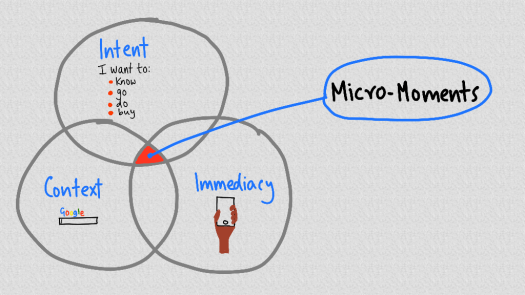
In 2015, Google came out with a name for these instances of time – calling them Micro-Moments.

They argued that interactions with customers are moving from “sessions to spurts” – hundreds of small, individual moments that lead up to making a decision.

They suggested that moments that matter – the key ones for anyone using the internet to interact with someone else – occur when three things intersect:

  1. Intent: The “I want to…” that triggers the impulse to act.
  2. Immediacy: What’s the quickest way – usually getting out the mobile phone.

3: Context: What am I searching for – and when might I do it?

Understanding which moments result at the intersection of these three things can guide you in creating resources that help.

As a marketer, the implications are obvious – you need to understand what someone wants or needs, and realize that they are going to open their phone and run a search. In addition, people usually want to know something, go somewhere, do something or buy something.

If you want to be in the game, you need to turn up in those search results, provide useful information and do it quickly – otherwise they will move on somewhere else.

This means that users are driven more by how relevant the information is that turns up than the brand or people providing related information.

This also matters, however, if you’re trying to organize knowledge and information across a business so you can work more effectively.

Where can you find the latest guidance on something? Where is the latest version of that model? Which presentation should you work from?

Organizations can now design internal information systems structured like the Internet does things. Instead of files in folders, you can have a collection of resources that people search when they need something.

You still need to be able to come up with useful and relevant material quickly that will help your teams function more effectively.

People act on information. How you give them that information will increasingly make the difference between succeeding and failing.

The business of keeping things cold

cold.png

Keeping buildings cool in the United States takes as much electricity as used in Africa for everything.

We can easily miss the amount of effort that goes into keeping things cool.

We use cooling systems to air-condition our homes and commercial buildings, keep food fresh and transport it across countries and use it in countless industrial processes – from medicines to preservation.

The internet couldn’t survive without the vast amounts of cooling that go into keeping the data centres that power the internet economy going.

Increasing urbanization, with the majority of the world’s population living in cities, will make the challenges and problems associated with cooling worse, not better.

For example, the United States uses more energy for air-conditioning than the rest of the world put together.

Many developing countries, however, are getting richer fast and are in hot parts of the world. If they were to use air-conditioning like the U.S, they would use around 50 times more – and half the world’s energy could go just on cooling.

This could happen quickly. In 2010, Chinese consumers bought 50 million new domestic a/c units and 95% of Chinese homes have a fridge, compared to 7% in 1995.

If India had the same proportion of refrigerated trucks as the UK, the fleet would rise from the tens of thousands to 1.5 million vehicles.

The problem is that keeping things cold is a very polluting activity. The technology being used is a hundred years old, relies on chemical refrigerants and has plodded on – generally ignored in the background.

As we move into a low-carbon economy – increasing cold using conventional methods is not going to help us reduce emissions or stay on target.

That means there are a number of opportunities out there.

For example, we could learn how to use and re-use cold energy more effectively. With better data collection – using the Internet of Things (IoT) approach, we can figure out how to be smart in the way in which we cool things.

Keeping things cold needs energy – so using free energy from renewables, being smarter about when energy is used based on supply and demand and moving to ways of storing and moving cold energy rather than creating it on demand using electricity are all ways to be more efficient.

The challenge, as always, is to make a business case for action.

What could opening up access to data do for us?

blinds.png

Governments, organizations and businesses have vast quantities of data they have collected over the years – and continue to generate more daily.

The amount of data out there can overwhelm anyone trying to analyze and make sense of it.

Let’s say you could have access to this data and were able to process and analyze it – what would that help you do?

You could:

  • See how governments spend their money.
  • Look at patterns of energy usage across economies.
  • Study the distribution of wealth and poverty.
  • Improve how we track and predict weather.
  • Monitor fair trading in stock markets.

and much more.

The idea that making data available to people will help with both understanding and accountability, while also increasing innovation is why the UK government has started to publish datasets on data.gov.uk.

Organisations such as the Open Knowledge Foundation and the Open Data Institute are helping to create guidance, tools and networks that make it possible for people to obtain and study data and share their findings.

Why does this matter?

For a start – there is a big market out there for data and analytics. You can now get Data as a Service (DaaS) products, allowing you to analyze everything from electricity and gas prices in Europe to pig futures in Kansas.

Organisations that are able to effectively use data for decision making can improve their processes, reduce prices and stay competitive.

But there are bigger challenges that can also only be achieved through transparency and cross-sector work.

For example, many large organisations are voluntarily taking action to cut their carbon emissions, through participating in programmes like Science Based Targets.

Others aren’t, partly because they haven’t the time, see it as a cost or just don’t know how to get started.

We need to start by making it easier to analyze their data through projects like Frictionless Data that help collect, share and validate data.

If you could see how your retail store portfolio compared with others in terms of carbon emissions per sales, you might be motivated to improve your performance.

Whether the motivation is financial, social, competitive or for research and interest purposes – opening up data is going to have a big impact on making the organizations we interact with more transparent, agile and accountable.

Why can some people never agree?

worldview.png

The world is full of conflict.

The word conflict can be used to describe visible events – like war or a battle, an internal struggle – like one where someone is torn between principles, or the interplay and opposition between individuals.

But what causes this conflict in the first place? For example, why is it possible for two leaders in an organization to differ bitterly over what they should do and how they should work together?

The thing that is probably causing this is a mismatch between their worldviews.

A worldview is how someone sees things. It takes into account their knowledge, upbringing, language, philosophy, emotions and so on and fuses them into a lens through which a person sees and interprets what is happening around them.

The mistake many people make is thinking that they can change someone’s worldview.

To do so would require completely reprogramming them – starting with their language.

For example, you may have been at a party where someone from another culture said “Pass the salt”, instead of “Pass the salt, please”.

You might have been a little put out by the first statement and thought the person as a little rude.

The problem, however, is that some languages have respect baked in, while others, such as English, need you to add respect with an additional word like “please”.

Unless you interpret the sentence you are hearing using the language that the person who is speaking is most familiar with, you are likely to get it wrong.

So, if you can’t change their point of view, what can you do?

The answer (cutting out a long of theory) is that you have to come to an accommodation.

An accommodation is a compromise – something you can both live with. Not a situation where one wins and the other loses – but a situation that both of you can say is acceptable.

It also helps to make an effort to see why the other person has a particular worldview. Leo Apostel writes that there are six things that make up a worldview:

  1. Explanation: A worldview can explain what is happening around you now.
  2. Futurology: It can describe possible futures and what might happen.
  3. Values / Ethics: It gives you answers to the question “What should you do?”.
  4. Theory of action: It tells you how to act in order to reach your goals.
  5. Theory of knowledge: It helps you tell true from false.
  6. Origin theory: It tells you where it came from – how it was created.

It isn’t hard to look at some religious worldviews and see how conflict between religions can emerge from how its followers answer these six questions.

But this remains true for cultures, communities and businesses – worldviews are likely to be in play everywhere people interact.

One approach to creating harmony is by applying the Golden Rule: Do unto others as you would have them do unto you.

But there is an even better rule – The Platinum Rule.

The Platinum Rule says: Do unto others as they would have you do unto them.

Are you following a Woozle?

woozle.png

It’s hard to be certain of much these days.

Most people look for evidence to support a particular point of view and we usually find such evidence in journal papers, articles and authoritative websites.

The internet, in particular, lets us link to sources of information quickly and easily – giving us an impression of robust research underpinning our conclusions.

But, there are Woozles out there.

In A.A Milne’s book Winnie-the-Pooh, Pooh and Piglet start to follow tracks in the snow, believing that they are on the trail of a Woozle.

They keep going and the tracks keep increasing, until Christopher Robin eventually finds them and explains they have been, in fact, following their own tracks round and round a tree.

The Woozle effect in social science is used to describe a problem that happens when publications cite other publications that don’t have evidence, misleading people into believing that there is proof out there for a point of view – and turn suppositions into facts.

For example, there is the long held myth that 93% of communication is non-verbal.

This has been taken to mean that you don’t really need to know anything about your topic, but as long as you are personable and charming and know how to read and influence body language, you’ll do well. But it’s based on a flawed interpretation of the research.

This effect can influence many lines of research, from human trafficking, violence in society, anxiety levels and so on. You can even find circular citations, where one citation cites another, which in turn cites the first one.

This effect is perhaps even more important with the way in which the news media and the internet helps ideas to flow and multiply.

The viral way in which an idea can now spread means that it is almost impossible to counteract an incorrect version of a story.

For example, apparently the U.S President was nearly hoaxed by a doctored Time Magazine that predicted an ice age in the 1970s. The story is still floating about on the internet, however.

So how do you deal with a world full of Woozles?

One approach is shut out the nonsense – retreat into a world of austere contemplation, cut out the news, ignore the internet and only get your evidence from high-quality, peer reviewed journals.

The other is to fight Woozles with Woozles, which leads to the Heffalump Conjecture, an approach apparently taken by the people that run our countries.

“Politicians, independent of ideology, in the presence of multiple verified facts and one Woozle will seek to fund Woozle related activity where either Woozle or funded activity emotively leads to increased votes and tenure in office.”

Where does creativity come from?

surrealism.png

It’s Meret Oppenheim’s 104th birthday.

So what?

Meret Oppenheim was one of the first women to become a professional artist in her own right.

She made a name for herself as a surrealist – an approach that takes elements that you would not expect to find together and creates something new.

One of her best known works is Object, a fur covered cup, saucer and spoon.

These aren’t things you would expect to find together – and the work might be seen as a joke or a decision by the artist to ignore convention, or an attempt to find something new.

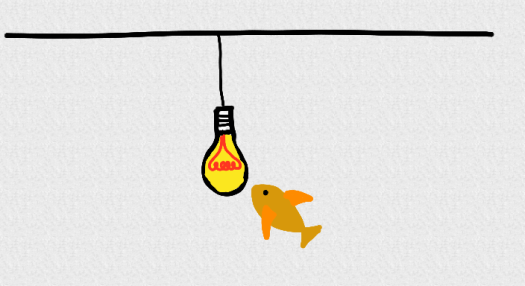
It doesn’t have to make sense. A surrealist joke goes like this – how many surrealists does it take to screw in a lightbulb? The fish.

People might respond to the work in different ways – some failing to see any art in it, others taking offence and some being fascinated by it.

That isn’t very different, when you think about it, from the way innovation progresses in general.

The creative process is not a rational, linear, sequential exercise. It’s messy and random and much more akin to insanity than we would like.

You also need to put more into the creative process than what you know already. This post describes a good example of this process.

If a person is asked to think up ways of using a box, their approach might be to think of how it can be used, what you can fit in it, where you might put it and so on.

A creative person might try and look at it from more angles – what happens if you open it up, get into it, tear it up, fold it down. What else could you do with that?

This kind of thinking results in unexpected combinations of ideas. For example, what does Origami, the ancient art of folding paper, have to do with space rockets?

NASA is experimenting with origami techniques to mechanically fold solar panels into small packages that can be deployed to space.

An origami folded package measuring 2.7 metres in diameter can unfold to create a solar array in space 25 metres across. You get a lot of power from a little folding.

Imagine the possibilities on earth as well.

You could deploy an origami solar package by drone anywhere on earth that could unfold to create a fully functioning solar power station. Free energy anywhere.

It’s easy to assume that surrealist art does not have much in common with practical, down to earth business.

The businesses and opportunities of the future, however, may actually emerge from combining two things that seem completely unrelated right now.

The STARTegy Model: a strategy for getting started

Startegy-model.png

Modern business is usually pretty lean. Investment capital is scarce, costs need to come down all the time and the budget for innovation is minimal.

In this environment, how do you decide what to do – where to put your money and how to develop an opportunity?

A misspelling of the word strategy as startegy may provide an insight.

STARTegy as a word does not appear to be widely used, so it might be helpful to appropriate it to describe what we need to do when we get started on a new opportunity.

Most business opportunities, whether inside organisations or as a new start-up can be seen as projects. The objective of the project is to figure out a new source of revenue.

Most people are familiar with the Business Model canvas, proposed by Alexander Osterwalder. This is now almost a standard model to use when thinking through what your business is going to do and consists of 9 areas:

  1. Value proposition: In essence – what are you going to do or offer?
  2. Customer segments: What is your market segment and the kinds of customers you are going after?
  3. Key partners: Who are the people who can help you get to those customers?
  4. Customer relationships: Who, precisely, are you going to approach?
  5. Channels: How, precisely, are you going to get to talk to them?
  6. Key activities: What do you need to do in your business?
  7. Key resources: What things do you need – money, people, technology?
  8. Cost structure: What is it going to cost to deliver your product?
  9. Revenue streams: How are you going to make money?

This is a good start and helps you check that you have covered all the basic points needed for an internal or external project, especially if you need investment.

But, to put a STARTegy in place, you need more than just a business model.

A business model is a nice, neat, boxy thing that gives you an impression of precision and rationality.

But, the real world is messy and unpredictable.

The way in which we make sense of the real world is through story – through a narrative that helps us make sense of what we see in the world.

So, the next part of the STARTegy model is the story – the beginning, the middle and the end of a coherent narrative that helps people see what you see.

The story you tell will be told, retold, changed, bits taken away, bits added – and over time you will come up with one that is a good one.

But that still isn’t enough.

The capstone of the STARTegy model is making sure that what you have provides sustainable competitive advantage.

There is no point having a great idea for a business if an existing player can simply come along and do what you do pretty quickly and wipe out your market share.

You can avoid this by asking yourself four questions.

  1. Does what you do have value? Do you have something here that really makes a difference – increases revenue, cuts costs, saves time or saves effort?
  2. Is what you do rare? Is it hard to find an alternative to the product or service you provide?
  3. Is what you do inimitable? Is it difficult to copy or recreate what you do?
  4. Do you have an organisation? Do you have, or can you put in place, an organisational structure that can deliver your product or service?

If your answer to these four questions is yes, then you improve your chances of having something can compete and grow or take market share.

In conclusion, the STARTegy model suggests that you need three things to make an internal or external project successful:

  1. Have a clear business model.
  2. Tell a good story.
  3. Make sure you have a source of sustainable competitive advantage.