How to write a business playbook

business-playbook.png

In sports, a playbook describes plays, a preset plan of action.

It’s a number of moves – a strategy – to move a team into the right places to score.

A playbook is not a woolly wishlist – it’s practical, tactical stuff.

So, how can a business playbook help us be more effective?

Let’s take a very simple example and draw out the most basic business operation possible in a consulting firm.

In basketball playbooks, the court has a number of zones and a basket.

Offensive players are denoted with a O and defensive players with an X.

Lets start with an engagement – a practice lead (O1) enagages with a customer contact (X1).

O1 dribbles the ball (the wavy red line), starting the conversation.

What this very first interaction reminds us is that X1 is not the target.

The target is to be useful – to solve a problem, make money, save money and so on.

That is the basket we are heading for at the end of the court.

When X1 and O1 have decided that there is some merit in this and worked out a problem they would like to solve together (identified the basket), the practice lead passes to an operations lead (O2).

The pass is shown by a line with two slashes. Quite often, people just assume others should know what to do, but a playbook shows that a clear pass is needed, perhaps with an update meeting or formal handover.

X1 may also involve other stakeholders, X2 and X3. O2 now needs to dribble towards the stakeholder team and come up with specific work packages and deliverables.

Finally O2 passes to a consultant or analyst (O3) that does the work, shoots and scores.

Drawing the play in this way also brings out a few other aspects.

O3 needs to deliver the work quickly.

The player is in the 3-second area, and you can’t linger in there. Get things done fast and the customer will appreciate it.

O1 is stood in the three point area.

It might be possible to shoot from there, but its a long shot. Instead, it makes sense to do the play and get closer to the basket.

In other words, rather than guessing and trying to make a quick decision, engaging and understanding the client’s requirements is more useful.

In some cases, we might be offered a free throw – a chance to prove ourselves – with a demo or a pilot piece of work.

We need to put the best player on there to try and make the shot.

It’s interesting how, with just a few components, one can draw out a fairly complex business interaction and make the crucial elements clear.

For example, how many projects have you seen where not having a clear handover or pass meant that requirements weren’t understood and it took longer?

How many times have you seen players going for the long shot when actually getting closer to the basket may have delivered the project?

Running a business is less about wishes and more about action oriented plays with our teams – and those are the things that need to go in a playbook.

How did this happen?

unrolling-a-carpet.png

We often want to know how something happened – what was the story behind it?

This approach to looking the world is powerful because it takes everything that happened and puts it into a sequence.

Most storytellers, as a result, follow a linear format – like unrolling a carpet.

First, this happened. Then that. And so, this happened in the end.

Even if you don’t know the ending, it’s going to happen one thing at a time. History is what happens, tomorrow.

This kind of thinking is also dangerous.

It leads us to think that things can only happen in the way they happened.

The extreme version of this is a complete belief in fatalism – the belief that all events are predetermined and inevitable.

This is almost never the case.

It is tempting to think that success for some people was inevitable. For every Zuckerberg and Facebook, however, there are people with similar ambitions, resources and opportunities who didn’t make it.

With hindsight, all the moves that he made were obvious. Anyone could have done it. Except they didn’t.

Taking an issue that has had a much greater impact for longer, the economist reports on a dispute between historians and economists, where there is disagreement how to look at slavery in the American economy and its impact on the industrial revolution.

A historic view might say slavery was important in the industrial revolution – it clearly happened, and therefore had an impact.

An economist might argue that because slavery happened, it does not mean it needed to happen. The industrial revolution would probably have happened anyway, just with different methods – for example with more mechanisation.

History describes what happened – it’s a story.

Just because it happened the way it did, however, it doesn’t mean it was the best way for it to happen, or that alternatives at the time were more expensive or unlikely.

To really understand something, it’s not enough to look at what happened.

We also need to look at the counterfactual – what did not happen, or what was not the case.

What’s your story?

types-of-growth.png

In his book One Up on Wall Street the investor Peter Lynch writes about six stories one can associate with companies.

Every investor wants a ten-bagger, a company that shoots up and multiplies their investment many times over.

Fast growers are usually small or are building a completely new market, which lets them get bigger fast.

They might have the potential to grow 20-25% a year or more for a number of years.

Stalwarts are larger companies, with a profitable market and room to build business.

They might double in a while – say five years.

Slow growers are the established companies that have pretty saturated markets.

They may grow at a little more than the growth rate of the economy as a whole.

Cyclicals experience the ups and downs of business cycles.

Commodities and shipping, for example, tend to go through cycles of oversupply and reduced investment followed by lack of supply and increased investment that makes the price of their products, and therefore their earnings, go up and down.

Turnarounds are opportunities where new management, new owners or a change in the environment make a previously unprofitable or failing company viable.

On the other hand, they might never grow at all – or have to change radically to remain relevant. Textile mills, for example, might move from cotton products to increasingly high-tech fibres now.

Asset opportunities are companies that have value hidden in places the market misses.

If that value then comes to light later, it should result in a rapid increase in valuation for the company.

Peter Lynch came up with these categories a number of years ago and used them mostly to select listed companies for a stock portfolio.

They are, however, fairly universal patterns and can be applied to a number of circumstances.

Take a career or a startup project for example.

Is it slow growing or fast growing? Is someone working on a project that, when realised, will skyrocket their value?

The point is that the story you tell will decide the investment you get.

A very simple model for innovators

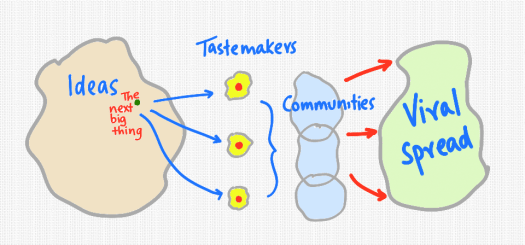
how-innovation-works.png

Once upon a time you needed to be a big company, with research and marketing departments and lots of money in order to find out what people wanted and give it to them.

That’s not the case any more.

The big companies that sat between creators and consumers are disappearing, as the internet makes it easier for people who want a thing to find the people who make that thing.

But, we still have barriers in many places.

Take innovation inside an organisation, for example.

If someone wants to improve a process or a particular way of doing things – can they just do it, or do they need to go through other people first?

How many layers are involved? Does IT need to install the software needed? Does a manager need to approve time to work on the idea?

Approval processes and managers rarely come up with cool new things. IT departments, which should be enablers, often become blockers.

People messing about with ideas and trying to make them work do.

There is a very simple test to see if an innovation has potential.

And that is – does someone else want it?

Whether we’re trying to improve an excel application, create a new product for our customer base or set up a new startup – if we make a thing that someone else wants, then we’re on the track to somewhere.

Will we make any money?

Possibly – perhaps not in the way many people think.

New revenue models are popping up all the time. For creators, Jack Conte created Patreon, a platform that allows people that make stuff to get paid through membership subscriptions.

He did that because money from adverts on platforms like YouTube were plummeting.

So.. if someone wants the thing you make, there is probably a way to make money from it.

At YCombinator, the startup incubator, this idea has become a mantra.

Make something people want. Don’t worry too much about making money.

How to negotiate in a principled way

how-to-negotiate.png

Getting to Yes: Negotiating an agreement without giving in is the classic text on negotiation by Roger Fisher and William Ury, setting out an approach to something many of us do all the time.

Good agreements should be fair, wise, efficient and capable of lasting.

Many negotiators, however, start with a position – such as price and get ready to bargain.

This tends to be confrontational – imagine that this is like trench warfare, where you dig in for the long haul and try to wear the other side down.

That hasn’t really worked out well in the past.

An alternative, set out by Fisher and Ury, is the idea of principled negotiation – set out as four principles to follow.

1. Separate people from problems

All too often, negotiators identify too closely with the problems they are trying to resolve and take things personally.

Winning or losing a point becomes about personal victory or failure.

We have all experienced the person that refuses to back down even when they are wrong. Sometimes we are that person.

The first step is to try and step back, untangle the personalities from the issues at hand, acknowledge and respond to the emotions swirling around us and use words carefully, listening actively and using language designed not to provocate while trying to see the other person’s point of view.

2. Focus on interests, not positions

A position is a decision. An interest, however, is the thing that led us to taking that position.

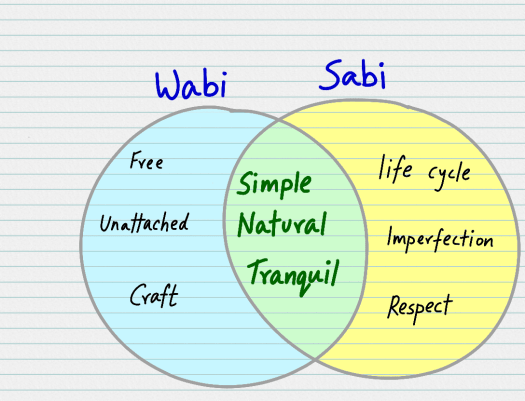
Our interests need to be put on the table, discussed and understood. A useful visual tool for this is a compare and contrast diagram, as shown in the picture above.

The idea is that the better we understand each other’s interests, the more likely we are to find a solution that satisfies both of us.

3. Generate a variety of options before settling

We often fall into the trap of thinking there are few options open to us.

This happens a lot with jobs. If someone is frustrated, they think the only option is to quit.

Instead, if they were able to have a principled negotiation, it might be possible to find other approaches that might work better.

Generating options is about being creative – coming up with a range of ideas and working through them, perhaps using a framework such as TOLOPOSOGO.

This is where the idea of win-win comes into it. Alternatives that maximise each parties interests are more likely to go ahead than win-lose.

4. Insist that agreement be based on objective criteria

When we just can’t agree because our positions are directly opposed, then we need to find a form of objective criteria that we can both share and use to resolve differences.

The classic example here is when you share a cake between to children and they both want to cut and choose first.

Resolving this often means agreeing that one child cuts it and the other gets to choose first.

It might be possible to adapt a decision table to make this clear to both parties.

BATNA – the Best Alternative To a Negotiated Position

Sometimes we can’t agree, perhaps because the other side refuses to engage in the open way needed for principled negotiation or thinks that they can get their way through manipulation and dirty tricks – such as deception, trying to create artifical stress (banging the table, eating before a meeting and leaving you hungry) or leaking to the media.

In this situation, we need to call them out.

For example, if someone makes a take-it-or-leave-it type offer, then we need to treat that as a proposal and not simply accept the feeling of finality imposed by one side.

It’s also important not to have a bottom line, especially when there are imbalances in perceived power.

The only reason to negotiate is to get a better deal than one we can get if we didn’t negotiate.

That is our BATNA, the best alternative. Knowing our BATNA helps us make the most of what we have.

The power in negotiations comes from the ability we have, in the end, to walk away.

How to deal with the facts in front of you

beyond-budgeting.png

How do we know what’s round the corner when we’re driving somewhere?

We look in front of us, through the windshield, at the road ahead.

The road behind us, reflected in the rear view mirror, isn’t going to add much to our journey now.

So, why is it that so much of what we do in work resembles driving by looking in a rear view mirror?

Take budgets, for example.

In many businesses these are set at the start of the year. We assume levels of sales and costs and work out what we think will come in that year.

Perhaps we set targets that are higher than we can achieve – as “stretch goals”, with the idea that this might motivate us and drive us to accomplish more.

Then, we tend to forget about them. Perhaps someone looks at them once a month and sends out an update.

Or, take the business of losing weight.

If we’ve put on a couple of stone and decide at the start of the year it’s going to come off – then we’re essentially setting a budget for weight loss.

Perhaps we then check our weight every once in a while and see where we are – and then it all gets a little too de-motivating and we switch off.

Many entrepreneurs seem to have a different approach – both to money and weight loss.

Instead of thinking up a magic number and then looking back each month to see how they are doing when compared to that number, they look forward.

They pick a target – for example the amount of money they need to bring in each week to break even and then watch how they are building up to that number every week.

This is a subtle but important difference.

They don’t ask themselves, “How did I do last month compared to budget”.

They ask, “How far off am I this week from target?”.

They know that if they build up to their target every day, every week, then as the weeks turn into a year, they will arrive at their destination ahead of any budget they might set.

In addition, if they are having trouble getting to the target, they can do something – they can change tactics, commit to doing the basic things they need to better or set a more realistic target.

There are no penalties – just deal with the facts in front of you.

Like driving, if a tractor pulls into the road ahead of you, then you can slow down or change direction.

You can only do this if you are looking forward, not back.

How much work can you really get done today?

actions-list.png

What kinds of things does work cover?

For many workers, it’s either a task or an appointment.

We handle tasks in to-do lists.

We add to these lists every day, either with a constantly growing one or on scraps of real or digital paper, scattered about.

Items on to-do lists are like weeds, they keep turning up and there is never enough time to get them all cleared away.

Appointments go on a calendar.

They are a commitment that we will meet with someone at a particular time, and they go into a slot.

More often than not, we are pretty good at keeping appointments.

Dan Charnas, in his book Work Clean – The Life-Changing Power of Mise-En-Place to Organize Your Life, Work and Mind, writes about how many people deal with the day.

Underplanners plunge in unprepared.

How the day goes is likely to be a surprise and what they do is determined by how others interrupt, order or interact with them.

Overplanners go to war with the day.

Their schedules are tight, with no space for disruption or the unexpected. They expect you to set an appointment for every discussion.

Both approaches don’t really leave us with a feeling that it’s been a good day at work.

Dan suggests that working clean with time means two things:

  1. Work out what you want to do
  2. Organise those in sequence

What you want to do – appointments or tasks can be collectively called actions.

He suggests starting with listing three actions that you want to do tomorrow. Put them on your calendar in the order you want to do them – fitting them in around any appointments you already have.

Then, do your actions.

If you did everything on your list, then move to setting out four actions.

Keep increasing the number of actions until you reach the point where you can’t always cross off every item on your list most of the time.

For example, if you can mostly do six things every day but never break seven, then your optimal number is six – what Dan calls your Meeze Point.

Less than that, and you’re probably not pushing yourself enough.

More than that, and you’ll probably just be overloaded and feel like you’re not achieving anything, even though you really are.

Your Meeze Point is the number of things you can really get done today.

How to do technical analysis in energy markets

technical-analysis.png

Most of us shouldn’t be doing any technical analysis.

If you are an end-user – someone who actually needs a commodity and uses it in real life, then the maths of markets shouldn’t be the main thing you think about.

Instead, like in any other business, the closer your purchase price is to the cost of production, the better the deal you’re getting.

In a commodity market, like the electricity and gas markets in the UK and Europe, the best strategy is to first work out that number.

Then wait.

When the market price is close to your number – buy.

If you buy too early and the price goes doen – then buy some more and average down.

But – these opportunities only come along once in a while. In the last 15 years, there have been perhaps four occasions when the price was right and it made sense to fill your boots.

So… what do we do if we have missed those opportunities?

At that point, many people fall back on market timing – trying to get a better position by making a call on the whether the market will go up or down from where we are now.

And the tool we use is technical analysis.

The idea is that a combination of indicators can help us come to a view on where the market is headed.

The indicator to start with is the Moving Average. This is the average of a number of days and smooths out the daily variations in prices.

When a 9-day moving average crosses the 20-day moving average, it can be a signal that the market is going to change direction.

Between these, the smoother curves help us form an opinion on the trend.

In commodity markets, the Relative Strength Indicator or RSI is a popular measure.

The RSI is created by adding the number of days the market went up and dividing it by the number of days the market went down and turning it into an index from 0-100.

When the line crosses above 30, it’s a bullish signal and when it crosses below 70 it’s bearish.

Volumes traded in the market also provide an advance signal of changes.

If more people buy, it might push the price up, and as less people engage, the price might go down.

A change in volume levels can be an early sign that the market is changing its mind.

Bollinger Bands are a more complex technical indicator.

We work them out by calculating two standard deviations from a central line, usually the 20-day moving average. The theory is that prices should be within this range most of the time.

If they break out of the bands that could be a signal to buy or sell.

The challenge in energy markets is that as the number of options increases we have more of them to track and take positions on.

There are obviously many more indicators, some fiendishly complicated.

The point is that markets may be closely correlated – but that doesn’t mean just looking at one measure, like an annual contract, is enough these days to pick out a price that is undervalued.

In an ideal world, we would buy at cost-price and not need to do any technical analysis at all.

But – when we do, it’s useful to know how it’s done.

How to make daily progress towards a goal

jar-of-paperclips.png

Many projects need continued work and commitment over time without providing the kind of feeback that tells us that we are on the right track.

Managing a project, writing a book, doing sales calls, managing accounts, reading papers, writing code – all these require us to do something, day after day.

It’s easy to think that we aren’t making progress on the big goals just because all the small bits of work we do aren’t amounting to anything more than half finished drafts and work in progress.

Part of the the solution, according to James Clear, is to create visual cues that help you measure your progress.

He uses the example of Trent Dyrsmid, now a serial entrepreneur. In his first job, Trent had to make sales calls – and the method he used helped him launch his career.

He had two jars on his desk and filled one with 120 paperclips. Even day, he’d start making calls and after each one move a paperclip from one jar to the other.

He was done when he had moved all the paperclips.

He credits this with helping him develop a large book of business and his subsequent success.

It’s hard to visualize progress on a big goal or objective.

When we can break it into small, manageable chunks then we can make meaningful progress quickly on each small chunk.

If we can also make that progress visible, it also helps motivate us to keep going.

The idea of a visual cue, like a Kanban board, is that it takes things out of our heads and puts them in front of us.

The question to then ask is – what are the things we most want to do, and so what activity should each paperclip represent and how many do we need to know that we have made real progress that day?

And, because we have limited space, we should have the fewest number of visual cues necessary to monitor only the most important things we need to do.

How can you become more profitable?

peter-lynch-5-ways-to-increase-earnings.png

What exactly does it mean to grow a company?

In the age of the internet, it seems that growth means eyeballs. You need to add users, quickly.

It doesn’t matter if those users are unprofitable. The idea is that if you add enough people, then a larger company will buy you just to be able to talk to your customer base and sell them more stuff.

Most businesses, however, don’t work like that.

They have three levers they can push – money, customers and operations.

According to Peter Lynch, the well-known manager of Fidelity Investments’ Magellan Fund until 1990, there are five things companies can do to increase earnings.

An investor would look at which of these options are open to any particular company before investing.

1. You can cut costs

Focusing on costs can be boring, but every penny you save has an immediate impact on profits.

Some costs, like electricity, gas and water, may be small – but their impact on profits can be considerable, especially in a competitive, low margin marketplace.

In an ideal world, you would compare costs against expectations daily, taking action to correct variations as soon as possible.

2. You can raise prices

If you raise prices, you will lose some customers.

That is no reason to keep prices low.

The calculation one needs to make is to work out at what price point a further increase will result in a net loss from customers leaving as a result.

This can be calculated – it requires a pricing model and charting, or if you’re feeling in the mood, differential calculus. Let me know if you’d like more information.

3. You can sell more to old markets

You may have more services that existing customers would take, if they were aware of what you did.

If you already have an existing working relationship with someone and have provided a good service you have an advantage over the competition.

4. You can expand into new markets

Now we’re looking at how you can get new customers.

The easiest place to start is to find customers like the ones you already have.

It’s much easier to have a conversation when you already have similar customers to the one you’re trying to work with.

And those conversations may tell you where the opportunities are for new products and services.

5. You can fix, close or sell a losing operation

If a part of the business is hurting profits, then you need to look at it carefully and work out what your options are.

It’s easy to fall into the sunk cost fallacy, where previous decisions and investments stop you from just stopping.

If you can’t fix it, then you need to close the operation or sell it – and that will have an immediate impact on your profits.

Lynch argues that how a company plans to deal with these five areas is its “story”.

As an investor, a company needs to to have a plausible and preferably compelling story about how it plans to increase profits before you put your money into it.