When a man tells you that he got rich through hard work, ask him: ‘Whose?’
— Don Marquis
Your first few customers will come through founder-led sales.
This week I’ve been working on my sales process. The simple truth every founder needs to hear? It’s up to you. If you don’t put in the work, nothing happens. Clients don’t magically turn up.
I’ve been doing some things right and some things wrong.
I started posting regularly on LinkedIn. There isn’t a huge readership – we’re all competing with many other people on the platform – but being invisible isn’t a good strategy if you want customers.
You’ve got to get out and do something – anything – to get started.
A year ago I put some time into pushing out content. I found that the people that liked what I published and that I interacted with were similar to me – interested in the same topics and with similar jobs. I saw that as a problem. After all, I was networking to meet clients, not competitors.
What I hadn’t realised was that you have to reach out to clients first. Every potential buyer has been approached by ten competitors before you’re even thought of getting in touch with them. The chances of them seeing your content and getting in touch are vanishingly small. You’ve got to start by improving the odds.
And this takes work. Not hard work like digging ditches, but work nonetheless. It’s a few hours a day working on reaching out to people that work in the roles that have the power to decide whether to work with you or not. And then a few more hours the next day. And so on until you have your first 20 clients and can afford to hire someone to do this work for you.
People who can bring business into a firm are called rainmakers.
I’m working with a coach to improve my rainmaking skills. Having someone talk through a plan with you, and then keep you accountable and motivated, is a good way to build and keep momentum during what is going to be an emotionally draining period. It’s easy to get low when you have no responses. You get that dopamine hit when someone responds. You have to learn to keep working the plan despite what you feel from time to time.
It’s early days, but what I can tell you already is that if you put the work in then something will happen. I can also tell you that the opposite is true – the best way to stay exactly where you are is to do nothing at all.
I might spend the next few posts digging into rainmaking as a topic, working through some of the ideas as a new book project.
Your customers are the lifeblood of your business. Their needs and wants impact every aspect of your business, from product development to content marketing to sales to customer service.
— John Rampton
I’ve got sales on my mind. I run a business – well, actually a couple of businesses now.
I dropped out of a PhD to join a startup twenty years ago as their first employee. Three of us in a small room. We grew to thirty and were acquired eight years later. I spent a decade in a corporate environment, and now am back to the startup routine, which is where I’m most comfortable.
That journey taught me a lot about building a business. In a startup you’re responsible for everything. Back then I was building computers and putting in wiring for servers. Now, you just start a Microsoft or Google workspace subscription and everything you need is up and running immediately. Infrastructure is not a problem.
Sales, on the other hand – there’s the real challenge. Sales isn’t magic – it’s a craft. One that you have to learn just like you learned everything else, with repetition and focus. So I’ve spent a little time today going back to basics. Reading the classics. And here’s what I’ve found.
Paul makes a distinction between founders and managers. Titles like CEO or COO mean nothing in a startup. You don’t have the ability to give your team instructions and then go golfing. You’re a part of the team – not apart from it.
You feel different when you introduce yourself as a founder, rather than a CXO or a sales person. It’s life or death for you. And you should approach it with that attitude. Seriously and with purpose. This matters. And if you really believe that, your prospects will see it too.
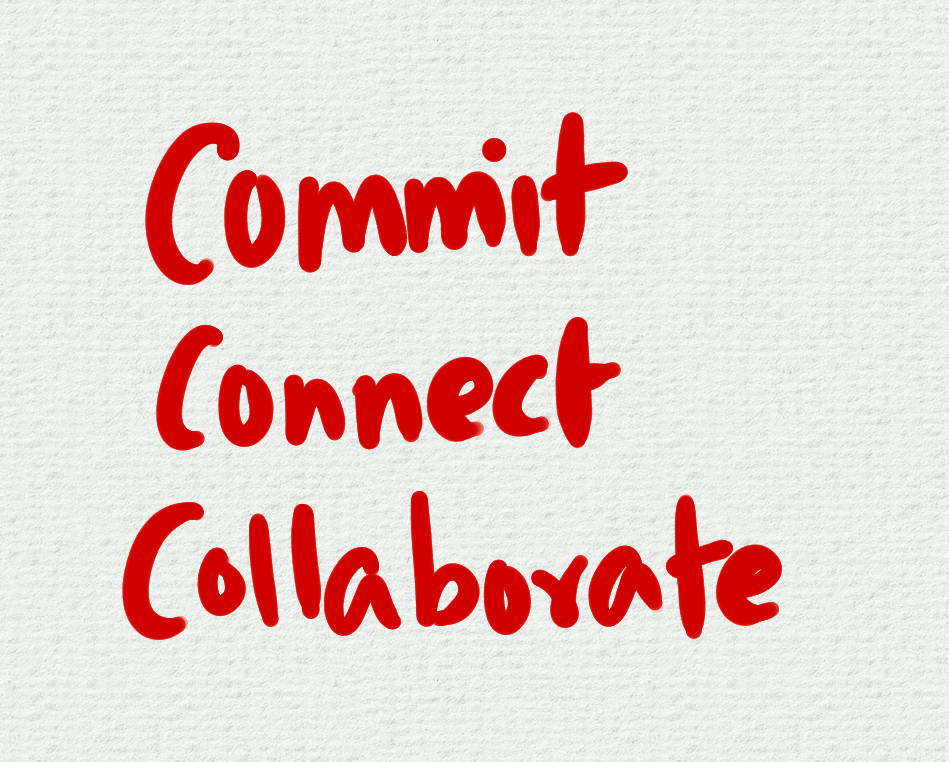
Commit, connect and collaborate
But what should you do – how do you spend your time? Three words: commit, connect and collaborate.
PA Consulting carried out research that found that professional services firm partners fall into one of five profiles. Only one of them is a rainmaker – that rare breed of person that brings in business to the firm. They called this profile the Activator.
An activator commits to building his or her network, connecting with people at different levels of an organisation. They know that a single contact is a single point of failure. As a result, they learn more about the company’s strategies, issues and needs.
Armed with this knowledge, they can collaborate with others to create products and services their clients truly need.
Engage on their time, not yours
B2B sales have changed since COVID. Everything starts with reaching out – but it’s not about cold calling or emails and relentless follow ups. I remember reading a line from a cold caller that said once a person was on their list, they stopped getting calls when they bought, or when they died. It’s a good thing that kind of thinking is dead.
Instead, you have to be where prospects are – which these days means platforms like LinkedIn for B2B consultancy firms like us. And events. And conferences. Places where people come together to learn from people.
The big difference is that the journey is now messy and multifaceted rather than linear and predictable. Lots of touchpoints rather than a funnel. Your content becomes the new cold call. Material that’s there for prospects when they are ready for it – case studies, opinions, videos – on their schedule.
Standardise marketing, not sales
Now this type of reality crashes headfirst into a common thought pattern. Many people believe that things that work have to be standardised, repeatable and teachable. In B2B, however, things are often complex, complicated and confused.
One of the best explanations of what needs to change here is the need to end the war between sales and marketing. The traditional view is that marketing is fuzzy and hard to measure. Sales is predictable and numbers driven.
In reality, we need to reverse this. Marketing is about numbers – put in the work, make connections, share content – and you’ll start conversations with the right people. Marketing opens the door. Sales then figures out what to do in the room – listening, understanding and co-creating the products and services that add value.
And closing the deal.
Learn to surface demand
Now you’re in front of a prospect. How do you talk to them and understand what they need?
Rob Snyder has an answer. His PULL framework gives you one way to structure a conversation.
Start by talking about a Project that they have to work on – one that’s Unavoidable and has to be done. That means it’s important. List the options that the prospect is going to consider. Do they all have severe Limitations? If so, you’ve got a demand signal – they need something. Now you can work out what that is and build it for them.
In other words, if you figure out what a prospect needs – demand – you can provide what they need – supply. It’s basic economics, just the other way around.
Putting it all together
In the end, sales is like everything else in a startup – you learn by doing. Get that right and you’ll end up with delighted customers, and a business that was worth building.
You can’t run a marathon without running a marathon. – Chris Sale
I’ve been writing on this blog for 8 years. I have a process. Bash out a draft, spell check, and hit publish. It’s good enough so get it out there.
I think that’s been the right strategy so far. When you’re starting it’s important to focus on producing work – to build the habits that help you create. Quantity over quality.
Over the years I’ve tried different approaches. Short sentences. Long sentences. Academic paragraphs. Lightweight paragraphs. Experimenting with writing styles and structures. I’ve tried projects – book projects, book summary projects, social media projects.
In the process it’s helped me find my voice and develop a writing style that works for me.
But now it’s time to get better. To improve my writing – and that comes from editing and rewriting. This time I’m not writing for myself, but for a reader who is giving me their time. I have to deliver value in return.
So that’s the plan as I head into the final stretch of my million-word writing goal. There are less than 20,000 words to go. I’m going to try and make them good ones.
I’ve always worked in startups – in that space where we try and identify opportunities, build systems and try to create value for clients.
In that time I’ve worked with lots of managers in large organisations. We’ve even hired some of them.
Most found the startup pace hard.
It’s the lack of support that gets you – having to do everything from creating a complex spreadsheet to fixing the printer yourself.
But that’s just the foundation. The boring but necessary stuff.
The real difference is whether they’re open or closed.
I must confess – I’m naturally quite closed.
As an engineer I’m heads down, focused on work, building things.
Fortunately, I work with partners that are the opposite of me and I’ve learned over time that being open is an essential skill to develop.
Open people are heads up. They connect with others, build relationships and look out for opportunities. They’re optimistic and politically astute. They’re likeable.
Drucker said that the purpose of business is to create and keep a customer.
In consulting, we add services only when it’s clear that clients need work done and every other option is worse.
Sometimes it feels like mucking out stables.
The work never ends, and just when you’re done it’s time to start again.
Take working with utility data, for example.
When I started out suppliers would email you billing files every month. Then portals came along and turned a one minute task into an hour of watching spinning loading screens.
And without the data, you’ve got nothing.
So we hired people, trained them as analysts and got them collecting and checking these bills.
We thought many times about outsourcing the task – but it takes a certain kind of person to care enough about getting this right – the detail, precision and technical complexity puts off most of the population.
And getting data and making sure it’s clean is the first step to doing everything else we do.
So we kept doing it in house. Because clients needed us to. And we had learned how to do it well.
This is the challenge clients have with outsourcing work- especially work that has to be done but isn’t strategically core to your business – like energy and carbon data management.
Jim Collins said it best – “If you can’t put your best people on it, then find someone else and get them to put their best people on it”.
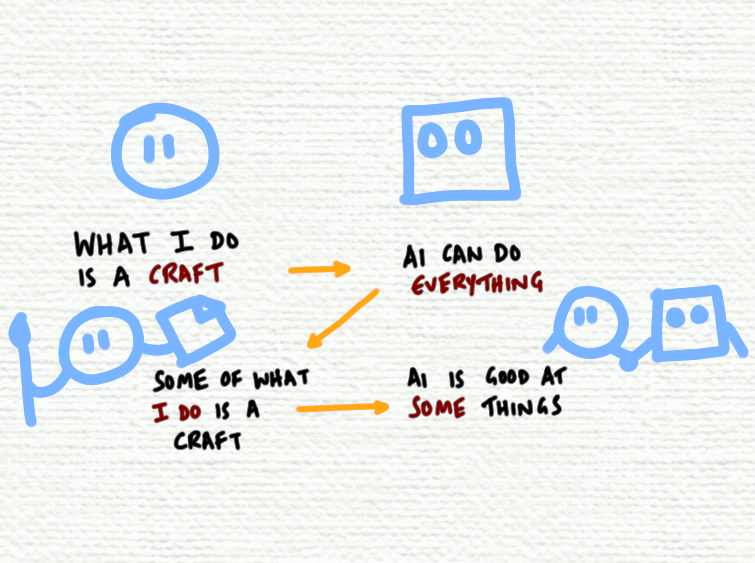
Two years ago I started building AI tools to help me with tasks. Now, I’m leaning back into doing some of them myself.
Things that are too easy to do have no value. One of the few things I remember from the one economics module I took was that the price you ask will drop to your cost of production in a competitive market.
Work that AI does for you for pennies is only worth pennies to your buyer. You may imagine that your prospects will value the time and effort that went into crafting your prompts but really they’re thinking two other things.
Can I do this myself for free?
Can someone else do this for less?
The downward pressure is inexorable.
Let’s take one particular example – using AI to summarise documents.
A couple of years back I built a simple tool. It took pdfs, converted them to text, split them into segments that would fit in ChatGPT’s context window, and then automatically extracted the key points that mattered.
Not as summary – a distillation. The job was to remove the fluff and leave the facts and key strategic points.
The advantage – it was quick. The disadvantage – it did something that wasn’t really worth doing.
A document worth reading will already be structured in a way that does this for you.
An introduction or executive summary will lay out the key facts and points.
The rest of the text should only include information that is important and relevant.
The only reason not to read the whole document is if it’s badly written. The logical response is to ignore it, not use AI to summarise something that isn’t worth your time to read.
This is just one example – the lesson for me is do your own reading. And your own writing.
You’ll learn more that way.
I still use AI every day. It’s a powerful tool.
We just need to figure out what’s it does that’s really valuable.
How would you answer if someone asked what you were most proud of?
Burritos.
That’s was the answer that popped into my mind.
Admittedly, I was making burritos at the time.
Here’s the background. A year or so ago, I was making lunch packs for the kids.
White bread or a wrap. Ham. Cheese. Mayonnaise. A sliver of lettuce.
This was bothering me. For a few reasons.
The news was talking about the carcinogenic effects of processed meat. You had the embodied emissions in red meat. And the health problems of a diet high in animal protein.
Should I really be shovelling this stuff into my kids?
But they loved the stuff.
Then I thought about burritos. And the more I thought about them, they seemed the obvious solution.
Slow cook dry beans in batches. Red, black, pinto, chickpeas. You’re spoiled for choice. Add salt and spice. Nothing fancy. Rice as a base on a wrap. Beans on top. Chopped salad and tomatoes.
I tried it as an experiment. Sent the kids off with the new packs. They came back glowing. “That was the tastiest lunch ever.”
My morning now looks like this. Make porridge. Make burritos. 11 a week for the road warriors. Over 400 a year. Thousands as they go through school.
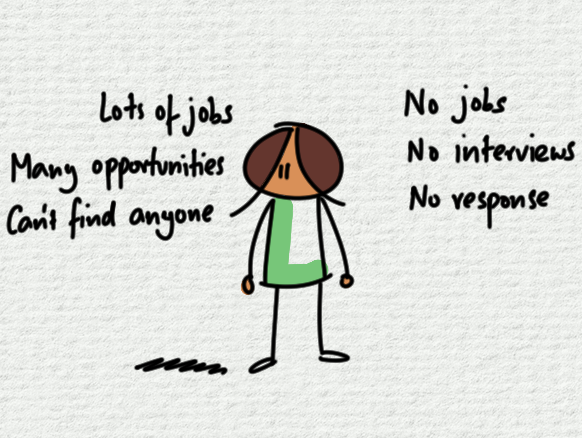
I’m a little confused about the jobs market at the moment.
I’m a little out of touch. But when I was starting my career it was the down bit of the dot-com bust.
I sent out hundreds of letters and got no response. It didn’t feel like there were jobs out there, at least not any that I could get.
But it seemed like it was a fair shot – if you kept trying you’d get something.
I’m not sure that’s the case now.
I keep hearing and seeing that people apply for a thousand jobs and hear nothing.
Okay – first, you can’t thoughtfully apply for that many jobs – it’s pretty much spam.
And on the other hand, recruitment managers must be overwhelmed by applications, and there’s got to be businesses set up just to maximise applications and play a numbers game.
So, the standard apply and be judged fairly system must be broken.
Which means the people getting the jobs, the opportunities, must be getting them through connections. Through knowing someone that can cut through the mess.
Technological solutions are making it easier for the haves to keep what they have rather than creating a level playing field.
Of course, this is a pessimistic zero sum view.
If technology destroys the existing job market something new will come up.
The people succeeding are the ones using unconventional ways to get ahead – building portfolio careers from the age of 16, leaning into new technology.
There are people creating new careers that didn’t exist a year ago. New business models that are being floated and tested.
What would you tell your kids now? Do you think the university -> job -> pension route is now done for?
This guy sat down next to me. “Are you writing a song?”, he said.
I was on the station platform waiting for the 16.53 to Leeds and making some notes. On a yellow legal pad with a fountain pen – with purple ink.
We talked for a bit. He’s in town doing some construction work. Writes songs. Likes the Beatles. Emigrating to Australia next week.
It was a short chat. He hopped on a train. I took the next one.
The afternoon had turned out glorious. The sun was out. The landscape flashed by. Grey clouds dotted a blue sky like an armada arriving off the coast of Normandy.
I noticed solar panels sprouting on warehouses. Elegant, flat panels covering south facing roofs.
Not the smoothest train ride and hard to write on. Another passenger remarked that he’d never been on a plane. More accidents now. His neighbour didn’t like trains going through tunnels.
Horses, each with a field to itself. One field with a row of VW Type 1 Beetles. Maybe being restored by the people in the grand new build next door.
You see and hear a lot more of life when you step away from the computer.
The US economy is sputtering. This should worry all of us.
There are two big happenings that are affecting markets, one immediate and one longer term.
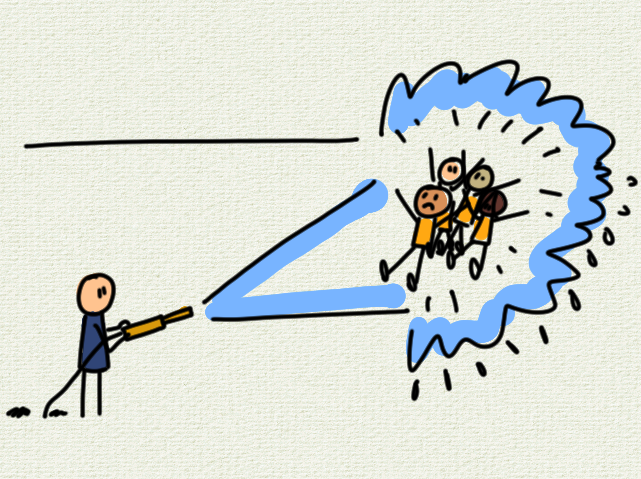
The immediate issue is that the US economy is reeling from a firehose of policy shocks, what some might call erratic decision making, and what looks increasingly like a puncturing technology hype bubble.
People are being affected. The economy is adding fewer jobs than needed for economic growth.
Cooling demand usually has a follow on effect on energy markets, dampening global prices.
The longer-term issue is the rise of the far right, and the resulting economic consequences of power-based politics.
The Economist suggests that by 2027 some of Europe’s most significant economies could have hard right parties in office.
Traditionally such parties implement protective and nationalistic policies – offering tax cuts, competitive protection and handouts.
The result is often stagnation. Populism and poor economic decision making go hand in hand leading inevitably to fiscal crisis.
We can see the early warning signals here in rising bond yields – it shows that markets are starting to price in these risks.
And often, things get worse before they get better.







 Handcrafted insight