Do You Think Covid 19 Will Change The Way We Live?

management-response.png

Saturday, 8.31pm

Sheffield, U.K.

Long-term commitment to new learning and new philosophy is required of any management that seeks transformation. The timid and the fainthearted, and people that expect quick results, are doomed to disappointment. – W. Edwards Deming

This is a fascinating time to watch what is happening with businesses as they respond to the impact of the Covid 19 virus.

We’re in a position where we can see what people think, how they’re affected, what they’re feeling and doing because they tell us on social media.

Now, we have to remember that there is real suffering, real tragedy – and people trying very hard to keep the world’s population safe so that more people don’t die.

And while it’s tempting to try and point fingers, to blame individuals and their behaviour for the reason we are where we are, what we need to always remember is that’s the most basic error we usually make.

We blame people for how things work out rather than the system – their situation.

We are where we are because of the system – the systems involved.

The systems of global transportation, of holidays, of long supply chains, of office work, of entertainment – the myriad other systems of modern life.

All these systems create the conditions that enable the spread of this virus – and it’s not surprising that the way governments have chosen to contain it is by stopping those systems from functioning at all.

Which leads to the obvious question.

What stops this from happening again when those systems are restarted?

Now, we’re not going to solve all those global systemic questions in one go, but an interesting and topical one to look at is the way in which we work.

For the vast majority of people who do non-critical jobs there is now a way you used to work.

You might have commuted to an office and spent the day in front of a computer.

You might have had meetings with a manager, with co-workers, with suppliers and clients.

You might have socialised, gone out for drinks, gone to networking events.

What’s happening now, it seems from the number of pictures that are being put up of brand new home working spaces, is that the office has come home.

People are jumping onto team calls, having chats with managers, setting up social mixers online.

Nothing has changed except for the physical distance between people.

As someone online said, it’s social distancing, but not distancing yourself from society.

In effect, there’s a thin layer of remote working technology that enables you to carry on working exactly as you’re doing now.

So that’s good for people who like how it is now.

It’s good for managers who like having the ability to check up on people – perhaps to the extent of having a tool that takes screenshots of their screen every so often to make sure they’re still working.

It’s quick and easy and people are finding that this whole remote working thing is quite easy after all.

They just thought it was hard – and it turns out there is no difference at all.

And that shouldn’t surprise you.

It’s easy because the large tech firms have spent the last several years trying to create tools that let you do the same thing you’re doing in the office using their technology.

If you weren’t doing it that didn’t mean the tech didn’t exist – it just meant you weren’t aware that it did.

And now you are – subscriptions for these tools are skyrocketing and demand has increased.

They built something that would work for you now – and unsurprisingly, it does.

The tragedy is that it does.

Because we’re going to miss out on the real potential that this crisis offers us – a way to change the way we’re doing things entirely.

In reality, we could be arranging work so that it works to fit the unique circumstances of each individual.

We could create working practices that enable more diversity – that use the same kind of remote working technology but that make it easier for disabled people to participate in work, for disadvantaged groups to access opportunities.

And, for your own workforce, you could create working practices that work for them – rather than for the most vocal or for the dominant managers.

But that’s not going to happen unless you change the system – and that’s the responsibility of management.

Will management respond in a way that looks to improve the system?

Or will they look for the quickest way to carry on doing things the way they’re working now.

The answer shouldn’t surprise you – because the other option requires the willingness to learn and study and try and few people have the time to do that.

So, in the short term, the forced stoppages of systems will clear the air, remove pollution, heal the planet.

And then it will go back to normal.

Won’t it?

The fact is that without changing the system the underlying mechanism will remain the same and produce results that are the same as before.

If we want to create better, more fulfilling lives for people – we have to work on improving the systems they live in.

If we want a cleaner planet, one where we pollute and emit less and where we consume fewer resources, we have to work on the systems.

This virus is not going to change our world.

It may interrupt how we live for a while.

But if it’s short-lived, we will probably go back to normal quickly.

If it lasts for a longer time then we may start rethinking how we do things.

But the change will still have to come from us.

Cheers,

Karthik Suresh

How A Crisis Reboots Our Entire Way Of Thinking – With Stories

bound-by-story.png

Friday, 9.32pm

Sheffield, U.K.

People like to think that stories are shaped by people. In fact, it’s the other way around. Stories exist independently of their players. If you know that, the knowledge is power. – Terry Pratchett, Witches Abroad

You have probably all noticed the scramble for attention online – the rapid repositioning of resources as companies deal with their inability to be in the same space at the same time as others.

Organisations that specialised in face to face services now have to change their models overnight to distance communications and no-contact delivery.

And they’re doing it amazingly well.

Close to us is a sustainable food business that used to be based on group catering that has transitioned to offering delivered meals – a full week’s menu.

Organisations that did conferences have moved to webinars.

Meet ups that required you to go down to a space now have a call in.

So, we’re rapidly reconfiguring the way in which we network with others.

On the one hand this has the effect of a tidal wave swamping our existing communications.

On top of the regular stuff we get there is a lot of additional material as the newly digital promoters tell us what they’re offering.

And maybe things will subside – after all most of these organisations have customers and lists they have built over decades and they are talking to the people who already care about what they offer.

It’s just that the story they’re telling about what’s going on has changed.

Or has it?

Terry Pratchett’s book Witches abroad has the penetrating vision of his other books – as an impossible land filled with impossible characters that play out their impossible lives – while revealing fundamental truths about how we live ours.

We’re surrounded by people, things, events and institutions.

We don’t often question these – wonder how they came into existence.

Most of them seem like they’ve always been there – and they have been – for our lifetimes anyway.

Things like democracy, a parliament, libraries and the NHS.

But what created them in the first place?

What’s there, binding everything together, like an invisible ribbon coiling around the world we think we live in, is a story – many stories.

The stories that have created the way we think now.

What happens in a crisis is that some stories start to fray and rip and others take their place.

We replace stories about how important it is for managers to see what their workers are doing with stories about better remote working and mental health.

We dig out forgotten stories about community and helping others which we didn’t need when we all had cars and supermarkets and could get everything we needed without speaking to a single person.

When you think about it this is something we’ve always known.

Stories are like a programming language for our brains.

We use them to program our children – with language, with ideas, with thoughts, with ways of being, with kindness.

And when we’re older we still crave those stories – although we think that we’re too old for them now.

For a few decades now I’ve read mostly non-fiction – and over the last couple of years I’ve started to realise just how thin and translucent and fragile most non-fiction is.

Fiction, on the other hand, is deceptive – while it seems like a child’s pastime, like something you read on holiday at the beach – it captures the human experience far more completely than any dry analysis of the situation.

With Pratchett, who I rediscovered recently, I started with the book on the left and started moving right.

And then they closed the libraries…

Anyway.

The point I think I’m trying to make is that life is complex and wonderful and deep – but while we’re experiencing it it’s too hard to understand what’s going on.

A fish, for example, probably doesn’t have a word for water – even though it spends its life in the stuff.

A story, on the other hand, picks out a few essential lines from that complex life picture and shows us more with those few lines than we could ever see by living the whole.

And that’s how it shapes how we think.

And that’s why stories have power.

Use them wisely.

Cheers,

Karthik Suresh

Why The Scientific Method Is Of No Help When It Comes To Understanding People

value-pirsig.png

Thursday, 9.25pm

Sheffield, U.K.

CEOs can talk and blab each day about culture, but the employees all know who the jerks are. They could name the jerks for you. – Jack Welch

I thought I would take a quick look at Robert Pirsig’s book Lila: An inquiry into morals to refresh myself on what he wrote about organising information.

But I found myself following a trail of words that were really about something different – something that describes what I’m slowly understanding now – something that I just didn’t see when I last read it.

Perhaps it’s just that I’m seeing more of this thing around me now – and so I’m more aware of just how important it is to us.

What is this thing?

Culture.

Now, I’m not going to try and define culture – but many people have.

And when they do, it starts to become complicated – you get long sentences filled with jargon as people try and pin down exactly what they think “culture” means.

In a nutshell Pirsig argues that people trained in the scientific method – logical positivists – say that you should only look at facts.

Facts are things you can see, observe, document.

So you can write down things about the culture you’re observing.

For example, in an office, you can document how people do their work, how different people approach tasks, how they spend their day.

An anthropologist would do this but what they wouldn’t do is generalise – say that the behaviour they’re seeing is because of certain values.

And that’s because “value” is another hard thing to define – and if you start saying anything about values – well you’re in the territory of various “isms” and you’re going to get in trouble.

For example, if you say your staff are lazy, or you talk about characteristics that are related to ethnicity or gender – you’re going to get hauled in front of HR or a tribunal pretty quickly.

From a scientific point of view, however, value is not something you can measure – you can’t objectively study it and so, for all practical purposes, it does not exist.

So, on the one hand, people who study culture for a living are too scared to say anything about it and people who live that culture don’t know enough to really talk about it sensibly.

Yet it exists.

Let’s ground this in the topical example of the Covid virus’ impact on the global economy.

You have read the stories – you’re cheered by the resilience of people, warmed by the generosity of many, buoyed by the support given to staff and suppliers by some organisations.

You’re annoyed by the stockpiling and selfishness of some, incensed by the laying off of workers by rich firms and shocked at the way some people have been forgotten.

What you’re seeing is the manifestation of cultures.

The problem happens when you try and name what’s going on.

Pirsig argues that you have subjects and objects – the things that are doing things and the things that are being done.

I’m probably off on the grammar, but if you put your hand on a hot stove, and you swear – one is a subject and the other is an object.

A voter marking the ballot paper is making their view felt on the politicians out there.

The difficulty arises, according to Pirsig, when we try and ascribe values to the subject or object.

When you try and say something like that person is a conservative or that viewpoint is conservative – both of which are value judgements.

This is easy to do – and it’s hard to see why it’s not the thing you should do.

Value actually lives between the subject and object – it’s the thing that you sense directly, the thing that you experience.

For example, when a manager shouts at you – what you experience is value – low value to be sure – but that’s the value.

The value doesn’t exist in the person shouting or in the feelings you have later – but it’s the thing you sense that comes from one and results in your feelings later.

And knowing this distinction matters because you have to experience what is going on before you can get a sense of the values at work, and therefore the culture at work.

Going back to our Covid example.

There are undoubtedly companies out there who talk about their values – set out a list of things that they believe in.

And they also, at this time of trouble, treat their employees like disposable commodities.

That experience – which you see documented all over social media – those are their real values.

Now, the other thing about these values is that they are as real as anything else out there – you’ll experience them all the time.

At this point you’re probably thinking – so what – what is the point of all this?

The point is this.

When you’re trying to sell to someone, to help them change, to make a difference – you won’t get anywhere if you try and put them in a basket conveniently labelled in some way that makes sense to you.

Using segmentation and personas and all that stuff is a way of trying to bottle culture and value.

You may be lucky and there may be an overlap between what you describe and the person you talk to.

But really, you’re better off trying to really understand them – by listening and watching and experiencing their values directly.

When you do that you’ll quickly realise which ones you want to work with and can help and which ones you should walk away from very quickly.

The better you get at sensing value – the better you will get at understanding the culture you’re working with.

And the better you will get at doing better business.

And there’s nothing scientific about this – it’s just getting better at being human.

Cheers,

Karthik Suresh

Will We Go Back From This Rapidly Reshaping Society?

existing-models.png

Wednesday, 9.00pm

Sheffield, U.K.

Society is always taken by surprise at any new example of common sense. – Ralph Waldo Emerson

There is a lot of stuff happening in the world right now – people are scared and fearful and worried about what’s going to happen to them, their families, their livelihoods.

And they’re talking about this – about the impact it’s having on them – millions of voices having their say.

And it feels like other people are listening.

When you think about the hard choices that governments are making – you get a sense that the response, in fairness, is on the right track – that there is method behind what is going on.

What people do for work seems to be recognised in terms how it can be done – rather than how a manager wants to do it.

Some services are ones that need people to be in certain places at certain times – healthcare, retail logistics, bin collections – and so we need to organise society to make sure they can get to work if they can.

Other work can be done from anywhere – and it makes no difference to these people whether they work at home or not.

In fact, all things considered, they might prefer to work from home but suffer through a commute because their boss comes from a generation that believes that work happens in the office.

And then you have work that’s affected by the policies that have been put in place to contain the spread of the virus – the entertainment industry, travel, hospitality, child care, construction – where work simply cannot be done.

Now, what’s going to happen is this.

People who need to be somewhere will be helped to get there.

People who can work from home will start doing so.

People who are in difficulty because of what is happening will be helped.

And, in several months, things will be back to normal.

And during that time, the damage will be covered by the state.

Hopefully.

Now, when we go back to normal – will we return to a world where a virus can stop everything functioning around the world in a matter of months?

Or will the new ways of working we put in place – ways of working that, one assumes, are more resilient in the event of this kind of threat – stay in place?

Will we see a wholesale shift from office based work to home based work?

Will that result in demand for different kinds of spaces?

Will the main reason we go out become because we want to socialise – and will the entertainment industry get a boost from that, while office space takes a hit?

There are lots of people who believe that working from home is the wrong thing to do – that people need the social and control structure of the office.

This assumption is about to be severely tested over the coming months.

The SAAS world will see a surge in interest in off-premise solutions.

Commutes, for those who have to, will become easier as the roads empty of non-essential traffic.

Carbon should go down.

This is a difficult situation for many – there is no doubt about that.

Some people will see this as judgement day, as doomsday, as something that is punishment for the way we live.

Others will be more optimistic – believing that society is better placed to weather this storm than we have ever been in the past.

I am in the optimistic camp.

And I would hope that once we go through this hard reset on our nineteenth century attitude to work – we make the choice not to go back.

Because the new way is better for us as individuals, as a society and for the planet.

Cheers,

Karthik Suresh

Why You Shouldn’t Be Afraid Of A Post-Industrial Future

connected-web.png

Tuesday, 7.42pm

Sheffield, U.K.

We must, indeed, all hang together or, most assuredly, we shall all hang separately. – Benjamin Franklin

Day 1 of self-isolation and it’s a window into a new world – is it one that we will embrace or is this the end of civilisation as we know it?

Times like this bring out the basic instincts in us.

We respond with fear and greed – and much of what you see on social media falls into these two buckets.

People are afraid, for their jobs, their industries, their future.

Others are looking for opportunities, pushing their services, angling for position working out new scams and profiteering.

So far, so natural.

And then you have behavioural responses – social, cultural ones.

These are empathetic acts – where you reach out to those who are afraid and reassure them.

Or more practically you organise into local support groups, helping those affected by restrictions on movement or those that are more vulnerable.

People rail against the selfishness of others – but also marvel at the unselfishness and community spirit of even more.

And then you have the responses of governments – and that’s a different kind of approach depending where you are and the kind of economics they believe in.

We’re seeing at least three kinds of responses then – instinctive, cultural and economic.

What should we make of all this?

The instinctive response is the one that has worked for many millions of years – find a safe place, keep a stockpile of stuff you need – depend on yourself and try to survive.

This is the world of the doomsday cults – the ones who believe that the world is going to end and that this is divine retribution.

Or, in a less extreme fashion, they’re conservative.

The kind of people who live within their income, have a decent savings pot and know they can ride out three to six months without an income.

But they’re probably in the minority, in developed economies anyway, because of the link between consumerism and economic growth.

Developed economies depend on people going out and spending money, keeping money circulating.

That stop in money circulation is devastating for individuals and industries.

It’s a connected web and while we all have a place to stand, things are ok – we keep bustling along and living our lives.

But what the people in charge know is that all this is built on a web of confidence – on the belief that we can live this way.

The social reaction to people in trouble is to reach out and help.

But not all the time – most of the time we ignore what’s going on.

The fact is that lots of people fall off our social web all the time – some were never on there in the first place.

We respond with social action – we raise money to help, there are charities that do what they can and philanthropists who spend money to solve the biggest problems.

But when we have a crisis, like the one we have now, the biggest thing a government has to do is maintain confidence.

And the way they do that is by not allowing anyone to fall – by helping them through this difficult time.

And you can see that happening – with loans and payment holidays and help of various kinds.

Help, you should note, that is given now but will need to be paid back later.

That way it’s not a handout but help to put people back on their feet – so they can carry on participating in the confidence game we call a modern economy.

What’s going on right now is a forced social experiment in creating a post-industrial society.

This is one where we work at home, get everything delivered and only go to a place of work when we have to be there because it’s critical for operations.

But we’re probably going to realise that there are few of those situations.

Most factories, docks, warehouses and places where things happen can be managed with a small staff – only a few of whom have to be on the premises.

A lot of things run themselves these days – and what we’re seeing at the moment is a good reason to make more things that way.

If you live in a modern economy it is probably a scary time, especially if you aren’t in a situation where you can survive on your own resources for very long.

And the thing people should realise is that it isn’t their fault – these kinds of shocks are a characteristic of the system they live in.

And it’s the people who are in charge of the system who need to make sure that a short-term shock does not result in a long-term impact on the people living in that system.

There are many reasons why this needs to happen – but the simplest reason is that people have long memories.

If you fire your staff now or make them take pay cuts when times are bad now – then when times get better you’ll find that they’ll get even by leaving.

Look after them now and they will repay you with loyalty in the future.

This is counter-intuitive behaviour for our basic instinct.

That just wants to run and hide, cut away the costs, pare to the bone, hunker down in order to survive.

Which is a little last century, perhaps even Jurassic.

What we now need to do is make sure no one falls off the web – by helping now.

Well – governments – the owners of the system need to do that.

Because this crisis will last a short time and then there will be a long period of growth and recovery.

That’s how these things work.

And why should governments act this way?

Once again – because people have memories.

A government that fails to act to support the system it manages will not stay in government very long.

So, there are two things we should remember.

There will be – there has to be – a safety net for people who are in trouble.

But you also need to help yourself – the changing economy will create new opportunities – for new products and services delivered remotely or by post.

The online economy will accelerate along with all its support services – see this post for the list.

Here’s what it comes down to.

You aren’t going to be allowed to fall – governments can’t afford for you to fall.

Not these days, with everyone watching them – urging them to do the right thing.

If you fall, we all fall.

So stop being afraid.

Take a helping hand, if you need to – and start thinking about what you’re going to do next to participate in the economic and social web we’re all clinging to.

Because that’s what matters now.

Cheers,

Karthik Suresh

Why We Have To Learn How To Keep Learning

bubbles.png

Monday, 7.59pm

Sheffield, U.K.

I am not afraid of storms for I am learning how to sail my ship. – Louisa May Alcott

There is a saying about learning which I think is used quite a lot by surgeons.

I think it goes something like “See one, do one, teach one.”

I think this approach works in lots of cases – where you’re learning what is effectively a craft skill.

A surgeon might not think of what they do in that way, but what they’re doing is training for specific eventualities – complex ones, carried out on a live person – but it has a lot to do with craft, with technique, nonetheless.

A surgeon who knows how to remove an appendix is not then qualified to carry out a knee replacement or brain surgery.

Then there are other situations which are less well defined – things that need to be improved in organisational and social situations, creative work where what is good and what is bad depends on who perceives it and how.

In these cases learning is different – and I was wondering how you might approach your own learning if you do that kind of work.

For example, let’s say you’re a management consultant and help companies improve aspects of their business.

One approach you might take is the one that is in every business textbook.

You start by having the company define its mission and vision and goals, and then you create a strategy, which is followed by detailed plans, which then requires a forecast of resources and time which you take to decision makers, and then a projects gets approved and then you do it as planned and it’s successful and comes in on time and on budget and everyone is happy.

You were probably with me until the point where it goes as planned and is successful.

If you’ve done many real world projects, that’s the point at which your memory of what happens next doesn’t quite match the rhetoric that came before.

You will see variants of this approach with almost every consultant you come across.

There seems to be a need by service providers to codify – to create a method that can be repeated and scaled – that you can put a name to and own.

But I think there is a problem.

Method works well when your task is to take out an appendix.

It works less well when you want to create art or improve the way a business works.

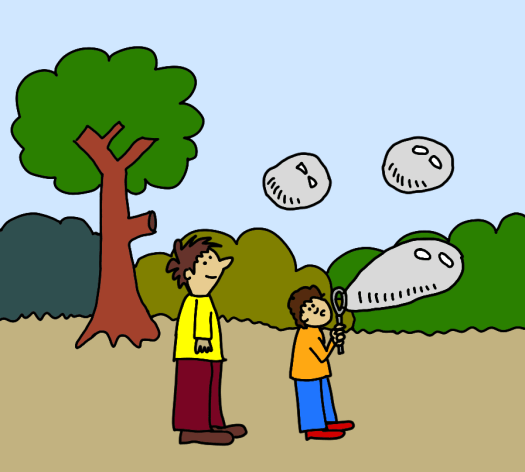
And I wondered how the learning approach I started this post with might cope with bubbles.

If you have kids you must have, at some point, had to get them to blow soap bubbles.

You probably showed them how to hold the wire loop and dip it into the soap solution and blow.

Your bubbles came out perfect and soared with the wind – and you were pleased.

You showed them how to do it.

Then, you let them try and they had a go.

Maybe they struggled and maybe they got it – and they made the bubbles fly.

Now, the thing is that no two bubbles are going to be the same.

This is not something where you come out with the same product – with bubbles that meet a specification for size, quality, reflectivity, translucence.

It’s all about process – about the experience of doing it.

For example, as I stood in the kitchen today making dinner, bubbles started to fill the room.

A small person had decided this was the right time to try out the process.

And I think with the type of uncertain, complex situations I’m talking about process is something that gets recreated and developed by each person that acts in the situation.

You might learn a method from a teacher or from a book – but then as you practice it and learn from the results you start to make the method your own.

There is a limited amount of discretion a surgeon has when working on your appendix.

It would probably not be a good idea to start the incision near your ear – however novel that might be.

With a complex problem, on the other hand, the entry point that was used the last time doesn’t have to be the same one you use this time.

It depends on what you’ve learned and the kind of situation you’re in now and how you apply that learning and how you then learn some more.

I think that if you’re doing creative work or improvement work then you should forget the idea that you’re a master of anything.

Being a master implies that you know all there is to know.

And you have nothing more to learn – you now only teach.

But what you teach is from another time, another place – and the world has a unsettling habit of moving on.

And the only way to keep up is to get good at learning when that happens.

Cheers,

Karthik Suresh

How To Think About Thinking To Think More Clearly

holons.png

I confused things with their names: that is belief. – Jean-Paul Sartre

I dashed off a quick paper today about the nature of thinking and the topic is still keeping me occupied.

As you will probably have guessed from the nature of this blog, I think that drawing is a good way to understand what’s happening around us.

The term handcrafted insight might be a clue to where it’s going.

My approach is rooted in a methodology called Soft Systems, developed by Peter Checkland, that captures the overall idea really rather well.

But it’s also pretty complicated to get across to people sometimes – and I have to remind myself of the ideas to check that I understand them myself.

And so, this post might help.

Here’s the basic idea.

There is a world around us – what we call reality – that is full of complex and hard to understand things.

Right now, for example, there is a pandemic on the loose.

What does it mean for you, for your family, for the world?

How should we react, respond, prepare?

People tend to take an approach that’s rooted in thinking from the fifties – what you might call a hard systems approach.

This approach takes the view that the world is full of systems that we can control.

We can stop travel, close schools, require people to self-isolate.

If you had a clever model with lots of variables you could predict how the infection would spread through a population.

Taking a simpler example – one perhaps less vital to the entire world – your own career can be engineered, as can a marketing campaign or a management restructure.

The language of engineering – of designs, plans, change management – is all based on the idea that there are systems in the world and you can understand and fix them.

Most quantitative approaches depend on this being true – your AI engine expects to be able to predict the future based on historical data and take appropriate action.

The small problem with rational, engineering models is that they tend to break down when confronted with the way people actually behave in situations.

And that’s mostly because people aren’t machines – they act with purpose and that inserts an unpredictability you don’t get with something that relies on ones and zeros to operate.

If you really want to change something, to make a difference, you probably have to start by understanding the way people think.

Now how they think in general, but how they think in this specific situation, with their particular perspective.

You see, reality is one thing that’s out there.

Another thing is the perspective, the thing in a person’s head as they look at and live in that reality.

Understanding that reality is one thing and the ideas in people’s heads are a different thing is the first step to tearing yourself away from a rational, engineering based approach to fixing the situation.

When you listen to someone, really listen deeply, they will tell you lots of things.

And those things will have patterns, shapes, fall into groupings.

These patterns can often be represented with nodes and links – a thought that leads to something else that leads to something else.

What you create when you do this is a model of their perspective – something that describes what they’re seeing out there in the world.

People often name this a system – the system they see.

And then they confuse the named system with reality – and think the two are one and the same.

At that point they stop being rational and start to sidle over to the part of the room reserved for those who believe in that particular point of view.

It would be better, Checkland argued, to call those models “holons”, things that are used to structure how we think about reality rather than models of reality themselves.

This is the hard bit to grasp.

When I draw a model, like the one you see in the picture above, it shows you a particular way of thinking about things.

It’s not reality but it’s a tool to ask questions of reality – with a view to learning more and, in the process, finding ways to improve what you’re doing.

For example, if I were to spend some time listening to you talk through a situation that you, for some reason, consider problematical – I would draw it up and create a model that you would debate and change and eventually agree sufficiently represents how you see your situation.

That’s one level of discussion.

Now we could go deeper into your thinking, drilling down into the model.

Or we could widen our view and see how this approach fits with others.

All the time, we’re thinking systemically, rigorously, but about what you think and see and how else you might see it and how others might see it.

And we do this because if we can create a model that works for you we can then compare it to reality and ask questions like does this thing exist? In what way? How could we make it happen?

These questions start to give us a way to discuss and debate possible changes – and come to an accommodation about a way forward that works for the people in the situation and improves it.

You’ve probably heard something on the lines of “If you can’t change your situation, change your mind.”

If you can understand how you and others see your situation, then you might be in a position to ask better questions about how you can change your situation.

Because you’ll be thinking more clearly.

And perhaps the first step to thinking more clearly is figuring out the difference between what’s in your mind and what’s really happening in the situation out there.

Then, you really might start to change reality.

Cheers,

Karthik Suresh

The One Thing You Have To Do If You Want To Change Your Life

journey.gif

Saturday, 8.46pm

Sheffield, U.K.

Sometimes we make the process more complicated than we need to. We will never make a journey of a thousand miles by fretting about how long it will take or how hard it will be. We make the journey by taking each day step by step and then repeating it again and again until we reach our destination. – Joseph B. Wirthlin

I watched a TEDx talk the other day by Patti Dobrowolski called Creative Genius: You about how you can achieve your dreams.

The drawing above is adapted from the one she did in her talk – it’s the image I took away.

The message I heard, however, is slightly different from what she was talking about.

So let’s look at that in some more detail.

The model itself is really simple.

The ground represents where you are now – the reality of your existence.

You are where you are because of the hundreds, if not thousands, of decisions you’ve taken – even before you knew the importance of decision making or why you were making decisions.

Those decisions about whether to engage in team sports or not, whether to do an activity or not, whether to read or not, and then later, the choice of subjects, of major, of degree – all these led to now, step by inexorable step.

Looking back, there probably isn’t any one thing you would do differently – but there are lots of things you might have done to nudge yourself down a different path.

Up there in the sky is where you want to be – a dream floating high above.

For some people these are dreams – dreams of more money, a bigger house, fancy holidays.

For some it’s the hope of a promotion, of the next step on a career ladder, of being selected for a competition, hitting the jackpot, being lucky at the lottery.

And for many of us they remain dreams – because there are things holding us back – fears – lots of them.

We’re afraid of what others will think, what they will do, how our managers will respond, how we will change.

And fear in its many forms stops us – it’s simply too scary to do anything different from what we’re doing now.

Patti’s solution to this is direct and simple – use this model to draw your future, change your mind and draw on your inner creative genius to make it happen.

And she also talks about love.

This is where we part company – perhaps differing on method rather than methodology.

In principle, she is right.

You need to know what you want if you are to know when you’ve got it.

You’ve got to get over those fears – and that does mean changing your mind.

And you have to do the work – it’s kind of difficult to do it any other way.

But I think underselling how long and dull and boring the journey might be is not the best thing you can do.

Well – actually, it’s probably not going to be dull or boring – but it will be long – longer than you expect, longer than you hope, longer than you are prepared for.

We’ve all probably got examples of journeys that we’ve already taken.

It must have taken you some time to get to the point you are now – to the career you have.

In my experience it seems to take around ten years.

Ten years to first find a niche for yourself – something you can do to earn more money than you’re spending.

Another ten years to get to a point where you’re good at it – where you are trusted to take responsibility and deliver.

Along the way, around year 15, you start to wonder whether you’re on the right track – whether you’re doing what you wanted in the first place or whether you’re doing what other people advised you to do all along.

In my case that thing is probably writing – something that I’d have liked to do earlier but only started twenty years into my journey.

Almost exactly twenty years, thinking back.

That’s a long time to put off doing the thing you like doing.

I decided that I would have to be ready to throw away a million words to practice and get better at writing – and that would take ten years.

I’m seven hundred and seventy thousand, six hundred and two words into doing that, half a million of which are in this blog.

And counting.

And the thing I’ve taken from my experience is that it doesn’t really matter whether you have a big dream or decide to do three big things or change your mind or whatever.

What matters is what you do every day.

Because a small amount of work on the thing that matters to you every day adds up, it compounds, and in a decade you have a body of work that you can call your own.

And you can do that while you have a job, a career, while you do the thing you spent the first couple of decades getting in position to do.

If you’re lucky you can do both – you don’t have to give anything up unless you want to.

Because if you’ve grown your dream from a seed, tended it as a sapling and watched it grow into a tree, pushing past the weeds of fear – then you know that what you have is no longer a dream – it’s a new reality.

And it emerged from your work – from your every day work – and not from a shortcut or a hack or a decision or a mind change.

It’s rooted in work, in toil, in graft.

And that’s what you’ve got to do – stop whining and hoping and dreaming.

Start working instead.

Cheers,

Karthik Suresh

Why Do We Think Competition Is The Only Way To Do Things?

community.png

Friday, 8.24pm

Sheffield, U.K.

The artist forges himself to the others, midway between the beauty he cannot do without and the community he cannot tear himself away from. That is why true artists scorn nothing: they are obliged to understand rather than to judge. – Albert Camus

How do you react when you first see something new – a new service or a product or an idea?

Do you react with cynicism, with scepticism – perhaps a view that it will never work.

Or do you eagerly try new things, knowing that if you don’t you won’t find those gems hiding among the stones?

Fear, uncertainty and doubt are our friends – they help keep us alive.

Our brains are wired to distrust the new, the unfamiliar until we’re sure it’s not going to eat or sting or poison us.

But we’re also social creatures, evolved to live together while constantly engaging in fractious tussles for turf and power.

And we’re not very different from our ancestors in that respect – monkeys have a strong sense of social hierarchy and status – and it governs much of what they do every day.

Now, what does that tell us about the way we work together – or more importantly, the way we should work together.

Let’s take any business, for example – probably one that’s based on an individual skill.

The other day I read a LinkedIn post where a provider of a particular service was called by a prospective customer asking for prices.

Later, when the provider researched the prospect it turned out that the prospect was actually a competitor – who then advertised the same service at a slightly lower cost.

You might argue that what the competitor was doing was smart market research, or you might feel that it was unprofessional behaviour.

Regardless, what it tells you is that the competitor saw the service they were providing as a commodity, something that was interchangeable with what someone else did.

And that leads to a problem.

If you’re selling something that is no different from what a number of other people are selling then the only difference is price.

In such markets the lowest cost operator will win.

You might be able to maintain margins for some of the time – but eventually many markets end up being dominated by a large commodity trade and a small luxury trade.

Take glasses, for example – the things that you wear.

You can pay a lot of money in a shop, even more if you’re buying a brand or treat it as an item of jewellery.

But you can also buy it for not very much through online services.

But the thing about being a commodity is that it’s as much about the way you see yourself as what’s actually happening out there.

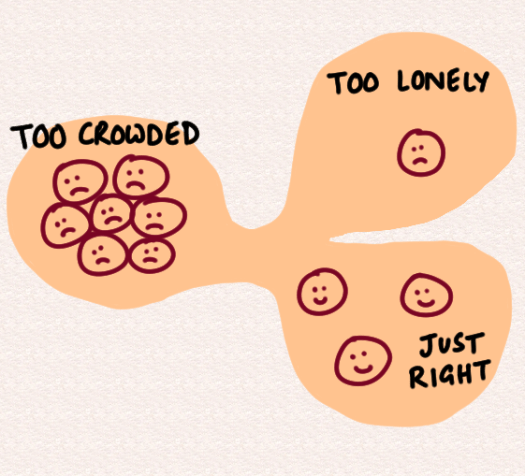
If you see yourself competing in a crowded, jostling market, selling things that anyone else could sell then you’re not going to have much fun running your business.

It will feel crowded and you’ll always be limited in what you can charge and how much you can grow.

At the other extreme you may have something unique but if it’s too different, too out of the ordinary, then you won’t have customers willing to take a chance on you.

That’s a lonely place – the kind where inventors who fall in love with their products go – when they stop listening to their markets.

A workable business, on the other hand, probably has principles of community at its core.

If you provide a service then you probably want to be in the company of other professionals who care about their subject enough to be expert at it.

More importantly, they need to have spent enough time on their craft to develop their own unique approach – one that doesn’t compete with your approach but that makes the whole field richer.

Take any industry, for example, say graphic design.

Graphic design is a field where a designer could have free rein to create amazing designs that delight customers.

Or they could turn out the same basic patterns again and again for different customers.

Or they could create pure art that no one really understands and therefore no one buys.

In that field you have people who experience business in all three ways: too crowded, too lonely and just right.

But it’s the same field.

What’s different is the approach and attitude they bring to their business.

All too often people blame the market for their lack of success.

Perhaps we should be asking ourselves what we bring to the market – what’s unique, rare, different about what we do?

Because the market, at its core, is the aggregation of lots of little decisions made by buyers and sellers.

Individual decisions.

Like the ones you make about whether to be a commodity or to be much much more.

To be part of a community.

Cheers,

Karthik Suresh

What’s Keeping You Trapped Where You Are?

trapped.png

Thursday, 6.44pm

Sheffield, U.K.

I have learned over the years that when one’s mind is made up, this diminishes fear; knowing what must be done does away with fear. – Rosa Parks

I started this post wondering about the things that get in our way – the things that stop us from doing what we want to do or being who we want to be.

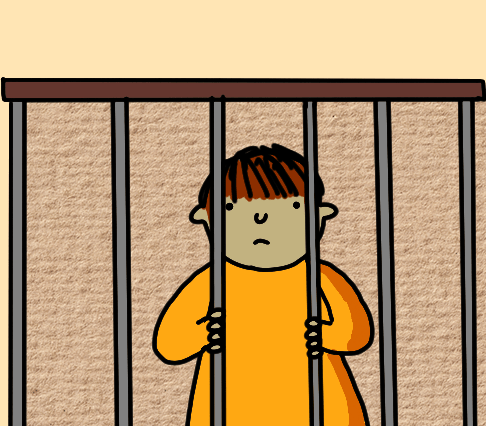
It was a simple question really – and the conclusion I came to was that many of the things that hold us back – the bars that imprison us – have to do with fear.

If you’ve been in a job or a relationship or a profession for a long time, you have a lot to lose if you stop doing what you’re doing.

If you’ve invested twenty years of your life becoming a doctor when what you really wanted to do was to be an artist – it’s hard to step away from the big salary and it’s frightening to think how you will afford that big mortgage and car payments.

The more you have, after all, the more you have to lose.

Now, on the one hand, this kind of thinking is only available to those who are already very privileged.

The quote that starts this post, from Rosa Parks, is a product of a very different time, a very different set of circumstances.

In those days the things holding you back were real bars, real people who wanted to do you real harm.

And when you were up against that kind of opposition – the kind of people who had power and wanted to keep it – you couldn’t just rock up and change things.

You needed to be organised.

Rosa Parks’ act of resistance against bus segregation wasn’t a sudden, impulsive act but a deliberate act of defiance aimed at getting long overdue justice.

Parks attended sessions at the Highlander Folk School, a place that trained activists working for social justice.

People didn’t like that kind of thing at the time – they still don’t now.

And so the school was viciously attacked and people with power tried hard to discredit and ruin the people involved.

One of those people was Maurice McCraken and his story is told in Judith B. Bechtel’s book, out of print but available on the web.

McCraken was a conscientious objector and his treatment at the hands of the state should not be forgotten.

The book starts with how Oswald Petite, a Marshall, uses an electric stun gun on the 80-year old McCraken seven or eight times because of his refusal to walk to and from the court.

In 1985.

Not that very long ago.

When you read about these people and the decisions they had to take and the sacrifices they had to make to take a stand so that future generations could have equality and justice, the comparative freedom we have to do anything we want is a luxury we should be ashamed to take for granted.

But, if you feel trapped, whether it’s by society and real oppression or the bars you’ve built in your mind you’re still trapped.

And the fact is that one does not escape from prison easily.

No one is going to come along and unlock the doors, dismantle the bars.

You need to make your way out, chip away at the walls, tunnel through the floor, saw through the bars.

And that takes time – time you get your head straight and time to get your plans in order.

It helps if you have little to lose because then you can move fast.

If you have more to lose then you have to figure out how you will manage if things go wrong.

The advantage you have now is that there is information everywhere, training everywhere.

If you want to change your life you don’t need to find a school – you just need to read and learn and try and do.

And Parks’ words do sum up everything you need to do.

If you’re trapped where you are the first step is making up your mind to change things.

And then its about study, learning how to make change happen in your life and doing what must be done.

When you do that the bars in your mind will rust and break.

And you will be free.

Cheers,

Karthik Suresh