The Way Media And Community Shape Each Other

reading-news.png

Wednesday, 6.21am

Sheffield, U.K.

Whoever controls the media, the images, controls the culture. – Allen Ginsberg

There are a couple of thoughts I want to explore in this post, one on media in general and one on the history of technology.

Let’s start with media.

What’s off the mainstream?

I’ve been experimenting with non-mainstream media for a couple of days – looking at options for content that isn’t on YouTube, searching for material that’s isn’t a famous, well known shot on a streaming platform.

One of these options is Peer Tube, a decentralized video sharing service. So what can you come across there? Well, its less than you can find on YouTube but it’s different. And that’s good, because you can stumble across stuff that’s not what you usually see.

I came across a video on Noam Chomsky’s five filters of the mass media. Chomsky argues that the media is influenced by factors of ownership, advertising, the media elite, flak and the common enemy. Now, I’m not entirely sure how to take this and I am not sure filter is the right term but then again, Chomsky is a linguist, and probably chooses words very carefully.

Then again, I want to look at these filters, or really what I’d rather term characteristics of the media and evaluate them. This list is presented as a critique of media, in particular media in the US. So, how should we think about them?

What’s the news?

News is simple organized gossip, with a helping of opinion on the side. And some people make it their profession to peddle the news. When you decide that you’re going to write down what’s happening and send it around to your friends you’re starting on a journey to becoming a media mogul. You own your little newsletter and it tells people about the things that you think are important.

As we speak, people are using newsletters to try and build their reach, figuring that if they bring you something useful you’ll want to hear more from them and possibly subscribe to their material. Which they own.

Ownership is not a bad thing. You can look at media and see that some people own large, profitable corporations that deal in the news. The question is not really one of ownership of the news, but of who owns the news. Can anyone own it, does it come down to competition, economics and freedom? Or is it controlled by the state, a cartel, a cabal, a shadowy force? And the answer is yes, to all these in different places because that’s the way life is. But then again it isn’t, because we have access to news from everywhere these days, and it’s hard to argue that ownership of a property equates to control of people’s minds.

I think similar arguments can be advanced for most of Chomsky’s other points. Perhaps it’s a function of time and things have changed. Advertising pays for resources, stars and elites pull in the interest, and if you can’t stand criticism then you shouldn’t be in this business in the first place. And of course, a common enemy pulls us all together. Is there anything in this list of factors that is abnormal?

One way to test this is to look at the inverse of each point. Instead of ownership by individuals you have ownership by everyone, which in practice means ownership by the representatives of everyone, which means the state, which means the only news you can have is the official state news. If there is no advertising, you have to make to with state resources, which means taxes. There are no elites, so all the news is about the lives of everyone, farmers, office workers, social workers, but of course all the stuff that makes stars needs to be thrown away. There is no flak, because there is no opposition, nothing critical is voiced and because all this is so boring you have to see everyone doing anything else as an enemy.

That describes what one imagines the media of North Korea looks like.

Now perhaps all this has to do with the media landscape of the seventies where you had to own presses to print and so ownership wasn’t available to everyone.

While now it is, with the advent of the Internet the cost of publishing has dropped to the cost of your access to bandwidth. Everyone has a voice. Rather than the state owning media, every single one of us has access to platforms, ones we can own ourselves like a website or blog or a voice on other people’s platforms like social media. Isn’t this a good thing? Millions of voices talking about what’s going on, singing in gossip?

Technology and mediating the news

The way to see this chorus of activity is not as an organized, planned thing but rather as an emergent, chaotic thing. The roar, the hubbub of online news has more to do with chaos and complexity theory than it has to do with planning and control. Voices will rise and fall, they will coalesce around points of stability, rise to a crescendo and fall away again. Like starlings flocking the behavior of people online resembles motorway traffic and the movement of schools of fish and you can see the broad sweep of what’s going on but not the individual judgments of individual elements or what the group as a whole is going to do next.

And all this is a good thing, it’s the opposite of control by a few. The eventual result emerges from the actions of many, too many to control. And that’s perhaps the fundamental signature of a free society – you don’t know what they’re going to do next because they don’t know themselves yet, but they’ll figure it out when it comes because they can adapt and change.

What’s important, what’s always been important is not control or money or power but knowledge, knowledge of the medium, of the technology – because if you have knowledge you have the ability to take control of your own thoughts and ideas, rather than having them placed in your head for you. I’m not sure if I’m making myself clear here, but it seems to me that a society where an extremist can voice their views and be challenged in public is better than one where they hide and do what they do in secret. A free society is surely better than a non-free one? And doesn’t the technology we have now lend itself to promoting openness and freedom rather than control and submission to corporations or the state?

Isn’t all this a bit heavy?

As a reminder, I’m trying to work through some ideas on community and I’m being challenged by conflicting objectives. On the one hand, there is the light, business like stuff. Which comes down to what kind of stuff should you send out if you want to build a community. Send out news, stuff people want to share and you’ll get interest. Work with a group of supporters, people with a common interest. That seems to work well, as others amplify what you put out there.

All these thoughts about the underlying structure, the tensions and threads holding it all together, the technology and the systems and the corporations – are any of these relevant to the discussion of community? Why does it matter?

And I have to say, I don’t know. I find myself going down these paths because I want to understand the underlying structure. Yes, given what we have now, the platforms and technology that exist, you can do certain things that make you popular and help you build a business. But the chances are that as you try and appeal to people you’ll choose an approach, you’ll be extreme and confrontational, in order to stand out, you’ll be sweetness and light but most of all you’ll be different from average because who is really interested in average? But then you get everyone being different in the same way, whether it’s trying to provoke or shock or stand out. Everyone’s trying to get an edge.

I don’t really have a conclusion for this post, because it’s such a big thing to chew on. I suppose you have to finish by saying that news brings us together, just like gossip does. But you have to be critical, you have to think about what you’re being told and that’s obvious really, isn’t it? One way of doing that is to build some diversity into your news gathering processes.

But how did this first start to happen? How did we transition from mass media in the Chomsky critique to the options we have today. I think I’ll look at that tomorrow.

Cheers,

Karthik Suresh

How To Manage The Process Of People Entering And Leaving Your Group

in-and-out-of-group.png

Sunday, 7.37am

Sheffield, U.K.

I am contracting continually a debt of gratitude which time will never see canceled. There is a treasury from which it will be repaid, but I do not dispense its stores. – Dorothea Dix

I sometimes wonder what the point of doing all this is. Why do we work, why do we create stuff, what drives us to do the things we do? It can’t just be survival or money because after a certain point the effect of having stuff seems to plateau. We do things because they matter to us, and get involved in activities and causes that seem worth spending our time on.

What underpins the thinking we do in those situations? How do we determine what seems a good use of our time, a worthwhile endeavor? Right now, sitting where you are, what are the things you do that matter to you? And why do you do them?

One of the reasons I think about this is because I spent a lot of my early life moving around, living out of suitcases. That meant always entering situations where people knew each other and I had to find a place in a new space. The easiest way to do that was to find and join groups that were interesting, that offered a way for new people to get involved and engage with others. Although I have been in one place for a long time now, I still like to work with groups. In the midst of a pandemic, where we can’t go out, many of us are probably rediscovering the magic of online group social activity and trying to get involved.

So what do you need for something like this to work?

Being clear about your contract with each other

I joined a university led program which started by emphasizing the idea of contracting. We were contracting with each other, the leader explained. They were contracting to support us, give us information, operate a program. And we were contracting to engage with the material, do the work, do our part in learning and participating.

It’s an interesting word, “contracting” when used in that context. It clearly has a very specific academic definition. Now, if you’re going to approach it in an academic way the first thing to do is find every instance of the word as it’s defined in various papers and create a table listing all of them.

With the help of Webster, then, we have the following that seems appropriate in this context:

“To enter into, with mutual obligations; to make a bargain or covenant for.”

In some of my other posts I’m a little dismissive of lawyers. I wanted to be one, but I failed to get into law school and what I’ve see of lawyers makes me wonder how good some of their work is. But, the realization I’m coming to is that what lawyers do – their function in helping us contract with each other – is perhaps absolutely fundamental to human society. It’s actually so important that perhaps we cannot leave it to the lawyers. Maybe each of us has to take responsibility for ensuring that contracts work for the benefit of humanity rather than for the protection of the powerful.

Terry Pratchett captures this, with his usual wit and insight when he talks about how nobles, the ones who own everything, once had to use swords and fight to get what they have. And then they realized that instead of all the fighting they could just hold pieces of paper that declared their ownership and the sword fighting stopped and they used the processes of law to protect their interests. But, as Terry points out, the nobles have a contract to own the land but they also have a contract with the people that live on the land and nurture it and that contract is just as important and, even if it’s not written down, breaking it will result in consequences.

You can call this a psychological contract and, in an ideal world, the written down contract and the psychological contract will mirror each other. But you have to get there first.

Talking it through

The place where it all starts is by talking it through, by having a discussion and getting ideas out and shared with the others that are part of your group. There are tools and approaches that you can use when you do this. You can run a brainstorming session, get on a whiteboard and draw it out, write letters to each other.

Let’s take an example of a specific community, the Internet Engineering Task Force or IETF.

Here is a quote that sums up their approach.

The IETF community works mostly online, guided by the informal principle: “we believe in rough consensus and running code”.

The IETF uses Requests for Comments (RFCs) as a way to set out their approach to a new standard.

Here’s an example of one: RFC 2549 – IP over Avian Carriers with Quality of Service, although I assume you get the joke…

And there are hundreds more. The point is that these folks worked out a way to work across huge distances and text, written words that set out how to do things were hugely important. They had a process, a secretariat, mailing lists, forums, discussion groups and all the other elements that allow a group to engage and converse and chat. Importantly, the conversations are documented and retrievable and that’s again a sign of the good functioning of a group – that someone takes on the responsibility and effort to document what is going on and what decisions have been reached.

So, one of the questions you have to ask when you want to set up a community is how people are going to engage with each other, how are they going to have discussions, debate different points of view and come to an agreement on how to move forward? The mechanism you choose and the technology that’s involved will influence who joins you and how they participate. That’s probably why the basic requirement for politicians is to be able to speak – we can all, in theory, say we want to say and so speeches and debates are a normal form of political contracting. For those of us that prefer to write rather than talk, the Internet offers different groups and choices.

But when it comes down to it, you have to be able to engage and then eventually put it down in a contract.

Capturing it in words

At this point I have a slight tangent to go on. I go a lot of visual thinking work and there are various groups involved in this space. Many focus on the art and the style of visual thinking, and there are a range of applications of their work, from documenting proceedings to helping a group work through a complex problem. But many of these approaches stop when the art is done, as if that is the final product and now it’s over to you, the group, to do what comes next.

What comes next, I’m starting to realize, is the contract. The tools we use in visual thinking help us to talk things out using another medium. In addition to speech and text, we can use images and space and geography to document and link and test ideas and connections and come up with a firmer conception of what we want to happen. Eventually, we need to write this down in text, in a contract that clearly spells out what we have uncovered during the talking out phase of our work. Again, this is not a contract in the legal sense, where a lawyer gets involved but a contract in the sense of a bargain or covenant, a promise to each other to make and keep mutual obligations.

But, of course, between the talking and the contract are a few more steps. These are the proposals, the requests for comments, the intermediate documentation that is considered and negotiated and which eventually becomes a contract.

All this has to happen before you can add and remove people to your group, beyond the core group of founders. The founders will debate and discuss and create the initial contract and then set it out in a way that new members can engage with. These are the rules of engagement, the code of practice, the community rules. Of course, you need ways for people to debate and discuss and change them over time but you do need them. And they need to be simple, especially if money is involved.

The longevity of a group is perhaps directly related to how these rules work. For a long time the rules were unwritten, unsaid, managed by a group of elders. Once they started being written down more people could relate to them, work within them and challenge them if they were unfair. Few clubs would dare to put a discriminatory process in writing and that’s a good thing. Shining a light causes evil to scuttle away.

Here’s my conclusion from all this. If you want to build a community make some rules, write them down. Try and balance things, aim for a rough consensus and working operations. And then get on with it.

As a friend of mine says about why this is worth doing. Go alone, and you can go fast. Go with others and you can go far.

In the next post I want to talk about news and how news can help hold your community together.

Cheers,

Karthik Suresh

How To Prevent Infighting And Self-Destruction In A Community

servile-populace.png

Saturday, 7.36am

Sheffield, U.K.

Last century we needed lawyers; this century we need big, broad coalitions. When extremists decide to attack all our communities, they must hope that there will be infighting. But we have stood all for one and one for all. That is how we will win. – Benjamin Todd Jealous

It’s funny how certain quotes roll around in your brain, making you wonder whether their time has come again. One of those is from Benjamin Graham, the father of value investing, who wrote that the stock market is a voting machine in the short term, but a weighing machine in the long term.

There are differences of opinion about what is short term and what is long term but I’m starting to wonder whether this statement applies more generally. Do you think that communities, businesses, societies are destined to always follow the popular vote or do they have periods of instability within longer periods of overall calm? Are things going to go the way they seem or are we going to find that things settle down eventually, when all is done, when all the votes are counted, when cooler heads prevail.

Now, I’m not referring to a particular election, although that’s clearly something that might fall within this area of inquiry. Instead, let’s look at a different period and ask what is going on, then and now, and whether things are changing, or whether they are the same but different.

A code of communication

In the early days of the Internet, when email was invented and we had Usenet, group emails and forums and all those things, people got very excited about these new modes of communication and piled into conversations with thoughts and opinions and energy. You had the invention of flame wars, long drawn out arguments between people and all the other things you see happening on social media today. You knew an argument stopped being useful when people started making comparisons to Nazis when talking about others.

This led to the development of rules about how you should act in these groups, and eventually started to be known as “netiquette”, a combination of network and etiquette. Just good, polite behavior online so that we could have a conversation, get along, have robust debates but end up in a better place than before. It’s hard to police this as well. All too often, posts pointing out spelling errors seem to be riddled with spelling errors themselves. Eventually, many communities find that it’s just easier to set out what’s expected in writing, so that people know what’s right and what’s wrong in the community they are thinking of joining. Free speech needs to be balanced with civil speech.

Is it hard to write these rules? Well, you could do worse than to start with looking at RFC 1855 – Netiquette Guidelines. This is from 1995 and you can adapt many of the rules to whatever community you’re building now. There are some interesting ideas in there, such as the economic impact of communication. The cost of communication is paid about equally, it argues, by sender and recipient. Spam, trolling, multi-posting may take up time for you if you’re doing that sort of thing but you’re also causing recipients to spend their time and resources on them as well.

What this also means is that if you want to join a community you will probably need to agree to support its declared position on various topics. That’s obvious when it comes to political parties. If you sign up, you sign up to their policies as agreed and communicated through their processes. You may disagree with some of them but if you want to be part of that community you work within the processes they have to voice your views, address your differences and abide by the eventual decisions.

What happens when there are no rules?

In my experience, perhaps your own too, there are two situations I see when things start to fall apart. The first is where people get together and no one really has the knowledge needed to put the basic administrative structure in place to enable civil conversations. People have a go at doing it and you end up with various permutations. Groups that encourage fewer rules find themselves constantly setting meetings to talk through things. Groups with detailed rules end up spending all their time interpreting rules and following processes, so that the only way to get things done is to game the system, understand and use the rules to your advantage.

And then there is power, the ever present pursuit of power. You have situations where someone new comes in and wants to make a difference – and the first thing they need to judge is loyalty, who is loyal to them and who is not. And then you have a purge. It happens quite organically, sometimes. People see the new person come in and decide to leave.

The thing with power is that it’s a faithless thing. The moment you get power is also the moment where it will start to drain away. The people beside you feed off you and so you have to be strong. The minute you show any weakness, the wolves start circling. Having power is not the same thing as being a leader. Perhaps the single biggest difference has to do with who is in control. A person who wants power wants control. A leader wants to set out a vision, a strategy, and then get out of the way of capable people who can execute.

And that means that an effective leader is also an effective communicator and, to do that, they must first be an effective listener. You need to listen to what is going on so that you can talk fluently about what needs to be done. But, of course, you can’t tell the difference between a leader who will leave a legacy and a power-mad crazy person who will leave a trail of destruction. Such conversations eventually take us to Hitler, and that marks the point at which this post should stop – as it’s reached the natural end.

The unhelpful conclusion, really, is this. The best you can do if you want to build a community that doesn’t implode is to set out some rules for the people who want to join your community. Create an environment where they can debate and argue and work to change the rules. If they can’t, they can choose to leave or choose to accept the rules. If you’re in charge, then get out of the way, support and help them to get thing done and spend your time removing obstacles.

Try and do the right thing.

It’s not really that hard to do…

In the next post, I want to look at members, how they flow into and out of a group and what we can do to make this process work well.

Cheers,

Karthik Suresh

The Secret To Building Your Community

belonging.png

Friday, 5.22am

Sheffield, U.K.

Most men today cannot conceive of a freedom that does not involve somebody’s slavery. – W. E. B. Du Bois

As we get older it becomes harder for us to imagine doing anything other than what we’re doing right now. We’ve dropped more than one anchor, and these commitments keep us in place, constraining our freedom to move around. Of course, we get certain things in exchange; money, security, family, associates, so it’s not a bad thing by any means. As long as we are where we want to be and are happy there.

In my last post I looked at rituals and their role in community creation and preservation. In particular, they create opportunities for engagement helping people to connect for all kinds of reasons, from looking at working together to meeting your future partner. But is that all there is, creating an event, or is there more to creating your community than that?

Going to a show

Many, many years ago at university I was active in student societies. You might be familiar with the scene that happens – used to happen – at the start of a new year. An open day for all the societies to set out their stalls, a chance to engage with potential new members and get them to come along.

The objective is to promote yourself, to get members in. Having a membership is the most important thing for a student society because membership brings in revenue and lets you put on activities. The larger your membership the more things you can do for them.

But is it just about numbers? After all, students also have the chance to go to events, and hundreds of them go along to the various club nights. Does that make them members or are they customers? After all, they go along, pay their money, listen to someone playing and maybe have a dance. They are there with a host of others and they may be fans and have interests in common with everyone else there. But is there a difference?

I think there is. When you go to a show you are a fan, part of a group of people who all like the same thing, the act, the band, the feel of the place, but you’re on the outside, looking in. Watching a performance is a little like going to the zoo. You’re there, separated by glass, bars or moats from the action. The scene is in front of you and you may be thoroughly enjoying yourself, but you’re very definitely separate from the action. You’re an onlooker.

Being part of something

One particular society I was part of could handle a very large number of people and I think that was because of one thing. We had a committed group of volunteers. Other groups that did a similar thing usually had one leader, supported by one other person. But, in general, that one person was the center of attention. The participants came to learn from that person and he or she could only handle a certain number of people and sessions. So, people came and learned but the event didn’t scale and there was always a sense of the “teacher” and the “students”.

But why did we have volunteers? Thinking back, it was because the group of volunteers went through a training session together, a sort of boot camp, that got them to work closely together and form bonds of friendship and professionalism. There’s a sort of magic that happens when you involve people, when you go beyond just letting them see what is going on and have them experience it for themselves. When you turn them from passive observers to active participants you create the conditions for volunteers to come forward.

I participated in a couple of online sessions yesterday which brought this difference into focus. The first session was a performance, expertly facilitated, video introductions and then discussions between experts. You had participation, with questions from the viewers and it all went very well. Most people, I suspect, watched it. Perhaps thought about it a little and then went on with the next thing they were doing.

The next session, later in the day, had a different structure. It started the same way, with a guest lecture but then it moved into an activity, where all the participants were split into groups and we went off to work on a task together. Before the task I was listening, but also a little distracted with other things that I was doing. Once we had the task, though, and there were a couple of other people and we got through the introductions and started to work on something together, it felt like something changed. I was much more involved, engaged and interested. And I finished the session feeling like it had gone well, I had really enjoyed it.

And the thing that made the difference between the two sessions was how the second session helped us to really get involved, by setting a task we worked on with others. That’s different from asking you to put in questions that are answered by an expert. The act of working together, of learning together, is a very powerful tool to get people to engage and really get into what you’re trying to do.

Harnessing the power of volunteers

The most powerful thing you can do if you want to build a community is to get intentional about growing your volunteer base. When people do things because they want to rather than because they are paid to do it you create a powerful, unstoppable force. But you need a way of doing this that helps you build a community rather than a power struggle. Creating a program people have to go through before they can contribute is a good idea, it helps them go through a shared experience with others that sets them apart, as a group, from everyone else. That is, I think, the single purpose of a military boot camp. It’s an induction process that is designed to take a group of people who don’t know each other and forge them, in a few weeks, into a cohesive unit that can then be trained in specialist skills over time.

The thing with involving others, however, is that you are put into a position where you may have to give up control of your project, and you may be very attached to it and not want to do that. And that’s okay, it’s possible to keep control and stay a certain size. Or you have to figure out how you can keep control of certain things while still enabling the growth of the community as a whole. This is hard to do and there will be splits and schisms and falling outs and groups will break up and go their separate ways.

I think the groups I was part of first started to see a split developing over attitudes to money. There was money coming into the societies and people wanted a bigger share of it rather than keeping it for the future community. That was a problem, and it led to differences of opinion and a falling out. The thing that ended the community, however, was losing the space where we operated. That was the end, but after a decade of involvement it was good to be able to walk away.

I think it’s worth looking in a little more detail on why communities split or fail or go their separate ways. Are there any factors that could help predict the failure of an organization?

Let’s look at that in the next post.

Cheers,

Karthik Suresh

How Do Rituals Help Bring A Community Together?

gran-picking-flowers.png

Thursday, 6.16am

Sheffield, U.K.

Throughout human history, people have developed strong loyalties to traditions, rituals, and symbols. In the most effective organizations, they are not only respected but celebrated. It is no coincidence that the most highly admired corporations are also among the most profitable. – Rosabeth Moss Kanter

I have a memory of my grandmother. Every morning she would go out into the garden and wander around her favorite plants, picking flowers. She would come back into the kitchen, where a little shrine was set up and arrange the flowers around the images of the gods and family members that had passed on. It was a ritual, a habit that she and many millions of others did and still do every morning.

I had a different upbringing, one not immersed in the traditions of my culture and so I never really did any of these things. I watched from a distance, read my books and got on with whatever seemed important at the time.

As I grow older, however, the years seem to be marked by one ritual after another. In the West you have the big holiday periods, Easter, the summer break, Halloween, Christmas, and then you have all the others. It sometimes seems as if there’s a holiday or celebration happening whenever you turn around. It’s not just about religion, birthdays are marked with rituals, as are marriages and deaths.

Organizations have rituals too, from set times for work and lunch breaks to the weekly get togethers and social breaks. I suppose we get a feeling of comfort knowing these things exist, that there is an opportunity that has been structured to allow us to get together and get along. Rituals help us to know that there is a community here, we do the same things and we have experiences we can share together.

Intentionally designing rituals

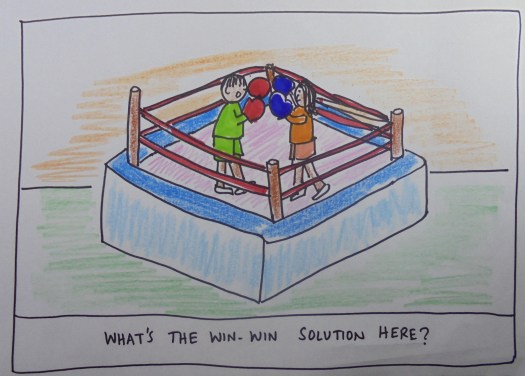
What then, is the purpose of a ritual and how can you go about designing one that works for your organization? After all, rituals are just a concept and they can be used for good or bad. For example, I’ve heard stories of bosses who hold meetings and challenge their teams to justify their ideas in front of everyone else. Do they do this so that the best ideas come out or do they do that to show they are the smartest person in the room. Is that ritual the equivalent of a blood sport, a challenge to get in the ring and fight? Or should it be about something different, a shared experience that leads to focused, joint action?

The kind of rituals you create probably depend on the kind of culture you have and the sort of people who get to be leaders. If you have an aggressive, macho culture then your rituals are more likely to be confrontational, designed to select and display winners. If it’s more collaborative, accommodating, that comes through in rituals that are about joint ownership and multiple authorities.

I suppose you need to ask yourself what you want from these rituals, what are you trying to incentivize? And it often comes down to money and how that is used. Let’s take religious rituals, for example. If you think of the rituals you go to as part of the community then there is a good chance that there is an element of fund raising going on. It’s an event where you go, you get an experience and you put some money in the collection pot to keep funding the institution that gives you those experiences.

There are rituals you do because they are part of your own journey, typically what happens at various ages and stages of life. Again, while your religious institution might do them without a fee, you may feel like you need to contribute and that exchange takes place, money for god’s blessings. Now I’m not trying to denigrate the sanctity of the rituals but you have to accept that there is a basic economic process going on. It takes resources to give you these experiences and religions have had to work out a way to fund those experiences and give you what you need to feel part of that society and community.

This is why even secular alternatives to religions rituals will have an element of ritual about them. If you have a civil ceremony for your marriage, for example, there will still be a formal process that gives you the experience of going through a ritual, something that solemnizes your experience and marks it as different, somehow special from all the other moments in your life.

You have to ask yourself, then, what the rituals are that govern how you live and whether they work for you in the communities that you are part of. And, if you want to build a new community, you have to work out what you want people to do and design rituals that incentivize the kind of behavior you want from your community.

Designing rituals online

Perhaps the simplest way to think about rituals is to see them as something you do consistently, something that is done in the same way each time. That makes it easy for people to understand what happens and how they can join. For example, right now you will see lots of online meetups. People are desperate for connection and these meetups give you an opportunity to join a community of like-minded people and share an experience together.

But what is it that will make these meetups successful in the long run? Will they create communities or will they create megaphones for the founders or will they be platforms for placing messages that go out to people? The Internet lets you do all this and more and you may well find members wiling to listen whatever option you go for. So it starts with you trying to work out what it is you want people to do – listen quietly, engage actively or have a series of experiences that end with them buying something?

I think there is a balance you have to strike, starting by working out what kind of community leader you want to be, one that fires up the community and leads it or one that listens to the community and serves it. You have every kind of example out there in front of you, you have the chance to experience a myriad different ways of doing things and it doesn’t take too long to think through the extremes of how this might work. Do you exercise tight control on what is said or let free speech reign? Do you spend most of the time presenting or lecturing or do you encourage participation and practice? Some of your options online will be constrained by your choice of platform. It’s hard to engage with hundreds, thousands or millions of participants. You need to keep groups small if your objective is to do that. Then again, if you have that many people in your community then you’re going to have to use a megaphone.

A sense of belonging

I suppose what you have to think through is how someone is going to feel when they go through the experience you design. Will they feel like this is something they could take part in, belong to? Or is it too different for them to accept, too extreme? Or is it exactly the kind of extreme they’ve been looking for? Unfortunately you get every kind of extreme out there. We want to look at the cases that create a benefit to us as people and a community. So let’s look at what “belonging” means in the next post.

Cheers,

Karthik Suresh

How To Prepare For And Deal With Conflicts Through Contracting

pistols-at-dawn.png

Wednesday, 6.24am

Sheffield, U.K.

“In my experience, people are usually fired for reasons having to do with budgetary constraints, incompetence or not fulfilling the terms of a contract. – Michael Shermer”

At the very heart of human society, underpinning every community is the idea of a contract, an agreement to act and be in a way that works for all of us. The word “contract” seems like an intimidating word, bringing up visions of complex wording and hard-to-understand concepts but there is a difference between the form and expression of a contract on paper and what it actually means for us. And what matters is what we believe because that leads us to take one action or another.

Entering into a contract

Recently our children wanted a treat, to get something they wouldn’t normally get. So, we asked one to write a contract, set out on paper what they would do in exchange for this treat. We ended up with a brief set of terms, essentially promising to be good, do homework and go out when asked. The other child was asked if he would sign the contract and he rushed to do so, although I did caution him to read it first.

He didn’t and then realized after signing that he didn’t want to agree to doing his homework and then tried his best to get out of the deal. He put forward persuasive arguments, including that he shouldn’t be expected to sign his first contract without making mistakes, it wasn’t fair to hold him to it.

We resolved the issue through negotiation and eventually figured out that he was open to doing his homework later, not just right now, and things were okay again after that.

What this little vignette showed me is that even with a simple domestic situation contracting is an activity fraught with conflict. There are many situations where we have to sign long legal documents and we go ahead without fully understanding what we’re signing up to. Sometimes it seems irrelevant, like most software contracts. What exactly do you sign up to when you accept your phone’s terms of use? The risk of getting something wrong seems low. At the same time I prefer to use Free Software for all my work because I don’t like having to agree to those terms because I don’t know what they are.

Is the law any help?

The formal system of law and lawyers and contracts has never seemed all that useful to me. Lawyers seem to spend a lot of time working through what should happen if really bad things happen. Or they try and make sure that you can do something without someone else being able to challenge you. They come across as instruments of power or instruments of denial rather than instruments of agreement. At some point we appear to have moved, as societies, from contracting our own agreements to having professionals do it for us. That makes sense in some cases, because the professionals know what usually goes wrong from having experienced a number of situations and so they can tell you what to put in to deal with those common situations. For example, if you’re buying a house and the seller hasn’t disclosed that there is a fault with it you want to make sure you’re able to do something about it.

That previous paragraph has contradictions – are lawyers useful or not? They are when what you want them to do is point out where the traps are in the road you’re planning on taking. What do you do if an employee steals from you, if they don’t do their job, or if you don’t get paid your share. But you have to also ask yourself why do things go wrong in the first place? Why do people not keep to the terms of the contracts they’ve agreed?

The law in your heart

A more useful idea I came across is that of a “psychological contract” – an unwritten set of expectations that govern our social interactions. We expect to be treated fairly and when that doesn’t happen we are hurt and upset. Once again you can see this clearly with children because they don’t hide their anger when they see a psychological contract being broken.

I experienced this a few minutes ago. Last night we promised one of the little people a green apple but there was only one left in the basket this morning. So, I cut it in half, which one could agree with because he was getting half an apple but the other found issue with because he had expected the whole one. What made it more complicated was that the one who was happy with the half had also had all the other green apples, so had taken more than his fair share. But do you look at the history of consumption or the fairness of division in the moment? From such simple conflicts you get generations of instability with consequences you can see if you look anywhere in the world today.

What matters to us is how we feel about what is going on, which then leads to our reactions, anger, fear, a desire to retaliate. And we try and manage, even avoid those emotions through rules and contracts and agreements. And they work much of the time, or they don’t matter much of the time and as long as we go ahead and do what we’re supposed to do things eventually work out. Unless they don’t.

Pistols at dawn

We are biologically built to defend our territories. You might think it’s a male trait but females will fight to protect themselves and theirs equally fiercely. We saw an example of this in Kenya. A group of lionesses were stalking a herd of buffalo and the usual method is to try and isolate a weaker one, usually a calf. But the mother was having none of. A group of buffalo, with a calf close on the heels of the mother repeatedly charged the lionesses, forcing them back and eventually into a retreat.

Disputes have often come down to personal animosity and two hundred years ago you would have met at dawn and dueled to death. Life is different now and most people wouldn’t see that as an option and duels take place in courtrooms instead. Perhaps that’s because we do have more experience in setting rules that work most of the time. Or perhaps the institutions that have survived are the ones that set better rules and those have endured.

For example, there are members clubs out there that have been going for a while perhaps even centuries. Their rules have changed over time. At one point they probably didn’t admit women or people of color. Few would still claim to do that overtly, even if they practice one kind of discrimination or another. I saw an interesting thread on Twitter about why someone would object to Voter ID. After all, surely you couldn’t object to something that cuts fraud. The articulate response from one person was that there is nothing to suggest that voter id would stop fraud. What it would do is stop a whole lot of poor people who find it hard to get official ids – they don’t drive, attend college, have a passport – from voting at all. Unless you give every voter a free id your only purpose in doing this is to enable only rich people to vote – and that’s a naked political tactic.

Rules of engagement

We aren’t born knowing the rules of how to get along. We’re taught those rules as we grow up in society. But societies are different and when you move from one to another you learn new rules. I am often taken aback by people who have experience of only their own society look down upon other societies without really taking the time to understand the other’s history. At the same time there are things that are wrong, things that shouldn’t still happen.

But they do, and people stoke up fear and hatred because it’s easy to do. For example I saw a message recently that suggested a particular community was growing and posed an increasing threat to the rest of society because of their extreme views. The post suggested the whole community was a threat and if you took it at face value, as many people might, you would be scared. At the same time you have to realize that in a free society people spend a lot more time watching shared cultures on TV than they do in their own culture. Extreme views are often held by a small group of individuals, most want to get along in their societies and get on with business.

I suppose what it comes down to is that you have to participate in your society and if you want things to be different or if you want your traditions to continue then you have to decide if you are willing to do something about it. You have to engage with your society and community if you want to avoid or deal with conflict when and if it arises.

Let’s look at how that’s done in the next post.

Cheers,

Karthik Suresh

Would You Have The Courage To Find The Truth?

path-no-return.png

Monday, 5.15am

Sheffield, U.K.

“The opposite for courage is not cowardice, it is conformity. Even a dead fish can go with the flow.” – Jim Hightower

There are always things that people would prefer remained hidden. And there are people who have the courage to expose the truth. But is it just courage or is it also organization. Do you need a society that encourages openness rather than one where secrecy prevails?

The free press

Freedom of the press has emerged over the centuries as a right, the ability to say what you see or think even if that annoys or infuriates people. And people don’t like it, for obvious reasons. Journalists get put in jail, murdered and intimidated. Yet members of the profession carry on, looking for the story. But there are fewer of them because of the way the business works, people with the money pay to keep the media in business and money comes with influence and pressure.

Things have, of course, changed over time. During the Indian independence movement Gandhi understood the power of the press and the way the West would react when the truth came out in their newspapers. An informed population would do the right thing. Would the methods of non-violence have worked against nations that had a different approach to press freedom? Perhaps not.

These days we are all free to publish. If you run a demonstration then you will be on camera, filmed by the police, by your opposition and, if you have any sense, you will have your own team of camera people recording what’s going on. The intense scrutiny everywhere is showing just how much violence there is but it’s not showing anything new, it’s just showing up what was always there. And the thing about behavior such as this is it cannot stand the light, it takes a certain kind of individual to stand and lie in the full glare of the camera. But, of course, there are a few of them around as well. Things are changing, though.

The rise of database journalism

When I started looking at this topic I had an image of someone who headed into a dangerous situation looking for the truth. But it’s never that simple, where you suddenly go into a place that reeks of danger, from where you may not emerge alive. Perhaps it happens but if you were in that situation you’d try and tilt the odds of coming out alive in your favor before going in.

I remember many years ago, when I first entered college, a friend took me to a coffee shop and introduced me to a chap. This guy was sat on his own at a table at the back, or was he alone? Did he have a team around him, quietly watching? I was introduced to him and he asked a few questions, almost like he were sizing me up, like it was an interview and he was gauging where I stood, whether I was a resource or a threat. It was only when we left that my friend explained that this person was a rising local political activist, someone who would probably go on to be prominent in local politics. And that started to explain that air of menace and a hunger for power and the eye on who would help and who needed to be gotten out of the way.

But the majority of the time what investigators probably do is investigate. They look at records, ask for information, look for patterns. There is information out there and the absence of information is also a signal in itself. It’s a signal that you shouldn’t go there, invest there, do anything there. And then you hope that things will change, that people will realize that being transparent is good for business.

News and society

I started this post by thinking I would explore a story about a meeting, something I saw on a TED talk where this guy went and interviewed a gang leader and told his story. That’s the image at the top of this post, the feeling of terror and dread going into a situation that could be life or death. Would you do it? He did, not just on impulse, but after introductions, vetting, a process to reduce risk and build trust. Even gang leaders want to be heard, there are reasons why they have become the way they have. You remember Mario Puzo’s “The Godfather”, which was portrayal of the Mafia. Vito Corleone, the Don, didn’t choose to be that way. He was born into a situation where acting honestly got you killed and he then made decision after decision that led to him having power and wealth and control. There is a theme that even gangsters want to become legitimate business people – there is more money to be made out of the shadows than in them.

But when you look at the big picture, we are fortunate that we live in a society where there is more happening in the light than there is in the darkness. The freedom of the press is available to everyone. The cost of entry is falling and the ability to capture and share what is happening around you is within the grasp of many more people. Of course, there are also less people listening and a few people who get most of the attention but that’s not the point. It’s not about how many followers you have but whether shining a light in the spaces you live in will lead to improvements there.

A group of people that have no way to share news, no way to learn about what is going on cannot be seen as a community. You need that gossip, that shared knowledge about what is going on. And that’s one of the elements that you will need to build if you want to create your own community. You have to ask yourself how you will keep the news flowing, how you will keep people informed about what is going on.

But what is news and what is not? What we’ve learned over the years is that people get very good at manipulating whatever you put out there. If you go on the Internet, you expect to be attacked by people who want to exploit any vulnerabilities in your setup. A few years ago I set up a server and it quickly started getting thousands of attacks from computers trying to guess usernames and passwords. This is industrial, state sponsored espionage. You do your work expecting to be attacked, and do what you need to do to fix vulnerabilities. In society, this often comes down to rules.

So let’s look at that in the next post.

Cheers,

Karthik Suresh

What Is Your Place In A Community?

competence-hierarchy.png

Sunday, 7.36am

Sheffield, U.K.

“Who is a professional? A professional is someone who has a combination of competence, confidence and belief. A water diviner is a professional. A traditional midwife is a professional. A traditional bone setter is a professional. These are professionals all over the world. You find them in any inaccessible village around the world.” – Bunker Roy

How do you fit into your world? Do you have a place, a niche? Or are you still looking for one, looking for what you can do, where you can do it and how you can contribute to your society and community? Have we really moved that far, are our societies composed mainly of soldiers, laborers and clerks – and then those outside the mainstream?

The nature of hierarchy

A state of hierarchy implies that there is a set of relationships between elements and, in particular, there is one element that is at the top. This means you can have a very flat hierarchy, with a number of elements subordinate to one or a tall hierarchy, grouped into multiple levels, as you traditionally see in organizations or the military.

What matters in society and community is often where you fit into that structure. It’s also more important for us, on a day to day basis, on how we are doing compared with others who are at the same level than how we are doing compared to others at the levels above or below us. After all, you might be delighted with your bonus until you realize that your coworker got twice as much as you did. That will often rankle more than the Chief Executive getting one hundred times what you received.

So what is it that gets us into the hierarchy in the first place and then how do we position ourselves in there? And does it matter?

Claiming your place in social status

The psychologist Jordan Peterson has talked about dominance hierarchies as having a biological basis – animals fight for status and so, he argues, do we. His views have been criticized for not taking account of the diversity of human societies over time. He also suggested that what we should be looking at now is a competence hierarchy, where your status in modern industrial or post-industrial society is largely dictated by your competence. This is perhaps nicely summed up by the phrase “Be nice to nerds. You’ll probably end up working for one.”

On the other hand, life just isn’t that simple as the last decade or so of politics have shown us. The information society we live in has made dominance politics perhaps even more important as people rush to the safety of messages and leaders that promise both to protect them and help them dominate others. The messages of competence and community are drowned out as the animalistic, fight or flight parts of our brains crowd out the reasoning and rationality required for compromise and accommodation.

What this probably means is that there is no formula, no sure fire way of getting to where you want to be. The path you take depends on the destination you’re aiming for and you need to play the game the way that works best for you. You can be who you are, you can be what your audience wants and you can be something in between. But that’s something you need to decide. Your worth, however, will be determined by others and how they feel you are contributing to them and their way of life.

When it comes to society anyway. When it comes to things that have to work, then there is a difference force at play.

Operational or technical status

A different approach seems to matter when it comes to technical tasks, the things that require actual competence to complete. This is captured by a observations that come down to something on the lines of “Those who can, do. Those who can’t are promoted to management.” It’s very easy to stand around and talk about what needs to be done. But when it comes down to it, the people doing the doing are too busy getting on with that to also think about the management of the process. And this leads to predictable problematic situations.

Take the handling of the Covid pandemic, for example. The professionals know how to handle patients who present with symptoms, they know how to build hospitals, set up processes, and create safe working environments. Once someone enters a hospital they will go through an industrial process that gives them a better chance of living.

Politicians, on the other hand, have the power to make decisions. But they are uniquely unqualified to make decisions of a technical nature and so they make decisions based on what’s best for them because that’s all they know to do. For example, a politician will take action to lock down communities after it is clear that infection rates are rising and people are dying. If they locked down before people started to die they would be criticized for destroying livelihoods without proof that there was a problem. So, they have to wait until the problem is visible before they can take action. If you’re an airline pilot and you see a mountain looming ahead of you then the sensible thing to do is increase your altitude, fly over it. A politician is in the unenviable position of having to first bump into the mountain and then, when it’s clear that there is a problem, try and take evasive action.

Which then leads to the second challenge, which is that as they cannot do anything useful they have to set objective and targets for others like mandating a certain number of tests a day. So the professionals, in addition to trying to diagnose and cure patients have to record and report on what’s going on. So the objective of the individuals involved becomes to monitor and report rather than do. The intervention of management, then, reduces the effectiveness of the system as a whole.

Does this mean that the competence hierarchy theory does not hold, that dominance is actually what matters?

A fine specimen

I suppose when it comes down to it everything matters when it does. We were on a beach in Wales and a couple of young women walked by and I caught the phrase, “It must be great having a husband like that.” For an instant I thought they were talking about me but, alas, I then saw the object of their admiration, a sculpted Adonis strolling with his partner. We are, after all, biologically driven underneath it all. Above that we have a veneer of humanity, a thin one, one that we have evolved over time but that we are still figuring out how to work with. Evolution is too slow for us, our brains have created a way for us to adapt to our circumstances that go beyond mere biology but we have to remember that he biology still underpins it all and when things go wrong, we will revert to survival and savagery.

But community is not about that, it’s about that veneer of humanity in action. It’s about having the courage to be human and overcome the flight or flight circuitry that’s hardwired into our brains.

Let’s look at that in the next post.

Cheers,

Karthik Suresh

Does Life Really Need To Be As Complicated As It Is?

raspberry-pi.png

Saturday, 7.42pm

Sheffield, U.K.

“First we thought the PC was a calculator. Then we found out how to turn numbers into letters with ASCII and we thought it was a typewriter. Then we discovered graphics, and we thought it was a television. With the World Wide Web, we’ve realized it’s a brochure.” – Douglas Adams

After a round of recent updates it’s becoming clear that some of my computers are getting a little long in the tooth. The relentless need for more bandwidth and higher resolution applications along with sneaky decisions by developers to create lots of processes that hog computing resource is pretty irritating. After all, does a browser really need to use quite so much memory and processor power? What are we trying to do here really?

It sometimes feels like we are in the relentless pursuit of bloat, more of everything at the expense of all things. Having more does not make us better off or smarter or better looking. It all just slows us down, adds weight and acts like anchors, physical, mental and financial. And is this really helping us at all?

I realize this is just moaning, and Douglas Adams in “The Hitchhikers Guide To The Galaxy” gets it right as usual, remarking on how people complain all the time, including how things went bad when we came down from the trees and started walking around, while others are of the opinion that we really shouldn’t have left the seas at all. I also appreciate that the complaints I have will seem pointless to people who do not quite see that constraints are freeing in a way that resources are not.

For example, the Raspberry Pi is in the news, with a gorgeous throwback to a computer in a keyboard priced lower than a weekly food shop, less than you’d spend on a takeaway on certain days. The Pi 400 is an entry level desktop computer and while it’s aimed at students there’s no reason why you can’t try and use it for other stuff as well. I thought I’d try an experiment for a bit and see if I could do the things I wanted to do in the world of the Pi, and actually go back to a previous model, the Pi B+, which is even cheaper.

There are a few core things that I do every day, write – in a blog or papers and draw the images that go along with these. Drawing is the only reason for starting up the graphical display, the X interface, what most people think of as windows. The rest of the time is all about text and that’s fine in the command line, in the old DOS looking terminal. Now, can I do that, can I spend most of my time looking at black and white, including for Internet research and only surface to the desktop when I need to draw something?

Well, so far it seems like I can. Elinks is a fine text mode browser. Using Screen I can create windows and copy and paste text from one place to another, like with the quote that starts this post. I post what I write to WordPress using org2blog but I have to confess I am not a fan of the interstellar spaceship that is emacs. I prefer writing in ed and vi. But emacs has the awesome org2blog mode that makes it so much easier to post what I write to WordPress.

Already as I do this it’s distraction free, I cannot do anything other than write without effort, so I have to make an effort if I want to distract myself. There is the cursor and the page and that is all. I only need to go to a browser when I am looking for information and the rest of the time I am free to move that cursor along, word after word, line after line. There is no email popping up, no LinkedIn to check, no news to worry about, no update on what Biden is doing right now or whether the other guy has finished with golf.

Now, for those of you that haven’t seen a Pi, it’s the size of a pack of playing cards. It’s sitting here, working away, doing what I would do with a lot more computing power. That said, this little box probably has most of the power of my eight year old machine, but given that I am using forty year old software it has all the power I need.

Anyway I don’t have much more to say on this matter other than I’m going to try this for a bit and see what happens. There should be no real effect on anyone that reads this. It might just make it easier for me to focus on what matters.

Cheers,

Karthik Suresh

How We Feel About The Others Around Us

stereotype-content-model-adapted.png

Thursday, 5.57am

Sheffield, U.K.

Everyone wants to be seen. Everyone wants to be heard. Everyone wants to be recognized as the person that they are and not a stereotype or an image. – Loretta Lynch

In my last post I looked at groups and some of the types of conflict that we see arising around us. But why is this, and why can’t we all just get along?

Resorting to stereotypes

In 2002 Fiske, Cuddy, Glick and Xu [1] proposed a model of stereotype analysis that suggested that while there are many factors that affect how we see each other, two in particular have a big effect on our reactions. They termed these warmth and competence. Competence is relatively easy to understand but the word “warmth” is harder to appreciate. It tries to capture the idea that we are biologically programmed to assess whether someone wants to harm us or help us and react accordingly.

That seems a poor choice of words, leading to reinforcing stereotypes with the added burden of an emotionally laden term. After all, if you label someone as low in warmth you don’t just mean they wouldn’t help you if you’re in trouble. You also mean they are cold, heartless, unsympathetic and from there, it’s a short step to deciding that they’ll be the first against the wall when the revolution comes.

In searching around for alternative words I’ve settled for “exposure” in the adapted model in the picture above. After all, how do we get to know whether something is harmful or not? If you look at how animals respond you’ll start to see how it works.

For example, the first time you meet someone else’s dog, the chances are that it will be wary. Animals are wary of everything when they first come across it. Then they quickly pick up signs that you are a friend, and as they get to know you they warm to you. Warmth, therefore, emerges from exposure and the realization that you are not harmful and are, in fact, helpful. If you’re a danger or a threat they’ll warn you first and then attack or run depending on what seems appropriate in those circumstances. Or if you are neither, they’ll ignore you and get on with investigating the nearest tree.

First reactions

Once we caveat what we mean by exposure and warmth the emotions we have when we respond to others start to become clearer. We’ll come back to competence later, but for the time being let’s take it as a sign of status. After all, if someone is in a better situation than you that must be because they are competent and if they are in a worse situation that must be because they are less competent. That statement is open to attack, but if we take it as true for the time being then we can look at the extremes and how we react.

If you look at someone who is better off but you don’t know well then you wonder why they are up there, what do they have that you don’t have. You envy them. If you are better off than others and wonder what they did to get themselves in that state, then you have contempt for them. On the other hand, if people are better off than you and you see them all the time, on television, you follow them on social media and like the stuff they put out, you admire them. And if they are worse off but you know them well then you sympathize and pity them.

This is why marketing firms and politicians and influences saturate you with information. The more you are exposed to something the better you feel you know it and the more likely it is that you will engage or interact or support or buy the thing being promoted. The amount of exposure also results in a paradox, even if you vehemently disagree with the products or opinions being peddled you can’t avoid being exposed to them, not if you want to have a chance to disagree or oppose those positions.

Second thoughts

What this means stereotypes form and are reinforced as your exposure to groups increases and you form perceptions of their competence and the level of harm they pose to you and your way of life. Reality is complex and nuanced and how you think is going to change over time, if not over generations. Groups that you perceive in a particular way didn’t get there overnight, there is history and precedent that weights down every thought and contributes to creating the reality that you see.

It also means that we have to take the time to engage with groups that we are underexposed to, and that takes time and effort. And courage. How many of us really have the courage to go into a situation that we haven’t been exposed to before and illuminate it, for ourselves and for the benefit of others. What does it take to do that kind of thing and should more of us be doing that?

We’ll look at that in the next post.

Cheers,

Karthik Suresh

  1. Fiske, S. T., Cuddy, A. J. C., Glick, P., & Xu, J. (2002). A model of (often mixed) stereotype content: Competence and warmth respectively follow from perceived status and competition. Journal of Personality and Social Psychology, 82(6), 878–902. https://doi.org/10.1037/0022-3514.82.6.878