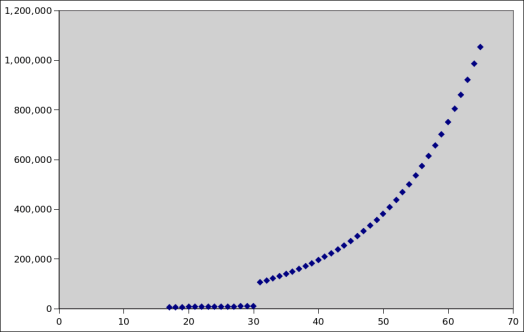
What Really Makes You Dangerous?

2024-01-25_moves.png

Thursday, 7.37pm

Sheffield, U.K.

I fear not the man who has practiced 10,000 kicks once, but I fear the man who has practiced one kick 10,000 times. – Bruce Lee

I have a new toy.

It’s unopened. I’m saving that for the weekend, but it’s a pretty nerdy thing.

It’s a Devterm from ClockWorkPi – a handheld computer that runs Linux and works off batteries.

An A5 notebook size “retro-entertainment” terminal.

It joins several, relatively low-cost computers that I’ve acquired over the years, although my main machines are a decent desktop computer and a Framework laptop.

The thing that unites all the things I buy is that they can be built and fixed – you can repair the Framework, the Devterm has open specs and you can 3d print parts for it and a desktop lets you choose parts and put them together.

It’s the opposite of the closed boxes the leading manufacturers sell, which really aren’t designed to be opened – once they die you throw them away.

That’s what’s happening to the Microsoft Surfaces that have died on me.

Closed boxes are not a good thing to get hooked onto.

That goes for computers. It goes for phones. It goes for the cloud and all that stuff as well.

You really need to have some say in the technology that you use.

Well, that’s not true. Many people are happy buying technology and not knowing anything more about it than that there’s a big company behind it and the software lets you do cool stuff.

It’s like some of the AI tools we see now. Text to video sounds amazing. You tell it to make a dancing bear and there it is.

No need for anyone to create and animate that thing – it’s just there.

I mean… just look at this stuff.

From a text prompt!

Entertainment is just going to explode – and the imaginary worlds we live in are going to get so much more attractive than these boring ones out here.

We have two options.

We can be consumers of content.

Or we can be creators that use these new tools that let us tell stories better.

What do you think we should work on?

And which tools should we use? Closed boxes or open ones?

Cheers,

Karthik Suresh

How Does One Learn To Teach These Days?

learning-to-teach.png

Wednesday, 8.06pm

Sheffield, U.K.

If you’re teaching today what you were teaching five years ago, either the field is dead or you are. – Noam Chomsky

I want to learn to teach – a little like I wanted to learn how to write a few years ago.

It’s for a selfish reason, of course.

There’s no better way to understand something than trying to teach it to someone else.

It’s when you first try and say words that you hope make sense and find that they don’t – when your student looks at you with part blank incomprehension, part pity and part irritation – that you realise you have two choices.

You can stop and never do this again.

Or you can try again and get better.

The pandemic taught us how hard it is to teach our children – and I’m amazed that teachers get through what they do at school.

But, if we’re being honest, they don’t actually get through a great deal.

A lot of the day is spent, I think, taking names, and waiting, and going to and fro.

When I was teaching the kids at home we finished the day’s work they had to do in the first couple of hours, usually before the working day actually began, because we had work to sort out as well.

That was partly because teaching the way we learned didn’t work.

You can’t just give someone a book these days and tell them to spend some time and go figure it out.

There’s a process, an intro activity, a build up, some other stuff, and then eventually the kids sit down and get on with the work.

We didn’t have time for that.

Instead, I discovered flipped teaching.

This is where you make a video of what you want to teach. The kids watch it. And then you give them the work to do.

This is because it takes you half an hour to get them to sit down and listen to you if you try and teach them properly.

Pop a video in front of them and they’ll watch it happily.

As a rule of thumb, a 2-3 minute video can get across what you’ll do in 15-20 minutes trying to teach it live.

If you use the 1-take format, where you hit record, say your stuff, hit stop, and are done – you can create content pretty quickly.

Plus, by recording your teaching up front, you don’t need to put on a performance – it’s already done – you can get on and facilitate learning.

The place where I’ve learned the most about this approach is from Lodge McCammon and the flipped classroom. Unfortunately, the videos that teach the elements of flipped classrooms seem to be slowly disappearing off the Internet, which I suppose is the problem with video resources rather than text.

But, there has also been quite a lot of technological change in the last ten years.

It’s a lot easier to use digital technology to create videos than it was.

But teaching is not about production, although it can be.

Michael Wesch, for example, creates amazing teaching videos that looks like hours of effort went into them.

But it’s not easy to maintain that level of output.

Anyway, so this is what I’m thinking.

Try out an approach to teaching that uses flipped teaching methods with Free software.

And see what I learn.

Cheers,

Karthik Suresh

Working On A Thesis

2024-01-23_thesis.png

Tuesday, 9.14pm

Sheffield, U.K.

In 1903, I finished my doctor’s thesis and obtained the degree. At the end of the same year, the Nobel prize was awarded jointly to Becquerel, my husband and me for the discovery of radioactivity and new radioactive elements. – Marie Curie

I haven’t laid down any words on my thesis so far this year.

Last year I made some progress – sparked in part by the method I use on this blog – draw something and use that drawing as a way to explore an idea.

Today’s drawing is from a throwaway comment on Mastodon – where I wrote that writing a thesis is like doing a 10,000 piece jigsaw where you first have to make the pieces.

This is literally the case. I need around 10,000 sentences and each one needs to be crafted and arranged in the right place. Or at least in a suitable place.

So how do you make progress. How do I move on from where I am so I can get this document written?

If you have any advice, I’d like to hear it, but in the meantime the purpose of this post is to figure out the next piece to make.

I’m working in a field called Operations Research.

The idea is that we can use scientific methods to make organisations work more effectively.

Some of those methods are quantitative – like figuring out how to reduce queues or manage logistics.

Other methods are qualitative – what strategy should we follow, how do we get people to work together more effectively?

That’s more what I’m interested in.

And I probably need to explain why that matters – what’s the purpose of my research.

This is the next piece.

It seems to me that the world is asking for two types of work.

Which should remind you of the joke – there are three kinds of people in the world, those who can count, and those who can’t.

Moving on.

The first kind of work is finished work. Work that is meant to be consumed. Work like movies, advertisements, books, products of all stripes.

These are things that are done, that are finished. All you have to do is buy them and enjoy them.

Your only decision is yes or no. Is this right for you or not?

This is the world of production and marketing, where a polished presentation of the thing is needed to persuade people who want or need the thing to buy the thing.

The second kind of work is uncertain, unknown or complex work.

This is where we don’t know what we need to do, what the right thing is, what would help us in this situation.

We need help figuring it out. In many cases we have to understand what we want or need before we can get on and make that thing.

This is the world of exploration and innovation – where we discover what is needed and create new products and services to meet those needs.

The tools and techniques I’m researching are about helping with discovery – with finding out what is needed in the world but which doesn’t exist right now.

It’s knowledge that helps us build new products and services, and create new opportunities and new businesses.

So that’s the area I’m working on, and the next section to write is for me to describe how my research helps make this happen.

Does that sound useful and/or interesting?

I hope so.

Cheers,

Karthik Suresh

We All Dance For Someone

2024-01-22_dancing.png

Monday, 9.27pm

Sheffield, U.K.

The idea of dancing is the only thing that scares me. – Johnny Depp

There is a series on Amazon Prime called “Panchayat”, a back to the village comedy that many people might find hard to appreciate.

Other than the billion or so people in India, of course.

It has, like the best comedies, penetrating flashes of insight into the human condition.

In one scene the main character asks a dancer why she does this job – the village equivalent of dancing on a table at a bar.

Everyone dances for someone, she points out.

Think about that for a second.

The vast majority of us are beholden to others, we dance to their tune.

We get paid to do so.

At what point did this happen?

Somewhere between being a slug and going to the moon there was a point when we invented a social structure that kept us in place, vibrating just enough not to complain and bring the structure down.

So what’s the takeaway here?

You wouldn’t think this if to look at me but I used to teach dance once.

It wasn’t that I was good at it – I was really pretty bad.

And that was pointed out to me.

Which made me a little mad. Ok. A lot mad.

So I practiced. And I got better. And I got good.

I haven’t done it now for ages – because life has moved on and other things became more important.

So the takeaway is this.

If you have to dance – get good at it.

Cheers,

Karthik Suresh

Where Do You Spend Most Of Your Time?

2024-01-21_bread.png

Sunday, 7pm

Sheffield, U.K.

The only reason for time is so that everything doesn’t happen at once. – Albert Einstein

We watched “Race across the world” recently and one of the scenes that stuck with me is where a participant helps a farmer get their oven ready and bake some bread – and is overwhelmed by the simplicity and purity of that life.

It might also be rather boring if you had to do it day in and day out.

A documentary on the increasing use of anti-anxiety medication remarks on how we spend more and more of our lives in our heads.

Well, in a sense, that’s all we do – everything we experience is really constructed our brains.

But more generally, our lives are not so much lived as spent watching screens.

We spend around 7 hours a day on screens – both for work and for entertainment.

The difficulty is that settling down and enjoying something on a screen – a game, a movie, a series – is almost always the easiest thing to do.

And therefore it’s perhaps the preferred thing to do.

It’s windy and cold out. Do you want to go for a walk? Or would you rather just watch something?

It’s always easier to do the easy thing.

That’s why water heads downhill.

This experience from our personal lives also happens in social and work situations.

It’s easier to go along with bad processes than to try and change them.

Sometimes things are the way they are because it was easier to do them this way than a different one – if things are hard to do you’ll find that people will just stop doing them.

Take commuting to work, for example.

It’s bad for you – we typically put on a couple of pounds – or a kilo or so a year for every year of a job with a long commute.

Staying at home isn’t perfect either.

Some of the mental health impacts include “less motivation, body image, depressing/negative content, vicarious living, mood swings, no social interaction, reclusiveness, dependency on screens, habitual use, arguing online, jealousy of others, feeling unproductive, guilt, toxic people online, socially anxious, hard to switch off, irritable, distracting, losing attention span.”

Trying to make all these variables work is a little like baking bread.

It’s actually quite simple to make bread – flour and water, knead for a while until it feels right, and give it some heat.

But of course, the kind of flour matters. Salt might help. Yeast makes a difference. The amount of time you spend stretching and kneading affects the quality of the loaf.

Knowing what I now know I think trying to figure out what to do with your time has to start with the basics.

Try and make a recipe that does three things.

First, optimise for health: get your food right and build movement into your day.

Second, optimise for relationships: make time for people because it’s easy to slip into a world of your own.

Third, optimise for peace of mind. You’ll know when you have that.

Cheers,

Karthik Suresh

Tools That Help You Understand Where You Are Right Now

2024-01-20_attachment.png

Saturday, 7.05pm

Sheffield, U.K.

For a lot of people, one of the reasons they don’t like to work for founders of startups is that they can be sensitive and protective around what they’ve built. You have an emotional attachment to the early marketing and technology materials, and you don’t want to hear that anything’s wrong with them. – Lynn Jurich

I watched Stutz again today – the documentary by actor Jonah Hill about the methods used by his psychotherapist Phil Stutz.

I’m most interested in the fact that Stutz draws models to help people work through situations – each model is a hand-drawn visual on an index card that captures a particular idea – that there’s a shadow that you are avoiding, a maze you might be stuck in and so on.

One of the ideas that jumped out at me this time around when watching was the idea of attachment.

Attachment is something that plays quite a big part in Eastern philosophy – we’re taught that it’s not a good thing.

Do your work without being attached to the results, for example.

If you take this idea to its logical conclusion you end up with an instruction to be attached to nothing – not material stuff, not relationships with friends, not even family.

Some people take this instruction literally, stories from the East are full of tales of wandering mendicants, travelling saints and gods who left everything, have nothing, who avoid any form of attachment altogether.

What do you make of this story, for example.

A boy bird and girl bird meet, fall in love, set up a nest together and have some baby birds.

One day when they’re out looking for food a hunter sees them and finds the nest, and sets a trap.

The parent birds, seeing their babies caught in the trap, try to rescue them and the mum gets caught as well.

The dad bird, desperate at all his family being caught, tries to rescue them and gets caught as well.

The hunter, having achieved his aims, goes home happy, has a nice meal and goes to bed.

The end.

Okay, so what’s the lesson here?

Are you slightly unhappy that the birds didn’t win – that the hunter got his way in the end?

Did you have chicken for dinner this evening?

Is it that the parent birds shouldn’t have gotten together because if they hadn’t been attached to family then they wouldn’t have had to suffer the loss of their children?

Would that have been a good outcome?

Sociology and biology suggest not.

Biologically, the only purpose living beings appear to have is to keep living – to create new beings in their image and pass on their genes.

Sociologically, we know how unhappy people get when they’re alone.

Perhaps the lesson is more subtle than that.

Being aware of how attached you are prepares you to think more clearly about your situation.

What would you do if it all went bad?

How would you feel if it all ended – if you were in the position of the birds?

What would you do differently if you acknowledged the possibility that the situation you have is temporary, that it could all end – would you treat the people in your life differently?

Would you make different choices knowing that what you have could vanish at any time?

Conversely, if you stare the fact that things can end in the face, would you be less attached to things than you are right now.

You might have created a thing – a new process, a technique – something that you really like but that is now not really as good as alternatives?

Can you let go?

When I was growing up the stories I was told was that attachment was literally a bad thing – you had to be unattached to be happy.

It’s something that people from my culture and background probably take for granted.

But maybe that’s not the real lesson.

The lesson is that we have to be able to visualise the outcomes – both good and bad – that we might encounter.

That’s where the tools come in – to help us do that.

And now knowing that – try and make better choices about what we do next.

Cheers,

Karthik Suresh

Why You Have To Know Something About Something

2024-01-19_knowing.png

Friday, 8.32pm

Sheffield, U.K.

Risk comes from not knowing what you’re doing. – Warren Buffett

Do you have children? Do you despair that they’re spending all their time consuming mindless junk on YouTube? Do you worry they’re just wasting their time?

Have you considered the possibility that you might be wrong?

I learn by reading – I always have – and I am old enough to remember a time when some people knew stuff and other people didn’t – and the ones who knew stuff were the ones that read.

Times have changed.

If you watch the latest episode of anything on TV – say it’s the new Percy Jackson on Disney Plus – do you think you know what’s going on?

You don’t.

One of the small people in my house watches something and then goes on to YouTube to watch forensic dissections of the episode, analyses that highlight subtle clues and connect seemingly insignificant events to the wider story universe in which the episode just makes up a fragment.

He knows more about it than I do.

Admittedly, more than I want to, but more nonetheless.

And I see this with other people, where I’ve researched or studied or understood something to the point where it is only possible to discuss it with others that have a sufficient amount of shared background knowledge.

Blagging is less possible these days.

Easy access to information makes it possible for you to learn about anything and everything, from stock market investing strategies to movie theory.

So when you don’t know something but try to come across as if you do, it’s painfully obvious to the experts in the room – some of whom might be your grandchildren.

Or grandparents.

Expertise isn’t about age – it’s about the information you’ve consumed.

For example, I can tell if someone understands a particular commodity market and has a good trading strategy.

But I also remember when I talked about something in a different equity market that I didn’t understand with a friend who did.

I was given some polite advice that I didn’t listen to – that particular investment ended in a total loss when the company went into administration.

In that situation, not knowing what I didn’t know had a real financial cost – I lost real money on that decision.

I have learned, as a result, to be more conscious of my own limitations.

There are three situations to watch out for.

The first one is easy – if I don’t know something I say I don’t know.

The second is somewhat straightforward.

If I do know something I say that I’m pretty certain.

The third has to do with the vast quantity of stuff that I really don’t know whether I know anything about or not.

In that case I have to do two things: I have to be willing to learn; and I have to be willing to experiment, take risks and lose.

Not lose big. Lose small, ideally.

But learn big.

After all, in a knowledge economy your only edge is your ability to learn – and to be useful because of what you know.

Cheers,

Karthik Suresh

Why Shortcuts Are Not The Point

2024-01-18_i-robot.png

Thursday, 8.47pm

Sheffield, U.K.

There are no shortcuts in evolution. – Louis D. Brandeis

Someone on LinkedIn said something today that was pretty insightful.

Why do people use AI to write stuff when they don’t read stuff written by AI?

Taking a step back, why do people write books when it’s clear they don’t read them?

We spend our time creating things for one of two reasons: we either want to; or we want something else that we think we will get if people think we have created something.

Let’s say you want to write a book.

Do you want to spend every spare moment creating words on paper or on the screen?

Do you think about what you’re going to write when you take a walk, when you have a spare moment?

Are you the kind of person who thinks about writing when you should really be paying attention to your family?

Then you’re probably the kind of person whose drive to write comes from inside – if you didn’t write you’d burst.

Others write books because they see it as a business card – a way to sell something or be able to say they’re a published author.

There’s a formula to writing these books – one that’s been refined ever since the days of the little blue books.

You can tell that a book is one of these in an instant.

I picked one up in the library the other day – a cover that had a hook, the required endorsements – then I looked inside and recoiled.

You could instantly see that it was full of bland and superficial advice – the kind of thing that sounds good but on a little thought is meaningless. The kind of advice where you could say the opposite and still be right.

I’m not saying that every book has to be complicated prose and great ideas – those are hard work too.

I’ve struggled to get through a few that seem to have good ideas but take too long to get around to the key points.

The thing about good writers is that they are readers and appreciate an author that makes it easy for them to read and understand interesting ideas.

We don’t want impenetrable prose.

We don’t want useless advice.

We want to be intrigued, to have our preconceptions challenged and learn something new.

A writer doesn’t get to do that overnight – not even by turning into a robot.

It takes time to grow into the person you are going to be – to find your voice and style and get comfortable being yourself.

There are no shortcuts.

And I think that that applies to learning a skill, creating software and anything else that requires you to put in the time to get good at something.

We need to learn to tell the difference between something that makes it easier to get something done – and the things that try to do what you want to do.

Cheers,

Karthik Suresh

Why You Really Do Have The Power To Make Choices

2024-01-17_power.png

Wednesday, 8.30pm

Sheffield, U.K.

The most common way people give up their power is by thinking they don’t have any. – Alice Walker

Next month I will be talking about some of the ways in which I use Action Research to address a variety of problematic situations.

I am always a little uncertain about whether I’m the right person to talk about stuff like this.

I learned when I was growing up that resources are limited and we can do much more with what we have than people might think.

We went to see people who lived in huts with floors made from cow dung.

It turns out that if you spread dung and get it flat, then let it dry and polish it you end up with a surface that works quite well.

It’s a sort of organic plaster, when you think about it.

Being dependent on certain resources may make you more effective but that dependence is also a problem.

Agriculture in the West is clearly not the kind of farming we think about when we imagine how farms work.

Farmers buy seeds that are designed to work for one harvest. We don’t get seeds from that that we can grow again – instead we have to buy more.

That kind of dependence on a supplier of an essential resource is also what computing has become for most people.

If you use platforms from one of the behemoths you have no option but to buy into the ongoing process of subscription and payment.

Without that you cannot function because they have captured the market.

There are several posts at the moment about the way in which these platforms use their dominant power over smaller companies that are now dependent on them to access customers.

And I have noticed a couple of things.

First, you have the company named after a fruit that controls its entire ecosystem – a strategy that is in its DNA from the start.

Then you have the boring company, the one that took over the desktop and is now trying to use AI everywhere.

When another firm starts up that has a unique idea – say it’s web conferencing or document sharing – the big firms go ahead and copy it.

And because they’re big they can get it out to their customer base faster.

So what they can now do is simply wait to see what’s getting traction in the market and then build that functionality into their own products.

I’ve seen this with online facilitation software – there are a couple out there that many people know about.

I don’t really use them – because I don’t like the SaaS model in that situation anyway – but I have tried them out.

I recently re-used the facilitation system from the major desktop provider.

And it now opens with templates and all kinds of things that are clearly designed to woo the market that uses these other platforms.

I think that competition from a big, hugely wealthy and powerful customer that already has dominance over the customer base will win.

But I don’t use any of their stuff.

So when I talk about what I do my tools aren’t the thing that most people will recognize or be willing to learn.

But people really want to know about tools – which pencil, which computer, which package, which app do you use?

And the think is that those don’t matter.

Well, they do a bit, the technology does dictate what you can do – it’s easier to draw certain things on a whiteboard and different things using a stylus.

But what really matters is the theory – the principles that underpin what works in practice.

But theory is boring.

So.. if what really matters is boring to most people, and what you’re interested in learning about is not what I’m there to teach – then what’s the point?

I suppose it doesn’t matter how many people you don’t reach.

It’s about putting the message into the world that you can take control of your systems – you can use Free and open source software to do your personal work, run your business, help your community, and spread learning to those who need it.

Show people that an alternative exists to the dual party – seemingly all-powerful system.

And that’s a good enough reason to have a go.

Cheers,

Karthik Suresh

If It’s So Good Why Are You Selling It?

2024-01-16_hamster.png

Tuesday, 8.26pm

Sheffield, U.K.

Like dogs in a wheel, birds in a cage, or squirrels in a chain, ambitious men still climb and climb, with great labor, and incessant anxiety, but never reach the top. – Robert Browning

If you have ever been under pressure to get involved in sales you will find that there are a great many myths about how sales works.

For a fee, many people will teach you their favourite ones.

This is something to guard against.

Think about it logically.

If someone has an edge, a source of competitive advantage, then why would they reveal their secrets to you?

After all, you want to exploit that advantage because it should make you money.

For example, let’s say you learn that there’s a foolproof way to trade currency futures – this is going to make you money.

Wouldn’t you keep that to yourself and trade the markets for as long as that worked for you – raking in the money?

Why would you stop trading to spend some time teaching others the techniques you’ve used?

Is it because you know it doesn’t work and your product is essentially a long con?

This is what I struggle with whenever I come across a situation where someone wants to teach their method rather than exploit their method.

Because the incentives are misaligned.

What works is usually simple. It’s a small tweak, or a straightforward process.

Common sense in practice. Or experience applied. That sort of thing.

But I can’t just sell you a few sentences – I have to create a complicated structure so it looks like you’re getting something of value.

So you end up with this universe of mushrooming courses and packages and content that are puffed up versions of something that’s usually quite simple.

A paragraph of insight turned into 40,000 words.

If you are really good at doing something then you should just do that – make a living from that thing.

If you decide that you want to teach others then you should do it because it’s something you are driven to do – it’s a public service, not a product or business.

Warren Buffet’s letters to shareholders are an amazing source to learn from – but they’re out there, free on the Internet for anyone to access.

Imagine if he had charged for his writing? Given his billions, it’s cost him to write down his thoughts for others to read.

The people I’ve learned the most from put their stuff out because they want to share, to explore, to learn more about what they do by expressing it to others – it’s a selfish thing really. They learn more by teaching than they would in any other way.

They’d teach for free quite happily.

And I think that’s the only way to really be happy – to feel like you aren’t on a treadmill to nowhere.

To work on things you would do anyway whether you were paid or not.

Cheers,

Karthik Suresh