Starting A Business Later In Your Career

2025-01-15_build-for-buying.png

Wednesday, 9.40pm

Sheffield, U.K.

The two big startup killers are when there’s just no market for what you are doing, and team problems. – David Cohen

Most ventures fail.

Many people think that successful founders are young – they’re the ones that are smart, know new technology, don’t have commitments, can outwork the competition and can think outside the box.

It turns out, however, that older founders are more likely to be successful. A 50-year old founder is nearly twice as likely to create a higher growth firm than a 30-year old.

This is good news for those of us that are growing irritatingly older.

People often think that what matters in a business is getting to product-market fit.

You have a great idea – perhaps it’s a new app that helps you manage your aquarium.

The next step is to build the app.

Then it’s time to go and find paying users.

This is the way we often do things when we’re young.

I remember building all kinds of tools that I thought would be immensely useful.

But somehow no one else wanted to use them, and they never got the traction I thought they might get.

As you get older you realise that you need to think about the problem in reverse – what you need is market-product fit.

Go and find a need – something people want that they’re not getting now – something they would pay for, preferably a lot.

Then build a product that fits that need.

Now, you might argue that if it were that easy surely everyone would be doing it.

Well, think about this for a minute.

Who is your competition?

On the one hand, you have young founders who don’t know what they are doing yet and are busy building rather than looking at the same market need that you’ve discovered.

On the other hand there are large companies that could meet that need – once they’ve got the budget approval, nod from legal, IT setup – all the things that hobble you in a big, rich enterprise from moving quickly.

You could build your product in the time the large enterprise gets its first white paper in front of a VP.

A low risk strategy for a founder, especially an older one, is perhaps as follows.

  1. Go and talk to the market. Find a need that you can fill.
  2. Build a solution and get early customers.
  3. Iterate and build until you have something that delights your small customer base.
  4. Grow quickly, hire and build a team that can support your service.
  5. Put yourself up for sale – look for a large company that wants what you have and will acquire the lot.

This is a 3-5 year plan, and then if you have time, rinse and repeat.

So, if you’re on the wrong side of 40, your best years are still ahead of you.

Cheers,

Karthik Suresh

Is The News Trying To Copy Social Media?

2025-01-13_news.png

It is difficult to get a man to understand something when his salary depends on his not understanding it. – Upton Sinclair

My news sources for a few years, perhaps even for the last half a decade, have been the BBC and CNN.

And whatever turns up on social media.

I was quite excited, then, to discover that the library made it possible to read newspapers from around the world.

I thought I’d get thoughtful, interesting, and balanced information from experienced journalists.

There is a lot of that.

And then there is stuff that makes you think.

Take the Wall Street Journal. You’d think that it’s going to focus on business, tell you what you need to know.

And it does. I shouldn’t be unfair. There are a number of excellent articles.

And then there are some downright bizarre opinion pieces, the sort of stuff you’d normally see on social media rather than in a reputable paper.

Quite a lot of them are angry about the renewables business – and the shift away from gas.

The argument goes something like this – renewables need lots of minerals, that’s a lot of mining, plus they get subsidies so they are bad and we should keep burning gas.

Which sounds reasonable, except that there’s no balance to the opinion.

Presumably the gas infrastructure was built with lots of subsidies and it still gets them.

Yes mining is bad. So is climate change.

The bad news is that if we really want to do something we need to stop consuming so much and live within planetary resources.

But that’s tricky because the reason we can make such powerful and sophisticated weapons is because the economies with the capability are rich because their consumers make and buy the kind of things that require powerful and sophisticated technology.

An agrarian society that is happy growing rice is going to be good for the environment – but will also struggle to defend itself.

These are complicated areas where it’s hard to figure out what to do and I suppose these baying opinion pieces are shouting about what they think is needed.

The reaction from government is to do what will get people to vote for them, and that acts as something of a check mechanism. Go too far one way and you’ll alienate everyone else.

You can get in power by being extreme. Staying in power, in a democracy anyway, requires compromise.

The extreme nature of social media and political discourse suggests that compromise is never an option.

In public anyway.

Away from scrutiny, the people that matter probably get on with making deals, and those deals rely on hammering out a compromise.

That’s the way the world really works.

And if anything is going to make things better, it’s continuing to work towards finding a compromise between competing priorities.

At least, while I’m reading this news and wondering what I’m getting out of it, I’m also strolling along on a treadmill.

The world might be complicated, but targeting calories needn’t be.

Cheers,

Karthik Suresh

We Have The Shovels – But Where Is The Gold?

2025-01-06_ai-and-green.png

Monday, 9.44pm

Sheffield, U.K.

Truth, like gold, is to be obtained not by its growth, but by washing away from it all that is not gold. – Leo Tolstoy

I’ve been enjoying reading newspapers again.

If you had told me 20 years ago that I would read a lot, then get to a point where I simply looked at lots of small articles lined up like cards, and rarely read a long-form article I would have thought you were nuts.

But that’s what’s happened. We’ve gone from making time to read to “consuming” content.

It’s time to slow down. Like the slow food movement, perhaps we should get back into slow reading.

And thinking about what we’ve read.

I have spent a lot of time over the last year or so thinking about AI.

It’s professionally important to me. Could AI do what I do? Could it help me do what I do better? It seems like my areas of competence – which centre around decision making and the sustainable transition, with a bit of technology thrown in, are affected by, and are relevant to the development of AI.

For example, I have spent much of the last couple of decades immersed in power markets. Power prices are set by supply and demand in deregulated markets. AI is power hungry and there is an explosion in data centers that will use a lot more power than current ones – which means there is a need for new connections, new contracts, and potentially price spikes in wholesale power prices.

Of course, you can build renewable generation near your data center – and there are strategies to mitigate the risks – but the point I’m making is that power is important.

The growth area in the last year has been in building and kitting out data centres to support the use of these new LLM models. That means lots of chips to run the models and big server farms to handle the global demand. ChatGPT runs very fast – much faster than the local LLM on my computer – because it runs on more computers.

Cooling those computers requires power and water – and we’re back to the resource requirements.

But really, all we have so far, is the equivalent of picks and shovels – where’s the gold?

Well, that’s the next thing to figure out. Which companies are going to make more money – either through increased revenues or decreased costs through the use of AI?

This is actually much harder to do than you think.

I think I’ve written about this before, but the savings from an improved process often go to the supplier, rather than the customer.

For example, will you really save money using ChatGPT?

OpenAI has already talked about how it wants to take a share of the savings made by firms using its technology.

A few months ago, I could use the tool and get a useful answer. I could show people how useful it was.

In my most recent tests, it’s searched the web and given me less useful information – almost like it’s teasing me and saying I do know something but you’re going to have to pay more to find out.

That creates friction – and increases costs.

This next stage is the really hard bit and I don’t think many companies are going to get this right.

On the one hand, you have a flaky technology – with its makers trying to figure out how to make money from it.

It’s like having a shovel that randomly turns into ice cream while you’re trying to use it.

On the other hand, you have to figure out what the value proposition really is – all too often we don’t care about what we get. AI writing, for example, isn’t the kind of stuff you’re dying to read. Instead it’s the stuff you submit for a term paper because you can’t be bothered to do the reading.

Are you really going to pay for that sort of output?

Have you seen anything produced by AI that you would pay a premium for?

I don’t know how things are going to turn out, but that’s what makes things interesting.

Cheers,

Karthik Suresh

What’s The Most Important Part Of An Information Business?

2025-01-05_analytics-drivers.png

Sunday, 6.42pm

Sheffield, U.K.

When a truth is necessary, the reason for it can be found by analysis, that is, by resolving it into simpler ideas and truths until the primary ones are reached. – Gottfried Leibniz

In a post a couple of days back I asked how we would go about starting to analyse situations.

That got me doing a little reading.

In a paper, which is now 15 years sold, Libertatore and Luo (2010) discuss the implications of the Analytics movement for Operational Research.

Analytics, at the time, was a new term doing the rounds.

I remember being introduced to tools such as PowerBi around 2012 with the advent of cloud computing and software as a service (SAAS) applications.

I didn’t like the idea – but I could see how it would sell.

The paper argues that four big driving forces led to the analytics movement.

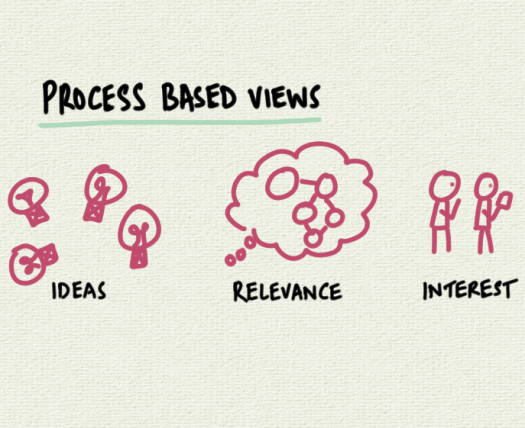
I’ve adapted their picture above, as I think the order I experienced is slightly different, so I’m going to discuss it from that perspective.

The first change is that of a process orientation. Things happen. Then other things happen. And these happenings over time result in value for customers.

Managing many operations these days, especially those in information businesses, are about managing processes.

This is different from innovation and research and new ideas.

For example, quantum computing is a hot topic right now. In the West it’s driven by a combination of private investment, university research and the ever-present military interest.

In the East, it’s driven by state investment.

Once you have something promising emerging from research, making it happen in practice is a process problem.

And I’m interested in those practical businesses in this post.

The changing view from stand alone products to processes has a natural fit with the changing ecosystem of data.

We might have once thought of data as a silo, a set of complete information.

Now, we know that we have data sets that keep growing, databases of daily stock prices, weather changes, flooding events, e-commerce purchases – the river of data is constantly flowing and replenished.

But to really use data in a process view what you need is software – and we are awash in software now.

When it comes to open source and free software there is a huge amount of choice – starting with r and python packages that can pretty much do anything you want.

And we now also have people in organisations who understand these things, that have grown up with these tools.

More importantly, those people are in charge – in management roles and in a position to understand how to use these tools in practice.

Knowing how to do analysis is increasingly important for organisations – and they will probably start hiring more and more analysts – people that have the skills needed to work with computers and data.

But, the most important thing they will be doing is applying those capabilities to build better and cheaper processes.

There is a saying in product firms that companies don’t compete, supply chains do.

In information businesses, we could change that to it’s not smart people in consultancies that are competing, it’s the processes they’ve implemented.

The better your process, those likely you are to win.

Cheers,

Karthik Suresh

References

Liberatore, M.J., Luo, W., 2010. The Analytics Movement: Implications for Operations Research. Interfaces 40, 313–324. https://doi.org/10.1287/inte.1100.0502

Why Would You Want To Buy Greenland?

2025-01-04_arctic-contest.png

Saturday, 9.46pm

Sheffield, U.K.

I’m actually writing history. It isn’t what you’d call big history. I don’t write about presidents and generals… I write about the man who was ranching, the man who was mining, the man who was opening up the country. – Louis L’Amour

Did you hear Trump talk about buying Greenland from Denmark and merging with Canada and wonder what was going on?

I spent some time today away from social media.

A few months back I think I wrote about how I thought social media was a useful source of insight – how people looked for interesting things and shared them with you and the result was like having a team of researchers making sure you knew what was going on.

I’m less sure of that now.

There is probably some useful stuff but because the algorithm shows you what you’re interested in that means after a while you’re not seeing anything new.

That happened very quickly. It took around two months of writing and engaging before it was clear I was in an echo chamber.

So I stopped.

The problem is that once you cut off the information hosepipe you’ve been drinking from, how do you know what’s going on?

It’s a complicated world out there so how do you make informed decisions for yourself and your business?

I started by going back to the library.

UK cities have good library facilities for citizens and one of the benefits of paying a council tax is access to a good e-library which lets you borrow newspapers.

Like the Economist. I used to read the Economist every day. I had a subscription for a while. But then, as free sources of news came along, those habits slipped away.

But 2025 promises to be a year where shutting your eyes is not a good idea.

I borrowed a few papers and started reading. And, for the first time in a decade, started clipping articles out of the paper.

Well, using a snipping tool on the computer and saving them, that is.

It feels like an old fashioned thing to do – to clip an article.

I have a book in my library about the Mitrokhin Archives – about secret KGB operations between the 1930s and 1980s.

I picked it up in a second hand book store, mainly because within the pages the former owner had clipped and stored news stories about spies.

I clipped a story from the Economist about the economics of the Arctic, and learned that Greenland has the biggest deposits of rare earths, nickel and cobalt in the West.

Canada is also home to huge reserves of iron ore, has the largest coastline around, with access to the seas around the Arctic.

These materials are important to the West because the biggest reserves of minerals essential for batteries are in China.

And you know there are some tensions going on there.

Modern armies need technology, that technology needs these minerals.

As an aside, we also need them for green energy technologies.

So, wanting to control the places where these are found starts to make sense.

I think my resolution now, for 2025, is a simple one.

Try and be better informed.

Cheers,

Karthik Suresh

Do We Really Want To Live In Interesting Times?

2025-01-03_connections.png

Friday, 8.42pm

Sheffield, U.K.

We live in the mind, in ideas, in fragments. We no longer drink in the wild outer music of the streets – we remember only. – Henry Miller

Sometimes, technology doesn’t make things better.

The Jevons paradox is an example. Take a resource, coal for example. We develop technologies that use the resource more efficiently and, in doing so, reduce the cost of using that resource. The lower cost increases demand so that we end up using more overall. So, better technology leads to greater energy use.

Not using technology isn’t the answer either. We don’t really want stone tools or bullock carts.

When it comes to getting the balance right, between supply and demand, the market system seems to work pretty well.

When the market works.

But markets are influenced by policy makers who, in many countries, want to try and control how wealth is created rather than letting the market get on with the job.

And that creates a large set of risk factors.

For example, when I was younger, I read that there were only two reasons to buy property.

One, because it was cheaper to buy than rent, or two, because you really really wanted that house.

A home was a place to live, not an investment.

At some point, property has become an investment. It’s supported by the idea that they don’t make land any more, and people will always need a place to live.

And that’s been true for a while. Property prices have surged and many people have a lot of equity tied up in their homes.

But not because of supply and demand.

The increases since 2008 have been driven by very low interest rates. Interest rates that were put in place to avoid a market meltdown.

Being able to borrow more money more cheaply led to an increase in prices, as that extra money people could borrow went towards bigger bids on houses.

And now we have a ticking sound as those cheap mortgages expire and some people find that a repayment at 1% is very different from one at 6%.

China, in particular, acts as a uncertainty generator.

For the last 70 or so years the Chinese system has funneled money into industry after industry, creating capacity and driving down global prices.

That has been a good thing, as part of globalisation, but it’s also led to the shutdown of manufacturing in many countries.

In the last decade or so that’s lead to dissillusionment with globalisation and a retreat, more protectionism and more nationalist leaders on the world stage.

You can see this in the news now, as America responds to an increasingly powerful China, and both countries consider trade barriers, limiting access to technology and the materials that are needed for technology.

The result of all this is what the Economist terms “radical uncertainty”.

Or what the Chinese might refer to as “interesting times”.

I doubt many of us know what to think or what to do in these situations.

How would we even start analysing what’s going on?

I think we might need to go back to the history books, to see what happens when things get complicated.

But we also need ways to get a sense of what’s going on and make decisions in these complex and uncertain times.

That’s one place to focus on in 2025.

Cheers,

Karthik Suresh

Where Is The Value In Work Now?

2024-12-28_predictable-action.png

Saturday, 2.15pm

Sheffield, U.K.

Statistics are used much like a drunk uses a lamppost: for support, not illumination. – Vin Scully

It’s normal, I suppose, to come to the end of a year and look back to see what has happened and what has changed.

I’ve written more this year, around 60,000 words. Far short of the 280,000 I clocked in 2020, but a better showing than the last couple of years.

I also have this sense of being buried under material. Notebooks full of stuff, notes from everywhere, from stuff I’ve done, stuff I’ve read, journals that chronicle the mundane everydays.

How do writers make sense of all their material? How do they work through these ideas and get them into a form that says something useful?

My favourite author, Robert Pirsig, gives us a sense of this in a rare talk, as he describes writing his book Zen and the art of motorcycle maintenance. How the book was something he had to write. How he wrote a draft. Hated it. Put it away for a couple of years. Then wrote it again – and how this time, it came out exactly right.

The sequence that one goes through, the germ of an idea, the flailing around in the darkness, the collecting of ideas and thoughts, trying to piece them together, failing, waiting, then starting again and making sense – that’s something that we go through as humans.

Will these new tools we have – the AI assistants – help us do this better or will they make us less capable of putting in the time and work needed to go through this process?

After all, if I can jot down some notes, or copy what others have written into a file, and get the AI to group and summarise what’s going on, isn’t that the same thing that I’ve spent all this time doing?

Probably.

I think that we’ll increasingly hand over stuff that isn’t worth doing to these tools.

Reading and summarising a whole canon of ideas – maybe that’s something we leave to the AI.

Although, we don’t really need it – that’s what encyclopedias have always done. Or the introduction and literature review of a decent paper. That’s going to have the same kind of material.

The work we’ve got to do is the stuff that hasn’t already been done, or that can’t be done because there isn’t enough data to build a statistical model that can fit the existing data and predict what comes next.

If what you do can be reduced to statistics then the machines will do those faster and better over time.

Maybe that’s helpful.

What they won’t do is the stuff that can’t be statistically modelled.

I learned a decade ago that sustainable competitive advantage comes from rare, valuable, inimitable capabilities that you have the organisational structure to deliver.

I think we might need to add unpredictable to this list.

VRIOU.

Cheers,

Karthik Suresh

What Kind Of AI Do You Need To Have In Your Life?

2024-12-10_ai-phase.png

I often tell my students not to be misled by the name ‘artificial intelligence’ – there is nothing artificial about it. AI is made by humans, intended to behave by humans, and, ultimately, to impact humans’ lives and human society. – Fei-Fei Li

A remarkable number of conversations that I have are now about AI. Whether it’s on my social media feed, or in a professional capacity, everyone is talking about AI and what it means for us.

I think AI has transformed our lives in two ways, one that we don’t notice and one that we do.

We rely on AI for our day to day activities far more than you might think. Google maps uses AI. So does Spotify. As does that scheduling thing that tries to work out a time when everyone is free to talk. There are lots of tasks that are being speeded up and because we’re using the tools without thinking about them we don’t realize that AI is embedded in more and more of what we do every day.

The second way is the visible one – the models you can talk to and which help you with intellectual work – as a sort of research assistant.

That’s again been immensely useful. Want to write a python script or do an analysis in R. Here you go. It gets you going, gives you a starting point, that often works. It sometimes needs fixing and won’t always follow what you want, but it’s certainly faster than reading the docs and starting from scratch.

It’s not human. Remember that. I once asked for a script that would go through some data and pick out numbers that looked odd. I meant odd in the sense of outliers or unexpected patterns. It thought I meant numbers that weren’t even.

Going from this step to engineering an AI workflow that does something more is a little harder. I have a decent workflow for document analysis, something that comes up fairly often.

But after that we’re in a bit of a gray area – between stuff that needs thinking to stuff that needs a lot of mathematics. New models like o1 are supposed to be better at thinking type jobs but we run into the issue of validation. When your maps app gives you a route you know it’s working if you end up where you wanted to go. When your AI tool sets out a strategy you have to follow it for it to work – and we run into the human problem. If you succeed, how do you know it was because of the strategy? And if you fail, how do you know if you did the strategy right?

When you’re managing people you try and train them as best you can. Then you let them get on with the work and you try and check in, make sure they’re on the right track. Some managers micromanage, look over their worker’s shoulders and tell them what to do, but that’s like a prison warden and prisoners. Both are in prison. A good manager should be able to go and read a book knowing that the team is doing the work and it will be done right. The point of checking in is to validate what’s going on.

I think that word – validate is an important one.

We need ways to validate what AI tells us, an ability to test its outputs and treat them with some scepticism until we see outcomes that suggest we’re doing the right thing. Validation is about having a mental model that tells us what to expect from the AI.

For a long time we’ve talked about digital twins – digital models of physical processes.

I wonder if it’s time for a new approach – an analog twin.

A brain tool that can help with talking about what we need from our AI assistants and validating if they’re doing the right thing.

Something that we can understand.

Such tools exist – they are mental models such as purposeful activity models from soft systems methodology (SSM).

They’re just not very well publicised.

Maybe their day will now come.

Cheers,

Karthik Suresh

What Are We Trying To Do At Work?

2024-12-09_pondering.png

Monday, 10.49pm

Sheffield, U.K.

When in doubt, mumble; when in trouble, delegate; when in charge, ponder. – James H. Boren

I’ve been thinking about James Thurber today, the American writer and cartoonist.

He had a drawing style that was loose and fluid, and captured the essence of a scene in a few scrawled lines.

One of his books is called “The last flower: A parable in pictures” apparently his favourite.

It’s a story about war. About how it happens, how people change, how it makes things worse, how people make things better, and how war comes around again.

We seem to be living through a time with more wars, with more parts of the world affected by conflict.

Operations Research, the field I’m interested, was born out of wartime work.

Early work was about working out things like the trajectories of shells.

Our modern high tech economy is arguably the result of the military-industrial complex, and it’s support for better spears to fight with.

It’s all a little depressing.

Human beings develop new technologies to stay ahead, to be better equipped than others to survive.

It’s an evolutionary trait.

Failing to participate is preparing to go extinct.

At an individual, organisational, or national level we need to organise ourselves for survival.

First survive, then climb the pyramid – see how far you can get to being an apex predator.

That’s what superpowers aim to be.

I guess an argument could be made that what we do at work is try and survive the day.

And we try to do that by figuring out what the boss wants.

Everyone has a boss. Someone you answer to, someone that needs what you provide.

Your customer is your boss too.

You’ve got to try and keep them happy.

But the trick to doing that is to ask a next level question – what does your boss’s boss want?

That’s the thing you need to figure out and deliver if you want to get your work done and go home.

Cheers,

Karthik Suresh

What Goes In A Soft OR Case Study?

2024-12-08_case-study.png

Sunday, 8.59pm

Sheffield, U.K.

You don’t lead by pointing and telling people some place to go. You lead by going to that place and making a case. – Ken Kesey

I’m going to have to focus on my thesis now for a bit – I need to make some progress there.

So please bear with me while I work through some stuff that may or may not be of interest.

My area of research is called Soft Operations Research, or Soft OR.

OR is a field that uses scientific methods, tools and techniques to solve problems related to how a system is operated and find optimal solutions.

Figuring out how much resource or material needed to get a particular task done efficiently is the kind of problem where you can bring out the OR toolkit.

It works really well when you need to think about how to get things working.

It’s not as effective when you want to get people working.

That’s where the “soft” part of Soft OR comes in – a different set of tools that we can use with people to structure decisions and problems so we can do something about them.

My thesis is about a tool I’ve come up with, called Rich Notes, and I’m trying to figure out how to write about it.

One of the ways of doing this is to discuss its use in practice with case studies.

So what does a soft OR case study look like?

I picked up Peter Checkland and Jim Scholes’ “Soft Systems Methodology in Action” to find out.

SSMA has a number of case studies and is probably a good model to follow.

Chapter 6 has two studies in a product marketing function, and seemed a good starting point for me.

There are two ways you can apply soft systems methodology or SSM. One is to use SSM to do a study, and the other is to do a study that uses SSM.

There is a difference. In the first I say I’m going to use SSM and plan a study that is designed to apply it. In the second I do my work and if I come across a situation where SSM could help, I use it.

The second approach is where a lot of ad-hoc managerial applications happen, for example when I talk to colleagues or long-standing clients.

The former is when I am trying to suggest that I consult with a new client – and propose that I use SSM.

Regardless, I’ve done something. What now, how do I describe it in my thesis in a useful way?

There are six things to consider, as I’ve gleaned from Chapter 6 of SSMA.

First, describe the context – what’s the background, what’s the situation, and how did you enter it?

The thing that people are most curious about is how it all began.

It’s like asking a couple, “How did you meet?”

It’s that context that helps us situate ourselves in the situation.

Second, from an SSM perspective, it’s worth understanding what’s going to be the end result.

Sometimes it’s a report. Sometimes it’s an outcome – some kind of change for the better.

Did you know at the start what sort of end result you were aiming for, or were you making it up as you went along?

Third, how did you gain an appreciation of the situation?

This is the important bit – seeing the situation from the points of view of the people involved.

It’s not about one side of the story but getting multiple perspectives and seeing what’s going on with fresh eyes.

How did you do that?

Then we come to the last three steps, which are a bit more technical.

Fourth, what systems did you conceptualise?

A system is about parts and connections – what are the bits and pieces that make up the situation you’re studying?

Fifth, what conceptual models did you build?

A conceptual model brings the system to life.

This is probably not going to make sense unless you already know a bit about this topic, but think of it like this.

A system is like the parts of a motorbike. The ignition, the gears, the handlebars, the fuel tank, the wheels, the frame, and how they are connected.

And don’t forget, the rider is also part of the system – maybe that’s you.

The conceptual model is how you start and ride the bike.

The first is static. The second is dynamic. Together, they get you going.

Sixth, you compare your models with reality and make changes.

What does your model say should happen, what is really happening, and what needs to be done to make things better?

In your case study, what did you do?

Bring these six pieces together and that’s how to write a soft OR case study. Should be good to fill a few pages.

Now I need to go and do a few of those.

Cheers,

Karthik Suresh