The Easiest Thing To Forget When Starting A New Project

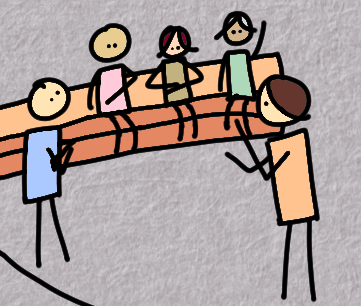
scaffolding.gif

When one puts up a building one makes an elaborate scaffold to get everything into its proper place. But when one takes the scaffold down, the building must stand by itself with no trace of the means by which it was erected. That is how a musician should work. – Andres Segovia

Over the last couple of years I have drawn nearly 600 pictures, trying to find different ways to visualise and explore conceptual models.

There are some days when the models dominate – where the elements and relationships are the main things to get right and line and colour simply embellish the core message.

At other times it’s simply the visualisation of a metaphor – a literal depiction of what is going on.

Most of the time there isn’t much time to try and do detailed work – and that’s not really the point of the exercise anyway – As Dan Roam writes we’re aiming for communication, not art.

But every once in a while it’s refreshing to go back to the books and see how proper artists go about their work – and thing we need to remember is that nothing springs into existence perfect and fully formed but is instead built over time and in layers.

I thought I’d have a go at one of the exercises in Christopher Hart’s book Drawing on the funny side of the brain, which you can see in the animation above.

What also spurred me on was watching a few videos of artists using the software that I use to draw.

It’s called MyPaint and it’s only by watching someone else work, someone far more experienced than I am, that you pick up tips and tricks for making the most use of the tool.

It’s a similar situation with the software I use to create the articles I write – using groff to lay out the pages from marked up text.

The thing with these tools is that they’re becoming like favourite pencils and pens I once kept in a case (and still do).

The more I use them the better I get to know them – and they have their own quirks and peculiarities – but there is a sense of community and shared use that you don’t get with anything else.

For example, I use Microsoft reluctantly and with unease.

But, if you want to work with large companies – and they are the ones that benefit most from the kind of work I do – you need to be able to engage with their ecosystem.

Using those tools doesn’t give me the same sense of artistic freedom and shared history and community – I just feel resentful that it’s something I have to do.

That is perhaps the great illusion that underpins modern society – many people want to convince us that whatever they’re selling is perfect.

People who actually create things, however, know that the reality is much more complicated than that – they remember the twists and turns and wrong paths they took as they created something that was eventually useful.

The problem with thinking like a salesperson is that you think only of convincing someone to take what you’re offering.

Thinking like an artist involves starting with a blank page and creating something new – something that is created for one person – perhaps the artist themselves or for the person who will stand in front of the creation one day and take their own message from it.

The biggest mistake we make is when we try and jump to the end without going through the stages in between.

These are necessary – just as necessary as building up a drawing from simpler blocks.

Andrew Loomis in his book Fun with a pencil writes that “As you proceed to build all sorts of shapes out of simpler ones, it is amazing what you can do with them, and how accurate and “solid” the resulting drawings will appear. The surprising part is that, when the construction lines are erased, very few could guess how it had been done. Your drawing appears as complicated and difficult to the other fellow as mine might seem to you now.”

This principle could apply with very little modification to problems of operations, sales and technology development.

And it just needs one simple mental model to remember this principle – an approach that will help you work in a structured way, building from the basics to a finished product.

Start thinking using a pencil and, when you’ve got the outline you need, go over your final lines in pen.

Cheers,

Karthik Suresh
How Do You Select Tools If You Do Knowledge Work?

core-tools.png

Friday, 9.18pm

Sheffield, U.K.

The Stone Age was marked by man’s clever use of crude tools; the information age, to date, has been marked by man’s crude use of clever tools. – Anonymous

If you had to set up in business tomorrow what tools would you need?

For most knowledge workers an office suite might seem like the most useful package – the trinity of Word, Excel and Powerpoint perhaps?

These tools each have a clear purpose: you write documents, do analysis and tell stories.

And get quite stressed.

If you have had the opportunity to work on a consultancy project of any magnitude you will be aware of how, as documents and spreadsheets and presentations get bigger and bigger, the difficulties associated with opening and working with them increase.

Even if you haven’t – but you have had to write a dissertation using Microsoft Word – you have probably experienced the frustration of losing work or struggling to get the file the way you want.

The end result is, in many cases, late nights and angst and stress as you wrestle with the tools that are supposed to help you out.

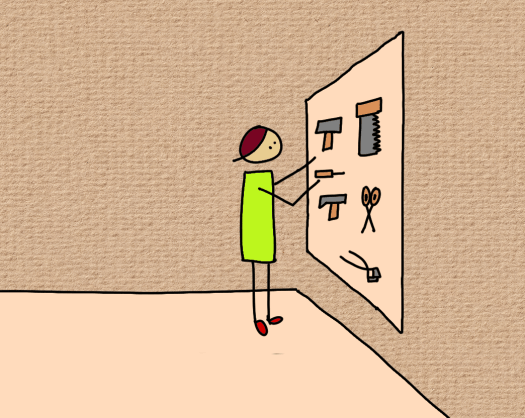
One way to look at tools is to think of what happens when you use a hammer to help you during a project.

If you need to bang a nail into a wall so you can hang a picture the hammer works in a certain way.

If you need to bang in the last nail on your multi-storey construction the hammer will work in exactly the same way.

As tools go the hammer isn’t fazed by how complex your project is. It just does the job it’s designed to do.

If you are a craftsman or a tradesperson who has to rely on your tools for a living you will probably take some care in selecting them.

Many years ago I was introduced to electronics repair by a technician who took me to a store where we purchased some high quality kit – from screwdrivers and needle nose pliers to an analogue multimeter.

These tools are still with me today, a couple of decades later and although some have been used to stir pots of paint along the way by others who should know better, they still work as well as they did on day one.

And there is no way I would use a Swiss Army Knife or a Leatherman as my primary tool when taking apart a machine.

So why is it that knowledge workers spend their lives working on problems with the digital equivalent of a multi-purpose tool from a dollar store?

Or worse, we do everything through interfaces – web based or app based that suggest that you can create works of complexity and beauty by pressing the right combination of buttons.

There is something fundamentally wrong with this – and that’s probably why most people don’t actually get very good at using digital tools.

Perhaps what’s happening is that we are too far away from the thing we are working on.

With a mechanical tool you are right there with the job.

I remember once having to repair a motorcycle brake system – the calliper was stuck and I couldn’t work out how to get the thing off.

As Pirsig writes in Zen and the art of motorcycle maintenance, I was stuck as well.

What is the equivalent of that kind of stuckness in knowledge work?

Is it perhaps not being able to work out what an algorithm does, what argument to make next in your essay or which font to select?

With physical problems the tools you use are designed to fix the problem.

With knowledge work the main tool you have is your brain – your ability to think about and focus on the problem at hand.

Digital tools don’t help you think any better.

In fact, perhaps the purest approach to carrying out great knowledge work is to sit quietly and think deeply.

The tools you select to help you should help you to capture, organise and communicate complex thoughts and ideas worth sharing.

Tools that encourage you to write one line emails, send out updates and log into portals should probably be seen as a form of entertainment.

But if you really want to get work done you should choose your digital tools with the same care with which a master craftsperson selects their tools.

But the tragedy is many people don’t even know they have that choice.

Do you?

Cheers,

Karthik Suresh

Why We Need To Understand The Difference Between Consensus And Accommodation

politics.png

Thursday, 8.15pm

Sheffield, U.K.

How can you govern a country which has 246 varieties of cheese? – Charles de Gaulle

If you look at the vast collection of literature that is loosely categorised as self-help you’ll find lots of tips to make things better.

Life hacks, they are now called – as if you can find a clever route that will make all problems vanish.

I suppose there are hacks that help you in practical ways.

A quick search suggests that you could grow rose cuttings in potatoes – that’s pretty useful information for some people.

But there are other problems that are less well served by looking for a hack.

Especially problems that involve working with other people.

This is something that those of us that are technical find hard to learn.

For example, do you believe that for a given office based task there is an optimal solution?

For most real world tasks there is more than one way to do it – and the approach you takes sits on a continuum between doing everything manually and automating everything altogether.

Take a practical example like checking whether a bill is right.

You could get out a calculator and work through the numbers.

You could create a spreadsheet and recreate the bill.

You might create a script that processes a file with the billing data and gives you a result.

You might be comfortable with one or more approaches but others will start to struggle at different points based on their skill sets.

The optimal approach then, if you want to work with others, is not one that depends on the solution but one that depends on the people involved.

And this is something that is not always easy to appreciate.

Peter Checkland, in his book Soft systems methodology in action writes about the problem of getting different people to go along with a plan of action.

This is the basic issue faced in a large number of problems – from how you do a task with a co-worker to how you decide which projects to do in your company and how your government makes policy decisions.

The thing that underpins it all is a process of politics – the activity by which different people figure out how to get along.

Checkland talks about the importance of achieving an “accommodation” in order to make meaningful progress.

An accommodation is something that people can live with, something they are prepared to go along with.

It differs from consensus in that people don’t have to agree that something is right or that they like it – just that they can accept it.

The point Checkland makes is that if you want to improve a situation you don’t need to find consensus.

It might be nice to have a consensus, to be in a situation where everybody agrees that a particular course of action is the best possible one.

In reality, such situations are rare.

Real situations have more to do with culture, politics and power than they have to do with technical virtue.

And culture, politics and power influence the stand people take on a particular issue – and the challenge you face is one of getting them to go along with your idea – to ‘accommodate’ you.

And people who don’t understand that struggle to get their projects through organisations, big or small.

This may seem like a technical and fairly pedantic point.

But it’s important for any non-trivial organisational problem you might come up against.

If it’s just yourself you have to convince, then that’s easy.

If you need to get another person or a group to go along with you, you need to understand where they’re coming from – their interests and what they can live with and decide whether you can live with that.

And if you’re rigorous in the way you approach that need for understanding, you will probably make meaningful progress in whatever project you’re trying to do.

In short, learn how to do politics because it matters.

Cheers,

Karthik Suresh

What Does Your Product Deliver For Your Customer?

three-fundamentals.png

Wednesday, 7.21pm

Sheffield, U.K.

We aren’t in an information age, we are in an entertainment age. – Tony Robbins

In the book Just for fun: The story of an accidental revolutionary about Linus Torvalds, the inventor of Linux, talks about his three rules or basic categories of motivation.

He says people do things to survive, for their social lives and for entertainment.

And, actually, the things they do tend to follow that order.

For example, we once needed fire to cook food and stay warm – it helped with survival.

In many societies the number of chimneys you had started to signal status – in fact there were taxation systems built around the number of hearths you had in your house.

And now we have fireworks, firepits and arson – forms of entertainment for different folk.

It’s a loose categorisation – a sort of derivative of Maslow’s hierarchy – but is it simply an interesting point of view from someone who has a giant profile in a particular field or is it actually something useful?

You might find it surprisingly useful if you use it as an aid to thinking about the way you market what you have to sell.

Few of us can really claim that what we do is essential for survival.

If you live in a relatively modern economy everything you need to survive is found in a shop somewhere – or on Ebay or Amazon.

It’s unlikely that what you do is necessary for people’s social life either – unless you’re in the business of making BMWs or a dating app.

The majority of us probably don’t work in businesses that really address points 1 or 2 in the picture above.

That must mean that what we’re selling is entertainment.

How can that be? If you sell training courses on video creation, for example, how is that entertainment?

Is it not something to do with social life – something that means the person learning has status or an income from their content?

Linus seems to have quite a loose definition of entertainment – it’s not just limited to lounging on a sofa watching telly.

Instead, he counts doing work as entertainment.

Especially if you work on a computer.

The fact is that if you are affluent enough to own a computer or work on one at work you probably are ok on the survival side of things.

And really, whatever you work at needs to do more for you than suck the life out of you.

There’s a Dilbert cartoon that sums up that kind of life perfectly.

Dilbert goes to his manager to have a chat about his career.

His manager says, “My plan is to work you until your health deteriorates and your skills are obsolete. Then I’ll downsize you.”

Dilbert is ill at the thought – his manager has never had a plan work so quick before.

So, really, if you’re at work you need to enjoy what you do – you need to be entertained by what you do.

Maybe not laugh out loud entertained – but entertained in a this is good fun and I’m doing something useful with my day sort of way.

And if that’s good for you that’s good for your customer.

Which means that your marketing might need to focus on how you entertain your customer.

How do you make their day better, and how do you make it easier and more pleasurable for them to get their work done?

How does the thing you offer help them to do their job better and get the satisfaction that comes from being competent at their job?

Many of us don’t think this way – we think about savings and return on investment as being key drivers.

The key driver, however, is perhaps how you help someone be entertained.

Because that’s what they’ll probably put some money down for.

Cheers,

Karthik Suresh

How To Get So Good That People Tell Their Friends About You

practicing-deliberately.png

Monday, 9.13pm

Sheffield, U.K.

Start copying what you love. Copy copy copy copy. At the end of the copy you will find yourself. – Yohji Yamamoto

On Twitter the other day Paul Graham, the founder of Ycombinator, retweeted this – “Be so good they can’t ignore you” can be adjusted to “make something so good that people have to tell their friends about it.”

So, how do you do that?

The bad news is that there are few shortcuts to getting that good.

Or should that be – there are no shortcuts?

There are a few books I’m working through that make this point in different ways.

Joel Spolky in his book Joel on Software starts by reminding us that “Life is just too short to hate your job.”

What you spend your time doing matters more than you realise.

We spend astonishing amounts of time in front of screens – and only some of that time is spent working.

The problem is that most of this time is not “good time” – instead it’s fragmented and disconnected bursts of work pockmarked by interruptions.

And in such a world it’s hard to get things done.

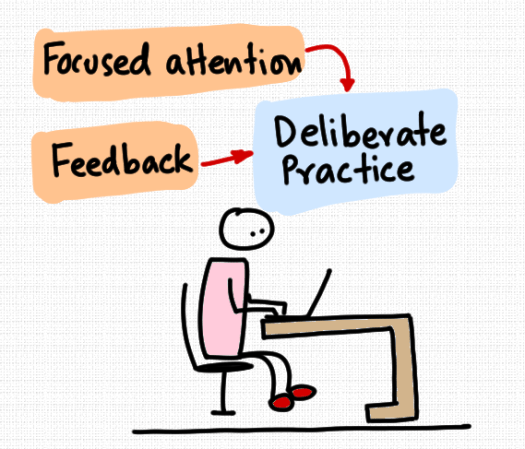
Cal Newport in his book Deep Work points to K. Anders Ericsson’s work which pulled together disparate ideas that were related in a field called Performance Psychology and came up with the term Deliberate Practice as the way to improve performance.

There are two core elements to deliberate practice – focused attention on a task and feedback on how you are doing.

I wonder how many of us find that we have the time to do the former and if we are given the latter in our working environments.

More importantly, do we consider these factors when we’re responsible for training others or even when we’re trying to help our kids get better at something?

The thing about focused attention is that it takes time – weeks are good, days are doable, hours are a minimum.

You are not going to get good work done if you have to rush doing it in five minute intervals.

You need time.

And that means dealing with the things that consume your time – which in this day and age is almost everything around you.

From phones and email to friends and family – they can all be time sinks.

Some of those sinks you want and need – but others do more harm than good.

If you listen to anyone who does work that you like you’ll probably find that they spent a long time getting good at what they do.

It’s clear that Joel Spolsky has spent a lot of time thinking about software.

But the trick, he says, is to start at the foundations of the machine and build up from there.

If you’re into Mr. Men books you should look at some videos of Andy Hargreaves showing you how to draw the characters on YouTube.

It’s hard, he says, to draw circles – and he prefers to draw squares.

You don’t get much more basic than that.

And if you like words there are always those from Churchill on which words to use – “Short words are best, and the old ones, when short, are best of all.”

There is an art to getting better at something – and that is to practice – but practice in the right way with focused attention and feedback.

And if you take the time to do that then what emerges, eventually, may be remarkable enough to share with your friends.

Cheers,

Karthik Suresh

How To Start Thinking In Terms Of User Personas

persona.png

Monday, 9.17pm

Sheffield, U.K.

Too often, Buyer Profiles are nothing more than an attractive way to display obvious or demographic data. – Adele Revella

In one of his podcasts Jay Abraham tells the story of a friend of his who has trouble dating.

They just can’t find the right person – it seems.

So Jay asks whether the person’s friends know exactly what to look for – and it turns out they don’t.

And, once his friend makes it crystal clear exactly what kind of person fits the bill – dates are lined up very quickly.

Or so the story goes.

So, the lesson is that you should do the same thing when marketing – you just need to know exactly what your perfect customer looks like and you’re off to a good start.

If you do a search for “how to come up with a persona” you’ll find lots of advice that follows traditional segmentation rules.

To save you the trouble of going through the results here are some of the questions you might ask – assuming you’re doing B2B sales.

  1. What job do they do?
  2. What job do they want to get done?
  3. What’s stopping them from getting on with the job?

Or you can do something that looks more like a CV.

  1. Name
  2. Gender
  3. Age
  4. Marital status
  5. Ethnicity
  6. Job title
  7. Income
  8. Blurb
  9. Education
  10. Previous roles
  11. Job goals
  12. Skills
  13. Social media use
  14. Frustrations

That’s turning into a long list.

Most of the first page of results have some variation on the lists above – and the differences are usually about how they’re arranged on the page and whether you’ve got a photo as well.

When you’ve done all this you’ve described someone on the outside – in terms of what you can see.

An enhanced approach is described by Chip and Dan Heath in their book Made To Stick.

In addition to demographic data they look at a case where the marketers also try and build a psychographic profile – where they try and get into someone else’s mind.

What does this person care about? Buy? Do with free time?

When you pull together information like this you end up with what looks like a collage – pieces that make up a person that now exists in your mind.

The thing with these approaches is that you can spend a lot of time building up a detailed picture of a person.

The other approach is to use the Sherlock Holmes technique.

And that is to start by elimination.

Who is not someone who is in the market for what you do?

In a B2B context that probably rules out kids and retired folk.

When you eliminate the impossible, you can go after what’s left.

Now, would I use any of these approaches to develop my own personas for marketing a product or service?

Perhaps – but there might be another, more powerful way.

Two, actually.

The first is to look at people who have already bought from you – or people who have bought the things similar to what you’re selling and try to understand them better.

But better yet is to throw away the personas – and try to have a conversation with the people you haven’t eliminated as ones you could work with.

In the Robert Collier Letter Book, first published in 1931, the author tells you the secret of selling.

“Find the thing your prospect is interested in and make it your point of contact, rather than rush in and try to tell him something about your proposition, your goods, your interests.”

Start by listening and try to understand.

Everything else will flow from there.

Cheers,

Karthik Suresh

Why History Is Perhaps The Best Guide To The Future

history.png

Sunday, 9.16pm

Sheffield, U.K.

A people without the knowledge of their past history, origin and culture is like a tree without roots. – Marcus Garvey

Yesterday I finished reading Hit Refresh, by Satya Nadella, the CEO of Microsoft and started The Four: The hidden DNA of Amazon, Apple, Facebook and Google and my resulting thoughts were of a cheerless future where we were controlled by these giant corporations and lived under a new Orwellian incarnation of Big Brother.

So, today it was time to go the other way.

Rebel Code, written by Glyn Moody back in 2001 takes us back to the early days of free software and the rise of Linux.

The Wikipedia entry for the book links to an essay by Steven Poole who dismisses Linux writing it’s “never going to be a mass-market consumer operating system like Windows or Mac OS.”

He goes on: “If you just want to use your computer for word-processing, web surfing or whatever, you’d better avoid it like the plague.”

And he’s right – In this snippet of video Linus Torvalds, the creator of Linux, says that it really annoys him that the desktop is the last holdout of Windows and Mac.

It has taken over everything else.

It’s just that most people don’t see what’s going on because all they see is what comes up when they turn their computer on in the morning.

Torvalds argues that the biggest problem is that computers don’t come pre-installed with Linux – they come with Windows.

Android phones run on Linux – but the software comes with them. Users don’t need to go through the pain of installation and figuring out all that computer stuff – so they stick with the default, which on the desktop is Windows or MacOs for most people.

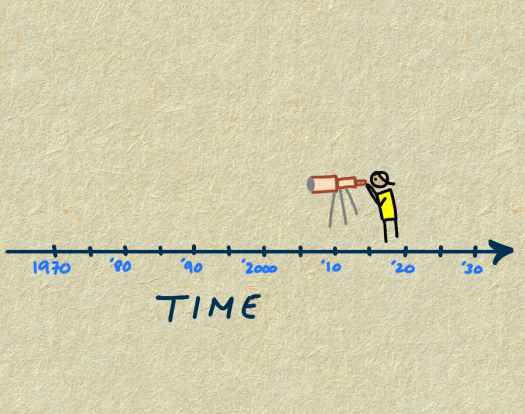
As we head towards 2020 the skirmishes between the free software/open source movement and closed software are starting to become part of the historical record.

You have Neal Stephenson’s In the beginning was the command line, and Eric S. Raymond’s collection of writing.

And, of course, you have the GNU project books and, in particular, the essays of Richard Stallman.

And, when in doubt, one should probably go back to Stallman’s views on all this.

And that’s because he uses a very simple rule – one that makes thinking about almost everything so much easier.

The thing that bothered me when thinking yesterday about the way key technologies marketed today work is that they are all centrally controlled by an all-powerful commercial organisation.

AI, Big Data and the Cloud are all, at their core, ways to centralise control over computing.

Stallman’s simple rule is that software should be free – free as in freedom.

From the GNU philosophy:

A program is free software if the program’s users have the four essential freedoms: [1]

  • The freedom to run the program as you wish, for any purpose (freedom 0).
  • The freedom to study how the program works, and change it so it does your computing as you wish (freedom 1). Access to the source code is a precondition for this.
  • The freedom to redistribute copies so you can help others (freedom 2).
  • The freedom to distribute copies of your modified versions to others (freedom 3). By doing this you can give the whole community a chance to benefit from your changes. Access to the source code is a precondition for this.

This is not a 50% rule or a 90% rule but a 100% rule – and it’s only aim is to protect your freedom to do your computing in the way you want.

To keep up with changing technology Stallman writes:

“On the internet, proprietary software isn’t the only way to lose your freedom. Service as a Software Substitute, or SaaSS, is another way to let someone else have power over your computing. SaaSS means using a service implemented by someone else as a substitute for running your copy of a program.”

For many people this is a non-issue – who cares?

As someone that comes from a relatively young democracy – I find the concept and importance of freedom perhaps more important – which affects the way I think about and do my computing.

The Indian flag has a wheel at its centre. Mahatma Gandhi had proposed a spinning wheel originally because he saw that simple device as a way to recognise the dignity of labour.

Back in 1921 the thing that mattered was giving people a way to earn a living through labour – and through that giving them dignity and a place in society.

Today, as we debate the effects of automation on jobs we would do well to remember that computers are the equivalent of spinning wheels for many people – the way we learn and work and make a living.

In India, the spinning wheel is inextricably linked with the independence movement – and freedom.

For those of us lucky enough to be free now – free software helps us keep it that way.

Cheers,

Karthik Suresh

What Must You Do To Gain And Keep Trust?

trust-consistency.png

Friday, 6.40pm

Sheffield, U.K.

Trust equals consistency over time – Jeff Weiner, CEO LinkedIn

A friend and I were talking about different types of jobs.

Not jobs exactly, but roles – and why different people end up in different roles and often very different situations.

Take a young person at the start of a career, for example.

They might start a low paid job, perhaps one that’s based on shifts.

They might get something that fits with their skills and willingness to learn – but comes with an entry level salary.

Talent, as Felix Dennis wrote, can be underpaid for a while provided the work is challenging enough.

Dennis quotes Degas as saying “Everyone has talent at twenty-five. The difficult thing is to have it at fifty.”

So, how do they move up in the world?

Change jobs, goes the advice.

Move on every 18 months and find a new, better paid role.

That’s the way to get experience in a sector or industry.

It seem that the best way to earn more money, if that’s what you want, is to jump ship often – and quickly you’ll earn more than the ones left behind.

The same logic applies perhaps the idea of skipping university and heading straight into work.

Why spend time studying when you could spend time working and making money?

After ten years or so, something different happens.

Some of the people who’ve stayed at a place for a while have worked their way up a ladder.

They’re insiders.

The ones who have moved from place to place are visitors.

And the nature of such relationships don’t seem to vary that much.

When you get a new colleague it takes some time to get to know them.

It’s easy when it’s transactional and they just need to do what they’re told.

But, given a choice between someone who you’ve worked with for ten years and someone you’ve worked with for six months – who do you know better?

Which one would you trust?

Well, it probably depends on how they have acted over that time.

Some people are dependable workers, turning out the same thing time after time on time.

Some are creative mavericks, who come up with different things all the time, but who deliver on time.

And then there are the ones that don’t.

The fact is that it doesn’t matter if you’re an insider or a visitor.

What matters is what you do.

People who stay in one place are trusted not because they stayed but because they did consistent work over that time.

The ones who didn’t are the ones you’re trying to move on – but they can’t find a role anywhere else.

If you’ve moved around your track record will get you an interview.

But after that you’ve got to show what you can do to build trust.

The ideal, really, is to start work at a place you’d be happy to spend the next twenty years because the work is interesting and challenging.

Over time, you’ll probably get paid what you’re worth.

Maybe a little less.

But at least you’ll be learning every day.

And you’ll probably have the trust of people around you.

There are few things that suck more than having to go to a well-paid job that you hate.

And this is the hard thing to tell young people – and you probably wouldn’t have listened when you were that age as well.

Choose your first job carefully.

If you think that’s not very good advice you should listen to what Bertrand Russell suggested you should try and do.

Choose your parents wisely.

Cheers,

Karthik Suresh

What Is The Most Important Asset You Can Own?

customer-scenario.png

Wednesday, 9.36pm

Sheffield, U.K.

Don’t find customers for your products, find products for your customers – Seth Godin

In Hit Refresh, a glimpse into the mind of Microsoft’s CEO, Satya Nadella, we see how hard it is to reconcile old and new ways of thinking.

For centuries, millennia perhaps, power and property have been inextricably entwined.

Those with property had rights – and the rest did not.

For example, only those with land had a vote in early experiments with democracy.

As the definition of property expanded from a narrow view of land and fences to a version of the law that allowed you to own mineral rights and computer code, you started seeing the concept of capital – the idea of owning assets.

These days it’s not uncommon to think about everything in terms of who owns it.

But, at the same time, capital is starting to lose value because there is just so much of it.

Once upon a time, if you had access to capital you could build a factory, pay people a pittance and make yourself even richer.

And, perhaps as the world’s only licensed producer of wool or steam locomotives, you were able to control markets as well, dictating terms to buyers.

That sort of business still goes on but in places further away.

These days, however, almost every physical thing you buy lives two lives.

One is as a commodity, with a price effectively equal to the cost of production.

And the other is as a brand – where you pay to feel a certain way.

For example, you can get knock off headphones for Apple devices for very little money or you can pay a lot of money for the official ones.

There’s very little difference in the innards – they’re all made and glued together in the same place – possibly in the same factory.

So what makes the difference – why doesn’t everyone just buy the cheapest product?

A clue is in Nadella’s book where he tells colleagues that what they get to own is a customer scenario, not the code.

Putting aside businesses that make things – this is an insight that service businesses would do well to mull over.

In a service business you depend on a combination of people, process and technology to help your customers.

None of those things offer a sustainable competitive advantage.

The chances are that your people are just as good as everyone else – you don’t tend to find teams where one company somehow has people twice as clever as everyone else.

Having a good process is something you take for granted – if it doesn’t work the customer will let you know by taking their business elsewhere.

And technology is available everywhere – quite possibly for free.

The fact is that there is no shortage of people who can do what you want – all they ask is that you tell them exactly what you want them to do.

And if you do know what you want – then you’re in search of a commodity.

Make a list, ask people to quote and pick the cheapest quote – that’s the way to make sure you buy what you want at pretty much the cost of production.

But if you don’t know what you want – when there are a number of things floating about in your head – what you’re looking for is help turning that into a scenario.

That scenario is the thing that will solve your problem, improve your business or move in the right direction.

From a service provider’s point of view, if they can “own” that scenario they’ve got something that you’ll buy.

In theory then, owing a customer scenario is the best asset you can have – because that’s the value that the customer gets in exchange for the money they give you.

Although, now that I reflect on that, I’m not sure you can really “own” a customer scenario.

The customer owns that.

If you ask them nicely they might lend it to you – so you can show them how you’d go about solving it.

And then, if you’ve built up enough trust, they’ll consider working with you over someone else.

Maybe the real asset you should try and build is your ability to appreciate what other people want.

And then, as Zig Ziglar said, “you can have everything in life you want, if you will just help enough other people get what they want.”

Cheers,

Karthik Suresh

Should You Make The Big Leap To A New Future?

point-of-no-return.png

Sunday, 9.15pm

Sheffield, U.K.

The most dangerous thing in the world is to try to leap a chasm in two jumps. – David Lloyd George

I was watching a TEDx talk by Dr Benjamin Hardy who talked about his research into wannabe entrepreneurs and actual entrepreneurs.

The one difference between the two, he said, was that the actual entrepreneurs had experienced a point of no return – something from which there was no going back, while the wannabes hadn’t.

This is an interesting concept – an appealing one and a dangerous one – a concept you should approach with caution.

On the one hand many of us are in jobs that we’d like to leave.

Maybe we want to start a new business or pursue a different career or talent, and surely it’s only by taking the decision – committing to a new way of life – that you’ll make any progress?

After all, is the only memory you want to have of your life one of regret?

So, if you’re in that situation, don’t you have to believe in yourself – believe in your ability to take the leap and get to the other side?

We read so many stories of just that happening – but at the same time we need to remember that stories are written only about those that reached the other side.

The rest fell, and were forgotten.

Survivorship bias stalks such stories.

Hardy’s research probably controls for this bias but it’s hard to imagine that there are many entrepreneurs who take part in interviews to talk about how they failed time after time.

But then there are other kinds of leaps – after all, not all leaps have to be ones that show up in dramatic announcements.

You don’t have to quit your job, move to Silicon Valley, invest all your savings or mortgage everything you own and go all in on your dream.

A leap can happen just in your mind.

In her book, Thinking in systems, Donella H. Meadows writes about an experiment she does with classes.

She takes a slinky out of a box, holds it from the top in one hand, resting it on the palm of the other.

She them takes away her hand and the free end of the slinky drops, bouncing up and down until it comes to rest.

She asks the class why the slinky behaves the way they did.

The answers come fast – “Because you took your hand away.”

She then picks up the box the slinky came in and does the same thing with that, holding it in one hand, resting it on the other.

She takes her hand away and nothing happens.

Her point is that it’s the nature of the slinky that makes it act the way it does – not the hand.

The behaviour is a property of the system – not of its environment.

And this gives us a hint off the kind of leap we need to make in our minds.

If we want to change things then we have to start by changing ourselves.

Changing things that are outside us amounts to fiddling with the environment.

If we change our jobs, locations or investments, we’ve changed the things around us but if we are no different aside we’re heading for failure – because the chasm still exists when we take the run up.

When we’re ready the chasm disappears – maybe just because we’ve now found where the bridge happens to be.

Cheers.

Karthik Suresh