Rich Notes – My Way Of Understanding A System

2024-10-29_empty-mind.png

He listens well who takes notes. – Dante Alighieri

Tuesday, 8.18pm

Sheffield, U.K.

This is the third post as I work through ideas in John Bicheno’s “The lean toolbox for service systems”.

And the idea in this post is a particularly big one.

What do you need to do when you first encounter a system?

You need to understand it.

Let’s unpack that.

My 1,708 page “Concise” Oxford dictionary defines “understand” as perceive the intended meaning of words / the significance, explanation or cause of.

“Perceive” is the important one there – and it in turn means to “become aware of or conscious of”.

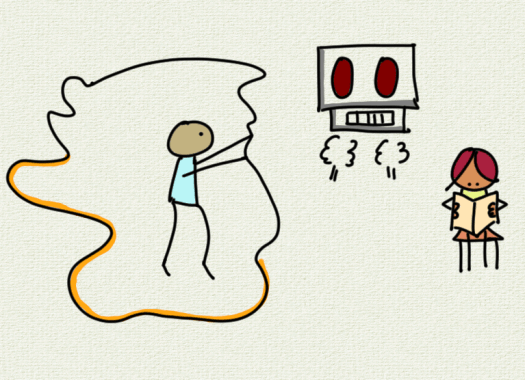
You have to learn to see what is there, not what you think is there, or what you want to be there, but what is actually there.

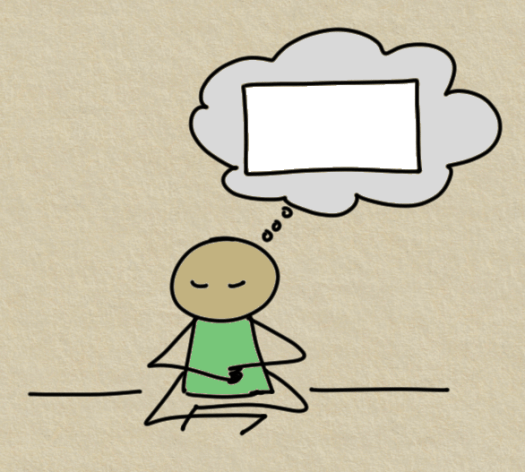
You have to enter a situation with what the Zen folk call beginner’s mind.

Or perhaps even, empty mind.

The problem with knowing even a little about something is that you are tempted to go in with assumptions about what is wrong with the system and what needs to be done to fix it.

Watch people the next time something comes up that’s an issue – see how quickly they jump to offering solutions.

What they find hard to do is take the time to understand what is going on.

Bicheno refers to this as the “check” phase and points to John Seddon’s six stages of check as being vitally important.

These stages are:

  1. Understand the purpose of the system.
  2. Understand demand.
  3. Understand the capability of the system.
  4. Understand flow.
  5. Understand system conditions.
  6. Understand management thinking.

I want to focus on number 2 in this post.

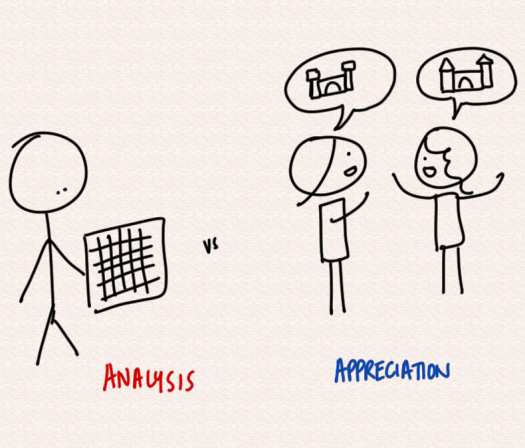
Seddon says that you don’t ask for requirements, instead listen for demands that your clients place on the system.

This is a big shift in emphasis, in case you weren’t noticing.

Never ask someone what they want. Instead, listen for what they need.

There are a number of techniques out there which are supposed to help you understand how you find product market fit.

Most of them are based on asking – complete a survey, answer these questions, participate in a focus group.

Listening requires you to be open to the possibility that what you have to sell is not what the customer is interested in – and you’ll never find that out if you insist on bringing up what you do.

How do you listen better?

That’s a big topic in itself, but let me tell you how I do it.

I take Rich Notes.

What are those, you ask?

Well, hopefully in the next year or so I’ll be able to point you to a paper that introduces this to the world but for now, Rich Notes are digital notes that I take during conversations.

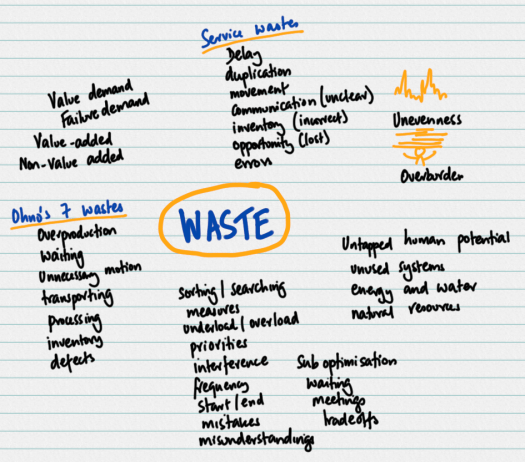
I start with a blank page – literally beginner’s mind – and we talk about the situation and I take notes.

The notes are non-linear and help me explore and understand the situation, seeing it from the points of view expressed by the participants in the meeting.

When we have finished talking I know more about the situation.

In fact, we all know more about the situation and are usually starting to converge – come to a consensus on what needs to be done to improve the situation.

That’s quite a good place to be – we understand what to do next.

We’ll pick up what that means in the next post.

Cheers,

Karthik Suresh

How To Think About Value In A Service Firm

2024-10-24_value.png

A satisfied customer is the best business strategy of all. – Michael LeBoeuf

In my last post we talked about “purpose” in a service firm and John Bicheno’s view that “the common purpose of everyone, top to bottom, is to improve the experience of the customer.”

Let’s start with this idea – that we are all working to improve the customer’s experience – how do we do that?

We improve their experience by delivering value.

But what does that mean?

I like Warren Buffett’s definition that “Price is what you pay, value is what you get.”

Value is a tricky thing to pin down – you know it when you see it and you know what it isn’t.

Value is an emergent property – it is created when you do things right. Things that the customer needs you to do.

As you know from the last post, this series is about reading the “The Lean Toolbox For Service Systems”.

One of the concepts in there is that of the value stream.

The value stream is where the customer gets value.

I find this hard to visualise – what is this stream? Is the customer dipping into it somehow? What are we trying to say here?

I think the reason we talk about streams is because the idea of flow is a big thing in lean – so I might come back to that.

But at this point, I think a more useful way to view how the customer gets value is thinking of value as emerging from carrying out a set of activities.

In other words, services are activities that provide value to a customer, rather than things that they get or use.

If I run a dry cleaning business, for example, value is created when the customer drops off dirty clothes and gets them back clean.

There are a certain number of activities we carry out in businesses.

  1. Manufacturing or construction.
  2. Field services or repair such a break-fix (the boiler is down, please fix it).
  3. Runner activities – the things we do every day.
  4. Repeater activities – regular or semi-regular tasks
  5. Stranger activities – things out of the ordinary, non-routine.
  6. Waste activities.

The ideas about customer experience, value, and activities are captured in the top part of the image above.

Let’s look briefly at the nature of the organisation that delivers this value.

In a service firm, the front line is closest to the customer.

When you buy a car, you’re unlikely to meet the person that finished your car door.

But you will have an interaction with the person that serves you your order at a takeaway counter.

People often think of the front line as being at the bottom of the pile – our lowest paid and most junior staff.

We should really invert this idea and see the front line as the most important people in the business when it comes to customer value.

However, it’s an inverted pyramid and their ability to serve the customer depends on how they are supported by management.

Ideally, everyone in the business will think about how to support the front line directly and indirectly.

They will be customer focused.

Often, the politics of work means that everyone is focused on what their bosses want, and end up looking away from the customer and inwards down the pyramid.

They are corporate focused.

It will not surprise you to learn that every service organisation, big and small, is bumbling its way towards figuring out how to make this structure work.

So, this is what’s happening. How can you make things better?

The first step is to understand what’s going in.

We’ll talk about how to do that in the next post.

Cheers,

Karthik Suresh

What Do We Owe To Each Other?

2024-10-19_purpose.png

Saturday, 7.36am

Sheffield, U.K.

I sit astride life like a bad rider on a horse. I only owe it to the horse’s good nature that I am not thrown off at this very moment. – Ludwig Wittgenstein

I realised recently that I need to do some more reading.

So I’m going to do a post series where I work through John Bicheno’s “The lean toolbox for service systems”.

I’m trying to understand the core elements that help us create better services for those we work with.

I’m also watching, for the nth time, “The Good Place”, which is where the title for the post comes from.

I want to explore this idea of service as something we do for others, something valuable rather than extractive.

What does good service look like?

In Bicheno’s book, we start with the big picture, zooming out and taking a systems level look at what is going on.

But what does that mean?

When trying to understand anything – an entity, a service, we start by asking “What is its purpose?”.

This is a surprisingly hard question to answer because it depends on who answers the question.

Let’s say you run a business offering consulting services, how might the members of your team answer this question?

With my technical head on, the purpose might be to carry out a series of complicated activities quickly and efficiently.

From my customer’s perspective, the purpose of the service might be to meet the requirements set out by the board.

From my boss’s perspective, the purpose might be to maintain a gross margin of 60%.

Narrow points of view lead to narrow definitions.

But what really matters in a service model is the customer.

Bicheno says that “the common purpose of everyone, top to bottom, is to improve the experience of the customer.”

That’s what the rest of the book is about.

See you in the next post.

Cheers,

Karthik Suresh

I’ve Just Discovered My Most Dedicated Reader

2024-09-24_dedicated-reader.png

Tuesday, 9.18pm

Sheffield, U.K.

Are you stalking me? Because that would be super. – Ryan Reynolds

Too many of my posts recently have been about generative AI.

I’m sorry, this is one more. It’s an important topic after all.

In my last post, I wrote about the future for human work, in particular about writing and knowledge.

My blog is not particularly widely read. I don’t actively promote it. It’s a place where I work on ideas by working on sentences. If someone reads a post and finds it useful that’s a bonus.

So, after I wrote my AI post, I thought, why not ask ChatGPT to write an article in my style?

Here’s what it started off with.

“Karthik Suresh’s writing style is characterized by a lucid, engaging tone that often mixes personal insights with a deep understanding of technology, business, and strategy. His pieces frequently strike a balance between being informative and approachable, with a hint of philosophical reflection.”

My first thought was, “Ok, well that’s nice”.

Followed by, “Sh*t, ChatGPT knows my work”.

Now how should I respond?

Let’s review the basic options. Fear. Flight. Fight. Food.

Actually, let’s go with the motivational triad: pain; pleasure; and sex.

The last one is not an option, so let’s consider the routes to pain or pleasure.

GenAI is going to take jobs. There is no doubt about that.

Transcribers. Translators. Voiceover artists. Visual creators. Writers.

A whole lot of jobs are going to change forever. That’s pain right there.

But is there pleasure?

I think that if you learn how to use these tools it will make you better at what you do.

I’ve worked on a couple of technical papers that I believe are stronger because I used these AI tools to help me learn quickly about concepts that are quite tricky.

I asked a person for help, one time, and was told I should join their class and it would take three months to learn.

Or….

I could get an AI to help me write some code, explain how things worked and figure it out from there.

I chose the easier option.

I asked ChatGPT to tell me how I could make my writing better.

It told me that my work lacked boldness. It wasn’t provocative. I’m too moderate in my views. And I don’t provide enough detail.

That’s good feedback. Points to consider and work on.

That’s pleasurable.

Here’s the thing. Options can be both good and bad at the same time.

The way you react to your options delivers good or bad results.

Me… the technology isn’t going away.

If a robot has peeked through the window and read everything I’ve written and knows more about how I write than I do myself – what should I do?

Throw stones at it and drive it away?

Or make friends with it?

What would you do?

Cheers,

Karthik Suresh

Statistics Are About The Past. Look To The Future.

2024-09-22_writing-as-thinking.png

Sunday, 7.54pm

Sheffield, UK.

I abhor averages. I like the individual case. A man may have six meals one day and none the next, making an average of three meals per day, but that is not a good way to live. – Louis D. Brandeis

I spent nearly three hours yesterday working and reworking a handful of sentences, trying to articulate what I had done between 2013 and 2017.

I wrote sentences. I wrote some more. I looked at them, shuffled them, reordered them. I put them aside. Later, I wrote new sentences on the same topic. Now I need to read, reorder and eventually type them into the computer.

What’s the point?

In five minutes between starting this post and writing the first paragraph ChatGPT wrote me a 1,759 word briefing note on logistics decarbonisation. It’s easy to read, contains what I need to know, and can be used virtually unaltered.

How can you be sure it’s correct? There are facts in there that I haven’t checked. But the weight of probability is on the side of the machines – literally – because it’s a statistical machine and the words are the most likely ones that would come up in that kind of writing. The last time I corrected the output from a generative AI, I introduced mistakes. It felt like a milestone, where I, the human, was the most fallible part of the system.

So where is the role for humanity in this? Do we just sit back and let the tide of AI generated material wash over us? How should we respond?

I think we do two things.

First, we recognise that knowledge is interesting and wrestling with data and information is part of the process of acquiring knowledge. If tools make it easy to do parts of the work then that simply means we can extend the edges of what we can learn about. When books first came out people complained that there were too many books being published to read in a lifetime. The Internet exploded our access to content. Now generative AI can spew out unlimited amounts of material.

In responds, many of us will pull down the barriers and restrict our reading to trusted material. How many news sites do you go to now? Our capacity for information processing has not increased with the technology for information creation. So we have to be selective – use our attention intentionally to gain the knowledge we are interested in and need.

Which takes us to the second point.

Statistics are good for showing what happens on average but not what happens to you in your particular situation. You can focus on your niche and figure out what you need to do to add value in a specific area. That area will be big enough to be interesting and valuable and too small to be able to be tackled with statistical methods. It will require human involvement, armed with tools like negotiation skills and constructive approaches – where you and others co-create the future.

In other words, where you look forward.

Statistics is about the past.

Human work is about what comes next.

Cheers,

Karthik Suresh

How To Think About Theory In Action Research

2024-09-19_theory.png

Thursday, 6.41am

Sheffield, U.K.

It is easier to act your way into a new way of thinking than to think your way into a new way of acting – anonymous

I’m grappling with the concept of “theory” in Action Research.

I’m not alone, many students and researchers avoid Action Research because of the need to come up with theory – it’s not clear what theory actually is or how to come up with it.

We have to start somewhere when unpicking a concept, so let’s start at a beginning.

You think. We all think.

A thought could be as simple as “If I listen carefully and take notes, I’ll learn about the situation my client is facing”.

It’s easier in the physical sciences – if I drop this rock it will fall down rather than go up.

We then take action based on what we think.

And we observe what happens.

This step of thinking to action is repeated countlessly.

Imagine a therapists office. The theory behind therapy might be that you listen to your patient and help them work out how to improve their situation.

That’s one way of thinking.

If you watch the Netflix documentary “Stutz” and read some of the commentary online you’ll find some criticism that the celebrity therapist the show is about “tells” his clients what to do rather than following an established process.

He thinks differently.

He does so because of what he has learned as a result of helping his patients – from the action he has taken.

But how do we learn from action?

We need time to reflect. To wonder about what happened, to write down what we remember, to make lists, to sort them, to categorise the ideas in them.

We need to articulate what we’ve learned.

This can be painstaking work.

It’s easy to take action – to do something.

When you do something a lot you start to forget how it’s done, how you learned to do it, what’s actually taking place.

Slowing down and analysing what you did is much harder than it seems.

You need tools for that.

Like slips of paper.

Once you start to see what has happened you can start to package your ideas into a framework.

This is the start of theory building.

I recently attended a conference where I was talking about my research to a colleague.

I used a lot of words to explain something I was doing.

He nodded and said, “Ah right, you mean…”

And then he said a word.

For example, I talked about how it took time to get good at using digital tools.

He said, “Ah right, you mean ability“.

That’s the next step, encapsulating a bunch of words and ideas in a single one, or a succinct phrase, and it gets you started with theorising.

You start to think about “truths” in this step.

I think that perhaps the difference between thinking and theory is that theory is thinking smartened up and put in a suit.

It’s a polished version of what you think, that’s ready to go out and meet the world and stand on it’s two feet.

It’s a grown up version of thinking.

It’s the rich flavour that’s left when you boil away all the excess liquid in a stock.

Of course, none of these descriptions really help with saying what a theory is – or how to write one.

We muddle our way towards creating theory by writing and having it reviewed and criticized and writing again.

Theories gain importance when they are used and found useful by others, especially when it comes to the social sciences and Action Research.

They are the way we make sense of our worlds.

Cheers,

Karthik Suresh

Why should you develop a reflective practice?

2024-09-05_appreciative-inquiry.png

Thursday, 5.32pm

Sheffield, U.K.

I feel like when you are really appreciative, it makes it easier to have a better outlook and perspective of life in general. – Miguel

A practitioner cycles between action and reflection; we do something and then we think about what we did, how it worked (or didn’t), and what we might do next or differently.

Sometimes it feels less like cycling between the two modes and more like vibrating, with acting and reflecting taking place constantly.

For example, any practitioner working with an organisation starts by asking “How can we understand what people in this organisation want or need to do?”

We need an answer to this question so that we can prepare an operational solution.

But what if people don’t know what they want?

In the 1980s, people used deficiency-based methods to address this problem, asking questions like “what’s wrong?”, “what’s your biggest problem?”, “what needs fixing?”, or asking about challenges, which is the the same type of question.

Such problem-solving approaches actually made it harder to improve some situations.

What if change really happens when people talk to each other, imagining and articulating what they think is possible and agreeing what to do next?

When people are passionate about something, you do not need to persuade, incentivise or coerce them into taking action.

How do you know what they are passionate about?

Well, you do this by talking to them using approaches such as Appreciative Inquiry.

There are five principles that underpin Appreciative Inquiry:

  1. Organizations are constructed by people who talk to each other about what they believe to be true.
  2. The questions people ask are not neutral — they reveal what they are passionate about.
  3. The story of the organization is constantly being told and re-told.
  4. What we do today is guided by what we think is going to happen tomorrow.
  5. The good kind of change is positive, grounded in hope, optimism, and open minds.

Designing a workshop or engagement approach that leans into these principles is impossible unless a practitioner is willing to try approaches, reflect on what happened and try to constantly improve.

It’s a reinforcing loop that’s needed to develop your practice.

After all, isn’t that what you’re passionate about?

Stutz’s Tools As A Way To Handle Obstacles

2024-09-04_partX.png

There are plenty of difficult obstacles in your path. Don’t allow yourself to become one of them. – Ralph Marston

I’ve just watched Jonah Hill’s “Stutz” again on Netflix, and it made me reflect on my consulting practice.

Stutz is a film by Jonah Hill about his therapist, Dr. Phil Stutz, and his unconventional approach to therapy, in particular using small drawings on index cards as tools, to help his clients address their problems.

A Stutz drawing is a tool that helps you take an action that moves you from a current negative state to a new, positive state.

We use these tools to help us understand what we do and what we should do next.

One of the tools is Part X – which teaches you to recognize an inner saboteur that tries to stop you moving forward.

These are the objections, the blocks that prevent you from making progress.

Could this Part X also explain obstacles faced when working in organizations?

Such obstacles include not being given the full picture, being pointed the wrong way, or not getting relevant information.

Obstacles slow progress and can stop it entirely – people give up and decide to work the system rather than improve it.

Perhaps we have to see past the blocking Part Xs and find a way through.

One way to do this is learn how to see the big picture and how the blockers you face fit into the larger organizational dynamic.

And then think about what action you can take next.

We should expect to encounter obstacles and wrong turns – we may need to tackle them or go back and try a different path.

We may be wrong, but we will be moving forward, in the direction we think is right.

The trick is to keep moving.

Cheers,

Karthik Suresh

The Enduring Power Of Text

2024-08-23_clock.png

Thursday, 9.26pm

Sheffield, U.K.

The first forty years of life give us the text; the next thirty supply the commentary on it. – Arthur Schopenhauer

CNN had a story this week that reported that we age significantly at two points in our lives, ages 44 and 60.

That is very precise. And perhaps correct, from my own experience of the first significant point.

Robert Kiyosaki had this story of life being like a football game – you started the game, you got a quarter of the way through. Then there was half time. Then there was the final quarter. And then you were out of time.

Do you remember what’s happened in the game so far?

I have a terrible memory. I know people who remember everything but for me the past is a blur.

Except when I read my journal entries.

I have kept journals, on and off, in different mediums, for several years.

Perhaps going on two decades now.

They are intermittent, interrupted by life’s events but they capture moments in time. In particular, the mundane everyday, where we went, what we had for lunch, what the commute was like, what I was listening to at the time.

I don’t know what percentage of people keep journals. Perhaps the modern form is the social media feed – that’s where people go to find out what was happening back then.

But I wonder about the persistence of media, whether we will still have all this when we need to remember something.

Many of us have tens of thousands of pictures. But do we have the stories? We have videos, we can relive moments. But is that the same as remembering?

Does text still have a place in this world?

I think it does. Text, the written word, is an incredibly compact way to hold a story. We can relive stories through video, we can see the world as it was in a picture – but we can recreate the world through text.

And this is perhaps important, because a moment frozen in time is different from a moment that made you the person you are.

Thinking back to a time and reflecting on the words you wrote, a message from a younger self, a different person, someone you barely remember, feels like growth, feels like something that helps you learn and develop rather than simply see again.

Too much of anything is a problem. When you take too many pictures, have too much video, you have to live your life again to process that material. It’s time consuming and exhausting and, when the clock runs down, will probably just disappear.

A memoir, on the other hand, a book, a package of print on paper – that has a chance to last.

If I were to advise my younger self I would have said, take a few pictures but write down as much as you can.

Cheers,

Karthik Suresh

Robert Pirsig’s Writing Technique

2024-08-21_slips-of-paper.png

Wednesday, 10.36pm

Sheffield, U.K.

There comes a time when you realize that everything is a dream, and only those things preserved in writing have any possibility of being real. – James Salter

One of my favourite books is Robert Pirsig’s Zen and the art of motorcycle maintenance.

So, I was quite excited when I came across a clip of a speed he gave in Minneapolis in 1974.

The speech is also included in a posthumous book that came out recently called “On Quality”.

In Pirsig’s second and less well known book “Lila” the main character, Phaedrus, has a collection of around 11,000 slips of paper that make up the ideas he’s been working on for several years.

These slips of paper have self-organized over time into the material for a book.

In his speech, Pirsig describes how he wrote Zen and the art of motorcycle maintenance using a very similar approach.

Here’s an important paragraph:

“I sat down and had to devise a way of keeping track of what were now very rapidly proliferating thoughts. Normally for a small article or a small essay, you’d use an outline, but you find that when you start getting into something big, the outline gets crossed out so fast that it becomes unusable. What I did for this particular outline was something I’d learned to do in technical writing, and that was to put down each idea on individual slips of paper and then compare them and see which went first. So my outline was always in a series of slips that went on, one after another. This is just a technique, a gimmick you might say, but it turned out, I think, to be a technique that gives Zen and the Art of Motorcycle Maintenance a great deal of its complexity, its fundamental sweep and wholeness, and its unification.”

So, using slips of paper was key to his writing method.

Now, if you’re interested in this kind of thing you will remember that there is a similar idea called the Zettelkasten, a card box, which researchers have used for a while to organise their research and help with their publications.

Niklas Luhmann’s zettel is perhaps one of the most famous.

You’ve also probably heard of Vladimir Nabokov, who wrote his books on index cards, working a bit at a time on any part of the story rather than taking a linear path from start to finish.

This idea, a linear versus non-linear approach, could be important.

An editor, in a video on YouTube, talked about how she advises writers to start at the beginning and work through the manuscript.

Each time the editor and writer meet she wants to see progress in terms of pages.

But writing isn’t really like that, is it?

Can you just start at the beginning and work to the end in one unbroken state of flow?

Some people can – Terry Pratchett wrote that way, I understand.

Back to slips of paper. Who else uses that.

I came across a lesser known approach called the “Crawford Slip Method”.

This takes writing to the extreme level, writing each sentence on a slip of paper and then working with the slips to organise material into paragraphs, essays and books.

Two monographs published on the topic are:

Crawford Slip Method: How to mobilize brainpower

and

Productivity Improvement by the Crawford Slip Method

This does not seem like the easiest way to write a book.

Even a small book will have around 40,000 words, so that’s around 4,000 sentences, which will need 4000 slips of paper, or an entire ream of A4, cut into 8 slips each.

Not the easiest stack to handle.

After a brief detour round the CSM, I went back to Pirsig’s paragraph and noticed the word “technical”.

Did technical writing manuals really tell you to work out ideas on slips of paper?

It turns out they did.

“Technical Writing” by John M Lannon, published in 1990 and a previous book with the same name by Gordon H. Mills and John A. Walter (1978) both have sections describing this method.

Not that I didn’t believe Pirsig, of course.

And a modern equivalent of this kind of writing is also used by John McPhee, as described in his chapter called “Structure”.

McPhee’s process was to type up all his notes and then have a go at the whole lot (after taking a copy) with a pair of scissors.

He then sorted and resorted the ideas until he worked his way to a finished piece.

So, if Pirsig were around now, would he use slips of paper or use a computer?

He was a technical person so I suspect the latter.

He used slips of paper because it was too hard to move sentences around that were written on a single page.

Crawford had the same problem.

With digital tools we can move sentences around more easily.

Well, I say that, but a wordprocessor really doesn’t make it easy without some customisation.

A text editor like emacs, on the other hand, makes this a trivial job.

That’s why McPhee used a text editor rather than Word.

I suppose the takeaway is this.

The functional unit of writing is the sentence.

If you want to write, you need to be able to do two things.

First, write lots of sentences quickly.

Then, have a tool that lets you sort and replace your sentences until they tell a story.

Cheers,

Karthik Suresh