What Does Everyone Want Most?

2024-06-18_esteem.png

Tuesday, 9.04pm

Sheffield, U.K.

Every man is said to have his peculiar ambition. Whether it be true or not, I can say, for one, that I have no other so great as that of being truly esteemed of my fellow-men, by rendering myself worthy of their esteem. How far I shall succeed in gratifying this ambition is yet to be developed. – Abraham Lincoln

Doug Lisle is a psychologist that I like listening to, first because he uses cartoons to illustrate his talks rather than boring slides, and second because what he says is interesting.

Lisle’s position on psychology appears to be that it’s all biology. I don’t think he seems to think much about the whole ego and id sort of thing. I really don’t know enough to have an opinion on the field, but for someone with an engineering background, a lot the old psychology stuff seems – well – made up. I remember reading some books in the field years ago and it was all, “well he said this” and then “she said this about what he said”, and my logical positivist engineering brain was going “why are people doing so much talking rather than just looking at the data?”

At the time, you didn’t have the data because you couldn’t look in people’s brains. And now that you can, it’s still not entirely clear why we think the way we do. For example, what can neurons firing in the brain tell us about poetry? Can you find a poetry circuit? Or a painting one? Probably. It’s like Pirsig writes about a novel and a computer – where, when you examine the circuits – is the novel.

Right, let’s back up. The thing about Lisle is that he doesn’t need the psychology to explain why we act the way we do. It’s biology. And a bit of economics. We make decisions to act for three reasons: to gain pleasure; to avoid pain; and to minimise effort. These are the reasons to act that kept us alive. And they’re also the reason why we’re in trouble these days because the easiest thing to do is often the worst thing to do in a world of abundance. Think TV and chocolate. A steady diet of those two is going to end badly.

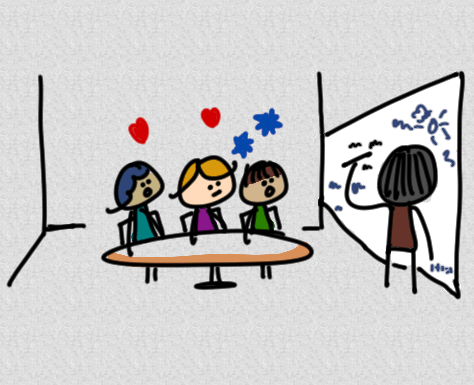
Let’s look at the pleasure motivation in a little more detail. The obvious reason to pursue pleasure is the payoff in a relationship. But as social animals, pleasure is more than just that. One quite important type of pleasure comes from esteem. Lyle says we all have little esteem meters in our heads. We’re constantly making decisions based on whether the choice we make will increase or lower our esteem in the eyes of those around us.

How does this apply to the world we live in. Well, if you’re someone that wants to build a business, then you need people to pay attention to you. One way of doing that is to demonstrate how clever you are. You can do that by going on LinkedIn and putting out posts that show how knowledgable you are. You can call people out who are wrong, and tell them why they’re stupid. And if you do that consistently you’ll find that people respect you and look up to you and start following you.

Or will they? My reaction is more on the lines of … what a p****.

I know a few people like this, and they don’t come across as wise and helpful. They come across as cantankerous grumps. And not the kind of lovable grump that really has a heart of gold. This is the kind of grump that your kids are scared of asking for their ball back. The kind you cross the road to avoid, or pretend you don’t see because you don’t really want another conversation on why the world is going to hell in a shopping bag.

A more reliable way to get people to like you is to look for ways to raise their esteem levels. You can do this by sharing what they do, or commenting about what you liked about what they did. Lincoln may have thought that he was alone in desiring esteem, but as social animals that desire is hardwired into us. Esteem matters.

It’s not hard really. If you want to work with someone, figure out how what you do will raise their esteem levels.

Or, as Zig Ziglar (what a name!) said much more succinctly than this post, “you can have everything in life you want, if you will just help other people get what they want.”

Cheers,

Karthik Suresh
What I Learned From Doing This: Action Research In Practice

2024-06-17_action-research.png

Follow effective action with quiet reflection. From the quiet reflection will come even more effective action. – Peter Drucker

I am not an academic. Yes I’m working on a PhD, but I’m not sure I’m doing a great job at that. Or perhaps I’m doing it the way I do things, by bumbling around and following things that are interesting. When I’ve done that in the past, something happens next. And sometimes that something is unexpected.

Here’s the thing. I am spending a huge amount of time – and I mean really quite huge – trying to understand what happens when people talk in a group about a situation they find problematic.

I watched a talk by Robert Pirsig recently where he said that everyone’s situation is different and the problems they have are unique. But in another way, everyone’s situation is the same and we all have the same problems. It all depends on how much we know about the situation we’re in right now.

I see this all the time. I don’t know what your particular situation is and what you’re finding problematic. If I listen to you and take notes I’ll learn about how you see that situation and understand the constraints and challenges you’re facing. As we talk, I’ll learn about what you’re already tried, what worked and what didn’t, and we’ll figure out what to try next. This is always going to be something unique to you.

At the same time this is a process that I’ve done hundreds of times now. Your situation has a history, now is because of what happened before. The current moment has actors and relationships and beliefs. And there are possible futures, which will be activated by agreements between all of us. A past, present and future. That’s always going to be the same.

This activity is a kind of research. A research based in action. The idea is that we think about what to do. Then we take action. Then we reflect on what’s happened, learn from it, and then plan and take new action.

Some people think this isn’t research, it isn’t science. Come on now. So you do something. Then you write about it. Then you do something else. And you say it’s science? No. This thing you’re doing isn’t replicable. Once you’ve done it, it’s done. No one else can do it again. You can’t step in the same river twice.

Ah, I say. You’re right, you can’t step in the same river twice. But you can get wet. You can get washed away, or make it safely to the other side.

Is this too abstract? Let’s make it concrete. The tools of “real” science are quantitative – numbers, figures, calculations. Go into any situation, any real situation, and use numbers to calculate what you think people should do. Then tell them and see how they react.

They will react with feelings. They will not react with cold, rational responses. They will instead, using the language of transactional analysis, have warm fuzzies or cold pricklies. Your maths will not carry the day. Your audience’s feelings will.

This has been a hard thing to learn. We imagine we can control things through logic. But that part of our brain is quite recent and requires a lot of training. A few people can respond that way. Most people use that other part of the brain, the deeper one, the one that responds to a tiger by running away rather than counting its stripes. Any method you use to work with people has to work with their feelings rather than trying to eliminate them.

Perhaps the real value in a meeting is to get people to tap into their feelings about the situation and possible courses of action, using those feelings as a guide to come to an agreement on the next thing to do. And this is not hard to do – just get people talking and those feelings will come out in their chatter.

All you have to do is listen, ask questions and take notes.

Cheers,

Karthik Suresh

What Kinds Of Things Do You Learn In A Good Meeting?

2024-06-10_learning-from-meeting.png

Monday, 8.18pm

Sheffield, U.K.

The noblest pleasure is the joy of understanding – Leonardo da Vinci

In the last few posts I talked around this idea of getting people in a virtual room and having a conversation, and how I take notes to help record and structure what we talk about.

What’s the point of doing that? How does it help?

Three reasons come to mind.

1. Align mental models

Everyone has a point of view. You may think something is simple, but from someone else’s point of view it may seem extremely complex. How do you think a typical conversation like this will go?

Take something from any newspaper in any country on any given day. The answer to illegal immigration is to round everyone up and put them in prison. Simple, right?

Or is it more complex than that? What resources are required to round people up? What happens when you inevitably arrest the wrong person. How much more expensive is it to incarcerate people than let them work while their claims are dealt with? And so on.

My work is much simpler. It’s usually about problems of business which are much more tractable than social ones.

Even in those situations, however, it’s almost impossible to know what’s in someone else’s mind. I read some research recently (I should get better at saving these references for later) that suggested we predict how other people think correctly around 8% of the time. So, most of the time we have no idea what they think.

It’s worse when we hope they’ll agree with us. This is why sales is a hard job. Many salespeople are given a product description and told to push it. Often the mental model underpinning the product has not been informed by the mental model that the customer has of the situation they face. This misalignment means that they don’t buy. Or if they do, they are disappointed by the experience.

It’s much easier to see the tensions and commonalities between points of view when these points of view are expressed and laid out on the page. A salesperson that learns what a prospect really needs has the opportunity to redesign or represent their product to show how it can help in that situation. That’s real added value.

2. Test the market

Gary Halbert has this story where he asks a room of marketers how they would sell a fast food product from a van. Would they focus on quality? Speed? Put on promotions? He’d tell the room that they could do anything they wanted and he’d beat on sales volume them as long as he had one thing – a hungry crowd.

When you have a conversation with someone that’s a deep exploration of their situation rather than a pushy sales message then you start to see what their problems are and where they need work done to improve the situation. However, not all improvements are worth doing – you don’t need to pitch to help with everything. Instead, you need to find places that need work that the prospect is also going to be willing to pay for.

I’m in the middle of a long and painful renovation project. We’re through the worst of it, but we need the bathroom sorting out. There are lots of problems, but one issue is that the bath is leaking. That’s a pain, but it can wait until we sort the whole room out. We just won’t use the bath. There’s also a hole in the roof, with water coming into a newly decorated room. That needs to be fixed now. During your conversations with clients you’re looking for roof-type problems rather than we-can-wait-until-later type problems.

3. Figure out what resources are needed

An open conversation makes it much easier to talk through what needs to be done and who’s going to do what. Most prospects are nervous that consultants are going to propose a big and expensive programme of work and throw low-level staff at high day rates at them, while delivering very little of value at the end. What they really need is to get the work done, not be given a big, expensive report on how to do the work that is short on detail and addresses the wrong issue altogether.

The answer is to use the resources that are already available to do as much of the work as possible and clearly show how any new resources are required because there is more work to do. You need to demonstrate the “additionality” of the resources. If I bring in a few people to work on a task that’s because there is no one at client’s firm that can do it already. Anyone who runs a business understands that you need resources. The question is whether the resources are being used productively or not. The discussion we have helps to work through this.

The takeaway

Many meetings are run badly. If you can run good meetings, you can create a good business. Being able to get a team to work well together is, unsurprisingly, a source of competitive advantage.

Cheers,

Karthik Suresh

My Practice Of Consulting

2024-06-09_consulting.png

Sunday, 8.30pm

Sheffield, U.K.

Wherever I was in the world, at the beginning of every consulting project, one thing was certain: I would know less about the business at hand than the people I was supposed to be advising. – Matthew Stewart

Next month I’m presenting at a conference and this current series of posts is me working out my talk.

I’ve spent three days thinking about the question, “So what is it you do exactly?”

This is the heart of it – what is my practice?

Let’s start at the beginning. I’m a consultant.

Some people get into consultancy because they join a big firm that trains them to be a consultant.

I became a consultant because I couldn’t get a job. I ended up creating a job for myself, finding out what tasks needed doing and then doing those tasks in exchange for money.

This tiny distinction between figuring out what to do and being told what to do is the difference between being a consultant and having a job.

But let’s focus on a specific aspect of my consulting practice. I invite people to a web conference, we talk, I share my screen and take handwritten notes with a lot of words and some pictures and it seems to help the group with figuring out what to do.

For the last few years my collaborators and I have been trying to figure out what exactly is going on. Is there some magic here? Is it different? And I think I have an answer, helped by the magic of television.

I recently saw a program on Disney Plus called “Reboot” which features a writer’s room. This is a room where all the writers go when they need to work on the story together and come up with a script. This activity seemed similar to the thing I do. I have a virtual room. I use the equivalent of a big whiteboard. We have a chat. I run the room. We don’t have a “workshop”, I don’t “facilitate”, but something happens in there – a collaborative exploration of a problem situation to get something done, like a shooting script or project.

Could this metaphor of a writing room explain what’s going on? I think we should find out. There are four things I think are relevant.

1. The room is where structuring work gets done

Writers come into the room to talk about the story, to pitch and build on ideas and agree what to work on. The idea is that the group mind is more powerful than the individual one, and when ideas are exposed to group discussion weaknesses will be seen and the group will build a consensus around strong ones.

The showrunner’s job is to run the room. That may be the role I take. The things that make a good room are:

  • The sense that it’s a safe space to talk
  • That it’s about valuing and getting excited about people’s ideas
  • That the culture is good, contributions are about making things better and negativity is discouraged
  • Criticism comes with a suggestion on how to fix the problem

The room (or virtual room) is the place where we work together to find ways to improve the situation.

2. There is a situation of concern

In a writer’s room everyone is working on a fictional situation. In a project room, everyone is working on a real situation. The trick is seeing the situation from the outside, seeing the participants as players rather than being stuck in the situation yourself.

The ability to step back and see the big picture what the room helps you do so that you can work out how to fix the fictional or real situation.

3. There is a whiteboard

It’s not enough to just sit around a table and talk. The ideas have to be captured and a whiteboard acts as external memory. Getting points on the board means that the group can concentrate on coming up with new ideas without worrying about losing the old ones.

My way of using a digital drawing tool like a whiteboard allows me to capture a lot of detail and the rhizomatic nature of the recording seems useful in remembering and connecting related ideas.

I am less convinced of the value of multiple inputs where everyone can add data at the same time because that seems like a way of working alone, together, rather than working together.

4. There is a product at the end of the process

The purpose of spending time in a writer’s room is to agree what to work on next and then get on with writing the script.

That’s the same thing that happens with my consulting room. Some consultants are all about producing a report or a recommendation but I’m interested in figuring out what to do next – discovering an opportunity or agreeing a project. It’s a practical, pragmatic approach – it’s about the work. It’s about the metaphorical pick and coal face. That’s where the real work is.

The specific aspect of my practice then is this virtual consulting room, where the purpose is to get people together and get them literally on the same page so that by the end we are ready to get on and do some work.

Cheers,

Karthik Suresh

What Are Rich Notes?

rich-note.png

Tuesday, 9.29pm

Sheffield, U.K.

The meeting of two personalities is like the contact of two chemical substances: if there is any reaction, both are transformed. – Carl Jung

19 November 2025 UPDATE – the post below is from 2024. If you are looking for an updated introduction to Rich Notes, this video may help.

Enjoy the rest of the post…

In 2018 I started to do a thing that changed the way I practiced consulting. I shared my screen in meetings and took handwritten notes using drawing software, writing on a graphics tablet with a stylus. This is what I am going to talk about at the EURO conference.

I call this thing Rich Notes and it describes nonlinear digital notes that I take during meetings to record and structure conversations. You can see an example in the picture and there are quite a few distinctive features that I won’t go into right now.

I have been obsessed with writing for as long as I can remember. I collected pens, pencils and paper. I tried different handwriting styles and experimented with calligraphy. I studied graphology. And I wrote, pages and pages. Study notes, journals, meeting notes. I kept logbooks, looseleaf notes, project notes. Writing has been the most useful method I’ve found to deal with life.

The act of getting words down has let me grapple with ideas. Stapling words to the page lets me chase other ideas down and wrestle them to the floor. Our brains are meant, as David Allen writes, for having ideas, not holding them. My philosophy for years has been that if it isn’t written down, it doesn’t exist.

Writing things down during meetings shows you’re paying attention. Or doodling. I once sat through a meeting where all I wrote down “I’m bored. So bored. I’m so bored.” in shorthand again and again. Luckily that doesn’t happen too often.

How we write is affected by the medium we use. I first wrote these words on an Amazon basics yellow legal pad with a Montblanc Mozart fountain pen using black ink, after passing over a Bic ballpoint and a Parker. Some people like such details. For others, it’s just strange. On the page my writing marches, like a line of drunk ants, to the right and down, line after line.

Taking digital notes is different. Writing on a computer screen with an infinite page is like throwing pasta at the wall and seeing where it sticks. It could go anywhere. Paper encourages linear writing, a wall encourages non-linear writing. The latter can hold many points of view while the former is better suited to one person working on their own. But that’s not a rule, you could do things the other way too – but it’s just easier to lean into whatever is easiest in the medium you’re working in. I focus on sharing my screen and taking notes to structure the conversation so we can have a productive discussion.

In this age of generative AI and SaaS why would writing by hand have any use? One reason is that it’s different – it’s still a uniquely human thing to do. The instrument being used is another human and I think we just connect instantly with handmade marks. When I pick my stylus and take notes on a digital screen I tap into thousands of years of human society, reaching back to a flickering fire in a Lascaux cave scratching a story on a wall with a burnt stick, or a Walbiri group in Australia scratching a story in the sand.

Rich Notes are an ancient art, as old as they come, and perhaps that’s why they work for me.

What I’m trying to do with my colleagues is understand more about them, what they are, and how they might work for others.

Cheers,

Karthik Suresh

What My Talk Is All About

2024-05-26_euro-talk-intro.png

Monday, 9.30pm

Sheffield, U.K.

The most powerful force ever known on this planet is human cooperation – a force for construction and destruction. – Jonathan Haidt

I’m spending a few posts working through the content of a paper I’m presenting at the EURO conference for Operational Researchers.

I’m making the argument that visible, shared, constructed Rich Notes lead to better meetings.

I’m not going to spend time comparing my approach with others. I saw a recent post by David Heinemeier Hansson where he talks about introducing Ruby on Rails and how it took off because he just showed what you could do with it. In the same vein I’m going to talk about what I do and the pros and cons, and you can do your own A/B comparisons and decide how this performs compared to what you do now or what else you could be doing.

Why a discussion needs to be visible

Meetings where people just talk are a waste of time.

We just aren’t designed to listen by default. Our brains hold a tiny amount of information so we zone out quickly and only focus when we’re surprised or entertained. Most meetings don’t do this.

I can often only stay interested if I take notes. For me, note taking is a way to listen closely. When you can see me taking notes I really have to stay focused. If I’m interrupted or distracted and stop taking notes you can see that happening. When the notes are visible people can see that their points have been noted – that I’m listening to what they’re saying and acknowledging their contributions.

The technology needs to allow for sharing

I make the discussion visible by sharing my screen when I’m taking notes. I take notes by hand using a digital drawing pad and stylus. This approach works best during a web conference call when everyone has joined and can see the screen. It does not work as well when some people join using a phone or if they’re in a room with a big screen and poor audio. It’s best when everyone is on the call, the audio and video works, and the screen can be shared easily – we can then get on and have a good discussion.

The notes have to be constructed in real time

Presentations are hard to follow because the thinking has been done in advance. The presenter is totally familiar with the content but the audience is trying to keep up, reacting to the small portion that we understand.

Building up notes from a blank page, filling in details by hand as people talk is very different. The notes build at a speed that is cognitively accessible – you can think and talk faster than I can write, so the process becomes slow enough to understand and rich enough to capture the complexity of the situation.

Being too prepared does not help. If I come into a meeting with preconceived ideas or frameworks then I talk too much. The point is to understand how the participants see the situation and starting with a blank page and asking them to talk about how they see things is more useful.

We all know people who sit in meetings waiting for others to stop so they can jump in and do their thing. I’ve seen this happen in online meetings as well when everyone can do stuff in a shared space – someone will always move around, dropping in content and waiting for a moment when they can tell others what they’ve done. That’s not listening – it’s just activity rather than understanding or really engaging with someone else’s ideas.

I keep it simple. Start with a blank page. Have a discussion. Take notes.

In my next few posts I will talk about three elements. What are rich notes? How do I use them in practice? And how do they help?

I didn’t create this approach for others. It emerged when others interests of mine worked well together – well enough to form a method that I could use. But does it have value more generally? Well, that depends on what another practitioner brings to it, so I’ll spend some time thinking about that.

Cheers,

Karthik Suresh

The Trouble With Meetings

2024-05-24_meetings.png

Friday, 8.56pm

Sheffield, U.K.

If you had to identify, in one word, the reason why the human race has not achieved, and never will achieve, its full potential, that word would be ‘meetings.’ – Dave Barry

I had an idea.

I have to give a presentation at a conference at the end of the month and it’s on using writing and drawing to think more clearly.

What better way to prepare than to work through a script over the next few posts with you?

So let’s begin with a question: why are meetings so dreadful?

I think it’s down to one simple reason – we’re not biologically designed to have them.

When we were frogs and fish decision making was simple: we either ate it, tried to have sex with it, or ran away from it.

When we became wolves and buffalo and lions we did those three things but we also added a fourth thing: let’s do what the others are doing.

We created group behaviour in social groups.

Most group behaviour deals with the same issues – shall we go there together or run away together? Or if everything’s ok, shall we stop and fight amongst ourselves?

Ok, but let’s focus specifically on that curious aspect of modern life – the meeting.

I think meetings don’t work because our brains can’t cope with the cognitive demands of the task when we try and run a meeting without the help of tools.

Think about the last meeting or call you had. Did you all have a conversation? Did you feel heard? Do you remember what everyone else said? Did you stay on track or drift? Did you make a decision? Were you happy?

Many meetings can be visualised as a period of time when people get together and let the air out of their lungs. And when they’re done talking nothing is left but the sound of silence.

This is because you can’t listen to someone else, listen to yourself working out what you’re going to say, listen to yourself creating a response to what you’re hearing, and remember what else was said earlier by someone else.

Your brain just can’t keep up. It simply drops the information.

“No problem”, you say. “I take notes.” And that’s great. That’s an answer. But that helps you. What about the group?

What we’ve done as a species is take things outside our bodies. There’s a technical term for this that I can’t remember but it basically means that we couldn’t survive on our own any more. We’ve externalised our digestive system, for example. We’ve got to cook food before we eat it in many cases.

It’s the same with our brains. If we want to use them effectively we need to get a lot of stuff out of there so we can function more effectively in information rich situations like a meeting. We invented writing to help with this and it’s an incredibly efficient way to hold on to more information than you can remember.

This is the essence of my argument for the presentation. If you take notes you remember more. If you take notes for everyone in a shared space that everyone can see then you transform the meeting experience for people. I call this approach “Rich Notes” and it’s a way of helping small groups grapple with complicated problems in a brain friendly way. It helps you load and unload data from everyone’s brain in real time to help you have better conversations, appreciate other people’s points of view and reach agreement on what to do next.

Sounds like magic?

But it’s not easy to do.

In the next post I’ll talk about what Rich Notes are, as I understand them at this point in time.

Cheers,

Karthik Suresh

The Entrepreneur’s Guide To Growing Up

2024-05-23_explorer-manager.png

Thursday, 8.41pm Sheffield, U.K

The entrepreneur always searches for change, responds to it, and exploits it as an opportunity. – Peter Drucker

I came across a paper by Fine et al., (2022) that looked at operations management for entrepreneurs. Entrepreneurs have been ignored by researchers. Most research is done in large companies and the standard subjects taught in universities focus on the needs of mature firms with large supply chains and complex operations. Startups are different. They don’t follow a formula. Some find customers and then figure out operations. Others do the reverse.

People who love startups will identify with the metaphor of a small group hacking through dense jungle. You need guts, courage, a belief in yourself, and the ability to withstand mosquito bites and the odd tiger attack. Cash is everything. Speed of movement is more important than quality. You want a determined team that can improvise on the fly rather than waiting for direction. Good communication, quick decisions, and getting away from charging elephants quickly is vital for survival.

At some point, the startup founders get through the jungle and find a place to make camp. They might stay here for a while. They might even create a village. But how do you handle that transition effectively? There are at least 10 things to think about.

1. Process

You need to go from ad-hoc one-off things to repeatable activities. If you follow a series of steps to get things done, then you can reflect on those steps and make them better over time.

2. Professionals

It’s time to get the professionals in. Find some “grown-ups” that wear suits and manage things and put them in charge.

3. Culture

This is how people behave when you aren’t around. Culture comes from the top. They way the boss behaves is the way everyone else acts.

4. Automation

Computers should make your life easier. Learn how to use them well.

5. Segmentation

Create a package of work that you can sell that provides a bundle of benefits to a customer. Do one thing and do it to completion. When you’ve tapped your market expand carefully without damaging your first offering.

6. Platforms

It works for some businesses if you’re lucky or a first mover or have lots of money or are lucky.

7. Collaboration

Leave your ego at the door and get good at working with others. Relationships will help you grow faster but you’ll have to share profits with your partners.

8. Capitalization

If you need money, you’ll need to share equity and give up control over your business. Pick your funders carefully.

9. Replication

Once you have a working model, you’ll want to do this over and over again, either the same way or with some customisation. Think about that.

10. Evaluation

Take time to check where you’re going. Are your numbers on track? What’s the voice of the process telling you? Hope this sparks a few thoughts.

Cheers,

Karthik Suresh

References

Fine, C.H., Padurean, L., Naumov, S., 2022. Operations for entrepreneurs: Can Operations Management make a difference in entrepreneurial theory and practice? Production and Operations Management 31, 4599–4615. https://doi.org/10.1111/poms.13851

How To Plan A Content Schedule

2024-05-21_planning.png

Tuesday, 8.15pm

Sheffield, U.K.

Adventure is just bad planning. – Roald Amundsen

If the purpose of business is to create a customer then the purpose of marketing is to create a conversation.

People can’t talk to you if they don’t know you exist. If they’re not aware of you.

It’s easier than ever to get in front of people.

Or is it?

More accurately, you have a small chance of getting your content into the social media feed if you post something relevant and the algorithmic gods smile on you.

It is, when you think about it, the mathematics of the casino.

LinkedIn plays the role of the house.

I’m picking LinkedIn because it’s the platform for B2B firms.

The algorithm has to work well enough to give you a buzz but not so well that you don’t need to use the paid promotion options.

It also has to keep you hooked by showing you a small handful of superstar winners that so you can see what wild success looks like.

Too cynical?

I don’t know. It’s the game we have to play. And it’s easier to play a game when you like doing what you’re doing and have a plan. One that will give you an outcome regardless of what happens on the platform.

Why am I telling you this?

Over the next few weeks I will be running an experiment to see if I can systematically create content for my professional practice on LinkedIn.

I mentioned yesterday that this blog is where I think and my professional practice is where I do.

So I’d like to share with you how I’m going to go about planning this experiment.

The first thing is putting some constraints around the kind of content I’m going to share.

I’m going to stick with 5,000 year old technology: text and handmade drawings.

Luk Smeyers has a great resource on creating a content machine if you’re a consultant.

And it comes down to a few key points.

  1. What can you write about that others will find valuable?
  2. What topics are your audience interested in?
  3. Can you create and stick to a schedule

A good idea is to create a cadence and share a particular kind of thing each day of the week.

Smeyer’s example is is advice on Monday, case studies Tuesday and Wednesday, newsletter on Thursday, advice as a carousel Friday, a reshare Saturday, and a shoutout to other creators on Sunday.

I don’t know if I can be as consistent – it all depends on how much time it takes but if it’s all taking too long there’s a simple fix.

Reduce the scope to fit the time you have.

The important thing is to ship. You don’t lose until you stop playing.

Cheers,

Karthik Suresh

How To Use Reflection To Build A Business

2024-05-20_reflection.png

Monday, 8.33pm

Sheffield, U.K.

By three methods we may learn wisdom: First, by reflection, which is noblest; Second, by imitation, which is easiest; and third by experience, which is the bitterest. – Confucius

There are two learning loops we all use all the time.

The first is single loop learning, which is thinking about what you do.

If you take a metaphorical step back and look at yourself doing what you do, that’s double loop learning.

Also known as reflection.

The “real” work happens in the doing, where the shovel meets the dung, the rubber meets the paper and the groceries meet the bag.

Reflection is about whether you’re going about the doing in the right way.

You can use one easy question for both types of thinking.

How do you help your client?

Ask it with the correct emphasis.

How do you help your client?

What value do they get from you? What is the bundle of benefits you offer?

What physical thing, monetary saving or peace of mind do you offer?

Then ask, how do you help your client?

What is it about the way you apply yourself – what knowledge, what approach do you bring to bear on their situation?

What is unique about your background and methods?

Why would those be particularly useful for a specific type of client?

The best way to think about these ideas is to write and apply what you’ve learned to build your business.

One kind of thinking is about the job. The other is about the “meta” aspects of the job. Keep these two separate. For example, I use this blog as a place to explore the meta but I use my professional social media to think about my specific area of practice.

Be clear about you you’re talking to and why.

How do you know when you’ve done enough thinking?

You’re never really done, but a good way to do this is to ask questions.

If you’ve thought about your work and written something about it then ask “What will my client do after reading this?”

You’ve hit the mark if reading what you’ve written leads to action, to doing something.

If you’ve written a reflective piece then you can ask, “What will I change about myself now?”

Growth begins when you recognize that something has to change.

You can do all this work and put your writing in a drawer, but you might be tempted to share it.

There are pros and cons.

You’ll get feedback – people will like what you write and say so or you’ll get ignored.

Feedback is good.

But we’re a social species and it’s easy to get addicted to checking whether people have noticed and responded to what you’re saying.

Feedback is to help you get better, not to make you feel better or worse.

That’s what reflection is for.

Cheers,

Karthik Suresh