Understanding Variety: The Key To Delighting Customers

variation-variety.png

Tuesday, 7.15pm

Sheffield, U.K.

Indian religion has always felt that since the minds, the temperaments and the intellectual affinities of men are unlimited in their variety, a perfect liberty of thought and of worship must be allowed to the individual in his approach to the Infinite. – Sri Aurobindo

If I were to pick out one book that has affected the way in which I have analysed problems over the last decade or so it would be Understanding Variation by Donald J. Wheeler.

Wheeler is an expert on statistics – especially the bits that tell you how to figure out when something is really happening and when it’s just random – where there’s a signal and where there is just noise.

Having a framework based on understanding variation helps you in two specific areas.

One is when you’re trying to understand whether a particular sequence of numbers is telling you a story or not.

Is it possible to figure out when you should do something and when you should just wait and sit on your hands?

The answer is, arguably, yes.

For example, it’s quite useful knowing how to use technical analysis or being able to have an approach to trading cryptocurrencies.

If you have an understanding of what is sometimes called a mean-variance framework you can make decisions that, over the long term, will probably deliver good results.

The second area where understanding variation helps you is when you make things.

Things like bread and cars and keyboards.

Everything you see, really – all the products that help you live the way you do.

The key thing to understand here is that the people who make products want to minimise variation.

If you go to the supermarket and pick up a loaf of bread you want to know that it’s the same as every other load of bread with that packaging.

For example, a Kingsmill 50/50 loaf needs to look like the love child of white bread and brown bread.

It can’t have seeds in there, or decide that some slices should be longer than others or perhaps triangular.

That sort of variation is not going to make you happy.

This is something that’s so obvious and taken for granted that we don’t really think about the thinking behind this.

Once upon a time you went to a tailor and had clothes made for you.

Now you go to a shop and pick up a size that fits – and you expect that there is an order to things – a waist size of 36 means just that – not 40.

Although that said – it looks like manufacturers have realised that they sell more jeans to men if they label the ones that have a waist of 40 with 36 – but the point about consistency, whatever the measure, still stands.

Now, variation is all very well when you’re dealing with impersonal things like things and numbers but it’s very different for situations that involve people.

It’s just that no one told us that.

If you go into any office there will be someone trying to standardise and writing policies and procedures and insisting that a System be used to record everything.

New managers think that this is their role – to monitor and control and structure and tell.

Administrators and auditors and support services try and make things follow a Process – creating forms and templates and libraries of things.

All of which sounds very sensible when you come from a world where managing variation leads to good things.

Surely, if you all do things the same way then you’ll deliver great service and the customer will be happy?

It will not surprise you to learn that the answer is no.

Which is why in the next few decades I expect to increasingly draw on the work of Professor John Seddon and the books and papers he has authored in which perhaps the most important point is the one he makes on variety – leaving the world of variation behind.

When you’re making things you want everything to be the same – you want to reduce variation.

When you’re serving people what you want is to be able to deal with variety.

Now, this is something that is hard to explain to people who aren’t ready to hear it.

People who want control, who want to install a CRM, who want a sales process or who want to create job roles and descriptions – these people aren’t going to listen to you.

Because they know they’re doing the right thing.

Even though they aren’t.

Now, here’s the extreme version of this argument.

Think of a society that once wanted everyone to confirm to a particular idea of the perfect.

Anyone who didn’t fit was eliminated.

Remember what happened?

The thing about people is that they are different – individual and unique.

If you want to serve them then you need to understand them – deeply.

And that’s difficult to do.

But all the literature has the same underlying message.

If you want to talk to kids, first learn to listen to them.

If you want to help someone going through a tough time listen to them.

But more than that – learn not to judge and correct and direct.

But to see.

What they see.

And it’s probably the hardest thing to do, for some of us anyway.

But if you do it’s like going from seeing films in black and white to colour – it’s not something you’ll ever go back from.

You won’t put people in boxes or processes or structures or roles.

Instead you’ll collaborate with them, work with them and learn more together.

It’s a big shift, moving from selling boxes to understanding your customer in their full technicolour dreamcoat variety.

But if you take the trouble you’ll have no problem delighting them with what you offer.

Cheers,

Karthik Suresh

The Art Of Selecting, Studying And Analyzing The Facts

detection.png

Monday, 9.01pm

Sheffield, U.K.

History is made every day. The challenge is getting everyone to pay attention to it. – Adora Svitak

I’m browsing through After the fact: The art of historical detection by James West Davidson and Mark Hamilton Lytle – an introduction to how historians work and how they painstakingly construct a story from fragments of fact.

What they do is dig – dig and dig and select and discard and keep – like archaeologists except in libraries and collections rather than in mud and dirt.

This idea of digging is interesting – something that applies to anything worth doing.

The more I read and learn the less I trust the idea of shortcuts and hacks as a way to do things.

Many people probably disagree and point to how they have successfully leapfrogged everyone else to become rich/famous/powerful using tricks and strategies they are willing to teach you as well for a modest fee.

But the truth is that to get good at anything takes time – it takes effort and it takes perseverance.

Which is why a culture that focuses on speed and movement may miss the point altogether.

In fact the whole thing has echoes of the Hare and Tortoise story.

As I write this election fever is gripping the nation.

And as it does the stories come out, the news and soundbites and revelations that affect how we think about what is going on.

For a few years now governments have been worried about interference in elections by other states.

People are concerned about rising levels of fascism, racism and antisemitism.

Environmental regulations are being eroded and pollution is getting worse.

Well, that’s what we get from the news and social media anyway.

Now some of this might be true and some might be false and much may actually be at some point in a continuum.

The problem is that most of us don’t know or don’t have the time to get to know properly.

So, should the ones who do know fight fire with fire – fight misinformation with misinformation?

Or should they counter with education and information – put the record straight?

It turns out that most approaches have their complications – and they aren’t really the answer to these problems.

The best way to prevent the extremes that result from shallow, fast thinking is to have an educated, literate population in the first place.

And this comes down to being able to critically analyse what is going on.

Davidson and Lytle give an example of how historians analyse text.

What is written, they argue, tells you as much about the person doing the writing as what’s on the page.

They suggest taking a text through four stages of analysis.

First, read it for what it is – for what it says on the surface.

Then, examine it for what it doesn’t say – something quite hard to do if you haven’t got the drafts that were created previously.

If, however, it puts forward a point of view without examining alternative ones you can question whether it’s balanced or not.

Anyone can put forward an argument but it takes someone who is very sure of their position to set out both sides of a case.

The next step is to look at the intellectual context of the document – what is the reasoning that underpins it.

Finally look at the social context of the document – who is the audience and what is it trying to do?

Right now, for example, there is a lot of focus on how the Liberal Democrats are using statistics in their campaign literature.

On the surface this says that they are running a two-horse race against the Tories – no one else is in sight.

What it doesn’t say is that the argument is based on responses to a rather tortured question – although the question is printed in small type.

What’s the intellectual context here – perhaps that they need to be seen as one of the larger parties rather than a tiny minority?

And what’s the social context – is it that they want the media and the public give them an elevated standing and status because of their position and stance on Brexit.

All the parties face similar issues – as they put out one sided material designed to shore up their core support and appeal to those on the fence.

At the same time who do we trust?

For example, with Labour constantly accused of antisemitism, can we trust the entry in Wikipedia that has nearly 400 sources giving you the facts but not a clear answer?

Or do you focus on a line that suggests that coverage like this is an attempt to use the media and “weaponise it against a single political figure just ahead of important elections”?

The thing with media today is that it’s tribal and fierce and raucous and vicious.

That doesn’t make it right.

Davidson and Lytle’s essays on slavery are especially hard to read – stories that remind you just how badly people can treat other people when they are given power.

Politics is, more than anything else, about power.

And the only thing that can defeat power is the truth.

Which is why you and I must get better at finding it among the facts.

Cheers,

Karthik Suresh

How Do You Really See Things From Another’s Point Of View?

masks.png

Sunday, 9.24pm

Sheffield, U.K.

Man is least himself when he talks in his own person. Give him a mask, and he will tell you the truth. – Oscar Wilde

I’m in the closing section of Keith Johnstone’s book Impro: Improvisation and the theatre and he has started writing about masks.

Children delight in masks – they are make believe and wonder and magic.

As we get older, we retreat from masks – and perhaps for good reason.

Johnstone writes that in many cultures masks were seen as having power – those who wore them stopped being themselves and instead took on the spirit of the mask.

Remember Jim Carrey and The Mask? That sort of thing.

Now, these sorts of ideas very quickly make people nervous.

It’s a pagan thing, Johnstone writes. “The church struggled against the Mask for centuries, but what can’t be done by force is eventually done by the all-pervading influence of Western education.”

Now, the idea of the Mask in this section of the book is really Johstone talking about how actors can use the power of the Mask to transform into their characters.

And that is fascinating if you’re an actor but what I’m interested in is its application to the more mundane world of the here and now.

Because here’s the thing.

Even if you haven’t got a real mask on right now you’re still wearing one.

The thing people see when they look at you is your Mask.

You call it something different – your Brand, perhaps.

But in essence, the part of you that you show to the world is the public face of your personality.

What lies underneath is what you think the world sees – what you think of yourself and that is your Identity.

I can’t remember quite where I read about this particular way of describing Brand and Identity – but it’s different from what you will get with a quick search.

Now, let’s say you want to understand how someone else thinks.

Take a child, for example.

How can you understand what a child wants right now?

If you have kids you’ll know this isn’t easy.

Mostly because you want them to do something and they don’t want the same thing.

So, you try and get them to comply, using incentives, threats and force.

Have you noticed how hard it is to see things from their point of view?

How you insist on seeing what’s happening through the eyes of a forty-year old rather than a six-year old?

One way of getting round this is by literally putting on a Mask.

Put on a Batman mask and see how it makes you feel – try the Hulk on for size.

There is a sense of freedom that comes with being anonymous – even though you know you aren’t you can play a new part.

Could this work to understand what your prospect might want?

Many people suggest that you create personas – detailed psychographic profiles of people you want to sell to.

If you just look at those profiles then you’ll still see things from your point of view – and find it hard to empathise with that person.

Why not try and see what happens to the way you think when you put on a mask and act like that person?

You might find that you start to think and feel and act differently – you step into the mind of that person and perhaps start to see what they see when they look at you and your product – perhaps you’ll see what turns them off and what needs to change to get them interested.

The thing is that the Mask unleashes behaviour that you don’t see when it’s not on.

For an example of how it makes things worse read the news reports of political activism anywhere in the world – once people cover their faces they are free to do bad things.

But a Mask can also reveal the real character, the real motivation and the truth that lies beneath the surface.

This time of year a Mask is probably not too far away.

Perhaps it’s worth trying on – for business research, of course.

Cheers,

Karthik Suresh

What Emotion Do You Need To Inspire Before People Will Listen To You?

curiosity.gif

Saturday, 7.25pm

Sheffield, U.K.

I think of myself as quite a shy person. But when I’m curious about something, I’ll go quite far to satisfy my curiosity. – Alain de Botton

The answer is curiosity – and it’s a bit of a surprise to me why I haven’t used that word before to think about this.

I was browsing through LinkedIn when I came across a post by Jess Cunningham that makes this point – before you spill out everything about what you do to someone check if they’re interested in what you’re selling or are interested personally in seeing you succeed.

If not, you need to first make them curious.

Now clearly this is Marketing 101. The AIDA model, which talks about the stages of marketing as Attention, Interest, Desire and Action, goes back to 1898 or earlier.

The words Attention and Interest, however, don’t do justice to what’s actually happening.

Even variants like Awareness or Comprehension are words that have had all the life sucked out of them – a word vampire has come along and left just a desiccated husk of meaning.

Too strong?

Well, to see how this works imagine taking your dog for a walk.

Let off the leash a dog will dart from bush to bush, sniffing and nosing and moving on.

Dogs are curious – they’ll pause longer to check out something new or if there is the scent of another dog.

Curiosity, however, is also a dangerous thing.

If you watch animals or little children they are naturally wary – they have to be to survive.

If you want to get a squirrel to come over to you or a cat to allow you to stroke it you have to first get it interest in a nut or show that you aren’t a threat.

Everyone needs to feel safe in the moment before they will venture towards something new.

Because, if they didn’t, something bad could happen and there might not be enough time to react.

When I drew the picture above I was trying to capture this idea of animal curiosity – the need to investigate that lies in us all.

The dog in the picture walks past three identical rocks until there is something new in the last one, where it stops and sniffs.

If you think of what is happening as getting attention – then the leaflet pusher or beggar on the street is doing the same thing – getting your attention.

In most cases you push past, because the attention is unsolicited, unwanted, undesirable.

So sales people are taught to force forward – get attention by any means and then force people to listen in order to create interest.

If you think about what is happening as inspiring curiosity, on the other hand, then different images come to mind.

What do you stop and look at?

Something pretty? Something fun? Something musical? Something you’re already interested in?

The quote from Alain de Botton above should probably be running in your mind as you think about marketing your product.

Most people are wary – that comes across as shyness.

But, when they’re curious they’ll spend a lot of time to assuage their curiosity.

The question you have to ask yourself is why they should be curious about what you do.

It’s too simplistic to say that there’s nothing interesting.

There is almost always something interesting about stuff that exists and that you’re marketing – because someone had to be interested enough to create it in the first place.

Maybe that’s a circular argument and actually there are lots of things that should never have been created in the first place.

If you’re selling those then maybe you should consider something else.

But for the 80% of stuff for which there is a market out there, however niche, your marketing plan should begin by asking, “what is it about my product or service that is going to make a prospect curious?”

Curiosity is the tip of your spear.

Get it as sharp as you can.

Cheers,

Karthik Suresh

The Wrong Way To Manage A Service Business

command-control.png

It is easier for a tutor to command than to teach. – John Locke

I was recently given Professor John Seddon‘s book Beyond Command And Control.

The concepts articulated by Seddon make a lot of sense but are still very far from being mainstream.

I suppose that is the problem with much of what we take for granted as true.

If you think something is true that’s probably because it’s been around for a long time – so long that we’ve forgotten that it was once a theory that was put forward by someone as a new way to look at something.

Take modern management, for example.

It should more properly be called ancient management.

If you talk about time management and keeping time sheets you’re echoing the thoughts of Frederick Taylor – born in 1856 – who would time workers how long it took them to do different jobs.

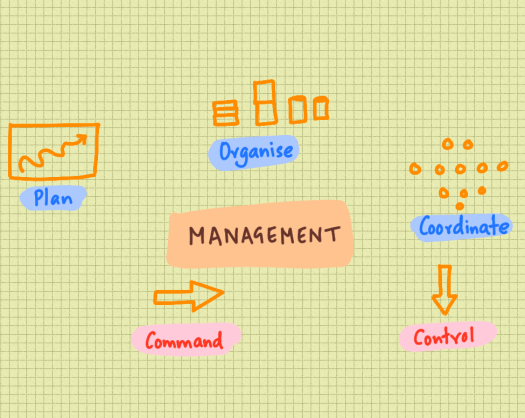
If you talk about the processes involved in management as involving tasks like planning, organising and coordinating – you are echoing words uttered by Henri Fayol – born in 1841.

There was a time, we must remember, when management did not exist.

People had trades, professions – they did their thing by themselves and had an apprentice.

The start of modern management came with the growth of industrial economies and the need to organise large groups of people to do manual work – their brains were not required.

Two components of Fayol’s work made this possible – command and control.

The concept of command has to do with hierarchy, authority, responsibility and the ability to make decisions.

Managers issue commands and their subordinates carry them out.

Control has to do with checking that what has been commanded has actually happened.

That involves inspections, checks and audits.

All very sensible, you might think.

Perhaps even obvious.

But it isn’t – it’s just a theory that someone came up with two hundred years ago so that a group of people would push and pull big heavy things into the right place.

It’s a mentality that was created for a world of strong systems – big and heavy machines.

We don’t do that kind of work these days – most of us don’t anyway.

But we’re trapped with a nineteenth century mindset that we default to even as we start making a dent in the twenty-first.

The fact is that this approach is outmoded and ancient and wrong – for today anyway.

Mainly because what we do now is increasingly service work – which involves meeting customer needs rather than building things because you can.

The cornerstone of the command and control process is the practice of budgeting – something created by James McKinsey – founder of the global management consulting firm that bears his name.

But command and control has been out of favour even at McKinsey for some time now.

But it’s still very much alive everywhere else.

Which gives you only a few options.

Change your mind – and live like it’s 200 years ago.

Change the minds of those around you and bring them into the present.

And if all else fails, change where you work.

Cheers,

Karthik Suresh

Why Structure Beats Content When You’re Trying To Get A Message Across

structure.png

Wednesday, 8.39pm

Sheffield, U.K.

What we observe as material bodies and forces are nothing but shapes and variations in the structure of space. – Erwin Schrodinger

It’s funny the things you forget as you go through life making assumptions about reality.

I am still working through Keith Johnstone’s book, Impro: Improvisation and the theatre.

In the second chapter he talks about being spontaneous and the main message that I take away is that in the beginning, as children, we see things as they are.

We see for the first time – and so what we see is original.

As we grow, we see by imitating what others seem to see – and that originality fades away.

Then, one day we perhaps try and see things as they are again and rediscover what it means.

As an adult we are surprised and delighted when someone simply talks about what they see – as they see it.

That’s why we like comedians – people who make fun of the great and powerful and point out the real, human side of what they’re doing.

The third chapter is about narrative and here Johnstone says something that reminded me of what I had forgotten.

“Once you decide to ignore content it becomes possible to understand exactly what a narrative is, because you can concentrate on structure.”

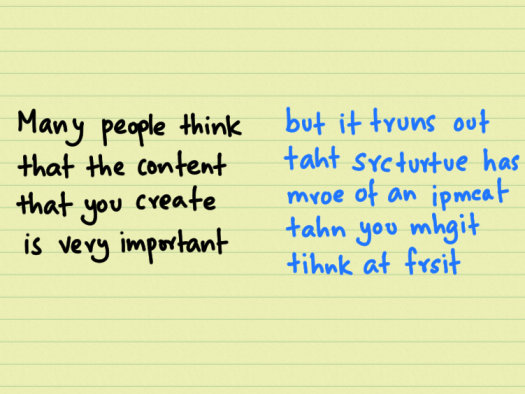
The image above is one example of how this works.

Most people think that you must write sentences like the one on the left to be understood.

It turns out that it’s surprisingly easy to read the sentence on the right because your brain has the ability to create meaning from structure rather than content.

This sentence has the first and last letter of each word in place but all the other letters are scrambled, where possible.

But what your brain does is look for patterns, not individual characters – and so the shape and structure of a word matters much more than the arrangement of characters inside them.

In the same way when you tell a story what matters isn’t how well you describe your characters or how clearly you explain what they do or say but in what happens.

One of the challenges I have in interesting my children in old stories from India is that so many of them seem to have content but no structure – and that’s because the intention is perhaps to deliver a moral message.

But that moral lesson does not always make for an engaging story.

So, what are the elements of structure you need to know if you are trying to tell a story or craft a message, for example for a business presentation?

The first thing is that the ideas you introduce need to be linked back to ideas you’ve introduced previously.

For example, if you simply recount events as they happened – you are telling a story but you “havenn’t told a story.”

Johnstone’s book gives you a few examples but the key thing is that you need to link up what is being told.

All too often you’ll see presentations that are like a list of things – one after the other you hear point after point but only a few presenters are skilful enough to link the points together.

If you want to persuade, to involve, to motivate people as a result of what you’re saying you need to get better at composing stories.

And Johnstone says that one way to do this is to stop thinking about making a story but instead of “interrupting routines”.

You create drama and tension when something happens to interrupt what’s going on.

The example he gives is about mountain climbing.

If you describe two people climbing up a mountain and then climbing down you’ve not really said anything interesting.

But if two people climb up a mountain and discover a plane crash then all of a sudden you’ve interrupted the routine.

The three things to remember if you want to keep your audience engaged is to construct your story as a series of interrupted routines, make sure you focus on what is happening right in front of you and avoid having things just fizzle out.

For example if you were to use this approach in a presentation it means that you need to create a series of linked ideas that keep breaking routines, focus on what matters to the audience and end with something that gets them talking and engaged.

It’s not easy to give examples of this kind of thing in business because it’s sort of like the case of “you just had to be there” but you’ll recognise it in any story you see or read – without these elements you’ll simply get bored and walk away.

Let’s finish by restating the importance of the last point.

Johnstone calls this “cancelling”.

The example he uses is the following sort of dialogue.

A: “How do you feel”

B: “Not very well at all”

A: “Do you want a glass of water”

B: “Yes please”

A: Gets the water. “How do you feel now?”

B: “Much better, thanks.”

Now, at the end of the last sentence B has just cancelled things.

The story started by introducing a need for water and then took the need away – cancelling it.

There’s nowhere to go from here without introducing a new element.

On the other hand, if B had done something else like –

B: drops glass, “Oh no, it’s gone all over me.”

The action continues.

A story works when it keeps the audience hooked.

A presentation works the same way.

And the tricks you need to learn turn on using structure to your advantage, not content.

Cheers,

Karthik Suresh

How To Make Differences In Status Work For You

status.png

Tuesday, 8.06pm

Sheffield, U.K.

Satori has no beginning; practice has not end! – Kodo Sawaki

The first chapter of Keith Johnstone’s book, Impro: Improvisation and the theatre deals with the issue of status.

Why is this important?

Status transactions, according to Johnstone, happen all the time.

The way we speak to each other shows the use of status and its ability to put someone down, big them up or agree with them.

Status is not something you have but something that emerges from what you do.

For example, when I was younger and going for interviews I remember reading about how where you sit affects how you act in a situation.

For example, during a one-on-one interview it’s common for the interviewer to sit behind a desk and the interviewee to sit in front, their back to the door.

This is an exposed position and results in the setting creating a status difference right from the beginning.

You might think that’s something that happens just from the relative roles played by the two participants – surely an interviewer has a higher status role than an interviewee?

Well, on one particular interview, I was shown to a conference room with a desk and two chairs, one facing the door and the other with its back to it.

The room was empty and the chairs were the same – so I took advantage of being the first one there to sit in the chair facing the door.

When the interviewer walked in he had a distinct look of surprise at seeing me sat in his chair.

He shrugged it off and sat down and we had the interview – but it was clear that the relative status had changed and it felt like a situation where the status had been reversed.

That particular situation worked out but I have been in other situations where an individual walks into a room, sizes up the seating and then quite deliberately walks over to the dominant seats.

It doesn’t work quite as well then because you know they’re playing a game because they walked past more convenient seats to get to the one that had more perceived power and people who see that will want to bring them down a peg or two.

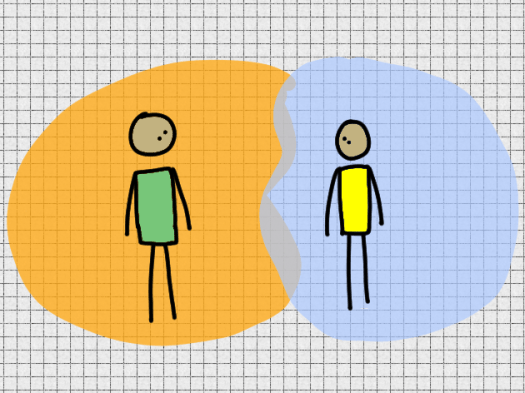
The point Johnstone makes is that status transactions emerge when you’re near someone else – it’s like the space around you, the auras spread out until they collide with someone else and then the status between the two of you governs what happens next.

In a business context many people teach that you should be the dominant one in this situation – brash sales trainers and alpha males talk about the prospect as weak and submissive and you, as the sales person, as the one who must seize and dominate, taking the prospect all the way through the sales process until it’s closed – overcoming objections along the way.

I have seen no one successfully sell anything significant this way.

I am not sure it works for pots and pans, or cars or consulting services.

The only thing the people selling such approaches seem to be doing is selling such approaches.

It’s like Internet commerce – lots of people want to take your money to tell you how to make money on the Internet.

The point to note is that status is something that helps you to build a relationship.

Johnstone writes that “acquaintances become friends when they agree to play status games together.”

If you want to develop a relationship with a prospect the key is being able to shift from status level to status level until you’re both working together.

What you need to do when you’re handing out leaflets in the street is very different to the way in which you would engage with someone at a trade show.

The skilful handling of status during a consultancy engagement will mean the difference between getting a client for life or an unhappy separation.

Starting to become aware of status is hard – because we’re so focused on being ourselves and being in control.

But if you have children you’ll find that often trying to impose your views on them is not a very effective strategy.

The expected, default or preferred status is simply something that holds you in place, like a mammoth stuck in tar.

The fluid, elegant use of status lets you adjust and flow to society – to prospects and customers.

Because what you really want is not to be in a position where you are given orders or have to give them.

What you want is to do work you enjoy for people you like, admire and trust.

Cheers,

Karthik Suresh

What Are We Losing By Trying To Be Adults?

adult-atrophy.png

Sunday, 8.58pm

Sheffield, U.K.

How do I know what I think until I see what I say? – E.M. Forster

I assume, if you are reading this, that you are an adult, someone who has left behind childish things and is now seeking Wisdom or Riches or both.

If that is so, you probably have the education system to blame – the system that systematically strips us of creativity and abandon in order to prepare us for a world of order where we must find our place.

Although that’s probably not fair – I didn’t have that kind of education and neither, probably, did you.

When we look for the reasons why something is not working as it should we tend to swing towards to extremes.

We either look at individuals and try and assess whether they’re performing well or poorly.

Or we look at the system they’re working in and ask how well it’s supporting them in delivering what they should be doing.

In most cases it’s the system’s fault.

And, in most cases, we look to blame the people.

But it may be that, when it comes to teaching, the teacher you have does matter.

Teachers who believe their job is to “Teach” – that knowledge is something they force into a child have one way of approaching their lessons.

On the other hand, teachers who see their role as putting students in situations where they can discover what they need to know are the ones you remember as being truly great.

These sorts of thoughts are the ones Keith Johnstone, a director, teacher and writer on theatre craft, explores in his book Impro: Improvisation and the theatre.

He reminds us that children of all kinds are deeply interested in things they are interested in.

If you try and force a child to read something that she finds boring then how can you be surprised when she stops when the timer goes off?

On the other hand the same child, when engrossed in a task that interests and engages her, will spend hours working away at it.

In this witty TED talk Sir Ken Robinson argues that schools kill creativity because “Truthfully, what happens is, as children grow up, we start to educate them progressively from the waist up. And then we focus on their heads. And slightly to one side.”

In the beginning, as children, we’re excited by almost everything – drawing, singing, running, playing – it’s like we’re a growing bush with leaves everywhere.

As we get older, the leaves drop off.

We stop singing, we put away the paints.

We focus on something that we can do that will bring in money.

And we end up older, bigger – with a set of skills.

But have we lost all the leaves in the process?

Johnstone writes that he “began to think of children not as immature adults, but of adults as atrophied children.”

What his book is about, then, is about getting that childlike state back again.

For example, right at the beginning, he suggests an exercise that you can do with your children.

Look around at things and call them by the wrong names.

Keep going, naming around 10 things.

We did this, the kids got quite excited, although they didn’t know why they were doing it.

The idea is that this exercise acts like sandpaper on your surface, getting rid of all the stuff that’s been collecting and stopping you seeing things like a child for the first time.

Suddenly one of the kids pointed out a towel holder on one wall – and I have to honestly say that in four years of walking in and out of this room, I have never seen that thing before.

It’s clearly been there all this time – I’ve just not noticed.

But I did – as a result of this exercise I saw the things around me clearly for the first time because we called them by the wrong names.

That’s a very different approach to taking an inventory – tabulating and checking what’s in there.

Much more exciting, lively, engaging, interesting.

Not a very grown up thing to do.

Johnstone’s book promises to deliver more interesting ideas – so I might come back to it in subsequent posts.

Until then.

Cheers,

Karthik Suresh

How To Avoid Making Fundamental Errors When Reasoning

fallacies.png

Saturday, 9.13pm

Sheffield, U.K.

It is just as easy to indoctrinate with fallacies as with facts. – Aldo Leopold

I am still working through Wanda Teays’ textbook Second thoughts: Critical thinking for a diverse society, trying to extract bits that might be useful on a day-to-day basis.

Chapter four is on fallacies – what happens when there is a fault in the way you have reasoned your way to a conclusion.

Teays writes that there are four big categories of fallacies.

Rather than repeating the academic version here I’m going to paraphrase and see if I can find examples so I can better understand each category – which, fyi, has a number of subcategories – but we’re not going to go into all of them.

Each category leads to a conclusion – the thing you choose to believe.

The first category has to do with the premise of the argument.

A premise is a previous statement that you use to get to your next statement.

The classic example of this is attacking a person instead of the argument they are making.

This is the equivalent of a hammer in the tool chest of the modern politician – absolutely essential to deal with opponents.

You don’t need to look far for examples of this – just search for Brexit on Twitter.

The second category has to do with the assumptions you are relying on to be correct.

The bad use of statistics, generalising from one case or applying a general rule to a specific situation where it doesn’t fit, and creating false either/or options are all examples of this kind of approach.

One particular one is arguing that because something has happened something else must now happen – even if there is nothing to show why there is a cause and effect relationship existing there.

Okay, I can’t resist going back to twitter and Brexit.

Here’s an example.

“PM @BorisJohnson has negotiated a new deal – Now it’s time for MPs to come together to back it today.”

Is it really?

The next category has to do with the wording that is put in front of people.

We have to ask whether the chain of words actually work together, or whether there is something that breaks it.

For example,

“Property prices have always gone up – you’ll never lose money investing in the property market.”

It’s true that property prices have gone up on average over time, but it’s been a roller coaster ride along the way – and you definitely can lose money depending on when you enter and exit the market.

The final category of error has to do with structural and logical flaws.

These are boring – and you’re not that likely have to use them.

Spot the flaw in the last sentence?

Anyway, the first couple of fallacies are the ones that we come across all the time.

At some other time I think it might be interesting to look more closely at specific examples of these fallacies.

But there are more important things to look at first.

If you come to a conclusion and people disagree with you, what should you do?

And, if you disagree with someone else’s conclusion, what should you do?

Should you try and change their minds – by pointing out the flaws in their arguments and educating them about the fallacies they hold?

Not if you don’t want to waste your time.

The only thing to do is talk to people who already think the same way you do.

And to those who haven’t made up their mind yet.

Thinking critically is hard and complicated.

I’m not sure we have the ability to do it in real time.

So we must take action based on conclusions we have already come to, hopefully based on sound reasoning.

Most of the time, however, we should probably switch off the telly and Internet and pick up a book.

Cheers,

Karthik Suresh

Is It Time To Bring The Three Wise Monkeys Up To Date?

evil.png

Friday, 9.33pm

Sheffield, U.K.

Only those who do not wish to see can be deceived. – Dianna Hardy, Saving Eve

Some time back I listened to a politician speak.

He said little of substance – and the audience was generally hostile.

And then I listened to the radio – where a local reporter was asked what the politician had said.

Now, here’s the thing.

I was there.

I heard every word.

And what the local reporter said was said wasn’t.

Said, that is.

Many of us, naively perhaps, trust the news – we trust what we see and hear.

And it seems that, increasingly, we shouldn’t.

I’m reading Wanda Teay’s book Second thoughts: critical thinking for a diverse society and taking another look at what we think is happening in the world around us.

Now, some things have always been – and will continue to be.

The messaging you get, for example, falls into a continuum.

Teays references Margaret Thaler Singer, a specialist on cults, as noting that what you see and hear can serve five purposes.

  1. Education
  2. Advertising
  3. Propaganda
  4. Indoctrination
  5. Thought reform

In the free world propaganda is the tool of choice by those who wish to be or stay in charge.

Propaganda is used to persuade you by appealing to your logic and your emotions – although it’s the appeal to the latter that really gets people worked up to the point where they do bad things.

But, while education and advertising might try and use the truth or at least a version that is not false propagandists are less reluctant to use misinformation or manipulation.

None of this is new.

What is, however, is the speed by which propaganda can reach everyone in the world through radio, television and twitter.

And whatever other way you choose to consume your media.

It should not surprise us that we are being subjected to a barrage of propaganda – but we should be aware of how it’s getting better and better.

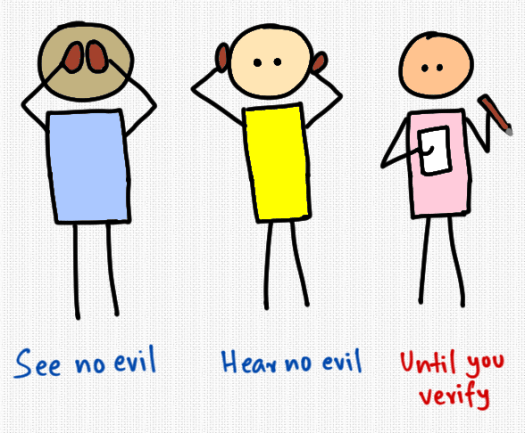
From tweet and article factories around the world to deepfakes – nothing you see or hear can be trusted without verification.

It’s safest to assume that everything is spam.

And you need a filter – not one run by other people like the media or journalists, but one that you operate yourself.

A filter called critical thinking.

A filter with which you can examine language, arguments, logic, analogies and identify what’s good, what’s not and what’s right.

So you know what to say.

Cheers,

Karthik Suresh