The Case For A Shared Digital Infrastructure

2024-02-02_sharing.png

Friday, 10.39pm

Sheffield, U.K.

Sharing is good, and with digital technology, sharing is easy. – Richard Stallman

I used ChatGPT a lot a few months ago and then I used it a bit less, and then I used it a little. And now I use it every once in a while.

I know – it can write stuff really fast – and sometimes that’s all you need. For those situations where no one cares it’s fine, it’ll do.

You can put the thing out there and it will do whatever it is you want.

But it’s not really that satisfying.

Perhaps this kind of stuff is going to become the Atkins diet for the mind. A little bit of meat may not kill you but a lot definitely will.

Anyway, I saw on a post that Facebook is open sourcing its AI code because Zuckerberg thinks that it will make hackers and programmers like it more and be more likely to engage and use it.

I think he is right.

I’d rather learn how to use LLaMA than be dependent on a closed system.

I’d sleep much happier knowing that there is infrastructure that can be accessed by everyone.

But really, I’d much rather pick up a book and learn that way.

But perhaps that’s just hopelessly old fashioned.

Cheers,

Karthik Suresh

Finding The Balance Between Being Interesting And Being Interested

2024-02-01_interesting-interested.png

Thursday, 6.33pm

Sheffield, U.K.

The teacher must adopt the role of facilitator not content provider. – Lev S. Vygotsky

In case you don’t know what I do you’re in good company – I don’t really either.

But what I’m interested in is in using drawing and writing to help me understand things.

I’ve used this in different ways – to take notes in class, to plan outlines for books (that I should really write sometime), to take notes during meetings, to listen better to people who have to operate in complex situations.

And recently, I’ve spent more time facilitating.

That’s something I never thought I would be that interested in.

My one experience of facilitation was a nightmare. I was asked to sit in a group and talk about my feelings. And that didn’t work – I didn’t want to do that and everyone else sounded like they were whining.

I’m a little more tolerant now.

But I’m still a little conflicted about icebreakers and team building and all that kind of stuff.

When I say conflicted, I mean I hate the idea of doing any of that.

Why can’t we just get on with work?

Now, I’m probably wrong. I also open minded. Except about most things.

So I listened to a facilitation podcast, the Facilitation Lab Podcast, if you want the details.

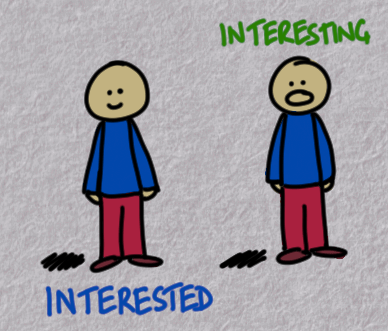
In one of the episodes they talked about the difference between being interested and interesting.

Being interested is about listening and asking questions.

Being interesting is about performing, taking the stage.

I suppose you need a balance between the two, perhaps more towards being interested as a facilitator and letting the participants take the stage.

And I am interested in things, in people and how they operate, how things work or don’t, and what could be done to make things better.

Crap. I might be turning into a facilitator.

Cheers,

Karthik Suresh

How Do We Get Better At Something?

2024-01-31_brain-meters.png

Wednesday, 9.21pm

Sheffield, U.K.

Esteem must be founded on preference: to hold everyone in high esteem is to esteem nothing. – Moliere

I’m a big fan now of Dr Doug Lisle and his presentations.

You can find them on YouTube and what drew me to them first is that he uses hand drawn pictures to talk about complex things.

What he says is interesting too.

One of the things he’s talked about is a model of human interaction based on what he calls an “esteem meter”.

The idea is this.

If people reject you, then that affects your esteem.

This is often thought of as a bad thing.

It’s not. What you should see a message of rejection as is feedback.

Feedback is a good thing, it’s a signal back from the world telling you whether everything is ok or if you need to change something.

For example, you send out messages to different populations at different times – to possible mates, possible friends and possible people you might work with – what Dr Lisle calls “trading partners”.

If their response is positive, then your esteem rises.

If not, you may need to change your message.

It’s really simple when you look at it that way.

If you want to get better at something try doing it, get feedback, see what it does to your esteem, learn from that feedback and try something else until you get a boost.

Cheers,

Karthik Suresh

How I Use Whiteboard Technology To Work

2024-01-30_whiteboard.png

Tuesday, 9.28pm

Sheffield, U.K.

Concern for man and his fate must always form the chief interest of all technical endeavors. Never forget this in the midst of your diagrams and equations. – Albert Einstein

I have to give a talk in a few weeks and I’m trying to think of ways to get my point across.

When I was younger, I used to do work and make things.

Well, create code that did stuff anyway.

I still do stuff with code but most of the time I try and figure out what needs doing rather than how to do it.

In the field of Operational Research that kind of work is labelled problem structuring methods.

Which some people object to because it’s not really about problems, it’s not really about structuring, and it isn’t really about methods.

But you don’t need to know that.

The point is that a lot of the time we don’t know where to begin – what is it that we ought to do?

That question almost always leads to standing in front of a whiteboard.

Or, in this digital age, starting with an application.

I recommend MyPaint or OpenBoard on a GNU/Linux platform.

The trick is making that first mark and being comfortable that it doesn’t have to be anything – not perfect, not done, just a beginning.

The trick is realising that the thing you make on the whiteboard is transient, ephemeral – it’s done and then wiped away.

Well, it used to be anyway.

We draw to make what we think visible, to clarify what is unclear, to make a thing out of thought that we can manipulate, and to explore and create. We do this because it makes thinking and working together easier (Cherubini et al, 2007).

A whiteboard is used to support conversations between people and the ideal software tool lets people just talk and express their ideas fluidly and unselfconsciously – using the tool doesn’t get in the way of being able to think and talk. (Pederson et al., 1993)

The difficulty I suppose is learning to be comfortable doing what you do now on paper using digital tools.

That used to be a steep learning curve.

But it’s a lot easier now, the only thing that stands in your way is confidence and practice.

We see too many examples of perfect and forget that perfect is often not the thing we want or need.

What we need is to be useful.

Cheers,

Karthik Suresh

References

Cherubini, M., Venolia, G., DeLine, R., Ko, A.J., 2007. Let’s go to the whiteboard: how and why software developers use drawings, in: Proceedings of the SIGCHI Conference on Human Factors in Computing Systems. Presented at the CHI07: CHI Conference on Human Factors in Computing Systems, ACM, San Jose California USA, pp. 557–566. https://doi.org/10.1145/1240624.1240714

Pederson, E.R., McCall, K., Moran, T.P., Halasz, F.G. 1993. Tivoli: An Electronic Whiteboard for Informal Workgroup Meetings. Interchi.

Why We Need To Listen To People Who Don’t Speak

2024-01-29_cautious.png

Monday, 8.43pm

Sheffield, U.K.

It’s the steady, quiet, plodding ones who win in the lifelong race. – Robert W. Service

There’s an image that pops up every once in a while along with a story – it’s a WWII plane riddled with holes and the engineers look at it and say, “We need to armour plate where the holes are.”

Then someone says, “No, we need to armour the places where there are no holes – those are the hits that brought the planes down”.

In other words, we have to learn that often the thing to fix is the thing we don’t see.

This particular decision point comes up quite often in life.

In investment, we see people making quick money through active trading. We see their stories and their triumphs.

We don’t see two things.

We don’t see the failures – because people don’t like advertising that.

And we don’t see the millionaires who got there by putting their money in an index tracker and letting it simply compound over time.

I tell my kids that I can guarantee they will be millionaires.

It’s simple maths.

Your savings will double around every 12 years on average.

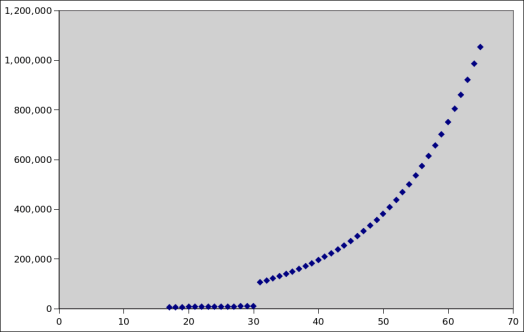
Say from the age of 17 you do enough to put away £300 times your age every year.

So at 17, save up your pocket money and do odd jobs and stash £5,100 in the market.

Do that every year, and at age 30 you put in £9,000.

You will have saved nearly 100k over that period.

Now, sit back and relax.

On average, you should see growth of around 7% a year if you invest in an index tracker and the global economy grows.

Some years it will be less, some years more.

But in the long term it will work out.

You don’t need to put in any more money.

By age 65, you will have over £1 million in your account.

Take a look at the chart.

2024-01-29_savings.png

Investing is really as simple as that. To do well, start early, save as much as you can, invest it in a tracker, forget about the market and enjoy your life.

Good investing should be like watching paint dry.

The payback will come years later.

Now, precisely how much would you like to pay me for that advice?

Probably nothing – even though it is the most valuable thing you could possibly learn from me.

But, what would you pay for some day trading training, perhaps forex on margin, or perhaps how to buy and flip houses, or how to rake in views on YouTube – all these get rich quick schemes that are designed only to do one thing.

Benefit the person selling you the stuff.

Now, what do you do when someone comes trying to pitch you something.

The correct answer is, in almost every case, “No thanks.”

Which makes it hard to be a salesperson.

If you ask people what they think about this thing you have the chances are that they’ll be polite and say it’s nice.

What you’ve got to listen to is what they don’t say.

What are the risks for them – how could they lose out?

If this thing is really valuable, if it’s something that could help them then you should try and get that across.

But you’ve got to recognise that there is an entire industry that’s also putting messages out there that aren’t good for them, and people, once bitten, turn shy.

I think business may be splitting into two very large factions.

On the one hand, you have companies that totally dominate their ecosystems, like Google and Microsoft and Apple.

I don’t know if you’ve ever tried to browse the Internet on a web browser that only supports html but it’s pretty much impossible.

Google and javascript has simply taken over the world of the web.

Wikipedia works, fortunately.

So you’re locked into those ecosystems with no choice at all.

On the other hand, you have hugely creative options for people that want to have some choices.

I bought my laptop from Framework and it has replaceable parts and can be upgraded.

I bought a Devterm from Clockwork Pi, again a machine that can be modified and extended and is just simply fun to use.

But if you go out and look for advice you’ll only see what the companies want you to see – the vast echo chamber makes it looks like you have no options but the obvious options, and there is no one to tell you to consider a different option.

Even I hesitate – should I talk about my experiences with Free software and Open hardware?

Is that useful or not?

Time will tell.

Cheers,

Karthik Suresh

Are We Really Rational Beings After All?

2024-01-28_moths-to-flame.png

Sunday, 7.51pm

Sheffield, U.K.

It has been said that man is a rational animal. All my life I have been searching for evidence which could support this. – Bertrand Russell

Economic theory from around the nineteenth century held that human beings were rational, self-interested creatures that pursued strategies that were optimal.

This was the world of economic man – Homo economicus.

In the 1970s and 80s we were introduced to behavioural economics that suggested more factors affected decision making than a cold blooded assessment of the costs and benefits – we had to look at psychology, cognition, emotion, culture and social elements as well.

I accepted this as the case, and so it was a little jarring when I listened Dr Doug Lisle talk about decision making.

For example, he talked about why we do anything – and there are three reasons which he calls the motivational triad.

First, we do things because we seek pleasure – with the main things for animals being food and sex.

Second, we avoid pain.

And third, we conserve energy and try to be as efficient as possible in how we acquire resources so that we increase the chances of survival.

For humans in particular, in addition to sex and food, we should probably add some kind of cognitive reward category – because we watch TV and read for mental pleasure – something that we don’t have in common with sharks.

Anyway.

Dr Lisle talks about how when we’re making decisions we’re really running several complicated simulations or scenarios to work out how to maximise pleasure, minimise pain, and conserve energy.

That’s a pretty rational way to act, if you think about it.

Let’s say you’re in a meeting trying to get a group to agree to do something.

Maybe you want them to choose Option A. You know that’s the best thing for the company.

But they stall, they complain, they hesitate – they just don’t seem willing to commit.

Why is that?

The chances are that you haven’t pushed their motivating buttons.

Does the decision help them gain pleasure or avoid pain?

In a corporate situation the pain is probably something that has to be done but just takes a long time or is hard to do.

Like cleaning out toilets.

You could dig a hole and clean it by hand but you’re more likely to approve a proposal to install proper toilets.

But when it’s not that clear and obvious maybe we should look at the energy conservation element.

If you want them to do something – follow a process, fill in paperwork, report regularly – and the effect is to make their job harder or take longer or be less efficient then they’ll push back.

Even if it’s better for the organisation as a whole if it’s worse for them, then they’ll avoid the choice.

What you see as irrational behaviour might actually be your inability to see the rationality at play.

But, we have to admit that there are situations where we don’t make rational choices.

Is that our fault?

I’m not sure.

I think we’re neurologically wired to make good choices. That’s how we’ve survived.

What’s happened, however, is that we’ve changed our environment faster than we’ve changed our brains.

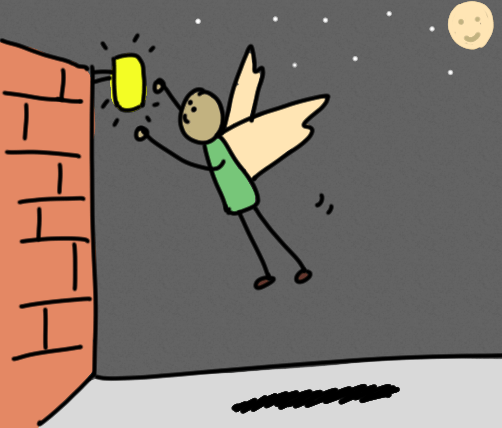
If you have a porch light you’ll see moths at night flying towards the light.

In the old days, when the light was hot they might even die.

That’s not rational, is it?

Except, for the moth, it is.

They’ve evolved to seek the brightest source of light in the sky at night – which is the moon, and by flying up they know that they’re going to find clear space to navigate.

Then we installed all these mini moons everywhere and messed up their perfectly rational strategy.

Our brains are similarly perfectly wired for the natural conditions of a few tens of thousands of years ago.

But now, civilisation and industrialisation have changed our world, so our old navigation systems don’t work anymore – not all the time anyway.

What we think we should do is not always the right choice in this new world.

This means that for those of us that have to work with others to make collective decisions and experience that frustration you feel when they just can’t arrive at the conclusion you know is right may have to change the way we approach the situation.

We have to realise that one of two things may be happening.

  1. We may be unable to see their rationality.
  2. Their rationality may no longer be suitable for the decision situation.

We have to change, or they have to.

And we have to be wise enough to know which one needs to be done.

Cheers,

Karthik Suresh

Holding Onto Hope In a Dead Universe

2024-01-27_heat-death.png

Saturday, 8.14pm

Sheffield, U.K.

The heat death of the universe (also known as the Big Chill or Big Freeze)[1][2] is a hypothesis on the ultimate fate of the universe, which suggests the universe will evolve to a state of no thermodynamic free energy, and will therefore be unable to sustain processes that increase entropy. – Wikipedia

I started reading Will Storr’s “The science of storytelling” today.

It starts by asking why humans think there is any point in anything given that the universe will eventually just lie down and die – that heat death will come to all.

He thinks that we tell ourselves stories to keep going – that’s the way in which we make sense of the lives we have.

If you look towards the world of biology instead, we’re programmed, like all animals, to maximise the changes of our genes surviving, presumably with an eye to lasting until the end of everything.

But does that have to be the end?

You might think that with a few years before all this happens – one followed by a thousand zeros or so – some enterprising soul will figure out how to avoid impending catastrophe.

The stars going out one by one is surely a problem that’s a little like the lights going out across an entire country’s electricity grid.

In case you don’t know much about power stations there are a few that have big yellow boxes on site that are there to provide a “black start” capability.

Recovery from an absolute blackout, that is.

One hopes that a scientist will figure out how to bang things together and make new suns, perhaps that’s the way to get out of all this.

Or is that wishful thinking?

Perhaps we should watch to see if the human intelligence that makes it possible to see the impending end of the universe can save our planet in the short term.

If we do, then perhaps there is chance after all.

Cheers,

Karthik Suresh

What Makes Humans Different From Animals

2024-01-26_esteem.png

Friday, 5.47pm

Sheffield, U.K.

Every man is said to have his peculiar ambition. Whether it be true or not, I can say, for one, that I have no other so great as that of being truly esteemed of my fellow-men, by rendering myself worthy of their esteem. How far I shall succeed in gratifying this ambition is yet to be developed. – Abraham Lincoln

I watched a video by Dr Doug Lisle that was an interesting refutation to Jordan Peterson’s concept of dominance hierarchies.

Peterson argues that we’re hardwired to look to dominate hierarchies.

Lisle argues that we look for esteem – and these might sound similar but they’re not.

In dominance, the bigger animal fights and wins.

With esteem, the person that does the most for the village is elevated.

One is a personal thing.

The other is a social thing.

And that’s why comparing humans to lobsters, as Peterson does, might miss the real lesson.

We’re all jockeying, not for dominance, but for esteem.

The more you do for others…

Cheers,

Karthik Suresh

p.s. The reason I really like Lisle is because of the way he uses drawings in his presentations.

What Really Makes You Dangerous?

2024-01-25_moves.png

Thursday, 7.37pm

Sheffield, U.K.

I fear not the man who has practiced 10,000 kicks once, but I fear the man who has practiced one kick 10,000 times. – Bruce Lee

I have a new toy.

It’s unopened. I’m saving that for the weekend, but it’s a pretty nerdy thing.

It’s a Devterm from ClockWorkPi – a handheld computer that runs Linux and works off batteries.

An A5 notebook size “retro-entertainment” terminal.

It joins several, relatively low-cost computers that I’ve acquired over the years, although my main machines are a decent desktop computer and a Framework laptop.

The thing that unites all the things I buy is that they can be built and fixed – you can repair the Framework, the Devterm has open specs and you can 3d print parts for it and a desktop lets you choose parts and put them together.

It’s the opposite of the closed boxes the leading manufacturers sell, which really aren’t designed to be opened – once they die you throw them away.

That’s what’s happening to the Microsoft Surfaces that have died on me.

Closed boxes are not a good thing to get hooked onto.

That goes for computers. It goes for phones. It goes for the cloud and all that stuff as well.

You really need to have some say in the technology that you use.

Well, that’s not true. Many people are happy buying technology and not knowing anything more about it than that there’s a big company behind it and the software lets you do cool stuff.

It’s like some of the AI tools we see now. Text to video sounds amazing. You tell it to make a dancing bear and there it is.

No need for anyone to create and animate that thing – it’s just there.

I mean… just look at this stuff.

From a text prompt!

Entertainment is just going to explode – and the imaginary worlds we live in are going to get so much more attractive than these boring ones out here.

We have two options.

We can be consumers of content.

Or we can be creators that use these new tools that let us tell stories better.

What do you think we should work on?

And which tools should we use? Closed boxes or open ones?

Cheers,

Karthik Suresh

How Does One Learn To Teach These Days?

learning-to-teach.png

Wednesday, 8.06pm

Sheffield, U.K.

If you’re teaching today what you were teaching five years ago, either the field is dead or you are. – Noam Chomsky

I want to learn to teach – a little like I wanted to learn how to write a few years ago.

It’s for a selfish reason, of course.

There’s no better way to understand something than trying to teach it to someone else.

It’s when you first try and say words that you hope make sense and find that they don’t – when your student looks at you with part blank incomprehension, part pity and part irritation – that you realise you have two choices.

You can stop and never do this again.

Or you can try again and get better.

The pandemic taught us how hard it is to teach our children – and I’m amazed that teachers get through what they do at school.

But, if we’re being honest, they don’t actually get through a great deal.

A lot of the day is spent, I think, taking names, and waiting, and going to and fro.

When I was teaching the kids at home we finished the day’s work they had to do in the first couple of hours, usually before the working day actually began, because we had work to sort out as well.

That was partly because teaching the way we learned didn’t work.

You can’t just give someone a book these days and tell them to spend some time and go figure it out.

There’s a process, an intro activity, a build up, some other stuff, and then eventually the kids sit down and get on with the work.

We didn’t have time for that.

Instead, I discovered flipped teaching.

This is where you make a video of what you want to teach. The kids watch it. And then you give them the work to do.

This is because it takes you half an hour to get them to sit down and listen to you if you try and teach them properly.

Pop a video in front of them and they’ll watch it happily.

As a rule of thumb, a 2-3 minute video can get across what you’ll do in 15-20 minutes trying to teach it live.

If you use the 1-take format, where you hit record, say your stuff, hit stop, and are done – you can create content pretty quickly.

Plus, by recording your teaching up front, you don’t need to put on a performance – it’s already done – you can get on and facilitate learning.

The place where I’ve learned the most about this approach is from Lodge McCammon and the flipped classroom. Unfortunately, the videos that teach the elements of flipped classrooms seem to be slowly disappearing off the Internet, which I suppose is the problem with video resources rather than text.

But, there has also been quite a lot of technological change in the last ten years.

It’s a lot easier to use digital technology to create videos than it was.

But teaching is not about production, although it can be.

Michael Wesch, for example, creates amazing teaching videos that looks like hours of effort went into them.

But it’s not easy to maintain that level of output.

Anyway, so this is what I’m thinking.

Try out an approach to teaching that uses flipped teaching methods with Free software.

And see what I learn.

Cheers,

Karthik Suresh