The Art Of Selling With Words

writing-zen.png

Friday, 9.41pm

Sheffield, U.K.

It’s time for a little Zen digression.

You’re going to have to write to sell. Especially these days.

We may spend more time than ever watching stuff but we’re also reading more than ever before. And if you’re involved in any kind of complex consultative sale, a presentation alone won’t be enough to close a deal. You’ll also need to put something in writing.

The best situation is one where what you say doesn’t matter. Your prospect knows what they want and they know you can do it. In that case, what you put down on paper is simply a way to get an agreement in place. You both know that you’ll do what needs to be done, not what’s written down.

Other situations can be more complex.

Take a classic tendering exercise, for example. Such processes are driven by a fear of losing, a fear of being vulnerable.

In large organisations no one can afford to take a risk and so they use methods that mean that they can’t be blamed if things go wrong. Not all organisations think that way, of course, but you’d be hard pressed to come up with examples of such beasts.

These situations echo the words of Tennessee Williams – we have to distrust each other. It is our only defense against betrayal.

If you don’t know you’re going to win a tender before it goes out, you’ve probably already lost.

So, at one extreme you’re going to get the business no matter what. At the other, you’re probably going to fail. So, what kind of attitude should you take when you’re writing to win that kind of business?

The standard advice is simple. Look at what they ask for, make sure you address each point and say how you’ll do it and give an example. Then move to the next point.

That way you’ll turn in a solid piece of writing that hits all the main points. It might even get you shortlisted and into the final five.

Then there are the other ways people find you. On your website. By the articles you write. The words that aren’t written in response to a request but because you want to put them down and feel that they describe what you do.

There are some very good books on writing, and I might come back to them in later posts, but right now let’s talk about Teaching English As A Foreign Language.

Many years ago, I had a teacher who was doing exactly that. She went through the process of writing – how you should brainstorm, select your best ideas, put them in order, construct the sentences and voila – you’d have a perfect piece of writing.

I tried that once.

The result was… turgid. It was an essay written by numbers, with no soul to it. It felt dead and lifeless and sad.

And the marks it got from teacher reflected how poor it was.

That’s the problem with following a process for doing anything. When someone did something for the first time they just did it. They wrote sentences that sounded good. They created music. Made stuff.

And then someone else came along and tried to understand how it was done. They tried to do it themselves, to get other people to do it. They came up with rules and methods and processes.

But here’s the problem. Were the rules pasted onto the thing that was new and good? Or did something new and good come out of following the rules.

I think we can all agree that following the rules does not result in creating something new and good. Following the rules makes you irritable and tired.

The thing with creating anything, with doing anything is that when you’re doing it, you’re doing it. Not thinking about it or analysing it or breaking it down.

People that do stuff are often terrible teachers, because they just do things rather than figure out how to get someone else to do it.

Which brings us to Eugen Herrigel and Zen in the Art of Archery.

People who do Zen don’t try and explain what Zen is.

They come at it from odd angles. For example, how should you hold a bowstring? Like a baby holding your finger. When you let go, you let go like that baby. The baby doesn’t think – it just lets go.

An archer has a target, but they’re not trying to hit the target. Hitting the target isn’t the point. The goal is a spiritual one. As Herrigel writes “fundamentally the marksman aims at himself and may even succeed in hitting himself”.

And that’s how I think we should think about what we write.

We write to understand what we do better. We write for ourselves.

In doing so, we may help someone else understand what we do as well.

When they do that, they may even decide to buy from us.

Cheers,

Karthik Suresh

How To Pull Together A Story For A Killer Presentation

problem-resolution-example.png

Thursday, 9.15pm

Sheffield, U.K.

In my previous post I wrote about taking your audience on a journey using a story. How can you use a story to make a more effective presentation?

To start with, what do you think is a good outcome for a presentation that you make?

Is it silence? Is it applause? Is it a barrage of questions?

If it’s silence – perhaps you were completely clear and everyone understood everything. Or perhaps they didn’t but you sounded so confident that they were too intimidated to ask anything in case they looked foolish. Or you were so boring they spent all the time checking their emails under the desk.

If it’s applause – perhaps you came across well. But, what did they remember from your presentation?

If they have lots of questions – is it because they understand what you’re saying well and want to show how clever they are in front of their colleagues? Or is it because you didn’t get the most important points across? Or were you vague and evasive and they’re trying to pin you down?

Going back to Andrew Abela and what he says about – a good outcome for a presentation you do is when your listeners start talking and discussing what you’ve said between themselves – seemingly almost forgetting that you’re in the room.

This is a great point to reach. I’ve seen this. You’ve made your points, and now everyone is nodding and talking and gesticulating. They’re buying into what you’re saying. You’re on your way to making a sale.

How do you do this, what’s the secret?

The problem with most presentations is that they start from the presenter’s point of view and work through the points that the presenter thinks is important.

Usually, this is with an introduction to who they are, some scene setting, then some meandering through whatever seems important, then a discussion about what this means for the audience, then next actions and any other business.

By which time everyone is asleep or bored or zoned out.

Instead, you need to think about your presentation from your audience’s point of view. You need to start by getting their attention.

You’ll do that by saying what they’re going to get or learn or see during your presentation that matters to them. For example, I started this post with the idea that you could use a story format for your presentation. So that’s what you’re expecting to find.

You read articles and ads and flyers because the headline gets your attention. Newspapers have headlines for that reason – so you can find the stuff that interests you quickly. It’s the same with presentations – you need to start by getting their attention.

Let’s say you’re a small business owner and you’re about to sit through a presentation on webinar services. How would you respond to two slide titles below:

  1. Introduction to ABC Webinar Marketing Services
  2. Can a single webinar increase sales by 30% next month?

The first one is the kind you see at the start of presentations all the time. The second is not.

The second gets your attention because that’s something that interests you. So, your first task as a presenter is to set out the situation – the context for what you’re going to do – the promise of what you can deliver to your listener.

You then lead into a story format – which is really quite simple. In most stories, there is a problem and a resolution repeated again and again. You put a man up a tree, throw stones at him and then get him down again.

Watch for this the next time you see a film. The tension in a story is created by putting things in the way of the protagonists. We need them to stumble and fall and then pick themselves up again.

In a consultative sale, the stumbles and stones are objections. They’re the thoughts that come to mind when you are exposed to something. It’s just natural to be sceptical – that’s human nature.

What you need to do is look at your situation and think of the first objection or objections that come to mind.

For example, following the webinar intro slide, perhaps the objection is “We don’t really have these in our industry – the bosses don’t sit at computers and join webinars”.

Rather than waiting for the audience to bring up this problem – address it head on in your next slide title – “Are small business owners too busy to attend webinars?”

Hopefully, you have a good answer to this question. You have a resolution to this problem. Perhaps you have research that says most bosses ask an intern to find out about marketing options, and the interns often jump on webinars for a quick intro.

So, you have a resolution trotted out. But just because you say so doesn’t make it so.

What you need next is an example. Something that shows what you say is real. It can even be an anecdote – it’s surprising how powerful an example can be of even one person that’s experienced what you’re saying can happen.

The example also lets your listener take a breath and process your point. It gives them time to get it. Right – I know the problem, it looks like this person can solve it – and it’s worked somewhere else.

Great. Onto the next problem.

“Aren’t webinars expensive?”

There’s a resolution to that. No – the technology is getting cheaper all the time.

And an example. My last client did six webinars last year and spent less than $5,000.

And on and on. Each objection will naturally lead to another one and another one. You’ll be able to think of them quite organically as you stop focusing on trying to sell what you do and focus instead on the problems people can think up about why it won’t work.

If an objection is particularly hard – if you can’t answer it – you need to stop and work on that until you can. If you can think it up, the audience can.

How many problem-resolution-example sequences do you need? As many as are needed to address all the objections that can come up. Address them yourself, do it before the audience can and you’ll see something wonderful happening in front of your eyes.

You’ll be talking to them, making your first point. You’ll see polite attention, some furrowed eyebrows, some sceptical looks.

Then, you’ll say the objection that they’re thinking out loud and see a flash of recognition in their eyes. They’ll sit forward and start to pay attention as you talk about how you are going to resolve it.

When they hear your example, the cogs in their brains start turning, processing what you’re saying, putting it in their own words.

As you carry on, they’ll get more and more engaged. You’ll be going through all the problems they have and coming up with answers before they can ask questions. They might even smile and say something like “I was just going to ask that…”.

When you’re done, you might get some nods. No questions, probably, if you’ve answered them all. Instead, someone will say something like “We could try this out with the XYZ product line”. And then someone else will join in with a supporting statement.

You’ll lean back, and watch as people start to talk about how they can use what you’ve talked about. All the time you’ve spent addressing objections means that they can now think about how to do things rather than whether they should do things.

That discussion is your goal – your signal that what you said has been processed and internalised and is now part of the way your audience looks at the world. That you’re on your way to making the sale.

Cheers,

Karthik Suresh

ps. As a reminder, this is the thirteenth post in a series that I’m planning on eventually collecting into a book on Consultative Selling. If you are reading this and are interested in this topic, please let me have any feedback, good or bad, so I can make this as useful and easy to read for you as possible.


How To Get Started With A Killer Presentation For A Consultative Sale

from-to-think-do-matrix.png

Tuesday, 8.54pm

Sheffield, U.K.

People don’t want quarter-inch drills. They want quarter-inch holes. – Theodore Levitt

Is the consultative selling process about persuasion?

Are you trying to bring someone round to your point of view? To get them to change their mind?

Or is it more complex than that?

Think about the last presentation you did or saw. What was it like?

The chances are that there were a fair number of slides. They went through the history of the company, what they do, how things work. Lots of stuff.

But… how much of it was useful? And did it get you to change your mind?

Well, to find out if something was useful or not, you need to start by asking what it is that you want in the first place.

I’m betting you haven’t really set that out. After all, who sits through a presentation if they already know what they want. You’re there to learn and see and make up your own mind.

Ah… there is a clue. What you want is to be able to make up your own mind. To make an informed decision.

I think that’s the point of a consultative sale. It’s not really about persuasion. It’s about informed decision making.

But what does that mean. How do you make an informed decision?

Well, an informed decision is not necessarily right or wrong. We usually can’t tell whether something will work out or not in advance. What we’re tying to do is arrange the facts we have in a way that makes sense – and tells a story that we’re comfortable with.

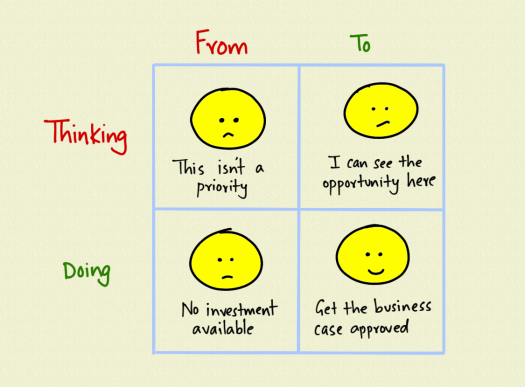
There are very few good books on creating good business presentations. Dr Andrew Abela’s is one. He is the author of Advanced Presentations By Design and has a free ebook on his site, where the matrix above comes from.

In any presentation situation, you need to figure out what you’re trying to get from the audience. What’s the result you want? What’s the end game?

Let’s say you’re trying to pitch your consulting service which helps companies design and deliver webinars to help with brand awareness and lead generation.

You know all about why companies should use this approach. For you, it’s a no-brainer and it’s hard to believe it when a prospect just doesn’t get it and why it’s worth the money.

That’s frustrating.

Can you do anything about it? Can you create a pitch that will help people understand why this is such a great thing?

The answer to that is yes – and it starts by working your way through the matrix.

Think of a prospect that you’re trying to sell to right now. Perhaps it’s the owner of an office furniture provider. Someone that supplies desks and drawers and chairs to companies. Let’s assume it’s a “he” and has been in the business thirty odd years.

This person is not going to take to your product naturally. Perhaps he’s never been on a webinar himself. Maybe he knows what one is, but thinks it’s something only new high-tech businesses do. Not something for him.

What he’s thinking right now is that what you’re selling isn’t a priority. He doesn’t need it and can get along quite happily without it.

He’s even made the decision already as he’s listening to you – this isn’t something for him. There is no investment available.

So, what you’re using the matrix to work out is what he is thinking and doing right now. That gives you a clear understanding of where he stands on the issue.

If you just try and close for the order the chances are you’ll get a no. Or be thrown out. Depends how much patience he still has left.

Before you can go for the close, you need to get him to see the opportunity that’s out there. The one that he’s missing out on.

You need to take him from thinking this isn’t a priority to thinking that he can see what’s in it for him.

When he can see what’s in it for him, then he’s going to be more open to the idea that this is worth investing in.

And that might get him to open up his wallet. To ask you what he needs to do to sign up and buy what you have.

The starting point for your presentation, then, is not the last one you did or the bunch of slides you always use.

No, the starting point is for you to work out what you want your prospect to do.

Then, you need to get clear on what he’s thinking and doing right now. You need to know that because that’s where you’re going to start. By stepping into his shoes.

Then, you’re going to take him on a journey. A journey that will end with him thinking differently about what you’re putting in front of him.

So, how are you going to take him on that journey?

You’re going to do it with a story – and that’s the focus of the next post.

Cheers,

Karthik Suresh

ps. As a reminder, this is the twelfth (or thirteenth) post in a series that I’m planning on eventually collecting into a book on Consultative Selling. If you are reading this and are interested in this topic, please let me have any feedback, good or bad, so I can make this as useful and easy to read for you as possible.

What Kind Of Business Are You In?

Monday, 9.09pm

Sheffield, U.K.

types-of-businesses.png

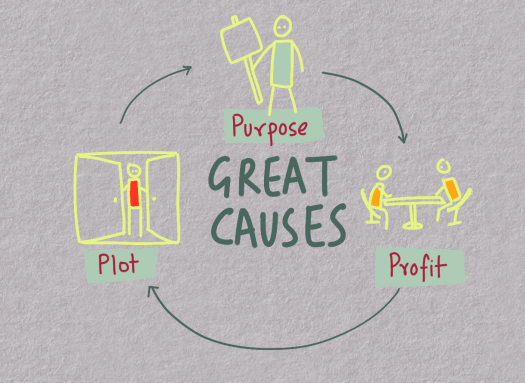
Every great cause begins as a movement, becomes a business, and eventually degenerates into a racket. – Eric Hoffer

Zig Ziglar, the motivational speaker, used to tell a story of a friend of his who was struggling to make it as a salesperson.

His friend sold cookware – pots and pans – but was finding it hard to convince his prospects to buy them. He would call on people, take them through the sales pitch but then, when it was time to ask for the order, be unable to close.

So Zig asked him a question.

Continue reading “What Kind Of Business Are You In?”

Why You Need To Focus On Serving Your Customer, Not Trapping Them

freedom.png

Sunday, 8.58pm

Sheffield, U.K.

If you’ve been following the last few posts, you’ll know that I’m pulling together some thoughts about consultative selling.

Except it’s sometimes not really about selling. And it’s sometimes not really about consulting.

It’s more about you. What you stand for. What I stand for.

Sometimes when you look at the world it’s like facing a featureless wall. A wall that you can’t scale. A wall that stops you where you stand.

Some of us don’t see things that way. They see a wall as something to be torn down. Most of us, however, keep our heads down and say nothing.

We get on with the important stuff. The really important stuff. Like raising our families and staying alive and getting ahead in the world.

We’re not activists. We’re realists. We deal with the world as it is.

Let others do all the protesting… that’s not for us.

To be fair, there does seem to be a lot of that going on.

In Copenhagen, there is a place called Christianhavn – which hosts Freetown Christiania – a little enclave of rebellion in an otherwise ordered and stylish city.

Walking around there, you see signs of entrepreneurship all around you – ranging from a blacksmith to jewellery and pottery.

And then there is the weed.

On stands made from a stack of three packing crates are plastic bags, full of weed. And people stood behind the stands. Selling.

Just like any other business…

Of course, it’s illegal and the police are in to do a raid shortly after.

The point is not really about what they’re selling – it’s about the fact that people there are making a stand for what they believe in.

And that’s the thing that’s missing from most business cases. Belief.

I’ve been reading some of Richard Stallman’s essays again. I wouldn’t be able to write these words in the way I’m doing right now without what he created.

Stallman believes that software should serve you – it should respect your freedom and community. It should be free – free as in freedom and not free as in beer.

Why does this matter?

It matters because there is always an uneasy truce between control and service. Businesses exist to serve their customers. They’d much rather control them, given a choice.

The best kind of customer is one that doesn’t have a choice. A customer that is addicted to what you provide.

Unsurprisingly, the central strategy of most companies now is to figure out how to get you addicted.

Addicted to your phone, to social media, to the software you use. To make it sticky, to make it hard for you to change or get away or do something else.

And this is where, as a consultant, you may need to decide where your loyalties lie.

Is your intention to have a captive customer base. Or is your intent to serve your customers.

If it’s the latter, then you must respect their freedom.

But how? For what?

First, just read the definition here to get started to understand what free means in the context of free software.

Then let’s think about the world of consulting for a minute.

Where do most of the ideas and concepts that are used by organisations come from?

They usually stem from the scribblings of an academic. They are created through publically funded research.

Then they’re made more lay person friendly. Sometimes they’re given names – A/B testing, Lean, Business Models.

People try and make what they have special – usually by trying to create a brand and product and set of ideas around a concept to set it apart from other concepts.

For example, I came across Edamame beans recently – exposed to the marketing push about how great it was.

I didn’t know anything about Edamame beans – I assumed they were a little known kind of vegetable, harvested at great cost and effort from the depths of some strange rainforest.

Of course, you know that they are baby soybeans. But Edamame is still a brilliant piece of marketing packaging. Still beans though, whatever you call it.

Okay.. now what if you came up with an approach, a way to solve a problem – and then made it free as in freedom.

You’d simply be following that old proverb give a man a fish and you feed him for a day; teach a man to fish and you feed him for a lifetime.

So, is my argument that your job as a consultant is not to do a job for a client but to teach him how to do it?

No. Not really.

I’m just saying that if you want to serve your customer, you’ll choose the best way to help them, whether that’s doing the work for them or teaching them how to do it.

Any way other than that – any way that doesn’t put your customer’s well-being first – is one that tries to trap them rather than serving them. The way app companies try and increase the amount of time you spend on their platforms.

And if you do that, in what way are you different from those drug dealers in the Freetown?

Cheers,

Karthik Suresh

ps. As a reminder, this is the eleventh post in a series that I’m planning on eventually collecting into a book on Consultative Selling. Although, after this post, it might go in a different direction and just be about consulting. If you are reading this and are interested in this topic, please let me have any feedback, good or bad, so I can make this as useful and easy to read for you as possible.
How To Fail At Getting Your Point Across To A Prospect

analytic-thinking.png

Saturday, 9.04pm

Sheffield, U.K.

I’ve had a few days where I haven’t been able to write, for various reasons. And that makes things difficult, because the point of a routine or habit is to keep it going. An interruption feels like going backwards, like having to start again.

But we’ve got to do that all the time. Cope with rejection, failure and disappointment and keep going. Interruptions and obstacles are simply part of the process.

So, what shall we look at today?

I’ve been thinking about communicating, about getting your point across.

If you’ve written a document trying to describe what you do, the chances are that you understand every word you’ve written, every point you’re making.

That’s because you’re familiar with everything – familiar with the terminology and jargon and customs of your field.

So what’s actually happening in your mind? What is it that is going on when you try and explain something to someone else?

One of my favourite books is Robert Pirsig’s Zen and the art of motorcycle maintenance and this explains a very important concept in a couple of pages.

Many years ago, I struggled to learn Chemistry. Years later, I found it impossible to understand electrical power systems.

To understand why, let’s see how Pirsig might teach you about a motorcycle.

To understand a motorcycle, he writes, you need to understand its components and functions.

Starting with the components, you can divide them into a power assembly and a running assembly.

The power assembly has an engine with a power train, with cylinders, pistons, connecting rods….

And so on for a page or so. Just like you’d read in a textbook about motorcycle maintenance.

Then, he stops, and explains that there are four things happening here as this description is taking place – actually five.

The first of the five, the one that will turn 98% of the people reading off, is that this is boring, boring, boring. All this talk of functions and components and whatever else. Who needs to know this stuff?

But, if you can get past this point, then there are a few other things that you don’t often pick up.

The first is that if you don’t know what a motorcycle is already, this lesson won’t help you understand what one is.

If you don’t have a picture of a motorcycle in your head – if you can’t see the things that the teacher is referring to – this description will not make the pictures pop into your head.

This is why I struggled with electrical systems. I had never seen a protective relay or seen one in action – and the description and academic discussion about it just made no sense whatsoever.

This is the same problem I have when trying to explain why I use plain text and a command line interface to manage this blog to someone whose entire experience of using a computer is on a Windows platform with a mouse.

It’s the same problem you’ll have explaining your thirty years of marine engineering experience to a graduate student doing his first procurement internship.

If your prospect doesn’t already know what you’re trying to explain, all the words in the world won’t help her get it.

You’ll need to start with words she understands already, concepts that make sense to her right now.

The second thing is that the observer – the person – disappears

Pirsig points out that many descriptions of things completely leave out any mention of people and how they relate to the thing.

Say you’re selling a software product. You might spend lots and lots of time describing all the features of the product, all the things it can do.

How often do you ask to speak with the person that will actually use your product. Or give an example of how a particular person in a different company used your product to make a difference to the way she worked?

You see this with companies all the time. They are too worried that if they inject any personality into what they do, identify any individuals, then they won’t look serious or professional enough.

As a result, they hide behind vague mission statements, promising everything to everyone and never actually clearly saying what they do.

But the fact is that you don’t do business with a company. You do business with people at that company – and the way in which you feel about the company is how you feel about the way the people in that company treat you.

One of the biggest things to remember if you’re selling to someone is to make that person the centre of your focus, not your product.

It’s not about you and your product. It’s about them and their problem.

The third thing is that value judgements disappear

When you’re talking to someone you want to make a good impression. You often want to please them, to make them happy.

The problem with this approach is that you can end up saying nothing really at all – simply agreeing with a prospect and getting forgotten by them later.

The way you stand out in any space is by taking a stand, taking a position.

And that usually means having values – having a view on what is good and what is bad.

The worst kind of place to be is neutral. Neutral means that you don’t care which approach is good or bad – you’ll just take the one that meets your targets or makes the most money or whatever else.

If you’re doing a consultative sale, however, you have a duty to help your prospect make the best decisions for him or her. And that means saying what is right and not just what is convenient.

The argument against this approach is one where you say that your job is to give the prospect all the information and her job is to make a decision.

That’s all very well. The reason you do that, however, is not because it’s a good way to be but because that way you can’t be sued if things turn out badly.

But, if the lawyers had their way, the safest thing for you to do is nothing at all – just don’t do any business and you’ll have no problems – other than the problem of paying their fee.

So… to make a real difference.. get off the fence and have a point of view.

The final thing to notice is that it’s all in your mind

All this talk of structures and components and functions is simply a creation of your mind or someone else’s mind.

It’s not reality. Reality is a collection of lumps of metal and plastic and rubber that combine to make the motorcycle.

So what came first – the motorcycle or its description?

Pirsig calls this a deadly analytic scalpel, so quick that you don’t even realise what’s happening.

It’s easy to assume that systems are fixed – they’ve always been that way.

If you’re doing sales certain methods work – the Challenger approach, the SPIN system.

What you miss is that all these structures were drawn after people saw what happened and tried to come up with a way to describe what was going in.

It’s not reality – it’s a model. It’s not even a model of reality… it’s just a model in your head.

Okay, this is getting a little abstract, so here’s the point.

Let’s take something like racism. You’d agree it’s abhorrent.

A hundred years ago, it was normal.

Seeing women as inferior to men was just the way it was not that long ago. That’s not the case now – although in certain parts of the world men are fighting to keep things the way they were.

The point is that your prospect has certain ways of thinking, certain structures already in her mind. She sees the world in a certain way and describes and justifies how she thinks.

So, if your approach or face or gender doesn’t fit the prospect’s way of thinking, you won’t succeed.

It doesn’t say anything about you… it’s just the way things are in that situation.

Which is why you should pay no attention to results or outcomes.

The only thing you can influence is process – what you do.

Whether you succeed or not, meet targets or not, is simply irrelevant.

If you focus on doing the best you can do, things will work out. And if they don’t, that doesn’t matter either.

Because all that stuff, the results, the outcome, the structure, the system – they’re all constructs in someone’s mind.

They don’t matter.

The way you live your life does.

So, in summary…

If you’re trying to get your point across to someone, start by putting her in the centre of your picture, not the product or service you’re trying to sell.

Try and see things from her point of view, ask questions that help you understand how she understands the world she’s in.

Get clear on what is good and bad – about what you do, and about how you can help.

Finally, try and work towards a common structure and model and description. Don’t try and cut and paste something you’ve done before – create something that both you and your prospect can look at and understand together.

If you can do that, have that kind of conversation, you’ll know what they need and be able to put forward a proposal and a pitch that will work for them.

One that you can win.

Cheers,

Karthik Suresh

ps. As a reminder, this is the tenth post in a series that I’m planning on eventually collecting into a book on Consultative Selling . If you are reading this and are interested in this topic, please let me have any feedback, good or bad, so I can make this as useful and easy to read for you as possible.
There Are No Facts In Your Building, Only Opinions. Get Out Of The Building.

finding-way-through-fog.png

Tuesday, 9.22pm

Sheffield, U.K.

Developing a consultative sale is like founding a startup.

You’ve got some skills, some experience, a background. But, you don’t know which problem you should solve. Which problem someone will pay you to solve.

And that’s the important point – one that is very easy to miss. It doesn’t matter what you can do. What matters is what someone is willing to pay you to do.

Steve Blank is a well-known Silicon Valley entrepreneur who has written extensively about startups. His work led to the lean startup movement, now taught in entrepreneurship courses and startup bootcamps around the world.

Blank wrote about the importance of getting the facts. “There are no facts inside the building”, he writes, “so get the hell outside”.

We know this, really. When you look around you see all kinds of people doing well in all kinds of businesses. There doesn’t really seem to be a plan where the smart people start businesses and make loads of money.

It’s a little more random than that.

Quotes capture this well, from Robert Kiyosaki’s rather brutal observation that A students work for C students and B students work for the government to the rather more scathing question of “If you’re so smart, why aren’t you rich?”.

And then you have the old adage – if you want to know what god thinks of money, just look at the people he gives it to. Or she. We don’t really know, do we?

We digress, however. Back to the issue at hand – where is the money?

The pot of gold we seek is out there. We’re trying to create businesses and projects that have value, that people want to buy. So, how do we go about doing this?

Well, if you’ve been in this position you might remember a few approaches.

Perhaps growth targets are handed down from on high. The management team then sits down and tries to work out what areas are likely to grow.

We brainstorm, perhaps come up with a number of ideas.

We winnow these down, select the ones we think are most likely to succeed and build campaigns around them.

The campaigns go live, the messages start to flow and business pours in.

Or more often, there is a tiny trickle – but nothing like the river of business we need to meet those expectations.

The problem, it turns out, is that when we sit in a room and come up with ideas, all we’re doing is coming up with conjectures and opinions and beliefs.

Those are not facts.

Facts are what you go out and find. What you discover by talking to your customers.

Blank calls this the Customer Discovery process, and it’s one that we need to get our heads around and adapt to our circumstances.

In a consultative sale, this starts with the realisation that we aren’t really trying to sell anything.

What we’re trying to do is have a conversation. We’re actually trying to listen – listen to what customers say their problems are.

That means not talking about ourselves and what we do and how good we are, but trying to understand where our customers are in their businesses, what they’re trying to do, the kind of problems they’re facing and what they’ve done to try and solve them.

Let’s take an example problem that we’re all going to have. How do you get good quality conversations with prospects?

You could go direct – beat the door down. Or you could get introduced by someone you both know.

The second option is the better one – but you’ve now got to find those people who will be able to make the introductions in a way that helps you.

There is an industry now of conferences – what seems like the fastest growing industry of all. In every sector you’ll find awards and meetups and conferences.

They exist to create customer lists and sponsorship opportunities and networking events. And we buy into the idea in large numbers – happily attending free ones and putting up with the pestering from salespeople to buy tickets or buy space or sponsor a session.

What you want is an introduction, ideally a one on one conversation with a prospect made easier by someone who knows both sides.

What the introducer wants is for you to buy into the idea that if you engage with their event, the prospects will drop out because of all the content or mailing or whatever else you do on their platform and during their sessions.

Once you realise this, you’ll start to push your money in the direction of people who can help you get what you want.

The organisers who don’t realise this will always struggle to get your business.

As Zig Ziglar said, “You can get everything in life you want if you will just help enough other people get what they want”.

So, let’s imagine that you’re back at the start of the process – trying to get to the pot of gold.

You’re lost in a fog of opinions and ideas and beliefs. What do you need to do?

You need to find out what the customer wants – and the way to do that is to have a conversation. Not about what you’re selling, but about what they are trying to get done and the problems they’re having along the way.

Ideally, you’ll find that they have a big problem that they’ve tried to solve themselves and found the going hard. If you’re lucky, your product or idea or project has the potential to solve this and make their lives easier.

The secret then, to developing a consultative sale, is the same as developing a startup.

Leave what you think in your building. Get out, go and talk to customers and find out what they want.

Then, shape your business to help them get what they want.

That will get you a sale.

Cheers,

Karthik Suresh

ps. As a reminder, this is the ninth post in a series that I’m planning on eventually collecting into a book on Consultative Selling . If you are reading this and are interested in this topic, please let me have any feedback, good or bad, so I can make this as useful and easy to read for you as possible.

How To Start Prospecting For Business And Maximise Conversions

venn-diagrams.png

Monday, 10.01pm

Sheffield, U.K.

What can Jack Reacher, the hero of Lee Child’s action series, tell us about prospecting and finding business?

All the core bits, it turns out.

I’ve just been on a family holiday to Copenhagen, one of the nicest cities in the world. Nice – both in terms of the feel of the place and the character of the people who live there. Even when they’re asking you to move out of the way they seem to sing at you rather than bark angrily.

It’s also a hugely expensive city – but somehow seems worth it.

You just get drawn into that cool Scandanavian style of it all – and suddenly spending en enormous amount of money on a cup of tea and a sandwich just seems ok.

On this trip I had the chance to devour a couple of Lee Child books, including “Night School”, where Reacher and a team of other operatives need to find an American who is cutting a deal with a terrorist group, with negotiations taking place in Germany.

They start by looking at the whole population of Americans in Europe. Reacher says “The percentage play would be to start making lists”. Military personnel, civilians, whomever you can find. It’s a percentage play because some people won’t be on records, for example if they drive in through a land border that isn’t recorded.

Perhaps around 200,000 Americans in all. That’s a big number.

Now, compare that to the way in which you might start your prospecting process. It’s much the same. How many companies are out there. In the UK, that’s around 2 million.

How many are large businesses that turn over more than £10 million? That’s around 30,000 or so.

How many are smaller ones that make between £300k and £3 million? You’re looking at around 850,000 companies.

A big list, however you look at it.

Then, you start working through the list, just as Reacher and the team did. They excluded people based on various criteria – if they couldn’t have been in a certain place, for example. They were trying to work down to a small number.

You’re trying to do the same. The difference is that with a list of several hundred thousand, starting at A and dialling is going to cost you – in time or money or both.

That’s the mistake most of us make with prospecting. To start with the assumption that what we do is interesting to a lot of people. That everyone out there is a potential customer.

We need to turn that around and shrink the population we’re working with as much as possible. What’s the characteristic of small populations?

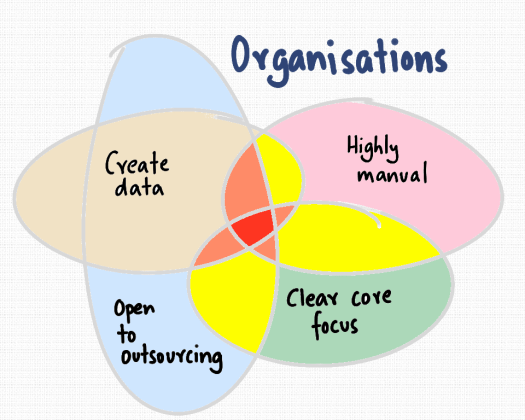
What you do is look for a number of different characteristics. As Reacher goes on to say, “Guys willing to betray their country for money”. Guys willing to do other bad things. “Like a Venn diagram. Not many people where the circles meet.”

That’s the point really. Getting the number of circles right. Too many, and you end up with no one. Too few, and the population is too large. What you want is the right number of circles to come up with a population size that is right for your prospecting engine.

Let’s apply this to a real business process, one that is increasingly applicable in today’s data driven business environment.

One of the areas that I am interested in is data-driven decision making. So, if I wanted to create a business out of this capability as a service, who should I target?

For a start, it makes sense to target businesses that create data. That rules out organisations like hairdressers or garage mechanics. While they promote their businesses through word of mouth and social media they don’t generate the kind of data that requires analysis and processing.

On the other hand, businesses that source a wide range of products and need to manage the associated data, firms that have large number of sensors that record and monitor data and organisations that work in financial or commodity markets are a good fit for what I do.

The next thing is that the businesses I target should currently have highly manual ways of working.

If they’re very technologically savvy, then they don’t need me. It’s the ones that are struggling, that are drowning in a mountain of data that require help.

Another criteria to look at is whether data is a core focus for them. If they sell clothes, for example, the data they create – specifications, sizes, photos – are secondary to their core focus on fashion and trend. The data bit is the messy backdrop to their core business of making people feel great in their clothes.

If, however, they make their living by arbitraging the differences in pricing, then data is a focus and they’ll do this as part of their core business.

Let’s add another circle. How open are they to outsourcing?

If they are the kind of firm that prefers to keep everything in-house and hire their own staff, then you’re going to struggle to get them to engage. Instead, if they see the value in using partners and contractors with specialist expertise, then you’ve got a chance to engage with them.

Creating these circles and looking at them like a Venn diagram gets you clear about what your ideal customer will look like. It doesn’t actually cut down your list – because you might not know some of these things about them – but you do know what kind of customer you want, and that’s a start.

Now, you can design your marketing and advertising to target this kind of customer. When you’re researching prospects, you can prioritise the ones that look like the ideal customer you now have in your head. When you’re talking to them, you can ask questions to find out where they sit in your Venn diagram and keep them in or out.

To succeed you need to focus on the clients that make up the core of your Venn diagram – these are the ones that you have the greatest chance of engaging with and converting to sales. The ones that will fill your pipeline with business.

Going back to Copenhagen, its reputation as an expensive city will put many people off travelling there.

That’s not a problem for the Danes. Some people will save up, just so they can experience the city. Others, who have the money, will go there willingly. It was a big deal for us, but we went because it was a special, one-off experience that we wanted to do.

The ones that turn up, the ones that are in the centre of Copenhagen’s Venn diagram, are the ones that will put money into the city.

And that’s just good business.

Cheers,

Karthik Suresh

ps. As a reminder, this is the eighth post in a series that I’m planning on eventually collecting into a book on Consultative Selling. If you are reading this and are interested in this topic, please let me have any feedback, good or bad, so I can make this as useful and easy to read for you as possible.

How To Figure Out What Your Brand Is Doing For You

brand-halo.png

Wednesday, 9.27pm

Sheffield, U.K.

How is branding important in consultative sales and how can you make the best use of your brand?

Entire books have been written about brand – what they mean and how you get one. Some people think that it’s as simple as a logo, while others talk about the entire experience people have when they interact with you in any way.

Branding can be looked at very simply for our task of consultative selling. You just need to ask how your customers and prospects feel about you?

If they like, admire and trust you, that’s great. That’s the place you want to be.

That’s what many modern internet influencers have built a business on. They know that if you listen to their podcasts or read their blogs and find that what they tell you or show you is good then, when they eventually ask you to support them by buying something, you’ll be much more likely to want to reach into your wallet.

It’s very clear when people do something because they want to help you and when they do something because they want to help themselves.

Take the Tim Ferriss podcast, for example. It’s one of the most widely listened to business podcasts in the world.

Tim started it as a distraction when his previous book, which he’d worked on really intensely, failed to take off. Burned out, he started a podcast, interviewing successful people and trying to find out the routines and habits that helped them get where they were.

Now, if Tim mentions a product on his podcast, it sells out within days. That’s because he offers a trusted shortcut. He’s done all the work needed to find information, test it and bring the best bits to you. Now all you have to do is take those results and use them.

The best blogs and podcasts and companies make you feel a certain way about them. These days it’s increasingly not about what they say, but about what they show you.

That’s an area where companies that keep a tight rein on marketing struggle. They can’t make themselves more human and, let’s face it, no one is really interested in what a company does. They’re interested in what it means for them. And they’re nosy – they want to see what other people are up to.

So, an easy way to develop a brand is to be radically honest. Show it like it is. Show your work, show what you do, give people a peek behind the scenes.

This is vital in consultative sales, which happen only when people trust you. The more you show of yourself, the more information they have to judge whether you’re consistent, authentic and trustworthy or an opportunistic con artist.

So, if brand is how you make people feel, the products you offer are what you help them do. The product is the hammer you’re selling.

Take a site like Monevator, for example. That started as a finance blog about getting rich slowly. The authors have put a lot of work into making it easy to understand the options open to you.

If you want to start a pension or choose a collection of cheap index trackers, the site tells you how you can do it quickly and easily. You can save thousands by making a few simple decisions, starting with actually opening an account.

Once you use and trust a site like that then there is a good chance you’ll buy products that they recommend. In my case, it’s often books. It takes me seconds to decide to get a book if it’s recommended on a site I trust. That’s the power of its brand.

The biggest mistake people make about branding is thinking that brand is about the physical things in front of you – the logo, the fonts, the packaging. And it is that – but it’s more. It’s about what sort of feelings you evoke in the people you work with.

In consultative selling, this comes across in the way you act with a prospect. The biggest problem with selling something intangible is that people can’t judge whether you’re any good or not. You might just be good at talking. You might be showing work that someone else has done – but they’re not sure whether you can actually do it yourself.

If you insist on someone signing a contract before you’ll show them anything at all, you’ll find the task of selling to them much harder. The secret is having lots to talk about. Lots to show and tell about what you’ve done.

Here’s the thing. Advice is cheap to give. Ideas aren’t worth much. In a consultative sale, the money comes in because you are hired to execute – to deliver on a promise. To get hired, you have to show that you know your stuff, and that comes from good old show and tell.

The way in which you do your show and tell – in front of a customer and in the various media open to you – will set up and reinforce the brand you’re trying to create. Ideally, you want people to know you before you talk to them. If that isn’t possible, you want them to feel good about you quickly. The worst thing is to have people feel apathetic.

The approach to take in modern consultative sales is probably this. My advice is free or low cost. I give it away on my blog and in my books. My time is what you pay for – and paying for my time is well worth it because of the results I’ll deliver for you.

In other words, spend all your time creating your brand. The products you sell can come later in the process, when your prospects are comfortable with you – even if you’ve never met them in person.

Cheers,

Karthik Suresh

As a reminder, this is the third post in a series that I’m planning on eventually collecting into a book. If you are reading this and are interested in this topic, please let me have any feedback, good or bad, so I can make this as useful and easy to read for you as possible.

How Do You Find Out What People Really Want?

finding-what-people-want.png

Friday, 10.24pm

Sheffield, U.K.

I’ve been thinking a lot about this whole idea of having goals and going after them.

I was listening to a podcast where the person being interviewed said that the purpose of their company was to help people do something on Instagram intentionally.

Then there’s the news story about Big Brother in the UK – and how the first few seasons of the show were about real people – an authentic portrayal – and then as the series went on it got more and more artificial, with the participants doing what they were expected to do for the camera.

I’m not a big fan of selling. No one really is, I think.

But it’s easy to think that’s what we have to do, that’s how the world works. We have something of value to offer. You have money. And my sales job is to help you exchange your money for my value.

And then I started reading a book about design patterns in user interface design.

It says if you want someone to use a tool you create, then you’re going to have to understand them first.

No one uses a tool because they want to use a tool.

Take a spade, for example. You’ll pick up a spade because you want to get your garden sorted. You want to get your garden sorted so you’ll have somewhere relaxing to sit during the summer with a cool drink.

You’re using the space because you really want to put your feet up and relax.

And this is something we all need to spend some time thinking about.

Let’s say you’re starting a management consultancy that is going to do some clever data analysis.

So, you can crunch data and create pretty pictures and send them to your customer daily.

Is that what she wants? To print off all your charts and cover her walls with them?

Or is she in charge of procurement and is responsible for cutting costs – and she only looks good to her boss if she cuts costs year on year.

So is your analysis going to help her reach that goal of cutting costs or, more importantly, warn her when she’s in danger of actually letting costs go up?

So, going back to the pattern book, we need to put our customers under a microscope.

We need to figure out what their real goals are. What’s their equivalent of cheese that will get them sniffing the air?

We need to think about how they will go about things. Can they make decisions right now? Does everything need to be in a budget first? What route will they take?

How do they talk about what they want? There’s not much point talking about vitreous structures of patent fragility when they think in terms of glass houses.

How familiar are they will what you do? Do you need to spend a lot of time educating them, or will it be obvious how you can help them?

What do they think about what you do? For example, I once called someone who managed a metals warehouse about commodity prices and got a long lecture on how they did nothing with markets and that was only for fancy chaps that drove Ferraris in London.

Even though the warehouse manager was sat on inventory of several million that went up and down in value all the time.

This is why scattergun or spray and pray approaches don’t really work.

You can’t really sell someone. Not for the long term anyway.

They have to make their own minds up about what you offer. The challenge for you is getting in position so they can see you when they’re ready.

It’s all about being discoverable.

And perhaps the best way to do that is to get out there and start talking to people. Not to sell them, but to understand them better.

Then, if they need you, they’ll know where to find you.