What’s Andrew Carnegie’s Number One Secret For Succeeding In Business?

all-eggs-in-one-basket.png

Saturday, 10.56pm

Sheffield, U.K.

I don’t know how you go about writing your blog, if you have one, but my approach is quite random.

Really.

If you were to get some advice from a marketing person on blogging, you’d probably start by having a goal, understanding your target audience, coming up with a list of topics they’d find useful, getting a schedule set up, crafting headlines and spending a lot of time promoting what you’re doing.

That’s how it should be. Perhaps.

What I do is start with an idea – something random I’ve read. Say it’s about the Rule Of Frequency – which I’ll cover in a separate post.

This particular article is associated with GNU/Linux, so that gets me searching and gets me to the O’Reilly Open Books site. Which talks about the Open Library project.

A lot of what I learn and write about wouldn’t be possible without people putting time and effort into sharing what they know.

And since that seems a good thing – the fact that there is an Open Library project is also very interesting.

Because it seems to me that people create stuff for one of two reasons. They think it will help them in some way. Or they need to put down what they know before they burst.

The ones who do it for the second reason create much more interesting stuff. Stuff that’s actually useful.

And those are the books and articles that are worth reading. So, it makes sense to spend time hunting them down.

Wandering through the Open Library finally has me stumbling over Andrew Carnegie’s book “The Empire Of Business”, printed by Doubleday, Page & Co. in 1902.

The first chapter is a talk to young men – young people if we bring it up to date – where Carnegie tells you what he’s learned over a long business career.

His success secrets…

It’s good to start at the bottom, he says. If you’ve started there, you’ll be motivated to get ahead and much less likely to be led astray by the temptations available to those with more money than you.

Then there are three things you shouldn’t do. The first two? Don’t drink or speculate.

The third one… this is out of left field…

Don’t “indorse”. This means lending your name to support someone else. Perhaps as a favour to a friend – or as an influencer in these modern times. Probably “endorse” today.

In essence, be very careful who you lend your reputation to, because if things go wrong, you’ll be dragged down as well.

Then… what should you do?

Instead of looking at what you are asked to do – what you must do – for an employer, look for what you can do.

You’re paid a wage to do what you must do. To make more, you must do more.

Future millionaires have one sure habit, Carnegie goes on. “Their revenues exceed their expenditures”.

If you can save, if you can show that you can hold on to money – others will lend you hundreds and thousands what you have when you need capital.

And then… we come to his final secret – the big one…

You can make money in any business – in any legitimate one making or dealing in a product that people want.

If you want to make money you need to do one thing. “Concentrate your energy, thought and capital exclusively” on that business.

Stick to it, fight it out, resolve to lead, be the best, have the best and know the most.

In other words, he says, “Put all your eggs in one basket, and then watch that basket”.

And finally… be patient. You’ll get there.

Cheers,

Karthik Suresh
What Should Your Computer Do When It Has Nothing To Say?

distraction.png

When you spend time working in a GNU/Linux environment, something strange happens.

Especially if you like the terminal – as I do.

For example, I recently discovered that Google has a cloud offering, just like Amazon AWS and Microsoft Azure.

You can set up a server and have a play – and it says that the really small ones – the ones they call a droplet – are forever free.

That’s the kind of price I like.

So, I played about creating a website – setting everything up from a browser that acted like a terminal. If you don’t know what that is – it’s a bit like DOS.

And do you know how many times the droplet – the terminal – interrupted me while I was working?

How many times did it stop to tell me I had new mail, or that a new file had been added to Dropbox, or that it needed to be updated?

That’s right – not once.

There’s a rule that’s part of the Unix Philosophy – a cardinal virtue. It’s called the rule of silence.

This rule says – if you have nothing surprising, interesting or useful to say, say nothing.

It’s ignored by virtually every other type of system out there.

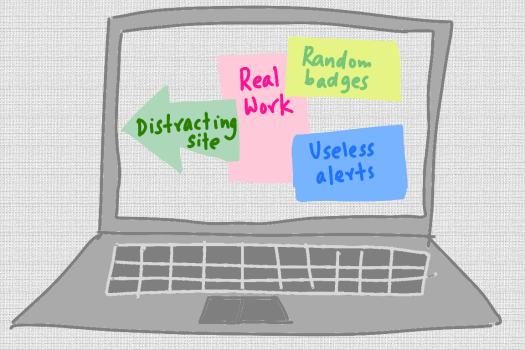
In fact, many do the opposite of being silent. They jump up and down, waving and shouting and pushing into your space, vying for attention.

People study exactly how to get you hooked. It’s called Captology, which stands for Computers as Persuasive Technologies – or now just behaviour design.

In essence – these systems know that if they want you to act in a certain way – then they have to get three things right:

  1. You must want to do it.
  2. You must be able to do it.
  3. You must be prompted to do it.

Watch out for this approach the next time you use Dropbox, for example, and see how they try and get you to upgrade.

They know that you want to keep your photos safe. If you have Dropbox, then you probably know how to put photos in there – but because photos take up space you’re probably keeping them somewhere else if you have the free account..

So what do they do? They introduce lots of prompts – with a pop up asking if you’d like to import your photos, integrate with your documents, add videos.

Anything that will make you add more to the folder and decide that you need to upgrade and pay for more space.

It’s just good business. Good, old fashioned manipulation.

That’s focusing on number 3. But you can do number 2 – make it easier for them. So videos autoplay on every service out there and your binge watching soars.

If you want to learn more about how to do this kind of work, or learn how to avoid it, here’s a good article.

The best defence, however, is a good offence. Turn off every notification, every alert. Stop using devices if you have to.

Or use a device for exactly one purpose. A text editor for writing. A camera for photos. Taking nothing in your pockets if you want to relax other than a good paperback.

Silence really is golden.

Cheers,

Karthik Suresh

How To Get Your Business Ready To Compete In A Digital Economy

digital-transformation.png

Sunday, 7.40pm

Sheffield, U.K.

What does a digital transformation mean for your business?

Your business may have been born digital.

Perhaps you used to do personal training, decided to do some videos of your training routines and recipe ideas, got a following and now create fitness and nutrition content online and offline full time.

You don’t need to worry about a transformation. You’re already there.

But, what if you clean carpets?

In 2015 I needed some carpets cleaning. So, I picked up the yellow pages and rang the number of the company closest to me. It was a weekend – a Saturday.

A lady answered the phone and took a message. She said the owner would call back later.

Well, I wasn’t that keen on waiting. So, I did a search. Found a website for a carpet cleaner that listed all their services and prices.

I could have ordered online, but I thought I’d call them instead. Someone answered the phone. They asked if I had called because of the online discount. I’d missed that but of course I said yes. They gave me the discount and got the order.

The first guy never called me back. Or maybe he did and I missed the call.

Now, if you called him as part of a survey and asked him if he had a website, there’s a good chance he doesn’t. And, of the people who don’t have websites, nearly 80% think they’re not necessary – perhaps what this guy would have said.

The problem is… he doesn’t know. He doesn’t know he’s losing business because he doesn’t have that website. It’s happening – but it’s invisible to him – he’s simply not even in the running for many people who’ve ordered online straight away.

At the other end of the scale you have large businesses that still operate using legacy digital and paper systems. It’s possible they’re changing things, but it’s also possible that they’re too terrified of breaking stuff to make a difference.

So, if this whole transformation thing is something you’re vaguely aware is something you should be doing, how do you get started?

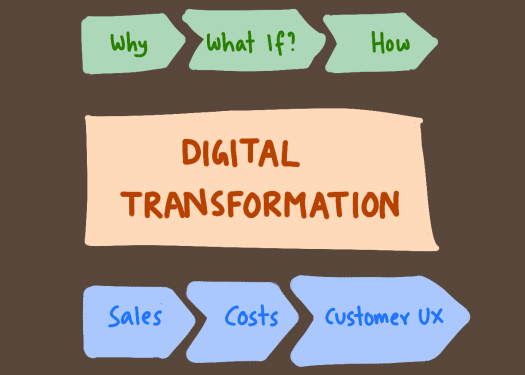
There are three areas where you can make a difference

The main thing to get clear is not technology. There are lots of offerings – and you might have a choice of free/open source software, cloud infrastructure, software as a service options and endless other combinations.

The first thing to get clear is what are the benefits to you. A digital technology must help you do any of these things to be in the running:

  1. Does it help you make more sales?
  2. Does it help you reduce operating costs?
  3. Does it help you give customers a better experience?

The business case for the first two is pretty simple. If you get more business than the cost of the technology, then you might consider it.

The last one is the hard one to quantify. Do your customers get a better experience if you give them a self-service portal or if you give them more individual attention?

Do the videos and pictures you put up make your company more human and approachable – more authentic – and so lead to a better experience than corporate blandness?

If anything comes to you that doesn’t clearly improve things in one of these three areas, then it’s not a priority. It’s a nice to have and you can think about it later.

How to think through your situation and come up with a strategy

Once you’re clear on the areas when you can make a difference, it’s time to ask yourself some more questions.

Once again – there are three to work through.

Let’s take sales, for example.

First you ask – why do you need to transform it?

Perhaps you’re an author and want to reach readers around the world but don’t have a publisher. If you’re going to try self-publishing, then understanding e-book platforms, personal branding and content creation is an absolute must.

If, on the other hand, you sell very specific business services to a possible market of a few thousand people, you’re not going to need a fancy CRM to manage that. A spreadsheet will probably work just fine.

Perhaps use Google docs so you can share information.

The second question is to ask, what if I do a particular thing.

Let’s look at costs this time.

What if you bought an expensive system to evaluate the impact of commodity prices on your business?

Such a system might cost you a few $100k. If your commodity spend isn’t in the hundreds of millions, it will be hard to justify the saving.

Perhaps you’re better off outsourcing that – having someone else buy the system and effectively rent the results from them.

The second question then leads to a decision on how to go ahead.

How do I implement this improvement?

The how is about getting the benefit – not about implementing a system. The system exists to provide you with a benefit.

So, let’s take the third focus area to look at this one – customer experience.

Quite often, companies think that they should install a self-service portal.

This does make the experience better in some industries – internet banking, for instance.

In other industries, it’s a pain in the rear. Customers might prefer to simply get the information they need by email rather than spending hours working with your painfully slow portal.

iCloud – for example – is my current example of a completely and utterly useless online portal.

And the how should also consider what happens when things go wrong.

If you go completely SAAS and the company folds, what happens? If it’s a crucial part of your business, perhaps you should consider open source so that you can keep going even if the developers fold up one day.

In summary… if you’re digitally native already, thank your lucky stars.

If you’re not, before you buy a system – you’ve got some important strategic thinking to work through.

Cheers,

Karthik Suresh

How To Engage Prospects Without Having To Sell To Them

engineering-as-marketing.png

Monday, 10.36pm

Sheffield, U.K.

Github, recently bought by Microsoft, is turning into the world’s largest software graveyard.

But, you don’t just find software there.

Take this cool collection of marketing resources for engineers, curated by Lisa Dziuba of Flawless App.

Flicking through these got me to the concept of Engineering as Marketing, popularised by Gabriel Weinberg and Justin Mares in Traction: How any startup can achieve explosive customer growth.

What does this mean?

You can’t just tell people what you do and show them a brochure and expect them to buy any more.

First of all, it’s hard to get to speak with anyone. They’re all busy. And, unless what you do is exactly what they are looking for right now, they’ll cut you off.

That’s if you get through the receptionist and the email only policy.

And that’s because telling isn’t selling.

Increasingly, what we’re trying to sell in product and service companies is technology. Brains aren’t enough.

You need tech as well – and with tech you have to show what you can do. Demo or die.

But what if you have a large, complex and expensive product?

Or what you have something like a book to sell? Something that doesn’t have a technology element to it.

Take the energy business, for example. It can take from tens of thousands to many millions to develop a new solar project.

I’ve just typed “solar irradiance calculator” into Google.

The first website that comes up is for a Solar Electricity Handbook.

The handbook is the best selling solar energy book today, the website says.

But on the website, they also have a calculator, which lets you see how much a solar installation will perform in the city of Masis, in Armenia – should you wish to do something like that.

And here’s the interesting thing.

The second link on Google is for a company that is using this calculator – and gives the first site a linkback.

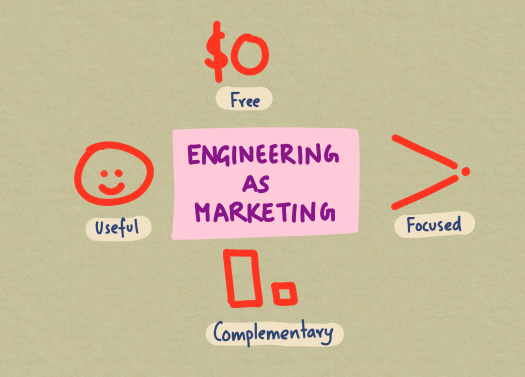
That’s a perfect example of engineering as marketing.

The company has created a free tool.

That is focused, no pun intended, on calculating a specific thing – how much sun energy do you get in a particular place.

It’s complementary – which means that it doesn’t steal sales from its main product. You can use the calculator without losing any sales of the book.

The book is the main product and the calculator is a useful additional bit that might get you to the website and even buy the book.

And its building useful links from other sites that use the tool.

Most examples of engineering as marketing focus on the big examples – Hubspot and the like.

But – small companies with small budgets can also use this strategy very effectively.

You might struggle to get time with decision makers to talk to them about what you do.

If your product is relatively expensive – it’s going to take time to develop a relationship with them at a number of levels.

If you provide free and useful tools that don’t cannibalise your core business – they could end up coming to you.

For example, if you use a calculator on someone’s website for long enough, you might be interested enough to talk more about the rest of your products.

Take the solar PV project business – if you can provide tools that make it easier to find locations with good sunlight – you might find people coming to you to ask about your design and installation services.

Like many of the best solutions, engineering as marketing doesn’t try and tackle a problem head on, you go around it instead.

And it doesn’t need to be expensive. Creating microsites, calculators and other small tools don’t need to cost a lot or take much time.

But you do want to make then free, focused and useful.

And, importantly, not make you lose sales.

Cheers,

Karthik Suresh

What Is The Secret Behind A Creative Leap?

problem-solution.gif

Saturday, 10.03pm

Sheffield, U.K.

Brian Tracy, the motivational speaker, starts one of his talks by saying something like “Before I came in today, I read every one of your resumes and I know all your job titles.”

He points to someone in the first row. “You sir, your title is Chief Problem Solver.” To another, “You’re VP of Problem Solving.” And to another, “Executive Problem Solver.”

This gets to the heart of where the interesting stuff happens in business today.

Either you’re in a job where you’re told by your boss exactly what to do, and you do it that way or you get fired.

Or, your boss doesn’t know what the right answer is and needs you to figure it out, in which case you have a client, not a boss.

The first kind of job is manual labour. And, when you think about it, many jobs need that kind of approach – from working at a fast food chain to carrying out heart surgery.

You wouldn’t want your meal cooked in whatever way the chef fancies – perhaps they’ll try it a little under cooked this time to test out if the flavour is better?

You’d want your surgeon to do exactly what is needed – and not go off on a diversionary expedition inside you to follow up something more interesting?

But, there was a time before those jobs and tasks existed in the way they do now. Someone figured out how to make fast food work.

The McDonald brothers worked it out. They created a restaurant where every move was orchestrated. Every step and action had a purpose.

At a recent visit to a McDonalds, I counted around 15 people behind the counter, and no one was getting in each other’s way.

In the film “The Founder”, you hear the story of how they did it – how they noticed that people wanted burgers and fries and not much else off the menu – how they tore down their restaurant and rebuilt it from scratch and created a whole new concept in dining as a result.

We see the end result, but we rarely see the process. Often, people who do creative things can’t explain how they do it – it’s almost magical.

But… it’s something many people are interested in and study. In this paper, Kees Dorst and Nigel Cross look at creativity in the design process.

There are two states we can be in – a problem state and a solution state.

Imagine them like mountainous islands separated by a forbidding stretch of water.

The challenge is to get from one side to the other.

People who do this well start by exploring their mountain in detail.

They look at the problem, what the client feels, how it impacts them. They try and look at it from different angles and viewpoints. They ask themselves questions that try to prod creative thinking, lateral thinking.

They look at possible solutions – explore the solution space. What are the approaches that have already been tried? What could we do differently? What’s the opposite of what is being asked for.

Then, they start to frame the problem – settle on a way to view it.

This means focusing on the things inside the frame and discounting the things outside it. Focusing on the things that matter.

Trying to match up the problem space and the solution space.

All this work is trying to build a bridge – a bridge between the problem space and solution space.

This bridge is the thing that links the two in a way that works. Some bridges won’t. Some will – and they will work well enough to be selected to go ahead.

So, the creative leap is like building a bridge. But what it takes – what it needs is immersing ourselves in the problem and solution space, going past the simple and default and first solutions that come to mind and forcing ourselves to look longer and further and harder.

When we see a finished product – whether it’s a book, an idea, a business model – we might think it sprang to life fully formed. This way of doing things is the only way.

And that way lie jobs that are filled with boredom.

The interesting jobs are the ones where you solve problems – where you make clients happy.

A warning, however. This doesn’t mean you’ll make money.

The McDonald brothers had to eventually sell their business to Ray Kroc, who went on to create the business we know today.

They solved the operations problem – to create fast food.

He solved the business problem.

Either way, they’re all creative problem solvers.

Cheers,

Karthik Suresh

How A Trade War Works And What It Means For You And Me

trade-war.png

Wednesday, 9:44pm

Sheffield, U.K

Unless you’re completely switched off from the news – you know there is a trade war going on.

The US, China and the EU have their gloves on – and they’re not playing nice.

So, how does a trade war work, what does it mean for businesses, and what’s it going to mean for us?

In these situations, I find it useful to trot out a model from Robert Fritz’s book Corporate tides.

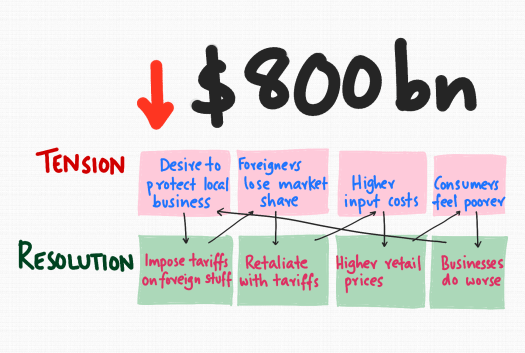
Basically, in any situation you have tension and resolution, yin and yang.

And, when you work through a sequence of tension and resolution steps – you are left with a feeling of despair at the futility of “solving” any problem – let alone one so complex as global trade.

So… let’s step through what happens.

One country, in this case the US, feels that it’s being taken advantage of by another – China, the EU, the rest of the world really.

US businesses are suffering. Not all of them, of course. Mostly the pain is felt by more mature industries that make commodities – things that can be manufactured anywhere in the world.

The people that work in those businesses are hurting.

So – any politician will do what is needed to help his people – and the obvious answer is to impose tariffs on all that foreign stuff.

Make it more expensive, and then the locals will be competitive, have room to breathe, have room to raise prices and the workers will be happy.

Only the foreigners will lose market share – and who cares about them anyway?

Well, they do. The foreigners do.

They’ve got people hurting as well – especially now.

So they retaliate with their own tariffs on the stuff that the US makes.

The US imposes tariffs on steel. China retaliates with tariffs on soybeans.

China steelmakers lose half their market. US soybean producers lose half theirs.

Now what happens?

Costs rise. They rise because imports are more expensive because of the tariffs. And they rise because local providers have room to increase prices.

Input costs for businesses go up and what do they do?

Well, they’re not going to watch their profits evaporate. All they can do is raise their selling prices – put the retail price up.

And what happens when things get more expensive for us consumers?

We feel poorer. Our money doesn’t go as far, and we wonder what’s going on and perhaps we should cut back on spending.

And businesses do worse.

Which, when we go back to where this all started – with the desire to make things better for businesses – is a bit of a let down.

All that’s happened at the end of all this is trade is down – and it’s going to fall by around $800 bn – as set out in this rather detailed play by play review of what’s happened so far.

This is the fundamental irony of economics.

Anything we do to try and “control” things usually results in something nasty happening somewhere else.

People in charge don’t like that – they want to be in control and make things happen.

Markets don’t take that well.

James Carville once said: I used to think if there was reincarnation, I wanted to come back as the president or the pope or a .400 baseball hitter. But now I want to come back as the bond market. You can intimidate everybody.

It’s taken hundreds of years to learn that.

Try and control the market and everyone becomes poorer.

Set it free – and people get richer.

The current move across the world – towards protectionism, isolationism and lots of other isms – are more likely to make things worse instead of better.

But… it’s not all bad news…

There’s always opportunity when things start to go wrong and people panic.

The question is – what will uncertainty mean for your business. Will you do better or worse?

And what can you do now to prepare for the inevitable slowdown?

You could do worse than remember the words of Charlie Munger – Warren Buffet’s business partner.

“It is remarkable how much long-term advantage people like us have gotten by trying to be consistently not stupid, instead of trying to be very intelligent.”

Or… as the Hitchhikers Guide to The Galaxy might put it .

DON’T PANIC

Cheers,

Karthik Suresh

What Are The Simple Rules That Will Radically Grow Your Business?

business-basics.png

Tuesday, 9.22pm.

Sheffield, U.K.

John Caples was one of the best known names in copywriting and advertising, and worked for 58 years in the industry.

What, one might think, would someone who started writing in the 1920s have to say to us – a century later – about the nature of life and business?

Plenty, it turns out.

Caples learned his trade in mail order advertising, a tough school where you could precisely measure the return you got from your investment.

Mail order advertisers learned what worked, what didn’t and quickly focused on the approaches that made them a profit.

So, what’s it like today.

In many industries, technology has swept away the old ways of doing things, but created chaos and confusion along the way.

Take emails, for example.

No one denies that email has made it easier to contact people. You can get a message to someone across the world in seconds.

But… can you find a contract in your records from five years ago?

What if you’ve changed email service providers? What if all the documents were sent electronically?

How many photos or documents or spreadsheets can you find from even a few years ago that relate to a project you’ve finished?

One of the things we’ve lost by going digital is memory – we forget too much.

What does that mean?

It means that we’re so overwhelmed with the new and shiny that we forget to focus on the basics.

Caples said that there are two basic rules we need to follow to be successful in business – especially if we want to move from having a hobby or lifestyle business to one that can grow radically.

The first is to create business formulas – repeatable steps that produce results.

Your business exists because it uses resources to produce something that people want.

You can follow a new approach every single time you need to do something.

For example, if you run a law practice, you can approach each project as a completely new thing – a blank slate.

You wipe your memory of everything that has been done before and start again from scratch.

Or, you could create templates and processes and repeatable fill-in-the blank solutions for common problems.

Which approach do you think will scale?

You can make a perfectly good living from producing bespoke work. To grow you need to be able to create standard work that you can do yourself, or hire other people to do for you.

In other words, find what you are successful at and repeat it. Then scale it.

The second is to try something new every once in a while.

If you stick with a successful approach and only do that, then one day you’ll wake up to find that the market has changed and you’re no longer relevant.

You do need to have ideas, invest in research and development and make sure your business isn’t obsolete.

And, in today’s technological world, the more your business is based around technology, the quicker it becomes redundant.

People, however, don’t change. If your business is appealing to people – technology is simply a channel to help you reach them.

Like most things – these two rules seem incredibly simple.

  • Repeat the successful
  • Try something new

Some people might say – that’s just obvious. So obvious it’s not worth pointing out.

Very well then – if they know this already – then they must already have a successful, growing business, no?

No?

Try going back to basics every once in a while. I know I need to.

How To Leverage Yourself With Other People’s Support

leverage.png

Monday, 8.19pm

Sheffield, U.K.

I’m reading Brian Tracy again, and the points he makes about leverage in his book, Focal Point.

Leverage is about getting more output for the same amount of effort.

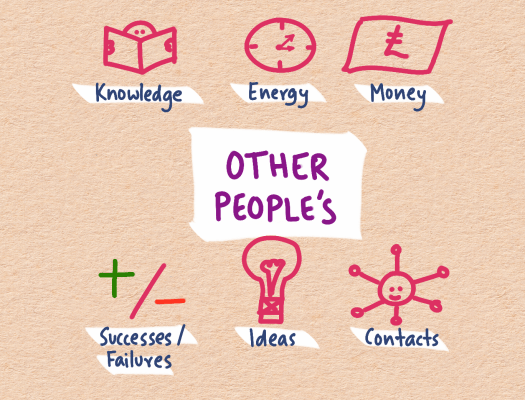
I was talking to a friend today about knowledge.

Many people have learned their trade and craft over 30 years on the job – they have experience.

They make decisions drawing on what they have learned over time. It’s possible that they don’t know why something is the right thing to do, but their gut tells them – and they have learned to trust their gut instinct.

But – that doesn’t mean we should take 30 years to learn the same things.

Many experienced people reflect on their experience and share their knowledge – in books and articles – and we should make the most of this.

Acquiring knowledge can help us skip years of experience. Experience still matters – but we can go so much further as a result.

Then there is energy.

We only have so many hours in a day – so many productive hours we can put in.

We should try and get the best out of each hour – and that means using other people’s energy to do everything that they can do better than us.

If you’re not practical – outsource all the jobs to someone who is. If you’re practical, get your bookkeeping and marketing done by someone who’s good at those things.

Robert Kiyosaki writes about money in such a simple and direct way that it hurts.

How long would it take you to save a hundred thousand dollars?

For most people, we’re talking years.

How long would it take you to borrow a hundred thousand dollars?

For many people, that could be pretty fast. Perhaps online.

The point is that if you’re good at borrowing money and investing it in something that gives back a higher rate of interest than you’re paying – you’re onto a winner.

Watching other people and learning from their successes and failures is crucial.

How many people do you know that have become successful and then spectacularly failed?

What made them do that?

Once again, all the information is out there. We just need to spend the time watching and learning and then picking the things that led to success and avoiding the things that led to failure.

It’s hard coming up with good ideas. So we should learn from those that other people have.

Everything we see around us is an idea that has survived the test of time. If you see a business model, a habit, a routine, a process that works – learn it and build on it.

It’s very rare that we see a completely new thing – most of the time we build on, iterate and improve on existing ideas.

Finally, there is the network – other people’s contacts.

Many of us know a few people. But together, we have access to a lot.

Other people can help you reach further through their contacts and connections. As the saying goes, your network is your net worth.

But isn’t all this other people’s stuff just using people?

No.

It’s the foundation of social structure. The bedrock of economics.

If we simply try and use other people – no one will help us. Or they’ll stop once they realise how selfish we are.

If you genuinely try and learn, give business to people, create returns for people, avoid failure and strive for success, search for the best ideas available and create and nurture good relationships – you just can’t help but do well.

Human beings are social animals. We prosper when our society prospers.

As Zig Ziglar said, You can get everything in life you want if you will just help enough other people get what they want.

How To Achieve Mastery

mastery.png

Sunday, 9.53pm

Sheffield, U.K.

I once listened to a Professor of Public Philosophy talk about work.

The whole idea of work is very poorly defined, she said. What exactly is it and how can we tell when we’re doing it?

Work has a few characteristics. First – it’s something we have to do, rather than something we want to do. In other words, there is a reason for doing it and we’re not just playing.

Then, it’s something that we do in exchange for money. If there is no money involved, it’s something other than work.

You may agree or disagree with her definitions and my memory may not be exact – but she said something else that was interesting.

Do you work for the sake of the work you do, or do you work for money?

Some people love what they do – they feel involved and committed and would do it even if they weren’t paid. Although they would then need to do some other work to actually get paid…

But others work for the money, or so they say. What do they want out of work?

Well, the Professor said, if you work for money, then before you can ask what you want out of work, you have to ask what you want out of money.

What is it that money gives you? Is it the ability to go on holiday? To buy nice things? Are you ok working at a job you dislike for the money that gives you the things you want out of money?

But that isn’t really the focus of this piece.

For many of us, we don’t work for money, and we don’t have the perfect job that we would do for free. So what is it we want?

One of the things we crave is mastery. The others, according to Daniel Pink, are autonomy and purpose.

So, how do we achieve mastery?

The author Robert Greene has written a book on the topic and, in this interview, sets out some of his ideas on the topic.

The place to start is with deliberate practice. As Zig Ziglar said, you don’t wander about and find yourself at the top of Mount Everest.

Whatever you do – sport, business, writing – the way to get better is to practice. And that practice needs to be deliberate, breaking down everything you need to do and working to improve each part.

But how do you know what to do?

You need to become a learning machine. There is information out there on everything. There are books, experts, resources.

The question is whether you have a system to take all this knowledge and process it, analyze it and internalise it. Make it your own.

There is a second part to doing anything. It’s easier to do something when you have a deep connection.

If you’ve entered a profession because your parents wanted you do but really don’t like it at all, you can end up living a life that doesn’t fulfil you.

It’s better to work on something that interests you, something that truly makes you happy.

Or you can settle for being happy by taking the money and doing fun stuff. Your choice really.

But how do you stand out?

Some people do that by knowing more and more about less and less. Academics can fall into this trap, where they know everything about something two other people in the world care about.

That’s great from a knowledge point of view – but don’t expect to get rich that way.

A better option is to combine two or three skills and create a niche that no one else is doing.

Scott Adams writes about this. He says he was an average cartoonist, an average storyteller and knew a little about engineering.

When he put all three together, he created one of the most loved comics in the world.

But it also takes time to get started.

We need to be grounded in reality. Realise that when we start we are an unknown, a small cog in a big machine.

We need to pay our dues, do the grunt work needed to be known and trusted enough to be given responsibility and chances.

That’s an apprenticeship we need to go through on the route to mastery.

And along the way we will meet people.

If we can maintain good relations with them, we are more likely to prosper.

We’ll find colleagues who will support and teach us, friends who will be there for us and mentors who will pull us up.

As the saying goes, your network is your net worth.

And what happens at the end of all of this?

At some point, you are so good at something that it’s self sustaining.

You work on something you love, get better every day, work with people you like, admire and trust and make a good living.

You’ve achieved mastery.

What Is The One Thing Most Companies Suck At Doing

white-belt-vs-black-belt.png

If you’ve guessed training – then you’re on the right track.

What is the point of investing in a training programme?

It might make sense if you have a defined role – perhaps a safety critical one.

We want pilots to be trained. Surgeons. Bus drivers.

There are some roles where you’re putting your life in the hands of someone else – you definitely want them trained to the highest possible standard.

You’ve heard the old joke – why do pilots follow procedures and checklist so much more than surgeons?

Because surgeons are involved while pilots are committed.

As a pilot, you’re on board with the passengers. If you screw up – you don’t get to escape.

Many other professions looks like they also see training as important – lawyers, for example. Financial advisers. Accountants.

These professions have long qualification periods and exams to pass before you’re allowed to practice as one.

But… is the point of all that to protect people?

The unsaid bit is that a big part of it is to protect the profession involved.

Basically, as a professional, you want to limit the number of people who compete with you. Creating a qualification and training requirement that stretches over years is one way of controlling the number of people who enter the profession.

That control over supply means you can keep prices high.

This kind of training doesn’t result in better quality. In fact, it can lead to worse service. Most financial advisers are better at working out what commissions they can make on a client’s portfolio than really growing it.

These kinds of jobs are the ones that the internet will kill off – as low cost self service options make it possible for people to get the same results at a cheaper price.

But then there is all the rest of business – which dwarfs the bit done by professionals.

Here you have workers and managers, doing jobs in industries from manufacturing to mining.

And, in any business, there are a number of things you need to do well to keep clients happy.

Clients – not customers. A customer is someone who buys something from you. A client is someone you advise and have a duty to.

A company is built around a set of products and services – it takes in inputs and sells outputs.

But how many companies have people in charge who think about the people the serve.

Yes – they serve customers or clients. Clearly those are important.

But what about your team – your employees?

How does your company see them? Are they resources, roles that need to be filled? Or are they people that you want to develop?

It’s like martial arts training. Do you want a company filled with white belts or black belts?

What makes the difference between a white belt and a black belt?

Well, usually one knows more moves than the other – but not that many more. Not thousands of moves. Perhaps 20 key ones.

The difference is that the black belt has practiced those moves thousands of times until they are second nature.

Their trainer didn’t just sit them in front of a blackboard and list out the steps or show them a video.

They also practiced, day after day.

And that’s what training should be. Not a one time demonstration or a presentation.

But regular, ongoing practice.

Not training – but practice. Practice is what turns a white belt into a black belt.

And that’s what will make you and your company better as well.

But – think about it. Does your company invest in training and practice?

And, if not, what can you do about that?