Where are the opportunities in the Fourth Industrial Revolution?

idt-opportunities.png

Industry is rapidly adopting and adapting digital technology in modern manufacturing, in a trend sometimes called Industry 4.0 or the fourth industrial revolution.

This marks a change from “strong” machines to “smart” machines, as a network of connected devices with increasingly sophisticated technology add value and remove waste from manufacturing processes, supported by more monitoring and analysis capability for operators.

The Made Smarter Review looks at how UK manufacturing can benefit from using Industrial Digitalisation Technologies (IDTs) to boost manufacturing, growth and jobs.

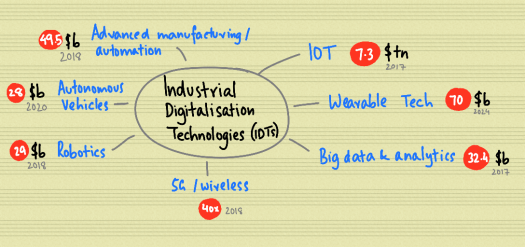
The review argues that the prize is large. The global market for IDTs is already significant, in the region of trillons of dollars for Internet of Things (IOT) devices.

We are already seeing the increasingly widespread application of big data and analytics. A robust communications infrastructure, underpinned by 5G and wireless will make it easier for devices to talk to each other.

Advances in robotics, autonomous vehicles and advanced manufacturing are already being implemented and wearable technology is being seen as a huge growth area.

We will need more people with the skills and capabilities to implement IDTs.

In addition, the challenge with collecting increasing amounts of data is that you can end up with the same problem we have now with emails – humans have limited processing power and there is more coming at us than we can deal with.

There is little point in capturing lots of information if someone then has to look at it and intepret it before taking action. That simply creates a new bottleneck as human capability fails to keep up with the power of industrial systems.

The opportunities in these technologies will be unlocked when machines can work out when to take action based on the data they collect – from the “voice of the process”.

For example, a wearable tech heart monitor package may continuously monitor your heart and alert both you and your hospital if your readings go out of tolerance, and perhaps even check your diary and book an appointment for you.

A machine learning algorithm may be able to figure out a shift pattern at your facility based on your electricity or gas usage and calculate when to buy from the wholesale market in order to minimise total cost.

Digital competence is quickly becoming a “threshold” competence.

It’s something you have to have in order to compete and profit as the next industrial revolution gathers pace.

This review is a useful and comprehensive overview of what needs to happen in the UK to increase productivity, create new businesses, better jobs and make it more competitive globally.
How to manage a process using a Kanban board

kanban.png

We’re all too busy all too often.

How can you get a handle on this – and get some control and visibility over what is going on?

One approach is to put a Kanban system in place.

Kanban is a way to see how value flows through your business.

At the end of any process, something should come out that has value to someone. Things – information, materials flow through the process and get changed into value.

Our job is to make it easier for things to flow from one stage to the next and we can do this using a Kanban board.

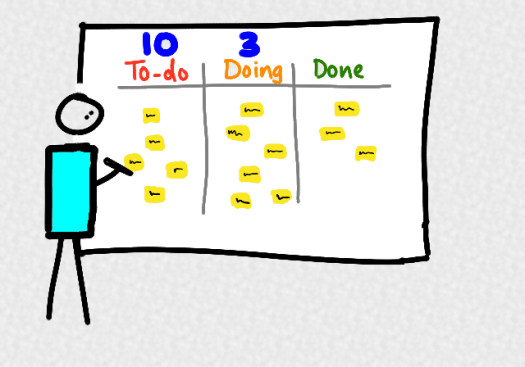
On the board, we set out the stages that we follow in our business. To keep things simple, let’s assume these are To-do, Doing and Done.

Under each title, we list out the things that fall into that category – usually on post-its, or perhaps in a spreadsheet.

The next part of the process is to introduce a constraint. The big number at the top limits the number of pieces of work that can be done in that stage at any time.

You can see in the picture above that there is conflict. The limit in Doing is 3 but there are six items.

Three need to be moved back into the To-do pile.

You can only move an item from To-do to Doing by moving something else from Doing to Done.

Applying the constraint and stopping your list from growing has an interesting effect.

To keep flow going, you have to get things done.

If there are things on your Doing list that don’t add value, or are acting as a bottleneck and taking up resources, you need to stop doing them or do them better.

In other words, do only things that matter to the end result.

A Kanban system is a deceptively simply way to improve a process.

It might look just like another way of creating lists.

But, when you combine the lists with a constraint on the number of items and a focus on flow, you end up creating more value at the end of the process than you were before.

How to pitch your idea

6-pitches.png

The author Dan Pink writes that we are all in the business of moving others now in his book To Sell is Human.

Whether it’s persuading others to back an idea or strategy to what people think of as traditional sales, all of us are increasingly required to pitch our ideas and get support in order to do anything.

The test for whether an idea was clear was the elevator pitch. Could you succinctly sum it up in 30 seconds or less as you went up an elevator with someone important.

But… we rarely share lifts with important people any more. What do you do when you don’t have an elevator available and you want to get their attention and spark interest?

Dan Pink describes six successors to the elevator pitch. It might help to remember them as you look at the symbols on your keyboard that match the ones in the picture.

1. ! The one word pitch

Can you describe your idea in one word?

Pink suggests starting with a short description, say 50 words. Cut it down to 25. Cut again to 10. One of those that is left is the one word that describes what you do.

For example, the website of Patek Philippe, the luxury watch brand, has the word Aesthetic scrolling on its homepage.

In an interesting twist, they have the one word that they feel describes the beauty of their product in several languages.

2. ? The question pitch

If you are sure of your facts and logic, then asking a question is a powerful way to get started.

WaterAid, a charity that helps bring clean water and toilets to people who lack basic sanitary provisons around the world, simply asks Are you ready? on their website.

Then they explain their goals and how you can get involved.

3. = The rhyme pitch

A rhyme sticks in your mind.

Pink says that if you are in competition with others, coming up with a rhyme that summarises what you do will help people remember your firm and potentially give you an advantage.

4. @ The tweet

Can you summarise what you do in less than 140 characters?

Apple is a company that mastered this approach with short, snappy lines under Steve Jobs.

“1,000 songs in your pocket” and “The world’s thinnest notebook” still probably bring to mind the iPod and the Mac Air.

5. _ The subject line

Email is still where most of us live, and where we get the most junk.

To stand out, your email must do at least one of two things, and preferably both, according to Pink.

It must have utility – a clear statement of whats in it for the reader.

It must spark curiosity – a desire to learn more.

6. ” “ The story pitch

The story pitch, also called the Pixar pitch, says that every Pixar pitch has the same formula:

  • Once upon a time…
  • Evey day…
  • One day …
  • Because of that, …
  • Because of that, …
  • Until finally, …

Pink’s site has a few videos that also explain these in more detail – and the book is a pretty good read as well.

The next time you’re stuck for a way to craft your pitch, just look down at your keyboard and remember the six new options you now have.

!?=@_” “

The 5-stage thinking framework – TOLOPOSOGO

5-thinking-stages.png

How should we approach a problem, think of solutions and take action?

We have a number of biases that affect us when trying to solve problems.

We might jump to a conclusion too quickly, select facts that confirm what we believe is true or allow the power balance within a group to control the direction we take.

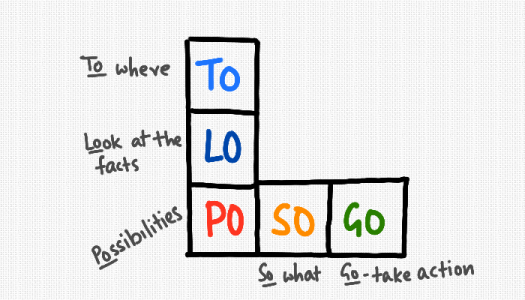
One way to structure how we think is to use a framework developed by de Bono, which uses the mnemonic TOLOPOSOGO.

It has 5 stages.

1. TO where are we going?

First, think about the end result.

What are we trying to solve. Where do we want to end up?

Having an idea of the outcome can help keep us focused.

2. LOok at the facts.

What data do we have? What are our assumptions?

This is where we set out the information we have and consider it – analyzing and evaluating what it says and means.

This is where we need to be careful not to select facts that support our views and discard others that don’t.

We need to stay open and fit all the facts into the ideas and theories we have.

3. Think through the POssibilities.

Once we have the facts, we need to think of the possibilities – come up with options and alternatives. This is a creative, idea-generating process.

It also needs to be a provocative process – challenging existing thinking and seeing how we can do things differently.

In the picture, the mnemonic makes a right angle turn to remind us that this is not simply a straight line process – we may twist away and go in a different direction at this point.

4. SO what?

Now that we have all these ideas – which ones matter? Which ones help us answer the So what? question?

Which ones are going to make a difference to the outcome?

We need to select the ideas and approaches that we think can be implemented and should be tried out.

5. GO – take action.

If we have gone through the effort of thinking through the problem in this way, we should have a good idea of how we can solve the problem and the approaches we can take.

Now it’s time for us to act – to start making and implementing plans.

Summary

This may seem an easy and obvious approach – but all too often the thinking mistakes we make are basic – and we do them because we are trying to think under pressure.

Using this framework can help slow us down and improve our chance of coming up with good solutions.

How do we change from one product to another?

ladder-vs-stack-models.png

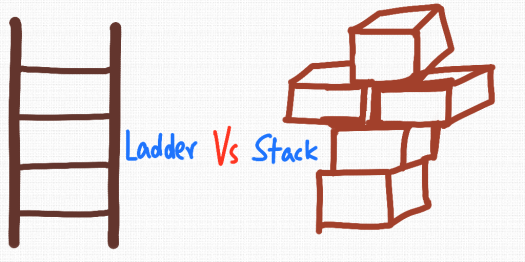
One way to think of change is like a ladder.

We move from rung to rung, stepping off the old one and committing to a new one.

For example, we used to burn firewood for cooking, and still do in some places. Then we moved to transition fuels, such as coal or kerosene. Then we might use cleaner fuels, such as electricity or natural gas.

This kind of transition seems straightforward, one way (upwards) and natural. You move from one choice to another and eventually stop doing the things at the bottom.

Another way to think of change, however, is like a stack.

In this model, you stack different choices on top of each other, perhaps continuing to use them all at different times.

You may try out two approaches at the same time, like two boxes stacked side by side, before moving on to try something else.

Continuing with the energy example, you may have gas-fired heating, but also install a wood-burner – going back to using firewood for heating.

Neither model is quantitative – but they provide different ways of looking at a situation.

Take software, for example. Let’s say you have a system that is a significant innovation on what is already there.

If you think of change like a ladder, then you need to persuade your market that they have to switch from what they are doing to your product in order to benefit.

If you think of change like a stack, then what you need to do is persuade your market that what you have builds on what they already have to create more benefits than they enjoy right now.

There is some evidence that the stacking model is a more accurate depiction of how people actually make choices than the ladder model.

The main difference is that the ladder assumes that people need to make a choice between one thing and another. This OR That.

The stack assumes that people want to hold on to what they already have and choose things that build on existing investments. This AND That.

Focusing on what people want will probably be more effective than telling them what they need.

The future of working and leading

shared-leadership.png

Many things seem quite clear and simple – because that’s just the way they are right now.

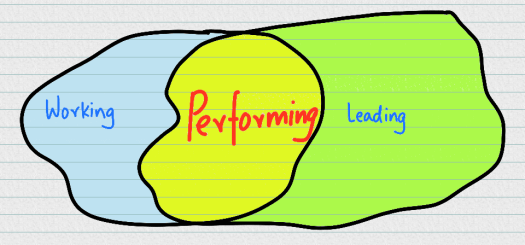
Take people in an organization, for example. You might think that there are two types: workers that do the work and leaders that decide what work needs to be done.

That approach to organizational structure comes out of the needs of an industrial, factory based society – where machines needed to be tended, things needed to be assembled and people had jobs that involved doing a few, repetitive tasks over and over again.

That world just doesn’t exist for many people any more.

The kinds of challenges organizations and societies face are more complex and nuanced now.

There may be an underlying trend, an upswell, a hint that our future economies will be based around more decentralized, democratic technologies than now.

At the moment, it feels like the world is controlled by a few giant corporations.

Take information, for example.

The four giants: Google, Amazon, Facebook and Apple dominate what we find, buy, share and see. They seem unassailable, billion dollar firms that are virtual monopolies in the current economy.

They may, however, be swept away in the future by shared, decentralized platforms that we all can own and operate using technologies such as blockchain.

People may prefer to deal with community owned businesses or social enterprises.

And that trend has an interesting application to organizational development.

Will organizations in the future stay hierarchical, controlled by a small number of leaders who make all the decisions?

Or will the organizations that perform in the future have more blurred lines between workers and leaders?

Despite an increasingly technological world, people will still choose to work with people much of the time for tasks that are complex, creative or need the application of thought.

There may not be much space in organizations for leaders who don’t contribute work. Conversely, workers who don’t learn how to lead and perform in teams may find themselves replaced by machines.

In this future, networks of committed and creative people may create the products and services we use every day.

It may be that the organizations of the future are going to be decentralized networks of individuals who share leadership and work – with performance in the market emerging out of their collective behaviour.

Do you know how you will fit in?

How to have good ideas

good-ideas.png

Linus Pauling, the only person to win two unshared Nobel prizes said, If you want to have good ideas you must have many ideas. Most of them will be wrong, and what you have to learn is which ones to throw away.

In the book A Technique for Producing Ideas, first published in 1939 by James Webb Young, the author says that there are two principles to recognise about an idea:

  1. An idea is a new combination of old elements.
  2. You need to be able to see relationships to be able to combine old elements into new combinations.

He suggests a five step technique to generate ideas: gather raw material, absorb and turn over material in your mind, step away from the whole thing and take a break – go to sleep if you can or watch a film, wait for the “Eureaka” moment when the idea will appear and finally expose it to the world – to criticism and comment so you can shape it into something practical and useful.

But how do you know if an idea is good?

Sometimes you just do – that’s what the “Eureka” moment is all about, and by putting into the world you will validate the idea and get feedback, so you increase the probability that the idea you have is a good one.

On the other hand, there are a few more criteria that are useful.

Paul Graham, in quite a long essay about how to get startup ideas, reminds us that instead of searching for ideas, look for problems.

If there is a problem – something that you want solving yourself, a solution that you could build yourself and something that other people haven’t quite realized is worth doing, then you might be on the verge of a good idea.

The missing piece from Webb’s model, as you can see in the picture, is that there is a person stood there, collecting the elements and working out the relationships between them.

The nature of the person is very important, but just by focusing on the idea, one might completely forget that individual stood behind the idea.

What kind of person comes up with good ideas?

Adapting Graham’s adaptation of Robert Pirsig’s Zen and the art of motorcycle maintenance one might write:

You want to know how to have a good idea? It’s easy. Make yourself the kind of person that has good ideas and then just think naturally.

If you are already at the leading edge of a field – if you live and breathe a particular industry – then you have a better change of having good, relevant ideas.

If your mind is prepared, already aware of the issues and problems that are relevant, when a good idea pops up, you will be ready to see it and work with it.

Even better, if you have the ability to build it, code it or write it, then you’ll have a mock-up that you can show people and test whether they feel the same way about your idea and more importantly, whether they will hand over some money for it.

Finally – the real opportunity is things that other people find boring, unsexy and tiresome. That’s the pain people want taken away and are willing to pay for.

As they say in Yorkshire, where there’s muck there’s brass.

The business of keeping things cold

cold.png

Keeping buildings cool in the United States takes as much electricity as used in Africa for everything.

We can easily miss the amount of effort that goes into keeping things cool.

We use cooling systems to air-condition our homes and commercial buildings, keep food fresh and transport it across countries and use it in countless industrial processes – from medicines to preservation.

The internet couldn’t survive without the vast amounts of cooling that go into keeping the data centres that power the internet economy going.

Increasing urbanization, with the majority of the world’s population living in cities, will make the challenges and problems associated with cooling worse, not better.

For example, the United States uses more energy for air-conditioning than the rest of the world put together.

Many developing countries, however, are getting richer fast and are in hot parts of the world. If they were to use air-conditioning like the U.S, they would use around 50 times more – and half the world’s energy could go just on cooling.

This could happen quickly. In 2010, Chinese consumers bought 50 million new domestic a/c units and 95% of Chinese homes have a fridge, compared to 7% in 1995.

If India had the same proportion of refrigerated trucks as the UK, the fleet would rise from the tens of thousands to 1.5 million vehicles.

The problem is that keeping things cold is a very polluting activity. The technology being used is a hundred years old, relies on chemical refrigerants and has plodded on – generally ignored in the background.

As we move into a low-carbon economy – increasing cold using conventional methods is not going to help us reduce emissions or stay on target.

That means there are a number of opportunities out there.

For example, we could learn how to use and re-use cold energy more effectively. With better data collection – using the Internet of Things (IoT) approach, we can figure out how to be smart in the way in which we cool things.

Keeping things cold needs energy – so using free energy from renewables, being smarter about when energy is used based on supply and demand and moving to ways of storing and moving cold energy rather than creating it on demand using electricity are all ways to be more efficient.

The challenge, as always, is to make a business case for action.

What could opening up access to data do for us?

blinds.png

Governments, organizations and businesses have vast quantities of data they have collected over the years – and continue to generate more daily.

The amount of data out there can overwhelm anyone trying to analyze and make sense of it.

Let’s say you could have access to this data and were able to process and analyze it – what would that help you do?

You could:

  • See how governments spend their money.
  • Look at patterns of energy usage across economies.
  • Study the distribution of wealth and poverty.
  • Improve how we track and predict weather.
  • Monitor fair trading in stock markets.

and much more.

The idea that making data available to people will help with both understanding and accountability, while also increasing innovation is why the UK government has started to publish datasets on data.gov.uk.

Organisations such as the Open Knowledge Foundation and the Open Data Institute are helping to create guidance, tools and networks that make it possible for people to obtain and study data and share their findings.

Why does this matter?

For a start – there is a big market out there for data and analytics. You can now get Data as a Service (DaaS) products, allowing you to analyze everything from electricity and gas prices in Europe to pig futures in Kansas.

Organisations that are able to effectively use data for decision making can improve their processes, reduce prices and stay competitive.

But there are bigger challenges that can also only be achieved through transparency and cross-sector work.

For example, many large organisations are voluntarily taking action to cut their carbon emissions, through participating in programmes like Science Based Targets.

Others aren’t, partly because they haven’t the time, see it as a cost or just don’t know how to get started.

We need to start by making it easier to analyze their data through projects like Frictionless Data that help collect, share and validate data.

If you could see how your retail store portfolio compared with others in terms of carbon emissions per sales, you might be motivated to improve your performance.

Whether the motivation is financial, social, competitive or for research and interest purposes – opening up data is going to have a big impact on making the organizations we interact with more transparent, agile and accountable.

Where does creativity come from?

surrealism.png

It’s Meret Oppenheim’s 104th birthday.

So what?

Meret Oppenheim was one of the first women to become a professional artist in her own right.

She made a name for herself as a surrealist – an approach that takes elements that you would not expect to find together and creates something new.

One of her best known works is Object, a fur covered cup, saucer and spoon.

These aren’t things you would expect to find together – and the work might be seen as a joke or a decision by the artist to ignore convention, or an attempt to find something new.

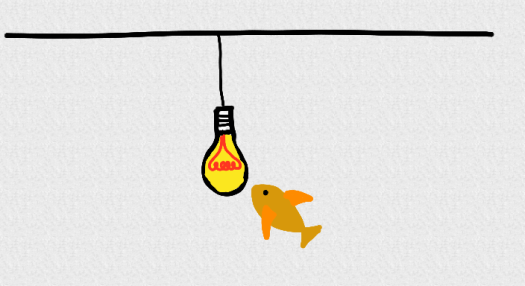
It doesn’t have to make sense. A surrealist joke goes like this – how many surrealists does it take to screw in a lightbulb? The fish.

People might respond to the work in different ways – some failing to see any art in it, others taking offence and some being fascinated by it.

That isn’t very different, when you think about it, from the way innovation progresses in general.

The creative process is not a rational, linear, sequential exercise. It’s messy and random and much more akin to insanity than we would like.

You also need to put more into the creative process than what you know already. This post describes a good example of this process.

If a person is asked to think up ways of using a box, their approach might be to think of how it can be used, what you can fit in it, where you might put it and so on.

A creative person might try and look at it from more angles – what happens if you open it up, get into it, tear it up, fold it down. What else could you do with that?

This kind of thinking results in unexpected combinations of ideas. For example, what does Origami, the ancient art of folding paper, have to do with space rockets?

NASA is experimenting with origami techniques to mechanically fold solar panels into small packages that can be deployed to space.

An origami folded package measuring 2.7 metres in diameter can unfold to create a solar array in space 25 metres across. You get a lot of power from a little folding.

Imagine the possibilities on earth as well.

You could deploy an origami solar package by drone anywhere on earth that could unfold to create a fully functioning solar power station. Free energy anywhere.

It’s easy to assume that surrealist art does not have much in common with practical, down to earth business.

The businesses and opportunities of the future, however, may actually emerge from combining two things that seem completely unrelated right now.