How Do We Learn From History?

antiquity.png

Sunday, 9.14pm

Sheffield, U.K.

History is a vast early warning system. – Norman Cousins

We visited Ironbridge recently, a place that is saturated with industrial archaeology, a relatively modern discipline. I learned about industrial archaeology from a book I found in a charity shop – Writing for antiquity – the essays of Glyn Daniels, the editor of the journal Antiquity.

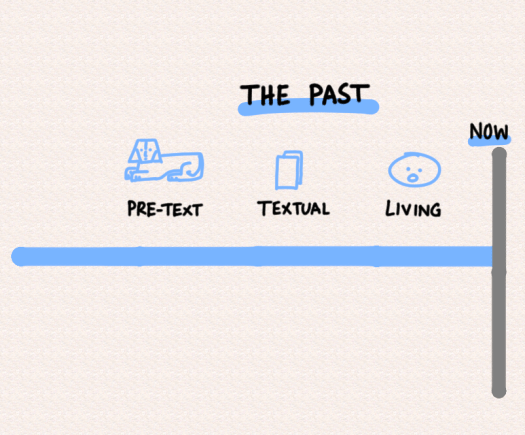
I also learned about a previous editor, O.G.S Crawford, whose autobiography is available on the Internet Archive and which is very readable indeed. Daniels talks about the field – archaeology, history, with their differences and similarities – and points out that perhaps the only thing that you can tell between pre-history and history is that one has writing and the other doesn’t. If you look back from now you will find people writing about their lives and then at some point the writing runs out and you have to figure out what is going on from the material things they left behind.

Crawford describes a time when he met an old family retainer, someone born around 1788 and who left France during the revolution. He talked about meeting her as a living link, one spanning 165 years. Living links bring us closer to the now – reminding us to have conversations with grandparents while they are still around.

Nassim Nicholas Taleb has a Twitter feed that seems odd at times – but he also writes fiercely intelligent stuff. Perhaps it seems intelligent to me because it’s new. But what he says sticks in the mind. For example societies that look like no one agrees and that have lots of disagreement and debate are in reality much freer and better off than ones where everything looks fine on the surface because it’s all controlled. He writes about how the mistake of the last century was thinking that technology would bring a utopia while the mistake this century is thinking that the utopia is going to come with artificial intelligence and machine learning.

Maybe it will. But the thing we need to understand is how people are going to work with this changing world – we need to have a way to make sense of the problems in the world without looking for a quick fix. Solutions take time. And in this day and age it can seem like no one has enough time to do what needs to be done. History has a big part to play in helping us understand what’s going on.

Cheers,

Karthik Suresh

Why We Need To Change The Way We Look At Things If We Want To Survive

looking-at-things-differently.png

Saturday, 8.19pm

Sheffield, U.K.

In our traditional culture, people have a very different view towards nature than in Western culture. We consider humans as part of nature. But in the West, they talk about protecting nature. That’s a joke because nature doesn’t care; it’s humans who need to protect themselves. – Ma Yansong

I have a folder in my research software with clippings of climate news – and it makes for grim reading. Things aren’t good around the world. Also in the news is a story of a journalist being forced to leave a country that she has reported in for twenty years. And you have the stories related to the ongoing pandemic, not least the issues of going back to normality or continuing to restrict movement.

Geopolitics is complicated. It was just as complicated a few hundred years ago. I’m reading a book that talks about how the Elgin marbles were moved to London to protect them – other monuments around that time were being defaced or being smashed for building materials. The UK became a home for historic artefacts that were at risk around the world. A refuge for history, you might say. And history was busily being blown up for much of the last century.

Arguably much of the problems in the world were caused by people moving to places other than where they came from. Exploration and colonisation followed by economic and social migration patterns have changed the way the world works – people move around, all the time for all kinds of reasons.

All that movement has made the world smaller and helped us understand different cultures, connect far-flung places and show us different ways of living. But the biggest cultural influence has been the growth of the media industry. We see and believe what we see and it creates an idea of what we think is true.

What’s the connection between these things? What is the point of considering these issues? I wonder whether the need for movement no longer exists in the way it did. People keep talking about going back to normality but what would normality look like in a world that accepts the reality of what we are seeing around us now?

Take journalism, for starters. The purpose of journalism, one definition goes, is to monitor the centres of power. Once upon a time you had to go to a place to do your monitoring. Now every citizen is a journalist, able to collect and share media. The dangerous places where journalists went to speak with sources that they had to protect are a remnant of an earlier time. Surely it’s just as easy now to have an encrypted conversation or share information via a low risk secure medium? Do you really need all that old-world cold-war stuff? We already see the effects of media sharing – gaining insights into the practices some governments enact on their people. And the task of your government should be to monitor what is going on and take decisions that are in the best interests of your people.

This can be a complicated discussion – so I’ll avoid going into it further – but the point is that when you have easy ways to share information on what is going on it’s much harder for the bad actors to hide. Shining a light on things makes evil scuttle away into corners – but while you can throw people out technology is now so cheap and easily available that it shouldn’t make a difference – a reporter should find it easier to get the story than ever before.

Let’s take another example – the business of the future. Are we really going to go back into offices or is there a better alternative? Everything you do in the office can be done just as well or better remotely – you just have to know how to do it. We’ve proven, for example, that you can have IT security and a remote workforce. This isn’t even a real issue. For example, I can imagine a new company providing all employees with refurbished laptops that can be fully recycled that has a physical tracker and locked down ports. All company work is done through the machine and it can be made just as safe as it could be in a physical office. The entire operation would be greener, require no travel for the employee and provide them with the tools they need to get the job done. It’s really not that hard and being a physical company is no security these days at being able to keep stuff private, especially if you’re doing anything dodgy. Reporters will be able to find out pretty quickly – see the above argument.

These examples merely preserve the status quo. But the other thing is that the technology we have can help us make things better. You can have experts in one place work with people who need expertise in other places around the world without needing to go there. If you can have a surgeon in London operating on a patient in New York why can’t you have an engineer in Sheffield instructing a technician in Bolivia on how to safely install a machine? We don’t need to have high bandwidth or even real time communications. We need to have the appropriate technology that enables participation instead of creating exclusion.

I learned recently, for example, that many developing countries run courses entirely on WhatsApp – delivering training and discussion groups using mobile phones. Do we really need lecture rooms? This kind of approach can help bring many people into the workforce, including working mums and people with disabilities who may not be able to access traditional venues or resources. You don’t need to go to an Oxford college – you just need a mobile phone.

The world is the way it is because history made it so. The virus doesn’t care about history and the planet doesn’t care about people – it’s just rebalancing its system as the gases in its atmosphere stir things up. If we want to survive we will have to change or we will be forced to.

Just to imagine a dystopian future – I was looking at the trees outside my window and thinking that those things remove CO2 from the air and give us oxygen. Surely we know how that works? Surely we can build an artificial tree? We must have done that already – that’s what they use in space for astronauts as they recycle their air.

The problem, one assumes, is that we don’t do at scale because there’s no money in it. Who would pay, after all, for air – something that’s free all around us? That’s what the machine would make. So we should ask ourselves, do we really want to put ourselves in a position where we have to pay for air? Where you go to a store every week to buy a week’s air for your family? Where air is piped into your house so that you can have it each month – and you pay for it?

And if you think that is outlandish just consider that you pay right now for water – another thing that you couldn’t exist without. We’ve messed up the water around us so much that you have to pay to have clean water delivered to you. What would happen to you and your family if you no longer had access to clean water? Is it really so far-fetched that the same thing could happen with air?

We really have to look at everything we do differently – one person at a time – starting with you and me.

Cheers,

Karthik Suresh

How To Get The Balance Right When Designing A Service

attenuator-amplifier.png

Thursday, 8.39pm

Sheffield, U.K.

If we need simple narratives so people can amplify and spread them, are we forced to engage only with the simplest of problems? – Ethan Zuckerman

Many years ago, when I entered my first electronics lecture, a charismatic lecturer introduced me to the book The art of electronics by Horowitz and Hill. 20 years later the words in the preface still resonate with me, the idea that electronics is “basically a simple art, a combination of some basic laws, rules of thumb, and a large bag of tricks.” I have not developed my knowledge of electronics beyond those early lectures – heading in the direction of computers instead but a few words that I came across again recently prompted me to have a go at the picture above – drawing on the old book again.

I am currently thinking about how you can make a difference with a service. All too often we think that service is the same as self-service – if we build a tool that lets you do something that’s the same as providing you with a service. That’s a little like saying here’s a booth – go in and the machine will give you a haircut. You might be happy with a booth if you need to get something like a passport photo but you might want a little more input into what happens with your hair.

Now, of course, an organisation can’t deal with anything and everything thrown at it. You have to reduce what comes at you to manageable proportions. Organisations do this by limiting what they do. A hairdresser, for example, may specialise in certain styles, or focus on a gender. The same professional will probably not cut a person’s hair and trim dogs and cats.

This act of limiting what comes in is like attenuation in electronics – accomplished by using a voltage divider that reduces the size of the signal. Now this isn’t an exact analogy because in attentuation you have the same signal, only at a lower amplitude, while in the work kind of attentuation you actually have less things that you are willing to do. So, the electronics analogy is not a good one – but since the theory uses the word it’s amusing to draw it that way.

The point, however, is that if you want to get something done you have to cut it down to size, limit it, make it possible to do. You can limit it too much though – if you insist on everything coming to you in a particular form then you’ll end up with little or no business. The trick is to limit and limit and limit until what comes to you matches your capability to deliver.

The other side of the coin, however, is that you want to increase your capability to deliver. Hairdressers use scissors and combs, of course, but they also use hairdryers and electric trimmers to make the process faster, so they can get more done to either give you a better service or reduce the amount of time you’re in the chair. This process of increasing their capacity is called amplification.

What’s interesting to note is the relationship between the organisation and the environment. When you try and attentuate what’s coming at you from the environment you have to limit it, reduce it, from whatever the total amount is to something you can manage. But when you’re trying to amplify something you have to rely on the resources you have available. You can’t rely on getting more from the environment for free – what you do depends on what you have.

These basic ideas are powerful – the idea of attentuation and amplification. If you translate this to simple language it really comes down to two things.

Focus on what you’re good at. And use the best tools you can get to be as good as you can be.

Cheers,

Karthik Suresh

What Can You Realistically Change Around You?

break-out-of-frame.png

Wednesday, 9.03pm

Sheffield, U.K.

If you change the way you look at things, the things you look at change. – Wayne Dyer

When you start reading you find that everything you read points to a whole list of other things that you should really also read. There’s a lot of stuff out there. Once upon a time, not that long ago, you could probably learn all there was to know about a topic. Now, what happens is you start with a search and try to winnow down the thousands of results to a manageable number – a few hundred or so. You read those and then you “snowball”, follow up on the references in those papers and hopefully when you’re done you know something about the area you’re reading about.

But you can’t be sure.

When you’re early in the reading process, as I am, this seems daunting. What if you spend months, even years following ideas that lead nowhere, ones that have no real value. How do you avoid doing that?

Well, you could start by being sensible. Reading the things that are in good journals, the material that is cited by others. Safe work, the good stuff – material that is judged to be best in class.

Unfortunately, that approach also leads to putting what’s there right now on a pedestal – taking it as unquestioned truth or really as it should be. The difficulty is that it could just be the way things are because people with power and influence thought that way. What you need to do is get away from the stuff that’s treated as seminal, as gospel – go to the edges where the interesting and revolutionary stuff is happening – maybe that’s where the real knowledge happens to be.

But of course sometimes things are on the fringes because they’re looney ideas – because they’re wrong. If they were right they’d be in the centre… maybe – perhaps there’s a conspiracy to keep them out, except that in real life most people aren’t skillful enough to run a real conspiracy without everything leaking out.

So we’re stuck – do we go with the known centre or do we go with the revolutionary edge?

Or is there an alternative. Everything we do is framed in some way – there’s a mental wall, one that we may not recognise, that keeps us thinking the way we do. We may not be able to pull it down completely or leave it entirely behind but we can try and see it for what it is and perhaps look to see what else is there close by – something that Steven Johnson calls “the adjacent possible.”

The other thing we can do is try and stick to the things we know – ground ourselves in the real world. For example, it’s easy to get lost in theory about concepts and situations that you don’t really know anything about. For example, I followed a reference about dysfunctional group dynamics – something I don’t really know much about. The thing is – I don’t really want to know much about that other than being able to recognise when something is going wrong. When that happens I don’t want to change the group – I want to get out of that situation and go and find a group that does want to do something and is interested in working together.

So perhaps that’s a strategy for dealing with the enormous amount of content on everything that’s out there. Start with what you know and learn about what’s adjacent. Grow your knowledge outwards, pushing your mental walls and expanding the area they cover. You never know – you might learn something that changes your life.

Cheers,

Karthik Suresh

What Is A Rich Picture

rich-picture-traditional.png

Tuesday, 9.07pm

Sheffield, U.K.

In systems thinking, increases in understanding are believed to be obtainable by expanding the systems to be understood, not by reducing them to their elements. Understanding proceeds from the whole to its parts, not from the parts to the whole as knowledge does. – Russell L. Ackoff

If you want to create something new – a product, a service – it’s very tempting to start looking at the inside of the thing you want to make – how will it work, what will it need, why will people want it?

I saw a post today on LinkedIn where someone shared a drawing of the learning process they designed when they set out to create a new business. The first few years were all about starting with a hypothesis, building something, trying it out, changing things and doing this again and again until you reached product-market fit. This is the basic idea behind concepts like the lean startup model – you start with an idea and then test and learn your way to making it real.

One of the steps in the lean startup model that stuck with me was the idea of “getting out of the building.” Go and talk to users, the process urges, get out there and interview them, understand what they need and use that knowledge to build the right product for them. And there are ways of doing this well. The big tip – don’t ask ice cream questions like, “Would you like feature X.” No one turns down a feature. Instead ask them “What did you do when you came across this problem?” The best predictor of how people will act in the future is how they acted in the past – if they spent money on an issue then there is a good chance they see the value of investing in a solution to problems of that sort.

Your goal with any project that involves an uncertain future is to get as much clarity as you can on what the situation is and what needs to be done to make it better. An unknown future is stuffed full of what is called “epistemic uncertainty” and you cannot rationally and mathematically work your way to the best possible solution. Believe me, I’ve tried. You need something more powerful. Something like the ability to map a situation and think about issues and scenarios.

That’s where tools like Rich Pictures come in. Rich pictures are part of Soft Systems Methodology. What you’re trying to do is understand how what you do fits into the world around you – moving from looking inward to looking outward. For example, if you want to pick a career should you look to follow your passion or look around you to see what kinds of jobs are available for graduates in the area you want to live? There’s no right answer to that, is there? There’s epistemic uncertainty – you could end up a millionaire rock star or starving in the gutter. You could end up a rich business owner or find yourself in a dead-end job with no prospects. How do you even start to make sense of that kind of problem situation?

You start by drawing a picture. There are no rules. In the picture above, for example, I’ve mapped a common problem we come up against. We have an organisation that has operations – we could make these work better. The people who can change things are the management team, who will be influenced by micro and macro factors, from labour availability to interest rates. They will be work with suppliers and have to deliver to customers. There are people involved, in different roles with different views who need different things from work.

You can see quickly how this simple map can be expanded to fit your particular situation and create a picture, an artifact, something tangible outside your head that you can use to talk to other people. If you have a good discussion, understanding the situation you face, the way the people involved act and how decisions are taken and who holds the “levers of power”. When you’re done you can make a list of issues – the things that come up that need to be sorted, thought about and dealt with. And when you’re done you should have something that’s going to help you figure out what needs to be done next.

It won’t be a guaranteed right answer but it will be something that you’ve worked to get to and that you are happy with. And if you’re not, you still have work to do. Because what you’re trying to do is understand where your idea, your product, your service fits into the world around it. What’s its niche?

Because if you want it to succeed you have to find the right fit – ideas that survive are ones that are best suited to their environment.

Cheers,

Karthik Suresh

The Connection Between Brain Effort And Note Taking

taking-note.png

Monday, 8.21pm

Sheffield, U.K.

For every complex problem there is an answer that is clear, simple, and wrong. – H. L. Mencken

If you are a fan of stationery and nice pens, as I am, you will have been pleased by the discovery by Mueller and Oppenheimer (2014) that taking notes by hand is better for you than taking notes using a laptop. Their conclusion is clear: “laptops may be doing more harm in classrooms than good.”

But unfortunately it’s not quite as simple as that. Like the often repeated but incorrect belief that 93% of communication is non-verbal you need to dig a little deeper to understand what’s going on.

A review of the literature by Jansen, Lakens and IJsselsteijn (2017) found that some studies show notetaking with laptops works better, while others prefer longhand. There are many factors to consider, such as the way information is presented, the way people take notes, differences in cognitive capability between people and the way in which understanding is tested.

They find, for example, some studies that show that taking notes worsens recall while other studies show the opposite. The link between taking notes and how much you remember varies with whether you’re reading or listening to the content, how fast it’s coming at you, whether you can go over it again and again or not, whether you copy it exactly or say it in your own words, whether you use an outline, or words or a diagram. Learning is complicated stuff.

Jansen et. al. suggest that we should look at cognitive load theory to understand what’s going on – the amount of effort your brain puts into the task and what it spends that effort on doing.

When you’re trying to learn something there are five main things you do. You need to understand the material, you need to pick the points that are important, you need to connect them with other ideas that you know and that are relevant, you need to restate the ideas in your own words and finally you need to write them down. That’s a lot of stuff that’s going on.

It’s not surprising that there isn’t one perfect system that will sort you out every time. What you need to do is figure out a way of learning that lets you engage at a deeper level with the material. Copying it out exactly or taking notes verbatim is a surface level of understanding. Picking out ideas and relating them to other ideas is a deeper level. Saying these ideas in your own words starts you on the path of making them your own which you finish by creating a piece of written work that is ready for the world.

We visited Ironbridge this weekend, a place known as a symbol of the Industrial Revolution. We saw a candle maker’s workshop where the owner and his children made candles all day, boiling down the fat from carcasses – a dangerous, difficult and smelly job. They were one of the richest families in the town, but carried the stench with them – and the term “stinking rich” originates with this kind of job.

These days what we’re aiming for is to be the “thinking rich” – and to do that we need the ability to boil down knowledge by taking good notes and creating something valuable.

Cheers,

Karthk Suresh

How To Spend Your Time

inverse.png

Sunday, 7.40pm

Sheffield, U.K.

In the commercial world, you have this problem that the amount of research you can do in a company is based on how well your current business is going, whereas there actually should be an inverse relationship: when things are going worse, you should do more research. – Alan Kay

I’m in the first few months of a PhD programme and trying to figure out what’s worth doing, what’s not and whether it matters. And the difficulty with these kinds of questions is that every answer you reach for is right.

For example – if you want to learn to write should you write every day? Yes. Should you only publish material when you know it’s ready? Yes. Should you show the world work in progress – a glimpse behind the workshop curtain? Yes. Should you make your research open so that others can examine your process? Yes.

You can’t produce good material in one sitting – that takes work and rework. But if you don’t produce something on a regular basis you won’t get the experience you need to be able to produce good work.

When you start looking into such questions there is no right answer. You have a mix of factors and no guarantee that you will get things right. Whatever choice you make, it’s very likely that there were better ones. But you’re stuck with the ones that you’ve chosen and the possibilities that open up because of those decisions. You learn in the world of decision making that there is no benefit in regret. You move on, leaving sunk costs behind.

In my research process I have challenges that look like these:

  • What to read
  • What to extract and keep
  • What to take notes on
  • What to think about
  • How to take notes and think – the medium, the method.
  • Balance traditional methods and newer, perhaps more creative ones
  • Try and see things from different perspectives
  • Consider how approaches work for me
  • Consider how approaches work in groups
  • Work out what the important questions might be

What role does this blog play in that process – and, as you’re reading this, is what you are going to find something that’s worth your time?

I’ve tried a few things so far. Writing about what’s on my mind, what I’ve learned, pulling together a book project. Sometimes there is a thread, sometimes there isn’t. Sometimes I write about specific methods, and sometimes it’s writing about process, about the experience of method.

The one constant is that I sit down at roughly the same time every day to work on something that will be published when I finish typing these words. There is a clear beginning and an end and a time limit – and that helps with producing words. Making the rules of operation less clear or subject to choice will make it harder to do. But, of course, that also makes it harder to be clear on what is being done – what’s the purpose of this blog?

I don’t think I need to answer that right now because it fits into an emerging programme of work that I am still working to define and design. Perhaps it’s a reflective journal, a place where I write about things that I’m working on. Perhaps it’s a place for work in progress, first drafts that are later reworked. Perhaps it’s Zettelkasten, a partner in research, but it’s going to be a few years before we can work together.

All I can say right now is that there is no right answer. What you have to do is trust in the process.

And wait.

Cheers,

Karthik Suresh

What Have You Made That Would Not Have Existed Without You?

hand.png

Thursday, 9.56pm

Sheffield, U.K.

The arts are not a way to make a living. They are a very human way of making life more bearable. Practicing an art, no matter how well or badly, is a way to make your soul grow, for heaven’s sake. – Kurt Vonnegut

Over the last few days and weeks I’ve been reading a lot of research and am finding it tricky to work out what’s worth remembering and why. I’m messing around with different approaches and trying to see what works and what doesn’t.

Some of the papers I read have interesting, exciting ideas captured in terse but powerful writing. These are words and sentences that have been thought about for a while, carefully constructed to express precisely what the author wants to convey. So why is it that these ideas are locked away in prisons of Times New Roman and don’t find their way out into the real world, the practical one – where they can make a difference?

It probably has a lot to do with the language. What we’re all trying to do is get to grips with this complex world around us. What relationship do we have with it? What kind of knowledge is going to be useful? How are we going to go about getting it?

These four components have big names: ontology, epistemology, axiology and methodology. They are important but they also create a barrier to understanding. We have to climb this complex language barrier every time we want to understand something.

Like everything else history plays a part. I suspect that the reason we use words in the way we do is because of printing. For centuries the only way to create books was to write them by hand and we had a certain kind of product – books with images and structure, the kinds of things you could create without constraints, other than the physical ones imposed by the paper you were working on.

Then along came type and the ability to print books. But type coped well only with words and so for a few centuries we relied on words to express everything, and those words became increasingly more complicated to cope with the complicated ideas we were trying to express. The constraint of type created a particular kind of expression of knowledge and that particular kind of expression was used by powerful people until it became the accepted way to do things. To this day if you want to be taken seriously you write a book or publish a paper.

I can’t remember the sources but the old handmade arts survived in the traditions of scrapbooking and creative journalling. But, this source said, because these were activities traditionally done by women they were discounted as less important – only suitable for the home and not “serious” enough for any real problem – like the ones faced in business, where men dominated what went on and were comfortable with papers and memos and notes and would have looked askance at anything “creative”.

The emergence of the Internet and the ability of people to find other interested people around the world is leading to a resurgence of mixed-media approaches to generating knowledge. We’re going from a world of papers to one where you can do anything – from painting your ideas to making videos about them. This is going to change the way we think and make it easier to discover new and useful ideas. As long as they are discoverable.

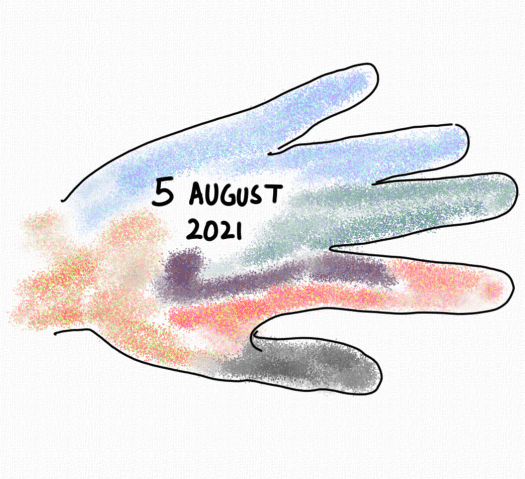
I’ve talked before about the work of Lynda Barry, who teaches about the value of writing and drawing by hand. She asks students to start their notebooks by drawing an outline of their hand – the “original digital device”. This leads to an interesting question posed by Ingrid Lill in her newsletter: What is out there in the world that wouldn’t exist if you hadn’t made it? You probably need to exclude your children from this – but what else is there?

Have you created something that makes your soul happy. And if not, should you?

Cheers,

Karthik Suresh

A Predictable Formula For Success That’s Hard To Stick To

belief-result-loop.png

Sunday, 8.32pm

Sheffield, U.K.

Victory has a thousand fathers, but defeat is an orphan. – John F. Kennedy

I was watching Nigel Topping’s TED talk 3 Rules for a Zero Carbon World and was surprised to see him put systems thinking principles at the core of his argument about what we need to do to take action on climate change.

A key principle is the one of loops. positive loops that reinforce each other. One thing leads to another thing which leads to more of the first thing and so on, in a virtuous circle that increases whatever the first thing was doing. Negative loops work the other way and balancing loops keep things the same.

But we want positive loops when it comes to climate action – more of the things that are good for the planet and less of the things that aren’t. But how do we go about doing that?

Well, it turns out that the basic principle is pretty simple. Start by doing something – taking a stand, making a point, making a change. And then work at doing that for a while.

At first people will ignore you, and then you’ll get your first follower, and then more will join and then early adopters will notice and then the mainstream will find out about you and then, all of a sudden, the thing will be an overnight success after thirty years of working on it.

You can see this pattern with the shift to renewables, the adoption of electric cars, the increasing focus many of us have in buying sustainable products. I watched another talk on heating homes with ground source heat pumps and it seems quite feasible now in a way it might not have been even a few years ago. We see the change in the last year or so but it’s taken decades to get to this point.

What’s happened during that time is the slow march of project after project, with successful ones increasingly leading to the belief of onlookers that this is something that is worth doing, leading to more projects which leads to more belief and so on, until the whole world believes that we have to do something.

But what’s also interesting about Topping’s talk is that you have to recognise that the change you will see is exponential. In the early period, you see little result from your time and effort. And then it starts to show up, as it takes you less and less time to double your impact. This means that you shouldn’t expect to see amazing results for a while – that doesn’t mean you are failing. It just means you need to give it enough time before you give up and walk away. How many people have walked away just before they hit that point where their results were about to explode?

If you put this in terms people understand these days you should think about likes and followers on social media. You can put out content for ten years without people noticing and then suddenly you reach a tipping point and the numbers go up and up, seemingly unstoppably. Or you give you because you don’t get the quick results you wanted and never find out.

Of course it’s hard to tell the difference between something that isn’t working and never will and something that will work one day but just isn’t showing results now. You have to believe in what you are doing and be willing to spend your life doing it anyway, regardless of how things turn out to be happy with this state of affairs.

So there are two things you have to do if you want to make a success of whatever you’re working on. You have to be willing to believe that your work will lead to success and that eventually the people around you will see that and support you. And you have to be willing to wait for the length of time it’s going to take.

Belief and time – those are the ingredients you mix for success.

Cheers,

Karthik Suresh

Value Creation Through Theory And Real-World Experience

real-world-value.png

Friday, 7.57pm

Sheffield, U.K.

Doing real world projects is, I think, the best way to learn and also to engage the world and find out what the world is all about. – Ray Kurzweil

If you were going to start a business tomorrow what would you do? For many people, the only model that comes to mind is possibly a technology startup – those are the ones that we see all the time. The kinds of businesses that get started in garages and go on to become huge businesses.

The trouble with basing your ideas on what you see around you is that you’re looking at a biased data set. The companies you see are the one that survived but what you don’t see is the failure rate, the ones that fell by the wayside.

It’s not hard to find opinions on why businesses fail. They don’t know what they’re doing, don’t know what business they’re in, can’t manage their money, don’t have the experience they need. And, perhaps most importantly, no one wants what they provide.

A business has to find a niche to survive. Or, more precisely, it has to adapt itself to fit into a niche to survive. The model that works is an evolutionary one – try something – make a change, cause a mutation – and see if that’s better. If it is, replicate and try again. If it’s not, let that version die away.

I’ve been watching Juran on Quality Improvement – a video series that is a masterclass by one of the pioneers of the quality movement. Quality is something that’s hard to define and easy to get. You know it when you see it. You can tell a good book from a bad one just by reading a few sentences. You can tell the difference between pieces of furniture.

But can you always trust yourself to know the difference? Probably not. Juran suggests that when there is little objective difference between products the consumer is influenced by the company with the better marketing. It’s hard to tell sometimes whether you have the better thing or whether you’ve been convinced that you have the better thing.

But is it possible that the best businesses are the ones that you don’t see, that you don’t hear about. If you started a software business tomorrow you’d be in good company – everyone else you know is probably also starting a software business. But it will probably take you a while to get your first client. If you started a plumbing business, on the other hand, you’d probably have a full diary in a week.

In Felix Dennis’ book How To Get Rich he talks about how people get wealthy doing quite ordinary things. One of the richest people he knows makes his money by digging holes. But that’s one of the things about money – you get it for doing things you don’t want to do. You get it for working. If it’s something you’d do without being paid then you shouldn’t call it work.

But how do you figure out whether you should dig holes or write software, join pipes or push paper? There’s probably something around wanting to work at a desk rather than outside whatever the weather. Some of us are softer than others. Then again, it doesn’t need to be one or the other, it can help if you can do more than one thing.

That’s where you really need to try and get theory and practice working for you – to learn from books and learn by practicing what you’ve learned from a book and trying to see if it really works. That’s the thing about the How to genre. Everyone is desperate to know how to do something and when there is a need it’s filled by something or the other. If you want a book, then a book you shall have. It’s up to you to work out whether what you’re getting is a quality product or not.

There’s that quality term again which brings us to what is perhaps an important point. If I were selecting someone to do something then these days I would want to know that they both understood the theory of what they were doing and they had also done it in real life and had learned from that as well. That’s actually a big ask – because in order to judge whether they’ve done those things you probably need to know enough to those things yourself. After all, how can you judge something you don’t know anything about?

This combination – theory intermingled with practice – the two informing each other seems the only real way to do something that can coexist in the real world and the mental world. Hands and brains together are clearly better than either on their own. For most things anyway. At the extremes – doing pure maths and running away from tigers, you don’t really want a debate about the balance of it all.

What’s my point here.

I think it’s this.

There are many ideas out there. Select ones that you think are promising. Try them out in real life. Do more of what works.

Cheers,

Karthik Suresh