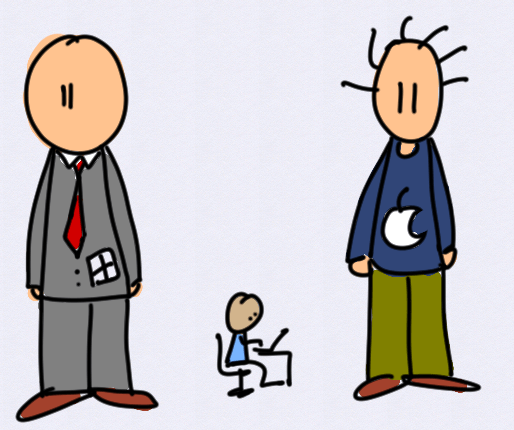
Why You Really Do Have The Power To Make Choices

2024-01-17_power.png

Wednesday, 8.30pm

Sheffield, U.K.

The most common way people give up their power is by thinking they don’t have any. – Alice Walker

Next month I will be talking about some of the ways in which I use Action Research to address a variety of problematic situations.

I am always a little uncertain about whether I’m the right person to talk about stuff like this.

I learned when I was growing up that resources are limited and we can do much more with what we have than people might think.

We went to see people who lived in huts with floors made from cow dung.

It turns out that if you spread dung and get it flat, then let it dry and polish it you end up with a surface that works quite well.

It’s a sort of organic plaster, when you think about it.

Being dependent on certain resources may make you more effective but that dependence is also a problem.

Agriculture in the West is clearly not the kind of farming we think about when we imagine how farms work.

Farmers buy seeds that are designed to work for one harvest. We don’t get seeds from that that we can grow again – instead we have to buy more.

That kind of dependence on a supplier of an essential resource is also what computing has become for most people.

If you use platforms from one of the behemoths you have no option but to buy into the ongoing process of subscription and payment.

Without that you cannot function because they have captured the market.

There are several posts at the moment about the way in which these platforms use their dominant power over smaller companies that are now dependent on them to access customers.

And I have noticed a couple of things.

First, you have the company named after a fruit that controls its entire ecosystem – a strategy that is in its DNA from the start.

Then you have the boring company, the one that took over the desktop and is now trying to use AI everywhere.

When another firm starts up that has a unique idea – say it’s web conferencing or document sharing – the big firms go ahead and copy it.

And because they’re big they can get it out to their customer base faster.

So what they can now do is simply wait to see what’s getting traction in the market and then build that functionality into their own products.

I’ve seen this with online facilitation software – there are a couple out there that many people know about.

I don’t really use them – because I don’t like the SaaS model in that situation anyway – but I have tried them out.

I recently re-used the facilitation system from the major desktop provider.

And it now opens with templates and all kinds of things that are clearly designed to woo the market that uses these other platforms.

I think that competition from a big, hugely wealthy and powerful customer that already has dominance over the customer base will win.

But I don’t use any of their stuff.

So when I talk about what I do my tools aren’t the thing that most people will recognize or be willing to learn.

But people really want to know about tools – which pencil, which computer, which package, which app do you use?

And the think is that those don’t matter.

Well, they do a bit, the technology does dictate what you can do – it’s easier to draw certain things on a whiteboard and different things using a stylus.

But what really matters is the theory – the principles that underpin what works in practice.

But theory is boring.

So.. if what really matters is boring to most people, and what you’re interested in learning about is not what I’m there to teach – then what’s the point?

I suppose it doesn’t matter how many people you don’t reach.

It’s about putting the message into the world that you can take control of your systems – you can use Free and open source software to do your personal work, run your business, help your community, and spread learning to those who need it.

Show people that an alternative exists to the dual party – seemingly all-powerful system.

And that’s a good enough reason to have a go.

Cheers,

Karthik Suresh

If It’s So Good Why Are You Selling It?

2024-01-16_hamster.png

Tuesday, 8.26pm

Sheffield, U.K.

Like dogs in a wheel, birds in a cage, or squirrels in a chain, ambitious men still climb and climb, with great labor, and incessant anxiety, but never reach the top. – Robert Browning

If you have ever been under pressure to get involved in sales you will find that there are a great many myths about how sales works.

For a fee, many people will teach you their favourite ones.

This is something to guard against.

Think about it logically.

If someone has an edge, a source of competitive advantage, then why would they reveal their secrets to you?

After all, you want to exploit that advantage because it should make you money.

For example, let’s say you learn that there’s a foolproof way to trade currency futures – this is going to make you money.

Wouldn’t you keep that to yourself and trade the markets for as long as that worked for you – raking in the money?

Why would you stop trading to spend some time teaching others the techniques you’ve used?

Is it because you know it doesn’t work and your product is essentially a long con?

This is what I struggle with whenever I come across a situation where someone wants to teach their method rather than exploit their method.

Because the incentives are misaligned.

What works is usually simple. It’s a small tweak, or a straightforward process.

Common sense in practice. Or experience applied. That sort of thing.

But I can’t just sell you a few sentences – I have to create a complicated structure so it looks like you’re getting something of value.

So you end up with this universe of mushrooming courses and packages and content that are puffed up versions of something that’s usually quite simple.

A paragraph of insight turned into 40,000 words.

If you are really good at doing something then you should just do that – make a living from that thing.

If you decide that you want to teach others then you should do it because it’s something you are driven to do – it’s a public service, not a product or business.

Warren Buffet’s letters to shareholders are an amazing source to learn from – but they’re out there, free on the Internet for anyone to access.

Imagine if he had charged for his writing? Given his billions, it’s cost him to write down his thoughts for others to read.

The people I’ve learned the most from put their stuff out because they want to share, to explore, to learn more about what they do by expressing it to others – it’s a selfish thing really. They learn more by teaching than they would in any other way.

They’d teach for free quite happily.

And I think that’s the only way to really be happy – to feel like you aren’t on a treadmill to nowhere.

To work on things you would do anyway whether you were paid or not.

Cheers,

Karthik Suresh

What Have I Learned Today?

2024-01-15_list.png

Monday, 9.55pm

Sheffield, U.K.

The art of teaching is the art of assisting discovery. – Mark Van Doren

There will be days when there just isn’t enough time to write.

Today is one of those days.

With no time at all then, what is the answer to the question “What have I learned today?”

  1. Action research is a good way to figure out what works for you.
  2. Make it simple. Complexity causes failure.
  3. If you listen carefully, you will learn what needs to be done.
  4. Choose the tools you use carefully.
  5. Sometimes you just have to wade through the marshes before you find solid ground.
  6. Eventually, you will find a solution if you work on it for long enough.
  7. The time to test is when you think you’ve finished. And before. And after.
  8. When you’re out of time, stop.

Cheers,

Karthik Suresh

Innovation In Our Hands

2024-01-14_3d-printing.png

Sunday, 8.19pm

Sheffield, U.K.

Everyone should have a blog. It’s the most democratic thing ever. – Jessica Cutler

I have been introduced to Ted Lasso recently and it is very funny.

It’s also been written by someone who likes smuggling in references to how writers do their thing – from offhand comments about Bird By Bird and Calvin and Hobbes to a scene where a character is walking on a treadmill and reading which is the thing all writers aspire to do – combine what we love with somehow losing weight.

One of the episodes talks about curiosity.

Curiosity is an interesting thing – it must be what innovators and inventors and creators of all kinds share as a character trait.

How things work, what are the edges of things, how far can you push something before it breaks.

And you can’t learn this sort of thing by reading about it or talking about it or listening to others talk about how they did it.

You have to experience it yourself.

I started a blog because I wanted to know how to use this kind of technology.

I use tools like WordPress because it’s free software but its default interface is too slow for someone that wants to write quickly and often.

So you might be interested in supercharging your process with org2blog to write and post entirely from the command line.

This kind of thing happens with software all the time – you find a tool and then figure out where it works, where it doesn’t, and get a process working where you can get what you want done without screwing up too much of the time.

Now, having a 3d printer is making it possible to explore building in real life again rather than just software.

We got a Voxelab Aquila C2 last year but it took an entire 12 months before I had the time to unbox and play with it.

It’s a basic entry level printer that requires some assembly and a high level of manual setup before you get the printing working reliably.

You need help from YouTube, this video is long but excellent to walk you through the process.

Now here’s the thing – you could get the printer working, print off a test model, and then download loads of stuff from the internet or Thingiverse and get on with making stuff.

But where’s the fun in that?

I liked OpenScad the first time I saw it – it’s a 3d modelling software where you write code to create the bits and put them together to make an object.

Then you can slice it with Slic3r to create the file that the printer uses.

One tip – load the configuration from one of the test files before you create the export with a model that you’ve created.

Most people think of click and drag and modify when they think design but there is an obvious advantage to coding your design.

If you want to create something new you can just reuse your libraries and build your knowledge.

For example, the first few things we printed were simple shapes and containers.

Now I’m playing with boxes with notches so you can create a lid that slides and fits.

The first lid I made didn’t work and I thought it was a manufacturing problem – but actually I had some dimensions wrong.

I was off by 0.2mm in a line of code and that meant things hadn’t stuck together properly.

No problem – fix and reprint. There’s no need to go to the shop.

I suppose it’s just kind of exciting that the technology that powered … well everything since the industrial revolution is now literally in our hands.

The power of information, amplified through printing – with a printing press (or blog) available to everyone.

And a factory in your office capable of making quite a lot of interesting stuff.

We should be seeing a revolution in invention and creation and just all around amazing advancements with solutions to solve all kinds of problems.

But, of course, there are distractions.

Like worrying about whether you should share or post here or there, if your message is clear or not, on brand or not.

But all that slick finished stuff is what someone does at the end to put a shine on what has already happened.

The work in the middle is messy and muddled and you just have to work through it.

And it helps if you enjoy doing it.

Cheers,

Karthik Suresh

p.s. I stopped posting to LinkedIn a while back because I wasn’t focused and just wanted to explore topics rather than seeming professional and polished and stopped with Twitter because, well… you know.

I realised recently that I could post to Mastodon and think that’s where people who might be interested in similar areas might be anyway, so I’m going to try sharing there for a while.

You can find me here on Fosstodon.

What To Do When You Can’t Do What You Want To Do

2024-01-13_daily.png

Saturday, 11.04pm

Sheffield, U.K.

My only ritual is to just sit down and write, write every day. – Augusten Burroughs

There’s an exercise called the perfect day exercise.

Write down what you would like your perfect day to be, assuming you have no restrictions – you’re wealthy and unattached and have nothing stopping you from doing exactly what you want to do.

Start in the morning, from the moment you get up.

What you do, what you have for breakfast, how you spend your day, with whom, doing what.

Work through the entire day until you get to bedtime.

Then look at what you say you want to do with your life – what you want to achieve.

Say you want to be a writer.

How much of our perfect day is about writing?

If you want to help others.

How much of your day is spend doing outreach or social work or care?

The perfect day exercise tells you what you would do even if you didn’t have to do it.

It’s a glimpse into what you really want to spend time doing.

If you’re not doing the thing that you want to do it’s probably not because you don’t want to.

It’s because there are blocks in the way – systemic ones, structural ones.

If it’s hard to get started, hard to find the time, hard to find the resources you need – then before you can do anything you need to get those blocks out of the way.

Streamline, cut, remove – do everything you can to make it easy to do what you want to do.

It is, as you’ve discovered, the most important thing for you to do.

Cheers,

Karthik Suresh

I Made A Thing. Listen To Me. Or Don’t.

2024-01-12_i-made-a-thing.png

Friday, 9.56pm

Sheffield, U.K.

There’s a big tendency to gravitate toward a closed and proprietary approach too easily. – Jimmy Wales

Every once in a while I’ll see someone come out with a thing they’ve made.

That’s great.

Then they name the thing and tell us what it is.

And that always makes me wince a little – because it’s a slippery slope from there.

Giving something a name is often a sign that you OWN it.

Once upon a time, when people owned others, one of the ways they enforced their claim was by giving their property new names.

It’s a way of jostling for position, for using sharp elbows and strategic stomping to get a place on the floor.

And it’s a really tempting thing to do.

For example, I’ve lost count of the documents where I’ve seen the words “our proprietary method”.

Very few methods are truly proprietary.

Usually, they’re some half-arsed combination of stuff published in journals a while back that have been borrowed and changed a little to create a new “framework”, or “methodology”.

In the field that I’m interested in – visual thinking – this leads to a particular problem.

You have methods that everyone knows – like brainstorming and mind maps – with the latter in particular associated with Tony Buzan.

There are ones that fewer people have heard about – like cognitive maps or thinking maps – search Novak for the first one and Hyerle for the second.

What I see with methods that are created by practitioners is that they start of with something simple, usually inspired by something that has descended from a research practice.

Writing, after all, is a codified form of drawing, so we trace our methods back a few millenia – or a few hundreds of millenia if you include cave art.

So if you take something simple – like using words and pictures to make sense of a situation – and give it many names what happens next?

The meaning that underpins each name needs to be distinguished from other names – which often leads to complicating the simple thing that made sense in the first place so that it looks different enough.

Practically, it’s like taking an invention and then tacking on a few others things so it looks like something new enough to warrant a patent.

I don’t want to call out specific methods – a paper I’m working on will do this more thoroughly – but I have made a thing and called it something – and I’m hoping my reasoning is different.

In OR, Peter Checkland suggested that what we should do is try and understand situations so that we can figure out what action to take to improve them.

A way to do this is to draw pictures of the situation – represent it diagrammatically to help with the discussion and debate.

He called this thing a rich picture. A picture that helped you get a rich understanding.

Now, I created what I thought were rich pictures but I did a lot more writing and a lot less drawing so what it ended up looking like were notes rather than pictures.

It’s different enough that calling it the same thing confuses the issue, so I’m calling this thing a rich note. So what you’ll do if you do something the way I do it is take rich notes.

See – I named a thing and now I own it.

But here’s the difference – and what I hope will come out in the paper.

The reason why I’m using a new name is that existing names don’t describe what this thing is.

And that’s the only good reason, I think, to create a new name – to be more precise about something that exists and is different to other things.

It comes down to intention.

It’s brilliant that people create things.

It’s less brilliant that people try and create the illusion that they’ve created something so that they can try and sell it to you.

Or when they change the name because they want to claim ownership over it.

And it’s not always easy to tell the difference.

That’s why names matter.

Cheers,

Karthik Suresh

What Business People Can Learn From Teachers

2024-01-11_reflection.png

Thursday, 9.02pm

Sheffield, U.K.

The art of teaching is the art of assisting discovery. – Mark Van Doren

I like charity shops – the ones that have books anyway.

In a world where algorithms feed you more and more of what they think you should see going into a charity shop and browsing through the book collection adds a delicious randomness to your life.

The other day I picked up a book called “The secret teacher”.

It is chock full of lessons – and ones that I recognize from years of working in businesses – the “aha” recognition that comes from seeing a familiar pattern.

Take, for example, the pressure we put on ourselves with presentations.

A new teacher will spend a huge amount of time trying to create an engaging and well-designed lesson, full of variety and wit and activities.

More often than not, the session won’t work and the teacher will feel like a failure.

The more experienced teachers know that they can rely on their slides, 18 point OpenSans won’t let them down.

The more complicated something is the more likely it is to fail.

The more complicated something is the less likely it is to be used or adopted or even considered.

I remember a documentary about the leading street food chef in … I think Korea.

She made chicken curry and rice – one dish at her stall – again and again and again.

She said that she had trust in her wok and trust in charcoal – and that was all she needed.

The less you need the harder it is to stop you, and the more likely it is that you can push through and reach those that need what you have to offer.

Here’s something that works when you’re trying to pitch something to someone else.

Try and teach your material to someone.

Not “present” it. Not perform. Just relax, and try to teach someone about this thing you do.

You’ll realize, probably in the first thirty seconds, that you don’t understand it as well as you thought you did.

But in that realization comes a gift – you’re going to learn more this way than you will any other way.

Here’s how I think this can be adapted to an online environment.

Create a simple set of slides – no fancy fonts, the key points, throw away the logos. Get the sentences down.

Use teaching software rather than presentation software to go through your slides.

Something like Openboard.

If you can use the built in tools to annotate and underline and add richness, all the better.

It’s going to take a lot of pressure off your next presentation if you try this.

But you probably won’t.

Not if you’re at a corporate, or any kind of place that tries to standardise or control how you do things.

So maybe this is more interesting if you’re a small independent firm, or a non-profit.

Or just if you want to have fun, and learn more about a particular topic by teaching it to someone else.

See you on YouTube then.

Cheers,

Karthik Suresh

What’s The Best Thing To Do When Facing An Obstacle?

2024-01-10_obstacles.png

Wednesday, 9.08pm

Sheffield, U.K.

Obstacles don’t have to stop you. If you run into a wall, don’t turn around and give up. Figure out how to climb it, go through it, or work around it. – Michael Jordan

Today has been an interesting day – technologically speaking.

I’ve been seeing a gradual tightening of system restrictions by the big OS providers as they try and get more control over their users.

Microsoft has been doing this with its cloud suite.

Apple is exerting its control over the app store.

Google is probably doing something. Hopefully not entirely evil.

The problem is that they are closing ranks, worried about the advent of AI and what it means for their businesses and therefore building walls around their systems and the ways in which they interact with each other.

This is sold as cybersecurity and protection but it also starts to limit the freedoms users have.

In particular the freedom to share and learn.

When you have walls around systems then two things happen.

The people inside the walls can’t learn from what’s out there.

And people outside the walls find it harder to interact with those inside.

So, for example, I’m hearing from people who say they’re only allowed to use the approved AI within their organisations – they can’t interact with others.

Good, sensible security?

Or a fog of inertia that dampens a person’s desire to learn and grow and innovate?

Now. Here’s the thing.

Trying to get programs working across platform doesn’t seem worth the effort anymore.

Gnumeric, for example is a great program that doesn’t do Windows builds any more.

It’s so easy to install GNU/Linux these days that you can get access to amazing software for free.

But very few people seem to do this.

In his essay In the beginning was the command line Neal Stevenson likens Mac OS to a luxury car, Windows to a station wagon, and GNU/Linux to a tank.

A tank that’s free, that’s being given away, that needs no fuel – but people keep going for the expensive options because they don’t want to learn how to operate a tank and want the security of having someone else look after it for them.

I’m digressing from my point here slightly.

The point is this.

When something goes wrong, when there’s an obstacle in your way, you can do many things to sort it out.

My way is to go around it.

It is possible to run a service these days powered entirely by a free / libre / open sources (FLOSS) environment.

Code generated by AI will make the availability of systems and platforms even more widespread and accessible.

And as something made by a machine cannot be copyrighted the laws that control who owns what will start to be tested.

I think the big incumbents are seeing this world and getting very worried.

If you cannot compete with the software out there the obvious thing to do is lock up your users using the age old techniques of fear, uncertainty and doubt (FUD).

As individuals, that means your restrictions within firms may very well increase.

You’re probably feeling that already – worried about what you say, what you do, what you use.

For some, it may make sense to look at having a backup, being able to carry on with what you like to do when the restrictions get tougher.

It’s going to be different for everyone but the one thing I’d recommend is to take some more interest in your own computing machinery and infrastructure.

Because without a computer can you really do anything these days?

Cheers,

Karthik Suresh

How Do People Make Decisions?

2024-01-09_decision-making.png

Tuesday, 7.51pm

Sheffield, U.K.

Sometimes you make the right decision, sometimes you make the decision right. – Phil McGraw

What makes us choose one thing over another? One product or service over another product or service? Are there patterns to our decisions and what might those look like?

Here are some thoughts from a survey article on the subject [1].

As early as 1960 Bauer suggested that what matters is the “perceived risk” of the decision [2].

Much of the work in between the 60s and 90s seems to have focused on logical or quantitative decision approaches.

I’ve recently been catching up on Star Wars.

This is the kind of approach Spock might take – rational, unemotional.

What matters are probabilities and decimal points.

This approach to decision making suggests that one should gather all the facts, have a clear objective and make an optimal choice.

We see this kind of approach in situations from procurement to recruitment, consisting of a two stage process of first short listing and then making a final choice [3].

The difficulty is that it’s not always possible to gather all the information needed to make a decision.

Sometimes it’s an emotional decision, we rely on instinct and connection.

Or we use heuristics – shortcuts and rules of thumb that help us choose between one and the other.

There are two kinds of heuristics at play [4].

Stored heuristics are ones that we pull out when we know quite a bit about the product or service and the choice is pretty trivial.

On Ebay, for example, you probably have enough experience to work out that something that’s too cheap sold by a seller with little history and a dodgy address should be avoided.

Constructive heuristics are used in areas where you have little experience and the choices are hard ones.

This second area is the one that seems to resonate with the field of problem structuring methods (PSMs).

Yesterday’s post, by the way, that talked about trust in decision making echoes McGuire’s concept of the “lazy organism” where humans ask someone they trust for advice [5].

Where we are now is understanding that real world decision making is a little more nuanced than that.

There’s the individual (or group of individuals) involved and their environment.

The way they perceive their environment frames the way in which they think about and eventually make decisions.

We have to understand the impact they have on their situation and the impact their situation has on them to be able to suggest courses of action that they can agree with and approve.

This is not an easy thing to do.

Workshops and facilitation methods try and do this but there’s a difference – facilitators are neutral parties that try to help participants come to a decision while sometimes what’s needed is an engaged participant that can get involved and contribute to the discussion and process of decision making.

Different methods work in different situations and the starting point is to get better at knowing what to use and when.

Cheers,

Karthik Suresh

References

  1. Babutsidze, Z., 2012. How do consumers make choices? A survey of evidence. Journal of Economic Surveys, 26(4), pp.752-762.
  2. Bauer, R.A. (1960) Consumer Behavior as Risk Taking. In: Hancock, R.S., Ed., Dynamic Marketing for a Changing World, Proceedings of the 43rd. Conference of the American Marketing Association, 389-398.
  3. Lussier, D.A. and Olshavsky, R.W., 1979. Task complexity and contingent processing in brand choice. Journal of Consumer Research, 6(2), pp.154-165.
  4. Bettman, J.R., 1971. The structure of consumer choice processes. Journal of marketing research, 8(4), pp.465-471.
  5. McGuire, W. J. The nature of attitudes and attitude change. In G. Lindzey & E. Aronson (Eds.),The handbook of social psychology (2nd ed., Vol.3). Reading, Mass.: Addison-Wesley, 1969

When To Crank Up The Formal Scientific Method

2024-01-08_paper.png

Monday, 8.49pm

Sheffield, U.K.

To mistrust science and deny the validity of scientific method is to resign your job as a human. You’d better go look for work as a plant or wild animal. – P. J. O’Rourke

Sometimes I feel like all I do is talk around what’s happening to what we do with the introduction of generative AI.

This probably bores some people.

But it’s important to test these new technologies and understand their limitations and applications.

Hypes are nothing new, after all.

In the last twenty years I remember being excited by biological computing, genetic algorithms, cloud computing and a bunch of other fads, before now playing with Gen AI, as the cool kids call it.

And I’m finding that my evolving relationship with it is hitting a few hurdles.

First, there’s an issue with cognitive capacity – how much our brains can take in.

For example, the other day I wanted to modify some code to make it more flexible.

The output from the AI worked perfectly and that was good – because it took something that I knew how to do but which would have taken me ten minutes or so and did it in less than a minute.

Time saved. Great.

Today I was trying to understand a particular statistical approach.

I tried putting the question into the AI and ran the answer but I couldn’t really work out whether it had understood what I had asked and if the answer it was giving was right.

The problem is I didn’t know enough to know if the AI was doing something correctly.

This is probably worth repeating.

In order to have confidence in what the AI tells you, you need to know enough about it already to be able to judge the quality of the information.

What you know matters.

You can’t just put something into the system, take the answer, publish the result and expect it to be correct.

The limitation is your ability to understand what’s going on.

Now, when I don’t understand something I read about it, watch videos, try and find a quick solution.

If still don’t get it it’s time to do what Pirsig writes about in “Zen and the art of motorcycle maintenance” and that’s to crank up the scientific method.

To do this you get a notebook – I often prefer a clipboard and paper – and you start writing things down.

You read, take notes, try and understand what you can do.

Which takes me back to another book I read two decades ago – “The Personal Software Process” by Watts Humphrey.

He writes there about the value of printing out code to do a review before running it – you can pick out many bugs when you see it in that different format.

The point is that we are constrained by our ability to comprehend what’s going on.

We need time to appreciate and consider and digest what is presented to us.

If you’re using AI to help you do something for a client, for example, it doesn’t matter if you can do it in five seconds when you previously took 5 days.

The bottleneck is your customer’s ability to understand what you’re presenting to them.

The real shortcut is something different – ask yourself when a client would simply accept the output of an AI generated system when you present it to them.

One word.

Trust.

Not in the AI. Trust in you.

That’s when the client will take your word that the output is good.

Which then makes you the next bottleneck – do you really understand what’s going on?

Or if you have teams working for you that use AI, do you trust them to do what’s needed to understand the output?

I think that in a world where anything can be generated humans will rely more and more on each other – and trust will become vital – even more so than it is now.

Does this make the case for a blockchain? Is that what AI will take us towards? Is AI the problem to which blockchain is finally a solution?

Or is trust something that will become the most human thing to grow?

You only work with people you like, admire and trust.

We’ll see how things work out.

Cheers,

Karthik Suresh