Two Approaches To Change

2026-03-10_change.png

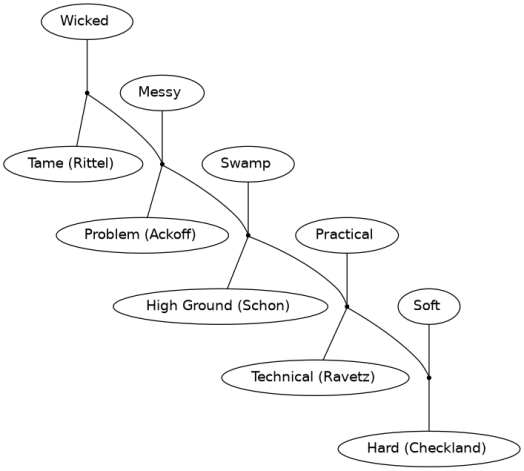
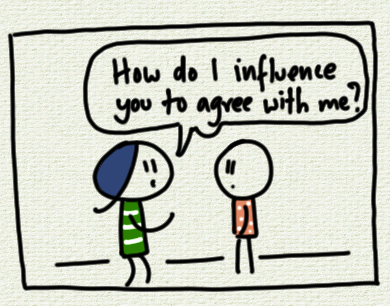
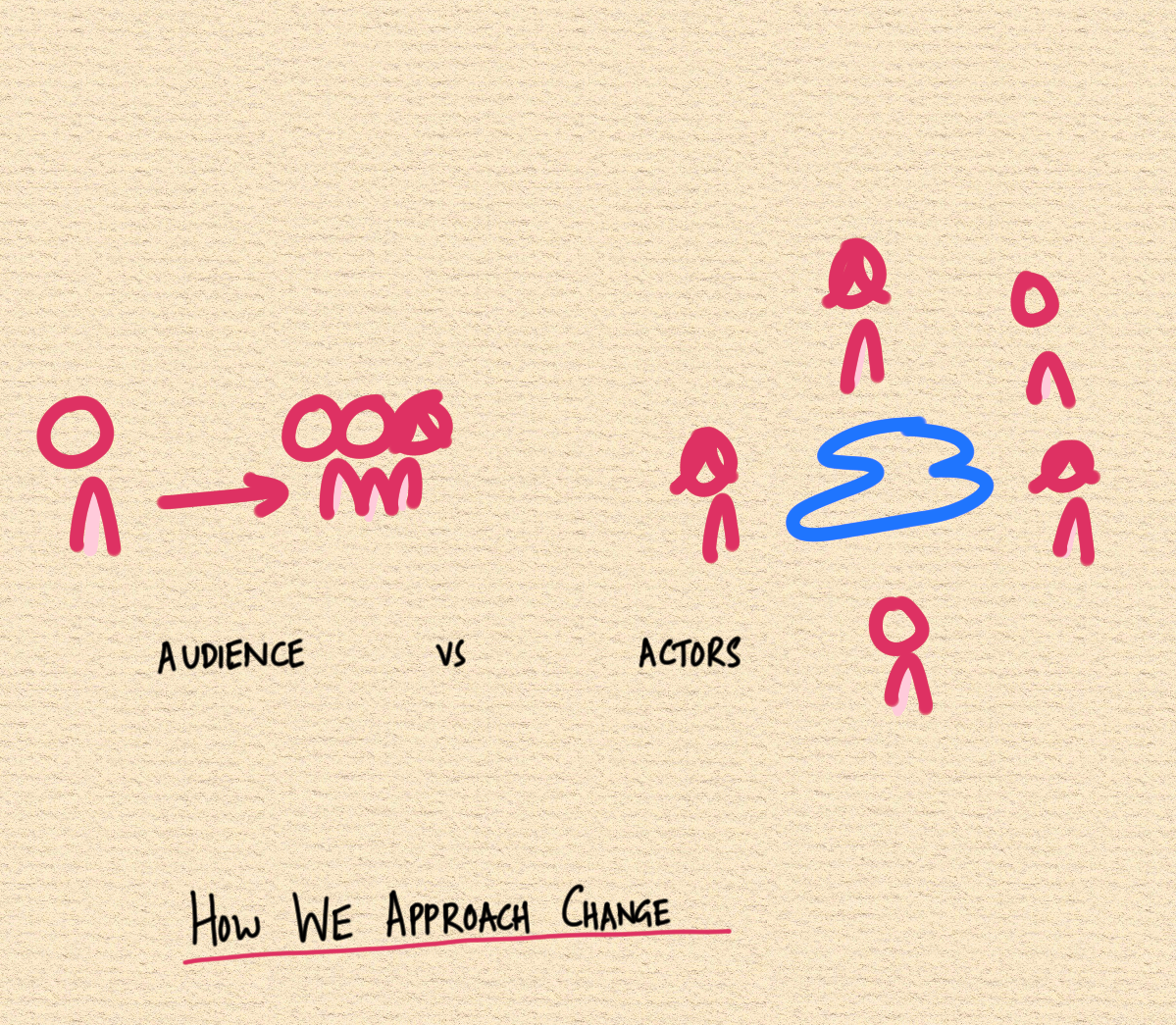
I come across two kinds of leaders tasked with driving change.

The first sees change as imposed. It’s a top-down, command-and-control process.

People are audiences – they are given a message and expected to act.

The second sees change as participatory and negotiated.

Stakeholders are actors with purpose and agency, and the ability to cooperate or resist change.

What matters here is building consensus and dealing with the messy reality everyone faces.

Which approach is better?

There is no right answer – it depends on the situation.

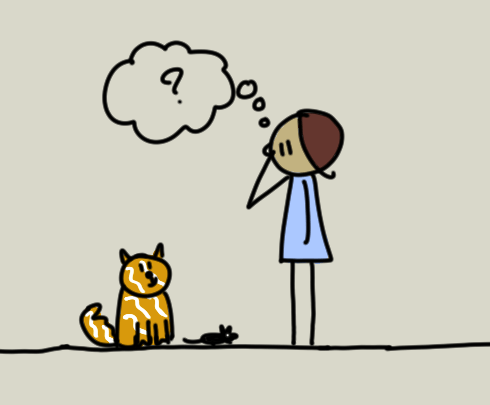
I love this quote by Poul Anderson – “I have yet to see any problem, however complicated, which, when you looked at it in the right way, did not become still more complicated”.

Change is not easy.

But it is a process.

Success or failure depends on how you design and run that process.

Nemawashi: A Way To Build Consensus For Action

2026-03-07_sust-topics.png

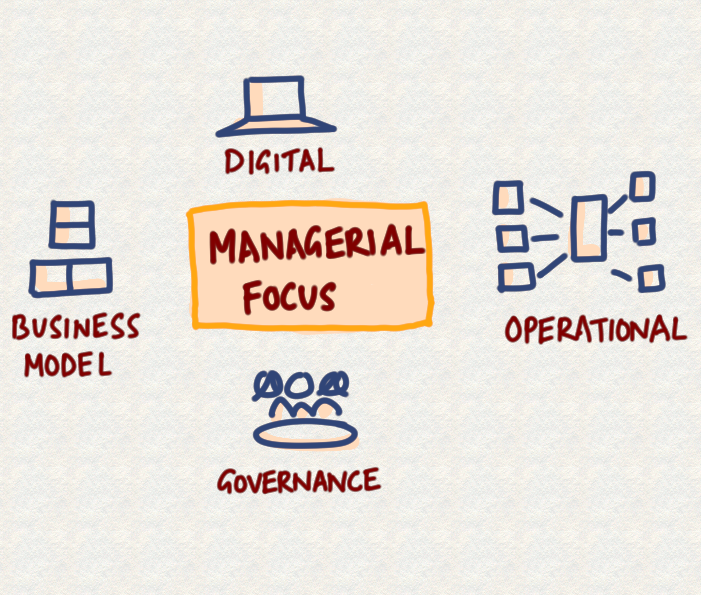
There are four topical challenges managers are addressing right now.

  1. Digital effectiveness

Which integrated systems and processes do we need to manage information?

  1. Operational effectiveness

How should we configure our internal and external value chains and build resilience?

  1. Governance

What roles do leaders play and how do they make good decisions?

  1. Business model development

What is the business and financial case for taking action?

Each department has variations on these themes to deal with – take sustainability as an example.

  • Digital: AI is pitched as a solution for dealing with overwhelming data confusion
  • Operations: New technologies have to be evaluated and assessed against like-for-like replacements
  • Governance: Leadership in sustainability requires regulatory fluency and agile political footwork.
  • Business Model: Financial models often don’t recognize the long term benefits of sustainability.

These are complex things to manage. It’s not surprising that some teams are feeling stuck – wanting to make progress but lacking budgets or resources.

A possible remedy? Nemawashi.

Nemawashi is a Japanese term for “digging around the roots” – and tells us to have informal discussions with stakeholders to prepare the foundations for change.

It’s a core element of the Toyota Production Process (TPS), and Japanese corporate culture.

Progress in organisations doesn’t happen quickly.

It happens when managers and teams take the time to engage widely, construct narratives, and build enough consensus to take action.

Orchestration As A Way To Get More Out Of Existing Systems

2026-03-06_tech-stack.png

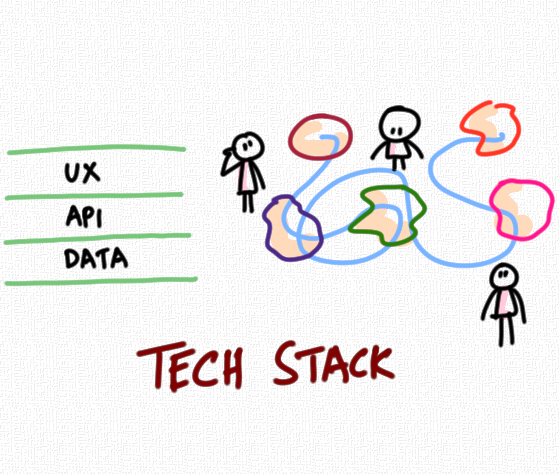
Imagine a technology-enabled enterprise. What comes to mind is often different from day-to-day reality.

Is there a clear technology stack? Data at the bottom? A user interface at the top? Clean efficient connections between data and insight?

Or do we have a mess of systems built and procured over time? People as an intrinsic part of the process. Software tweaked and customised over time to get the job done.

In such situations, change is a challenge.

Go down the RFP route, and you can end up getting a large, bloated system that no one uses.

Pick an innovative new platform – and navigate risks and issues raised by procurement, IT, legal, and finance – delaying the start of projects.

Change imposes costs. Real ones.

Right now, we’re being told that budgets are tight, costs must be controlled, and there’s no money to spare.

Buying a system doesn’t mean the work gets done. Sometimes it creates more work.

The pragmatic solution? Orchestration: start by getting the most out of the systems and capabilities we already have.

How To Build Trust In AI

2026-03-02_pressure-testing.png

AI outputs cannot be trusted. Unless you change the way you work.

We need to get better at “pressure testing” our ideas.

Here are three approaches I’m trying in our practice.

  1. Use a Red Team

AI produces plausible output rapidly – but we should not accept that uncritically.

Nominate a Red Team – people who try and tear apart what’s produced and test if the logic and assumptions still hold true.

Find the flaws before a customer does.

  1. Use AI cross checks

AI tools are cheap right now. You can feed the output of one into another and ask for a review.

It’s an easy way to validate the work.

Of course, both AI’s can hallucinate, but if they both agree on the key points, that gives you some confidence.

And humans make mistakes too. In one of my early posts I corrected AI output and got the message wrong. The AI was right.

Verify, then trust.

  1. Design defensively

As AI produces more of my code, I spend more time building tests.

For example, it’s easy to introduce errors into spreadsheets – and everyone uses spreadsheets all the time to collect and analyse raw data.

So I build in cross checks, error reviews, and comparative analyses – all to help me get confidence that what I’m working on is correct.

Test everything.

Do you have any other techniques you’re using as you integrate AI into your work?

Using AI Creates New Risks To Manage

2026-02-28_ai-in-work.png

We’re using AI more and more, as it takes centre stage in work and business.

Let’s go through the list.

I’m sure you’re using AI to help you read, write, analyse and summarise information.

So is your boss.

Your customer is using AI before they talk to you.

As is your customer’s customer.

All your competitors are leaning into this.

And your next hire, they’re building resumes with AI and practicing interviews on AI avatars.

We’re doing this to be more productive. But it also creates a whole new category of risks.

The recent Anthropic row is a preview. It’s fallen out with the DOD, federal agencies have been ordered to stop using it, and it’s been labelled a “supply chain risk”.

Any use of tools like Claude could bar a company from defense contracts.

Will all this happen or will there be a negotiated resolution?

We don’t know yet – but even the risk that it could – that the AI tool that’s central to the use of so many organisations could be banned with the stroke of a pen – is going to cause concerns.

If you’ve spent the last year building your services around the use of Claude, what are you going to do next? Wait and see? Pivot?

When AI becomes core infrastructure – and is exposed to regulatory and geopolitical risk – we need new controls and mitigations.

What are they going to look like?

If You Run Operations Like A Programmer

2026-02-27_programmers.png

We will start to run business operations like programmers – but that needs a shift in thinking.

You’re an FD or Sustainability Director and here comes a hot topic – new SRS rules in the UK. How are you processing what this means for your operations?

The way I’d have done this a few years ago is to assign an analyst – an individual contributor – to read the source material and create a brief. Key points? Align with IFRS S1,S2. More work coming your way. Get ready. Review the output and get it out to clients.

What changes if we bring AI into the process?

The picture shows a workflow that I’ve been testing.

First, we use a production agent, an intellectual chainsaw, to mine content and create work-in-progress output.

That output can be picked up by an IC who has two tasks.

First, they ought to have their own validation agent that checks the WIP against source material.

The IC also has to read and check the content – someone, somewhere has to take responsibility for actually knowing what’s going on.

Then, checked, validated content is used to produce the final output – which is reviewed by the leader and shared with a client.

If you’re a programmer looking at the revised process, you’ll see that there are more steps, and more opportunities for bugs.

And there are two ways to squish technical bugs.

Better reviews. And better tests.

If you are getting your organisation AI-ready – that means two actions.

  1. Build better group review processes
  2. Build test processes to improve automated validation and error detection

Systems, Skills and Speed – A 3S Strategy Framework

2026-02-26_3s.png

If I have one fear, it’s missing the world changing around me while I have blinkers on.

Strategy is about seeing where things are going and getting in position.

And then, if you’re lucky, you’ll catch the next wave.

I think we have to do three things to get in position.

1. Think Systems

Complexity is everywhere now.

Systems approaches engage with the complexity.

They recognize that culture and power matter, uncover assumptions and hidden dynamics, and build consensus with stakeholders.

Want to bring your team along?

Teach them how to think in systems.

2. Think Skills

And that requires new skills – at every level of an organisation.

Leaders need to figure out how they’re going to drive change and where to allocate resources.

Individual contributors have to get good at using a combination of tools to augment their capabilities.

And they have to do it now.

3. Think Speed

The window to deliver outcomes is compressing. I’m using AI. You’re using AI. Our clients are using AI.

We’re all getting further faster. And the people who aren’t – they’re simply further back in the discussion.

We don’t have time to wait.

Given a choice between a slow option and a fast one – most people will need a good reason to pick the former.

If you’re in the business of running a firm, ask yourself – are you thinking in systems? Are you building a team with the right skills?

And above all, are you moving as fast as you should be… or are you already behind?

Consulting Is In Trouble

2026-02-25_bottleneck.png

Ok – I agree. Consultants are in trouble.

Given a choice between giving work to a person or AI – I’m going to pick AI first.

Have a question about a market, technology, location? Start with deep research.

Pre-AI, the bottleneck was hours spent doing research, looking up sources, and drafting decks.

Junior consultants did research and drafting. Senior ones did a review and Partners managed socialisation and communication.

Research and first drafts can be done with AI, moving the bottleneck downstream to the review process.

That’s the next pinch point – how can we tell if the information is good, or correct?

AI will come for that in time. For example, we can use multiple AIs on the same problem and get them to check each other’s work. The industry is going to solve the citation problem.

The bit that still needs people is for the human sense making and decision processes involved in socialisation and group consensus.

What are the implications?

  • Smaller teams able to do more.
  • AI-first firms raising the bar.
  • A focus on outcomes rather than outputs.

This is not going away.

Knowedge As Inquiry Rather Than Expertise

2026-02-24_overwhelm.png

Don’t you find bookshelves overwhelming these days?

Can anyone read them all?

For those of us who grew up before smartphones, social media and streaming, there was time to sit and read for hours.

But now the big shift, for me, is that books have stopped being definitive sources of knowledge.

The ideas in them often fail to connect with the complexity of reality.

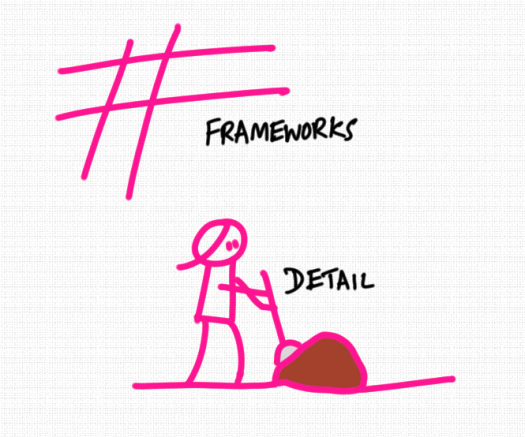
Say you have a problematic situation at your firm. Can you roll out a 2×2 matrix and solve it? Will a SWOT be enough?

No. We know that the specifics of the situation matter. What you do depends on what you find when you go and look at what’s going wrong.

That’s why, as I get older, I am less willing to accept simple universal solutions to real-world problems, even if they’re fossilised in books.

We need to be willing to learn – and find knowledge, wherever that is now.

It’s a process of inquiry rather than an application of expertise.

The History and Foundations of SSM

Sunday, 8.48pm

Sheffield, U.K.

My methodology is not knowing what I’m doing and making that work for me. –Stone Gossard

This is a retake of a talk I did in 2025 at the EURO conference on the history and foundations of Soft Systems Methodology (SSM).

I go into:

  • The origins of SSM in Systems Engineering applied to problems faced by managers
  • SSM as a part of Soft Operations Research (OR), and views of Soft OR.
  • Key books that documented SSM’s development
  • SSM over the years, and the “definitive” version of the methodology
  • Issues and critical views of SSM
  • A summary of how to use OR for problem solving.

The AI transcription of this talk is laughable so I’m going to protect you from that summary.

Cheers,

Karthik