Is The Jobs Market Broken?

2025-09-11_jobs.png

I’m a little confused about the jobs market at the moment.

I’m a little out of touch. But when I was starting my career it was the down bit of the dot-com bust.

I sent out hundreds of letters and got no response. It didn’t feel like there were jobs out there, at least not any that I could get.

But it seemed like it was a fair shot – if you kept trying you’d get something.

I’m not sure that’s the case now.

I keep hearing and seeing that people apply for a thousand jobs and hear nothing.

Okay – first, you can’t thoughtfully apply for that many jobs – it’s pretty much spam.

And on the other hand, recruitment managers must be overwhelmed by applications, and there’s got to be businesses set up just to maximise applications and play a numbers game.

So, the standard apply and be judged fairly system must be broken.

Which means the people getting the jobs, the opportunities, must be getting them through connections. Through knowing someone that can cut through the mess.

Technological solutions are making it easier for the haves to keep what they have rather than creating a level playing field.

Of course, this is a pessimistic zero sum view.

If technology destroys the existing job market something new will come up.

The people succeeding are the ones using unconventional ways to get ahead – building portfolio careers from the age of 16, leaning into new technology.

There are people creating new careers that didn’t exist a year ago. New business models that are being floated and tested.

What would you tell your kids now? Do you think the university -> job -> pension route is now done for?

A Train Ride

2025-09-09_train.png

This guy sat down next to me. “Are you writing a song?”, he said.

I was on the station platform waiting for the 16.53 to Leeds and making some notes. On a yellow legal pad with a fountain pen – with purple ink.

We talked for a bit. He’s in town doing some construction work. Writes songs. Likes the Beatles. Emigrating to Australia next week.

It was a short chat. He hopped on a train. I took the next one.

The afternoon had turned out glorious. The sun was out. The landscape flashed by. Grey clouds dotted a blue sky like an armada arriving off the coast of Normandy.

I noticed solar panels sprouting on warehouses. Elegant, flat panels covering south facing roofs.

Not the smoothest train ride and hard to write on. Another passenger remarked that he’d never been on a plane. More accidents now. His neighbour didn’t like trains going through tunnels.

Horses, each with a field to itself. One field with a row of VW Type 1 Beetles. Maybe being restored by the people in the grand new build next door.

You see and hear a lot more of life when you step away from the computer.

Populism Makes For Poor Economics

2025-09-08_growth.png

The US economy is sputtering. This should worry all of us.

There are two big happenings that are affecting markets, one immediate and one longer term.

The immediate issue is that the US economy is reeling from a firehose of policy shocks, what some might call erratic decision making, and what looks increasingly like a puncturing technology hype bubble.

People are being affected. The economy is adding fewer jobs than needed for economic growth.

Cooling demand usually has a follow on effect on energy markets, dampening global prices.

The longer-term issue is the rise of the far right, and the resulting economic consequences of power-based politics.

The Economist suggests that by 2027 some of Europe’s most significant economies could have hard right parties in office.

Traditionally such parties implement protective and nationalistic policies – offering tax cuts, competitive protection and handouts.

The result is often stagnation. Populism and poor economic decision making go hand in hand leading inevitably to fiscal crisis.

We can see the early warning signals here in rising bond yields – it shows that markets are starting to price in these risks.

And often, things get worse before they get better.

Why Would You Build An Unsustainable Business?

2025-09-06_game.png

The word strategy reminds me of another one that is hard to define but you know it when you see it.

So what kind of strategy does a company pursue in these uncertain times?

A time where the gap between opposing views has never seemed wider.

On a recent UN Global Compact webinar Susanne Stormer from PwC said something that stuck with me.

As a company, you should ask yourself two questions:

  1. Where are you positioned on the climate transition?
  2. How do you treat your people?

In a decade of talking to managers only one, maybe at a stretch two, have said that sustainability is not an issue for them.

Of these, one was privately owned and did not have to answer to shareholders, and the owner didn’t really believe this climate change thing.

And the other was buried so deeply in the supply chain that no one asked them.

In other words, you can only ignore sustainability if you are invisible.

But if you’re in the game, and the other players are looking at you, then strategy is about position and the next move.

I mean – imagine you’re building a business now.

Why would you build one that’s not sustainable, or that treats its people badly?

Does that sound like a winning strategy?

Choosing The Long Road

2025-09-05_hard-bit.png

When I hit a bad shot I always look at the bat like there’s something wrong with it.

The middle is too hard. The edges are too soft. There’s no grip.

It’s easier to do that than admit I need to work on my game.

It’s easier to look for a shortcut, a tip, a life-changing programme.

Something that will get me from here to there without having to go through all the tedious bit in the middle.

But the middle is the bit that’s worth doing.

That’s where the learning, the fun, the value is.

The hard thing is saying no to the easy pill.

And then focusing on the next step.

Getting in shape for the game.

How Do You Give Time Back To Your Client?

2025-09-02_time-thieves.png

Some services are time thieves.

I really resonated with a post from Paul Brown.

He said your clients aren’t short of reports and alerts – they’re short of minutes.

https://www.linkedin.com/posts/paulbrown579_you-dont-sell-digital-health-to-clinicians-activity-7366684711647191040-ERwD

He was talking about clinicians.

But this applies to operators and managers across the piece.

Companies like Apple have convinced us that what we need to solve problems is to first reach for a new software product.

“There’s an app for that”. Apple’s trademark.

It’s easy to say yes.

It’s harder to ask why?

Why do we need this step? Why do we think this application will save us time? Why are we still doing all the work after spending all this money?

Too many applications just make it easy to do easy things.

They leave you with the hard jobs.

So now you have two jobs – the job you had, and the job of feeding the application you thought was going to make your job easier.

When we design services, we keep one key question in mind.

How will this thing we do return time to our client?

Monday Markets Update – w/c 1 September 2025

2025-09-01_monday-markets.png

September is the last summer month for energy watchers.

I started my career building energy market tracking tools.

The electricity and gas forward markets are like having a crystal ball – the way they move gives you an early warning signal of good and bad times ahead.

So I thought I might go back to my roots and write a Monday markets review – nothing too complicated but just keeping an eye on what’s going on.

So, from now the focus shifts to the coming winter.

Storage in Europe is around three quarters full, comfortable for this time of year.

But the war in the Ukraine shows no signs of easing.

Both sides will and are targeting energy infrastructure including pipelines that supply Russian fuel to Central Europe.

We have always said that March to August is a good time to get contracts done.

Markets get twitchy after September, watching weather and geopolitical news carefully – Summer is unfortunately a good time to start a war or continue offensives.

This is the time to check that your exposure to the comine winter is covered – time is running out.

How To Deliver Quality Outcomes

2025-08-30_next-generation.png

Building a company is a constant cycle of finding fit for purpose.

Every new service line I’ve built has started with a trigger that we should really get our heads around what’s coming next.

A lot of consultants feel like they have to perform – to pretend like they know everything and are on top of it all.

In reality, most of us are a page or two ahead of clients.

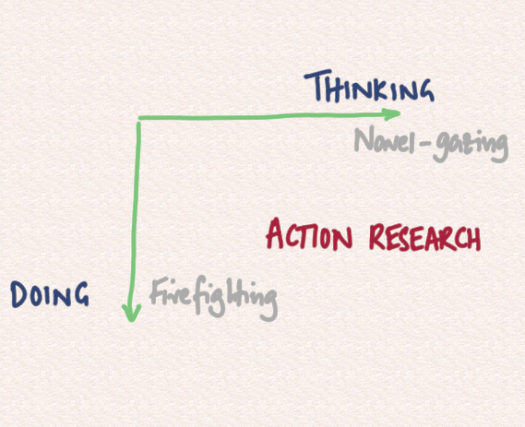
Around a decade ago, I started treating business building like a research project.

The research phase is about accepting that things are a mess – in your head at least – that there is lots going on and it’s not clear what’s important and what’s not important.

Anyone looking at building a sustainable firm today has to engage with a mess – what’s going to happen with regulations in the US and EU? How will China change the game – or has it already changed it entirely? What do we have to do, what would be nice to do, and how do we make the case for action?

There are no simple and easy answers to these questions.

But if we engage with the detail, with the mess, we can start to create a programme for action that we can use in practice.

A series of steps that can make some part of the situation better.

But the difference today is that the research work is not done in a room alone.

It’s action research – done in the real world and participatory – done with clients and co-creators.

Helped by technology, including AI.

And if we do this well, we will create quality outcomes – defined as ones that are “fit for purpose”.

Change Is Here – And It’s All About Speed

2025-08-29_time-to-value.png

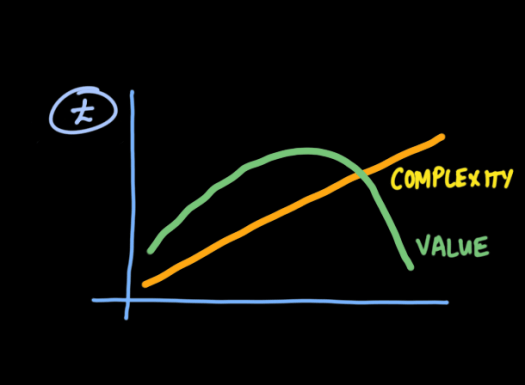
As a founder building a consulting firm I’ve been reflecting on the benefits of speed.

The thing we can do today in service firms differently from a few years ago is dramatically lower time to value.

Speed is a superpower. If you’re fast enough you can predict what others are going to do and do it before them.

But in service firms, we’ve always been limited by the speed at which we can get manual work done.

And there is a lot of manual work in consultancy. There’s research. Analysis. Verification. Report writing. Presentations.

The traditional model is to hire – Maister’s grinders, minders and finders model. That’s how we built businesses from 2000 to 2025.

Things are changing. That model is evaporating in front of our eyes.

For example – I was listening to a webinar a day or so ago, but I needed to process some documents. The task was to extract key elements and put them into a structure.

In a previous life I’d have sent this over to a back office team. Someone would have picked up an email and done the work, and then let me know. Maybe. I’d probably have had to chase it.

This time, I remembered I had gemini on my machine, working at the command line. So I told it what to do and went on listening to my webinar while it did the task in the background.

And it did an ok job. It pulled out what I needed. Not perfectly, but it got me an hour or so down the road so I could finish things off.

The real benefit of these tools is they give you time back. You get to a value point faster than you could before.

And this frees up the time to focus on making things better – to really improve what’s happening – and deliver better outcomes.

Change is here. And it’s all about speed.

Cross Little Chasms Rather Than Big Ones

2025-08-28_chasm-model.png

I was thinking about Geoffrey’s Moore’s crossing the chasm concept, which Clayton Christensen also explored in the “Innovator’s dilemma”, and an old memory popped into my mind.

The first proper game I played was Prince of Persia on my dad’s computer – an IBM PC-XT, which had no hard drive, only a 5 1/4 inch floppy drive.

I found a version of that DOS game recently that I could try on Linux – and if you’ve played it you’ll remember the character jumping over hazards.

Moore’s book is about marketing – early adopters vs the mainstream. Christensen’s is about crossing the early thorny stage to find and serve a niche that eventually disrupts the status quo.

The idea of a chasm, a space we have to cross which has hazards in the way, is more generalisable to everyday business operations as well.

Take sustainability, for example.

I liked a post by Maria Svantemark about the questions to ask if you were going to take on a Head of Sustainability role.

https://www.linkedin.com/posts/mariasvantemark_%F0%9D%97%9B%F0%9D%97%BC%F0%9D%98%84-%F0%9D%98%81%F0%9D%97%BC-%F0%9D%97%B8%F0%9D%97%BB%F0%9D%97%BC%F0%9D%98%84-%F0%9D%97%B6%F0%9D%97%B3-%F0%9D%97%AE-%F0%9D%97%9B%F0%9D%97%B2%F0%9D%97%AE%F0%9D%97%B1-%F0%9D%97%BC%F0%9D%97%B3-activity-7366370211559624707-yhpm

Each one of the questions she asks is a little chasm that needs to be crossed. Will you have a supportive team? Will you have a budget? How much power will you have? What does the company want to achieve.

And of course I focused on the last one – which is how is data collected now?

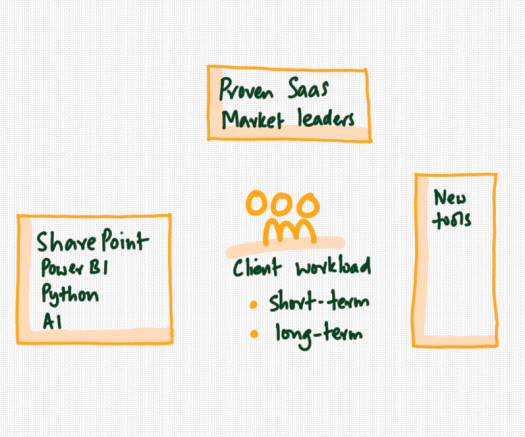
If it’s spreadsheets and a SharePoint folder, it’s going to take a year of work before you can do anything.

The reality is that most organisations start with spreadsheets. And it makes sense to use SharePoint.

It’s a big chasm to cross to try and get them to stop doing what they’re doing and starting using an entirely new system – especially when it’s not clear exactly what time this system is going to save.

So we took the approach of crossing a little chasm instead. We keep everything in spreadsheets and build better data management and dataflow processes so that we can get the information we need quickly and easily.

Once we have clean data, we can feed it into other systems, that you can select because they add value to your processes – specialist billing tools, asset management tools, pricing and procurement, climate risk measurement. These then take the data we collect and give you added value.

Company operations are full of chasms.

Choose the ones you can step over rather than the ones you will struggle to jump over.